There’s a reason linen has been prized for thousands of years. This ancient fabric, made from the flax plant, offers a combination of beauty, durability, and natural performance that synthetic materials simply can’t match. And when it comes to window treatments, linen curtains deliver that same timeless appeal—creating spaces that feel both refined and effortlessly relaxed.
In recent years, linen curtains have surged in popularity as homeowners move away from synthetic fabrics toward natural, sustainable materials. But beyond the trend factor, linen offers genuine practical benefits that make it ideal for window treatments in any room of your home.
In this guide, we’ll explore everything you need to know about linen curtains—why they’re worth the investment, how to style them, and how to keep them looking beautiful for years to come.
What Makes Linen Special?
Linen is a natural fiber derived from the stalks of the flax plant. It’s one of the oldest textiles in human history, with evidence of linen production dating back over 30,000 years. Unlike cotton, which comes from a plant’s fluffy seed pods, linen fibers come from the plant’s stem—giving it unique characteristics.
Natural Temperature Regulation
Linen is naturally breathable and moisture-wicking. It absorbs humidity in summer and releases it, creating a cooling effect. In winter, those same properties help regulate indoor humidity while the fabric provides a layer of insulation. This makes linen curtains comfortable year-round—they won’t trap heat in summer or feel cold and stiff in winter.
Exceptional Durability
Linen is one of the strongest natural fibers—approximately 30% stronger than cotton. Quality linen curtains can last for decades with proper care, actually becoming softer and more beautiful with age. This longevity makes linen an excellent investment despite its higher upfront cost.
Naturally Hypoallergenic
Linen has natural antibacterial and antifungal properties. It doesn’t attract dust or lint the way synthetic fabrics do, making it an excellent choice for allergy sufferers or anyone prioritizing a healthier home environment.
Sustainable and Eco-Friendly
Flax requires significantly less water and fewer pesticides than cotton. The entire plant can be used, producing minimal waste. And because linen is biodegradable, it won’t sit in a landfill for centuries like polyester curtains would.
The Linen Look: Understanding the Aesthetic
Linen curtains have a distinctive appearance that sets them apart from other fabrics. Understanding this aesthetic will help you decide if linen is right for your space.
Beautiful Imperfection
Linen has natural texture variations—subtle slubs and slight irregularities in the weave that give it character. This isn’t a flaw; it’s a hallmark of natural fiber and part of linen’s charm. If you prefer a perfectly uniform, smooth appearance, linen may not be for you.
Relaxed Drape
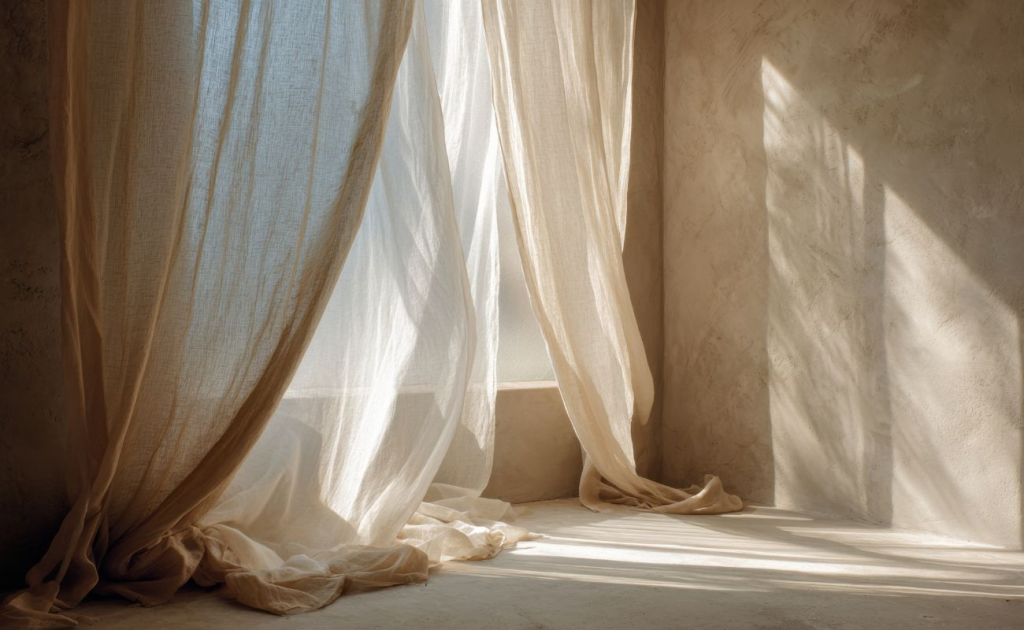
Linen naturally falls in soft, organic folds rather than crisp pleats. It has what designers call a ‘relaxed drape’—elegant but not fussy. This makes linen perfect for casual, coastal, Scandinavian, farmhouse, and contemporary spaces where an effortless look is desired.
The Wrinkle Question
Yes, linen wrinkles. It’s part of the fabric’s nature. Many linen lovers embrace these wrinkles as part of the relaxed aesthetic. However, if wrinkles bother you, consider linen-blend curtains (mixed with cotton or polyester) which maintain the linen look with improved wrinkle resistance.
Light Filtering Properties of Linen
Pure linen curtains are naturally light-filtering rather than light-blocking. They gently diffuse incoming light, creating a soft, warm glow while providing daytime privacy. This makes them ideal for:
- Living rooms where you want natural light
- Dining rooms for a warm, inviting ambiance
- Home offices where glare control (not blackout) is needed
- Any space where you want to maintain connection to the outdoors
For bedrooms or media rooms where you need darkness, look for linen curtains with a blackout lining. This gives you the beautiful linen exterior with full light-blocking capability.
How to Style Linen Curtains
Color Choices
Linen looks beautiful in its natural, undyed state—a warm oatmeal or flax color. It also takes dye beautifully, available in soft whites, warm neutrals, and deeper tones. For a timeless look, stick to natural, white, or soft gray. For more personality, consider dusty blue, sage green, or warm terracotta.
Header Styles
Linen works with various header styles, but some complement its relaxed nature better than others:
- Rod pocket: Creates soft, gathered folds—very casual
- Back tab: Clean, tailored look while hiding the rod
- Grommet: Modern, uniform folds—works but less traditional
- Pinch pleat: More formal, structured appearance
Layering with Linen
Linen curtains layer beautifully with other window treatments. Try pairing sheer linen panels with woven wood shades for a coastal look, or layer lined linen drapes over roller blinds for complete light control.
Caring for Linen Curtains
Proper care will keep your linen curtains beautiful for decades.
Regular Maintenance
- Shake out dust periodically
- Vacuum gently with an upholstery attachment
- Steam to remove wrinkles while hanging
Washing Linen Curtains
Many linen curtains are machine washable on a gentle cycle with cold water. However, always check the care label first—lined curtains may require dry cleaning. Air dry or tumble dry on low, and rehang while slightly damp to minimize wrinkles.
Important: Linen can shrink slightly when washed. If your curtains fit precisely, consider dry cleaning to avoid shrinkage.
Frequently Asked Questions
Are linen curtains worth the higher price?
Yes, for most homeowners. While linen costs more upfront than polyester, it lasts significantly longer, looks better with age, and offers genuine performance benefits. Quality linen curtains are an investment that pays off over time.
Do linen curtains provide privacy?
Unlined linen provides good daytime privacy—people outside can see movement and shapes but not details. At night with interior lights on, they’re more transparent. For full privacy, choose lined linen curtains or pair with blinds.
What’s the difference between linen and linen-look curtains?
‘Linen-look’ curtains are typically polyester designed to mimic linen’s texture. They’re more affordable and wrinkle-resistant but lack the breathability, durability, and natural feel of real linen. True linen curtains use 100% linen or linen blends.
Embrace Natural Beauty with Linen
Linen curtains offer something rare in home decor: a material that’s both timelessly beautiful and genuinely functional. Their natural temperature regulation, exceptional durability, and sustainable origins make them an excellent choice for conscious homeowners. And their relaxed, organic aesthetic brings warmth and sophistication to any space.
Whether you’re drawn to linen for its environmental benefits, its health advantages, or simply its beautiful drape, you’re choosing a window treatment that will serve you well for years to come.
Experience the beauty of linen. The Curtain USA offers a curated selection of premium linen curtains in a variety of colors and styles. Contact us for samples and a free consultation.
Request Your Free In-Home Consultation