Table of Contents
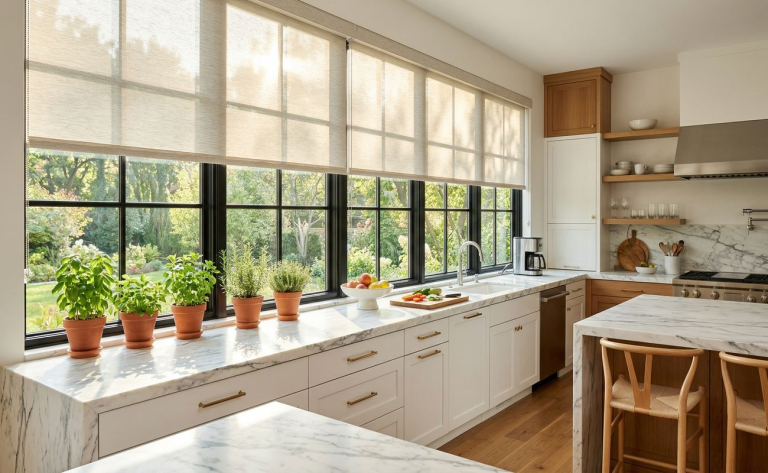
Walk into any designer-decorated room, and you’ll likely notice something about the windows: they’re not dressed with a single treatment, but with layers. Sheer curtains float in front of blackout shades. Woven wood blinds peek out beneath linen drapes. A tailored valance frames Roman shades below.
This layered approach isn’t just aesthetically pleasing—it’s also incredibly functional. By combining different window treatments, you gain precise control over light, privacy, and temperature while creating visual depth and interest that single treatments simply can’t achieve.
In this guide, we’ll break down the art of layered window treatments—why designers swear by them, which combinations work best, and how to create the layered look in your own home.
Why Layer Window Treatments?
Unmatched Versatility
With layered treatments, you can have it all. Open the blackout shades but keep the sheers closed for soft, diffused light. Draw the curtains for dramatic evening ambiance. Adjust each layer independently to suit the moment, the season, or your mood.
Superior Light Control
Single treatments often force compromise. Sheers allow light but don’t block it. Blackouts block light but look heavy. Layering lets you combine light-filtering and light-blocking elements, achieving perfect control at any time of day.
Enhanced Privacy
A single sheer curtain provides daytime privacy but not at night. Layer it with a shade or blind, and you have privacy when you need it while still enjoying natural light throughout the day.
Better Energy Efficiency
Multiple layers create additional air pockets that insulate your windows. The combination of a cellular shade with curtains, for example, can significantly reduce heat loss in winter and heat gain in summer.
Visual Depth and Interest
Layered treatments add dimension to windows. The interplay of textures, colors, and materials creates a richer, more designed look that elevates the entire room.
Classic Layering Combinations
Sheers + Blackout Curtains
The Look: Elegant and versatile
Best For: Bedrooms, living rooms, formal dining rooms
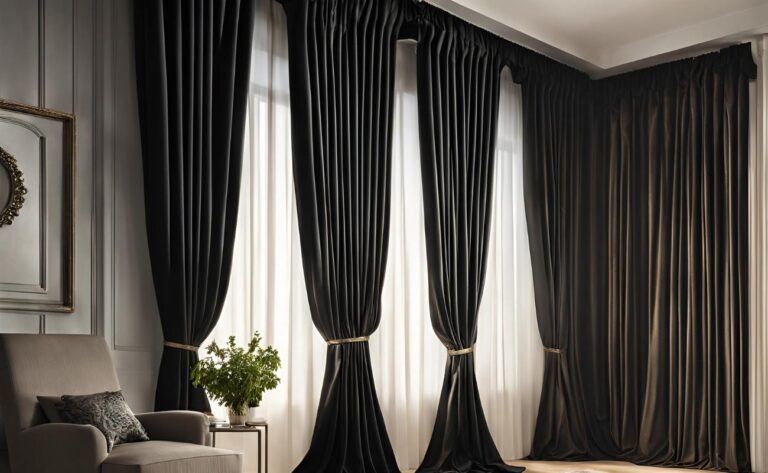
How It Works: Hang sheer curtains closest to the window on a double rod, with blackout drapes on the outer rod. During the day, close just the sheers for soft light. At night or for movies, close the blackouts for complete darkness.
Roman Shades + Side Panels
The Look: Tailored and sophisticated
Best For: Traditional and transitional spaces, home offices
How It Works: Mount a Roman shade inside the window frame for clean light control. Add stationary curtain panels on either side for softness and to frame the window beautifully.
Woven Wood Shades + Linen Curtains
The Look: Organic and relaxed
Best For: Coastal, bohemian, farmhouse, and contemporary spaces
How It Works: Natural woven shades provide texture and light control, while breezy linen panels add movement and softness. This combination feels effortless yet thoughtful.
Roller Shades + Decorative Curtains
The Look: Clean and modern with personality
Best For: Modern bedrooms, minimalist spaces wanting warmth
How It Works: Simple roller shades handle light control discreetly, while curtains in a bold color or pattern add style. The shades disappear into the background when raised.
Valance + Blinds or Shades
The Look: Finished and polished
Best For: Kitchens, bathrooms, traditional spaces
How It Works: A valance or cornice box tops off functional blinds or shades, hiding hardware and adding a decorative element without the bulk of full curtains.
Hardware for Layered Treatments
Double Curtain Rods
The most common solution for layering two curtain panels (like sheers behind drapes). One rod sits closer to the window, the other extends out further. Available in many styles and finishes.
Ceiling-Mounted Tracks
For a sleek, modern look, ceiling-mounted tracks can hold multiple layers and allow curtains to glide smoothly. They also maximize window height and work well with heavy drapes.
Inside + Outside Mount Combo
Mount shades or blinds inside the window frame, then hang curtains on a rod outside the frame. This creates natural separation between layers without special hardware.
Tips for Successful Layering
- Start with function: Identify your must-haves (blackout? privacy? glare control?) and choose your functional layer first
- Vary textures: Combine smooth with textured, sheer with opaque for visual interest
- Coordinate, don’t match: Layers look best when they complement each other rather than exactly matching
- Consider depth: Make sure your window frame can accommodate multiple layers without looking cramped
- Think about operation: Can you easily access and adjust each layer? Will they get tangled?
- Balance visual weight: Lighter layers go closest to the window; heavier layers frame the outside
Frequently Asked Questions
Is layering window treatments expensive?
It can be more costly than a single treatment, but doesn’t have to break the budget. Mix high-quality functional pieces (like blackout shades) with affordable decorative curtains. Prioritize spending on the pieces you’ll use most.
Do layered treatments work in small rooms?
Yes, but keep layers light and streamlined. Avoid heavy, dark combinations that can overwhelm small spaces. Sheers with slim roller shades work beautifully in compact rooms.
Can I layer treatments on every window?
Layering works best on larger windows and those you want to highlight. Smaller or utilitarian windows (like in a bathroom) may be better served by a single treatment.
Elevate Your Windows with Layers
Layered window treatments are a designer secret worth stealing. They offer unparalleled versatility, superior function, and the visual richness that transforms ordinary windows into stunning focal points.
Start simple—perhaps sheers behind your existing curtains, or a Roman shade paired with side panels. Once you experience the flexibility of layered treatments, you’ll wonder why you ever settled for just one.
Ready to layer like a designer? The Curtain USA offers expert guidance on creating layered window treatments that work for your space and style. Contact us for a free consultation.