A valance is the short piece of fabric or wood across the top of a window. It sounds minor, but it does two big jobs: it hides hardware (rods, brackets, the tops of blinds) and it finishes a window the way a frame finishes a painting. Used well, a valance makes even budget curtains look custom.
The trick is choosing a style that reads as current rather than dated. Here’s the full rundown.
What a valance is for
- Hides hardware and the headrail of blinds or shades
- Adds height when mounted above the frame, making windows feel taller
- Softens hard window lines and blinds
- Layers beautifully over curtains, shades, or shutters
- Defines a style — tailored and modern, or soft and traditional
The main valance styles
- Tailored / flat valance. A clean, straight panel with crisp lines. The most modern and versatile — works in contemporary and transitional rooms.
- Box-pleat valance. Structured pleats for a neat, tailored look with a little more dimension. Great in dining rooms and offices.
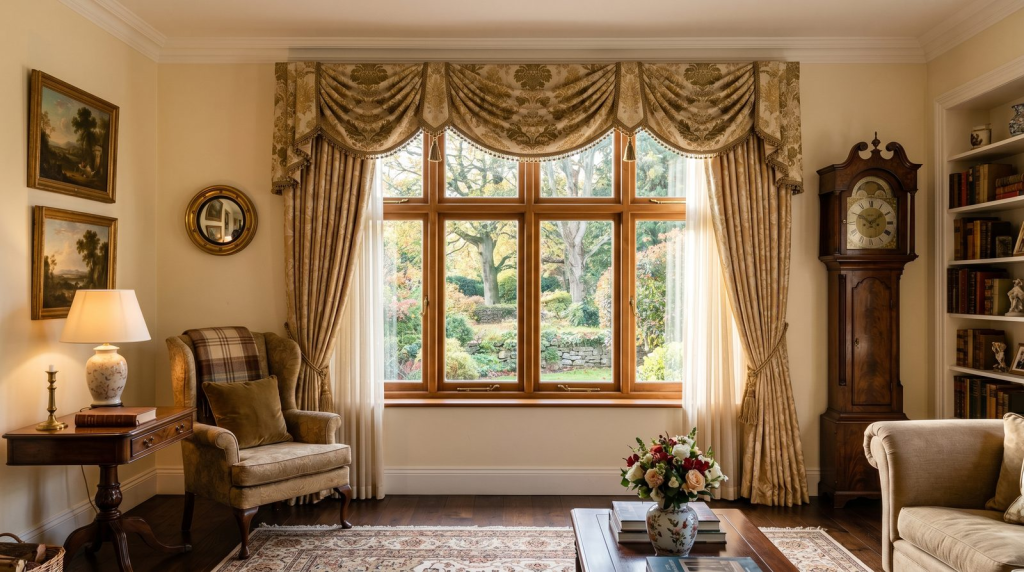
- Scarf / swag valance. A length of fabric draped over the rod or through brackets to create soft, cascading “swags” and “tails.” Romantic and traditional — beautiful in formal living and dining rooms.
- Balloon / cloud valance. Gathered fabric that puffs into soft scallops. Very traditional; use sparingly and in the right room (bedrooms, cottage style).
- Cornice (upholstered or wood). A hard, structured box covered in fabric or made of wood, mounted above the window. Tailored, architectural, and excellent for hiding hardware on wide windows.
Where valances work best
- Kitchens & bathrooms: a valance alone (no full curtains) keeps the look light and the fabric out of the way.
- Living & dining rooms: layer a swag or tailored valance over drapes for a finished, designed look.
- Bedrooms: soften blackout shades with a simple tailored valance.
- Wide or short windows: a cornice adds presence and proportion.
Modern vs. dated: how to keep it current
Valances earned a “dated” reputation from heavy, ruffly, mauve-colored versions of the ’90s. Keep yours current by:
- Choosing tailored, flat, or simple box-pleat styles over fussy balloon valances
- Sticking to solid colors or subtle patterns in current palettes
- Mounting high and wide so it looks architectural, not droopy
- Pairing with clean curtains, roman shades, or shutters rather than matching swags everywhere
For more on coordinating headers and panels, see our types of curtains guide.
How to size a valance
- Width: the valance should span the full window plus the same overhang as your curtains (a few inches past each side).
- Drop (height): a common rule is the valance covers about ⅕ to ⅙ of the total window height — long enough to hide hardware, short enough not to block light. Wide windows can take a slightly deeper valance.
Frequently asked questions
Are window valances out of style?
No — but heavy, ruffly balloon valances are. Tailored, flat, box-pleat, and cornice valances look current and are widely used by designers to hide hardware and finish a window.
What is the difference between a valance and a swag?
A valance is any short treatment across the top of a window. A swag (or scarf) is a specific valance style — a length of fabric draped to create soft cascades, giving a softer, more traditional look.
Can you use a valance without curtains?
Yes. A valance alone is popular in kitchens and bathrooms, and works well over blinds or shades to soften and finish the window.
How deep should a valance be?
Roughly one-fifth to one-sixth of the total window height — enough to hide the rod and brackets without blocking too much light. Mount it high and wide.
Finish your windows the right way
The right valance hides the hardware and pulls the whole window together.
👉 Browse our drapery and shades collections, or book a free consultation and we’ll help you choose a valance style that fits your room.