Short curtains are the right call more often than most people expect, and Bergen County houses are full of the windows that prove it. A sink under the glass, a radiator below the sill, a window seat, a dresser pushed against the wall: in all of those spots a panel that stops high looks deliberate, and one that runs to the floor looks like it did not fit. The catch is that “short” is not a single length. It is three, and the gap between them is only a few inches.
Short answer
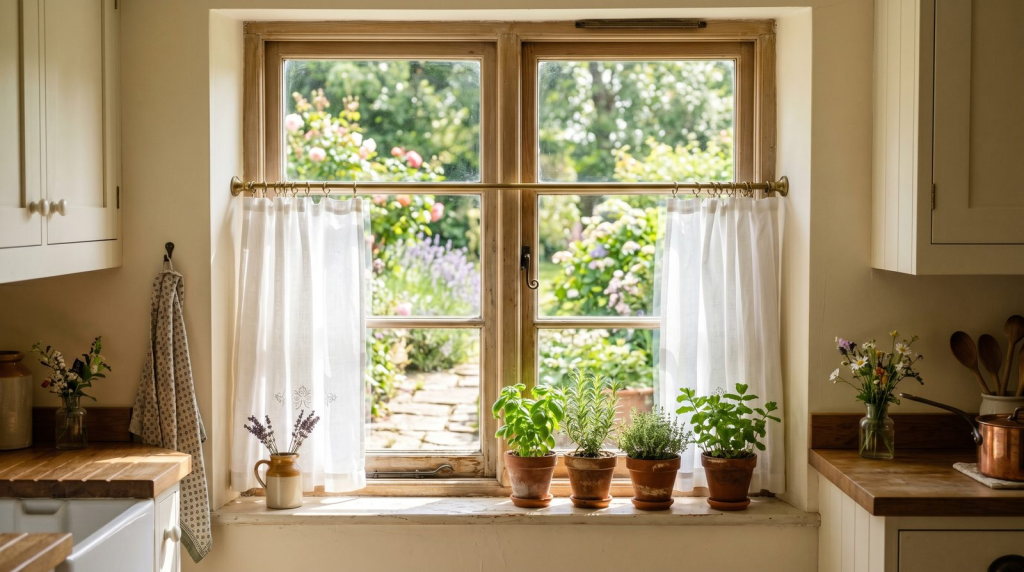
Short curtains come in three deliberate lengths. Cafe curtains, also called tier curtains, cover the bottom half of the window on a rod across the middle. Sill length ends a quarter to a half inch above the sill. Apron length stops about 4 inches below the sill, covering the apron trim. Those short panels you see over kitchen sinks are almost always cafe or tier curtains.
When short curtains make sense
Pick a short length when the window has something in front of it or under it:
- Furniture sits below the sill. A sofa back, a bed, a desk, or a countertop. Floor-length panels bunch behind furniture and get pulled out of line every time someone moves a chair.
- There is a radiator or a heat vent under the window. Plenty of older homes here still have one. Long fabric traps the heat against the wall instead of letting it into the room, and it is a fire risk you do not need.
- It is a kitchen or a bathroom. Long fabric near a sink or a tub collects grease, steam, and splashes.
- You want a casual room, not a formal one. Short panels read relaxed. Floor-length reads dressed up.
- The window is small or set high. A tiny bath window with full-length drapes under it looks like a costume.
If the window has none of those problems, go long. Our guide to whether curtains should touch the floor covers that side of the decision.
The three short lengths, in inches
| Length | Where the hem lands | Best for |
|---|---|---|
| Cafe (tier) | On a rod across the middle of the window, covering the bottom half | Kitchens and street-facing bathrooms |
| Sill | A quarter to a half inch above the sill | Kitchens, kids’ rooms, any sill you want to keep clear |
| Apron | About 4 inches below the sill, covering the apron trim | Bedrooms and living rooms with furniture under the window |
The rule that matters: end the panel either at the sill or 4 inches below it. Never partway down the apron. An inch or two of trim showing under the hem is the single detail that makes a finished window look like a measuring mistake.
Kitchen windows: keep the fabric out of the splash zone
Cafe curtains earn their keep in kitchens. A rod across the middle of the sash gives you privacy from the sidewalk at eye level while the top half of the window keeps feeding light onto the counter. Nothing hangs near the faucet, and the panels are small enough to wash often, which matters when they hang a few feet from a stove. We go deeper on the style in our cafe curtains guide.
Sill length is the other kitchen answer, and the better one when the window is set into a deep sill you use for herbs or a soap dish. Cotton, linen blends, and washable weaves belong here. Silk and velvet do not. If the window sits directly behind the sink, skip fabric at the glass and use a roller shade, then add a valance for softness. Our roundup of the best window treatments for kitchens compares the options, and the valance guide covers the top treatment.
Bathroom windows: privacy at eye level, moisture everywhere else
A bathroom asks the window covering to do two things at once: block the view from the neighbor’s driveway and survive constant humidity. Cafe curtains handle the first part well, since the half you need covered is the bottom half. They struggle with the second. Fabric that stays damp between showers eventually smells like it.
That is why a shade is usually the safer answer at a bathroom window. A roller shade wipes clean and rolls up flat. A cellular shade ordered with a top-down/bottom-up lift gives you the same split cafe curtains do, covering the bottom while the top stays open. Our guide to bathroom window treatments works through the privacy and moisture math.
How to measure and hang short curtains
- Mount the rod high and wide. Four to six inches above the window frame, and a few inches past the frame on each side. Short curtains still need breathing room, and the extra width lets the panels stack off the glass. The exception is cafe curtains, which mount on the sash at the midpoint by design.
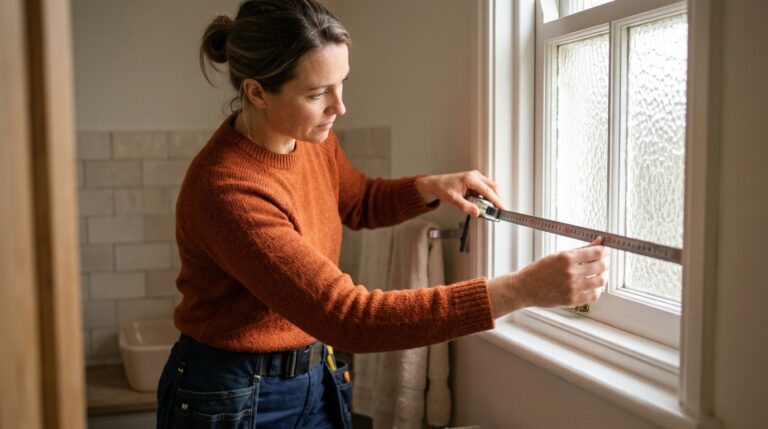
- Measure from the rod to the endpoint you chose, not from the frame. Measure each window separately, because openings in an older house are rarely identical, even on the same wall.
- Go wide enough. Total panel width should be about twice the window width. Two skimpy panels look stretched no matter how good the fabric is.
- Check what the rod is screwing into. Plaster, tile surround, and metal casement frames all need different anchors. Our rods and hardware guide and the walkthrough on hanging curtain rods cover it.
What we would put on the window
- Kitchen window right behind the faucetRoller shade at the glass, nothing hanging in the splash zone.
- Kitchen window a step back from the sinkCafe curtains on a center rod in a washable cotton or linen blend.
- Street-facing bathroomRoller or cellular shade, with a top-down/bottom-up lift so the top half stays bright.
- Bedroom with a dresser under the windowApron-length lined panels over a blackout shade.
- Living room with a radiator below the sillSill-length panels hemmed clear of the radiator, mounted high and wide.
Mistakes to avoid
- Hanging the rod on the frame. Short curtains already shorten the window visually. Mounting the rod at the top of the frame instead of above it makes the whole wall look squat.
- Skimpy panels. One flat panel per window, or two narrow ones, will never look full. Double the window width.
- An in-between hem. Commit to cafe, sill, or apron. There is no fourth length that looks intentional.
- Fabric that cannot be cleaned. In a kitchen or a bath, choose the panel you are willing to take down and wash. If that is nothing, you want a shade.
- Loose cords near a counter or tub. If a shade is going into a room a child uses, ask for a cordless lift. Our notes on child-safe window treatments explain the options.
When a shade beats a short curtain
Short curtains win on softness and on how easily you change them. Shades win wherever the window is doing a job: glare on a screen, heat through west-facing glass in July, privacy on a window three feet from the neighbor’s wall. A Roman shade is the compromise most people are actually after, since it gives you real fabric and a soft fold, and it can be mounted inside the frame so nothing hangs below the sill. Browse the full shade lineup or the wider window treatment range.
Short curtain questions, answered
What are short kitchen curtains called?
Cafe curtains, or tier curtains. Both names describe the same thing: a pair of panels on a rod mounted across the middle of the window, covering the bottom half only.
Are short curtains out of style?
No. They are the practical answer for kitchens, baths, and any window with furniture beneath it. What dates a room is an accidental length, not a short one.
What is the most popular short curtain length?
Apron length, about 4 inches below the sill, because it is the most forgiving. Cafe length is the popular pick specifically for kitchens and street-facing bathrooms.
Can you use short curtains in a living room?
Yes, when a sofa, a console, or a radiator sits under the window. Apron length keeps it looking intentional.
How wide should short curtains be?
Total panel width of about twice the window width, so the folds look full rather than stretched.
From our own installs in Bergen County


See the lengths in person in Palisades Park
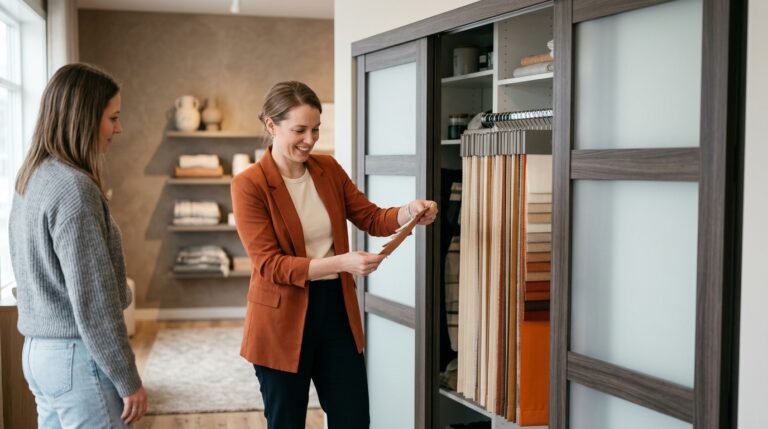
Fabric does not behave the same way at 24 inches as it does at 90. A linen that falls beautifully to the floor can look stiff and thin at sill length, and a small print that charms on a kitchen window can shout in a bedroom. That is a judgment you make with the material in your hands, next to your cabinet color and your trim.
The Curtain is a family-owned window treatment showroom at 547 Broad Ave in Palisades Park, and we have been fitting windows across Bergen County since 2007. Sejun Park, our owner and designer, will hold the short lengths up against what you already have. We are a Hunter Douglas partner for shades, blinds, and shutters, and we sew custom drapery when a fabric panel is the better answer for the room.
Measuring is the step people get wrong, so let us do it. Book a free in-home measurement and we will measure every window and leave a written quote. Call (201) 302-9111, see finished rooms in the gallery, or check the towns we cover on our service area page.