If you rent, hate patching holes, or just want curtains up in ten minutes, a tension rod is the fastest answer. It uses an internal spring to wedge itself between two surfaces, so there are no brackets, no screws and no drill. Tension rods also have real limits, and using one in the wrong spot leads to the 2 a.m. thunk of curtains hitting the floor. This guide covers how a tension rod works, how much it can hold, where it belongs, and the point at which a Bergen County homeowner is better off with a measured, bracket-mounted rod or an inside-mount shade.
What a tension rod is and how it works
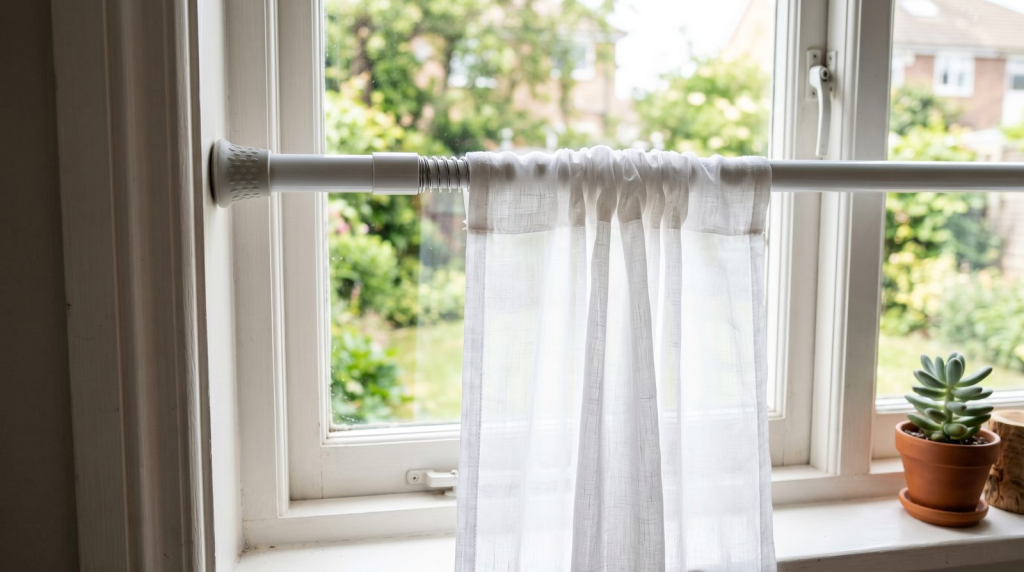
A tension rod (or spring rod) is a two-part telescoping rod with a spring inside. You extend it slightly wider than the gap, compress it, and let the spring press the rubber end caps against each wall or window-jamb surface. Friction holds it in place.
That friction is the whole game. It is why tension rods work well for lightweight curtains in an inside-mount opening, and why they struggle with heavy drapes on a wide span. The rod is only as strong as the grip of two small rubber caps.
Most rods are sold by range, and 28 to 48 inches is a common one. The spring pushes hardest near the short end of that range and weakest when the rod is nearly fully extended, so a rod bought “just big enough” is the one that ends up on the floor.
The pros and cons
Pros
- No drilling, no holes. Perfect for renters, dorms and anyone who does not want to patch drywall.
- Fast and removable. Install or move one in minutes.
- Inexpensive.
- Works well inside window frames, doorways, closet openings and other small spans.
Cons
- Limited weight capacity. Not for heavy or blackout drapes on wide windows.
- Can slip on glossy, painted or uneven surfaces.
- Best for inside-mount spans, not wall-to-wall picture windows or bays.
- Sits inside the frame, so the curtain always covers part of the glass even when open.
Weight limits: the #1 thing people get wrong
Tension rods are sized for sheers and lightweight curtains. Think a voile sheer, an unlined cotton café panel or a single polyester panel over a kitchen window. As a rule:
- Short, narrow spans (under about 28 inches) hold the most securely.
- The wider the span, the less weight the rod can hold before it sags in the middle or slips at the ends.
- Heavy blackout or velvet drapes usually need a bracket-mounted rod, not tension.
- Lined custom drapery is never a tension-rod job. A lined panel weighs several times what a sheer does, and pleated headings need rings or a traverse rod to move properly.
If you need to hang heavier curtains without drilling, see our full no-drill hanging guide for adhesive bracket options.
Best places to use a tension rod
- Inside a window frame for café curtains or sheers, especially the lower half of a kitchen or bathroom window.
- Doorways and closet openings as a fabric “door.” See our guides to door curtains and curtains for closet doors.
- Under-sink as a hidden storage screen.
- Shower and small bathroom windows. Our bathroom window treatment guide covers fabrics that hold up to steam.
- RVs, dorms and rentals where you cannot drill (see our RV curtains guide).
Where a tension rod is the wrong tool
Tension rods in Bergen County homes tend to fail for one of a few reasons. Check your window against this list before you buy.
Vinyl replacement windows
Plenty of older houses have had their original wood windows swapped for vinyl units. The inside face of a vinyl jamb is often shallow and glossy, and rubber end caps slide on it. Test the rod with the curtain on it and tug before you trust it. Museum putty behind each cap helps, but a bracket rod on the wall above the trim is the reliable fix.
Deep wood jambs that are out of square
Older colonials and Cape Cods with deep, flat wood jambs are the best candidates for a tension rod. The catch is that old houses settle. If the jamb is wider at the top than the bottom, the caps press at an angle and lose grip. Measure the inside width at the top, middle and bottom. If the numbers differ by more than a quarter inch, plan on a bracket rod.
Wide living-room windows and bays
A tension rod cannot turn a corner and it sags on a long span, so a bay or a wide picture window is out. Those openings need a bracket-mounted rod that extends 6 to 12 inches past the frame on each side, so the panels stack off the glass when open. See our pages on bay windows and large windows.
Sliding glass doors
The span is too wide and the curtain has to clear the door track. A wall- or ceiling-mounted rod, or vertical blinds, is the answer. Our sliding door page covers both.
Bedrooms that need real darkness
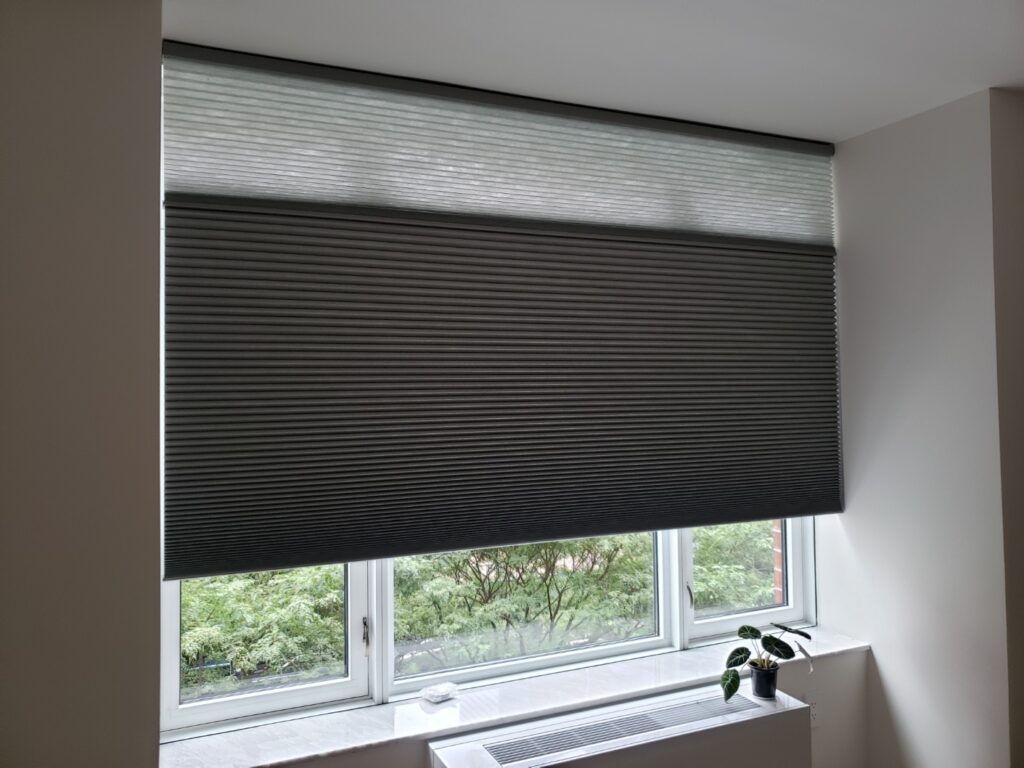
A tension rod sits inside the frame, so light leaks around the edges of the panel no matter how thick the fabric is. If the goal is a dark bedroom, a blackout honeycomb shade fitted tight to the frame leaves far less edge light than a panel on a tension rod ever can. See our blackout shades page, or our blackout curtains guide for when heavy lined panels on a proper rod are the better call.
You want the clean no-hardware look on a wider window
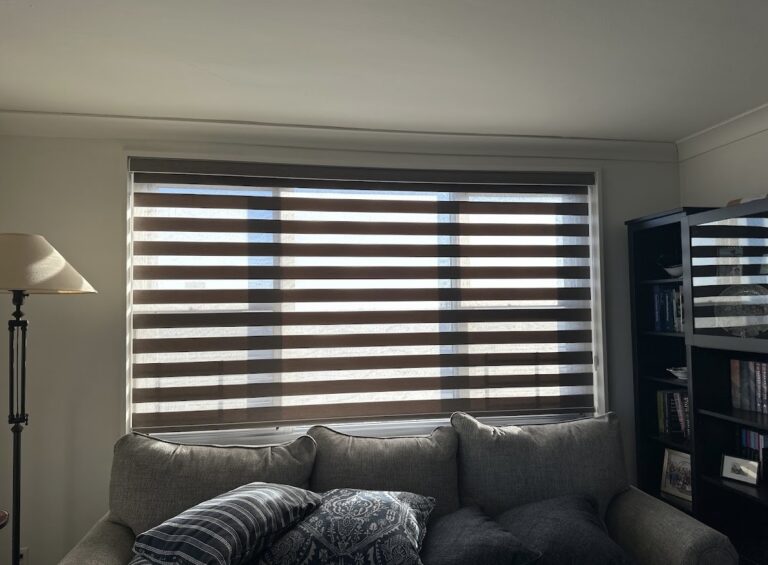
Part of the appeal of a tension rod is that nothing shows. If you like that look but the window is too wide or the fabric too heavy, a cassette roller shade or zebra shade gives you the same clean line, with the fabric rolled into a slim housing and no exposed rod.
How to install one (and keep it from slipping)
- Measure the inside span at the top, middle and bottom, and use the smallest number. Buy a rod whose range comfortably covers it, not one that is at the very end of its range.
- Extend the rod slightly wider than the opening, then compress it and position it level. A short torpedo level on the rod is enough.
- Release so the end caps press firmly into the surfaces. Give it a downward tug with the curtain on before you walk away.
- To stop slipping: make sure surfaces are clean and dry; add a small rubber cabinet bumper or a dab of museum putty behind each end cap on glossy surfaces; do not overload it.
- Re-check it after a week. Springs relax a little as the caps settle in. Retighten by extending the rod another quarter turn.
If you get partway through this and realize the window wants a bracket rod after all, our guide to hanging curtain rods picks up from there.
Frequently asked questions
How much weight can a curtain tension rod hold?
It depends on width. Tension rods are made for sheers and lightweight curtains. Narrow spans hold more securely; the wider the span, the less weight before it slips. Use a bracket rod for heavy blackout or velvet drapes.
How do you keep a tension rod from falling down?
Buy a rod rated for a wider range than your opening, install it on clean, dry surfaces, keep the curtains light, and add rubber bumpers or museum putty behind the end caps on glossy surfaces. Re-tension it after the first week.
Can you hang blackout curtains on a tension rod?
Lightweight blackout panels on a narrow window, yes. Heavy, wide blackout drapes are usually too heavy and need a bracket-mounted rod.
Do tension rods damage walls or window frames?
They are designed not to, since there are no holes. On very glossy or delicate finishes, the pressure can leave a faint mark over time, so check periodically.
Can you put custom drapery on a tension rod?
No. Lined drapery is far too heavy, and a pleated heading needs rings or a traverse rod to open and close cleanly. Custom drapery is usually measured for an outside mount so the panels clear the glass.
From our own installs in Bergen County


How we do it at the showroom
The Curtain is a family-owned window-treatment showroom at 547 Broad Ave in Palisades Park, New Jersey. We have been in business since 2007 and serve homes across Bergen County. Sejun Park is the owner and designer. We are a Hunter Douglas partner for shades, blinds and shutters, and we make custom drapery.
When a tension rod is the wrong tool, this is what happens instead. You book a free in-home measurement or call (201) 302-9111. We come to the house, measure the window at the top, middle and bottom, and check the jamb depth and whether it is square. Then we talk through what you want from the window: privacy, darkness, a clean line, a softer look. Sometimes the answer is a simple bracket rod. Sometimes it is an inside-mount honeycomb shade, or lined drapery on a traverse rod. You get a written quote either way.
If you are in Bergen County, our service area page lists the towns we cover.
Hang curtains the easy way
Tension rods make light curtains effortless. Use one inside a square, clean wood jamb with a sheer or café panel and it will stay put. When the window is wide, the fabric is heavy, or the room needs to be dark, stop fighting a spring and measure for something built for the job.
Browse our window treatments, or book a free in-home measurement for help choosing the right rod and curtain weight for every window.