

You love the warm, classic look of wood blinds. But real wood warps in humid bathrooms, cracks in direct sunlight, and costs far more than most budgets allow. Faux wood blinds solve this exact problem. They deliver the same rich appearance at a fraction of the price, and they stand up to moisture, heat, and daily wear far better than natural wood. This 2026 buying guide covers what you need to know—materials, sizing, room-by-room picks, and where to find the best value—so you can choose the right blinds with confidence and skip the costly mistakes.
What Are Faux Wood Blinds?
Materials Used in Construction
Most composite blinds start as a blend of PVC and natural wood particles. This mix gets molded into slats, headrails, and bottom rails. The result is a composite material that’s denser than plain vinyl but lighter than solid wood.
Manufacturers add polymer coatings to strengthen each slat. Some brands skip wood particles entirely and use a foam-core PVC instead. Both versions rely on molds that stamp in grain lines and texture during production. That’s why every slat looks nearly identical, unlike natural boards.
How They Compare to Real Wood Visually
From a few feet away, most people can’t tell composite slats from painted wood. Manufacturers use detailed molds and layered paint finishes to copy the grain patterns, knots, and color shifts found in oak, maple, or cherry.
Real wood shows unique streaks and tone changes in every board. Composite slats repeat a pattern across a production run, so they look more consistent. Still weighing overall style? Our blinds vs curtains choosing the right window treatment guide breaks down how different treatments affect a room’s look.
Common Myths About Composite Blinds
One myth says these blinds look plastic and cheap. Modern texturing and matte paint finishes have mostly solved that. Another myth claims they can’t handle heat or sunlight. In reality, PVC construction resists warping better than solid wood.
Some buyers assume all composite blinds are the same. They’re not—quality varies a lot between brands and price points. For deeper comparisons and buying tips, many local businesses point customers toward their blog for updated product reviews.
Why Homeowners Choose This Window Treatment
Built for Humidity and Temperature Swings
Bathrooms, kitchens, and laundry rooms create tough conditions for window coverings. Steam, splashes, and heat warp real wood over time. Faux wood construction resists this because it’s made from PVC composites or foam-core polymers, not organic material. These slats won’t crack, fade, or bow, even near a shower or stove.
Homeowners in coastal climates or humid regions often see the biggest payoff. Salt air and moisture destroy untreated wood within a few seasons. Faux versions hold their shape and color for years. That makes them a practical pick for guest bathrooms and sunrooms alike.
Temperature swings matter too. Near a window that gets direct afternoon sun, real wood can shrink or split. Faux wood tolerates heat exposure without losing its finish. That’s why it stays a top choice for rooms with heavy sunlight or inconsistent indoor climate control.
Budget-Friendly Alternative to Hardwood
Real wood blinds often cost 30 to 50 percent more than comparable faux wood options. For a standard 36-by-60-inch window, that gap can mean saving over $100 per window. Multiply that across a whole house, and the savings add up fast.
Faux wood delivers a similar look at a lower price. Grain patterns and painted finishes mimic oak, cherry, or white-washed wood convincingly from a normal viewing distance. Many homeowners can’t tell the difference once the blinds are installed.
This affordability also opens the door to bigger projects. Families furnishing an entire home, or landlords updating multiple rental units, can outfit every window without paying for solid hardwood throughout.
Style Flexibility for Any Décor
Faux wood blinds fit traditional, farmhouse, and modern interiors equally well. Slat widths ranging from 2 to 2.5 inches let homeowners adjust the look, from classic plantation shutters to sleek contemporary lines.
Color options span whites, grays, and rich wood tones, so blinds can match trim, flooring, or cabinetry. That adaptability makes them useful in kitchens, offices, and living rooms without clashing with existing design choices. Planning a broader room refresh? Understanding the design process of custom window treatments helps you coordinate blinds with drapery and furniture.
Pairing blinds with fabric panels is common for layered window designs. Anyone doing this should also learn how to wash curtains properly, since fabric treatments need different care than PVC slats.
Faux Wood vs. Real Wood vs. Vinyl Blinds
Cost and Lifespan Breakdown
Price and durability vary widely across these three materials. Faux wood sits in the middle, offering real wood’s look without the moisture problems. The table below breaks down typical ranges per window, based on standard sizes.
| Material | Avg. Cost (per window) | Lifespan | Moisture Resistance |
|---|---|---|---|
| Faux Wood | $60–$150 | 10–15 years | Excellent |
| Real Wood | $120–$300 | 15–20 years | Poor |
| Vinyl | $25–$70 | 5–8 years | Good |
Weight and Slat Size Differences
Real wood is the lightest option, which matters for oversized windows and heavy headrails. Faux wood is denser—often 30-40% heavier per slat—so very wide blinds may need support brackets. Vinyl is cheapest but flimsiest, and it’s prone to warping under direct sun. Slat sizes typically run 2-inch or 2.5-inch across all three materials.
Best Use Cases for Each Type
Choose faux wood for kitchens, bathrooms, and basements where humidity is a concern. Real wood suits living rooms and offices, where warmth and authenticity matter more than moisture exposure. Vinyl works well in rentals or budget projects. For a deeper look at material tradeoffs across window treatments, see the best fabrics for curtains material pros and cons. Many homeowners comparing options end up exploring Custom Faux Wood Window Blinds for their balance of cost and performance.
Key Factors to Consider Before Buying
Assessing Your Room’s Climate
Humidity matters more than most buyers realize. Faux wood handles moisture better than real wood, but conditions still vary room to room. Bathrooms with poor ventilation, steamy kitchens, and laundry rooms all create daily humidity swings. In these spaces, faux wood’s moisture resistance becomes a real advantage—not just a marketing line.
Check your room’s airflow before ordering. A bathroom with an exhaust fan handles humidity far better than one without. Sunrooms and basements bring their own challenges, from temperature swings to dampness. Reading 5 things to know before buying window coverings can help you spot climate issues before they affect your final choice.
Window Size and Slat Weight Limits
Large windows need extra support. Most faux wood slats come in 2-inch or 2.5-inch widths, and manufacturers set weight limits per window, often around 15 to 25 pounds depending on width and headrail strength. Windows wider than 72 inches may need a split blind or reinforced headrail to keep them from sagging over time.
Measure carefully before ordering. Oversized windows paired with standard hardware can cause slats to bow or tilt unevenly. Checking specifications through a resource like Faux Wood Blinds | Blinds | JustBlinds shows how weight limits shift across sizes and styles.
Matching Light Control to Lifestyle
Think about how each room gets used daily. Bedrooms often need near-total blackout for good sleep. Living rooms usually benefit from adjustable slats that filter light without blocking views completely. Light control needs should guide slat spacing and tilt mechanism choice.
Privacy matters just as much, especially for street-facing windows or ground-floor rooms. Budget plays a role too. Basic faux wood blinds start around $30 per window, while premium cordless or motorized versions can reach $150 or more depending on size and features.
Choosing Slat Size, Color, and Finish
Slat Width and How It Affects Views
Slat width shapes both looks and function. The two standard sizes are 2 inch and 2.5 inch slats. Smaller windows and cottage-style rooms often look best with 2 inch slats, since they create a tighter, more detailed pattern.
Larger windows benefit from 2.5 inch slats. Wider slats mean fewer routing holes, which gives you a cleaner view when the blinds are open. They also need fewer slats to tilt, so light control feels smoother and less choppy.
If your window sits near six feet wide or taller, wider slats cut down on visual clutter. Narrower rooms or stacked windows often look sharper with the tighter 2 inch profile instead.
Painted vs Wood-Grain Textures
Faux wood slats come in two main finishes: smooth painted surfaces and embossed wood-grain textures. Painted finishes give a crisp, modern look, similar to freshly painted trim. They work well in contemporary spaces with clean lines.
Wood-grain textures mimic real timber, complete with subtle ridges and color variation. These finishes suit traditional or farmhouse interiors, where a natural wood look matters. For product-specific options, browsing a Custom Faux Wood Blinds – Products catalog helps you compare finish samples side by side before ordering.
Trending Colors and Finishes
For 2026, warm neutrals lead the pack. Think driftwood gray, honey oak, and soft greige tones. These shades pair easily with most wall colors and furniture styles.
Deeper tones, like espresso and charcoal, remain popular for bold, modern rooms. White and cream stay timeless choices for bright, airy spaces. Before deciding, review guidance on how to match curtains with your homes color scheme to keep your whole window treatment cohesive.
Matte finishes are outpacing glossy ones this year. They offer a softer, understated look that suits nearly any decor style.
Pros and Cons of Faux Wood Blinds
Top Benefits Worth Knowing
These blinds earn their popularity through a few clear strengths. Durability tops the list, since the composite material resists warping, cracking, and fading far better than real wood. Cost is another draw, and moisture resistance makes them a smart pick for tricky rooms. Homeowners comparing options often browse Faux Wood Blinds to check price ranges before settling on a room-by-room plan.
- They hold up under years of daily use without splitting or discoloring, even in high-traffic rooms.
- They cost noticeably less than real wood, often 30-50% cheaper for the same slat size.
- They resist warping in bathrooms, kitchens, and laundry rooms where humidity is constant.
- They wipe clean easily, since the synthetic surface doesn’t absorb spills or steam like natural wood.
- They keep their color over time, avoiding the sun-bleaching that affects painted or stained wood slats.
Limitations to Keep in Mind
No product is perfect, and this one has real tradeoffs. Weight is the biggest concern. Faux wood slats are heavier than wood or vinyl, which strains headrails and cords on oversized windows. Extra-wide windows may need a split blind or a different treatment altogether. If privacy is a priority, it helps to research can people see through my blinds before locking in slat size and tilt settings for bedrooms or street-facing rooms.
- They add significant weight, making single-panel blinds hard to lift smoothly on very wide spans.
- They struggle to cover extra-large windows, often requiring costly multi-panel configurations.
- They may sag slightly over time on oversized openings without added support brackets.
Upgrades and Options Worth Exploring
Cordless and Motorized Lift Systems
Standard corded blinds work fine, but many homeowners now choose upgraded lift systems for safety and convenience. A cordless lift uses a spring mechanism, so you raise or lower slats by hand, with no dangling cords at all. Motorized options go further, letting you control blinds with a remote, wall switch, or smartphone app. Before deciding, it helps to research whether are motorized shades worth it for your specific rooms and budget.
Consider these factors when comparing lift systems:
- Cordless lifts remove strangulation hazards, making them a safer default choice for homes with kids or pets.
- Motorized blinds allow scheduling, so windows open and close automatically at set times each day.
- Battery-powered motors avoid rewiring but need periodic recharging or battery swaps.
- Hardwired systems offer constant power but require professional electrical work during installation.
- Smart home integration lets you pair blinds with voice assistants like Alexa or Google Home.
Routeless Design for Child Safety
Traditional slats have small routing holes that let light seep through in thin lines. A routeless design eliminates these holes, creating a cleaner, more finished appearance. This style also removes tiny gaps where dust and pests could gather, which makes long-term upkeep a lot simpler.
Decorative Tapes and Matching Valances
Decorative tapes are fabric strips that cover the front cord holes, adding color and texture to plain slats. Matching valances hide the headrail for a polished, custom look. Shoppers comparing styles side by side often browse Online Faux Wood Blinds to see tape colors and valance profiles before ordering samples for their own windows.
How to Measure Your Windows Accurately
Accurate measuring is the difference between a perfect fit and a costly reorder. You’ll need a steel tape measure, a pencil, and a notepad. Skip the cloth tape measure—it stretches and gives false readings. The steps below outline both mounting methods side by side.
| Step | Inside Mount | Outside Mount |
|---|---|---|
| 1 | Measure width at top, middle, bottom | Decide overlap (2-3 inches per side) |
| 2 | Use narrowest width, no deductions | Measure width including overlap |
| 3 | Measure height at left, center, right | Add 3-4 inches above frame for height |
| 4 | Use longest height measurement | Confirm mounting surface depth |
| 5 | Check depth for tilt mechanism clearance | Mark bracket positions before ordering |
Inside Mount Measuring Steps
Inside mount blinds sit within the window frame. This gives a clean, built-in look. Measure the width at three points, since frames rarely stay perfectly square. Always record the smallest number to avoid a blind that won’t fit.
Outside Mount Measuring Steps
Outside mount blinds hang on the wall or trim above the window. This method works well when a frame is too shallow. It also hides uneven openings. These same width and height principles apply broadly; our guide on how to measure for curtains covers similar overlap logic.
Mistakes That Lead to Reorders
Rounding measurements up, guessing depth, or skipping the middle-width check causes most reorder requests. Always double-check numbers before ordering Faux Wood Blinds to prevent delays.
Installing Faux Wood Blinds Step by Step
Preparing Tools and Hardware
Good prep saves time later. Gather a pencil, tape measure, level, drill, screwdriver, and the mounting screws included with your blinds. Planning a full window makeover? This is also a good time to review choosing and installing custom draperies for layered looks. Confirm your brackets match either inside or outside mount specs before drilling anything.
Mounting Brackets Correctly
Bracket placement determines whether your blinds hang straight. The mounting bracket spacing depends on headrail length, so check manufacturer guidelines first.
| Headrail Length | Brackets Needed | Bracket Spacing | Screw Type |
|---|---|---|---|
| Up to 36 in. | 2 | 1 in. from each end | #8 x 3/4 in. |
| 37–60 in. | 3 | Center bracket added | #8 x 1 in. |
| 61–96 in. | 4 | Even 20 in. intervals | #10 x 1 in. |
| 97 in. and up | 5 | Even 18 in. intervals | #10 x 1.25 in. |
Final Adjustments and Testing
Snap the headrail into the brackets until each latch clicks. Test the lift cord and tilt wand several times. Blinds should raise smoothly and tilt without dragging. For product-specific instructions, browse Custom Faux Wood Blinds Blinds before final adjustments. Recheck bracket screws if slats sit unevenly.
Caring for and Maintaining Your Blinds
Routine Dusting and Deep Cleaning
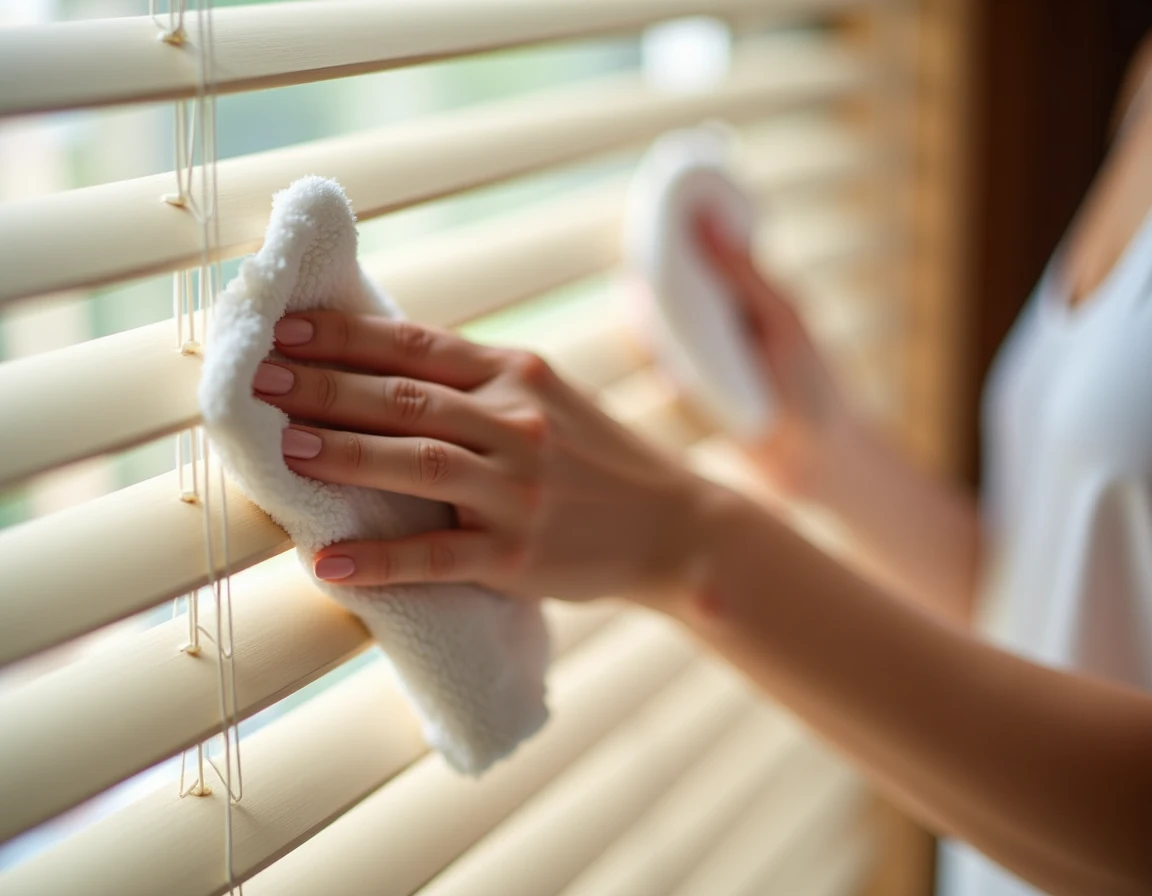
A weekly wipe keeps dust from building up on each slat. Use a microfiber cloth or a soft brush attachment on your vacuum. Close the slats fully, then work top to bottom for even coverage.
For deep cleaning, mix mild soap with warm water. Wipe each slat, then dry with a clean cloth to avoid streaks. Do this every two to three months, or more often in kitchens where grease collects. Avoid harsh chemicals or abrasive pads—they strip the finish and dull the surface over time.
Protecting Slats From Heat Damage
Faux wood handles heat better than real wood, but extreme sun exposure still causes stress. Rooms with south-facing windows can reach high temperatures during summer afternoons. Tilting slats to a 45-degree angle during peak sun hours reduces direct heat contact and helps prevent warping.
Pairing blinds with heat-blocking curtains adds another layer of protection. Curious how much difference fabric layers actually make? This guide on do curtains keep heat out breaks down the numbers. Keeping indoor temperatures more stable protects both your blinds and your cooling costs.
When to Repair vs Replace
Small issues rarely require full replacement. Cracked slats, frayed cords, or a broken tilt mechanism can often be fixed with replacement parts ordered directly from the manufacturer. Many local businesses keep common parts in stock for popular product lines.
Replace the entire set when warping spreads across multiple slats or the headrail mechanism fails repeatedly. At that point, repair costs often approach the price of new blinds, making replacement the smarter long-term choice.
Where to Use Faux Wood Blinds in Your Home
Ideal Rooms for Moisture Resistance
Kitchens, bathrooms, and basements are the best fit. These rooms deal with steam, splashes, and humidity every day. Faux wood resists warping, unlike real wood, so it holds its shape near sinks and tubs. A slat that stays flat means blinds keep working smoothly for years.
Basements bring their own challenge: damp air and temperature swings. Faux wood shrugs off moisture that would swell or crack a wood slat. Laundry rooms fall into this same category, since dryers push out warm, humid air constantly.
Bathrooms with limited ventilation deserve extra attention. Choose blinds with a moisture-resistant coating for tubs or showers with no exhaust fan. This keeps the slats performing well, even in rooms that stay damp for hours after a shower.
Large Windows and Patio Doors Considerations
Faux wood works well on standard windows, but large openings need caution. The material is heavier than real wood or vinyl. On patio doors or picture windows wider than 60 inches, slats can sag or strain the lift mechanism over time.
For these spots, many local businesses recommend vertical faux wood blinds or a hybrid shade instead. Sliding doors benefit from a track system built for weight and daily use, since patio doors open constantly.
Layering With Curtains for Added Style
Pairing blinds with fabric adds warmth and softens hard lines. Sheer panels or lined drapes create depth, especially in living rooms and bedrooms. Not sure which fabric style fits best? This guide on curtains vs drapes breaks down the difference clearly.
Layering also improves insulation and light control. Blinds handle daytime privacy, while curtains block light fully at night. This combination suits bedrooms and formal spaces where style matters as much as function.
Frequently Asked Questions
Durability and Lifespan Questions
Homeowners ask the same practical questions before buying. Here are honest answers based on common product performance.
- Do they fade in sunlight: quality faux wood is treated with UV-resistant coatings, so slats resist yellowing even in south-facing windows that get direct sun for hours each day.
- How long do they last: most well-made sets last 10 to 15 years with normal use, far outperforming basic vinyl blinds in high-traffic rooms.
- Can they be repaired: broken slats can often be swapped individually, and cords or tilt mechanisms are usually replaceable without buying a whole new set.
- Do they warp near heat sources: unlike real wood, faux wood resists warping from steam and humidity, making it a steadier long-term choice in kitchens and bathrooms.
- Should you compare alternatives before committing long-term: if you’re weighing softer, sheer options for sunny rooms, it helps to first read what are solar shades before deciding.
Safety and Child-Proofing Concerns
Safety is a top concern for families with young kids or pets. Are they child-safe? Most modern faux wood blinds now come with cordless lift systems or motorized controls, removing dangling cords that pose strangulation risks. Many local businesses only stock cordless or wand-operated versions for this reason. If you’re buying older stock with looped cords, ask about add-on cord cleats or tension devices, which anchor cords safely out of reach and meet current child-safety guidelines.
If you’re ready to see how faux wood blinds could transform your own windows, stop by The Curtain and talk with people who genuinely know their craft—this family-owned business has been helping neighbors find the right window treatments since 2007. As an authorized Hunter Douglas dealer, they’ll walk you through real samples and offer honest guidance based on your home’s light, style, and budget. Book a design consultation today and let their installation team handle the rest.