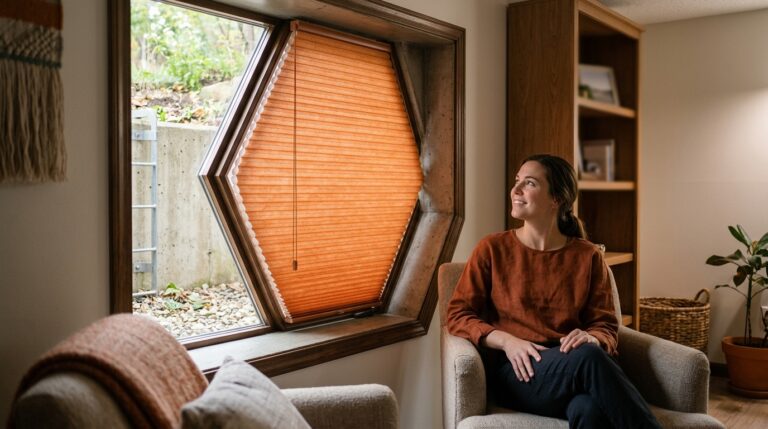
Do curtains keep heat out? The dense, lined ones do. The thin decorative ones mostly do not. What separates them is fabric weight, lining, and how much of the glass the panel actually covers. Two questions usually follow that one: do sheer curtains block heat, and do curtains help insulate in winter as well as summer. Here are the honest answers, plus what we would put on the window in a Bergen County home.
Short answer
Yes, in proportion to how dense the fabric is and how completely it covers the opening. A lined panel hung wide and long over the glass slows the heat coming in. A single unlined sheer softens glare and does little else. For a room that bakes every afternoon, a cellular shade against the glass with a lined drape over it beats either one on its own.
Do Curtains Keep Heat Out, or Just Block Light?
Sunlight arrives through the glass as radiation, so by the time it reaches your curtain the energy is already inside the room. That makes fabric a second line of defense rather than a wall. The effect is still real. A dense weave stops the light before it lands on your floor and furniture and turns into heat. A pale face fabric or a reflective backing sends a share of it back toward the window. Layers of cloth with air trapped between them slow the warm air rolling off hot glass into the room.
The fabrics that do the most work are the heavy ones: velvet, heavy cotton, wool. Thermal panels use the same idea on purpose, with an insulating core sewn between the face fabric and the lining. Dark colors look the part but absorb more sun than they reflect, which is why a light face with a reflective back usually wins on a window that gets direct afternoon sun. Our thermal curtains guide covers construction in more detail.
Do Sheer Curtains Block Heat?
Barely, on their own. An open weave lets sun straight through to the floor, so a plain sheer panel is a glare and privacy tool rather than a heat tool. What it does well is soften a harsh window during the day and screen the room from the street without closing it off. If daytime privacy is the real concern, read can people see through my blinds.
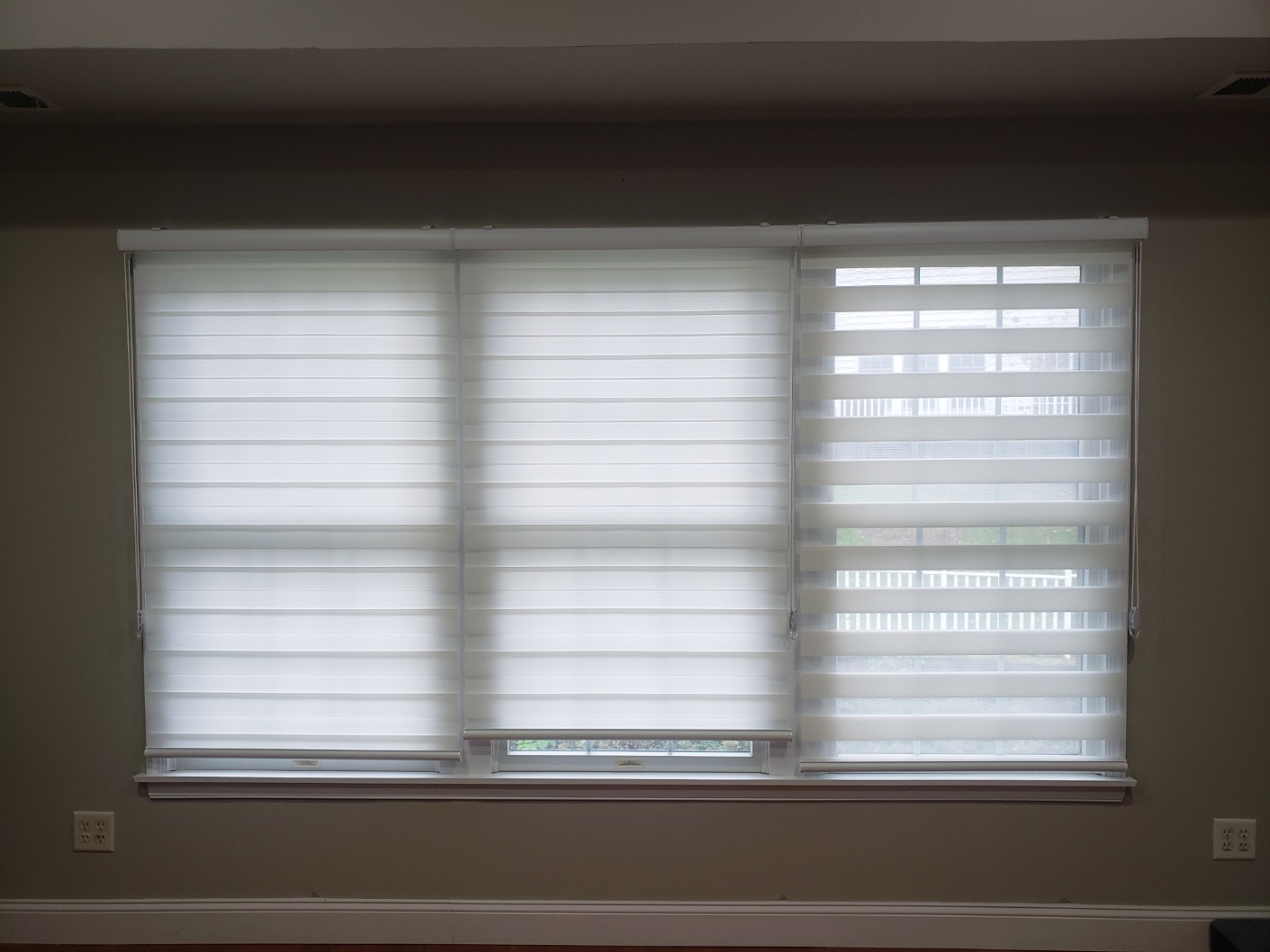
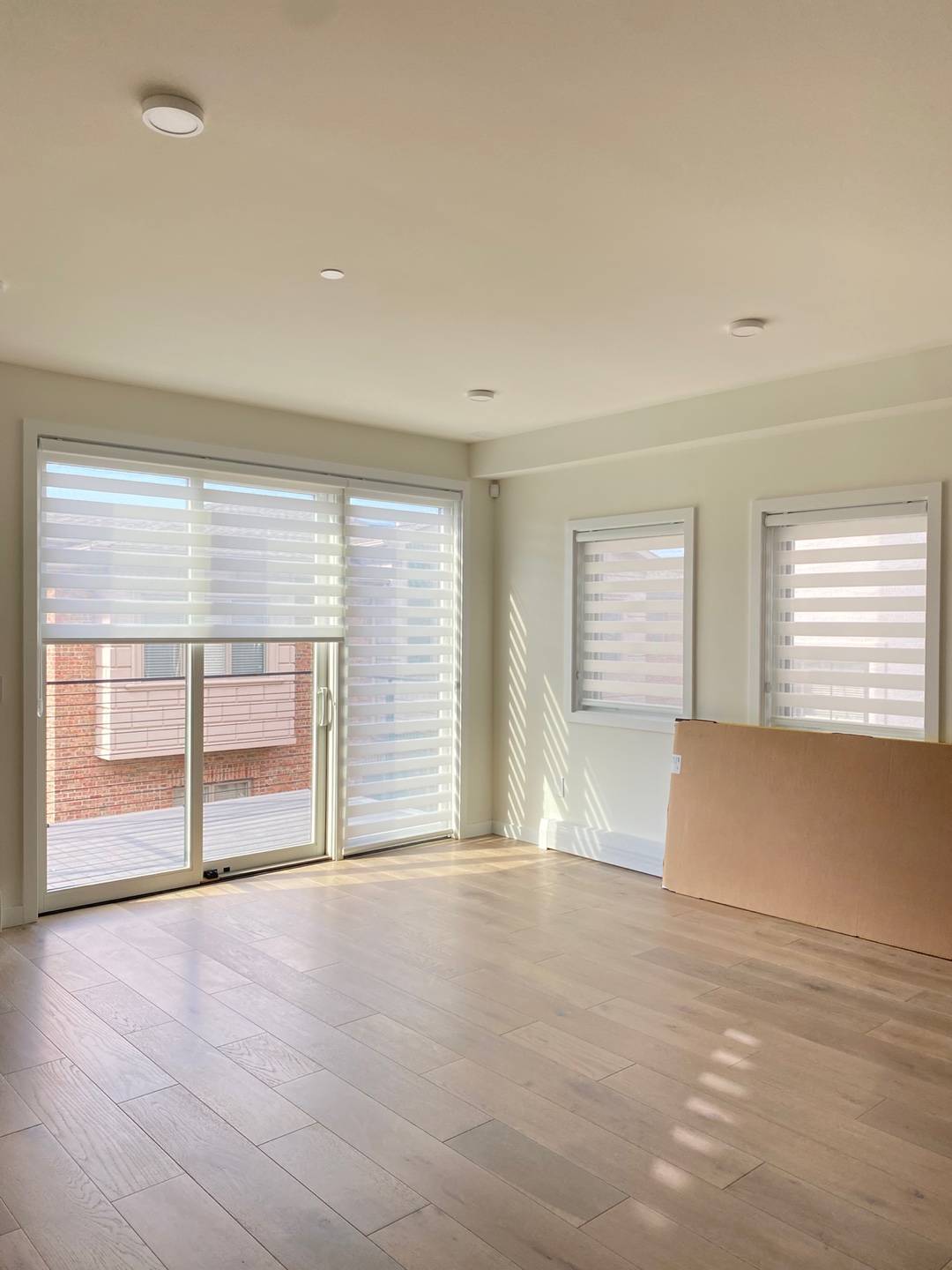
Two products give you the sheer look and take heat seriously. Sheer shadings suspend fabric vanes between two sheer facings, so you can tilt the vanes closed against the 4 p.m. sun and open them again at dusk without giving up the window. Solar shades use a tight technical weave rated by openness, usually 1, 3, 5, or 10 percent. The lower the number, the tighter the weave, the more sun and glare it stops, and the less you see through it. Three percent is the common compromise in a living room, and 5 or 10 percent suits a north window where the view matters more than the glare. See how solar shades work or browse solar shades.
Do Curtains Help Insulate in Winter, Too?
Yes, and the construction that keeps summer sun out is the same construction that holds warmth in. A lined panel is two layers of cloth with air between them. Add interlining, a soft flannel-like layer sewn between face and lining, and you get a third layer plus enough weight to make the panel hang flat instead of billowing. Single-glazed windows and large picture windows lose the most, so those are the ones to treat first.
Length and width matter more here than most people expect. A panel that stops at the sill leaves cold air free to spill down into the room, so floor length is the insulating choice. Two related reads: should curtains touch the floor and floor to ceiling curtains.
Cellular Shades, Solar Shades, or Lined Drapery
Most rooms come down to one of four answers. Here is how they compare.
| Treatment | What it does with summer sun | Where it usually goes |
|---|---|---|
| Cellular (honeycomb) shades | Honeycomb pockets hold still air between the room and the glass. Double cell holds more air than single cell. | Bedrooms, offices, any hot window that needs a small stack |
| Solar shades | A tight weave cuts a set share of sun and glare while you keep the view out | Living rooms, sliding doors, rooms with screen glare |
| Sheer shadings | Tilting vanes diffuse direct sun, then close for more coverage | Front rooms you do not want to darken |
| Lined or interlined drapery | Heavy layered cloth stops light before it becomes heat and slows air moving off the glass | Bedrooms, dining rooms, and as the outer layer over a shade |
If the room is hot morning through evening, cellular is the quiet winner because the insulating layer is built into the shade instead of hanging in front of it, and room-darkening cell fabrics are opaque, so they handle the light at the same time. Start with cellular shades and the honeycomb blinds buying guide. For hard cases we also keep a rundown of the best blinds to keep heat out and a broader look at energy efficient window coverings.
Layering Beats Any Single Panel
The rooms that stay comfortable in August almost always have two treatments on the window: a shade against the glass and drapery outside it. The shade does the technical work and sits close to the heat source. The drapery adds mass, closes the sides, and makes the window look finished. That pairing is the usual answer for large windows and sliding glass doors, where the glass area is simply too big for one thin panel. How to layer curtains walks through the hardware side.
Two rooms deserve their own note. A skylight takes sun from directly overhead all afternoon and needs a shade made for the opening, usually motorized because nobody reaches it otherwise. And a bedroom that faces east wants opacity as much as insulation, which is where blackout shades or blackout curtains come in.
What we would put on the window
- West-facing living roomA 3 percent solar shade on the glass with lined drapery panels at the sides.
- Bedroom that is hot by mid-afternoonBlackout cellular inside the frame, floor length lined drapery over it.
- Sliding door to the deckOne shade sized to the full door opening so the traffic side still clears.
- Home office with screen glareSolar shade at 3 percent, or sheer shadings if the room is also the front room.
- Kitchen window over the sinkLight-filtering cellular, which stacks small and stays clear of the faucet.
Fit Decides How Much Heat You Actually Keep Out
The best fabric in the wrong size loses to a mediocre fabric that covers the opening. Hang the rod wider than the window so the closed panels overlap the frame instead of stopping at the trim, and use brackets that return the panel back to the wall at each side so the gap between cloth and wall closes. Panels that meet and overlap in the center beat panels that just touch. On shades, an inside mount looks cleaner but leaves a light gap at the sides, and an outside mount covers more of the opening, which is the one that matters for heat.
Two cheap tricks from the DIY side still hold up. Magnetic tape or hook-and-loop strips along the edges seal a thermal panel to the frame on the worst windows. Reflective film on the glass itself takes a share of the sun before it ever reaches the fabric. Neither one replaces a treatment that fits. If you are measuring on your own, our how to measure for blinds guide is the place to start, and if an existing shade no longer sits square in the opening, that is a repair, not a replacement.
From our own installs in Bergen County
See the Fabrics in Palisades Park
The Curtain has been a family-owned window treatment showroom since 2007, at 545 Broad Ave in Palisades Park, serving Bergen County. Owner and designer Sejun Park can show you the difference between an unlined sheer, a solar weave, and an interlined drapery panel by holding them against a window instead of describing them. We are a Hunter Douglas partner, so we sell and install their shades, blinds, and shutters, and we make custom drapery as well.
We measure in your home for free and put the quote in writing, so you know what the treatment costs before you decide anything. Call (201) 302-9111, book a free consultation, or check that you are in our service area first. You can also see finished rooms in the gallery, browse the full range of window treatments, or read more about the showroom.