
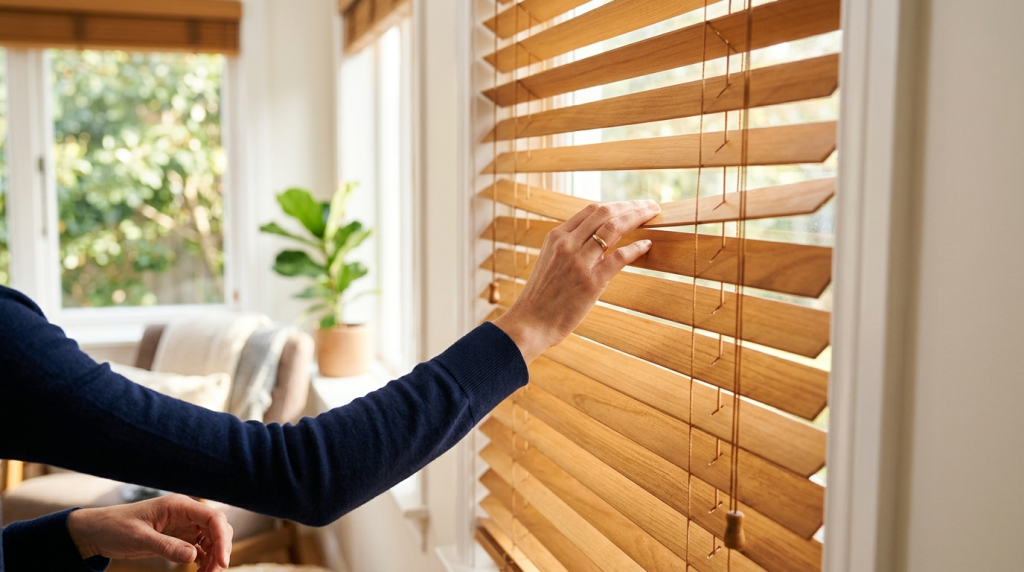
Choosing window treatments that balance warmth, durability, and light control is harder than it looks. Faux options flood the market, and pricing varies wildly from store to store. Wood blinds remain one of the most reliable investments for homeowners who want natural texture and lasting quality. But picking the right slat size, finish, and mounting style takes more than a quick glance at a showroom display. This guide covers everything you need to know in 2026, from material differences and cost to maintenance realities, so you can buy with confidence for every room in your home.
What Are Wood Blinds?
Basswood vs. Other Hardwoods
Basswood is the most common material used in these blinds. It’s light, strong, and resists warping better than many hardwoods. Basswood also takes stain and paint evenly, giving manufacturers more color options. That’s why it’s a top pick for custom window treatments.
Other hardwoods, like oak or bamboo composites, show up in premium lines. Oak brings heavier grain patterns and a rustic look. Bamboo blends offer a more casual, textured style. Each wood type shifts the weight, cost, and finish quality of the final product.
Basswood stays popular because it balances strength and affordability. It holds up under daily use in most rooms. Homeowners who want a natural wood look without extra weight usually reach for basswood first.
Slat Sizes and Profiles
Slat width matters a lot in wood blinds. Common sizes run 1-inch, 2-inch, and 2.5-inch. Wider slats give a bolder, more modern look. Narrower slats suit smaller windows and traditional interiors.
Profile shape changes light control too. Flat slats create a clean, simple line. Curved slats stack more tightly when raised, making a tidy headrail. Some brands offer routeless designs, hiding the cord holes for a smoother slat surface and better light blockage.
The right slat size depends on window height and the style you want. Larger windows often look better with wider slats. Smaller windows may need narrower ones to stay in proportion.
Where Wood Blinds Work Best
These blinds work well in living rooms, home offices, and bedrooms. They add warmth and texture to spaces with wood furniture or flooring. Many homeowners also use them in dining rooms for a classic, upscale look.
They’re less ideal for bathrooms or kitchens near sinks, since moisture can warp real wood over time. For those spaces, many local businesses recommend faux wood instead.
For smart home upgrades, some homeowners compare manual wood blinds to motorized options. Reading about automated blinds vs automated shades which smart window t… can help clarify which system fits a home best. A helpful blog can offer more detailed comparisons and design tips.
Wood Blinds vs. Faux Wood and Other Window Treatments
Real Wood vs. Faux Wood
Real wood offers rich grain and warmth that composite materials can’t fully copy. Faux wood costs less and resists moisture better, making it a smart pick for bathrooms or laundry rooms. Wood wins on appearance and weight; faux wood wins on budget and humidity resistance. Still weighing window coverings in general? This guide on blinds vs curtains choosing the right window treatment covers the basics.
Wood Blinds vs. Aluminum or Vinyl Blinds
Aluminum and vinyl blinds are lighter and cheaper, but they lack the insulating value and premium look of wood. Vinyl can warp near heat sources like radiators. Wood holds its shape and adds resale appeal.
Wood Blinds vs. Cellular and Roller Shades
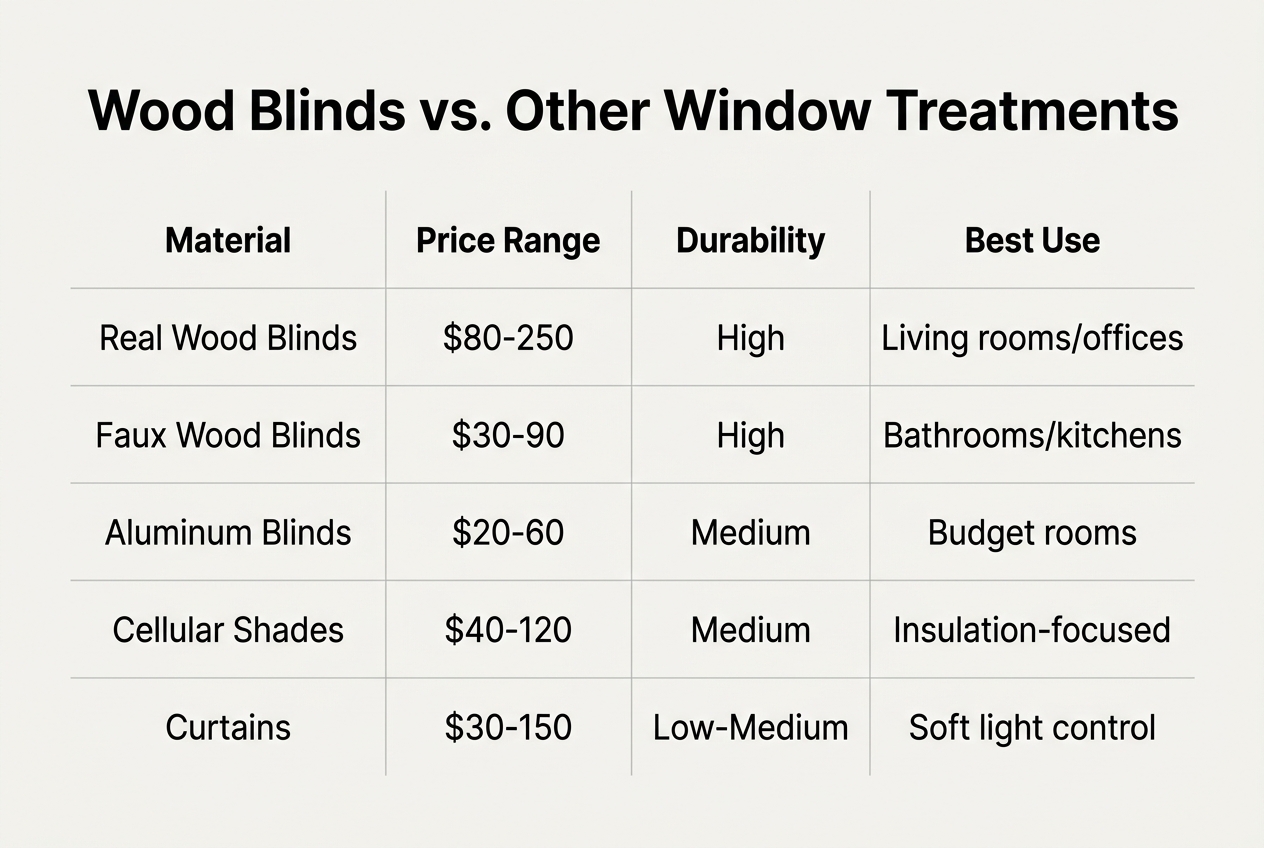
Shades offer softer light control and, in some cases, better energy efficiency. But wood blinds give sharper tilt control over light and privacy. The table below breaks down the key differences.
| Material | Average Cost (per window) | Weight | Moisture Resistance |
|---|---|---|---|
| Real Wood | $150–$400 | Medium | Low |
| Faux Wood | $80–$200 | Heavy | High |
| Aluminum/Vinyl | $30–$100 | Light | Medium |
| Cellular Shades | $60–$250 | Light | Medium |
| Roller Shades | $50–$180 | Light | Medium |
For living rooms and offices where style matters most, Custom Wood Window Blinds remain a strong, timeless choice.
Why Homeowners Choose Wood Blinds
Warmth and Natural Character
Wood brings a sense of warmth that few materials can match. Real grain patterns, subtle color shifts, and a tactile surface make each slat feel unique. That natural variation is part of the appeal, not a flaw to hide.
Many homeowners call the look timeless. A row of two-inch basswood slats can feel just as fitting in a 1920s bungalow as in a newly built home. That staying power is one reason wood blinds rarely feel dated after a few years, unlike some trend-driven fabrics or patterns.
The material also softens light in a pleasing way. It filters sun into warm, diffused bands rather than harsh glare. That quality adds comfort to a room’s mood, not just its appearance.
Fitting Traditional to Modern Interiors
One reason for their popularity is sheer versatility. Wood slats work in a farmhouse kitchen, a minimalist condo, or a formal study. They adjust easily through stain color and slat width.
Pairing them with soft window treatments extends the design further. Homeowners exploring layered looks often research how to choose curtains for living room spaces, since wood blinds and drapery panels can share a room without competing for attention.
Retailers offering Wooden Blinds typically stock dozens of finish options, from bleached white to deep walnut. Matching existing trim or furniture becomes straightforward instead of a guessing game.
Long-Term Home Value
Beyond daily use, wood blinds carry genuine resale appeal. Real estate agents often note that natural materials read as higher quality to buyers touring a home.
Unlike trendy treatments, wood blinds rarely need replacing before a sale. Many local businesses report that homes with well-maintained wood blinds show faster during walkthroughs. Buyers see them as a finished, move-in-ready detail rather than an upgrade still needed.
That mix of durability and broad appeal makes wood blinds a practical long-term investment, not just a short-term style choice.
Key Benefits of Wood Blinds
Energy Efficiency and Insulation
Real wood acts as a natural barrier against heat and cold. The slats trap air near the window, which helps stabilize indoor temperatures. That means less strain on your heating and cooling systems all year. Many homeowners see a noticeable drop in energy bills after installing them, especially in rooms with large windows or direct sun.
Light and Privacy Control
One major advantage is precise light control. Tilting the slats lets you adjust brightness without losing privacy. This flexibility works well in bedrooms, offices, and living rooms alike. For rooms needing near-total darkness, pairing blinds with heavier drapery may help; you can learn more about the benefits of blackout curtains for extra light-blocking power.
Durability Over Time
Quality wood blinds hold up well against daily wear. Consider these practical advantages before you invest:
- They resist warping better than many synthetic alternatives when installed away from high-moisture areas.
- Solid wood slats maintain their shape and finish for years with minimal upkeep.
- The natural material provides noticeable sound dampening, softening echoes in larger rooms.
- Sturdy construction means fewer broken slats compared to lightweight plastic options.
- A well-made set can last over a decade, offering strong long-term value.
For those exploring premium options, the Custom Real Wood Blinds – Products line shows how craftsmanship affects long-term performance.
Popular Wood Types and Finishes
Basswood, Oak, and Cherry Options
Basswood is the most common choice for wood blinds. It’s lightweight, strong, and resists warping, which makes it ideal for wide windows. Its tight, even grain also takes stain and paint smoothly, giving a clean, consistent look across every slat.
Oak offers a bolder, more textured grain pattern. It costs more than basswood but adds a rugged, traditional character that suits farmhouse or craftsman-style rooms. Oak is also denser, so it holds up well in heavily used spaces like kitchens or mudrooms.
Cherry is prized for its rich, reddish tone that deepens with age. It works beautifully in formal dining rooms or studies. Because cherry costs more, many homeowners reserve it for statement rooms rather than whole-house installations. To browse options side by side, Custom Wood Blinds Online makes comparing species simple.
Stained vs. Painted Finishes
A stain highlights the wood’s natural grain, letting light and dark streaks show through. This creates a warm, organic look that works well with wood furniture and flooring. Stains typically come in shades like honey, walnut, and espresso.
A painted finish covers the grain entirely, producing a smooth, uniform surface. White, cream, and gray paints are popular for modern or coastal interiors. Painted blinds also hide small imperfections in the wood, which can lower costs slightly.
Both finishes hold up well over time. But painted slats show fingerprints and dust more easily in rooms with strong daily sun exposure.
Choosing a Finish for Your Décor
Grain and color naturally vary between slats, even within the same order. Treat this variation as a mark of real wood, not a flaw. Before deciding, review guidance on how to match curtains with your homes color scheme for coordinating tones. Order a sample slat and view it in your room’s actual lighting before committing.
Customization Options for Wood Blinds
Slat Widths and Tapes
Slat width changes the look of a window. Narrow slats, around 1 inch, suit small windows and traditional rooms. Wider slats, near 2 inches, show off wood grain and open up bigger, bolder views. Decorative fabric tapes can cover the cord holes, adding color or pattern. This detail supports Wood Blinds for Natural Interior Window Style in modern and classic homes alike.
Corded, Cordless, and Motorized Controls
Control style affects safety and daily use. Homeowners with kids or pets often skip corded designs entirely. Consider these common options:
- Corded lift and tilt systems, which are budget-friendly but leave hanging cords in reach of children and pets.
- Cordless lift systems, which use a simple push or pull motion for a cleaner, safer window.
- Motorized blinds with remote controls, letting you raise or lower slats from across the room.
- Smart-home compatible motors, which connect to voice assistants or phone apps for scheduled adjustments.
- Wand-controlled tilt options, giving smooth control without any cords at all.
Custom Shapes for Unique Windows
Not every window is a plain rectangle. Arched tops, angled bays, and oversized picture windows all need custom shaping. A dedicated provider can build blinds to match these unusual frames precisely. This also solves privacy questions, since buyers often ask can people see through my blinds once slats are cut for oddly shaped openings.
Helpful Upgrades to Consider
Motorized Lift Systems
Motorized lift systems let you raise or lower slats with a remote, wall switch, or smartphone app. Many systems now pair with smart home platforms, so blinds open on a schedule or respond to voice commands. This helps most with tall windows, skylights, or hard-to-reach spots above cabinets and stairwells.
Battery-powered motors have improved a lot, often lasting a full year or longer before needing a recharge. Some models include sensors that adjust slats based on sunlight, cutting glare and managing indoor temperature automatically. Homeowners planning a full smart home setup should ask about compatibility before purchase.
Child-Safe Cordless Designs
Safety standards have pushed the industry toward cordless operation. Cordless lift systems remove dangling cords entirely, lowering strangulation risks for young children and pets. Many families now treat this as a non-negotiable feature rather than an optional upgrade.
Cordless designs typically use a simple push-up, pull-down motion or a hidden spring mechanism. They work well in nurseries, playrooms, and family rooms. If you’re also refreshing nearby windows, these diy curtain hacks transform your space with simple upgrades pair nicely with cordless blinds for a coordinated, safer look throughout the home.
Decorative Valances and Hardware
Decorative valances hide the headrail and lift mechanism, giving windows a finished, tailored appearance. Options range from matching wood valances to fabric-wrapped cornices that echo other decor in the room. Premium hardware, including brushed nickel brackets and wood-tone tilt wands, adds a polished detail many homeowners overlook.
These finishing touches matter most when budget-friendly alternatives, like Faux Wood Blinds, get compared side by side with genuine wood options for overall presentation and value.
Choosing the Right Room for Wood Blinds
Living Rooms and Home Offices
Living rooms and home offices show off wood blinds at their best. Stable temperatures and low humidity mean the slats stay straight and true for decades. Rich wood grain adds warmth to built-ins, wide windows, and reading nooks, and the tilt wand gives precise control over glare on computer screens.
For homeowners weighing panels alongside blinds, this how to choose curtains guide expert tips for every room covers how to layer both in shared living spaces. A 2-inch slat works well in a home office, since it blocks screen glare without cutting too much daylight. Many homeowners pair blinds with sheer curtains for softness during video calls.
Bedrooms and Light Control
Bedrooms benefit from the tight seal wood blinds create when closed. A 2.5-inch slat, angled shut, can block nearly all outside light. That helps shift workers and light sleepers alike. Cordless or motorized lift options also cut tripping hazards near nightstands and cribs.
Stained wood tones, like walnut or cherry, add a cozy, hotel-like feel to primary suites. For rooms needing near-total blackout, consider pairing blinds with a lined drape as backup coverage on especially bright mornings.
Kitchens, Bathrooms, and Moisture Concerns
Kitchens and bathrooms pose real risks for real wood. Steam from cooking, showers, and daily humidity swings can warp, crack, or discolor slats within a year or two. Sinks and stovetops also splash water directly onto nearby windows, speeding up the damage.
For these rooms, faux wood is the smarter choice. It resists moisture, holds its shape, and mimics real grain closely. The Faux & Real Wood Blinds comparison shows how similar the two can look. Save real wood for dry, climate-controlled rooms instead.
How to Measure for a Perfect Fit
Inside Mount vs. Outside Mount
An inside mount fits blinds inside the window frame for a clean, built-in look. It needs at least 2.5 inches of depth to hold the brackets. An outside mount attaches to the wall or trim above the frame. This style hides uneven windows and blocks more light. Choose outside mount if your window frame is shallow or crooked.
Tools and Preparation
Grab a steel tape measure, not a cloth one, since fabric stretches and throws off the numbers. You’ll also need a pencil, paper, and a step stool for tall windows. Measure each window separately, even in the same room. Frames often shift slightly over time, so never assume two windows match. This same careful approach applies to soft treatments too; the guide on how to measure for curtains covers similar basics.
Step-by-Step Measuring Process
Follow a consistent order for accurate results. The table below breaks down each step.
| Step | Action | Detail |
|---|---|---|
| 1 | Measure width | Record at top, middle, and bottom; use the narrowest |
| 2 | Measure height | Record at left, center, and right; use the longest |
| 3 | Check depth | Confirm at least 2.5 inches for inside mount |
| 4 | Note obstructions | Locks, cranks, or handles that could block blinds |
| 5 | Record to 1/8 inch | Precision prevents gaps or tight fits |
Round measurements according to your mount type before ordering.
Installing Wood Blinds Step by Step
Preparing Brackets and Hardware
Every installation starts with the right hardware. Brackets hold the headrail in place, and most kits include end brackets plus a center support for windows wider than 48 inches. Before drilling, check that screws match your window frame material. Wood frames need standard wood screws, while drywall or tile requires anchors.
Good prep work matters as much as the blinds themselves. The same logic applies to other treatments too — anyone comparing options should review 10 important things to consider when youre buying curtains before finalizing hardware choices.
Mounting and Leveling the Blinds
Mounting can happen inside or outside the window frame. The table below breaks down the core steps.
| Step | Action | Tool Needed |
|---|---|---|
| 1 | Mark bracket positions | Pencil, level |
| 2 | Drill pilot holes | Drill, 1/8-inch bit |
| 3 | Secure brackets | Screwdriver |
| 4 | Snap headrail into brackets | None |
| 5 | Test tilt and lift function | None |
When to Call a Professional Installer
Uneven walls, oversized windows, or motorized systems often need expert hands. A professional installer makes sure brackets sit level and the headrail carries weight evenly. If you’re unsure about drilling into tile, stone, or metal frames, call for help before starting.
Caring for and Maintaining Wood Blinds
Dusting and Cleaning Techniques
Regular dusting keeps wood blinds looking new. A quick pass once a week prevents buildup that can dull the finish over time. Deeper cleaning every month or two removes grime that dusting alone misses.
- Use a microfiber cloth or a duster with an extendable handle to reach every slat without scratching the wood.
- Close the slats fully, wipe one direction, then flip and repeat on the other side for even coverage.
- Vacuum with a soft brush attachment on low suction if slats have heavy dust or pet hair.
- Spot clean marks with a barely damp cloth and mild soap, then dry the slat immediately.
- Avoid all-purpose sprays with ammonia or alcohol, since they strip natural oils from the wood.
Protecting Against Sun and Moisture Damage
Wood reacts to heat, humidity, and direct sunlight. Prolonged sun exposure causes fading and uneven color, while damp rooms can lead to warping or swelling. Rotate slats periodically to spread out UV exposure, and use a light coat of furniture polish twice a year to guard against dryness. Keep wood blinds out of bathrooms and steamy kitchens, where faux wood performs better.
Repairing Minor Wear and Tear
Small issues rarely call for a full replacement. Loosen sticky cords with a drop of silicone lubricant, tighten loose brackets with a screwdriver, and sand light scuffs with fine-grit paper before touching up the stain. Families with young children should also review curtain safety tips you need to know, since cord management matters as much for wood blinds as for drapery.
Things to Know Before You Buy
Budgeting for Custom Blinds
Custom wood blinds usually cost more than stock options. Expect a range from $150 to $400 per window, depending on wood type, slat size, and finish. Basswood tends to cost less than premium hardwoods like oak or cherry. Setting a realistic budget early helps narrow choices without wasting time on products outside your price range.
Extra features add cost too. Motorization, decorative tapes, and specialty valances can raise the price by 20% or more per window. Ask for an itemized quote so you know exactly what you’re paying for before committing to a full-home order.
Order Timelines and Lead Times
Custom blinds are built after you order, not pulled off a shelf. Standard lead times run 2 to 4 weeks, though busy seasons like fall and spring can stretch that to 6 weeks. Large orders covering many windows often take longer to complete and schedule for installation.
Plan around move-in dates or renovations with this timeline in mind. If you need coverage sooner, ask about faster production options or temporary coverings. A good design consultant will give you a written estimate, not a vague guess.
Questions to Ask Before Ordering
Before signing a contract, ask about warranty length, what it covers, and who handles repairs. Confirm whether measuring and installation are included in the price or billed separately. Many local businesses bundle these services, but terms vary widely.
Ask about slat size options, cordless safety features, and how color samples look in your home’s actual lighting. For a broader checklist, this guide on 5 things to know before buying window coverings covers questions many buyers forget to ask.
Frequently Asked Questions About Wood Blinds
Are Wood Blinds Worth the Investment?
Most buyers ask this before spending $150 to $400 per window. Wood blinds hold their value because they last longer than cheap vinyl mini-blinds and add real resale appeal. Homeowners often recover part of the cost through higher home value, especially in living rooms and offices where wood tones matter visually.
Compared to fabric treatments, wood blinds skip frequent replacement costs. A dedicated provider can show samples so you see grain and finish before buying, which cuts the chance of regret. If light control is your main goal, it also helps to review what to know about blackout curtains before deciding between fabric and hard treatments.
Do Wood Blinds Work in Humid Climates?
Real wood struggles in bathrooms, kitchens, and humid coastal homes. Moisture causes warping, cracking, and discoloration over time. Wood blinds absorb humidity from steam and condensation, which weakens slats after a few years in high-moisture rooms.
Faux wood alternatives, made from PVC composites, handle humidity better and resist swelling. Many local businesses recommend faux wood for bathrooms and laundry rooms, saving real wood for bedrooms, dining rooms, and dry living spaces where humidity stays low and stable year-round.
How Long Do Wood Blinds Last?
Quality wood blinds typically last 10 to 15 years with proper care. Lifespan depends on wood type, sun exposure, and how often cords and tilt mechanisms get used. Basswood and cedar options often outlast cheaper pine versions.
Direct sunlight fades finishes faster, so rotating slats and using UV-protective window film extends life. Loose screws, frayed cords, and sticking mechanisms usually signal it’s time for professional adjustment or replacement, rather than full removal.
If you’re ready to bring the natural warmth of wood blinds into your home, the team at The Curtain would love to help you find the perfect fit. As a family-owned business crafting custom window treatments since 2007, they offer premium Hunter Douglas products alongside expert design consultation to make sure every detail suits your space. Stop by for a visit or book a consultation today, and let their experienced installers take care of the rest.