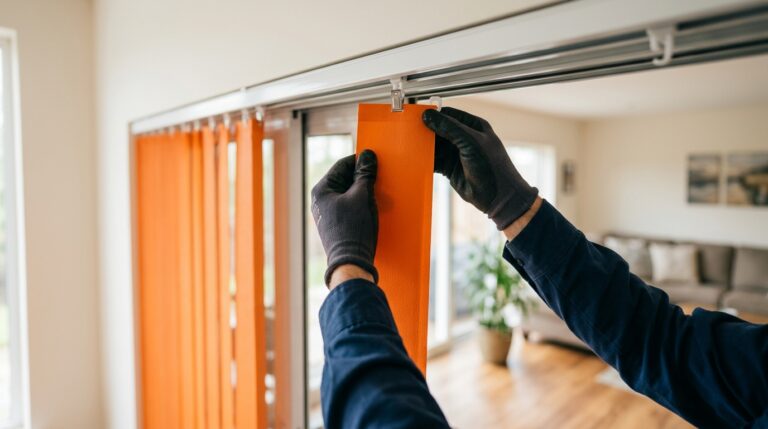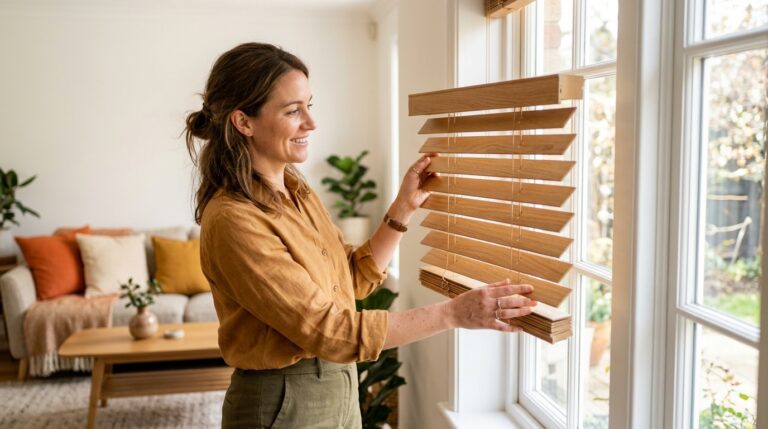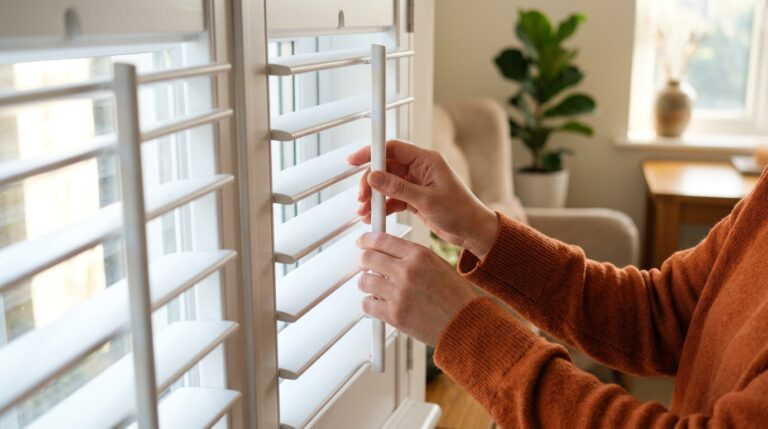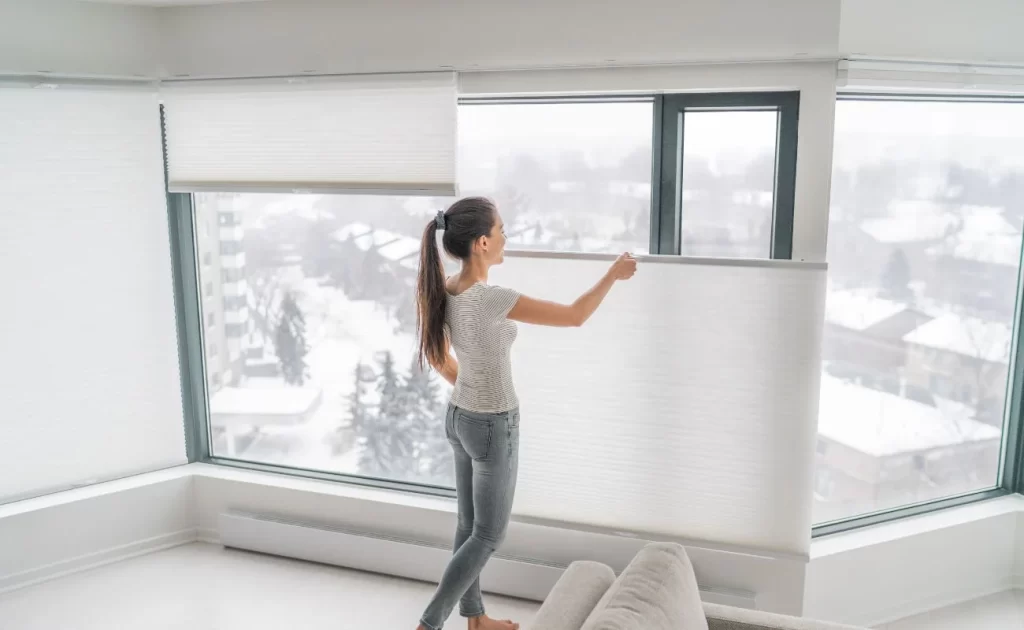
If you are shopping for motorized window treatments in Bergen County, the decision usually comes down to automated blinds vs. automated shades. Both replace the cord with a motor, both can run on a schedule, and both get measured and installed for your exact opening. They behave very differently once they are on the wall, and that is the part most buying guides skip. Below you can compare smart shades and blinds automation options in plain language, then see what we would actually put on a Palisades Park living room window, a home office that fights afternoon glare, or a slider out to the deck.
Short answer
Pick automated blinds when you want to tilt slats or vanes and fine-tune glare while keeping the view. Pick automated shades when you want a clean fabric look, true room darkening, or the best insulation. Plenty of homes end up with both: blinds where tilt control matters, shades in the bedrooms and across the big glass.
Welcome to Effortless Light Control
An automated window treatment is a normal window treatment with a motor in the headrail. The covering is the same product you would have chosen anyway, and the motor takes the place of a cord, wand, or chain. Remember that order when you shop. You are choosing a covering first and a control system second, because the covering is what you look at every day.
Motors, Sensors, and Smart-Home Magic
- Motorized drive that raises, lowers, or tilts the covering at the press of a button, or with no button at all.
- Power source, usually a rechargeable battery wand, low-voltage wiring, or a discreet plug-in adapter.
- Control hub that ties the motors to a remote, a phone app, voice assistants, schedules, and sunlight sensors.
- Optional extras such as occupancy detection and geofencing, so the windows react to the way you actually live.
When you hear motorized, think remote control. When you hear automated, think set it and forget it. Hunter Douglas calls its automation system PowerView, and it is the system behind the motorized Hunter Douglas products we sell and install. If a motor ever loses a saved scene, resetting it is usually a short sequence you can run yourself, and our guide to resetting motorized blinds walks through it.
Automated Blinds vs. Automated Shades: Key Differences at a Glance
| Feature | Automated blinds | Automated shades |
|---|---|---|
| Light control | Precise tilt lets you micro-adjust glare and privacy without raising the blind. | One-touch raise and lower blocks or invites light in broad strokes. |
| Materials | Rigid slats or vanes in wood, faux wood, aluminum, or vinyl. | Soft or structured fabrics, including roller, cellular, Roman, and solar. |
| Energy performance | Good at redirecting daylight, moderate insulation. | Top insulation with cellular or blackout fabrics, and solar mesh cuts UV. |
| Look | Architectural lines that frame the window. | Seamless fabric that disappears into a cassette when raised. |
| Maintenance | Dust the slats regularly, deep clean occasionally. | Vacuum the fabric with a brush attachment, spot clean. |
| Best for | Home offices, kitchens, and rooms where tilt control matters. | Bedrooms, media rooms, and wide glass where blackout or sheer is the point. |
Light and Privacy: Finesse or Full Coverage
Blinds: Micro-Manage the Sun
Automated blinds tilt in small increments, as little as a degree on some systems. Fighting screen glare at 3 p.m. in a west-facing office? Pivot the slats part way and you keep the daylight and the view without the eye strain. That is also why tilt products work so well on wide sliders, where vertical blinds can be angled for privacy without traversing the whole panel. Slat material matters more than most people expect, and our comparison of faux wood and real wood covers where each one belongs.
Shades: One-Touch Serenity
Automated shades do not tilt. They disappear. One tap rolls the fabric up into the cassette and gives you an unobstructed view. Blackout liners block up to 99 percent of incoming light, which turns a bedroom facing a streetlight into a dark room at any hour. On the other end of the range, solar shades hold a sheer mesh across the glass so you keep the view while cutting glare and UV. If privacy after dark is the worry, read what people can actually see through your blinds before you choose an openness factor.
Energy Performance Through a New Jersey Winter
How Automated Blinds Help You Save
Blinds reflect direct sun toward the ceiling and spread brightness deeper into the room. In winter, a morning tilt-up routine on the south side captures solar warmth. In summer, tilting down bounces heat back outside and shortens the run time on the air conditioning. The savings come from consistency, and a schedule is more consistent than you are.
Why Automated Shades Take It Further
Honeycomb cellular shades form insulating air pockets that cut heat transfer by up to 45 percent, which is why they are the default answer for a drafty January window here. Program them to drop during peak afternoon heat and rise at sunset and the thermostat works less on both ends of the year. Our honeycomb buying guide covers single versus double cell, and our energy-efficient window coverings guide puts the fabrics side by side.
Why Homeowners Ask Us for Motorized Blinds and Shades
Style is rarely the first reason someone calls about motorization. These are:
- No cords. Hanging cords are a hazard around small children and pets, and a motor removes them entirely. See our notes on child-safe window treatments.
- Windows nobody can reach. Two-story great room glass, transoms over a stairwell, and skylights only get used if a remote runs them.
- Wide openings. A single heavy roller across a large window or a slider is a two-handed pull by hand and one button with a motor.
- Scheduled routines that make the house look lived in while you are away.
- Soft starts and stops that prevent the sudden jerk that wears out hardware over time.
Both blinds and shades pair with the usual platforms, including Google Home, Alexa, and Apple Home. A good morning routine can raise the blinds partway while the coffee brews, and a movie routine can drop the blackout shades in seconds.
Cost Breakdown: Upfront vs. Lifetime Value
Are motorized shades worth it? That depends on what is driving the price, and it is a short list: the motor and power option you choose, the fabric or slat you choose, the width and weight of the opening, and how many windows share one hub or remote. A battery-powered motor on a bedroom window sits at the bottom of the range. A hardwired motor on a wall of glass with a premium fabric sits at the top. None of that changes the covering itself, so you can start with the manual version on some windows and motorize the ones you cannot reach.
On the value side, motorization earns its keep in three places: windows that would otherwise never get closed, rooms where a daily schedule reduces heating and cooling load, and households where cords are a safety problem. We measure in your home for free and give you the quote in writing, so you can motorize the windows that matter and leave the rest manual.
What we would put on the window
- Bedroom facing a lit streetMotorized blackout honeycomb, hardwired if the window is wide.
- Two-story great room glassMotorized roller or solar shades, because no one is reaching that window twice a day.
- Home office with afternoon glareMotorized blinds, so you can tilt a few degrees instead of losing the view.
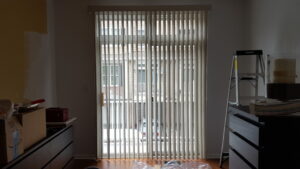
- Slider out to the deckMotorized verticals for tilt, or one wide roller on a single motor for a cleaner look.
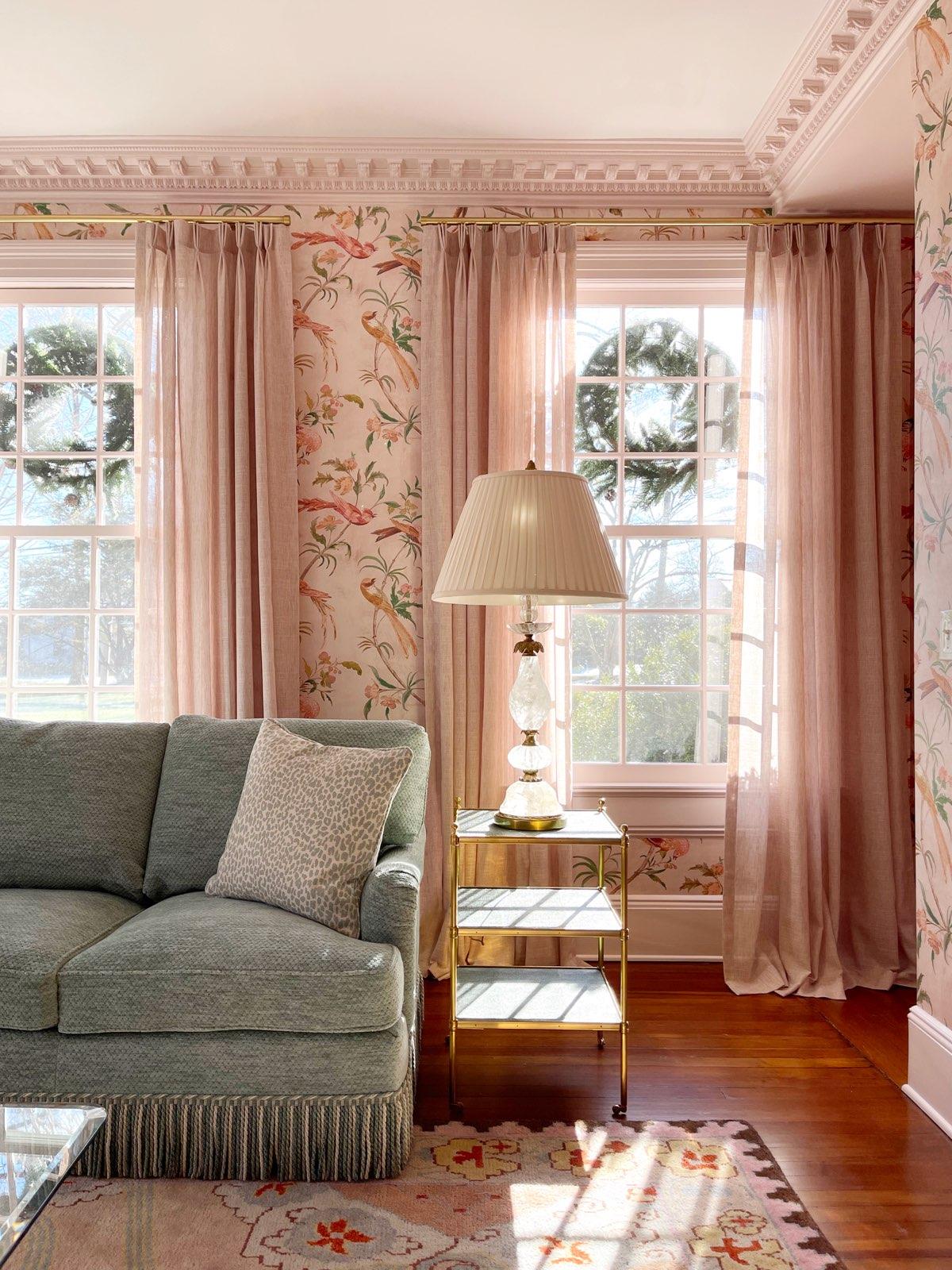
- South-facing living room with a viewMotorized solar shades on a sun schedule, layered with drapery panels if you want softness.
Decision Matrix: Find Your Perfect Match
- Do you want granular light control? Choose automated blinds.
- Is blackout or sheer elegance non-negotiable? Choose automated shades.
- Are you automating the whole house? Both work, so decide by decor and by room.
- Is the window extra wide or out of reach? Weight and mounting depth decide this one, which is a measuring question rather than a catalog question.
Mixing is normal. Many homes run roller shades in the sun-soaked rooms and blackout shades in the bedrooms, all from one app.
From our own installs in Bergen County
Measured and Installed in Bergen County
The Curtain is a family-owned window-treatment showroom at 547 Broad Ave in Palisades Park, New Jersey, in business since 2007 and serving Bergen County. Owner and designer Sejun Park works through the room with you: which windows get motors, which stay manual, what the fabric does at noon versus at night. We are a Hunter Douglas partner, we sell and install Hunter Douglas shades, blinds, and shutters, and we also make custom drapery when a motorized shade wants a soft layer over it.
Motorized products are unforgiving about measurements, since the headrail has to hold a motor and the fabric has to clear the frame. That is why the measurement happens in your home rather than over the phone. To understand the process first, start with how to measure for blinds, then look at finished rooms in our gallery. Already have motorized treatments that stopped working? Start on our repair page.
Your Next Step Toward Smarter Living
Once you can see the difference between automated blinds and automated shades, the rest is a room-by-room decision, and that goes faster with someone measuring next to you. Book a free in-home measurement and we will bring samples, measure every opening, and leave you a written quote. Call (201) 302-9111 or use the form below.