

Your kitchen window probably deals with more grease splatter, steam, and direct sun than any other spot in your home, yet most curtains simply aren’t built for that reality. Choosing the wrong fabric means fading, mildew, or a valance that’s constantly in your way while you cook. This guide breaks down exactly which kitchen window curtains hold up in 2026, from fade-resistant fabrics to fits that keep your sink and stove unobstructed. You’ll know precisely what to buy before you spend a dime.
Choosing the Best Kitchen Window Curtains for Your Space
Why Kitchen Windows Need Special Consideration
Kitchen windows work harder than almost any other window in the house. They sit near heat from the stove, moisture from the sink and dishwasher, and grease that drifts through the air every time you cook. A curtain that looks perfect in a bedroom might turn limp, stained, or musty within a year over the kitchen sink. That’s not a design failure. It’s just physics meeting daily life.
Sunlight is another factor people underestimate. South- and west-facing kitchen windows can bleach fabric and fade nearby countertops or cabinet finishes faster than you’d expect. Durability and cleanability matter here as much as color or pattern. Machine-washable cottons, blends with stain resistance, or shorter café-style panels tend to hold up better than heavy, floor-length drapery near a busy cooking zone.
Think about airflow too. Curtains hung too close to a gas range or a window that gets opened often need to stay clear of flames and breezes alike. It sounds obvious until someone’s café curtain catches a draft over a lit burner. A little planning up front saves a lot of trouble later.
Matching Curtains to Your Kitchen’s Function
Every kitchen window plays a different role. One over the sink deals with splashes and steam; one behind a breakfast nook might need more privacy in the evening; a window above a built-in bench gets sat near constantly, so trailing fabric becomes a real nuisance. Matching the curtain style to that specific job matters more than chasing a trend. For a deeper comparison of how fabric panels stack up against harder window coverings in these high-moisture spots, reading about choosing the right window treatment is a smart first step before you buy anything.
The rest of this guide walks through the practical layers: fabric choices that resist grease and moisture, popular styles like tiers, cafés, and valances, hardware and mounting basics, and alternatives such as roller or cellular shades when full fabric panels aren’t practical. Browsing a wide range of kitchen curtain ideas in 2026 can help you settle on a look before worrying about the technical details.
If you’re still unsure what fits your window’s light exposure, shape, or proximity to appliances, a free in-home consultation takes the guesswork out of it. A designer can look at your actual sun exposure, window depth, and traffic patterns and recommend options you might not have considered on your own.
Fabric and Material Options Compared
Best Fabrics for Grease and Moisture Resistance
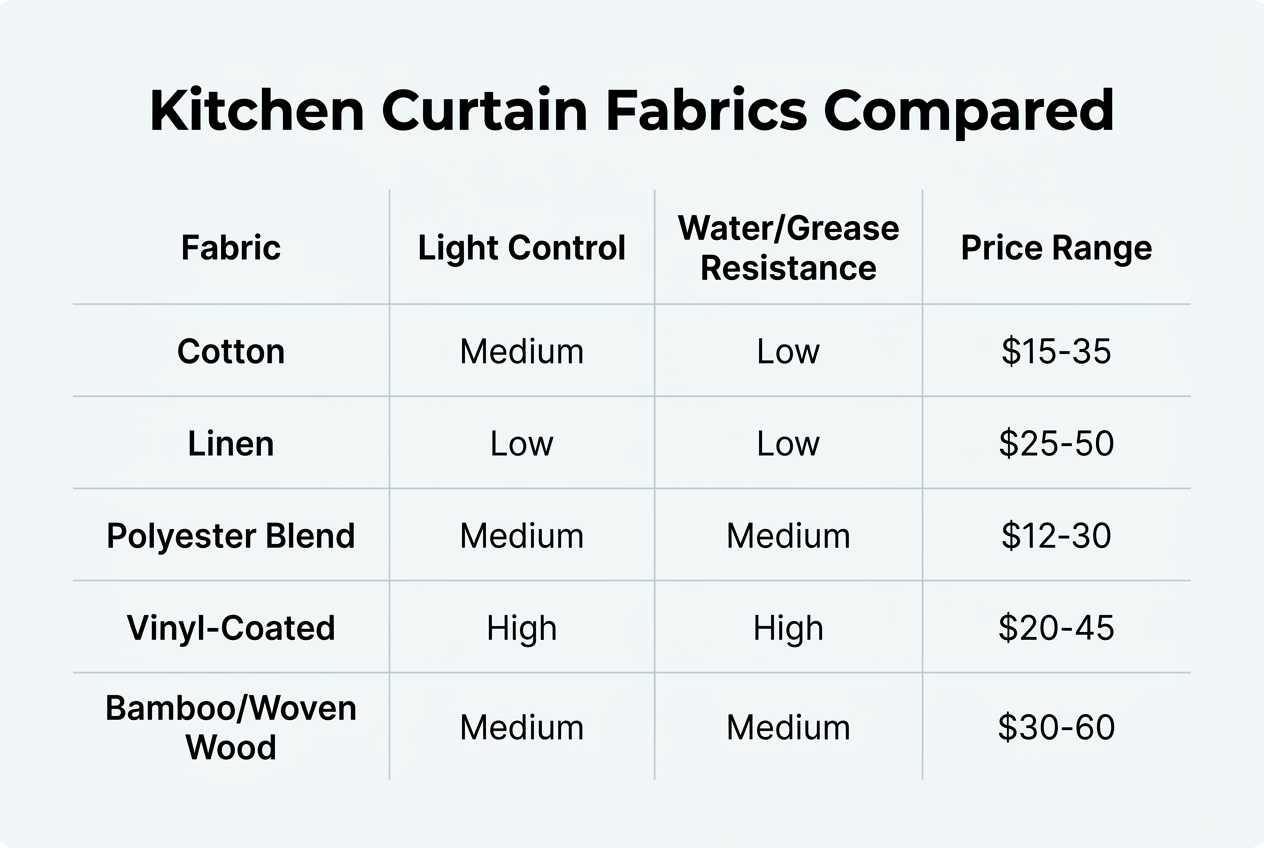
Kitchens are rough on fabric. Steam, splatters, sun — it all adds up fast. Cotton and linen blends breathe nicely and look relaxed, but they soak up odors and stains quicker than you’d like. Polyester blends handle grease and moisture much better, which is why they’ve become the default pick for busy cooking spaces. If you’re still weighing your options, learning about the material pros and cons for curtain fabrics before you buy will save you a return trip to the store.
Sheers let in light and feel airy, but they offer little privacy if your kitchen faces the street. Heavier weaves fix that, though they trap more heat near the stove. Machine-washable fabrics are worth prioritizing near the range. Toss them in cold water on gentle, skip the dryer, and most grease spots lift right out. UV-resistant finishes also matter more than people realize; they keep sunlight from bleaching countertops and cabinet finishes over time.
Here’s a quick side-by-side to help narrow things down.
| Fabric Type | Grease/Moisture Resistance | Light Filtering | Care Level |
|---|---|---|---|
| Cotton-linen blend | Low | Moderate | Dry clean recommended |
| Polyester blend | High | Moderate | Machine washable |
| Sheer polyester | Moderate | High | Machine washable |
| Heavy cotton twill | Low | Low (privacy-focused) | Spot clean only |
| Insulated lining + poly face | High | Low | Machine washable, low heat |
That last row deserves a mention. An insulating layer behind a poly face fabric does double duty: it blocks grease vapor from settling into fibers and helps stabilize temperature swings near ovens and drafty glass. The concept overlaps with home insulation generally — the same logic behind blown-in cellulose insulation for walls applies at a smaller scale to your window treatments. And if you’d rather browse ready-made options before committing to custom, scrolling through kitchen window curtains online gives a decent feel for what’s out there. Homeowners near Fort Lee often ask about layering fabrics for both function and style, and window treatments in Fort Lee tend to favor exactly this hybrid approach.
Popular Styles and Design Ideas
Classic Cafe and Tier Curtains
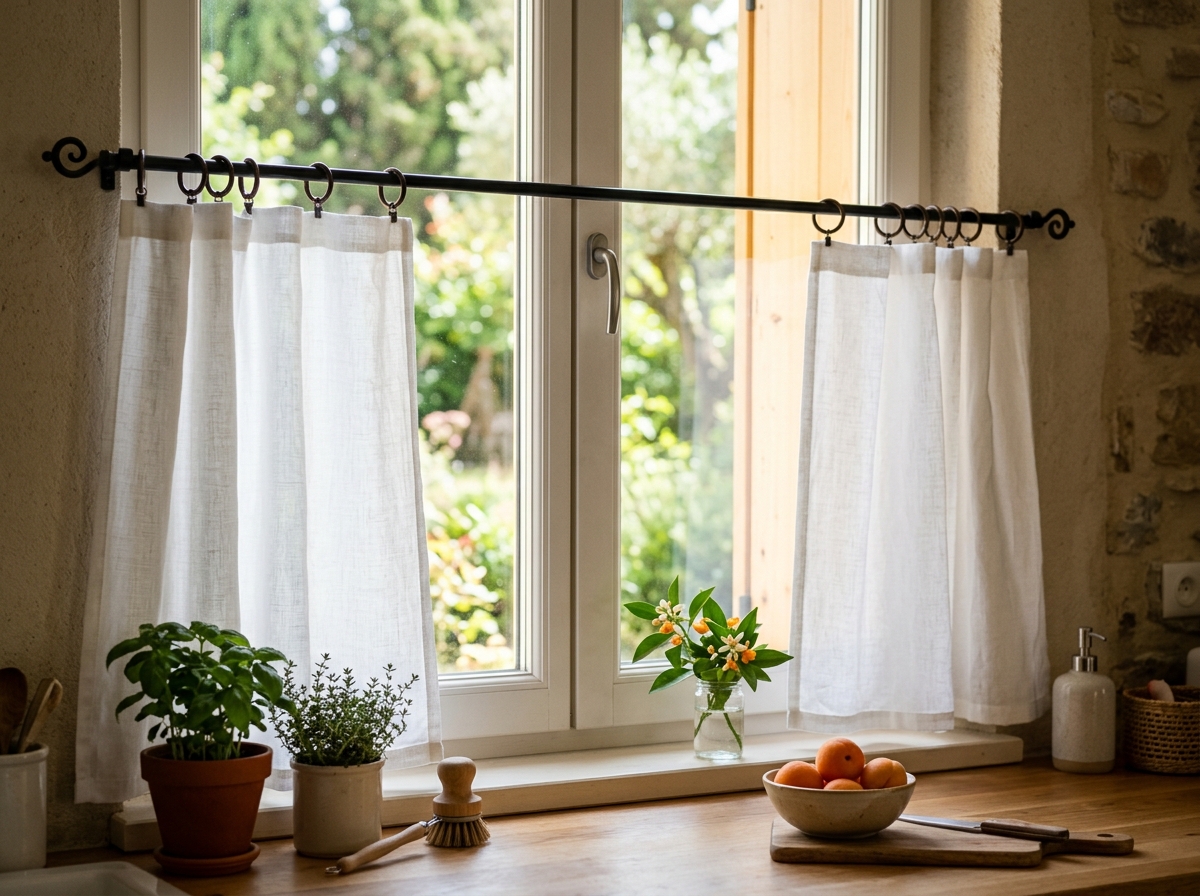
Kitchens have their own rules. You need light, you need privacy from the sidewalk, and you need fabric that won’t drag through dishwater. That’s why cafe curtains remain a favorite: they cover only the lower half of the window, blocking eye-level views while letting sunlight pour in through the top. It’s a simple trick, and it still works decades after it became a kitchen staple.
Tier curtains take that idea further, usually paired with a coordinating valance for a layered, farmhouse-style look. This combination adds texture without swallowing the window in heavy fabric. If your kitchen leans traditional, there’s a lot of room to play with pattern and print. Consider a few tried-and-true approaches:
- Gingham or plaid tiers bring a cottage feel to a farmhouse sink and open shelving.
- Small floral prints soften a room dominated by stainless steel appliances and hard surfaces.
- Striped tiers paired with a solid valance create contrast without looking busy.
- Toile patterns suit a more formal country kitchen with darker wood cabinetry.
- Ruffled hems on tiers add a handmade, vintage touch to older homes.
None of these require heavy commitment. Tiers are inexpensive to swap out seasonally, which makes them a low-risk way to update a kitchen’s personality.
Modern and Minimalist Approaches
Contemporary kitchens call for cleaner lines. Grommet-top and tab-top panels have become the go-to headings for that look, hanging in crisp, even folds instead of the gathered ruffle of a traditional valance. For homeowners weighing the difference, a closer look at modern vs traditional curtains is a useful place to start before settling on hardware and heading style. Solid linen or cotton-blend panels in neutral tones tend to work best here. They don’t compete with an already busy backsplash or open shelving display.
Roman-style fabric shades are worth a mention too, since many homeowners use them as a tailored alternative to hanging curtains altogether. They fold flat when raised, sit close to the glass, and give a kitchen a buttoned-up, streamlined finish. For more concrete pairings and layout ideas, browsing Modern Kitchen Window Curtains & Drapes Ideas I … can help you visualize how these styles look in real rooms, not just showrooms. And if you’re near the Palisades, checking local options for window treatments cliffside park nj residents already trust can save you some guesswork. Minimalist doesn’t mean boring. It just means restraint.
Curtains vs. Blinds and Shades for Kitchens
Pros and Cons at a Glance
Kitchens are messy by nature. Grease splatters, steam rises, and sun pours in over the sink half the day. So before you pick a treatment based on looks alone, it helps to weigh how each option actually performs where you’ll use it. Cleanability, light control, and cost are the three factors that matter most here, and they don’t always favor the prettiest option.
| Treatment | Cleanability | Light Control | Typical Cost |
|---|---|---|---|
| Fabric curtains | Machine wash, but odors and grease linger | Good with lined panels, weak alone | Low to moderate |
| Cellular shades | Spot clean or vacuum | Excellent, includes room-darkening options | Moderate |
| Roller shades | Wipeable, very low maintenance | Good, sheer to blackout fabrics available | Low to moderate |
| Woven shades | Occasional vacuum, harder to wipe clean | Moderate, natural fibers filter light | Moderate to high |
Curtains bring softness and color no hard treatment can match. But fabric near a stove absorbs cooking odors and airborne grease faster than most people expect, and that build-up doesn’t always wash out. Cellular shades solve a different problem entirely: their honeycomb pockets trap air, giving you insulation curtains alone just can’t offer. If your kitchen window is small or narrow, roller or roman shades sit close to the glass and stay out of the way of cabinets and faucets. Many homeowners land somewhere in the middle by pairing a sheer curtain with a functional shade underneath, getting texture and a clean, finished light source together. It’s a practical compromise, honestly. When you’re weighing panel colors against your cabinetry and walls, reviewing guidance on how to match curtains with your homes color scheme can narrow the decision fast. Homeowners near the water often deal with extra humidity and glare, and browsing options for window treatments edgewater nj residents choose shows how local conditions shape material choices.
Solving Common Kitchen Window Problems
Comfort and Efficiency Fixes
If your kitchen faces a busy street or a shared driveway, you already know the noise problem. Cars, delivery trucks, neighbors’ conversations. It all seeps in through glass. Pairing a solid fabric panel with a shade or blind underneath does more than one layer alone. Combining layered window treatments adds density that absorbs sound instead of letting it bounce around your kitchen. It’s a simple fix, but people overlook it constantly.
Temperature swings near kitchen windows are another headache, especially in older Bergen County homes with single-pane glass. Cold drafts near a sink or breakfast nook make cooking uncomfortable and drive up heating bills. Insulating cellular shades installed underneath your curtains trap air in their honeycomb pockets, cutting heat loss significantly. Think of it as a hidden layer doing the hard work while your curtains handle the look.
Sunlight is a slower, quieter threat. UV rays fade cabinet finishes, warp countertops, and bleach flooring over time, sometimes before you even notice it happening. Light-filtering fabrics — semi-sheer linens or solar-treated weaves — cut glare and UV exposure while still letting the room breathe. You don’t have to block the view to protect your investment.
Convenience Through Motorization
Steam and humidity near a kitchen sink cause a different kind of damage: warped wood blinds, mildew spots, fabric that sags after enough hot dishwater cycles. Moisture-resistant materials like PVC-faced woven shades or washable polyester blends hold up far better than natural fibers in that zone. It’s not glamorous, but durability matters more than looks right above a sink. Choosing wipeable materials for that one window saves you a replacement headache down the road.
Then there’s the window nobody wants to deal with: the one above the sink, often flanked by cabinets or a faucet that makes reaching a pull cord awkward. Motorized shades solve that instantly. With PowerView automation, you can raise or lower shades with a smartphone app or a scheduled setting, no stretching over dishes required. Comparable systems, like Lutron’s Serena line, offer similar remote control, though pairing choices often comes down to which ecosystem your other smart home devices already use.
Automation isn’t just a gadget for gadget’s sake. For hard-to-reach kitchen windows, it’s genuinely practical, and many homeowners in towns like Englewood or Ridgewood add it during a broader remodel. If you’re weighing options for a specific home, exploring window treatments tenafly nj residents have chosen can give you a sense of what works in similar layouts nearby.
Measuring, Hardware, and Installation Basics
Step-by-Step Measuring Guide
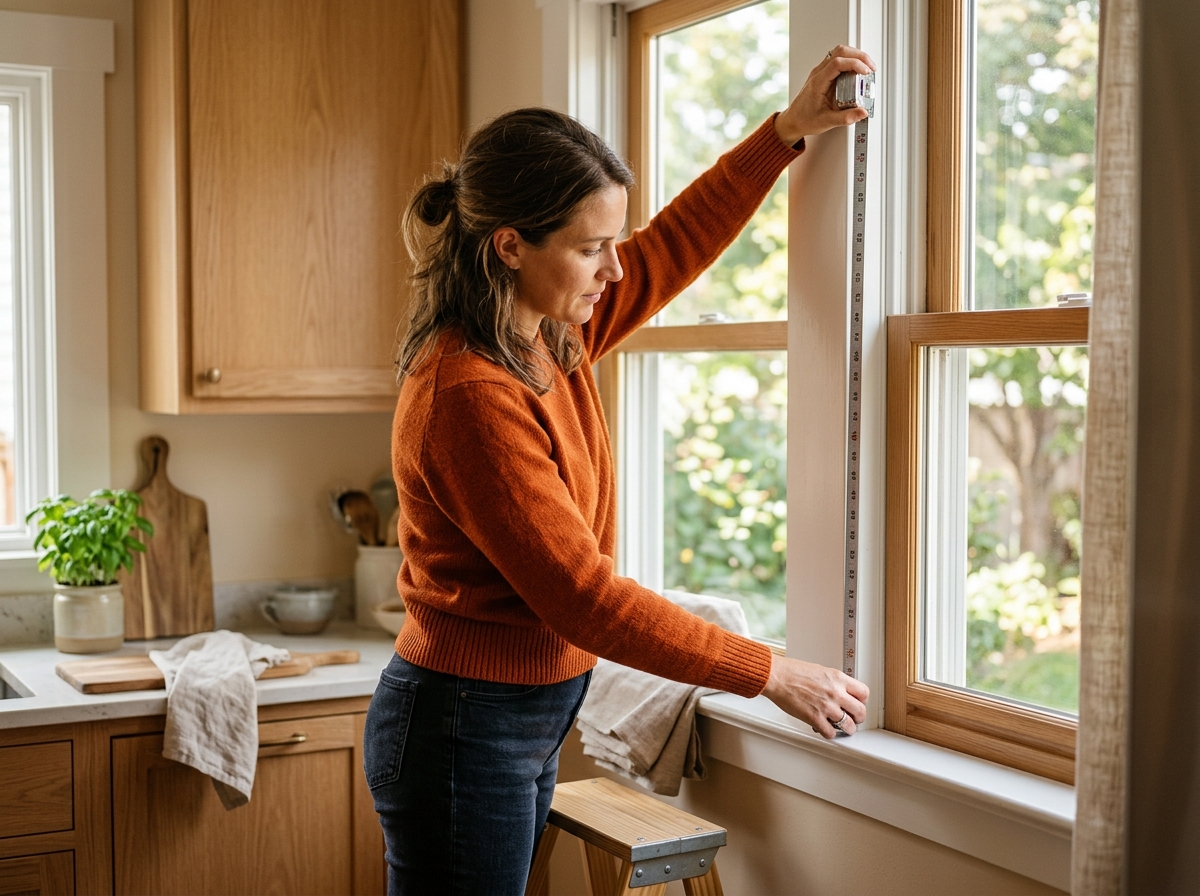
Good curtains start with a tape measure, not a guess. Get the numbers wrong and you’ll end up with panels puddling on the counter or floating three inches above the sill. Measure twice, order once. It’s the oldest advice in the book because it’s true.
- Measure the width of the window frame or rod span, then add several inches on each side so panels can stack open without blocking natural light;
- Measure length from the mounting point down to your chosen endpoint — sill, apron, or floor — since even half an inch off can throw the whole look;
- Decide mounting height first: rods hung four to six inches above the frame make windows look taller and grander;
- Check clearance from the stove, sink, or any faucet arm, keeping fabric at least a few inches clear of heat sources and splash zones;
- Account for hardware projection, since brackets that sit too shallow will cause panels to brush against knobs or handles;
- Note any obstructions like handles, tile backsplashes, or window cranks that could interfere with how the curtain hangs or opens.
Selecting the Right Hardware
Hardware matters more than most people think. A tension rod works fine for lightweight café curtains over a sink, since there’s no drilling and it’s easy to adjust. Full-length panels need something sturdier — a decorative rod with real brackets, rated for the fabric’s weight. For homes with retail or gallery displays, browsing options for Kitchen Window Curtains and Valances can offer a helpful visual reference for pairing rod style with fabric weight.
Bay windows, corner windows, and the awkward space above a sink often need bent rods, swing-arm hardware, or tension-mounted tracks built to follow the angle. These aren’t off-the-shelf sizes, so ready-made panels rarely fit cleanly. That’s the honest trade-off: ready-made panels save money and work fine for standard rectangular windows, while custom drapery earns its price on anything oddly shaped or oversized. If you’re weighing that decision, it helps to review the practical reasons to choose custom drapery installation before committing either way. Professional measuring isn’t fussy overkill. It’s what keeps returns, gaps, and lopsided hems from happening in the first place.
Working with a Local Window Treatment Expert
What to Expect During a Consultation
A free in-home visit isn’t just a sales pitch. It’s a practical step that saves you from expensive guesswork. A designer brings actual fabric swatches, hardware finishes, and color samples into your kitchen, under your lighting, next to your cabinets. That matters more than you’d think — the crisp white that looked perfect on a screen can read dull or yellow-tinted once it’s sitting against your countertops. Getting this right the first time is worth the hour it takes.
These visits also open the door to product lines you simply won’t find at a big-box store. Cellular shades, sheer shade systems, and motorized options from premium manufacturers are typically sold through authorized dealers, not retail shelves. If you’re weighing a curtain-panel approach against structured shades, reviewing the design process of custom window treatments beforehand helps you ask sharper questions once the consultant arrives. Bring your own inspiration too. Nobody knows your taste better than you do.
Local knowledge shapes these recommendations in ways a national call center can’t match. A designer familiar with Bergen County housing stock knows that a prewar home in Englewood often has uneven window openings requiring precise measuring, while newer construction in Franklin Lakes tends toward taller windows that beg for floor-length drapery or layered treatments. Older homes in Leonia or Tenafly may need hardware that works with plaster walls rather than drywall. That kind of detail doesn’t come from a catalog.
Budget matters too, and this is where seasonal promotions earn their keep. Many local businesses run limited-time offers on select product lines each year, often timed around spring refreshes or fall home prep. Custom treatments carry a real cost, so timing a purchase around one of these windows can meaningfully lower what you pay for premium cellular shades or motorized systems. It’s smart shopping, not a gimmick — but only if the product fits your needs first. Discount timing should never override fit and function.
Support doesn’t end at installation, either. Cords fray, shades stick, and motorized components occasionally need recalibration years down the line. A dedicated provider that offers repair and adjustment service extends the working life of your treatments considerably, often by many years, rather than forcing a full replacement over one broken lift mechanism. That’s a meaningful difference for anyone who’s shopped for short, stylish kitchen curtain options and wants them to actually last. Good after-sale support is the quiet detail that separates a lasting investment from a one-season fix.
If you’re ready to find the perfect curtains for your kitchen windows, the friendly team at The Curtain would love to help—this family-owned business has been serving Bergen County homes since 2007 from their Palisades Park, NJ showroom. Book a free in-home design consultation and let their experts bring you fabric samples, styling advice, and Hunter Douglas options suited to your space. Call (201) 302-9111 or stop by the showroom to get started today.