Two questions come up every summer in Bergen County. First, which blinds actually stop the afternoon sun from cooking the back of the house. Second, will blinds keep heat in once the weather turns and that same glass starts pulling warmth out of the room. Both answers come down to three details: what the shade is built from, which way its outward face reflects, and how tightly it fits the opening.
Short answer
Yes. A blind or shade slows heat moving in either direction, so the covering that blocks August sun also cuts the chill coming off cold glass in January. Cellular shades do it best because the honeycomb cells hold still air, and every product does it better when it covers the opening with no light gaps at the sides.
How Heat Gets Into a Room Through Glass
Sunlight hits the pane and turns into heat inside the room, then moves inward through the glass and around the frame. A covering fights that in three ways, and the ones doing at least two are what you feel on a 95 degree afternoon.
- Reflect. A light or metalized outward face bounces sunlight back out before it soaks into the room.
- Trap. Still air is a poor conductor, so anything holding a pocket of it, like a honeycomb cell or a lined shade, slows the transfer.
- Block gaps. A half inch of daylight down the side of a blind puts a hot stripe on the floor all afternoon. Side channels, a cassette at the top, and a wider outside mount close those leaks.
The Best Blinds to Keep Heat Out, Compared
What each product does about heat, and where we usually put it. The full lineup sits on our shades and window treatments pages.
| Treatment | How it fights heat | Best window for it |
|---|---|---|
| Cellular (honeycomb) shades | Traps air in the cells; double and triple cell hold more | Bedrooms and windows in afternoon sun |
| Solar shades | Tight weave filters radiant heat and glare, keeps the view | Living rooms and offices with a view to keep |
| Roller shades with reflective backing | White or metalized back bounces sun outward | Narrow frames and flat modern spans |
| Roman shades with a thermal liner | Liner adds an insulating layer behind the face fabric | Rooms where you want fabric, not hardware |
| Wood and faux wood blinds | Solid slats block sun; cloth tapes cover the cord holes | Kitchens and rooms that need a wipeable surface |
| Shutters | Thick louvers in a rigid frame at the opening | Street facing windows that need privacy too |
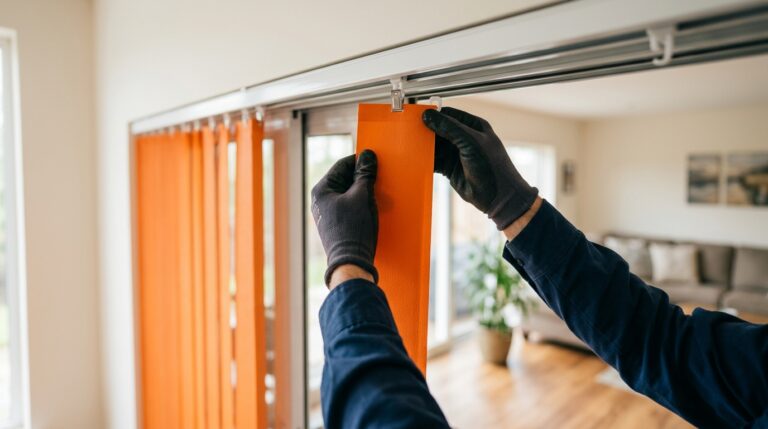
| Vertical blinds and vertical cellular | Lined vanes or cells across an opening that slides | Sliding doors and wide patio openings |
Cellular Shades Do the Most Per Inch
For the biggest drop in heat gain from the thinnest product, start with cellular shades. The cells hold air, and trapped air is what slows the transfer. Double cell and triple cell hold more than single cell, and a light face on the street side helps before the cells come into play. On a tall window, a top down bottom up lift vents hot air near the top while the lower half stays private. Cell counts and lift options are laid out in our honeycomb blinds buying guide.
Solar Shades Keep the View
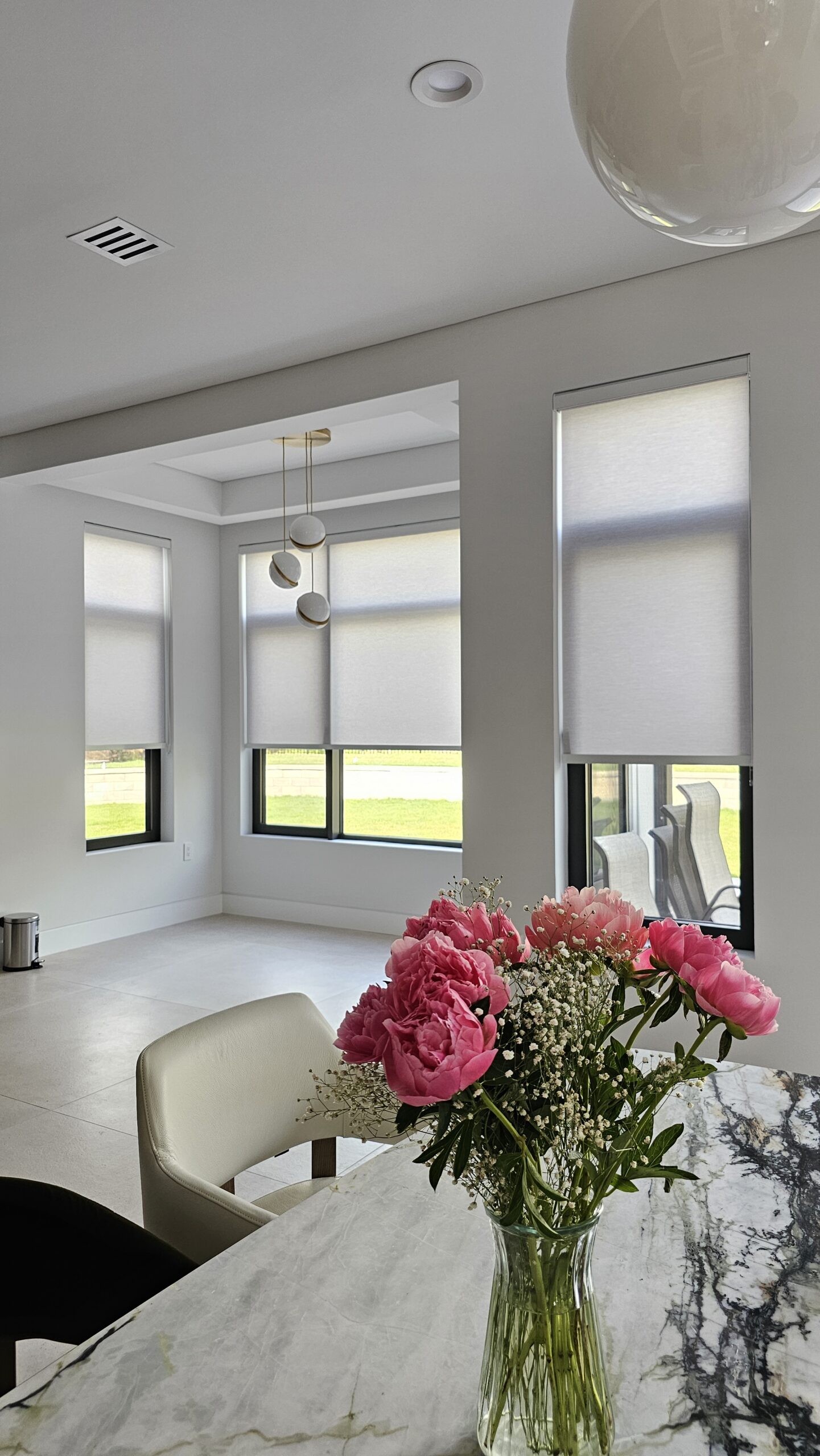
Solar shades use a tight weave that cuts radiant heat and glare without closing the window off. Openness is the number that matters. A 1 to 5 percent weave blocks the most sun and still gives you a usable view, while a 10 percent weave feels more open and lets more heat through. Lighter colors reflect more, darker ones cut glare harder and read the view more crisply. More on the mechanism in how solar shades work.
Reflective Roller Shades
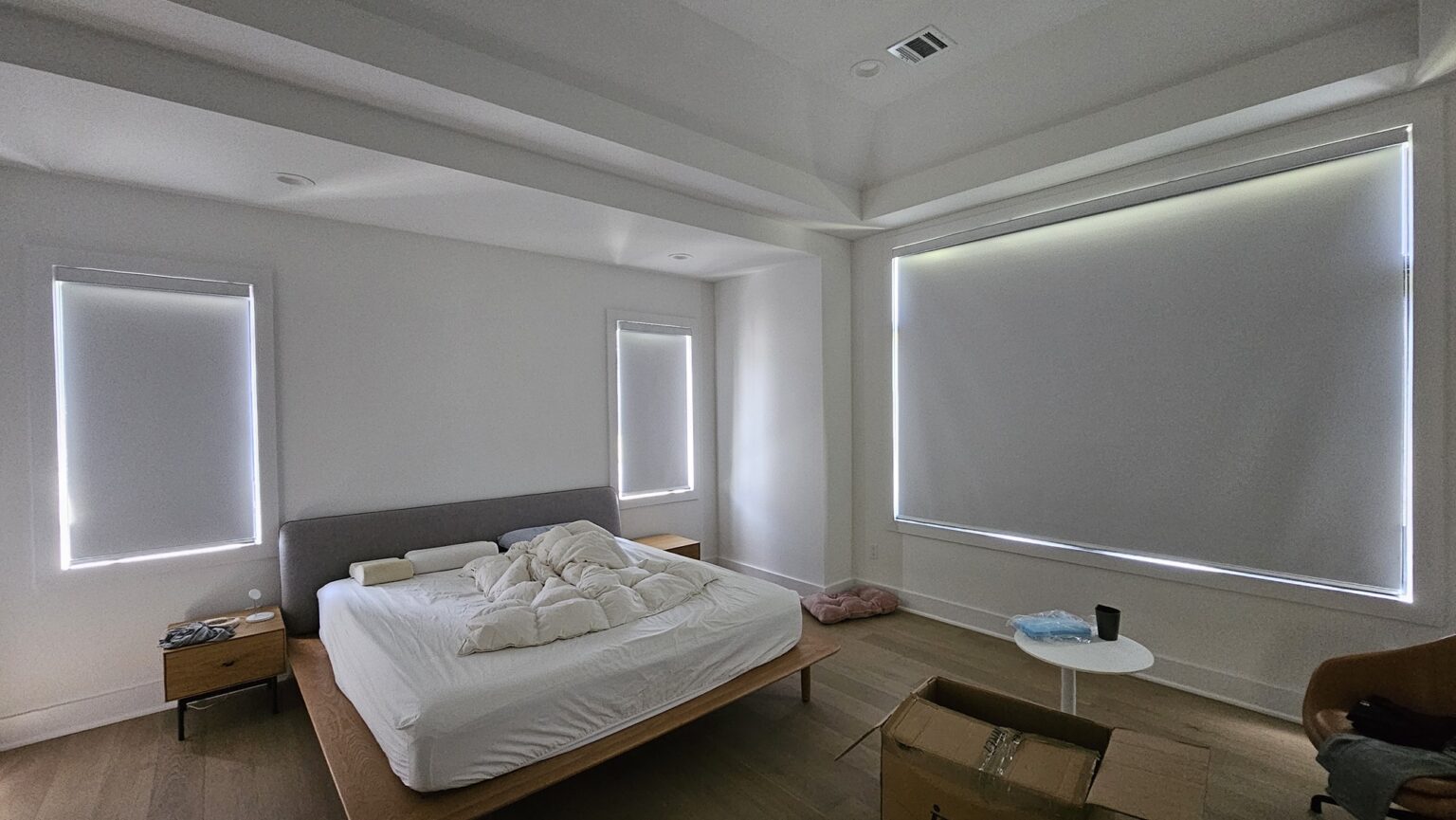
A roller shade with a white or metalized backing is the plainest version of the reflect strategy. The panel sits flat and close to the glass, so it fits shallow frames and tight trim. Add side channels or a cassette so sun does not pour over the roll. In a bedroom, the same roller in a blackout fabric handles heat and sunrise at once. If you want folds instead of a flat panel, a roman shade with a thermal liner does similar work, mounted outside the frame.
Slat Blinds and Shutters
Wood and faux wood blinds block sun with solid slats, and cloth tapes cover the holes the cords run through, which kills the small beams of light that heat the floor. Tilt the slats up during the day so sunlight bounces back toward the glass instead of onto your furniture. Faux wood handles steam better, real wood is lighter across a wide span, a trade we cover in faux wood vs wood blinds. Shutters put a rigid painted layer right in the opening, and a white finish reflects more than a dark stain. See the shutter guide, or kitchen window treatments for the room that gets sun and grease at once.
Sliding Doors and Wide Spans
A patio door is an uninterrupted sheet of glass, so it takes on more sun than the windows around it. Vertical cellular shades run on a track and insulate the way a honeycomb does while still sliding clear of the door. Lined vertical vanes are the simpler version. Options are compared in vertical blinds for sliding glass doors, and fit details live on our sliding door and large window pages.
Layering Two Treatments
One layer stops most of the sun, a second catches what gets around it. A cellular or solar shade under a lined drapery panel closes the side gaps and adds insulation, and a light colored lining reflects rather than absorbs. See how to layer curtains and the thermal curtains guide.
Will Blinds Keep Heat In During a Bergen County Winter?
Yes, and it is the same physics running backwards. In January the glass is the coldest surface in the room, and warm air that touches it gives up its heat. A cellular shade slows that with the same trapped air that blocked the summer sun. A lined roman or a lined drape does it with mass. What changes is the cost of a gap. In July it means a hot stripe of sun on the floor. In January it lets a cold draft roll off the glass, so mounting wide and sealing the edges pays in both seasons. Fabric panels help too: do curtains keep heat out and our guide to energy efficient window coverings.
What we would put on the window
- West facing living room you do not want to darkenA solar shade at 1 to 5 percent openness in a light face, with lined drapery panels for the evening.
- Bedroom that is warm by three in the afternoonDouble cell honeycomb in a light color, blackout liner if you sleep past sunrise.
- Sliding door out to the deckVertical cellular on a track, or lined vertical vanes for a simpler setup.
- Kitchen window over the sinkFaux wood blind with cloth tapes, slats tilted up through the hottest hours.
- Home office where the screen washes outLow openness solar shade with a cassette at the top to kill the light line.
Why a Custom Fit Cools Better Than a Stock Blind
An off the shelf blind comes in standard widths, so it lands near your opening and a valance hides the rest. Older houses settle and openings drift out of square. Here is what a measured install changes in summer.
- Every opening gets its own numbers. Two windows on the same wall are rarely the same width. Our measuring guide shows the three width and three drop readings to take.
- Mount style is decided before fabric. An outside mount running a few inches past the glass covers more of the leak path. An inside mount looks built in and needs side channels to match it for heat.
- The top gets closed. A cassette or valance stops sun pouring over the roll or the headrail, the leak most people never think about.
- The outward face is chosen on purpose. White or off white on the street side reflects more, and the room side can still be any color.
- The hot windows go first. Fit the west and south exposures, plus any skylight, then work outward.
- Timing beats fabric. Drop the shade before direct sun reaches the glass, not after the room is warm. Motors put that on a schedule, compared in automated blinds vs automated shades.
That is most of what people mean when they ask how custom window treatments keep a house cool in summer. Not exotic fabric. Coverage, mount and timing, decided at the window. Our custom window treatments guide covers the rest.
From our own installs in Bergen County
See the Fabrics in Palisades Park
The Curtain is a family owned window treatment showroom at 545 Broad Ave in Palisades Park, and we have been fitting Bergen County windows since 2007. Openness and reflective backings are hard to judge from a photo, so come hold a solar screen up to the light next to a double cell honeycomb. Sejun Park, our owner and designer, can walk you through which one belongs on your sunniest window.
We are a Hunter Douglas partner for shades, blinds and shutters, and we make custom drapery, so the comparison happens on one table. Measurement is free and done in your home, and the quote comes to you in writing. Call (201) 302-9111, book a free consultation, or check the towns we serve. Finished rooms are in the gallery, and if a blind is stuck rather than wrong, we also handle repairs.