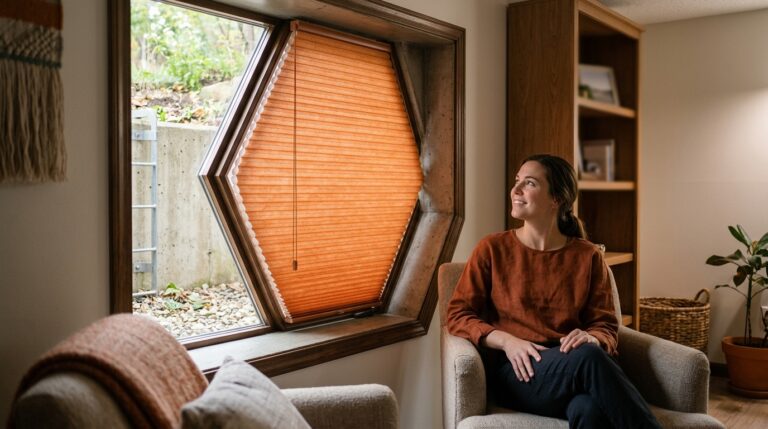
Cold rolls off a window long after the heat kicks on, and the room closest to the glass never quite catches up. Thermal curtains are the first thing most Bergen County homeowners ask us about once that starts in November. This guide covers what they are, how much work they actually do, and what we would fit instead when a drape is the wrong tool.
Short answer
A thermal curtain is a drapery panel built in layers: a decorative face fabric, an insulating core, and a reflective or dense backing. It slows heat loss by holding a pocket of still air between the fabric and the glass. Insulated draperies can reduce heat loss by up to 25 percent according to the U.S. Department of Energy, and how tightly the panel seals the window decides whether you get anywhere near that.
What Are Thermal Curtains and How Do They Work?
Thermal curtains, also sold as insulated curtains or energy saving drapes, are built from three layers that each do a different job.
- Decorative outer layer. The fabric you see from inside the room, in a wide range of colors, patterns, and textures.
- Insulating core. Dense foam, felt, or high density polyester that traps air and slows heat transfer.
- Reflective backing. Usually a white or metallic coating that pushes heat back into the room in winter.
The mechanism is simple. Windows are the weakest part of almost any exterior wall: warm room air cools at the pane, drops, and slides across the floor. A thermal panel puts a pocket of still air in front of that pane and interrupts the loop. It does not change the glass, so on an old double hung sash the drape buys comfort at the surface rather than fixing the window. That is the reasoning behind the rest of our energy efficient window coverings, and there is more on what a panel alone can do in do curtains keep heat out.
7 Key Benefits of Thermal Curtains
- Less heat loss at the window. The insulating core and the trapped air pocket both slow the transfer, most noticeably in north facing rooms.
- Fewer cold spots. You stop feeling the draft that pours off a cold pane and settles around your feet.
- Quieter rooms. Dense, multi layered fabric dampens sound, which matters if you back onto a busy road. More in our noise reducing window treatments guide.
- Light control. Most thermal panels are made up with a room darkening or blackout liner, which is why they land in bedrooms and media rooms.
- UV protection. Closing the panels on the sunny side keeps direct sun off hardwood, rugs, and artwork.
- Summer use. The same layers work in reverse and keep afternoon heat from loading into the room.
- Privacy. A lined panel is opaque, so it works during the day as well as at night.
Thermal Curtains or Cellular Shades for a New Jersey Winter
This is the real decision for most people who land on this page. A thermal drape and a cellular shade fight the same problem from two different positions, and they are not interchangeable.
| What you are comparing | Thermal lined drapery | Cellular shades |
|---|---|---|
| Where it sits | Off the glass, on a rod above and beyond the frame | Inside or on the frame, right at the glass |
| When it insulates | Only when the panels are drawn closed | Whenever the shade is down, including while you are out |
| Light options | Room darkening or blackout liner behind the face fabric | Light filtering or room darkening, plus top down bottom up |
| Look | Soft folds, covers wall and trim, adds fabric to the room | Flat and quiet, leaves the trim visible |
| Best rooms | Bedrooms, formal living rooms, tall window walls | Bays, kitchens, offices, anywhere a panel is in the way |
Cellular shades, also called honeycomb shades, hold air inside the cells of the fabric itself, so they insulate at the pane without anyone having to close anything. We fit Hunter Douglas Duette honeycomb shades along with our own custom drapery, so the answer is often both: a shade at the glass and a lined panel over it, the layered approach covered in how to layer curtains. Compare cell sizes and fabrics in our honeycomb blinds buying guide or on the cellular shades page. If the cold room is a bay, start at bay window treatments; if it is a patio door, start at sliding door treatments. For hard surface options, see the best blinds to keep heat out.
Best Fabrics for Thermal Curtains
Not all thermal panels perform the same. The face fabric and the lining together decide how well the panel holds its air pocket.
Velvet
A dense pile weave insulates well on its own and hangs with enough weight to stay closed against the frame. More on it in our velvet curtains guide.
Polyester with thermal backing
The most common construction. A foam or reflective backing bonded to the face fabric gives solid insulation and an easy care panel.
Wool blends
Natural wool insulates and regulates temperature well, and it is the pick if you want a natural fiber rather than a coated one.
Triple weave fabric
Three layers woven together in one cloth, so you get insulation and light blocking without a separate bonded liner or its stiffness.
A separate thermal lining
If you already own drapery you like, a thermal liner made up to the same finished size and hung behind the panel gets you most of the benefit.
How to Install Thermal Curtains for Maximum Effectiveness
Installation is where thermal curtains are won or lost. A well made panel hung two inches above the frame leaks heat around all four edges. Follow these five rules.
- Mount high. Set the rod 4 to 6 inches above the window frame. That gives you a longer drop and stops warm air escaping over the top of the panel. Hardware options are in our curtain rods and hardware guide.
- Extend wide. The panels should extend 3 to 4 inches past each side of the window so drafts cannot sneak around the edges.
- Touch the floor. For insulation, the hem should just meet the floor or take a slight break. A gap at the bottom lets cold air flow underneath, which is the one case where floor length is not just a style choice.
- Cap the top. A valance or cornice box across the header seals the space behind the rod and stops the convection current from circulating behind the curtain. See our valance guide for styles.
- Consider liners. Thermal liners that attach behind curtains you already own give you insulation without replacing the panels.
All five come down to one idea: seal the perimeter. Sizing matters more here than fabric choice, which is the argument for measuring first. Our custom window treatments guide walks through that.
What we would put on the window
- Bedroom that faces the streetRoom darkening cellular shade with a thermal lined pinch pleat panel over it.
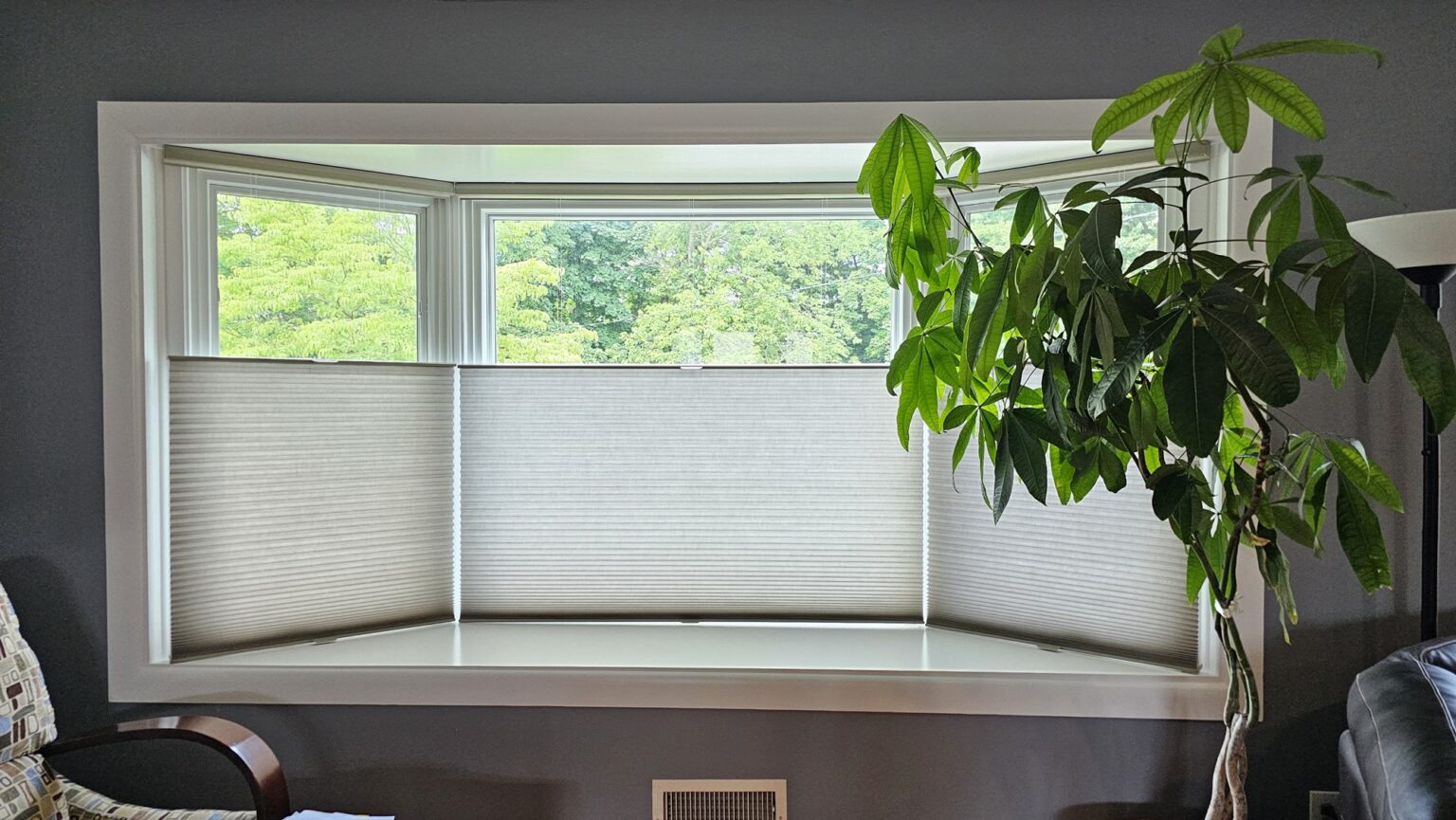
- Living room bay that runs coldCellular shades fitted to each sash, panels at the outside corners for softness.
- Sliding door to the deckA wide cellular shade or panel track, with a lined drape that stacks clear of the door.
- Home office with screen glareTop down bottom up cellular shade: daylight kept high, low sun blocked.
- Drapery you already loveA custom thermal liner made to the same finished size, hung behind it.
Frequently Asked Questions About Thermal Curtains
What is a thermal curtain made of?
A face fabric you choose for looks, an insulating core of dense foam, felt, or high density polyester, and a reflective or dense backing. Some fabrics combine all three in a single triple weave cloth.
Do thermal curtains work in summer?
Yes. The layers slow heat transfer in both directions, so closing them on the sunny side during the afternoon keeps heat from loading into the room.
How do I clean thermal curtains?
Many thermal panels are machine washable on a gentle cycle in cold water, but always check the care label first. Some backings and linings require dry cleaning to stay intact.
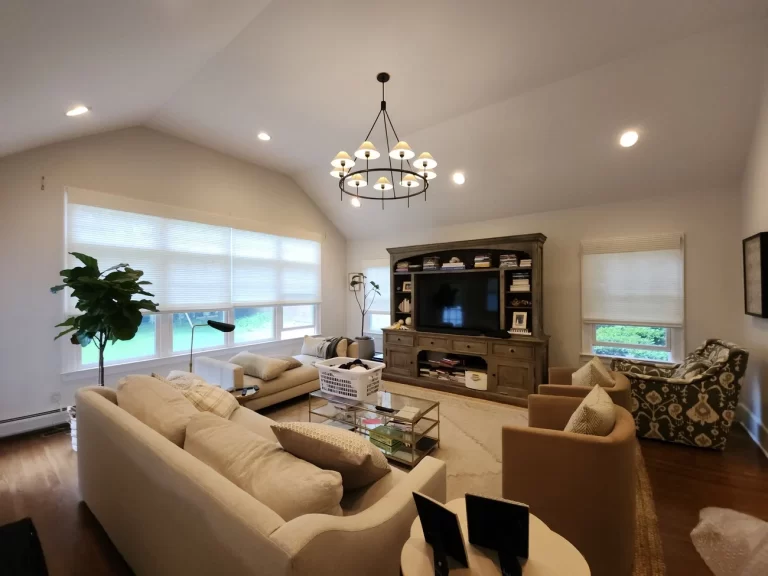
From our own installs in Bergen County
Where to See Thermal Curtains in Bergen County
The Curtain is a family owned window treatment showroom at 545 Broad Ave in Palisades Park, in business since 2007 and serving Bergen County. The owner and designer is Sejun Park. Fabric and lining are hard to judge from product photos: you need to feel the weight of a lined panel and see how much light a room darkening honeycomb fabric holds back. We make custom drapery, and as a Hunter Douglas partner we sell and install Hunter Douglas shades, blinds, and shutters as well.
Measurement is free and in your home, and the quote is written. That visit is where the install rules above meet your walls: where the rod can go, whether the header will take a cornice, how much stack room the panel needs. Call (201) 302-9111, book on the free consultation page, or check the towns on our areas we serve page. You can also browse finished rooms in the gallery, read more about the showroom, or compare categories on the window treatments and shades pages.
Stay Warm and Save Money This Winter
Thermal curtains are one of the few comfort upgrades you can make without touching the window itself. Get the sizing right, seal the top and the sides, let the hem reach the floor, and pair the panel with a cellular shade where the glass is doing the most damage. Do that and the coldest room in the house stops being the one nobody sits in.