
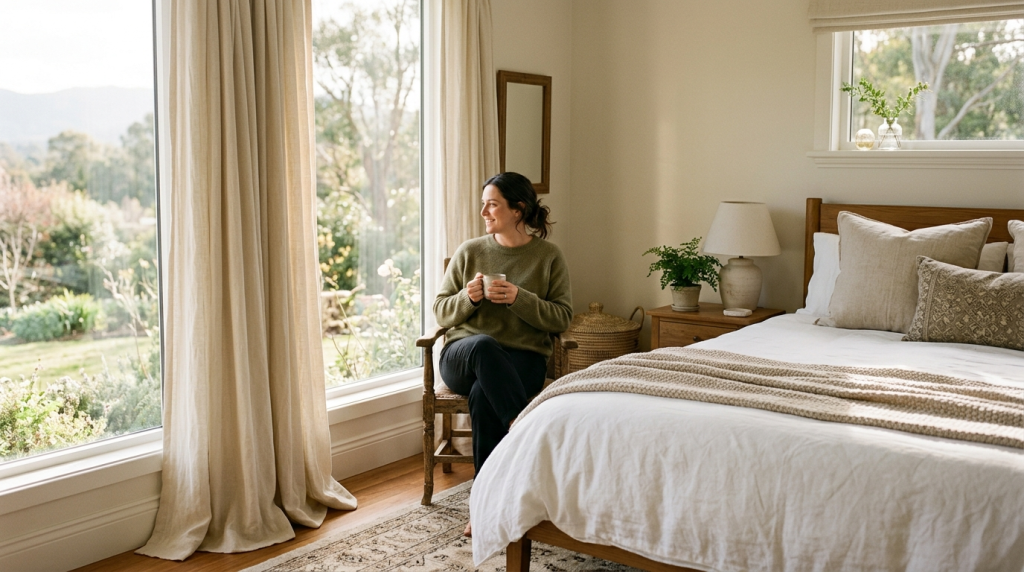
You’ve painted the walls, chosen the perfect bedding, and arranged the furniture just right—yet something still feels unfinished. Your windows are usually to blame. The truth is that bedroom drapes do more heavy lifting than almost any other design element in the room. They control light, noise, privacy, and warmth while quietly setting the tone for everything else. With so many fabrics, linings, and hanging styles on the market in 2026, choosing the right ones can feel overwhelming rather than exciting. This guide walks you through what to look for, how to style drapes like a pro, and where to buy them with confidence.
How to Choose the Perfect Bedroom Drapes for Your Space
Assessing Your Room’s Light and Privacy Needs
Bedrooms need more than pretty fabric at the window. Unlike living rooms, bedrooms demand real light control and true privacy, especially at night. Streetlights, sunrise glare, and nearby neighbors all factor into the decision. Before shopping, walk your room at different times of day. Notice how morning light hits the bed and where evening privacy gaps appear.
East-facing bedrooms often need heavier drapery to block early sun. West-facing rooms may need protection from harsh afternoon heat. If you share a wall with a neighboring property or face a busy street, privacy becomes the top priority. Many homeowners find helpful direction in a detailed top 5 shades for privacy and light in new jersey comparison, which breaks down real options for common window challenges.
Insulation matters too. Drapes add a layer of warmth in winter and help block heat in summer, cutting energy costs. A dedicated provider can measure your room’s exposure and recommend fabric weights suited to your climate and comfort goals.
Matching Drapes to Bedroom Style and Furniture
Drapes should echo your bedroom’s overall style. A modern platform bed pairs well with clean, simple panels. A traditional four-poster bed suits richer, more layered fabric. Look at your existing furniture finishes, wall color, and bedding before choosing a direction.
Scale matters as much as style. Tall ceilings can handle bold, floor-length drapes. Smaller rooms often look better with lighter, simpler panels. Consistency across the room creates a calm, restful feel—exactly what a bedroom should deliver.
Measuring Windows Correctly Before You Buy
Accurate measurements prevent costly mistakes. Measure window width and height twice, and note ceiling height for rod placement. Small errors lead to gaps that let in light or reduce privacy.
Many shoppers research options further through an educational blog before scheduling a consultation. A professional measurement, done in person, remains the safest way to guarantee a precise, polished fit.
Popular Fabrics and Their Characteristics
Natural Linen and Cotton Blends
Linen and cotton are breathable, casual fabrics. They filter light softly and add texture without feeling heavy. Both wrinkle easily and often need blending with other fibers for better structure. For a deeper look at material trade-offs, see the best fabrics for curtains material pros and cons.
Heavy Velvet and Luxury Textiles
Velvet and silk bring richness and weight. Fabric weight directly changes how drapes fall and how much light they block. Heavier velvets pool elegantly and darken a room, while silk drapes gracefully but is delicate and prone to sun damage.
The table below compares five common fabrics used in sleeping spaces today.
| Fabric | Weight | Light Filtering | Care Level |
|---|---|---|---|
| Linen | Light | Moderate | Easy, gentle wash |
| Cotton Blend | Light-Medium | Moderate | Easy, machine wash |
| Velvet | Heavy | High | Professional clean |
| Silk | Medium | High | Dry clean only |
| Polyester Blend | Medium | Moderate-High | Easy, low fuss |
Performance and Easy-Care Synthetics
Synthetic blends resist fading, wrinkling, and moisture. They suit busy households needing durability without constant upkeep. Cleaning methods still vary by fiber, so check how to wash curtains before starting any at-home cleaning routine.
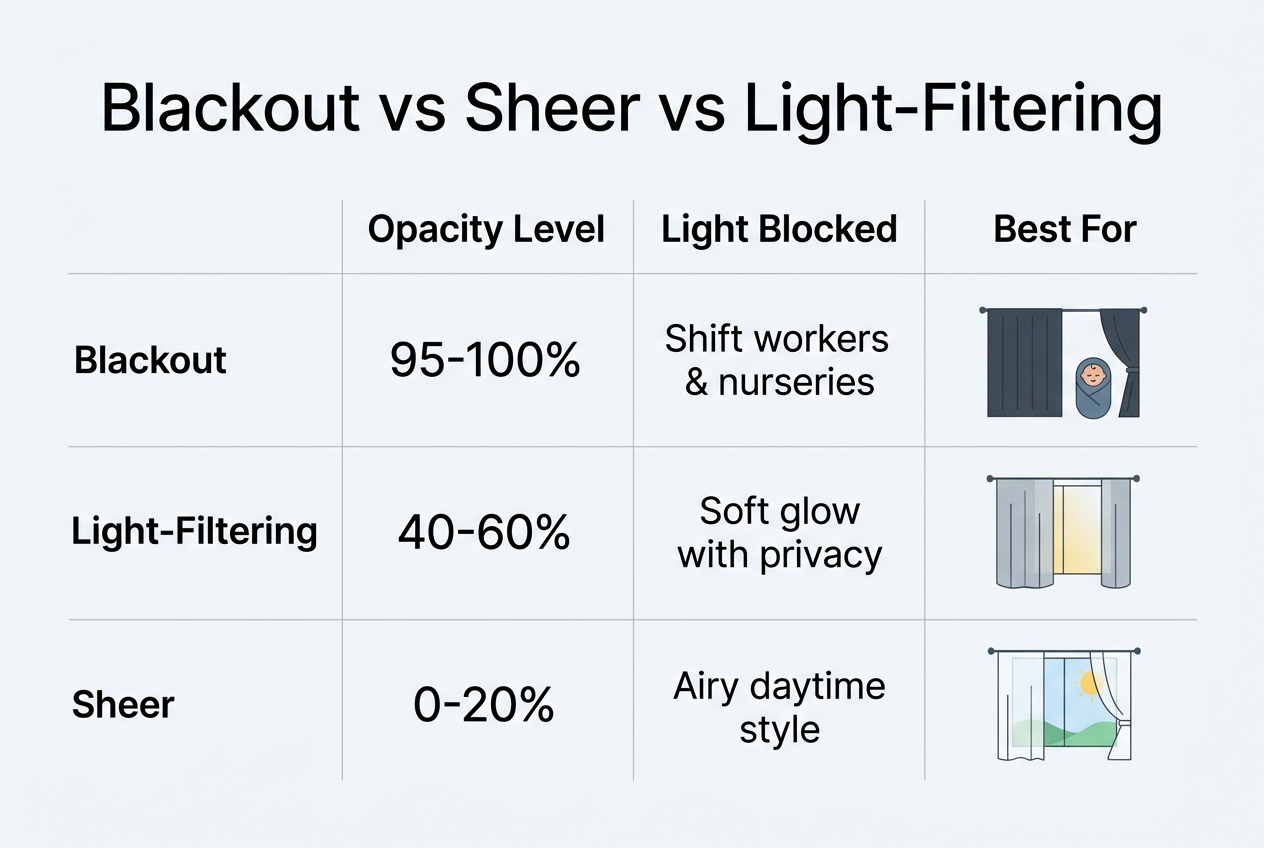
Blackout vs Sheer vs Light-Filtering: Comparing Opacity Levels
Blackout Drapes for Better Sleep
Blackout drapes block nearly all outside light. They help shift workers sleep during daytime hours and support deeper rest for everyone else. Dense, tightly woven fabric or a foam backing stops light and muffles outside noise. Many sleep specialists point to the benefits of blackout curtains for regulating melatonin and improving sleep quality.
Sheer and Semi-Sheer Options for Daytime
Sheer panels soften harsh sun while keeping rooms bright. They allow airflow and preserve a view, making bedrooms feel open during the day. Semi-sheer fabrics offer a middle ground, cutting glare without darkening the room too much.
Layered Panels for Day-to-Night Versatility
Pairing sheers with blackout panels gives a bedroom flexibility. Open the sheers for morning light, then close the blackout layer at night. The table below compares typical performance across common opacity types.
| Type | Light Blocked | Best Use | Noise Reduction |
|---|---|---|---|
| Blackout | 95–100% | Sleep, shift workers | High |
| Semi-Sheer | 40–60% | Daytime privacy | Low |
| Sheer | Under 20% | Airflow, soft light | Minimal |
| Layered (Sheer + Blackout) | Adjustable | Day-to-night flexibility | Medium-High |
Homeowners exploring options can browse Custom Bedroom Curtains & Drapes to compare fabric weights and layering combinations suited to their windows.
Choosing Colors and Patterns That Set the Mood
Soothing Neutrals and Country-Style Prints
Soft neutrals remain a top pick for bedrooms. Shades like ivory, taupe, sage, and dove gray create a calm atmosphere that supports rest. These colors also blend easily with changing decor, so you won’t need new drapes every time you repaint.
Country-style prints add warmth without overwhelming a room. Think small florals, gingham checks, or subtle stripes in muted tones. These patterns work well in cottage-style or farmhouse bedrooms, especially paired with natural wood furniture and woven textures.
If you’re unsure where to start, the same logic used for choosing living room curtains applies to bedrooms too. This guide on how to choose curtains for living room spaces offers helpful principles on color balance that translate directly to bedroom design.
Bold Colors and Statement Patterns
Bold drapes turn a plain bedroom into a statement space. Deep navy, emerald, or burgundy adds drama, especially against a neutral wall. Large-scale florals, geometric prints, or trellis designs give the room personality and visual interest.
Pattern scale matters. Small prints can look busy in a large room, while oversized patterns can overwhelm a small one. As a rule, choose bolder, larger prints for bigger windows and rooms with 9-foot or taller ceilings. Smaller rooms often look better with tighter, subtler patterns.
Bold choices don’t need to be expensive. Many affordable retailers now carry striking options, such as the Curtains & Drapes – Affordable & Modern collection, which offers budget-friendly ways to experiment with color before committing to custom fabric.
Coordinating Drapes with Bedding and Walls
Drapes should complement, not compete with, your bedding and wall color. Pull one accent shade from a patterned comforter and echo it in solid drapes for a pulled-together look. This creates visual harmony without matching everything exactly.
For patterned walls or wallpaper, keep drapes simple and solid. This prevents the room from feeling too busy. On plain walls, patterned drapes add depth and texture instead.
Consider the room’s natural light, too. South-facing bedrooms handle darker, richer tones well, since they get plenty of sunlight to balance the mood throughout the day.
Hardware, Headers, and Hanging Styles Explained
Pleat and Header Styles Compared
The header determines how drapes fall and how much fullness they show. A quick guide to pleat curtains can help you compare options before ordering.
- Rod pocket headers slide directly onto the rod, creating soft, gathered folds that suit casual bedrooms.
- Grommet headers use metal rings for a clean, modern look and smooth, quiet gliding.
- Pinch pleat headers gather fabric into crisp folds, giving a tailored, traditional appearance.
- Ripple fold headers create even, wave-like curves and hang close to the wall or ceiling track.
Choosing Rods, Tracks, and Finishes
Rod material affects both weight capacity and style. Metal rods suit heavier fabrics, while wood rods add warmth to lighter panels. Finishes like matte black, brushed nickel, and antique bronze should match existing hardware, such as door handles or lighting fixtures.
Mounting Height and Width Best Practices
Ceiling-mounted tracks make rooms feel taller and work well with ripple fold headers. Wall-mounted rods offer flexibility and easier installation for most bedrooms. Hang panels 4 to 6 inches above the window frame, and extend the rod 8 to 12 inches beyond each side for full coverage. For inspiration on proportions and styling, browse the Bedroom Curtains – Blackout Curtains & Shades Collection for real-room examples.
Motorized and Cordless Options for Modern Bedrooms
Benefits of Cordless Safety Features
Dangling cords are a real hazard in bedrooms shared with kids or pets. Cordless designs remove that risk entirely. There’s nothing to tangle, chew, or pull down.
Cordless drapery tracks and lift systems use hidden wands or gentle hand pulls instead. This keeps the look clean and the operation simple. Many families choose cordless as a baseline safety upgrade before adding any tech.
Beyond safety, cordless setups tend to last longer. Fewer moving parts mean less wear over years of daily use, which matters for a treatment meant to hold up night after night.
Smart Motorization and App Control
Motorized drapes add real convenience to a bedroom routine. One tap closes them at bedtime; another opens them at sunrise, no reaching or tugging required.
Most systems pair with smartphone apps, letting homeowners set schedules, group rooms, or adjust settings remotely. Many also connect to smart home hubs, syncing drapes with lighting or thermostats for a coordinated wake-up sequence.
Voice control through Alexa or Google Home is now common too. A simple spoken command opens or closes the drapes, which is especially helpful for anyone with mobility limitations or a nightstand out of reach.
Pairing Drapes with Automated Shades
Layering motorized drapes over automated shades gives precise control of light and privacy. Shades handle daytime glare while drapes add nighttime darkness and texture. For a closer comparison of these two systems, this guide on automated blinds vs automated shades which smart window t… breaks down the differences well. Reviewing options for Bedroom Curtains alongside shades helps confirm both layers fit the room’s style before installation begins.

Step-by-Step Guide to Measuring and Installing Drapes
Tools and Measurements You’ll Need
Before shopping for Curtains For Bedroom & Window Drapes, gather a steel tape measure, a pencil, a step stool, and a level. A metal tape is more accurate than fabric, since it won’t stretch or sag. Measure the window three times: once at the top, middle, and bottom, since older frames are rarely perfectly square. Write every number down before you leave the room.
Calculating Width for Proper Fullness
Flat, skimpy panels are the most common drapery mistake. The table below shows target multipliers for common fabric weights.
| Fabric Type | Fullness Multiplier | Rod Width Example | Total Fabric Width Needed |
|---|---|---|---|
| Sheer voile | 2.5x – 3x | 60 inches | 150 – 180 inches |
| Cotton or linen blend | 2x – 2.5x | 60 inches | 120 – 150 inches |
| Velvet or heavy jacquard | 1.5x – 2x | 60 inches | 90 – 120 inches |
| Blackout lined panels | 2x | 60 inches | 120 inches |
Installing for a Polished, Puddled, or Floating Look
Length determines the finished style. Floating panels break half an inch above the floor. Polished panels just kiss it. Puddled panels add three to six extra inches for a formal drape. For full guidance on bracket placement and rod height, review this resource on how to hang drapes before drilling. Always mount brackets four to six inches above the frame for height and visual drama.
Caring for and Maintaining Your Drapery Over Time
Routine Cleaning and Dust Removal
Drapes collect dust, pollen, and pet hair just like any soft surface in your bedroom. Regular upkeep keeps fabric looking fresh and extends its life significantly.
- Vacuum panels weekly using a soft brush attachment on low suction to lift surface dust.
- Shake out lightweight panels outdoors once a month to release trapped particles.
- Use a lint roller on pleats and folds where dust tends to settle deepest.
- Rotate curtain rods slightly every few months to prevent permanent creasing at the fold lines.
Washing, Dry Cleaning, and Spot Treatment
Cleaning method depends entirely on fabric type. Cotton and linen blends often tolerate gentle machine washing on cold, delicate cycles. Silk, velvet, and heavier weaves usually require professional dry cleaning to avoid shrinkage or water spotting. For small stains, blot immediately with a damp cloth and mild soap rather than scrubbing. Always check manufacturer tags before treating any panel, since improper washing can warp linings or shrink hems permanently.
Protecting Fabric from Sun Fading
Sunlight breaks down dyes over time, leaving visible fading on the side facing your window. Adding drapery lining blocks UV rays and adds a protective barrier between fabric and glass. Watch this Top 10 Drapery Ideas for Bedroom video for styling inspiration that pairs well with protective lining choices.
Custom vs Ready-Made Drapes: Which Is Right for You
Fit, Fabric, and Design Flexibility
Ready-made panels come in fixed sizes, usually 84, 96, or 108 inches long. This works fine for standard windows. But tall windows, bay windows, or extra-wide walls often need custom sizing. Custom drapes are built to your exact measurements, down to the inch.
Fabric choice is another big difference. Ready-made options limit you to whatever is in stock. Custom drapery opens up hundreds of fabrics, weights, linings, and trim details. You can match a specific paint color or add blackout lining without settling for a compromise. If you want a broader starting point, browsing Curtains for Bedroom & Drapes shows the range of styles available before deciding which route fits your room.
Cost and Lead Time Considerations
Ready-made panels are budget-friendly, often $30 to $100 per panel. They ship fast, sometimes within days. Custom drapes cost more, typically $150 to $400 per panel depending on fabric and lining, and take three to eight weeks to produce.
That wait pays off in precision and durability. Custom drapes hang better, last longer, and avoid the puddling or gapping common with off-the-shelf sizes. For homeowners on a tight deadline, ready-made is the practical choice. For a lasting investment, custom wins.
Working with a Design Consultant
A design consultant measures your windows, discusses light needs, and recommends fabrics suited to your bedroom’s style. This guidance prevents costly mistakes, like choosing a fabric too sheer for privacy or a header that won’t clear a ceiling fan.
Many local businesses offer free in-home consultations. This service is especially valuable for tricky windows or when coordinating drapes with existing furniture and blinds. Homeowners looking to elevate your interiors with custom drapes in new jersey often find the consultation itself clarifies which fabrics and headers actually suit their space.
Budgeting for New Bedroom Window Treatments
What Drives the Cost of Drapery
Fabric choice has the biggest impact on price. Basic polyester panels might run $40 to $80 per window, while silk, velvet, or linen blends can climb to $200 or more. Lined and interlined drapes cost extra but improve insulation and light control.
Hardware adds another layer of cost. Simple tension rods are cheap, but decorative rods in brass or wrought iron, plus motorized tracks, can double a project’s total price. Wider windows and floor-length panels also require more yardage, raising labor and material costs together.
Installation matters too. A dedicated provider often charges for measuring, mounting, and fitting, especially for custom work. This step is worth the investment, since it helps protect your furniture with the right window treatments and prevents costly rehanging later.
Tips for Saving on Custom Treatments
Ask about bundle discounts when ordering drapes with blinds or shutters. Many local businesses offer reduced rates for multi-room projects or repeat customers, which can trim 10 to 20 percent off the total.
Watch for seasonal promotions. January and July often bring clearance pricing on discontinued fabrics, while Hunter Douglas frequently runs rebates each fall and spring. Timing a purchase around these windows can save hundreds without sacrificing craftsmanship.
If you’re ready to find the perfect drapes for your bedroom, the team at The Curtain can help you get it right the first time. As a family-owned business offering premium Hunter Douglas treatments, they’ll bring fabric samples right to your home and walk you through options suited to your space and light needs. Book a free in-home design consultation today and start creating the cozy, restful bedroom you’ve been picturing.