Custom draperies are the one window treatment you cannot buy off a shelf and get right. The panels are cut to your window, the lining is picked for the room, and the drapery installation is planned to a rod height and width before the fabric is ever cut. This guide walks a Bergen County homeowner through choosing and installing custom draperies in the order a showroom would. If you would rather have it measured and installed, The Curtain in Palisades Park does that; the section near the end explains how.
Why Choose Custom Draperies?
Ready-made panels come in a handful of sizes, usually 84, 96 or 108 inches long and about 50 inches wide. Bergen County houses rarely cooperate. Older colonials and split-levels have windows set close to the ceiling, radiators under the sill, or trim that is wider on one side than the other. Custom draperies solve four things ready-mades cannot:
- Exact fit. Panels are cut to your measured width and length, so the hem lands where you want it, whether that is a half inch off the floor or puddled by an inch.
- Fabric, color and pattern you chose, not a factory’s three colorways.
- Light control and privacy built in. The lining is chosen for the room, and the panels can be layered with a shade for full blackout.
- Construction that lasts. Weighted hems, deeper headers and proper lining keep the panels hanging straight for years.
A lined, weighted custom panel hangs in even folds. An unlined ready-made panel flares at the hem and shows every crease from the package (see how to get wrinkles out of curtains).
How to Choose the Right Custom Draperies
Start with the window and the room
Measure the window width and height, and note what is around it: ceiling height, trim width, radiators or baseboard heat below, and wall space on each side. Then name the job the drapery has to do. A living room facing the street needs privacy at night and softness by day. A bedroom needs darkness. The job decides the lining and the fabric weight before you look at a single color.
Choose the fabric
- Cotton and cotton blends: easy to live with, take pattern well, good in family rooms.
- Linen: natural, relaxed, filters light softly. It creases and moves a little with humidity in a New Jersey summer, so it is usually lined.
- Silk and faux silk: the most formal look. Real silk fades in direct sun and needs lining. Faux silk in polyester gives the sheen without the fading.
- Velvet: heavy, rich, and the best light and sound blocker of the four. Right for bedrooms and media rooms. More in our velvet curtains guide.
- Sheer voile or linen sheer: daytime privacy with full light, almost always paired with a second layer.
Choose the lining
Lining changes how a panel looks and works more than the face fabric does.
- Unlined: sheers and casual cotton. Light comes through, and so does the pattern from the street side.
- Standard lining: a cotton or polyester sateen behind the face fabric. Softens light, protects against sun fading, gives the folds body. The default for living and dining rooms.
- Blackout lining: a foam-backed or triple-weave lining that blocks nearly all light through the fabric. Bedrooms, nurseries and home theaters. Light still leaks at the panel edges, so bedrooms often get a blackout shade underneath.
- Interlining: a flannel layer between face and lining. Adds insulation, deadens sound, and makes silk and thin linen hang like a heavier fabric.
Decide fullness and length
Fullness is how much fabric is in the panel compared with the width it covers. Two times fullness, meaning a 100-inch-wide panel covering 50 inches of rod, is the standard for pleated drapery. Two and a half times is fuller and more formal, and one and a half times is the minimum before closed panels look flat. For length, the three usual choices are a half inch off the floor (the cleanest for panels you open and close daily), just touching the floor, or a 1 to 3 inch puddle for a formal room where the panels mostly stay put.
Pick the header style
- Pinch pleat: classic and tailored, hangs from rings or a traverse rod. Goblet and cartridge pleats are the dressier cousins.
- Grommet: metal rings punched through the header. Slides easily on a round rod, modern and casual. See our grommet curtains guide.
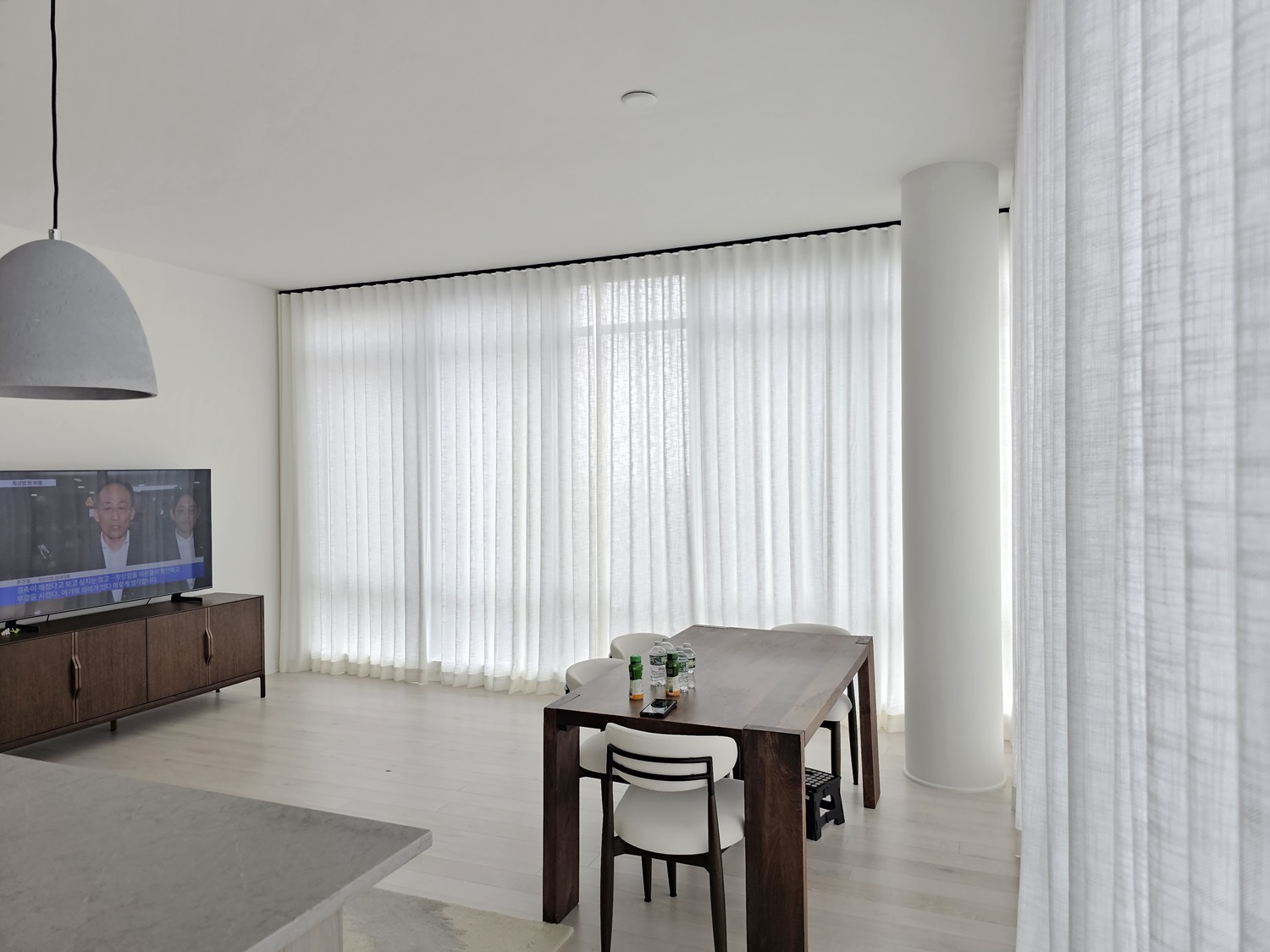
- Ripplefold: a continuous S-wave on a track. The cleanest look for wide windows and sliding doors, and the easiest to motorize.
- Tab top and rod pocket: casual, stationary panels for windows you rarely close.
Color and pattern last
Neutral solids a shade or two off the wall read as architecture and date slowly. Bold color or a large pattern makes the drapery the focal point, so keep the rest of the room quiet. A 12-inch swatch reads very differently from a 108-inch panel, so see fabric at full drop before you order.
Planning Your Drapery Installation
Most of what makes drapery look custom is decided before the first hole is drilled.
Rod height and width
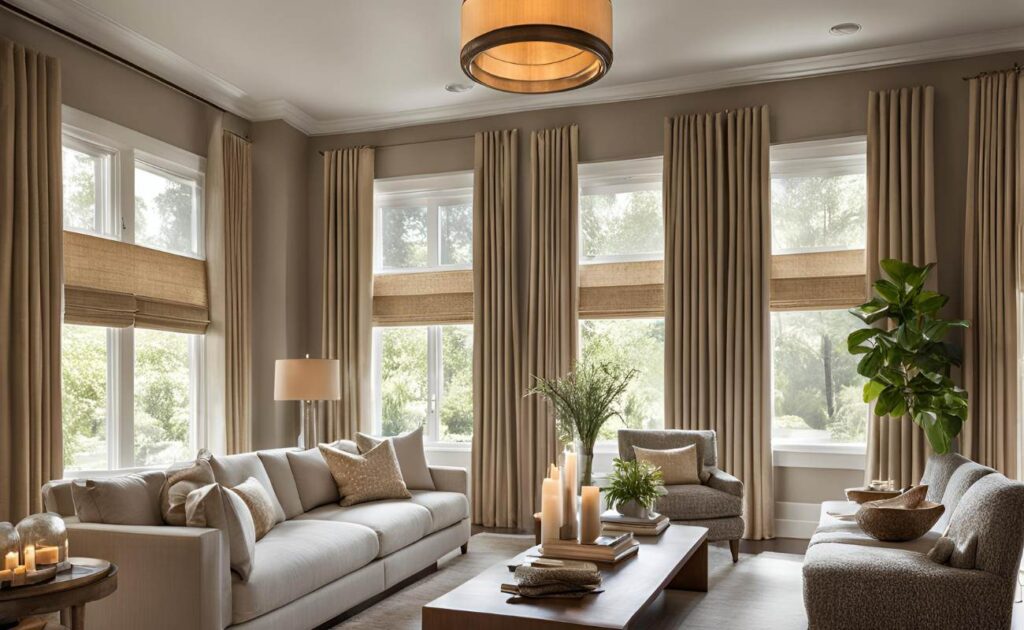
- Height: mount the rod 4 to 6 inches above the top of the window trim. With 9-foot or taller ceilings, go higher, up to halfway between trim and ceiling, or all the way up for floor-to-ceiling panels.
- Width: extend the rod 6 to 12 inches past the frame on each side. The open panels then stack on the wall instead of over the glass, and the window looks wider.
- Stack space: a pleated panel at two times fullness stacks back to roughly a quarter to a third of the width it covers. Size the rod overhang so the glass is clear when the drapery is open. It matters most on a large window or a sliding door.
How to hang double curtains
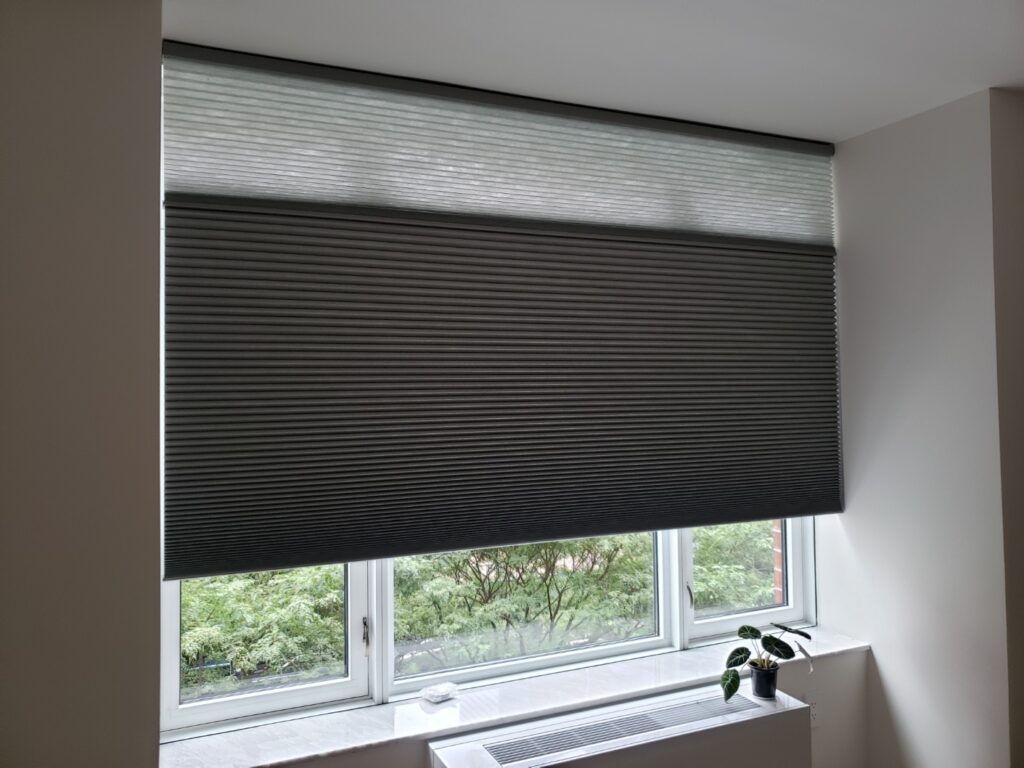
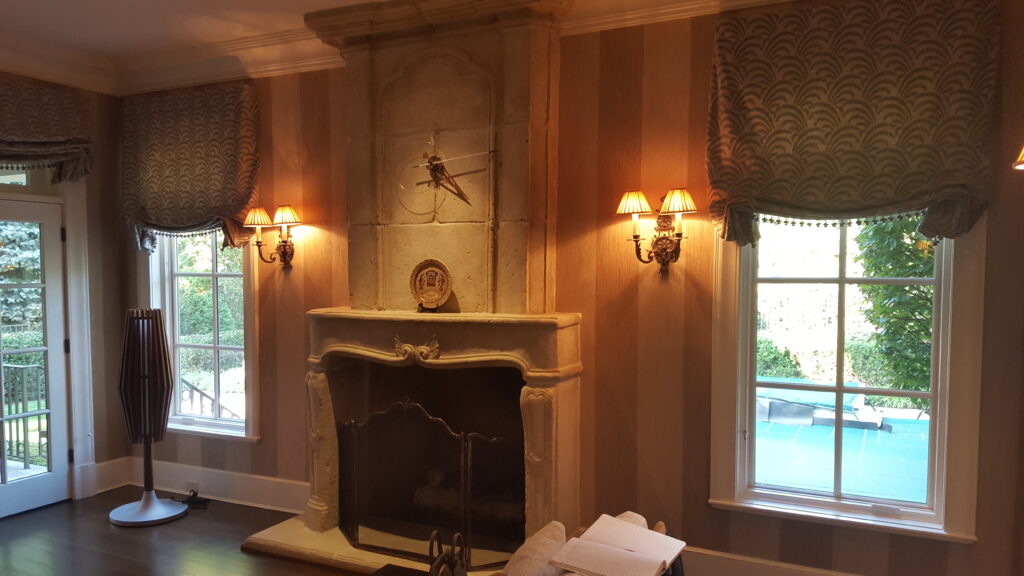
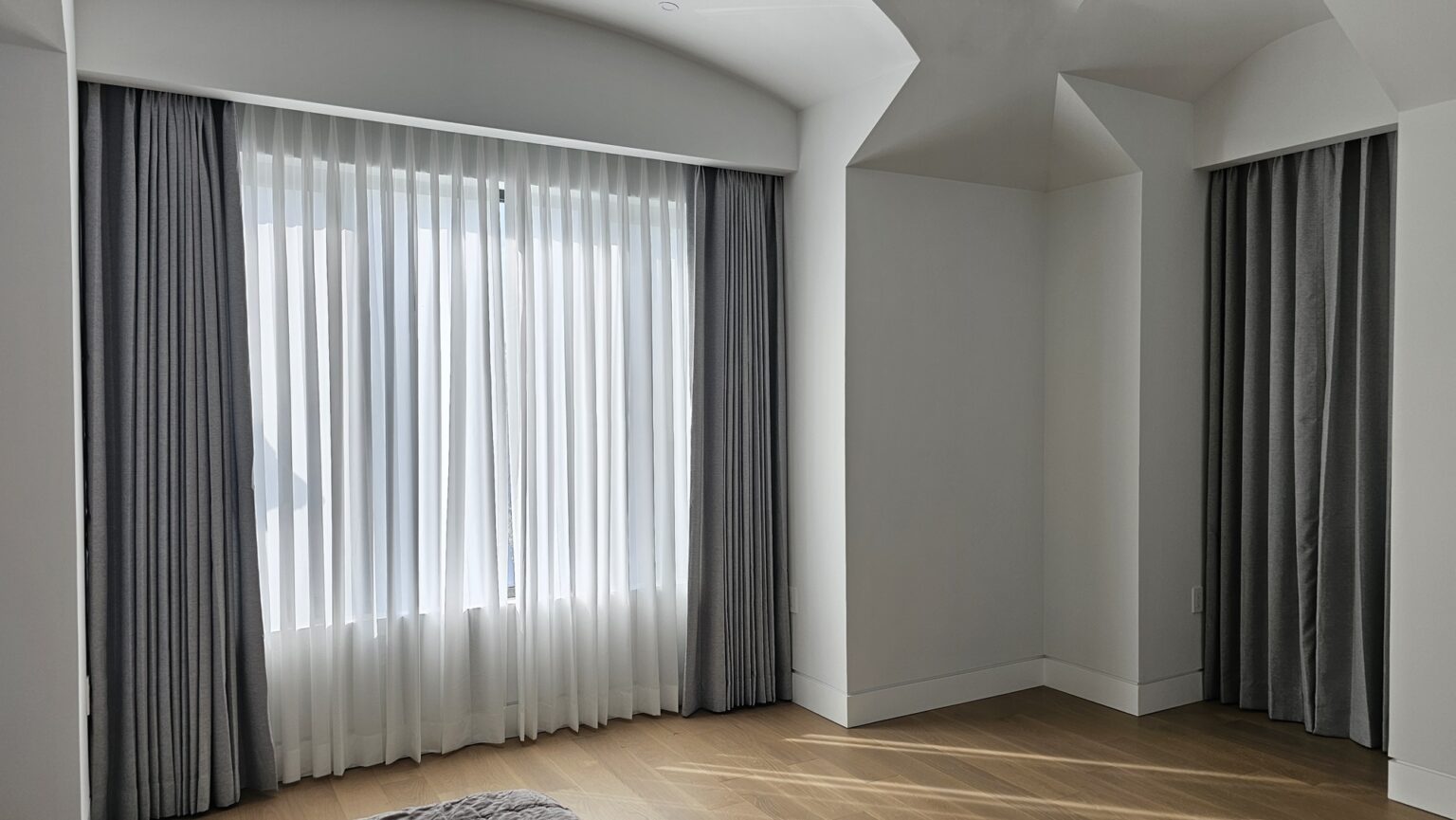
Double curtains, meaning a sheer on an inner rod and a drapery panel on an outer rod, are a common custom setup in Bergen County living rooms. Use a double rod or two rods on stacked brackets, with the inner rod set 2 to 3 inches behind the outer one so the layers clear each other. The outer rod carries the weight, so it gets the studs or the heavy anchors. Hang the sheer first, then the drapery. The other option is to keep the drapery as the outer layer and put a roman shade or a cellular shade inside the frame instead of a sheer. That pairing looks cleaner from inside and gives better blackout in a bedroom. More combinations in our guide to layering curtains.
Tools and materials
- Metal measuring tape, pencil and level
- Stud finder, drill and bits
- Screws and wall anchors rated for the rod’s weight
- Rod, brackets and rings or track
- Ladder or step stool
- Your custom draperies
Install the brackets
- Mark the placement. Measure down from the ceiling, not up from the floor, so both brackets match even if the floor is off.
- Check level. A rod that is off by a quarter inch across 8 feet shows in the hem.
- Drill pilot holes, into a stud wherever the layout allows.
- Attach the brackets. Add a center support on any rod longer than about 6 feet, or it will bow under lined panels.
A note on Bergen County walls: pre-war houses in Englewood, Ridgewood and Teaneck often have plaster over lath. Where you cannot reach a stud, use a toggle or a heavy-duty screw anchor rated for the load, not the plastic plugs in the bracket box. More in our curtain rods and hardware guide.
Hang the draperies
- Assemble the rod and put the rings or carriers on it before it goes up.
- Attach the panels to the rings with drapery pins, or feed grommets and rod pockets onto the rod on the floor.
- Mount the rod on the brackets and tighten the set screws.
- Train the pleats. With the drapery open, fold each pleat the way it should fall, tie the stack loosely with a fabric strip, and leave it two or three days so the folds set.
- Adjust for symmetry. Shift rings so the leading edges meet at center.
Maintenance Tips for Longevity
Vacuum lined panels with the upholstery brush every few months. Dry clean lined or interlined drapery; only unlined cotton and polyester should see a washing machine, and only if the care label allows it. Check brackets once a year and re-tighten screws. Blot spills right away with a white cloth and plain water, then leave the stain to a cleaner who knows the fabric.
From our own installs in Bergen County
How We Do It at the Showroom
The Curtain is a family-owned window-treatment showroom at 545 Broad Ave in Palisades Park, in business since 2007 and serving Bergen County. Sejun Park is the owner and designer. We make custom drapery, and as a Hunter Douglas partner we also sell and install Hunter Douglas shades, blinds and shutters, so the double-layer setups above can be planned as one job instead of two.
A drapery project runs in four steps:
- Free in-home measurement. We measure each window in your home and talk through what the room needs before recommending fabric, lining and header.
- Written quote. The recommendation comes in writing so you can compare and decide on your own schedule.
- Fabrication. Your drapery is made to the measurements we took, in the fabric, lining and header style you chose.
- Installation. We install the hardware, hang the panels and dress the pleats so they fall correctly from day one.
Book the free in-home measurement at our consultation page or call (201) 302-9111. We serve Bergen County; the town list is on our areas we serve page, and finished projects are in the gallery.