Table of Contents
You’ve decided on the perfect color, measured your windows twice, and chosen a beautiful header style. But there’s one decision that matters more than any of these: fabric. The material you choose determines how your curtains drape, how much light they block, how long they last, and how much maintenance they require.
Fabric is the foundation of great curtains. A beautiful color in the wrong fabric will disappoint. A simple color in the right fabric will exceed expectations. Understanding your options—and which works best for different rooms and lifestyles—is essential to making a choice you’ll love for years.
In this comprehensive guide, we’ll break down every major curtain fabric option, comparing their characteristics, ideal uses, and care requirements to help you make the perfect choice.
Natural Fabrics
Linen
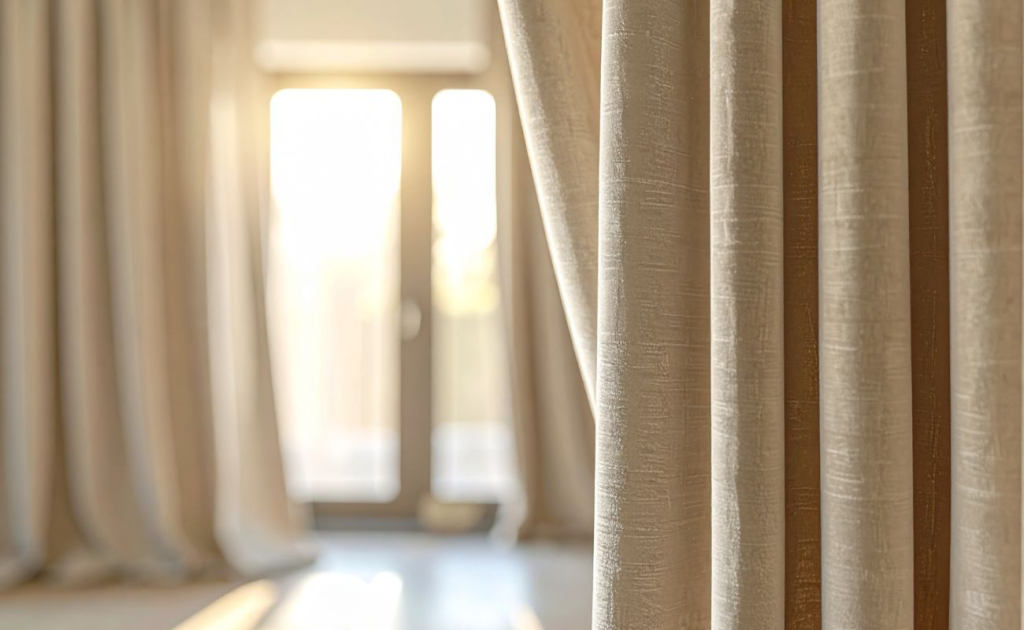
Linen is the fabric of the moment—and one of the oldest textile materials known to humanity. Made from flax fibers, linen has a distinctive texture with natural slubs (slight irregularities) that add character and visual interest.
Characteristics: Natural texture, breathable, filters light beautifully, softens with age, wrinkles naturally
Best for: Living rooms, dining rooms, bedrooms (with blackout lining), coastal and farmhouse styles
Care: Many are machine washable; may shrink; wrinkles are part of the look or can be steamed
Price point: Medium to high
Cotton
Cotton is the workhorse of curtain fabrics—versatile, affordable, and available in countless weaves and weights. From crisp canvas to soft sateen, cotton adapts to virtually any style.
Characteristics: Clean finish, versatile weight options, breathable, easy to dye (available in any color)
Best for: Any room; particularly good for kids’ rooms and high-traffic areas
Care: Usually machine washable; may shrink; prone to wrinkling
Price point: Low to medium
Silk
Silk is the ultimate luxury fabric—luminous, with an incomparable drape and subtle sheen. Real silk catches light like no synthetic can replicate.
Characteristics: Lustrous sheen, elegant drape, lightweight yet strong, naturally temperature-regulating
Best for: Formal living rooms, dining rooms, master bedrooms; low-traffic areas
Care: Dry clean only; fades in direct sunlight; handle with care
Price point: High to very high
Wool
Wool curtains are excellent insulators, naturally flame-resistant, and have a rich, substantial feel. They’re less common but worth considering for specific applications.
Characteristics: Excellent insulation, sound-absorbing, naturally flame-retardant, substantial weight
Best for: Cold climates, media rooms, bedrooms in drafty homes
Care: Dry clean; may attract moths if not properly stored
Price point: High
Synthetic Fabrics
Polyester
Don’t dismiss polyester—modern versions are remarkably sophisticated. It’s durable, wrinkle-resistant, affordable, and can convincingly mimic natural fabrics.
Characteristics: Wrinkle-resistant, colorfast, affordable, durable, low-maintenance
Best for: High-traffic areas, kids’ rooms, rental properties, budget-conscious decorating
Care: Machine washable; resists shrinking and fading
Price point: Low to medium
Blends
Blended fabrics combine the best of both worlds—natural aesthetics with synthetic durability. Common blends include cotton-polyester, linen-cotton, and silk-polyester.
Characteristics: Varies by blend; typically easier care than pure natural fibers while retaining their look
Best for: Anyone wanting natural appearance with easier maintenance
Care: Usually machine washable; check labels
Price point: Medium
Specialty Fabrics
Velvet
Velvet is the drama queen of curtain fabrics—rich, luxurious, and undeniably glamorous. Its pile catches light beautifully and creates stunning depth.
Characteristics: Plush pile, excellent light blocking, sound-absorbing, insulating, available in cotton, silk, or synthetic
Best for: Formal rooms, media rooms, bedrooms wanting drama and light control
Care: Dry clean recommended; can crush if stored improperly
Price point: Medium to high
Voile and Sheer Fabrics
Voile and other sheers are lightweight, semi-transparent fabrics that filter light without blocking it. They create an airy, romantic atmosphere.
Characteristics: Translucent, lightweight, flowing, creates soft glow
Best for: Layering with heavier curtains; living rooms; anywhere you want light without direct sun
Care: Usually machine washable; handle gently
Price point: Low to medium
Best Fabrics by Room
Living Room
Top picks: Linen, cotton, velvet, or high-quality polyester. Choose based on your style—linen for relaxed elegance, velvet for drama, cotton for versatility.
Bedroom
Top picks: Velvet or lined linen for blackout capability. Silk for luxury. Any fabric with blackout lining works for light control.
Dining Room
Top picks: Silk or velvet for formal dining; linen or cotton for casual. Consider cleanability near food.
Kitchen
Top picks: Cotton or polyester blends that are machine washable. Avoid delicate fabrics near cooking areas.
Kids’ Rooms
Top picks: Polyester or cotton—durable, washable, and affordable. Blackout options help with naps and early bedtimes.
Quick Comparison
- Most luxurious: Silk, followed by velvet
- Most durable: Polyester, followed by cotton
- Easiest care: Polyester and polyester blends
- Best light blocking: Velvet, wool, or any fabric with blackout lining
- Most natural look: Linen, followed by cotton
- Best value: Cotton and polyester blends
Choose the Right Fabric for Your Life
The perfect curtain fabric balances aesthetics with practicality. Consider your room’s purpose, your lifestyle, and your maintenance preferences. There’s no universally “best” fabric—only the best fabric for your specific needs.
When in doubt, order samples. Seeing and touching fabric in your own space, your own light, tells you more than any description. The right fabric will feel right—and you’ll know it when you find it.
Need help choosing? The Curtain USA offers free fabric samples and expert consultations. Contact us to find the perfect material for your curtains.