If you have searched how to make goblet pleat curtains or how to make cartridge pleat curtains, you want one of two things: a weekend sewing project, or the heading you saw in a photo and could not name. This guide covers both: the steps for each pleat, where home-sewn headings fall apart, and what changes when a workroom pleats the panels instead. We are a family-owned window treatment showroom at 545 Broad Ave in Palisades Park, and custom drapery for Bergen County homes is what we make, so the second half is what we would tell you at your window.
Short answer
Both are hand-formed headings sewn into a stiffened band at the top of a drapery panel. You cut the panel two to three times the finished rod width, sew buckram into the top, mark even pleat positions, then shape each fold into an open cup for a goblet or a smooth upright roll for a cartridge and hand stitch its base. What separates a crisp result from a sagging one is fabric weight and what supports the pleat from inside.
What Goblet and Cartridge Pleats Actually Are
A goblet pleat opens at the top like the bowl of a wine glass. The fold is pinched and stitched tight at the base, and the cup above stays open, usually padded so it keeps a round mouth instead of folding flat. A cartridge pleat skips the pinch. The fabric rolls into a smooth upright cylinder, and a row of them reads like a line of tubes across the top of the panel.
Both need real fullness and both read dressy. Goblet leans traditional and suits formal dining rooms and tall front rooms. Cartridge is quieter and turns up on modern floor to ceiling glass. Our notes on modern versus traditional curtains are a useful check before you commit.
How to Make Goblet Pleat Curtains
- Measure and cut. Measure the rod width, not the glass. Cut the panel two to three times that width, and add length for the hem and the heading allowance.
- Sew the hem and sides. Double fold the bottom hem, press it, and stitch straight across. Do the same at the sides. If you are lining the panel, lay the lining behind the face fabric and secure it along the edges so it cannot shift.
- Build the heading. Stitch a stiff buckram band into the top of the panel on the reverse side. Buckram is what holds the pleat upright. Heading tape can substitute on lighter fabric, but the top reads softer.
- Form and support each pleat. Chalk the pleat positions so the spacing is even, pinch each section closed at the base of the buckram, and hand stitch that base. Then pad the cup above it with batting or a rolled scrap of fabric so the mouth stays round. Lightweight fabric collapses without this step.
- Press and hang. Press the panel without flattening the cups. Set a hook or ring at every pleat so the weight spreads evenly, then dress the folds by hand so they fall the same way down the panel.
How to Make Cartridge Pleat Curtains
- Measure and prepare. Same fullness rule, two to three times the finished rod width, with allowance for hems and the heading.
- Hem and finish the edges. Double fold hem at the bottom, pressed and stitched. Neat side seams. Anchor the lining so it never peeks past the face fabric.
- Set the heading. Stitch the buckram or heading tape along the top on the reverse. Cartridge pleats put steady outward pressure on the heading, so it has to be firm across the whole width, not just at the pleat points.
- Roll each pleat. Mark even intervals, usually a few inches apart depending on the fullness you want, then roll each marked section into a cylinder. Stitch only at the base and leave the roll open. A stiffener slipped inside keeps the tube round.
- Press and hang. Press around the pleats rather than over them. Align a hook with every roll, hang the panel, then run your hand down each fold to train it.
Goblet, Cartridge, or Pinch: Which Heading to Choose
Most people are choosing between more than two headings. Here is how they differ.
| Heading | What it looks like | Where it works |
|---|---|---|
| Goblet | Open cup at the top, pinched at the base, padded to hold its shape | Formal dining rooms, tall front windows, panels rarely drawn |
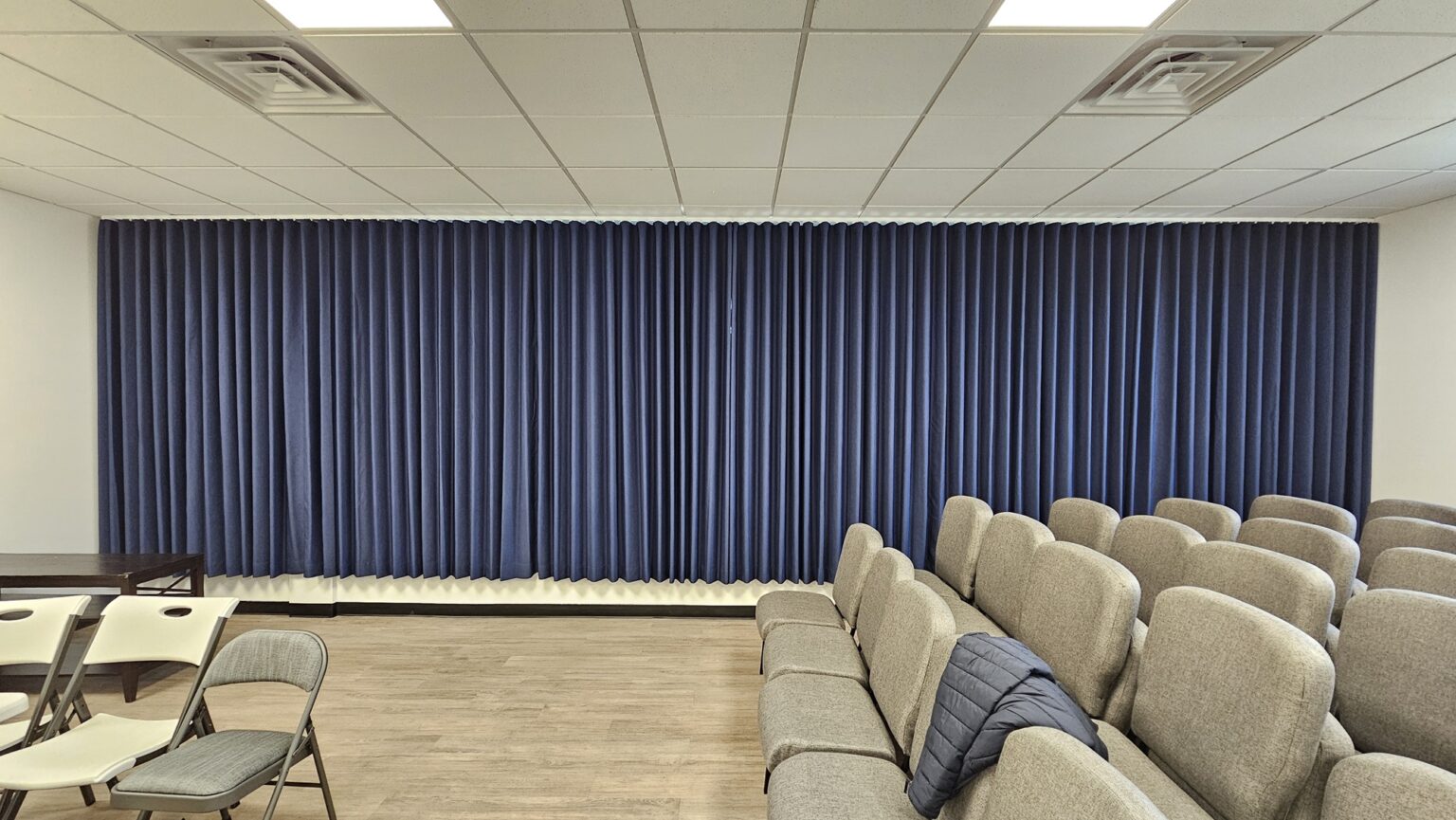
| Cartridge | Smooth upright cylinders, no pinch, evenly spaced | Modern rooms, wide spans, floor to ceiling glass |
| Pinch (French) | Two or three folds pinched at the base, fanned above | The everyday default, panels opened daily |
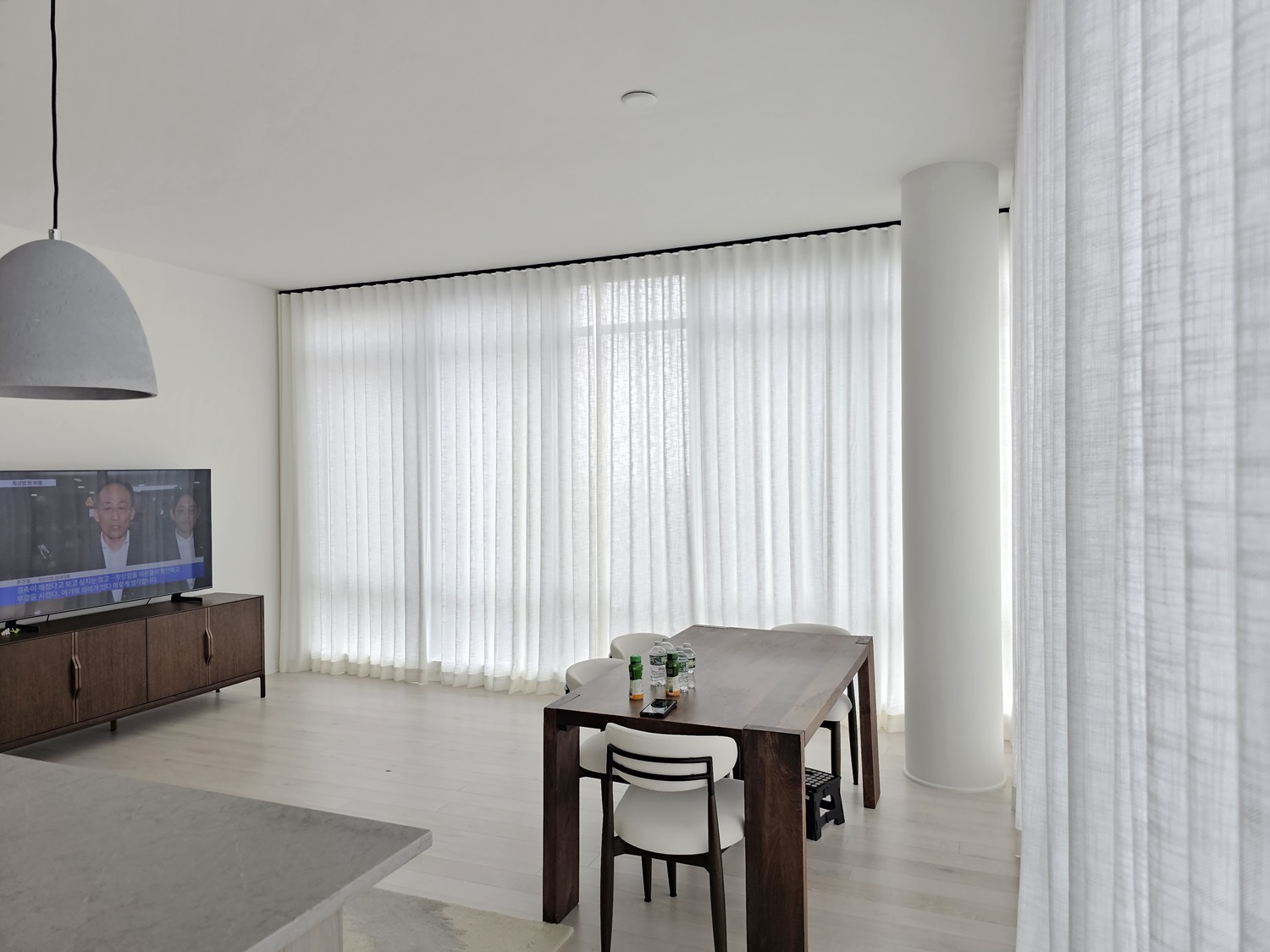
| Ripple fold | Continuous soft S-curve on a track, no pleat at all | Long runs and sliders where panels must travel easily |
Goblet and cartridge headings sit taller than a pinch pleat, so they want a decent gap between the rod and the ceiling. On a low wall, a pinch pleat beats a squeezed goblet every time.
Fabric and Fullness Do Most of the Work
Neither heading rescues a thin fabric. Both want medium to heavyweight cloth with body: linen blends, cotton sateen, wool flannel, jacquards, and velvet, whose pile helps a goblet cup hold its round shape. Sheer voile will not hold either pleat on its own.
Lining does two jobs. It protects the face fabric from sun, and it adds the weight that makes folds hang straight instead of fluttering. Interlining, a soft layer between face and lining, gives drapery that heavy, quiet fall. For a dark room, a blackout lining behind the face fabric does more than a blackout face fabric alone, as our guide to blackout curtains explains.
Fullness is the other half. Two to three times the rod width is the working range. Below two times, the pleats sit too far apart and the panel looks starved between them. That ratio and the fabric behind it drive most of what custom drapery costs.
Where Home-Sewn Pleats Go Wrong
The sewing is not the hard part. These are the things that undo a weekend of work.
- The pleat math. Flat width minus finished width, divided across the number of pleats, with returns and the center overlap accounted for. One bad number and the spacing walks off across the panel.
- Pleats that flatten. A goblet with nothing inside it folds shut. A cartridge without a stiffener goes oval.
- Bulk at the header. Face fabric plus lining plus interlining plus buckram is a lot to pass under a needle, and too much of it stops the pleats sitting square.
- Length. Floors in older Bergen County houses are often out of level, so one measurement can leave a panel a half inch off the floor at one end and dragging at the other. Measure both ends, and read our take on whether curtains should touch the floor before you cut the hem.
- Yardage. Pleated headings eat fabric, and buying short ends the project, because the same dye lot may not be there when you go back.
Measuring, Rods, and Hanging
Goblet and cartridge panels are heavy once lined. The rod or track has to carry that weight without bowing, and brackets have to hit something solid. Mounting high and wide, above the frame and past it on both sides, makes the window look taller and lets the panels stack off the glass. Our curtain rod and hardware guide and the walkthrough on how to hang drapes cover bracket spacing and hook placement.
Wide spans change the math. A drapery track handles a long run better than a rod, and stack back, the space a gathered panel takes up when it is open, grows with fullness. Plan that before you order on large windows or a bay window, where the panels have to clear the corners. For daytime privacy, put the panels over shades, as in our post on how to layer curtains.
Living With Pleated Drapery
Vacuum the panels with an upholstery attachment a few times a year, top to bottom, so dust does not settle in the pleats. Check the care label, and dry clean rather than wash, because washing relaxes the buckram and the pleats rarely come back the same. If the folds go slack, dress them by hand and tie them loosely for a few days. Our notes on getting wrinkles out of curtains cover steaming safely around a pleated header. When a pleat pulls loose or a hook tears through the heading, that is a repair, not a replacement.
From our own installs in Bergen County
Custom Pleated Drapery in Bergen County
The Curtain is a family-owned window treatment showroom at 545 Broad Ave in Palisades Park, in business since 2007. Sejun Park is the owner and designer. We make custom drapery, and we sell and install Hunter Douglas shades, blinds and shutters for rooms that need something behind the panels.
What a workroom gives you is the engineering: pleat spacing worked out to your rod width, buckram and interlining chosen for the fabric, hems weighted so the panel hangs plumb, hooks set so the pleats align with the rings. Measurement in your home is free and the quote is written, so you see the fabric, fullness and heading priced out before anything is cut. There are finished rooms in our gallery, more on choosing and installing custom draperies, and the towns we cover in our service area.
Call (201) 302-9111 or book a free in-home consultation, and we will bring fabric samples to your window.