

Choosing the right window treatment shouldn’t mean giving up light control for style, or durability for a fair price. Yet that’s the trade-off many homeowners feel stuck with when browsing today’s crowded market. Venetian blinds remain one of the most versatile solutions because they solve this problem outright, offering precise light adjustment, timeless design, and materials suited to almost any room or budget. This 2026 buying guide cuts through the marketing noise. It breaks down slat materials, sizing considerations, mounting options, and pricing benchmarks so you can invest with confidence instead of guesswork.
What Are Venetian Blinds
Anatomy of a Slat System
A horizontal slat blind is built from thin strips of material stacked one above another. Each slat spans the width of the window. This sets them apart from roller shades or panel curtains, which use one solid piece of fabric. The slats work together as a system, not a single sheet.
Every slat connects to a headrail at the top. The headrail houses the mechanics that raise, lower, and tilt the whole unit. Slats typically run 1,000mm to 2,000mm wide, depending on the window. Wider windows may need multiple units joined together for full coverage.
Horizontal vs Vertical Blind Styles
Slats hang on ladder cords, thin strings arranged like a ladder’s rungs. These cords hold each slat in place while letting it pivot. A tilt mechanism, controlled by a wand or cord, rotates all slats at once. This lets slats open fully, close tightly, or angle halfway for filtered light.
Vertical versions use the same ladder logic but rotate side to side instead. Horizontal styles suit standard windows, while vertical blinds often cover sliding doors or oversized glass. Homeowners comparing options can review blinds vs curtains choosing the right window treatment for more on style differences.
Common Slat Sizes Explained
Modern slats come in three common widths: 25mm, 35mm, and 50mm. Smaller 25mm slats suit narrow windows and give a delicate look. The 50mm size works well in larger rooms, with bolder lines and easier cleaning.
These proportions trace back to 18th-century designs, which used wide wooden slats and simple pulley cords. Materials evolved from wood to aluminum, then to PVC and faux wood. Many local businesses now stock all three sizes, and further comparisons show up regularly on manufacturer blog pages.
Why Choose Venetian Blinds for Your Home
Timeless Style for Any Room
Venetian blinds fit almost any space. A kitchen needs light control near the sink. A home office needs glare-free screens. A bedroom needs privacy at night. The same basic slat design handles all three jobs. That flexibility is why they remain a staple choice for homeowners updating one room or an entire house.
Design style matters too. Farmhouse kitchens often use wide 2-inch wood slats. Modern condos lean toward slim aluminum in matte black or white. Traditional dens sometimes pair faux-wood blinds with drapery panels for a layered look. This adaptability means one product category can serve a coastal cottage and a downtown loft equally well.
Cost Versus Longevity
Soft treatments like fabric shades often need replacing every 5 to 7 years, especially in sun-heavy rooms. Quality slat blinds, particularly aluminum or wood, routinely last 10 to 15 years with basic care. That extended lifespan changes the math on upfront cost.
A mid-range wood blind might cost more than a basic roller shade at first. Over a decade, though, the per-year value often favors the blind. Slats resist fading, sagging, and fabric wear better than soft materials exposed to direct sun daily.
Homeowners comparing motorized options should also weigh mechanics and upkeep. This guide on automated blinds vs automated shades which smart window t… breaks down which motorized system tends to hold up longest.
Pairing with Existing Decor
Color and finish options make matching existing furniture simple. Wood tones can echo hardwood floors or cabinetry. Painted finishes can match trim or wall color exactly. Metallic slats work well against industrial or minimalist interiors.
Many local businesses stock dozens of finish samples for in-home comparison. Reviewing a broad catalog, such as the offerings at Venetian Blinds | Americanblinds.com, helps homeowners see how varied these choices are before committing. This level of customization means blinds rarely clash with existing furnishings or wall colors.
Material Options Compared
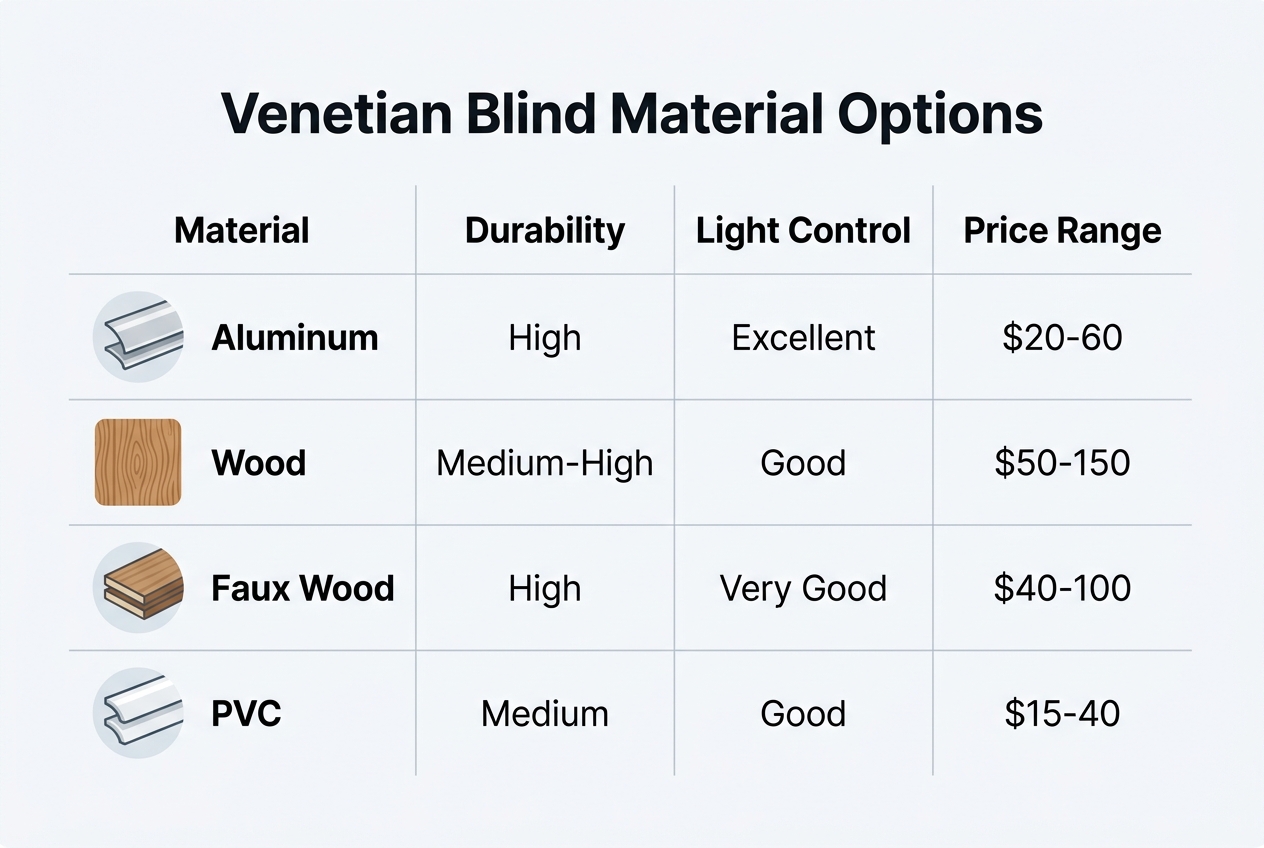
Slat material affects durability, sound, and price more than most buyers expect. The table below breaks down four common choices side by side, so you can match material to room before you shop Custom Horizontal Venetian Window Blinds & Shades.
| Material | Moisture Resistance | Weight | Typical Price per Window |
|---|---|---|---|
| Real Wood | Low | Medium | $120–$300 |
| Faux Wood | High | Heavy | $80–$180 |
| Aluminum | High | Light | $40–$120 |
| Vinyl/Composite | Very High | Medium | $35–$100 |
Wood and Faux Wood
Real wood gives a warm, upscale look but warps in damp air. Faux wood resists humidity and costs less, making it the smarter pick for bathrooms and kitchens.
Aluminum and Metal
Aluminum slats are light, cheap, and dent easily under rough handling. They work well in offices, laundry rooms, and budget-conscious households needing quick coverage.
Vinyl and Composite
Vinyl handles steam and splashes best of all, ideal for humid climates or growing families. If you’re also updating fabric panels nearby, this guide on how to choose curtains for living room spaces pairs well with your material decision.
Key Benefits of Choosing Slat Blinds
Precise Light Control
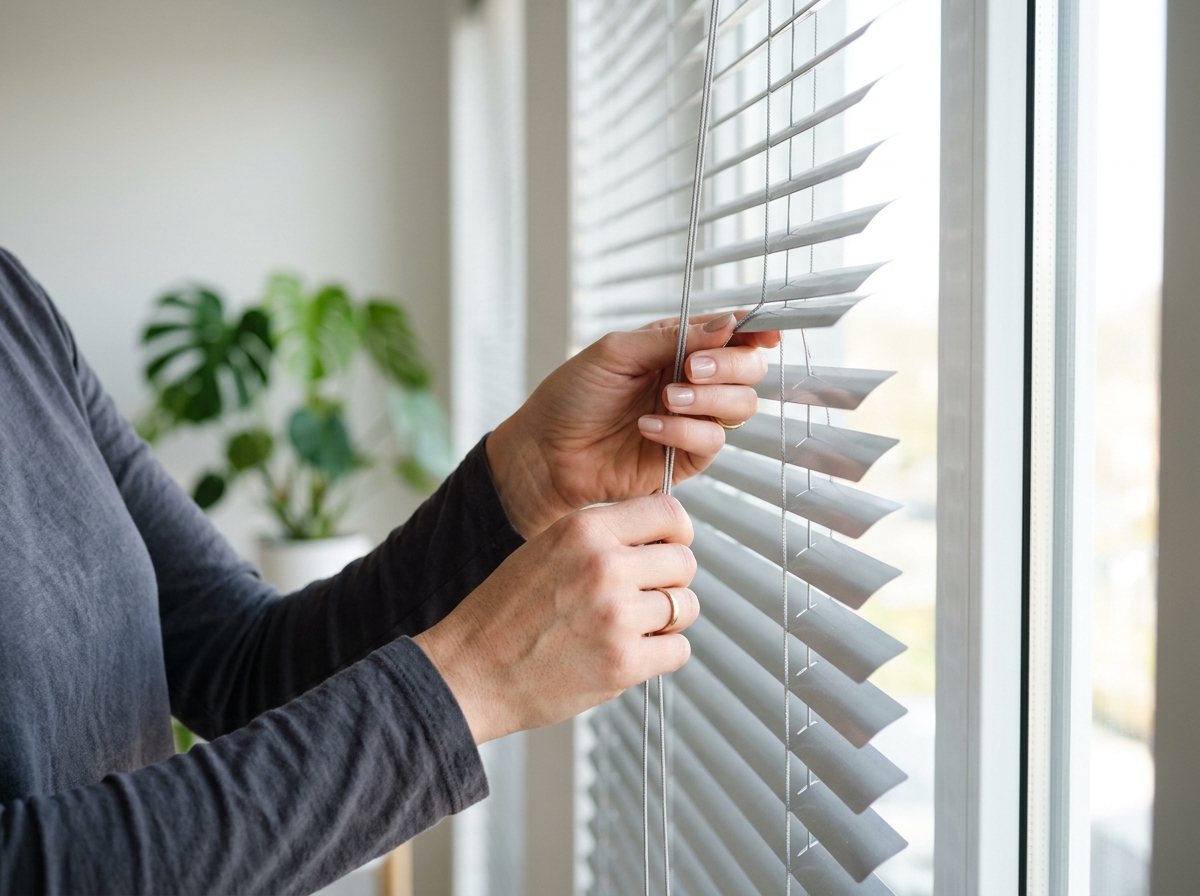
Slat blinds give you precise light control through a simple tilt mechanism. Turning the wand or cord rotates each slat, adjusting the angle of incoming sunlight. You can filter harsh afternoon glare while still keeping a room bright. For a closer look at how these options compare across different homes, check out this guide on the top 5 shades for privacy and light in new jersey.
Enhanced Privacy Options
Adjustable slats also deliver strong privacy without blocking every bit of light. Homeowners get flexible control that many other treatments simply can’t match.
- Tilting slats upward lets light in while keeping street-level views blocked.
- Closing slats fully creates near-total privacy after dark.
- Adjustable angles work well for shared walls or busy streets.
- Remote-controlled options, like Motorized Venetian Blinds for Windows, add convenience for hard-to-reach windows.
- Consistent slat spacing prevents awkward light gaps common in older blinds.
Simple Cleaning Routine
Slat blinds are also allergy-friendly and easy to clean. Smooth, flat surfaces resist dust buildup better than fabric shades. A quick wipe with a damp cloth, done monthly, keeps slats looking new. This simple routine also supports long-term durability, since dust and grime rarely settle into the material.
Components and How They Work
Headrail and Lift Mechanisms
Every blind starts with the headrail. This is the top box that hides the lifting hardware and anchors the whole system to your window frame. Inside sit spools, gears, and cord locks that raise and lower the slats. Below the headrail hang the slats themselves, usually spaced half an inch to one inch apart, connected by ladder cords and finished with a weighted bottom rail that keeps everything hanging straight.
Lift systems vary by budget and household needs. Cordless lift designs use spring tension, so you push or pull the bottom rail directly, with no dangling cords. Corded lifts remain popular for large windows because they handle heavier slat stacks with less strain. For those exploring upgraded options, this guide on are motorized shades worth it breaks down the cost and convenience tradeoffs clearly.
Choosing the right mechanism affects daily comfort more than most buyers expect. A cordless lift suits a nursery. A corded lift suits a tall patio door.
Ladder Cords and Tilt Controls
Ladder cords run vertically along both sides of the slats, forming rung-like supports that hold each slat in place. When you tilt the blind, these cords pull one side down and the other up, rotating slats between open, closed, and angled positions. Quality ladder tape resists sagging and stretching over years of use.
Tilt control traditionally comes from a wand, a slim rod you rotate by hand. Wands offer precise, quiet adjustment and rarely wear out. Some blinds instead use a tilt cord, a pull-string method that’s simple but slightly less exact for fine angle adjustments.
Retailers offering side-by-side comparisons, such as Venetian Blinds for Windows | Factory Direct Blinds, help buyers see how wand length and cord placement differ across slat widths. Getting this detail right matters for windows near furniture or high-traffic walkways.
Motorized and Smart Options
Motorized lift systems replace cords and wands with a small battery or hardwired motor built into the headrail. A remote control, wall switch, or smartphone app then raises, lowers, or tilts the slats. Many 2026 models pair with home automation hubs, allowing scheduled openings tied to sunrise or thermostat settings.
Battery-powered motors need recharging every few months, depending on use. Hardwired versions run continuously but require an electrician for installation. Remote-based control suits households wanting quick upgrades without rewiring, while app-based systems suit larger homes managing many windows at once.
Choosing the Right Style by Room
Kitchens and Bathrooms
Moisture is the biggest challenge in these rooms. Choose faux wood or PVC slats here, not real wood. These materials resist warping, swelling, and mildew near sinks, tubs, and stovetops. Light gray, white, or soft beige tones stay easy to clean and hide daily splashes.
Kitchens often need quick light control near a sink or prep area. Narrower 1-inch slats work well over smaller windows above counters. For a closer look at how these slats hold up in humid spaces, see Venetian Blinds: The Classic Window Covering. Bathrooms need privacy above all else, so tilt slats nearly closed while still allowing airflow and soft daylight.
Living Rooms and Bedrooms
These are formal, lived-in spaces, so material choice can shift toward real wood or aluminum with richer finishes. Warm walnut or espresso tones suit traditional living rooms, while matte black or brushed nickel aluminum fits modern bedrooms. Wider 2-inch slats soften light and add a tailored look.
Bedrooms need strong privacy and light-blocking control at night. Living rooms usually get more daytime sun exposure, so tilt-adjustable slats help manage glare on televisions and screens. If you’re layering blinds with fabric panels, this guide on how to choose curtains for living room spaces offers helpful pairing tips for color and texture.
Home Offices and Studies
Offices need glare control above comfort or decoration. Aluminum or faux wood slats in neutral gray or white reduce screen reflection during video calls and reading. South-facing office windows benefit most from adjustable slats, since midday sun can wash out monitors. Privacy matters less here than in bedrooms, but afternoon light exposure still calls for careful, consistent slat tilting throughout the workday.
Measuring Your Windows for a Perfect Fit
Accurate measuring decides whether your blinds fit well or hang crooked. Inside mount fits inside the window frame for a clean look. Outside mount attaches above the frame and covers more glass. Each method needs different steps and tools, including a steel tape measure, a pencil, and paper for notes.
Inside Mount Measuring Steps
Measure width at the top, middle, and bottom of the frame. Use the smallest number. Measure height on the left, center, and right side. Record depth too, since some frames are too shallow for certain headrails.
Outside Mount Measuring Steps
Add extra width so blinds overlap the frame by 2 to 3 inches on each side. Measure height from where the headrail sits to the desired bottom point.
| Mount Type | Width Rule | Height Rule | Best For |
|---|---|---|---|
| Inside Mount | Smallest of 3 width points | Frame top to sill | Clean, built-in look |
| Outside Mount | Add 2-3 inches per side | Headrail to desired stop | Shallow or uneven frames |
| Bay Window | Measure each pane separately | Varies by pane | Angled window setups |
| French Door | Exact glass width | Top to bottom of glass | Doors needing clearance |
Avoiding Common Measuring Errors
Rounding numbers causes gaps or jams. Skipping the depth check can block tilt wands. Many homeowners browsing Venetian Blinds for Windows online misjudge frame depth. Comparing prices, like reviewing custom curtains costs, helps set realistic budgets before ordering. For custom orders, a professional measurement session removes guesswork and prevents costly remakes.
Installation Process Explained
Tools and Preparation
Before mounting anything, gather the right tools. You need a drill, a level, a pencil, a tape measure, and the mounting screws included in your kit. Check your brackets against the headrail length. For a quick refresher on the basics, this video explains What are Venetian Blinds? in under five minutes.
Step-by-Step Mounting Guide
Most kits follow a similar sequence. The table below breaks down the core steps for a standard inside-mount installation.
| Step | Task | Key Detail |
|---|---|---|
| 1 | Mark bracket positions | Space brackets evenly, 3 inches from each end |
| 2 | Check level | Use a bubble level before drilling any holes |
| 3 | Attach brackets | Drive screws into studs or use anchors in drywall |
| 4 | Snap in headrail | Press firmly until you hear a locking click |
| 5 | Test operation | Raise, lower, and tilt slats to confirm smooth motion |
Small upgrades matter too. If you want extra flair around the frame, try these diy curtain hacks transform your space with simple upgrades once your blinds are hung.
When to Hire a Professional
Cordless and motorized systems involve wiring, batteries, or tensioned springs. A crooked headrail can strain these mechanisms. Many local businesses offer free installation with custom orders, which cuts safety risk for complex or oversized windows.
Maintenance and Care Tips
Routine Dusting and Wiping
Regular dusting keeps slats looking sharp and prevents buildup. Aim for a quick pass once a week using a microfiber duster or the brush attachment on a vacuum. Close the slats fully, wipe from one end to the other, then flip and repeat on the reverse side. For a fresh coordinating look elsewhere in the room, this how to choose curtains guide expert tips for every room offers helpful pairing ideas.
Deep Cleaning Wood and Faux Wood
Wood and faux wood need gentler handling than metal or vinyl. Try these methods:
- Wipe wood slats with a barely damp cloth, then dry immediately to prevent warping.
- Clean faux wood with a mild soap solution since it tolerates more moisture than real wood.
- Use a vacuum with a soft brush attachment monthly to lift dust from grooves and tilt mechanisms.
- Spot-treat grease near kitchen windows with a small amount of dish soap on a soft rag.
- Avoid soaking any slat type, as excess water can loosen glue or swell wood fibers.
Fixing Minor Damage
Bent slats and tangled cords are common but usually fixable. Gently reshape aluminum slats by hand, and replace a cracked wood slat rather than forcing it straight. Untangle cords slowly, working knots loose from the top down. If a lift cord frays badly, call a professional for a replacement rather than risking a full mechanism failure.
Modern Upgrades and Smart Features
Motorized and App-Controlled Blinds
Motorized slat blinds have become a top request for 2026 homes. A small motor inside the headrail raises, lowers, or tilts the slats at the touch of a button. Many systems pair with a smartphone app, letting you adjust blinds from bed or from across the country.
Voice control adds another layer of convenience. Systems that connect to Alexa or Google Home let you say “close the living room blinds” instead of reaching for a remote. Scheduling features can open slats at sunrise and close them at sunset automatically, saving energy without any effort on your part.
For large windows or hard-to-reach skylights, motorization solves a real problem. It removes the need for a step ladder or an extension pole, which matters most in homes with vaulted ceilings or oversized picture windows.
Cordless Safety Features
Cordless designs have shifted from a premium add-on to a standard safety expectation. Traditional lift cords pose a strangulation risk for young children and curious pets, so manufacturers now build lift and tilt mechanisms directly into the headrail. A gentle push or pull moves the slats without any dangling cord in reach.
This matters most in nurseries, playrooms, and homes with dogs or cats that chew on cords. Many parents choose cordless models even in rooms adults use most, simply to remove one more household hazard from daily life.
Energy Efficiency Considerations
Insulating slats help regulate indoor temperature year-round. Aluminum and faux wood slats reflect summer heat away from glass, while closed blinds trap warm air near windows during winter, cutting strain on heating systems. Pairing blinds with heavier fabric treatments boosts results further; homeowners researching layered options often read about the benefits of blackout curtains for added insulation and light control. Even modest slat adjustments, tilted at midday in summer, can noticeably cut solar heat gain and lower monthly energy bills.
Comparing Venetian Blinds to Other Window Treatments
Blinds vs Shades
Slat blinds work differently than cellular or roller shades. Blinds use tilting slats for adjustable light control. Shades use a single fabric panel that raises or lowers. Each style handles privacy and light in its own way.
| Treatment | Light Control | Privacy | Best Fit |
|---|---|---|---|
| Venetian Blinds | Tilt for precise control | Good, with slat gaps | Kitchens, offices |
| Cellular Shades | Moderate, insulating | Very good | Bedrooms |
| Roller Shades | Basic, on/off | Depends on fabric | Casual spaces |
| Drapery | Soft, layered | Excellent when lined | Living rooms |
Comparing Fabric Panels
Drapery offers softness and warmth. Blinds offer structure and easy cleaning. Drapery suits formal rooms. Blinds suit rooms needing daily light changes, like a home office or kitchen.
Combining Blinds with Soft Treatments
Many homeowners layer blinds with drapery panels. This adds texture without losing function. It also helps protect your furniture with the right window treatments, since layered coverage reduces sun exposure. Choose based on your priority: function first, or style first.
If you’re ready to see how venetian blinds could transform your own windows, the team at The Curtain is happy to help. As a family-owned business, they offer in-home design consultations and carry premium Hunter Douglas treatments, so you can get expert guidance and see fabrics and finishes in your own light before deciding. Reach out to book a visit and explore what fits your space best.