Let the Sunshine In, On Your Terms
Bergen County windows get the full range: low winter sun that pours across the living room, July afternoons that cook a west-facing family room, and glare on the TV in between. So how do solar shades work to fix that without turning the room dark? The answer is in the fabric. A solar shade is a roller shade made from a screen fabric woven to a precise openness, so it cuts glare, UV and heat while you keep the view. This guide covers what is inside the shade, what the openness number means, how solar shades compare with cellular shades and drapery, and how we fit them from our Palisades Park showroom.
What Exactly Are Solar Shades?
Solar shades are roll-up window coverings made from a vinyl-coated polyester or fiberglass yarn woven to a set density. Instead of blocking light completely the way a blackout roller does, they filter and diffuse it. Think of them as sunglasses for your windows: you see out, glare drops, and the fabric shields the room from up to 99 percent of UV radiation. As a type of roller shade, they take up almost no space, rolling into a slim cassette or an open roll above the glass. See the options on our solar shades page.
Openness Factor 101
Openness is the percentage of the fabric that is open weave, and it is the number that matters most.
- 1 to 3 percent openness: maximum glare and heat reduction. Best for media rooms, home offices with screens, and south-facing glass walls.
- 4 to 7 percent openness: a balance of view and protection. The usual pick for living rooms and kitchens.
- 8 to 14 percent openness: softens light while keeping a near-panoramic view. Good for a picture window over a dining nook.
The smaller the percentage, the tighter the weave and the stronger the sun-blocking power. A 1 percent fabric shows shapes and light outside; a 10 percent fabric shows the trees.
How Do Solar Shades Work? The Science Made Simple
At the heart of every shade lies its fabric architecture:
- Micro-engineered weave. Tiny gaps between fibers act like microscopic louvers, reflecting, absorbing and redirecting sunlight instead of letting it stream straight through.
- Color chemistry. Dark fabrics absorb visible light, which cuts glare and gives the clearest view-through. Light fabrics reflect more heat back outside. Some fabrics are woven two-sided, light on the street face and dark on the room face.
- UV filtration. Additives in the yarn capture ultraviolet rays before they bleach furniture, artwork or flooring.
- Thermal barrier. By interrupting direct solar gain, the fabric can cut window-related heat transfer by roughly 30 percent, a figure echoed by U.S. energy researchers.
- Adjustable lift system. A tug on a cordless hem bar, or a tap on your phone for motorized models, raises or lowers the roll, so you can drop the shade when the sun swings around.
Key Components You Should Know
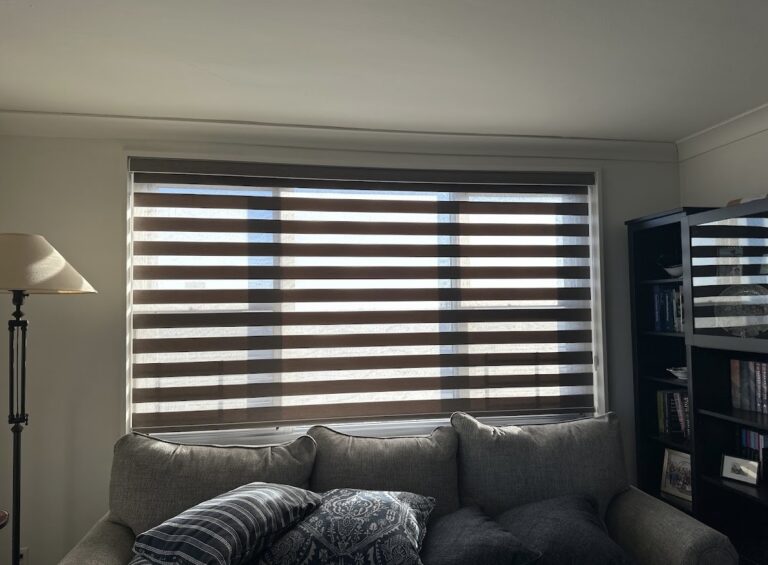
- Specialty yarns resist moisture, mold and fraying, so the fabric holds up in kitchens and bathrooms.
- PVC or polyester coating adds strength, wipe-clean durability and fire resistance.
- Seamless welded edges prevent curling and keep the roll flat against the glass.
- Cordless or motorized lift improves child safety and fits smart-home routines. See our guide to child-safe window treatments.
Benefits You’ll Feel Every Day
Energy Savings
By blocking radiant heat before it enters, solar shades keep rooms cooler in summer and reduce HVAC runtime, cutting energy bills by an estimated 15 to 25 percent. They do less in winter, because the open weave lets warmth escape at night; if winter heat loss is your bigger problem, a cellular shade is the stronger choice, and our guide to energy-efficient window coverings compares the two.
Glare-Free Comfort
Reading, TV and laptop work all get easier when the blinding sunspots are tamed but daylight still fills the room.
UV and Fade Protection for Furniture and Floors
Sunlight fades hardwood floors, area rugs, sofas and artwork, and it is UV, visible light and heat working together. Solar shades cut the UV portion by up to 99 percent and reduce the heat and light with it, so an oak floor by a south window stops developing a pale rectangle where the sun lands. Homes with a lot of glass benefit most, whether a Bergen County colonial or a coastal house facing the water. If you already see fading, put the tighter fabric (1 to 3 percent) on the windows that get direct afternoon sun.
Daytime Privacy With a View
From inside you see out; from the street, passersby see a reflection. This only holds in daylight; see the FAQs below.
Sleek, Minimalist Aesthetics
Taut fabric and slim hardware suit contemporary, industrial or coastal interiors. For softness, pair the shades with drapery panels; see how to layer curtains.
Choosing the Right Solar Shade for Your Space
- Room purpose. Home theater? Choose 3 percent openness. Home office? Aim for 5 percent. Sunroom or breakfast nook? 10 percent keeps the brightness.
- Window direction. East- and west-facing panes battle low-angle glare, and darker fabrics excel there. South-facing windows carry the most heat, so lean toward a lighter or two-sided fabric.
- Climate. New Jersey summers are hot and humid, so most Bergen County rooms do best with a mid-tone fabric or a light street face that reflects heat.
- Decor goals. Neutrals blend in; charcoal frames the outdoor view like a photo border.
- Control preference. Go cordless for kid safety. Upgrade to motorization for hard-to-reach skylights, a wall of large windows, wide sliding doors, or whole-home automation. See our comparison of automated blinds and automated shades.
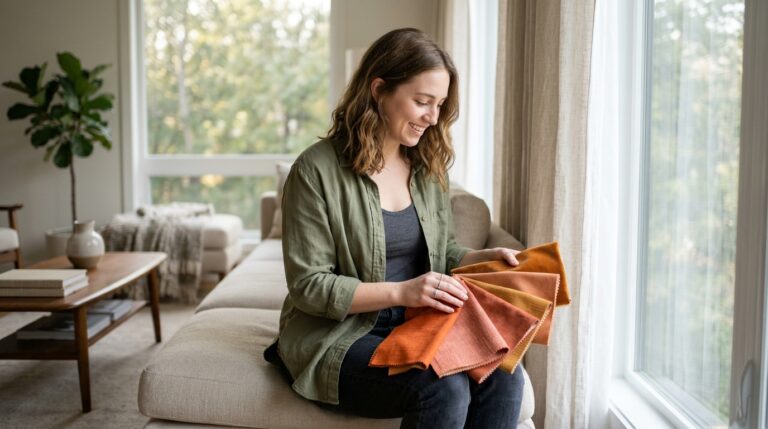
Pro tip: Look at fabric swatches before you order. Hold them against the glass at midday to preview color shift and view-through.
Installation & Care: Easier Than You Think
Most homeowners can install an inside-mount solar shade with a drill, screws and a level: measure the width at three spots and use the narrowest, mark the bracket holes, secure the hardware, and snap the roller into place. Openings in older Bergen County houses are rarely square, and a shade cut too wide will bind.
Care is simple. Lower the shade fully and wipe it with a microfiber cloth, or vacuum on low with a brush attachment. No harsh chemicals. If a lift mechanism stops working, see our shade repair page.
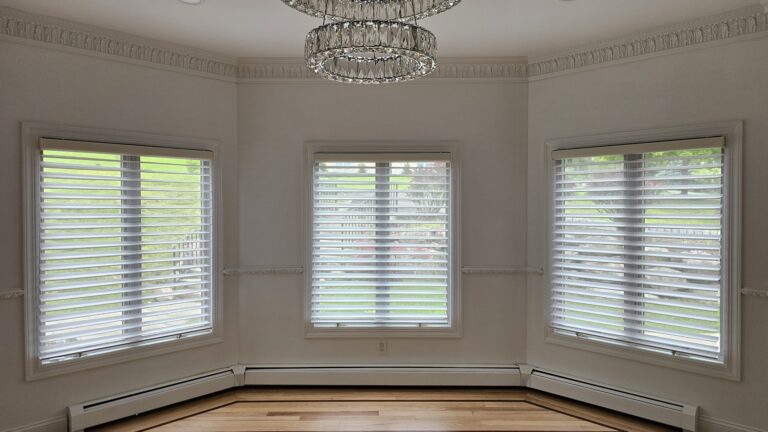
From our own installs in Bergen County
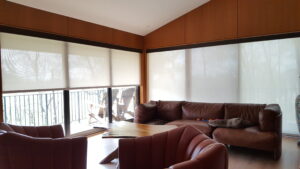
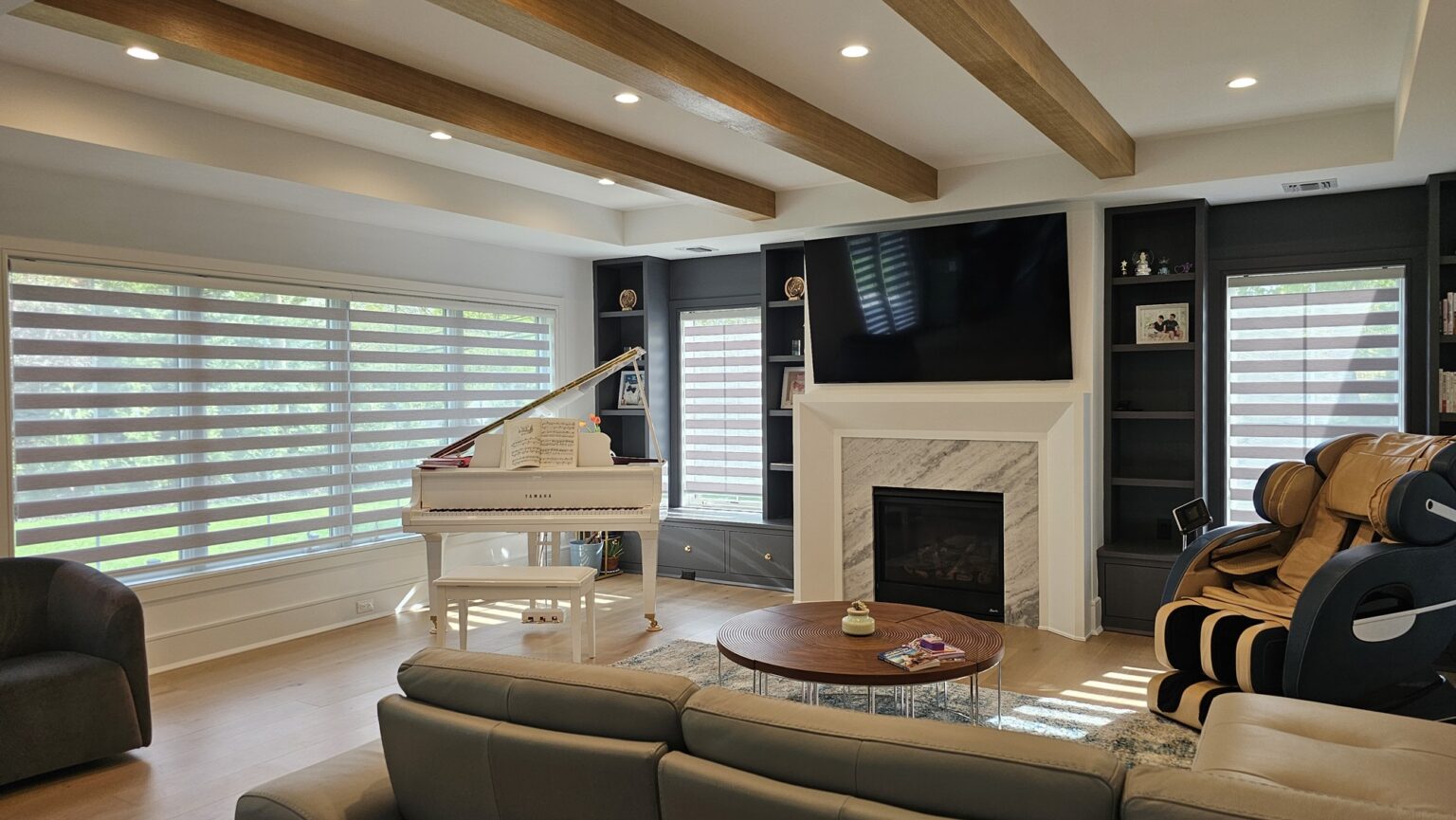
How We Do It at the Showroom
The Curtain is a family-owned window-treatment showroom at 545 Broad Ave in Palisades Park, in business since 2007 and serving homeowners across Bergen County. Owner and designer Sejun Park handles the design side. We are a Hunter Douglas partner, so we sell and install Hunter Douglas shades, including their solar-screen line, which comes in a range of openness levels with cordless and motorized lifts. We also make custom drapery, the usual answer to the nighttime privacy question.
A solar shade order runs like this:
- Free in-home measurement. We come to your house and measure each window. This is where openness, fabric color, and inside versus outside mount get decided.
- Swatches at the glass. Check fabric samples against your actual window, ideally when the glare is worst, before anything is ordered.
- Written quote. You get the price in writing, window by window, before you commit.
- Installation. We install the shades, level the brackets, and check that each one rolls straight and stops where it should.
Call (201) 302-9111 or book a free consultation online. See the Bergen County towns we serve and our gallery of finished installations.
Solar Shades vs. Other Window Coverings
| Feature | Solar Shades | Cellular Shades | Traditional Drapes |
|---|---|---|---|
| View preservation | Yes | No (opaque cells) | Variable |
| Glare control | High | Medium | Medium |
| Energy efficiency | High (radiant heat barrier) | Very high (insulating pockets) | Low to medium |
| Dust resistance | Excellent | Good | Poor |
| Modern aesthetic | Sleek | Subtle | Depends on fabric |
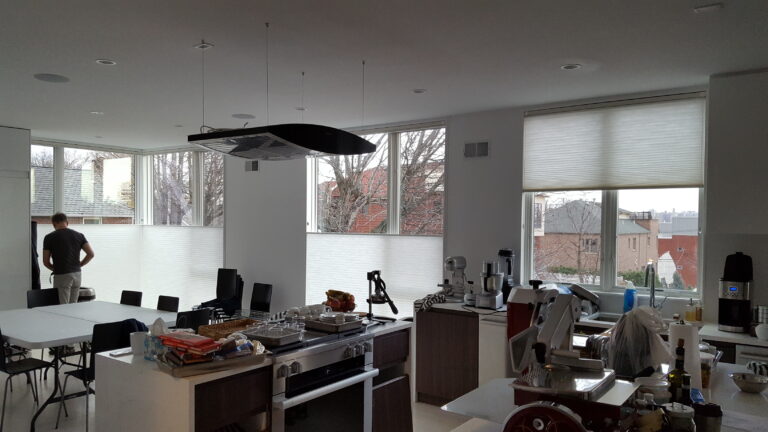
A common Bergen County layout: solar shades on the south- and west-facing windows, cellular shades or blackout shades in the bedrooms, and drapery layered over the solar shades in the living room for evenings. See also the best blinds to keep heat out.
FAQs About How Solar Shades Work
Are solar shades the same as roller shades?
All solar shades are roller shades, but not all roller shades use solar-screen fabric. The difference lies in openness factor and UV-blocking capability. A standard roller uses light-filtering or blackout fabric with no view-through.
Can you see through solar shades at night?
From outside, yes. When interior lights are brighter than the exterior, visibility reverses and someone on the street can see in. Pair the shades with drapery, or a second shade on a dual bracket, for nighttime privacy. More in our post on whether people can see through your blinds.
Do darker or lighter fabrics work better?
Dark colors reduce glare best and give the clearest view; light colors reflect heat more effectively. Choose based on your primary concern, or pick a two-sided fabric for some of each.
Will they darken my room too much?
Pick a higher openness level (8 to 10 percent) to keep the room bright while still cutting the harsh rays.
Shade Smarter Today
Now you know how solar shades work, from the weave to the energy savings. Decide which rooms need glare control and which need insulation, pick an openness for each window, and check swatches against the glass. Or skip the guesswork: call (201) 302-9111 for a free in-home measurement and written quote anywhere in Bergen County.