Table of Contents
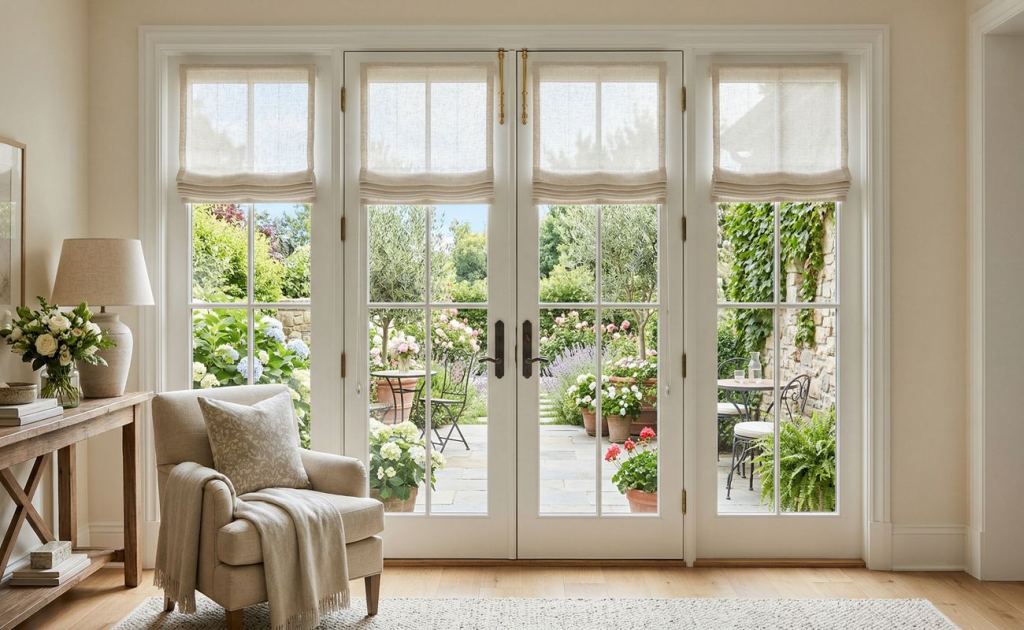
French doors are one of the most beautiful architectural features in any home. Their floor-to-ceiling glass panels flood rooms with natural light, create a seamless connection between indoor and outdoor spaces, and add an unmistakable sense of elegance. But they also present one of the trickiest window treatment challenges you’ll face.
The problem is straightforward: all that glass means limited privacy, potential glare, and energy loss through large, uninsulated surfaces. And unlike a standard window, any treatment you install on a French door has to move with the door when it opens and closes — without swinging, rattling, or catching on the hardware.
This guide walks you through the best window treatments for French doors, explains what makes each option work (or not work) on a door, and covers the practical details — mounting, hardware, and handle clearance — that most guides skip. Whether your French doors open to a patio, a garden, or another room, you’ll find a solution here that balances privacy, light control, and the clean aesthetic these doors deserve.
Why French Doors Are Tricky to Dress
French doors aren’t standard windows, and treating them like one is the fastest route to frustration. Here’s what makes them different:
- They move — Any treatment mounted on the door itself will swing every time the door opens or closes. Lightweight, low-profile options perform best; heavy or loose treatments swing, rattle, and look sloppy.
- Handles get in the way — French doors have protruding levers or knobs that most shades and blinds aren’t designed to accommodate. Treatments either need custom cut-outs, careful bracket placement, or wall-mounting above the frame entirely.
- The glass panels are large — Floor-to-ceiling glass means more surface area losing heat in winter and gaining it in summer. Energy-efficient treatments can make a noticeable difference on French doors.
- Pairs need to match — Double French doors require coordinated treatments on both sides. Individual shades on each door typically work better than a single wide treatment spanning both panels.
- Mounting depth is limited — French door frames are often narrower than standard window frames, which affects whether you can mount inside or outside the glass area.
The best window treatments for French doors are the ones you barely notice until you need them — sleek, stable, and out of the way when the door is in use.
The Best Window Treatments for French Doors
Each of these options handles the unique demands of French doors differently. The right choice depends on how your doors are used, whether they face exterior or interior spaces, and how much privacy and light control you need.
Cellular Shades — Lightweight, Energy-Efficient, Door-Friendly
Cellular shades are one of the most popular window treatments for French doors, and for good reason. Their lightweight honeycomb construction doesn’t swing excessively when the door opens, and the air pockets provide insulation that’s especially valuable on large glass panels where energy loss is a real concern.
Hunter Douglas Duette® Honeycomb Shades offer a top-down/bottom-up option that’s ideal for French doors — lower the shade from the top for natural light while keeping the bottom raised for privacy. For doors specifically, the cordless Vertiglide™ system allows the shade to glide sideways rather than up and down, keeping the treatment completely out of the way when you walk through.
Hold-down brackets are available to secure the bottom of the shade to the door frame, preventing the treatment from swinging freely when the door moves. This small hardware addition makes a significant difference in how polished the installation looks and feels day to day.
Plantation Shutters — The Premium, No-Swing Solution
If you want zero swing, zero rattle, and zero maintenance, plantation shutters are the gold standard for French doors. Because they’re mounted directly to the door frame within a custom-built surround, they become part of the door itself — opening and closing with it as a single unit.
The biggest advantage shutters have on French doors is stability. There’s no fabric to catch, no cord to tangle, and no loose material to sway. The adjustable louvers give you complete control: tilt them open for a full view and maximum light, angle them for filtered privacy, or close them completely to block the view and reduce heat transfer.
Hunter Douglas offers custom cut-outs for door handles — square, rounded, or angular — so the shutters fit cleanly around your hardware without interfering with operation. For exterior-facing French doors exposed to sunlight and weather, Palm Beach™ Polysatin™ Shutters provide UV resistance and moisture protection. For interior French doors between rooms, Heritance® Hardwood or NewStyle® Composite Shutters deliver the warmth of natural wood.
Roller Shades — Clean, Modern, Low-Profile
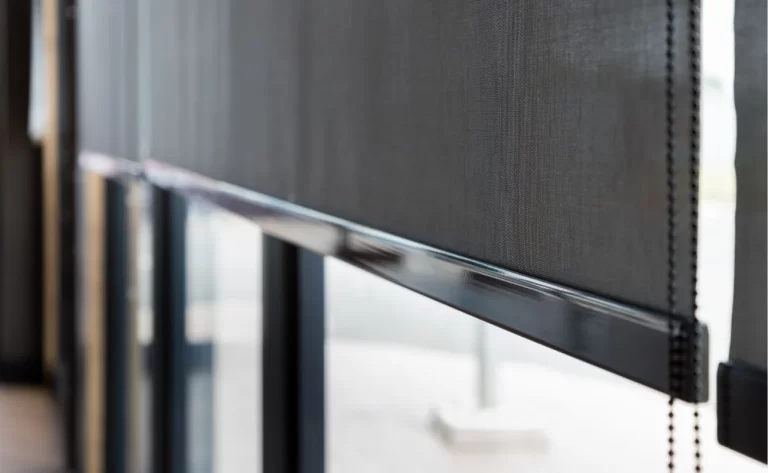
Roller shades bring a sleek, minimal aesthetic to French doors. The single fabric panel rolls up into a slim headrail that virtually disappears when raised, preserving the clean lines of the door. When lowered, the shade lies flat against the glass with no folds or slats to collect dust.
For French doors, choose a performance fabric suited to the exposure — Designer Solar Shades block UV rays and reduce glare while maintaining your view, while Designer Roller Shades in light-filtering or blackout fabrics provide more coverage. Hold-down brackets keep the shade from swinging, and motorization through PowerView® Automation is particularly practical on French doors: it eliminates dangling cords near door hardware and lets you control both doors from a single app, remote, or voice command.
Roller shades work especially well on modern and contemporary French doors where a minimal, streamlined look is the priority.
Roman Shades — Soft Elegance for Interior French Doors
Roman shades add a layer of warmth and sophistication that hard-surface treatments can’t replicate. The soft fabric folds bring texture and visual interest to the glass panels, creating a more inviting, layered look — particularly appealing on interior French doors that connect living spaces or lead to a home office or library.
Hunter Douglas Vignette® Modern Roman Shades offer rolling or stacking styles with clean, consistent folds that hold their shape beautifully on a vertical door panel. Carole Fabrics Roman Shades provide even more design flexibility with exclusive fabric collections, decorative trims, and style options including flat, front fold, reverse fold, hobbled, and soft Roman profiles.
One consideration: Roman shades are best suited for French doors in lower-humidity areas or interior applications. For exterior-facing doors with significant sun or weather exposure, a roller shade or shutter may hold up better over the long term.
Drapery Panels — A Classic, Dramatic Frame
For homeowners who want French doors to make a grand statement, custom drapery panels mounted on the wall above the door frame create a dramatic, architectural effect. Side panels frame the doors without touching them — they hang from a rod or track on the wall, not on the door itself — so they never interfere with opening, closing, or door hardware.
This approach works best on double French doors in living rooms, dining rooms, and primary bedrooms where design impact matters. The key is proper rod placement: mount the rod wide enough that the panels stack fully to the sides when open, leaving the doors unobstructed. When closed, the panels sweep across the full width of the doorway for privacy and light control.
For complete functionality, consider layering drapery panels with a door-mounted treatment — a roller shade or cellular shade on each door for daily light control, with the drapery providing the decorative frame and additional insulation.
French Door Treatment Comparison at a Glance
This table summarizes how each option handles the unique demands of French doors.
Treatment | Door Compatibility | Swing Risk | Privacy | Energy Efficiency | Best For |
Cellular Shades | Excellent — lightweight, hold-down brackets | Low | High (top-down opt.) | Excellent (honeycomb) | Any French door; energy-conscious homes |
Plantation Shutters | Excellent — fixed to frame, moves with door | None | Very high | Very good (solid panel) | Premium installs; high-traffic doors |
Roller Shades | Very good — low-profile, hold-down brackets | Low | High (blackout avail.) | Good (solar option) | Modern/contemporary doors |
Roman Shades | Good — slightly more bulk | Low–Moderate | Moderate–High | Good | Interior French doors; design-forward rooms |
Drapery Panels | Excellent — wall-mounted, no door contact | None | High (when closed) | Good (layered) | Double doors; living/dining rooms |
Inside Mount vs. Outside Mount: What Works for French Doors?
Mounting is one of the most important decisions for French door treatments — and it’s different from standard window mounting.
An inside mount fits the treatment within the glass area of the door frame. This creates a clean, flush look, but French door frames are often too shallow to accommodate most treatments inside the glass recess. Only very low-profile options like cellular shades typically work as inside mounts on French doors.
An outside mount covers the entire door panel, with the treatment extending beyond the glass frame. This is the most common approach for French doors because it provides more room for brackets, better coverage, and easier clearance of door hardware. Extension brackets or spacer blocks may be needed to ensure the treatment clears the door handle and any raised trim around the glass.
Two hardware additions make French door installations work smoothly. Hold-down brackets attach to the bottom of the door frame and clip to the shade’s bottom rail, keeping it flush against the glass when the door opens and closes — essential for any door-mounted shade or blind. Handle cut-outs are custom modifications (available on shutters and some shades) that allow the treatment to fit around the door lever without blocking it.
For doors with especially complex frames or hardware, a custom solution for specialty-shaped windows may be the best path — Hunter Douglas can fabricate treatments to fit virtually any door configuration.
French Door Window Treatment FAQs
What Is the Best Window Treatment for French Doors That Open Outward?
For outward-opening French doors, the best options are treatments mounted directly to the door glass (cellular shades with hold-down brackets, shutters mounted within the frame) or wall-mounted drapery that hangs above the door opening entirely. Avoid anything that hangs loose from the door panel — when the door swings outward, gravity pulls unsecured treatments away from the glass, creating an untidy look and potential damage over time.
Can You Put Curtains on French Doors?
Yes — but the approach matters. The best method is wall-mounted side panels on a rod or track installed above and wider than the door frame. This creates an elegant frame without any contact with the door itself, so the curtains never catch, snag, or interfere with operation. Some homeowners use door-mounted curtain rods with hold-down brackets for a tighter, more tailored look — this works but requires careful measurement to ensure the fabric clears the door handle and doesn’t bunch when the door opens.
How Do You Handle the Door Handle?
Each treatment type addresses door hardware differently. Shutters offer the cleanest solution: custom cut-outs (square, rounded, or angular) are built into the panel so the treatment fits around the lever without any gaps or awkward spacing. Shades (cellular, roller, Roman) are typically mounted above the handle area using spacer blocks or extension brackets, so the shade panel drops in front of the hardware without touching it. Drapery panels sidestep the issue entirely — they’re mounted to the wall, not the door, so they never interact with the handle at all.
Are Motorized Shades Worth It for French Doors?
Motorized shades are one of the smartest upgrades for French doors. Cords and chains on door-mounted treatments tend to swing, tangle around handles, and look messy. Motorization eliminates all of that. With Hunter Douglas PowerView® Automation, you can raise and lower shades on both doors simultaneously from an app, remote, or voice command — no walking to each door individually. You can also set daily schedules: shades close automatically at sunset for privacy and open in the morning for light. For double French doors, motorization ensures both sides stay perfectly synchronized.
Find the Right Treatment for Your French Doors
The best window treatments for French doors balance three things: privacy and light control when you need it, a clean look that honors the elegance of the doors, and practical stability when the doors are in use. Cellular shades and shutters handle daily door operation best. Roller shades bring a modern, minimal aesthetic. Roman shades and drapery add warmth and design impact for rooms where the doors are a focal point.
At The Curtain, French door treatments are one of our specialties. We take precise measurements that account for handle clearance, frame depth, and door swing — details that off-the-shelf solutions can’t accommodate. We bring samples directly to your home so you can see how each option looks on your actual doors, and we handle every step from consultation through installation. With 18+ years of experience and 300+ five-star reviews from homeowners across New Jersey and New York, we’ll help you get this right the first time.
Ready to dress your French doors?
Schedule your free in-home consultation: (201) 302-9111 or Request a Consultation
The Curtain | Good Choice, Good Life | Family-Owned Since 2007