A window that spans eight feet, wraps a corner, or climbs to a second story ceiling will not take a stock blind. Most off the shelf products stop near 72 inches wide, which is why blinds for large windows get built to the opening instead of trimmed down to fit it. Width, stack, and lift are the three decisions that matter. Here is how large window shades and blinds get sized, specified, and hung in Bergen County homes, and what we would put on each kind of oversized opening.
What we would put on the window
- Wall of glass onto a deck or yardPanel track blinds in a light filtering weave, stacked to one side so the doors stay usable.
- Sliding patio door you walk through every dayFabric vertical blinds or Luminette privacy sheers with a split stack, so the traffic path stays open.
- Two story great room window above the stairsOne wide motorized roller shade, so nobody is balancing on a ladder to reach it.
- Bedroom window wall facing the streetBlackout cellular shades with top down bottom up, sky in, sidewalk out.
- South facing living room with screen glareSolar shades in a low openness weave, in a dark fabric for the clearest view out.
Why Large Windows Need Their Own Game Plan
Wide glass brings dramatic daylight, and it also brings heat, glare stripes across a television, and hardware you cannot reach from the floor. Splitting one opening into three separate blinds gives you three headrails, three light gaps, and three chances for the colors to read slightly differently. A single treatment sized for the full span solves that, but it has to be engineered for width, not just ordered wide.
Weight is the part most people underestimate. A twelve foot roller shade in blackout vinyl is a real load on a bracket, and a long vertical headrail has to be dead level or the vanes will not line up when you close them.
The Payoffs of Getting It Right
- Light mastery. Sunrise glow without the blinding beam across the sofa.
- Energy savings. Cellular materials trap air and reduce the load on your HVAC, which counts for more on a wall of glass. See our guide to energy efficient window coverings.
- Privacy on demand. Lower the whole span with one tap instead of walking the room.
- Design cohesion. One broad treatment beats three skinny mismatched blinds.
Top Blind Styles Sized for Success
Five styles hold up at width. They differ in how they stack, how they lift, and how much view they return.
1. Panel Track Blinds (Sliding Panels)
Panels glide sideways on a low profile headrail with an ideal span of up to 330 inches, which covers most wall to wall glass and nearly any sliding door. They stack neatly at one end, so you still get the view. Choose textured fabrics for a soft, drapery like look, or solar screen weaves to cut UV without going dark.
2. Vertical Blinds, Reinvented
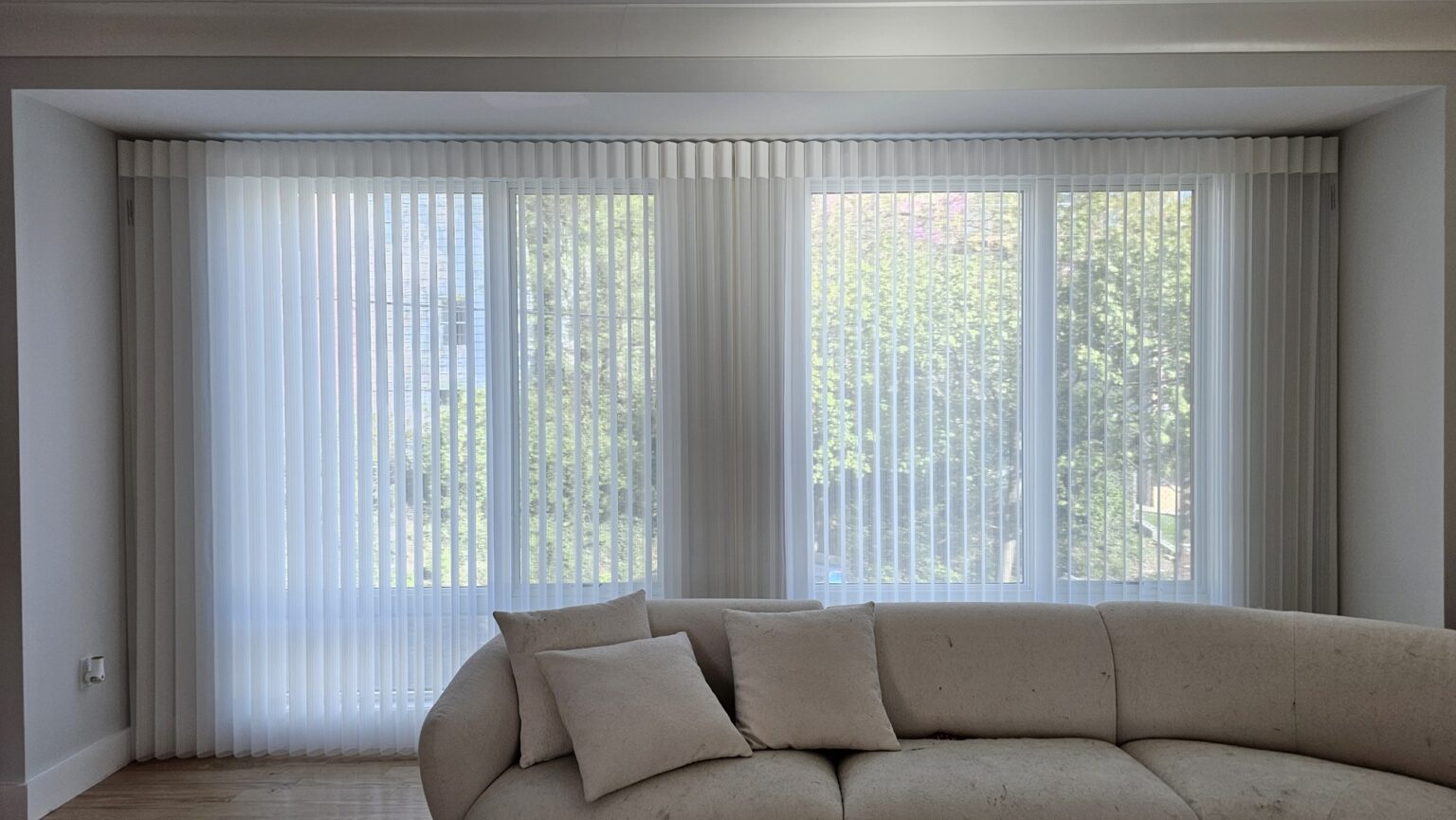
Forget clunky vinyl. Modern verticals come in fabric, sheer covered vanes, and real wood. Patented headrails keep the vanes aligned, and a split stack setup reduces sway on extra tall openings while letting you part the treatment in the middle at a door handle. Pick verticals when you want precise tilt control and an effortless glide. If the opening is a patio slider, read our notes on vertical blinds for sliding glass doors.
3. Continuous Loop Roller Shades
A single sheet of fabric rolls into a compact cassette and frees every inch of the view. On extra wide sizes, request a reverse roll so the fabric stays snug against the glass and the bottom bar does not curl away from the window. Blackout vinyl shuts a bedroom down. Light filtering textiles soften a living room. Compare weaves on our roller shades page.
4. Cellular Shades in XL Cells
Honeycomb pockets trap air, and at this scale the cell size is the real news. A 1¼ inch cell stays crisp across a window wall where a narrow cell tends to sag. Add top down bottom up so you can expose the treetops and skyline while masking street level. See the fabric range under cellular shades.
5. Motorized Zebra (Layered) Shades
Alternating sheer and opaque bands slide past one another, so one shade covers everything from open view to closed privacy. Motorization is close to mandatory when the shade sits twelve feet above the floor, and a sunny day schedule in the app will adjust it each afternoon on its own. Start with zebra shades, then read automated blinds vs automated shades if you are weighing motors.
How to Measure Like a Pro
- Inside mount or outside mount. Deep frames let you recess the hardware. Shallow sills call for an outside mount that overlaps the trim.
- Record three widths and three heights. Use the smallest width and the largest height for an inside mount. Old houses are rarely square, and a wide opening exaggerates the difference.
- Note obstructions. Cranks, door handles, and alarm sensors may call for spacer blocks.
- Account for depth. Roller cassettes and cellular headrails run roughly 1¼ inches to 3 inches, so check that they clear the handles before you order.
On an opening this size, a quarter inch error is visible from the doorway. We measure large windows in your home for free and put the quote in writing, so the numbers are ours to get right. To check your own first, use our measuring guide.
Design Tips to Elevate the Look
- Color match to the walls when you want the glass to be the event and the treatment to disappear.
- Contrast with the frame in a bold neutral such as charcoal or espresso to define the architecture.
- Let texture tell the story. Woven grass cloth warms a minimalist room, while a sateen weave suits a contemporary condo.
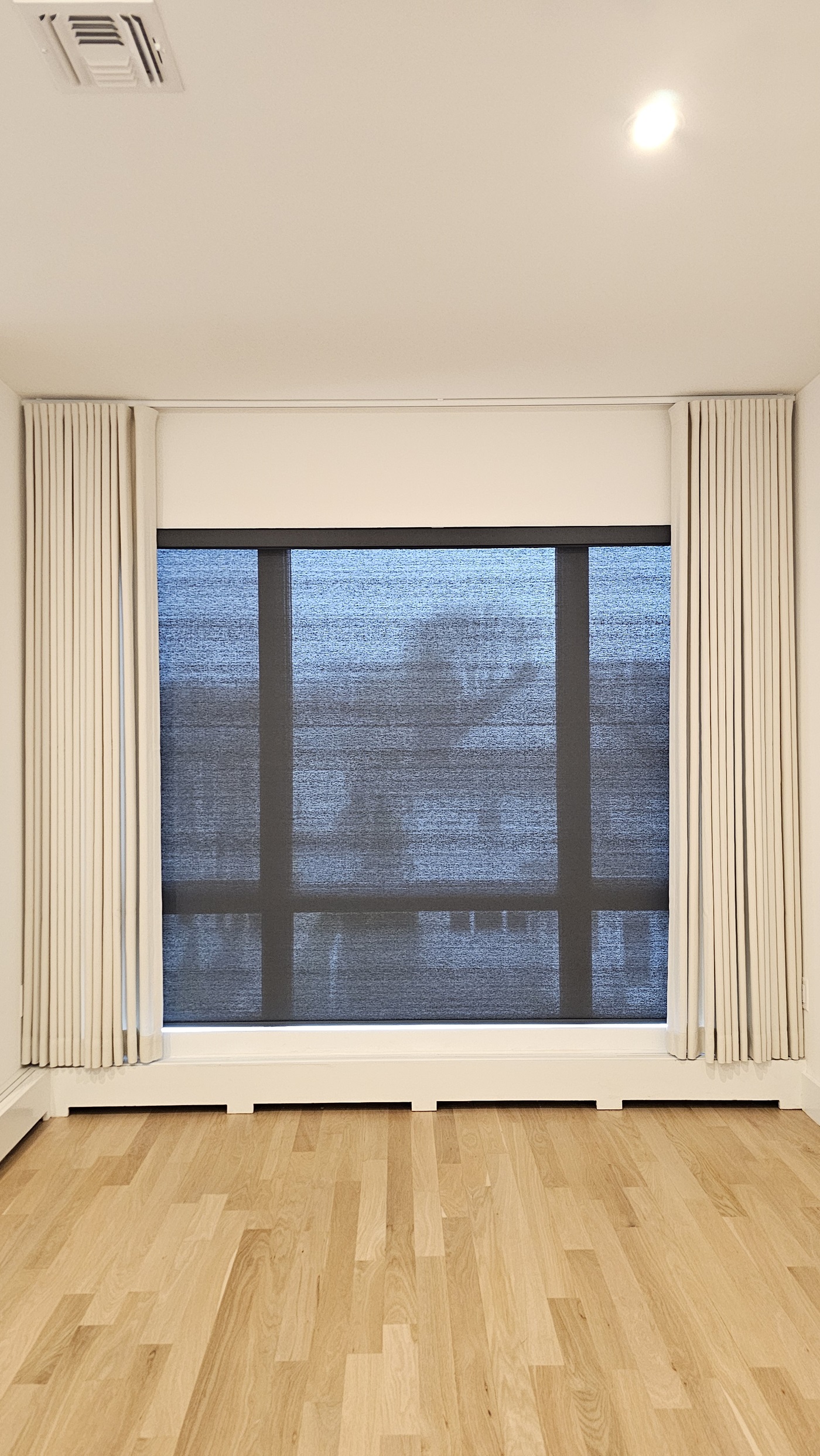
- Layer for softness. Panel tracks or rollers with decorative side drapery hide the gaps at night and take the hard edge off a big rectangle. See how to layer curtains and floor to ceiling curtains.
Control Options Worth the Splurge
| Lift style | Perfect for | Why you will love it |
|---|---|---|
| Remote motor | Loft and transom windows above eye level | One touch lifting eliminates the ladder |
| Wand control | Homes with kids and pets | Cordless safety on a treatment you can still reach |
| Smart home hub integration | Frequent travelers | Automates open and close for the look of an occupied house |
| Rechargeable battery tube | Condos and rentals | No hardwiring, and the tube swaps out for charging |
Cordless and motorized lifts also keep loose cords off a wall of glass, which matters in a room children use. Our notes on child safe window treatments cover the rest.
Solving Common Large-Window Pain Points
- Heat build up. Specify a solar screen fabric with 3 to 5 percent openness to cut infrared rays while keeping the scenery. See how solar shades work and the range of solar shades we carry.
- Echo and sound bounce. Soft cellular shades dampen the acoustics in a vaulted room with hard glass and hard floors.
- Drafty panes. Double cell options add R value, which shows up first on north facing walls in January. More in best blinds to keep heat out.
- Cleaning worries. Aluminum and faux wood verticals wipe down, and roller cassettes hide the dust inside the tube.
Installation Insights
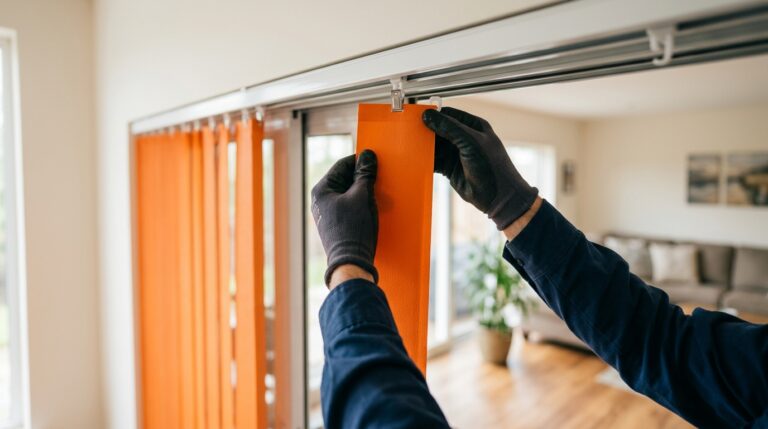
You can hang a wide treatment yourself if you can carry the weight safely and have a helper on the other end. Past a certain size an installer is the better call, especially for motorized systems that need proper low voltage power. Expect roughly 20 to 30 minutes per opening once the brackets are up. We install what we sell, so the measuring and the hanging are both on us.
Maintenance Made Simple
- Dust monthly with a microfiber wand, with the blind in the closed position so you are working on a flat surface.
- Vacuum quarterly on low suction with a brush attachment to clear cellular pockets.
- Spot clean early with mild soap and distilled water. Harsh chemicals can delaminate a fabric.
- Service the motors every couple of years for tuning and battery replacement. If a motorized shade drifts out of alignment, try resetting it first, and bring the stubborn ones to us through our repair service rather than replacing the whole treatment.
From our own installs in Bergen County
See Blinds for Large Windows in Our Palisades Park Showroom
The Curtain is a family owned window treatment showroom at 545 Broad Ave in Palisades Park, in business since 2007 and serving Bergen County. Owner and designer Sejun Park runs the showroom floor. On an oversized opening, three questions set the order: how wide is the true span, where should the treatment stack, and who has to reach it.
We are a Hunter Douglas partner, so the panel tracks, verticals, cellular shades, and motorized rollers above are products we sell, measure, and install, and we make custom drapery when a window wants fabric on the sides. Bring photos and rough dimensions, or book the free in home measurement and skip that step. You get a written quote either way.
Call (201) 302-9111, book a free consultation, or browse finished rooms in the gallery. You can also compare options on our large windows page, see the full shades range, or check the towns we serve.
Your Perfect Finish Line
Measure precisely, match the style to how the room is actually used, and pay for the motor wherever the reach is bad. Do that and a big pane becomes the centerpiece instead of the problem: clean light, steadier temperatures, and one uninterrupted view instead of three.