
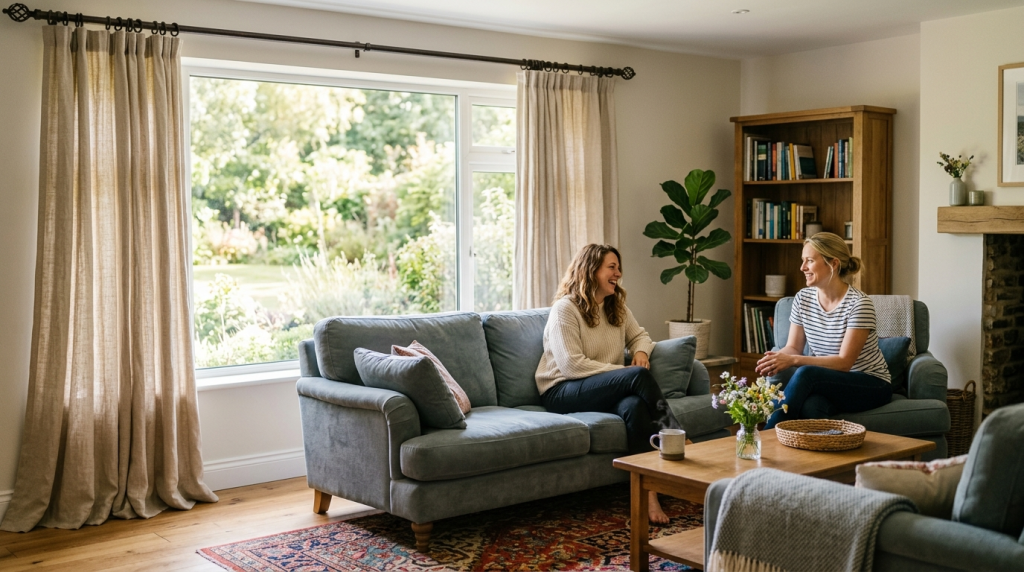
You’ve found the perfect curtains, but now you’re staring at a wall of rods, brackets, rings, and finials with no idea what actually fits your windows—or your walls. Choosing the wrong curtain and drapery hardware can undermine even the most beautiful fabric. Panels sag, hang crooked, or just look out of place. This guide breaks down every component, material, and mounting option available in 2026, so you can pick hardware that supports your window treatments properly and fits your room’s design.
Understanding Curtain and Drapery Hardware Basics
What Counts as Curtain Hardware
Curtain hardware includes every piece that hangs, holds, or moves a window treatment. That means rods, rings, brackets, finials, tiebacks, and tracks. It also covers hooks, clips, and the small pins that attach fabric to a rod. Each part plays a specific role in how the panel hangs and moves.
Some hardware stays hidden, like mounting brackets tucked behind fabric. Other pieces, like decorative finials, become part of the room’s style. Choosing between blinds vs curtains choosing the right window treatment often starts with understanding these building blocks. Once you know the parts, the decisions get easier.
Why Hardware Choice Impacts Your Whole Room
Hardware acts as the anchor for the entire window treatment. A thick rod with bold finials draws the eye upward. A slim track disappears, letting fabric take center stage. Get it wrong, and a tall window feels cramped, or a small window looks bare.
Weight matters too. Heavy velvet drapes need sturdy brackets and reinforced rods. Light linen panels can hang on thinner hardware. Complete Drapery Hardware Sets are built to match specific fabric weights and window sizes, which stops sagging over time.
Key Terms You’ll Encounter
Throughout this guide, you’ll see terms like traverse rod, finial, return, and bracket projection. A traverse rod lets panels slide open and closed on a cord or wand. A finial is the decorative end cap on a rod. Return refers to the short bend that brings fabric back to the wall.
Bracket projection measures how far the rod sits from the wall. Knowing these terms helps when reading product labels or asking questions during installation. It also helps later, when you’re following care instructions like how to wash curtains without damaging hardware attachments.
Core Components of a Drapery System
Rods, Finials, and Brackets
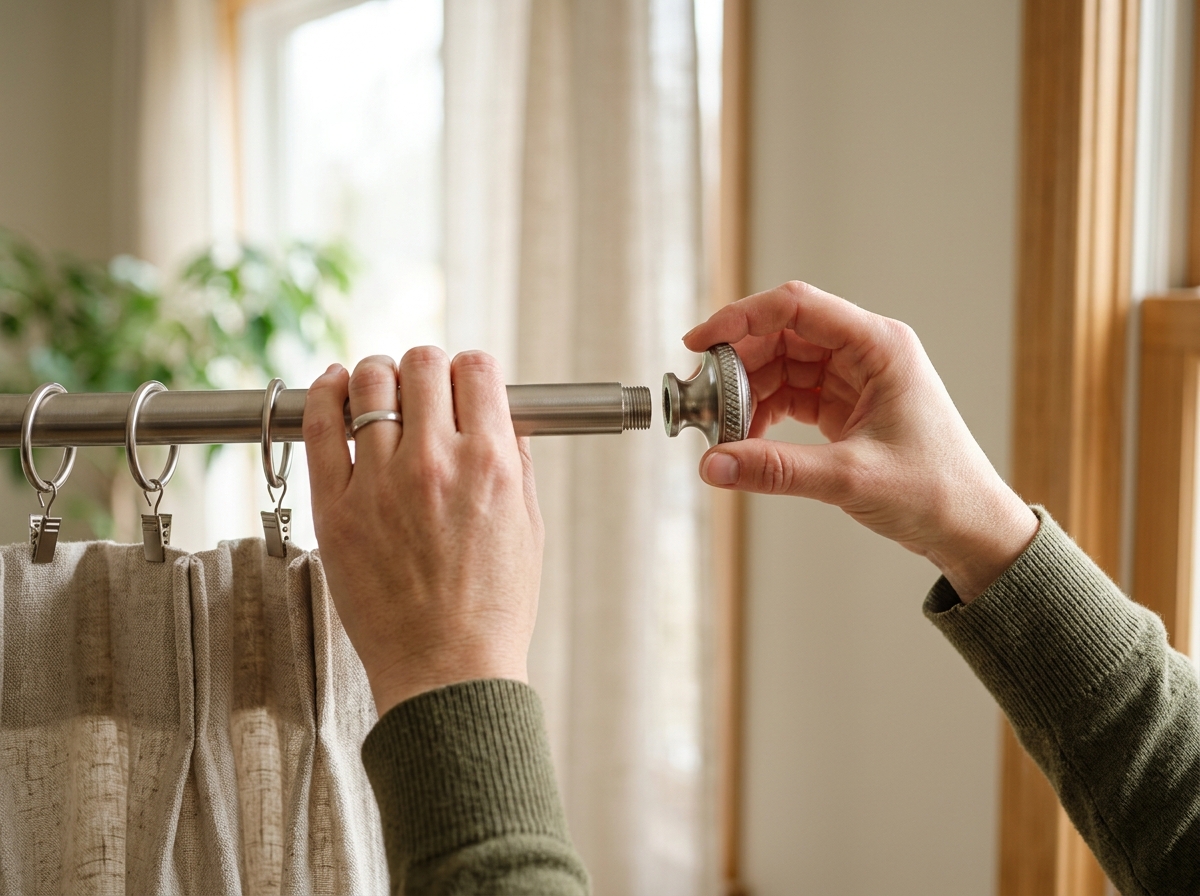
Every drapery setup starts with a rod, the horizontal bar that carries the fabric’s weight. Brackets anchor the rod to the wall or ceiling, and they must be rated for the panel’s weight. Finials cap the rod ends, stopping rings from sliding off while adding a decorative touch. Choosing between double curtain rods vs single curtain rods affects how many layers you can hang, from a simple panel to a sheer-plus-blackout combination.
Rings, Clips, and Pins
Rings and clips connect fabric to the rod, and this small link controls how smoothly curtains glide. The right hardware also shapes how pleat curtains fall, since pins determine spacing and fold depth. Consider these common options:
- Clip rings grip fabric without sewing, making them ideal for flat panels that need quick, damage-free installation.
- Pinch-pleat hooks insert into pocket tape to create structured, evenly spaced folds along the header.
- Eyelet grommets slide directly over the rod, producing soft, rounded waves with minimal hardware showing.
- Sew-on rings attach permanently to fabric, offering a traditional look for formal, heavier drapery.
- Ripplefold carriers snap into a track tape, creating continuous, wave-like folds popular in modern rooms.
Tracks vs. Traditional Rods
Tracks are enclosed channels with built-in glides, often used for wide windows or motorized systems. Traditional rods sit exposed and rely on visible rings for movement. Both affect fabric drape: tracks favor uniform pleats, while rods suit relaxed, decorative folds.
Popular Hardware Material Collections
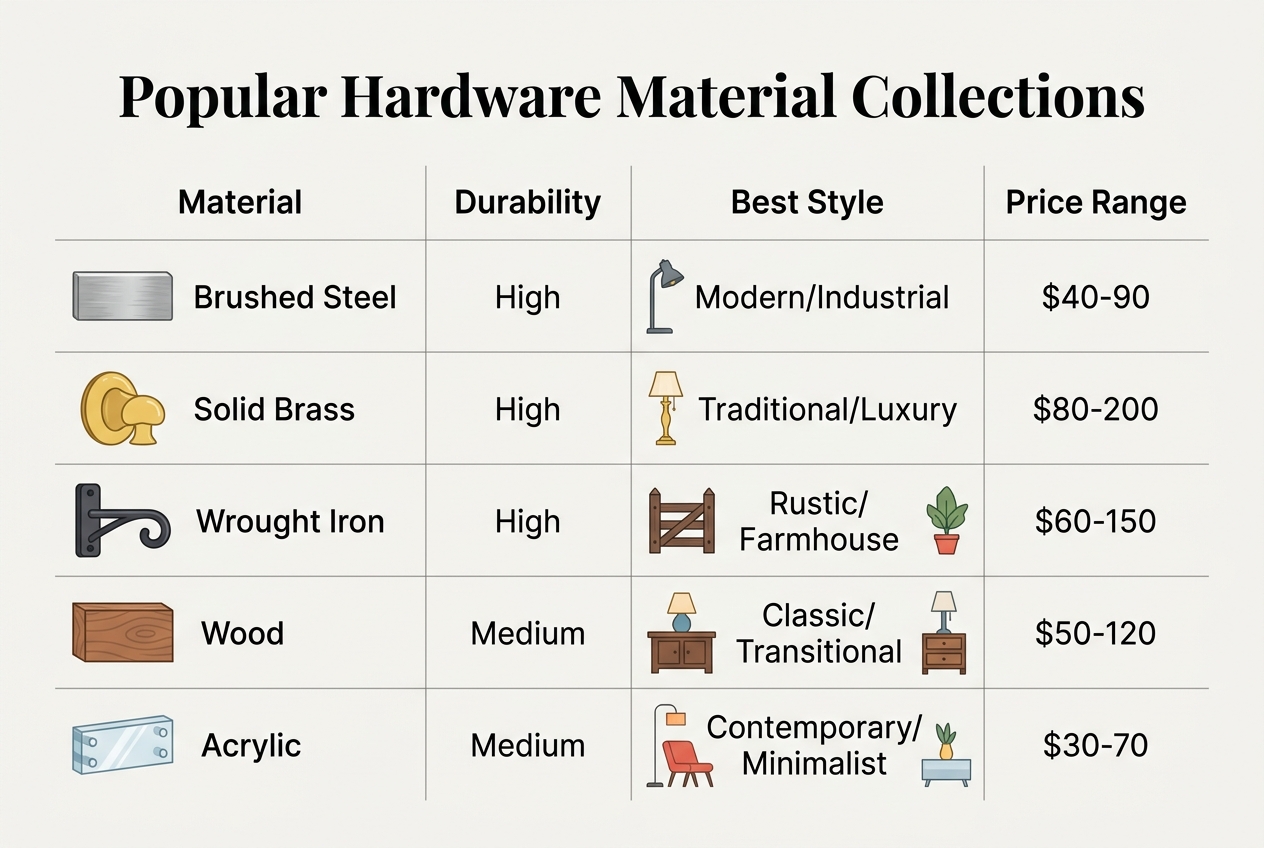
Metal Collections: Steel, Iron, and Brass
Metal rods handle heavy panels best. Steel offers strength without a high price. Wrought iron adds texture and a handmade look. Brass brings warmth and shine to formal rooms. Each metal behaves differently under weight, so matching rod to fabric matters. Heavier drapery, like the options covered in the best fabrics for curtains material pros and cons, needs a rod rated for real load, not just decoration.
| Material | Weight Capacity | Style Feel | Best Use |
|---|---|---|---|
| Steel | Up to 40 lbs per bracket | Clean, modern | Long spans, wide windows |
| Wrought Iron | Up to 35 lbs per bracket | Rustic, textured | Farmhouse, traditional rooms |
| Brass | Up to 25 lbs per bracket | Warm, formal | Living rooms, dining spaces |
| Lucite | Up to 15 lbs per bracket | Airy, transparent | Sheers, contemporary decor |
| Wood | Up to 30 lbs per bracket | Natural, classic | Bedrooms, cozy interiors |
Wood and Lucite Options
Wood rods suit heavier drapes without feeling cold or industrial. Oak and walnut finishes bring warmth to bedrooms and studies. Lucite, by contrast, stays light and nearly invisible. It works well with sheer panels, letting fabric take center stage. Since heavier metal rods can affect insulation near the window frame, some homeowners also weigh how coverage impacts comfort, a topic explored in do curtains keep heat out.
Mixed-Material and Designer Lines
Designer collections often blend metal cores with wood or acrylic accents. This mix balances strength with style. A steel rod with brass finials, for example, adds detail without adding weight. These combinations suit eclectic or transitional interiors that want both function and character.
Finishes and Design Styles to Consider
Classic and Traditional Finishes
Traditional rooms lean on warm, historic metals. Antique brass, oil-rubbed bronze, and aged gold bring depth to formal living rooms and dining spaces. These finishes often pair with ornate finials shaped like urns, pineapples, or scrolled acanthus leaves. Wood tones, including walnut and cherry stain, also fall into this category and suit heavier drapery panels.
Polished brass was once considered dated, but it’s back in updated forms with softer, brushed textures. Pewter and weathered iron offer a rustic alternative for farmhouse or cottage-style interiors. Each of these finishes tends to look best on rods with substantial diameter, usually one inch or wider, since thin rods can look flimsy against ornate detailing.
When choosing among 20-plus available finish options, homeowners should consider undertones already present in flooring, cabinetry, and light fixtures. A room full of warm wood tones generally calls for brass or bronze rather than cool metals. For guidance on pairing panel style with these classic finishes, resources like how to choose curtains for living room spaces offer useful starting points.
Modern and Minimalist Finishes
Matte black remains the most requested modern finish, prized for its clean silhouette and versatility across color palettes. Polished nickel, brushed steel, and satin chrome offer cooler alternatives with a reflective quality. These finishes typically pair with simple cylindrical finials or no finial at all, keeping the look streamlined.
Minimalist spaces often favor track systems or slim rods under three-quarters of an inch in diameter. Matte white and clear acrylic have also grown popular, letting hardware disappear against light walls. Anyone comparing rod, track, ring, and bracket options should review a full Curtain Hardware Rod, Track, Ring, Hooks, and More lineup before deciding.
Coordinating Finish with Fixtures and Decor
Hardware finish should echo at least one other metal already used nearby, such as door handles, lamp bases, or picture frames. Mixing two complementary metals, like matte black with brushed brass, can work if done intentionally and sparingly across a room.
Consider the room’s overall palette before finalizing a choice. Cool-toned rooms with gray or blue walls typically suit nickel or chrome, while warm neutrals favor bronze or gold accents. Consistency across three to four rooms in an open floor plan creates visual flow.
Motorized and Track Systems for Modern Homes
How Motorized Tracks Work
A motorized track uses a small motor built into the headrail to glide drapery panels open or closed. The motor runs on a rechargeable battery or a direct wire connection, depending on the system. Most tracks respond to a remote, a wall switch, or a mobile app.
The biggest benefit is convenience. Heavy panels that once required a firm tug now move with one button press. This matters most for oversized windows, where manual pulling can strain the fabric or the rod over time.
Automation also supports daily routines. Owners can schedule panels to open at sunrise and close at dusk. This guide on automated blinds vs automated shades which smart window t… breaks down how motorized fabric treatments compare to motorized hard treatments for daily use.
Custom Track Solutions for Unique Windows
Bay windows, curved walls, and angled ceilings need more than a straight rod. Custom tracks bend to follow these shapes while still allowing smooth motorized movement. Many are built from flexible aluminum that holds its curve permanently.
Multi-track systems also solve layering needs. A single headrail can run a sheer panel on one track and a blackout panel on another, each with independent motor control. For a closer look at configuration options, see this resource for Shop Drapery Hardware: Rod & Track Systems.
Smart Home and Remote Control Integration
Modern tracks pair easily with smart home systems. Many connect to voice assistants, allowing simple commands to open or close panels. Others sync with home automation hubs alongside lighting and thermostats.
Scheduling features add real value. Panels can close automatically during peak afternoon sun to cut heat gain. Homeowners often report noticeable energy savings after adding this automation.
Battery-powered motors typically need charging every few months, depending on how often you use them. Hardwired systems skip this task entirely, making them ideal for frequently used rooms.
Choosing Curtain and Drapery Hardware for Your Space
Matching Hardware to Fabric Weight
Heavy fabrics need strong support. A lightweight sheer panel can hang on a thin rod. A lined velvet drape cannot. Weight capacity matters more than style when picking a rod. Always check the manufacturer’s load rating before buying.
Trying small updates first can help you learn what works. These diy curtain hacks transform your space with simple upgrades reveal which hardware upgrades matter most.
Sizing Rods and Rings Correctly
Proportion affects both looks and function. A rod that’s too short will pinch fabric. One that’s too long will sag under weight. Use this quick reference when planning a window.
| Window Width | Recommended Rod Length | Ring Count (per panel) | Ideal Fabric Weight |
|---|---|---|---|
| 36 inches | 48–54 inches | 7–8 rings | Light to medium |
| 48 inches | 60–72 inches | 9–10 rings | Medium |
| 60 inches | 84–96 inches | 10–12 rings | Medium to heavy |
| 72 inches | 96–120 inches | 12–14 rings | Heavy, lined |
Extend rods 8 to 12 inches beyond the frame on each side. This lets curtains stack neatly when open.
Balancing Function with Aesthetic Goals
Good hardware blends purpose with design. A finish should match room style, but it still has to hold weight safely. Browse a wide range of Curtain Hardware to compare finishes against your fabric and window needs.
Think about daily use, too. Smooth glide rings suit rooms with frequent opening. Fixed rods suit stationary panels. Function first keeps the final look practical, not just pretty.
Step-by-Step Installation Considerations
Measuring and Mounting Height
Good installation starts with accurate measuring. Mount brackets 4 to 6 inches above the window frame, and extend the rod 3 to 6 inches past each side. This lets curtains stack fully off the glass when open. For guidance on picking the right style before you measure, see this resource on how to choose curtains for living room spaces.
Bracket Spacing and Wall Support
Bracket spacing depends on rod weight and window width. Heavier fabrics and longer spans need extra support to prevent sagging. The table below outlines common spans and recommended bracket counts.
| Window Width | Recommended Brackets | Max Spacing | Wall Anchor Needed |
|---|---|---|---|
| Up to 48 in. | 2 | 48 in. | Only for drywall without studs |
| 49–72 in. | 3 | 36 in. | Yes, center bracket |
| 73–96 in. | 4 | 32 in. | Yes, at least two anchors |
| Over 96 in. | 5+ | 28 in. | Yes, studs preferred |
DIY vs. Professional Installation
DIY installation works well for lightweight rods and standard windows. A level, stud finder, and drill are usually enough. Professional consultation helps with motorized tracks, oversized windows, or heavy drapery panels. Many local businesses offer free in-home measuring to avoid guesswork.
Common mistakes include mounting too low, uneven bracket spacing, and skipping wall anchors. Trusted suppliers like Designer Drapery Hardware: Kirsch Drapery Hardware, Kirsc… offer detailed spec sheets that help installers double-check load ratings before drilling.
Using Hardware to Elevate Different Rooms
Living Room and Bedroom Applications
Living rooms benefit from bold hardware. Thick rods, oversized finials, and wide rings create a statement look. A 1-inch or 1.25-inch diameter rod suits most living room windows, especially with heavier drapery fabrics. For guidance on matching hardware scale to fabric weight, this how to choose curtains guide expert tips for every room offers useful direction.
Bedrooms often call for quieter hardware. Blackout curtains need traverse rods or wraparound designs that block light gaps at the edges. Smooth, silent gliding matters more here than decorative flair, since bedrooms prioritize rest over visual drama.
Dining spaces sit between these two extremes. Medium-weight rods with subtle finishes work well, since dining curtains open and close less often but still need to complement table settings and chandeliers above.
Layering Hardware with Shades or Shutters
Many homeowners pair curtains with shutters or shades for both function and style. A double rod system lets sheers hang closer to the glass while drapery panels sit in front. This layering adds texture and improves light control.
When shutters are already installed, curtain rods should mount outside the frame. This placement avoids hardware conflicts and keeps shutter louvers fully operable. Proper spacing between layers stops fabric from catching on shutter panels.
Solutions for Bay Windows and Sliding Doors
Bay windows need custom-bent rods or flexible track systems that follow the window’s angles. Corner brackets help keep curtain movement smooth around each bend.
Sliding doors work best with traverse rods or track systems mounted above the door frame. This keeps panels clear of the sliding mechanism. Exploring options like Drapery Hardware can reveal specialized tracks built for wide openings and heavy panel loads.
Maintenance and Longevity Tips
Cleaning Metal and Wood Finishes
Routine cleaning keeps hardware looking new and working smoothly. Metal rods and brackets do well with a soft, dry cloth for weekly dusting. For deeper cleaning, use a mild soap solution, then dry the metal fully to avoid water spots or rust. Wood poles and finials need gentler care. Avoid harsh chemicals, which can strip stain or seal. A furniture-safe polish restores shine without damage. Check our blog for seasonal cleaning schedules tailored to different finishes.
Signs It’s Time to Replace Hardware
Even well-maintained hardware wears out eventually. Watch for these warning signs:
- Rings that no longer glide smoothly and instead stick or catch along the rod
- Brackets with visible cracks, rust spots, or loosened screws that won’t tighten
- Finials or rods showing chipped paint, peeling finish, or exposed base metal
- Sagging support that causes curtains to hang unevenly or droop in the middle
- Motorized components that stall, reverse unexpectedly, or make grinding noises
Replacing worn parts early prevents bigger repairs later. Browse Curtain Rods & Hardware options when it’s time to upgrade.
Preventing Wear on Tracks and Motors
Tracks and motors need light, consistent care. Vacuum tracks monthly to remove dust buildup. Apply silicone spray, not oil, to keep gliders moving freely. For motorized systems, avoid forcing manual movement during power outages. That strain can damage internal gears. Proper care keeps both function and finish in good shape for years.
If you’re ready to find the perfect hardware to complement your window treatments, the team at The Curtain is happy to help. As a family-owned business offering custom drapery, shades, and Hunter Douglas premium treatments, they can walk you through the details during an in-home design consultation and make sure everything works together beautifully. Reach out to book your visit and see what they can create for your space.