Custom Window Shades
Eight ways to dress a window in fabric — from a sheer that glows at 4pm to a blackout that holds a nursery dark at noon. All measured, made and installed by us.
 ★★★★★ 4.9 · 314 reviews (314)
 Partner
~2 weeks to install~2 wks
Partner
~2 weeks to install~2 wks
Eight styles, and what each one is actually for
Shades all look similar in a catalog. They behave completely differently on a window — so here's the short version of each, and where it earns its keep.
Roller Shades →
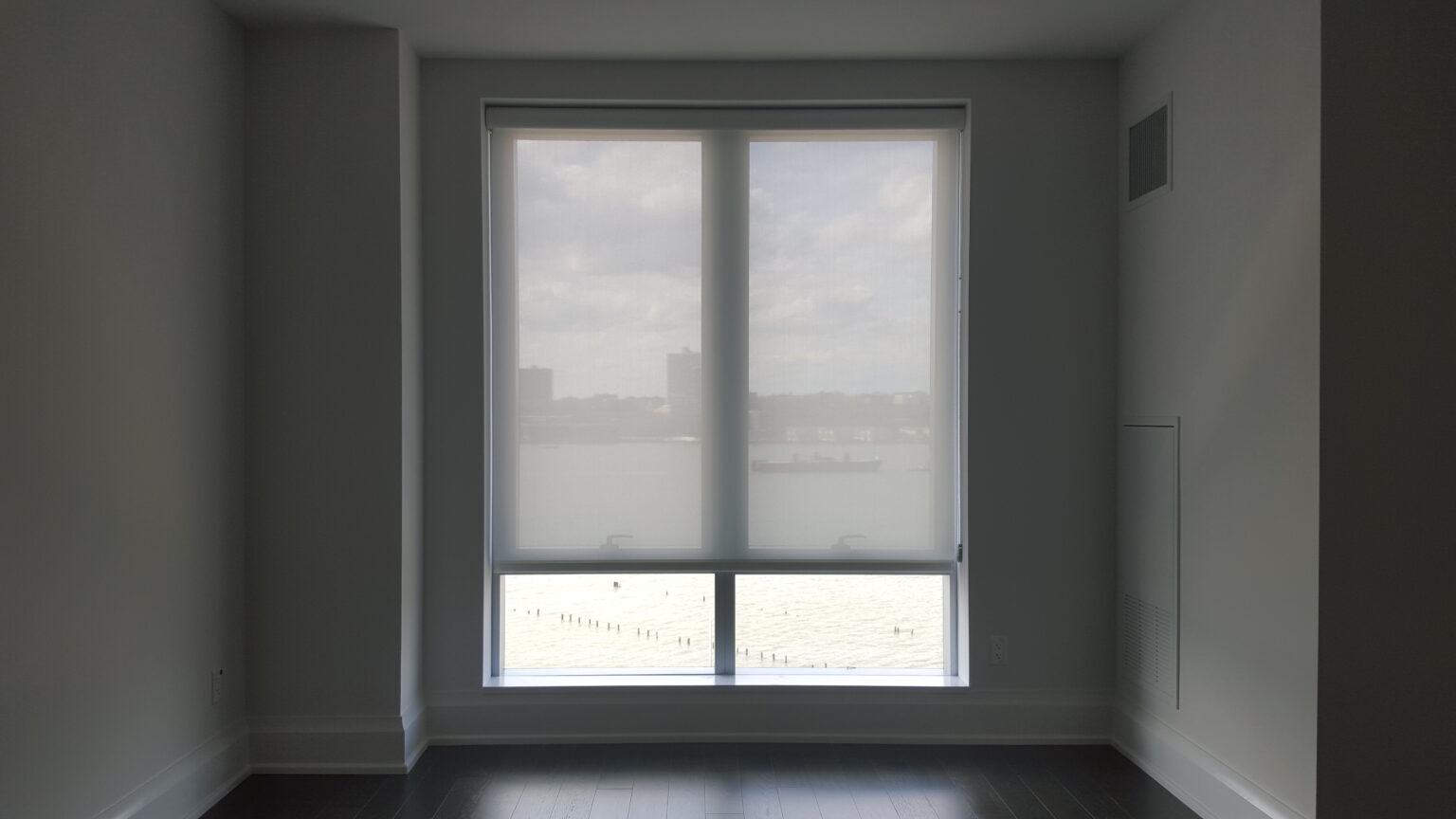
One clean sheet of fabric that rolls up into a cassette. The simplest, tidiest shade there is, and the easiest to motorize.
Solar Shades →
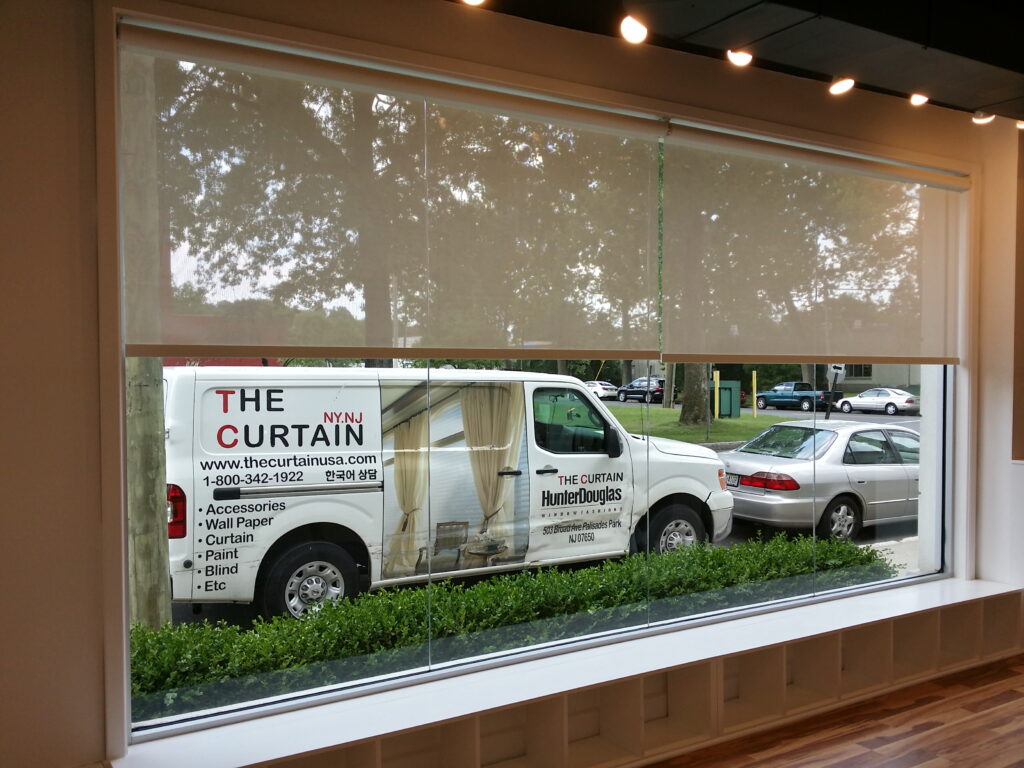
A roller in an open-weave screen fabric. It cuts heat and glare but you keep the view straight through — the openness factor decides how much.
Zebra Shades →
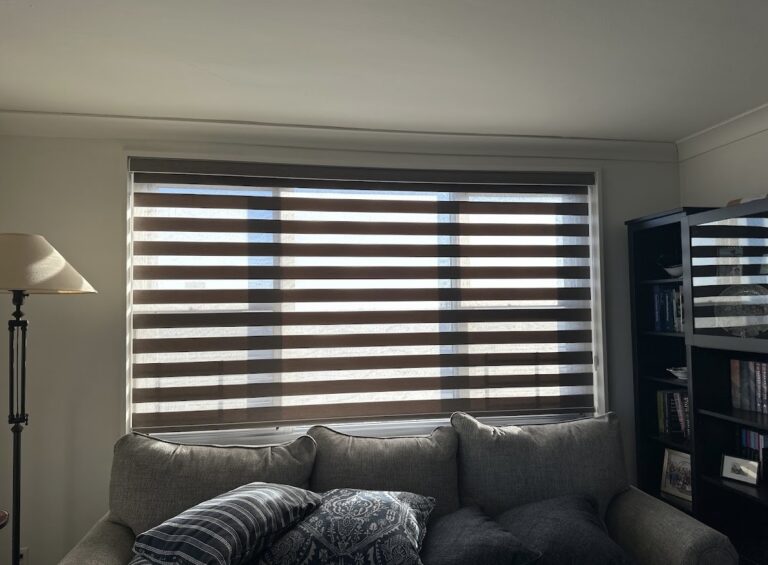
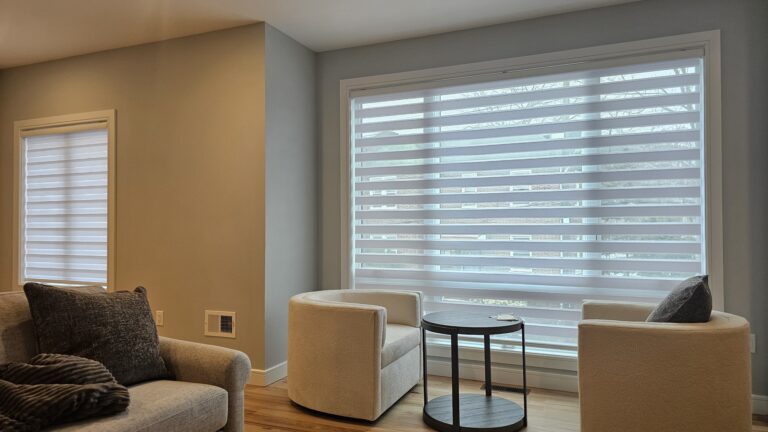
Alternating sheer and solid bands on one roller. Line them up and you see out; offset them and the room closes. View to privacy in a single pull.
Cellular & Honeycomb →
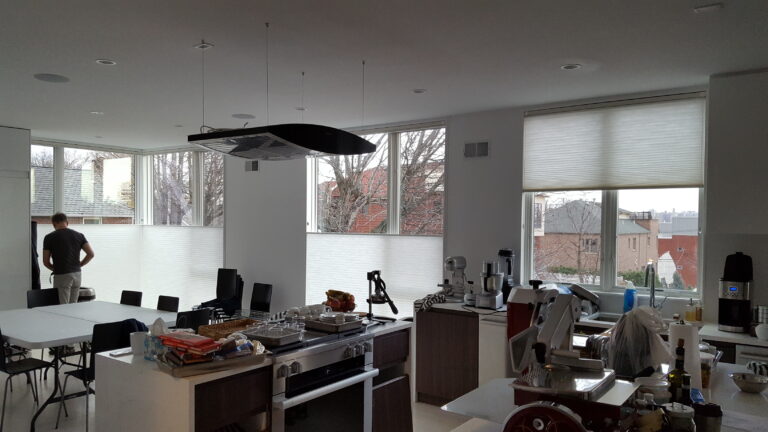
Pleated cells trap a pocket of air against the glass, so it's the shade that actually does something about your heating bill. Also the best top-down/bottom-up option.
Roman Shades →
Soft fabric folds with the structure of a shade. The one to pick when you want pattern and warmth without the bulk of full drapery.
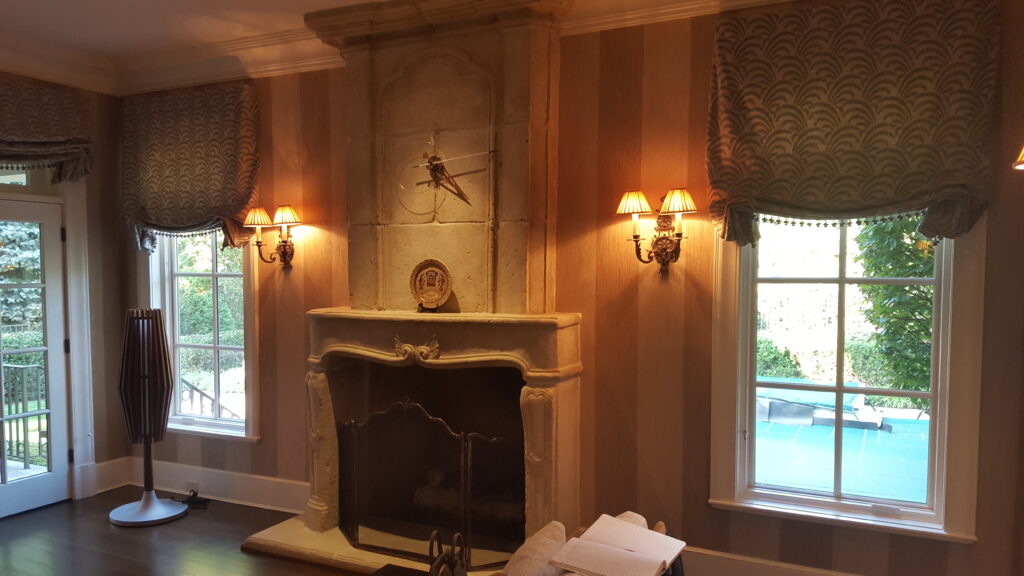
Sheer Shades →
Fabric vanes floating between two sheers. They turn hard afternoon sun into soft, even light and protect your floors and furniture while they do it.
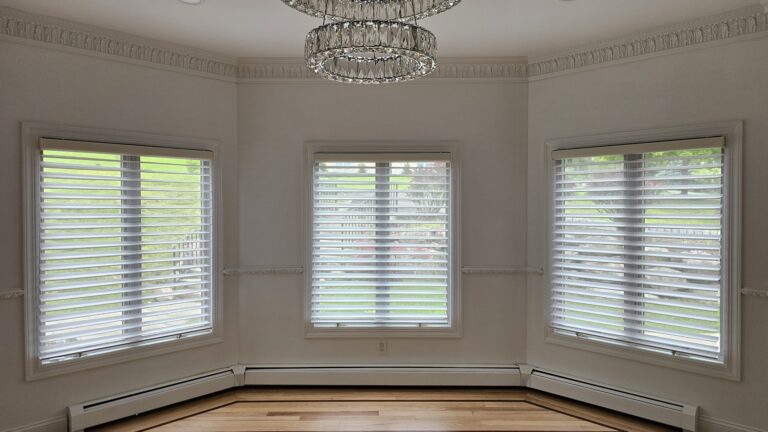
Woven Wood Shades →
Real reeds, grasses and bamboo woven into a shade. It brings texture a flat fabric can't, and it is most at home in a living room or a breakfast nook, away from the stove. Add a liner for privacy after dark.
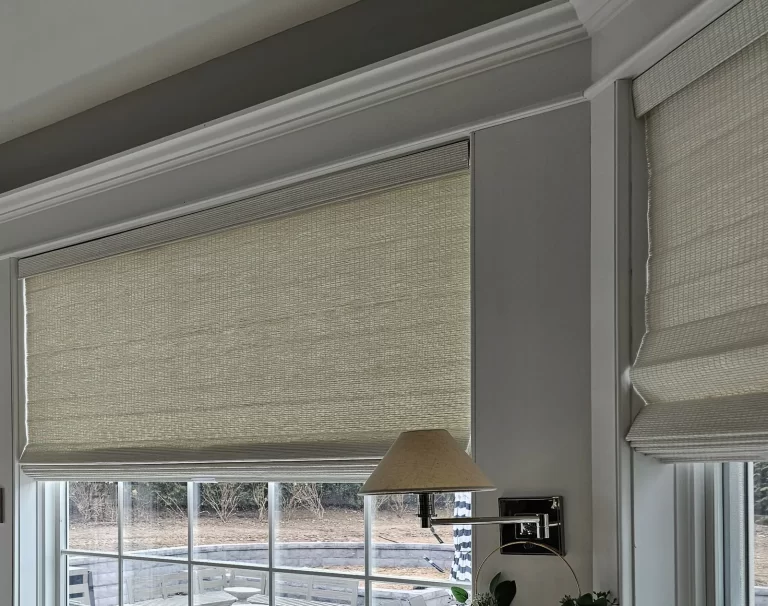
Blackout Shades →
Any of the above with a blackout lining — but the lining is only half of it. Side channels and the right mount are what stop light spilling around the edges.
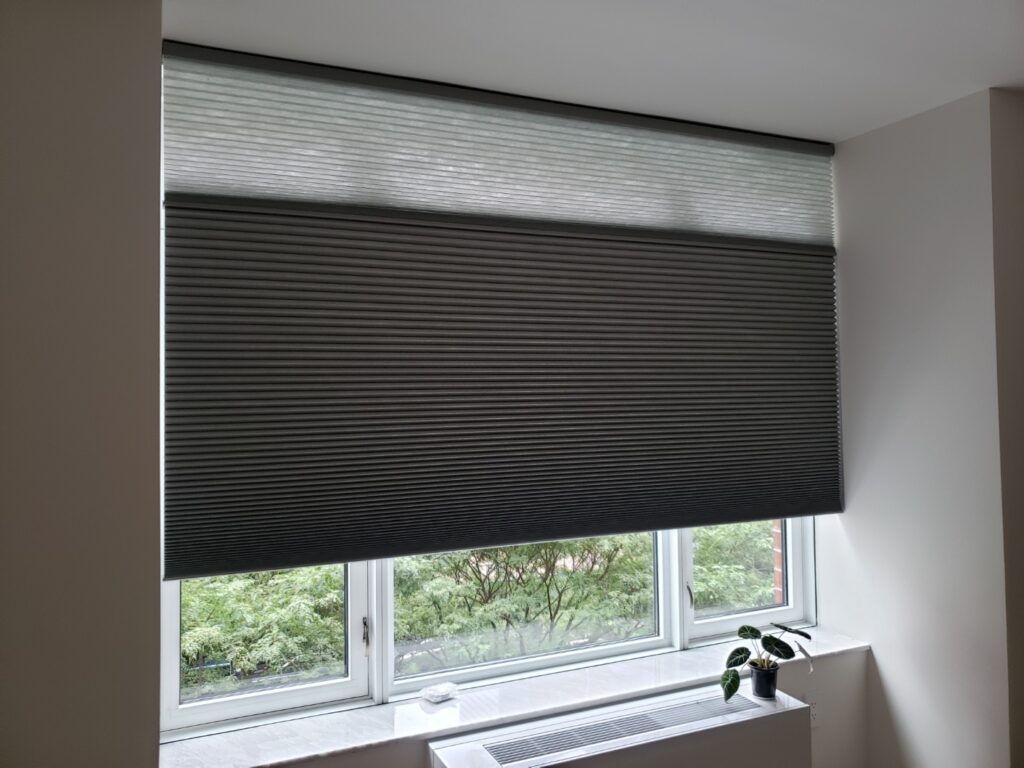
Start with what the room needs
Nearly every client arrives with one priority. Pick yours and we'll tell you where we'd start — and the runner-up worth seeing next to it.
Sheer Shades
Vanes between two sheers block the view in while daylight still comes through. You get privacy at 3pm without turning the room into a cave.
Sheer shades →Zebra Shades
Same idea, different mechanism — and you can switch all the way to a solid band when you do want the room closed off.
Zebra shades →Solar Shades
Built for it. An open-weave screen cuts heat and glare but keeps the view — a 3% openness for a west-facing window, 10–14% where the view matters more than the glare.
Solar shades →Roller Shades
A tighter weave in the same roller format if you'd rather trade the view for more heat control.
Roller shades →Blackout Shades
A blackout lining plus side channels and an outside mount. The lining alone won't do it — the light that ruins a nursery comes around the edges, not through the fabric.
Blackout shades →Cellular & Honeycomb
Room-darkening cells that insulate at the same time, which matters if the bedroom runs cold.
Cellular shades →Cellular & Honeycomb
The only shade that genuinely insulates. Each cell holds a pocket of air against the glass, cutting heat loss in winter and heat gain in summer.
Cellular shades →Solar Shades
Better on the cooling side specifically — they stop solar heat before it gets into the room.
Solar shades →Roman Shades
Hundreds of designer fabrics, three fold styles, and trims if you want them. This is where the design conversation usually goes.
Roman shades →Woven Wood Shades
Natural reeds and grasses for texture and warmth — quieter than a pattern, but never flat.
Woven wood →Shades or blinds?
People use the words interchangeably. They're different products, and the difference decides which one suits your window.
A shade is one piece of material
It rolls, folds or stacks as it rises. Because there are no slats, it reads softer and quieter on a wall, and it gives you a continuous surface for fabric, pattern or texture.
Choose a shade when you want warmth, softness, or a specific fabric.
A blind is made of slats
The slats tilt, so you can angle daylight up onto the ceiling or down toward the floor without raising anything. That directional control is something no shade can do.
Choose a blind when you want to aim the light. See blinds →
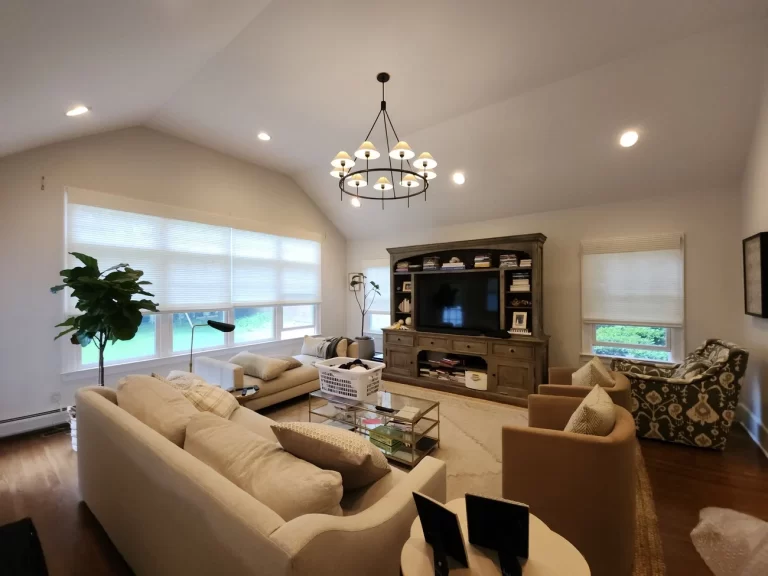
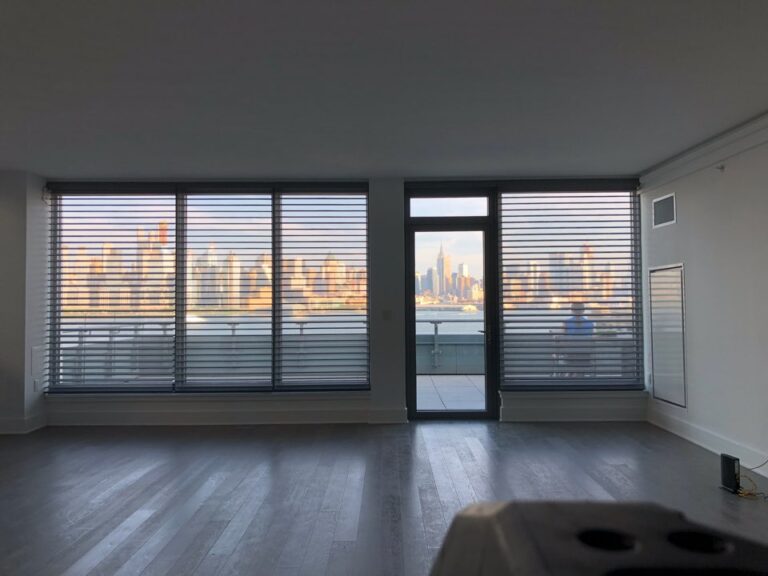
Shades we've installed nearby
Real homes across Bergen County and the Tri-State — no stock photography.
Shade questions
The five that come up in almost every consultation. Covering a sliding door? That opening plays by different rules.
Tell us the room and what's bothering you about the light. We'll narrow it to two options in a five-minute call.
What is the difference between a shade and a blind?
A shade is one continuous piece of material that rolls, folds or stacks as it rises. A blind is made of individual slats that tilt, so you can angle the light without raising anything. Shades read softer; blinds give you finer control over direction.
Which shade is best for blocking heat and glare?
Solar shades are made for exactly that — they block heat and glare while keeping your view, in openness factors from 1% to 14%. If you also want to stop heat escaping in winter, cellular honeycomb shades trap air in their cells and insulate the window itself.
Can window shades be motorized?
Every style on this page can be. As a Hunter Douglas dealer we fit PowerView® automation, which runs from an app, a remote, your voice or a schedule that follows the sun. It’s most worth it on tall or hard-to-reach windows, and rarely worth it on a small one you can comfortably touch.
Are custom shades child-safe?
Every shade we install is cordless or motorized by default. There’s no operating cord and no inner lift-cord loop, which meets the current safety standard for homes with children and pets.
How much do custom window shades cost?
They’re priced per window, because cost is driven by the size of the opening, the material, whether it’s lined or blackout lined, and whether you add motorization. We quote every window exactly during the free consultation, so the number you get is the number you pay.
Visit the showroom
Prefer to see things in person before we come to you? We're on Broad Avenue in Palisades Park, a few minutes from Fort Lee and the GWB.
- 547 Broad AvenuePalisades Park, NJ 07650
- Mon–Fri 10–7 · Sat 10–5Closed Sunday
- (201) 302-9111We usually pick up on the first ring