Solar Shades
A shade you can see straight through. Solar screens cut glare, heat and UV while leaving the view exactly where it was — which is why they end up on the windows you actually want to look out of.
 ★★★★★ 4.9 · 314 reviews (314)
 Partner
~2 weeks to install~2 wks
Partner
~2 weeks to install~2 wks
One number decides everything
Solar fabric is a mesh, and the openness factor is the percentage of it that is open space. It is the only spec that really matters, and it is the one nobody explains.
5% openness
The balance point. Noticeably clearer than 3% with most of the glare control, and the one we suggest when the view is the reason you bought the house.
A visual illustration, not a photograph of each weave. What you actually see depends on the openness, the fabric colour and how bright it is outside — we bring samples and hold them against your own glass.
What a solar shade is actually for
They are not a privacy product and they are not a darkening product. They solve three specific problems, and they solve them better than anything else.
A solar shade is a technical mesh rather than a textile. Light passes through the openings in the weave, so you keep seeing out; the fibres themselves absorb and reflect the rest. That single fact explains everything a solar shade is good at and everything it is bad at.
It is worth being blunt about the limit before the benefits. A solar shade gives you no privacy at night. After dark the bright side is inside, and anyone outside sees in about as well as you saw out during the day. If the window needs privacy after sunset, it needs a second layer, and that is a conversation we would rather have before you order than after.
- Glare. The one people buy them for. A screen makes a west-facing room usable at four in the afternoon without closing it off.
- Heat. Blocking solar gain at the glass is far more effective than dealing with it once it is inside. West and south windows are where this pays for itself.
- UV. Hardwood floors, rugs and artwork fade in direct sun. A screen cuts the great majority of the UV that causes it, which is a slow benefit you only notice by its absence.
- Not privacy. During the day the darker side is outside, so you see out and they do not see in. After dark that reverses completely.
Dark or light changes what the shade does
On most window treatments colour is decoration. On a solar shade it changes the performance, and the choice most people make by instinct is usually the wrong one.
Dark fabrics: the clearest view
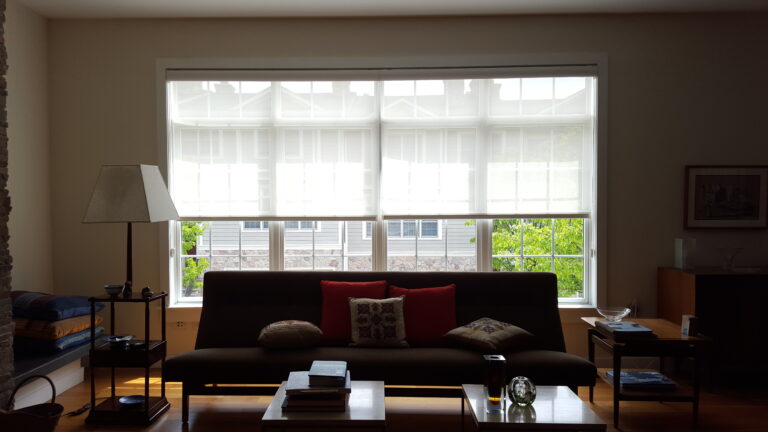
A dark screen absorbs light rather than scattering it, so there is less haze between you and the outside. Look through a charcoal 3% and a white 3% side by side and the charcoal is dramatically clearer — it behaves like a good pair of sunglasses.
The trade is heat. Absorbed energy becomes warmth at the glass, so a dark screen is a little less effective at keeping a room cool than a light one at the same openness.
Best for a view worth protecting, home offices, anywhere glare is the main complaint.
Light fabrics: the coolest room
A white or oatmeal screen reflects energy back out through the glass instead of absorbing it, which is the more effective way to keep heat out of the room. It also disappears against a white frame and reads brighter from the street.
The cost is clarity. Light fabric scatters the light coming through it, so the view picks up a soft haze — more noticeable the lower the openness. A white 1% is close to opaque in daylight.
Best for south and west glass, keeping a room cool, matching white trim.
Two-tone: both, if you can have it
Some screens are woven dark on the inside face and light on the outside, which gets you the clear view from within and the reflective surface facing the sun. It is the technically correct answer for a bright west window.
The range is narrower than single-colour fabric and it costs more, so it is not the default. On the one or two windows in a house that really suffer, it is usually the right place to spend.
Best for the worst window in the house, where neither compromise is acceptable.
The windows that need them most
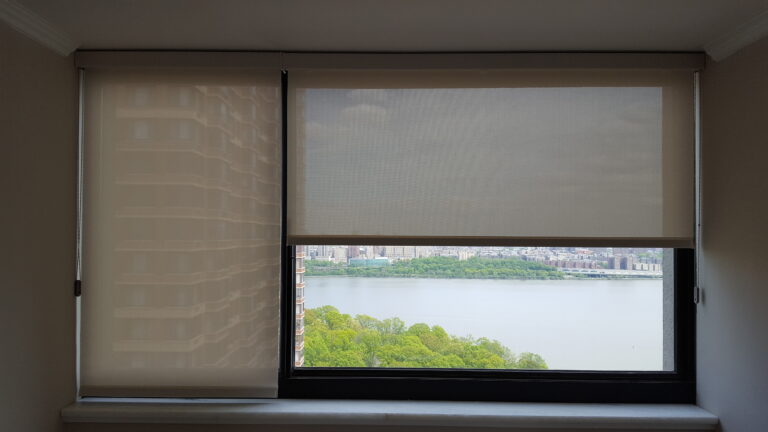
Solar shades earn their place on specific windows rather than throughout a house. These are the ones we fit them to again and again.
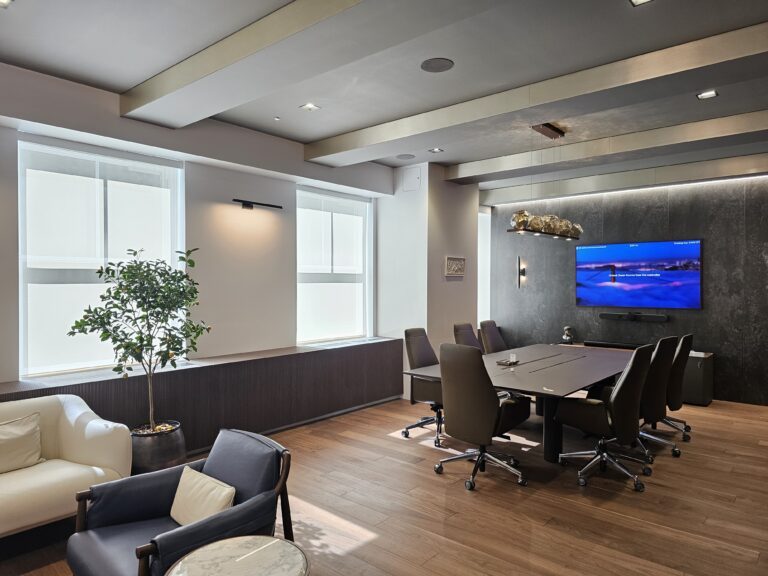
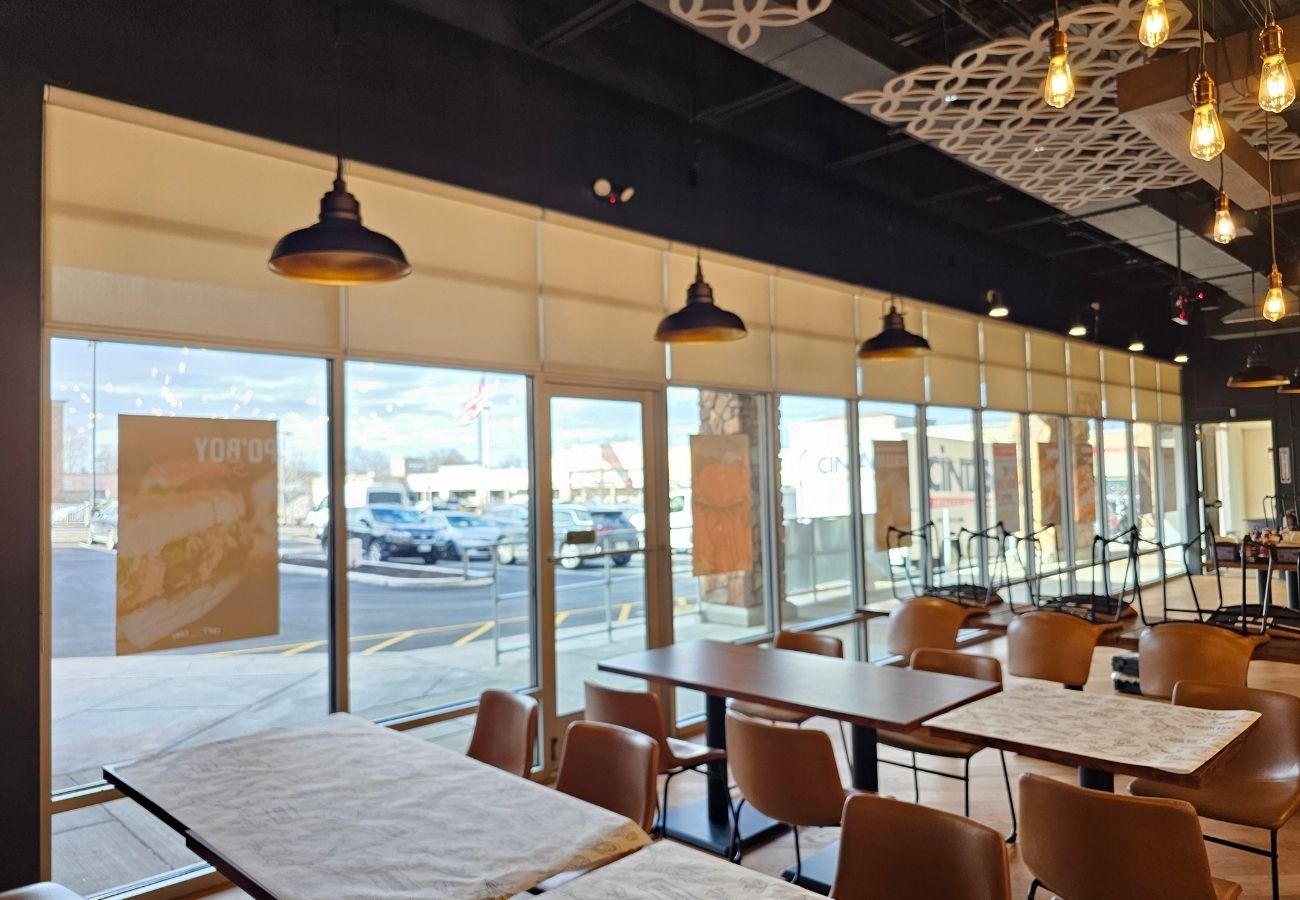
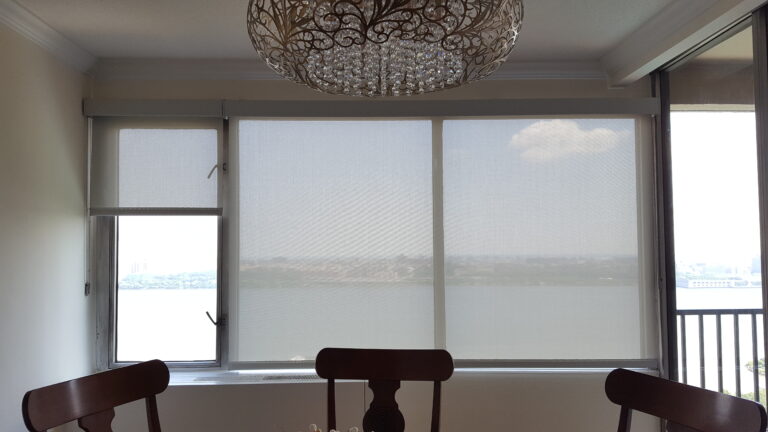
Pairing is common and worth planning for. A solar screen by day and a blackout shade or a drapery panel by night covers both jobs on one window — see dual roller systems for how that is built.
How you will raise and lower them
Solar shades are the strongest case for motorization on the whole site, because their job is time-of-day sensitive and most people are not home to do it manually.
Motorized & scheduled
Set them to drop before the sun swings round in the afternoon and lift again at dusk. The shade does its job on the days you are out.
The obvious fit hereSun sensor
Responds to actual brightness rather than the clock, so an overcast afternoon leaves the view alone.
South and west glassCordless
Push up, pull down, nothing hanging beside the window.
Reachable windowsChain drive
A tensioned loop anchored to the wall, for a wide or heavy screen on a budget.
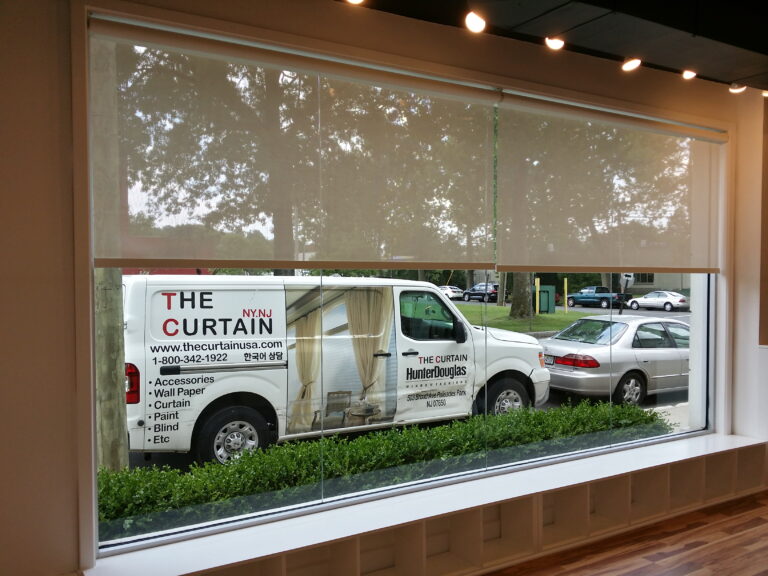
Oversized shadesSolar shades we have installed
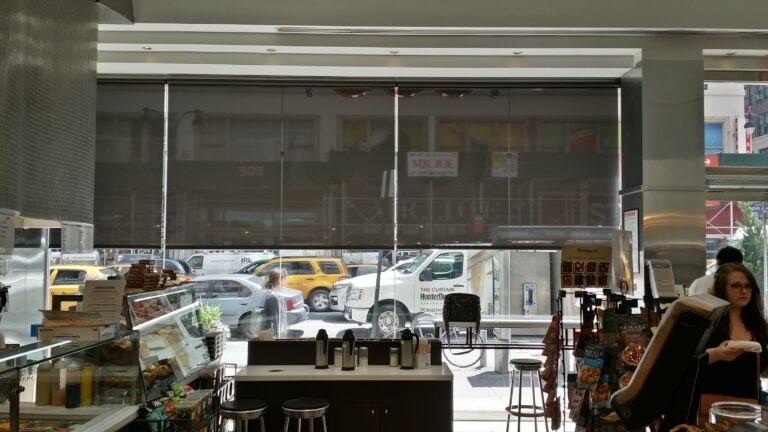
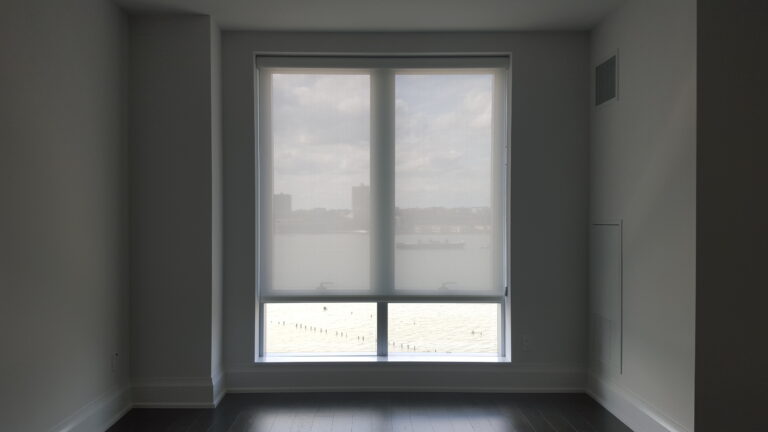
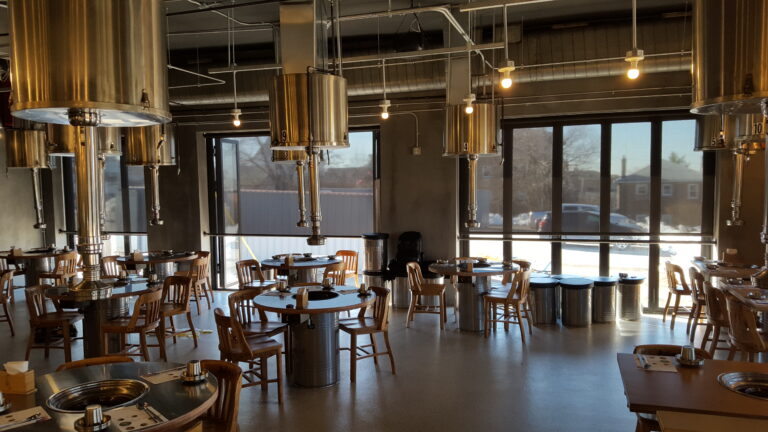
No stock photography, no showroom staging — homes and offices across Bergen County and the Tri-State.

What actually drives the price
Solar shades are priced per window. Openness and fabric move the number more than anything else, and neither of them is a size.
01Fabric and openness
Screen fabric is a technical textile and it is priced like one. A basic single-colour screen and a two-tone or designer weave can differ several times over per yard. Openness itself barely changes the price — it is which fabric family you pick that does.
02Size of the opening
Screens go on big windows more often than any other shade, and big means a thicker tube and stronger brackets. Past a certain width the tube steps up a size to stop it sagging, and that is a step rather than a gradual climb.
03Headrail
An exposed roll costs nothing extra, a fascia a little, a full cassette more. On a solar shade a cassette matters less than on a blackout, because you are not fighting a light gap — here it is purely about how finished the top of the window looks.
04Motorization
A motor and power per shade. This is the one product where we genuinely think it earns its cost on most installs, because a solar shade that is up when the sun is out is not doing anything.
Why we don't publish a price list. Two windows in the same room can price differently once you account for size, fabric and mount. We measure and quote every window during the free consultation, so you see the number before anything is ordered. Book one here.
Measured to installed in about two weeks
Free consultation
We come to you, so you're judging the room in the light the shade will actually live in.
Measure & design
Every window measured to the sixteenth, with a designer's eye on mount, stack and fabric.
Made for your window
Hunter Douglas or our own Korean workroom — built to your opening, never trimmed from stock.
Installed & tidy
Professionally hung, tested, and the packaging leaves with us. Usually a single visit.
Solar shade questions we get asked
What are solar shades?
A solar shade is a roller shade made from an open-weave technical mesh rather than a textile. Light passes through the openings, so you keep the view, while the fibres block glare, heat and UV. Same mechanism as a roller shade, different fabric.
What openness factor should I choose?
For most rooms, 3% or 5%. Pick 3% when glare is the main complaint; pick 5% when the view is why you bought the house. 1% only for a punishing window, 10% only where the window faces north or is already shaded and you mainly want UV protection.
Do solar shades give you privacy?
During the day, in one direction only — the outside is brighter, so you see out and they do not see in. After dark that reverses completely. If the window needs privacy at night, pair the screen with a blackout shade or a drapery panel.
Do solar shades actually reduce heat?
Yes — and stopping the gain at the glass beats cooling the room afterwards. Lighter fabrics reflect more energy back out and keep the room cooler; darker fabrics absorb more but give a clearer view. Lower openness blocks more than higher openness at the same colour.
What is the difference between solar shades and roller shades?
Mechanically, none — a solar shade is a roller shade with open-weave screen fabric on it. The whole difference is the fabric: a standard roller fabric is closed and gives privacy, a solar fabric is open and gives you the view.
Can solar shades be motorized?
Yes, and this is the product where we most often recommend it. Their job depends on the time of day, so a scheduled or sun-sensing motor means the shade still works on the days nobody is home to lower it.
Do you fit exterior or patio solar shades?
No. We fit interior solar shades only, mounted inside the room at the window. Exterior and patio systems are a different product entirely, with different mounting, weatherproofing and motors, and it is not work we take on. If you are shading a deck or a pergola, you want a specialist in exterior systems — we would rather tell you that now than take the appointment.
How long do custom solar shades take?
Usually about two weeks from approval to installation. Two-tone and specialty screen fabrics can run longer, and we tell you the timeline before you order.
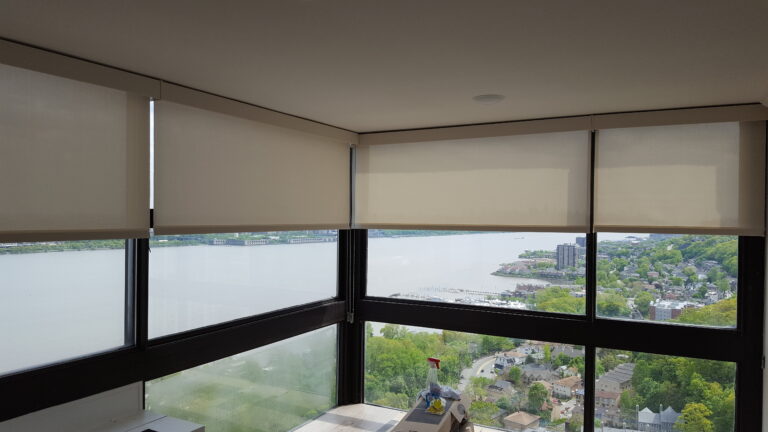 Roller ShadesThe same mechanism, in closed fabrics
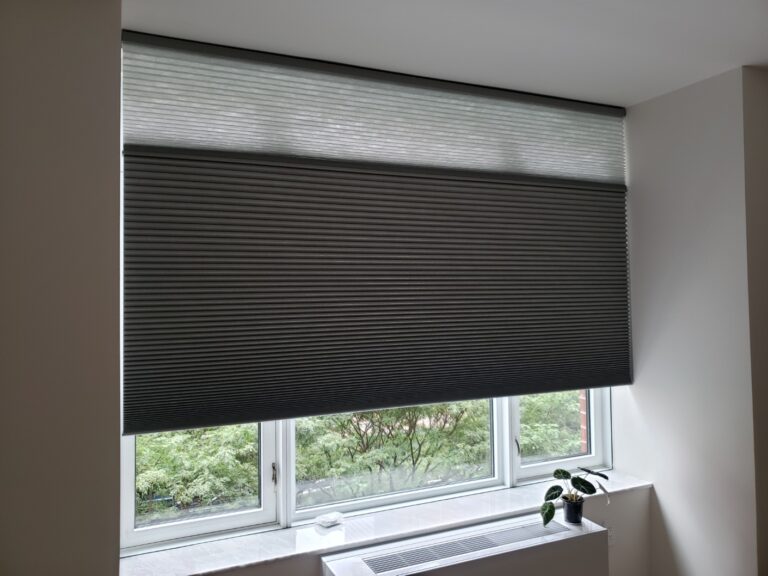 Blackout ShadesThe night-time half of the same window
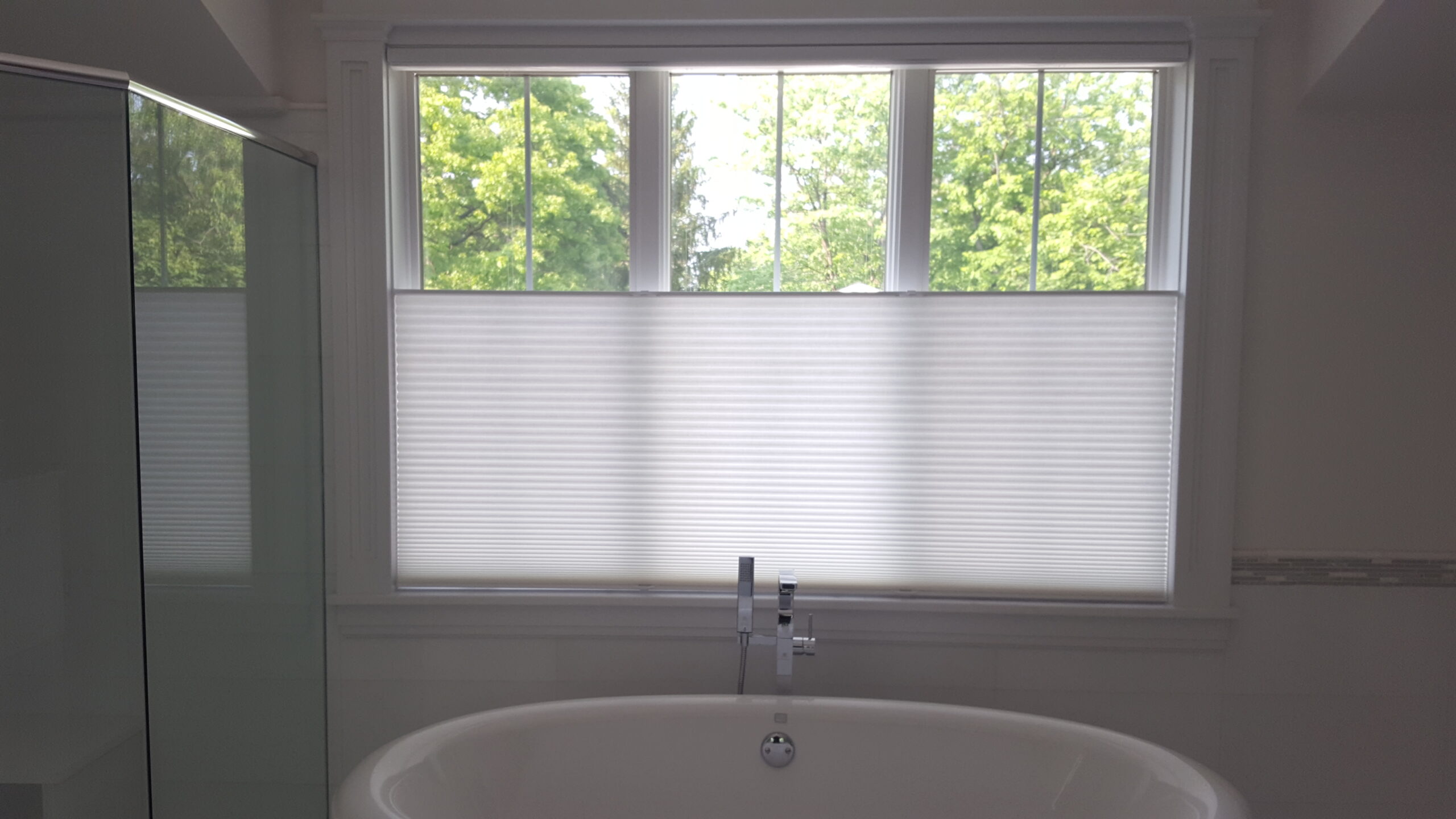 Cellular & HoneycombWhen insulation matters more than the view
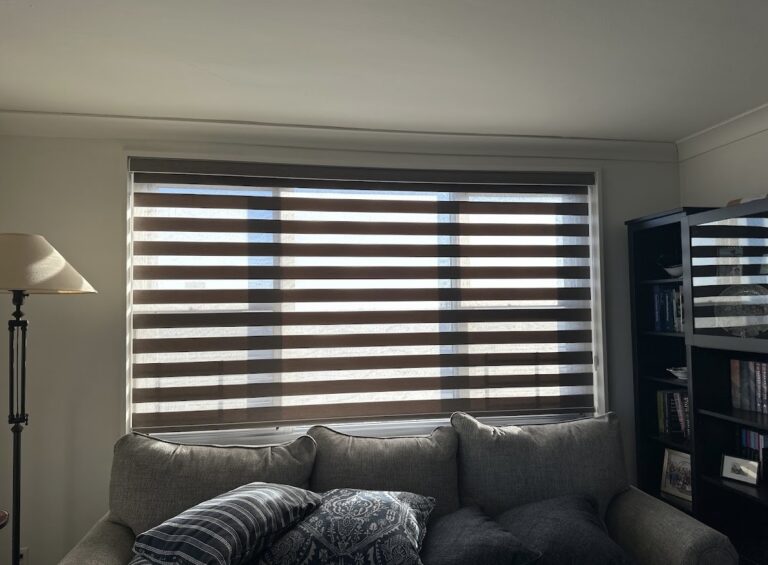 Zebra ShadesView or privacy, switched in one pull
4.9 across 314 Google reviews
“They always make such good recommendations, are considerate of my timeline, come up with creative solutions to tricky situations, produce beautiful products, and consistently provide super smooth installation and thorough cleanup afterwards. Their service is top-notch, yet their price is very competitive.”
★★★★★ a year ago
“There is a reason why this place is five stars. Jay listens to what you need, goes out of his way to help you make the right decision for your home and is absolutely competitive and fair on pricing. We got quotes with Blinds to Go, 3 Day Blinds and The Curtain, and what set The Curtain apart was the quality of the products and working with him.”
★★★★★ a year ago
“I got motorized shades, both light filtering and blackout, and they were able not only to come to my house to take measurements and provide a consultation but deliver and install the shades within a week. The prices were competitive and the end result was beautiful and of high quality.”
★★★★★ a year ago
Visit the showroom
Prefer to see things in person before we come to you? We're on Broad Avenue in Palisades Park, a few minutes from Fort Lee and the GWB.
- 547 Broad AvenuePalisades Park, NJ 07650
- Mon–Fri 10–7 · Sat 10–5Closed Sunday
- (201) 302-9111We usually pick up on the first ring