Floor-to-Ceiling Curtains
A wall of glass is why you bought the room. At this scale the treatment is engineering as much as fabric — weight, width and reach all bite.
 ★★★★★ 4.9 · 314 reviews (314)
 Partner
~2 weeks to install~2 wks
Partner
~2 weeks to install~2 wks
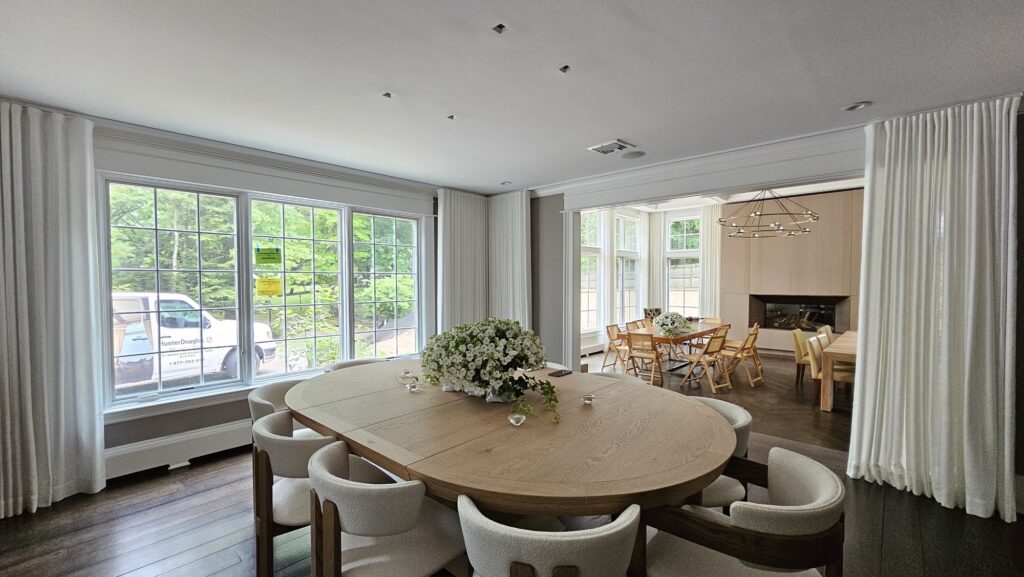
Scale changes the rules
What works on a normal window quietly fails at twelve feet. Four things drive every decision.
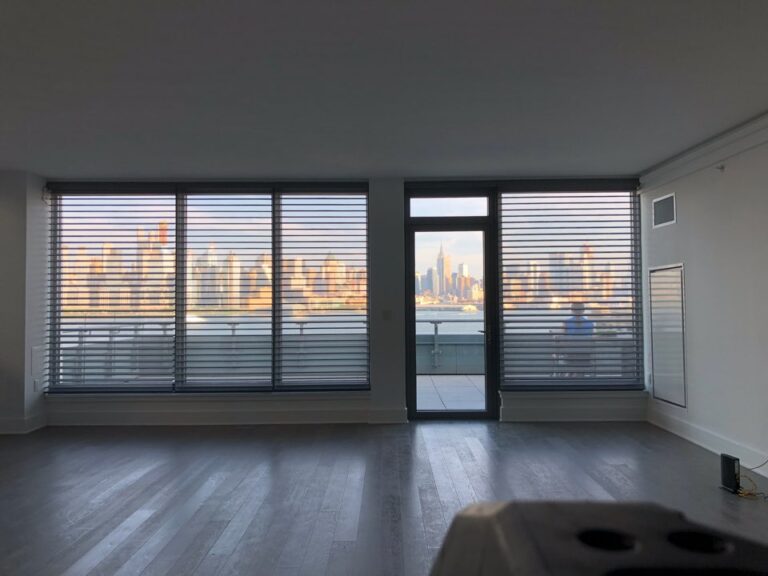
- 01Width has a ceilingA single shade only comes so wide. Past that, a wall of glass is covered in aligned banks — and where the joins fall is a design decision, not an accident.
- 02Weight climbs fastDouble the drop and you haven't just doubled the lift — fabric, hembar and headrail all scale. Hardware gets specified for it, not scaled up from stock.
- 03You can't reach the topCords and wands stop making sense above comfortable reach. Motorization stops being a luxury and becomes how the window works.
- 04Glass moves heatA full wall of west-facing glass is a radiator in July. Solar and cellular fabrics at this scale measurably change the room, not just the light.
Three that work at height
Stack-back, lift weight and reach decide the mix — usually two of these layered, not one.
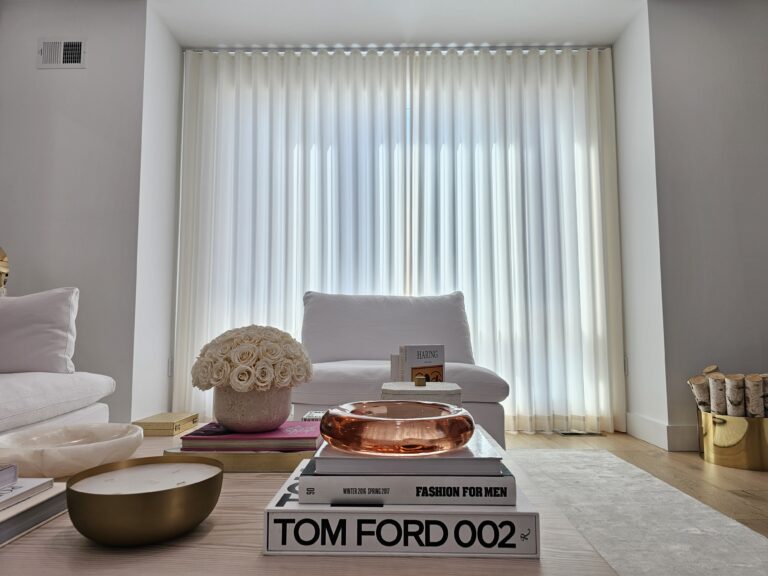
Drapery at Height
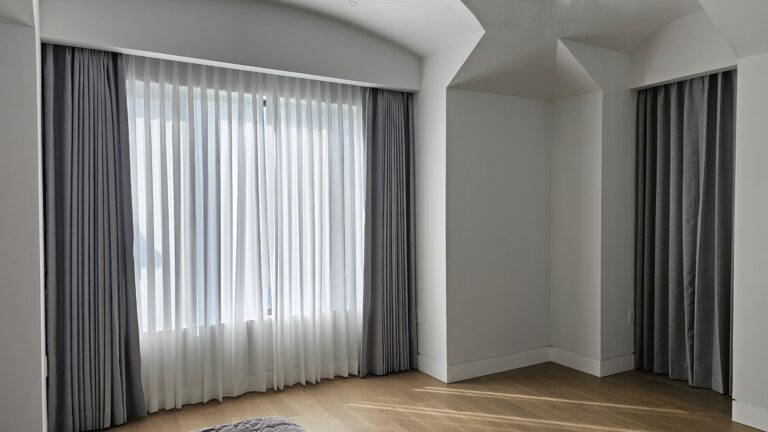
Floor-to-ceiling curtains hung from the ceiling line, with the stack planned so the glass clears when they open. The scale that swallows small treatments is exactly what drapery wants.
Why here: nothing else makes a tall room feel taller.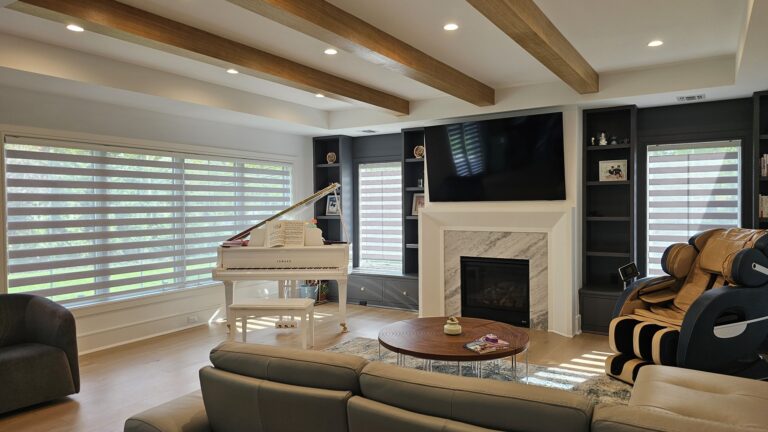
Motorized Shade Banks
Roller and solar shades in aligned banks, one motor or several, run from a remote, an app or a schedule. See the shade range.
Why here: clean at any width, and the heat control is real.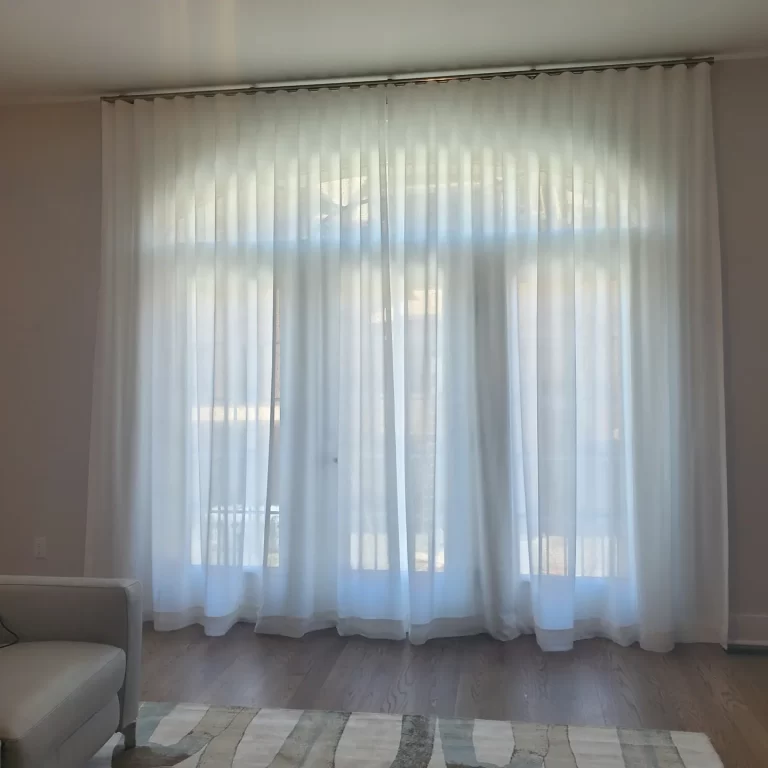
Sheers Across the Wall
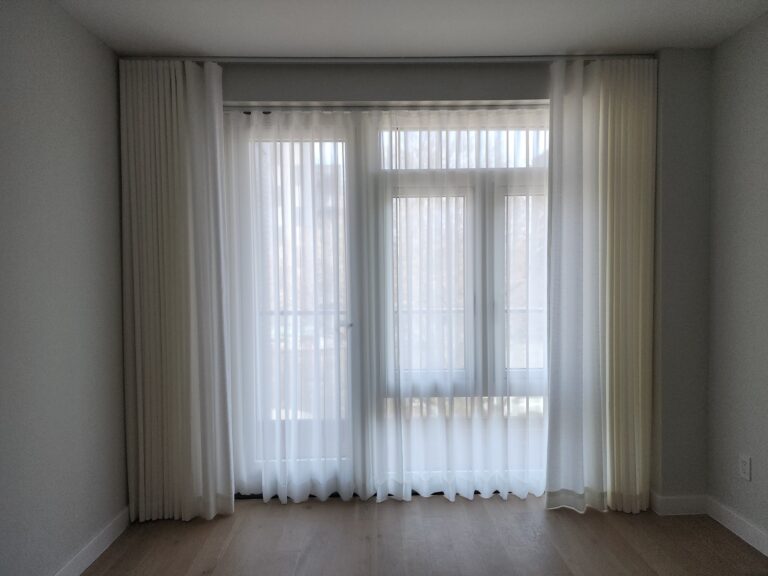
Full-height sheers that filter a glass wall without shrinking it — on their own, or layered under drapery for the evening.
Why here: daylight stays; the fishbowl feeling goes.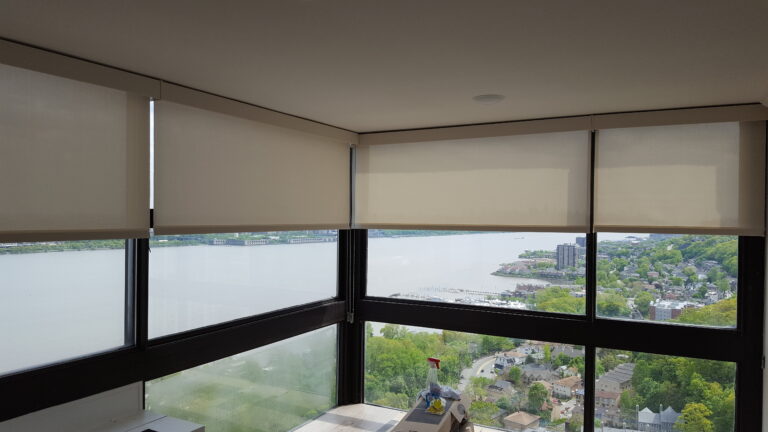
What we'd steer you away from
A corded lift on a two-story window
Somewhere above eight feet, a corded shade stops being operated and starts being tolerated — and a treatment nobody touches is just an expensive way to lose the view.
Motorize the tall ones, or use a Two-on-One headrail roman or split banks where hands can reach. We’ll tell you where that line is in your room.
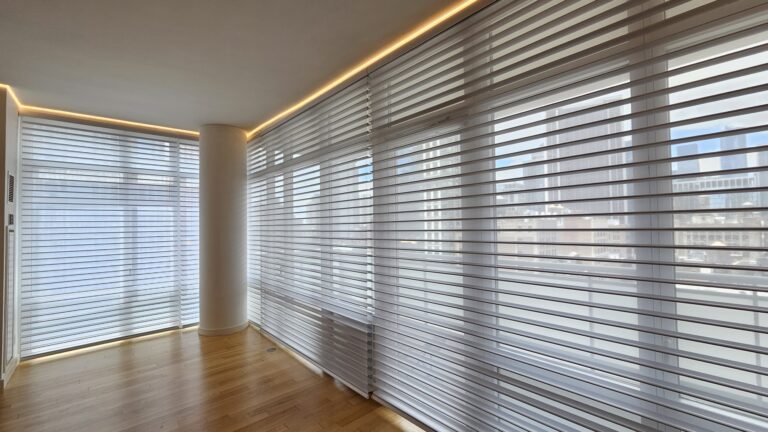
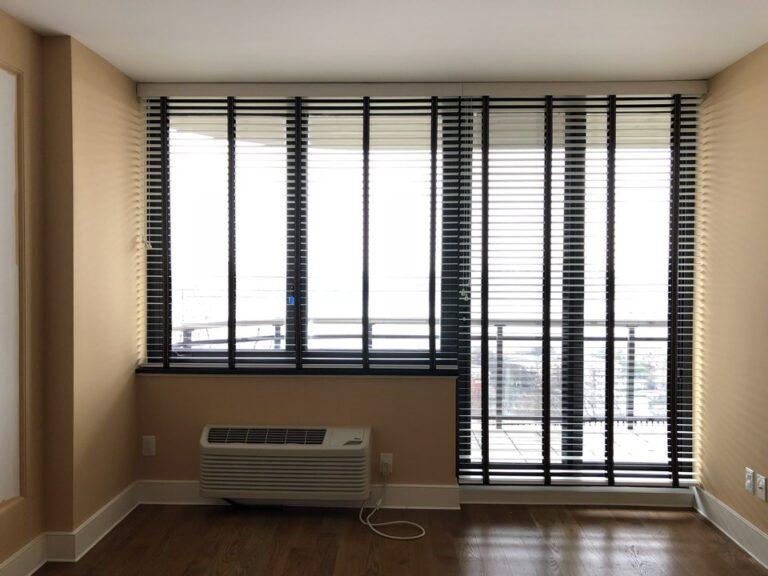
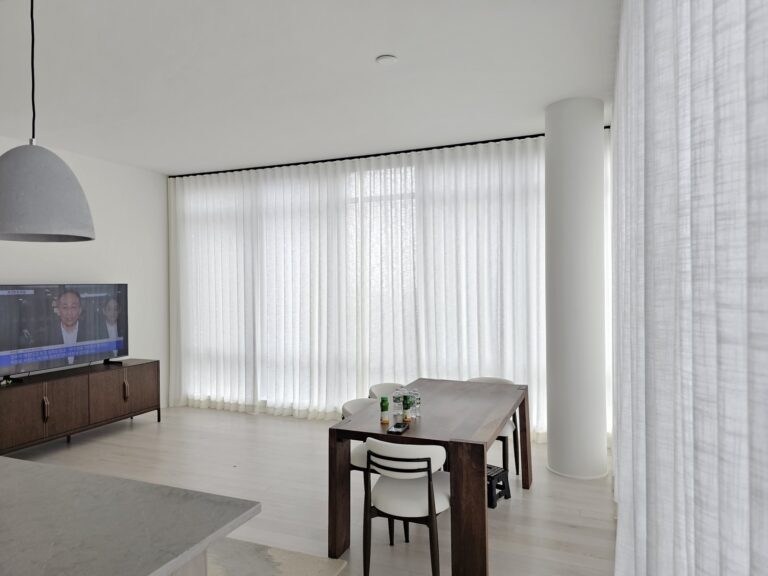
Tall windows we've dressed
Real windows in Bergen County homes — no stock photography.
Tall window questions
The five that decide a big glass wall.
Tell us the height and the direction it faces. We can usually narrow it to two options on the phone.
How do you cover floor-to-ceiling windows?
Three proven routes: drapery hung at ceiling height, banks of motorized roller or solar shades, and full-height sheers — often layered. Stack-back, lift weight and reach decide the mix.
Is there a maximum width for one shade?
Yes — fabric rolls only come so wide. A wide wall of glass gets covered in aligned banks, and we plan where the joins fall so they read as architecture rather than compromise.
Do tall windows have to be motorized?
Not all of them. Above comfortable reach, though, motorization is the difference between a treatment you use and one you ignore — remotes, apps and schedules all work, including PowerView automation.
What's the best way to block heat on a wall of glass?
Solar shades cut glare and heat while keeping the view; cellular shades insulate the glass itself. On a full wall, either changes the room in July and January, not just at noon.
How long do floor-to-ceiling curtains take?
About two weeks from approving the order to installation, the same as the rest of our work. Awkward access or specialty fabrics can add time, and we tell you before you order.
Visit the showroom
Prefer to see things in person before we come to you? We're on Broad Avenue in Palisades Park, a few minutes from Fort Lee and the GWB.
- 547 Broad AvenuePalisades Park, NJ 07650
- Mon–Fri 10–7 · Sat 10–5Closed Sunday
- (201) 302-9111We usually pick up on the first ring