Roller Shades
One clean sheet of fabric on a roller — the simplest shade there is. Which means the fabric does all the work, from a screen you can see straight through to a blackout that holds a bedroom dark at noon.
 ★★★★★ 4.9 · 314 reviews (314)
 Partner
~2 weeks to install~2 wks
Partner
~2 weeks to install~2 wks
The fabric is the whole decision
A roller shade is the same mechanism every time. What changes the room is how much light the fabric lets through — and that runs from almost all of it to almost none.
Light filtering
A closed weave that glows softly and blocks the view in. The default for living rooms and kitchens, and the safest choice if you are not sure yet.
A visual illustration, not a photograph of each fabric. Real light levels depend on the fabric, the window and which way it faces — we bring the range to you and hold it against the actual glass.
Three families, and what each one is actually for
Roller fabric splits into three groups that behave completely differently. Getting this right matters more than the colour.
Woven fabric
Textile rollers are the ones that read as a furnishing rather than a fitting. The weave carries a texture and a slight warmth, and because the fabric is opaque you get privacy the moment it is down.
This is the family that covers light filtering through to blackout, so almost every bedroom and living room we do lands here. Colour holds up well because the face is dyed rather than printed.
Best for living rooms, bedrooms, anywhere the shade is part of the decor.
Solar screen
A technical mesh rather than a textile. The weave is deliberately open, and the size of those openings is quoted as a percentage — 1%, 3%, 5%, 10% — which is the single number that decides how the shade behaves.
Screens cut heat and glare without taking the view away, which is why they end up on the windows people actually want to look out of. They are the most common thing we fit in offices and on west-facing glass.
Best for south and west windows, home offices, rooms with a view worth keeping.
Vinyl and coated fabrics
A wipe-clean surface with no weave to hold anything. Vinyl is what we reach for when the window is somewhere steam, splashes or cooking residue would ruin a textile.
It is also the most reliable route to a genuine blackout, because the coating is continuous rather than woven. The trade-off is that it reads more functional than furnished, so it earns its place in utility rooms more than living rooms.
Best for bathrooms, laundry rooms, kitchens near the hob, true blackout.
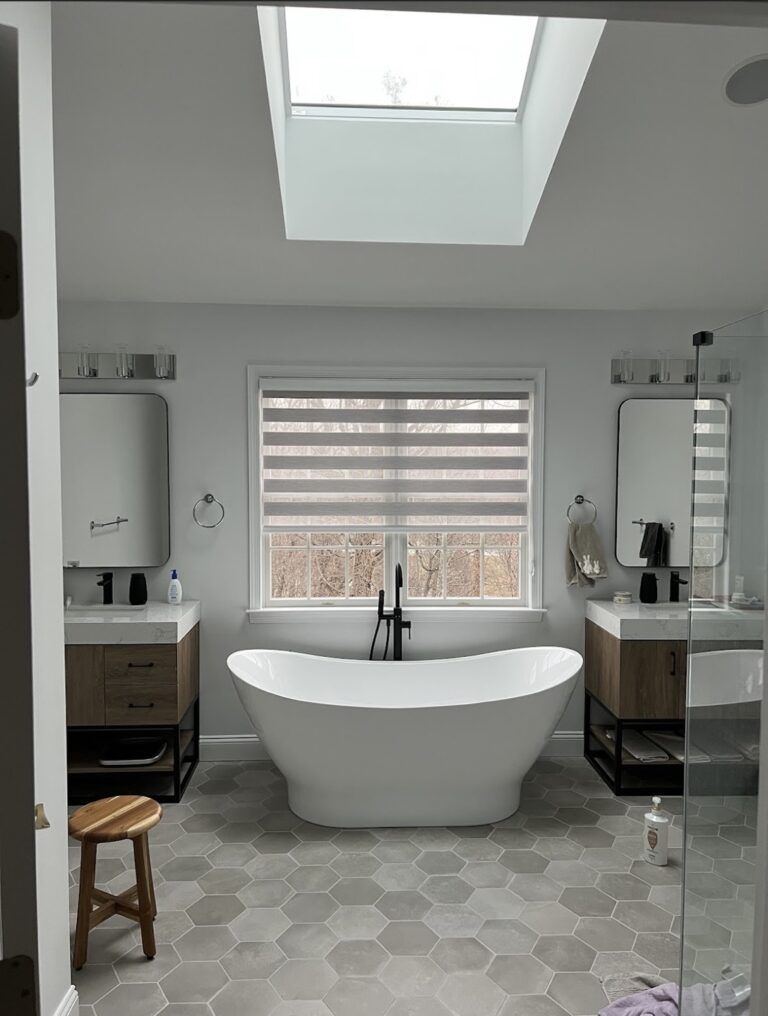
The part nobody asks about until they see it
Every roller shade has a tube at the top. What you wrap it in changes how finished the window looks more than most people expect.
On a bare roller you see the tube and the roll of fabric on it. That is fine in a utility space and it is the cheapest way to hang a shade. In a room you have spent money on, it tends to be the thing your eye keeps going back to.
Look through our own job records and the cassette shows up constantly — Empire 5 Fence Post with Large Cassette, Empire 3 Oatmeal with Small Square Cassette. That is not decoration for its own sake. A cassette hides the roll, keeps dust off the fabric, and on a light-blocking shade it closes the gap at the top where daylight otherwise leaks straight through.
- Cassette. A closed housing that wraps the tube completely. Square or rounded, in a colour matched to the fabric or the trim. The most finished option, and the one that matters most on room-darkening shades.
- Fascia. A flat panel across the front only, open behind. Cleaner than a bare roll, slimmer than a cassette, and the usual answer in a shallow reveal.
- Exposed roll. No housing. Honest, cheap and completely fine in a garage, a basement or a rental.
How you will raise and lower them
Every shade we install is cordless or motorized as standard. Which one you want comes down to how high the window is and how often you will touch it.
Cordless
Push it up, pull it down. Nothing hangs beside the window at all.
Kids’ rooms, reachable windowsMotorized
App, remote, voice, or a schedule that closes them before the afternoon sun arrives.
Tall or hard-to-reach windowsChain drive
A tensioned loop anchored to the wall. Still the surest way to move a very wide, very heavy shade.
Oversized shadesWand
A rigid wand you tilt and pull, with no loop of cord anywhere.
Everyday windowsA note on cords. We do not fit corded lift systems on shades for homes with children or pets, and we will say so if you ask for one. Cordless and motorized are the default here, not an upgrade we push.
Two shades on one window, when one will not do
A dual roller puts a screen and a blackout on the same bracket, so one window covers both jobs.
The problem it solves is a real one. A west-facing living room needs a screen at four in the afternoon and something much heavier at ten at night, and no single fabric does both. A dual system runs two rollers on one headrail: pull the front one for glare, pull the back one for dark.
It costs roughly what two shades cost, because it is two shades. What you are buying is one set of brackets, one cassette and one clean line at the top of the window instead of two competing ones. On a window you look at every day, that is usually worth it.
People sometimes confuse this with a zebra or banded shade, which is a different thing entirely — one fabric with alternating sheer and solid stripes that line up or offset as it rolls. Zebra is elegant and cheaper; a true dual gives you a real blackout, which zebra never will.
Rooms roller shades suit best
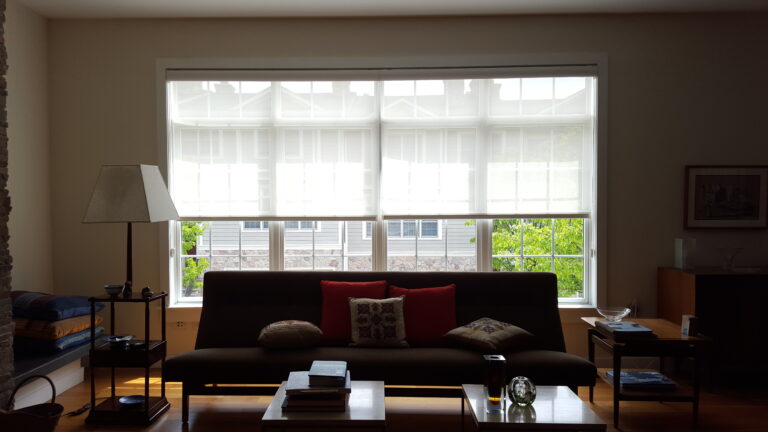
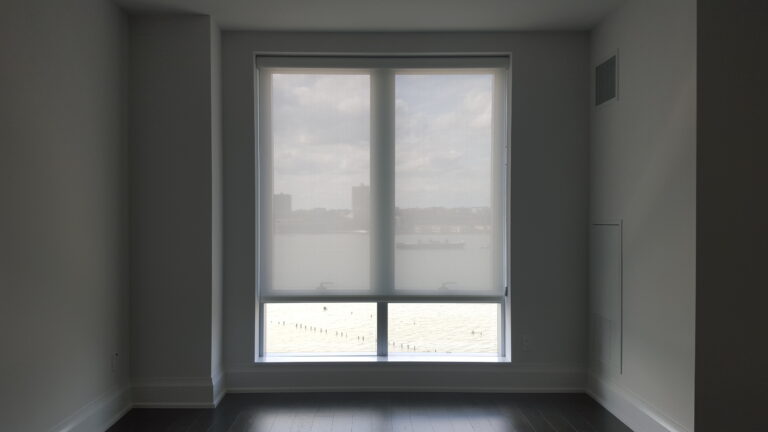
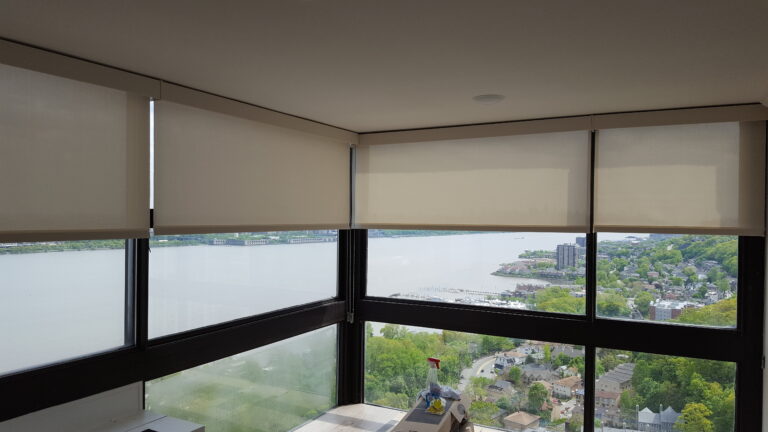
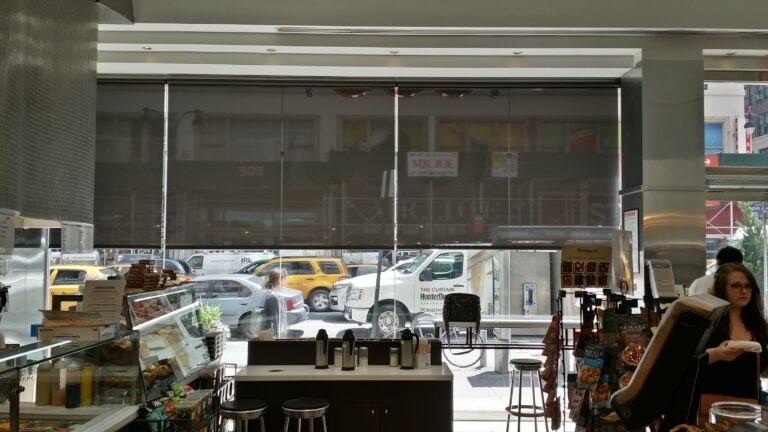
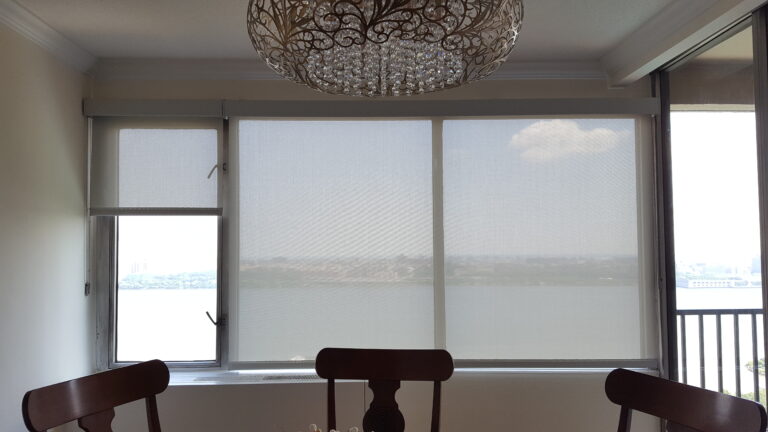
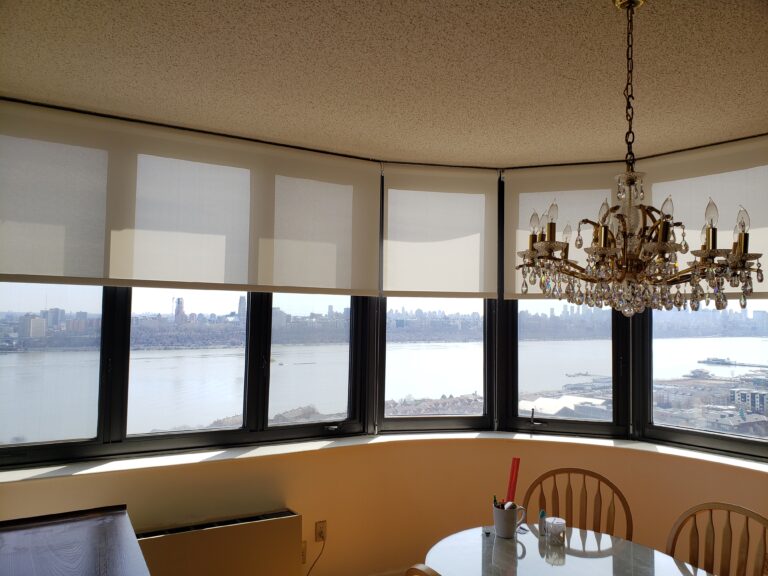
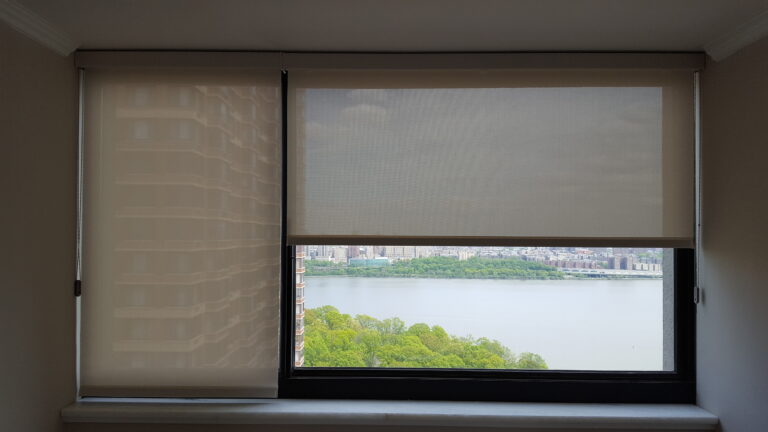
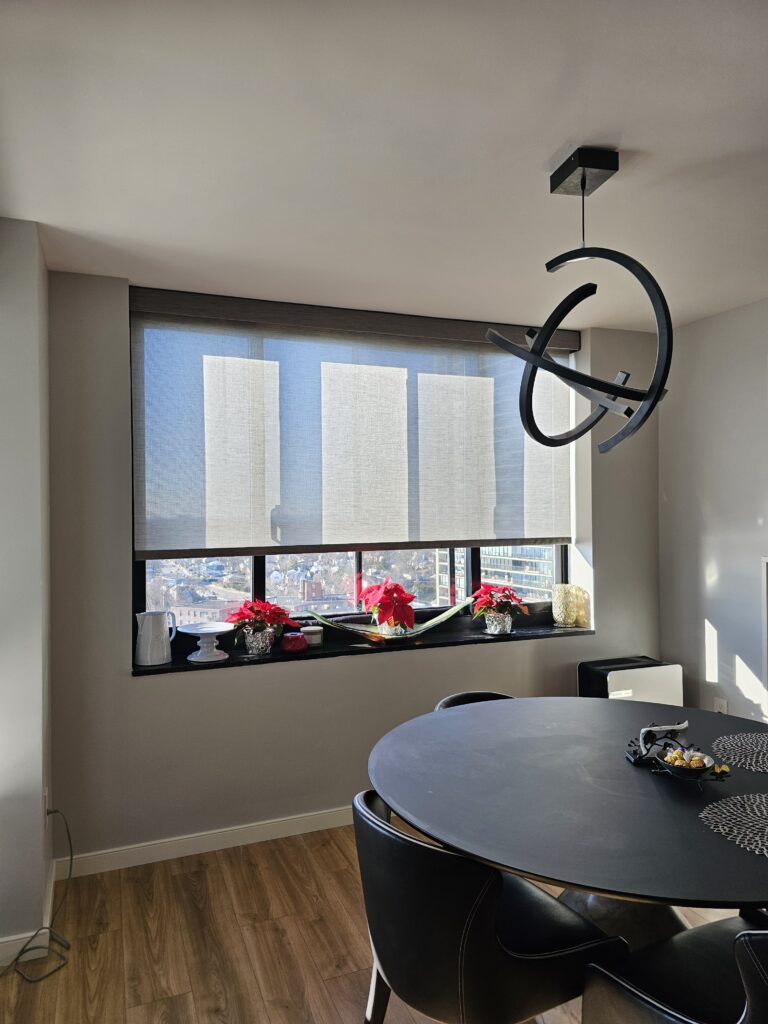
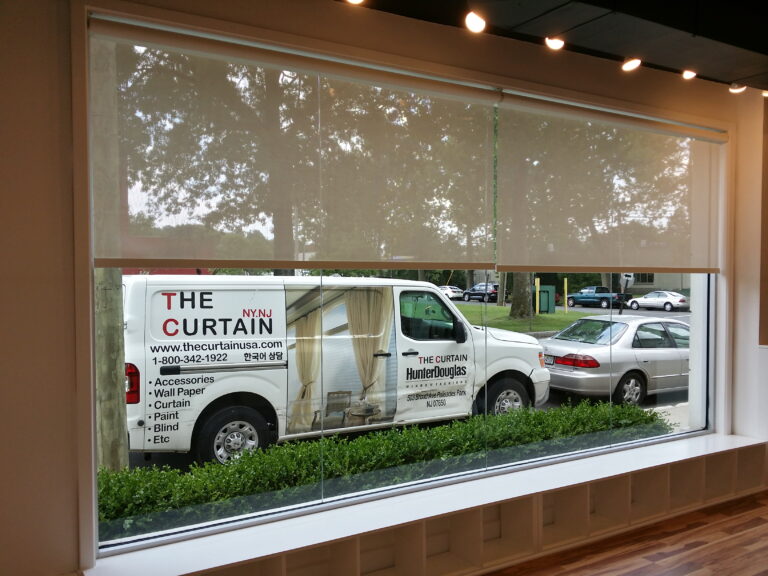
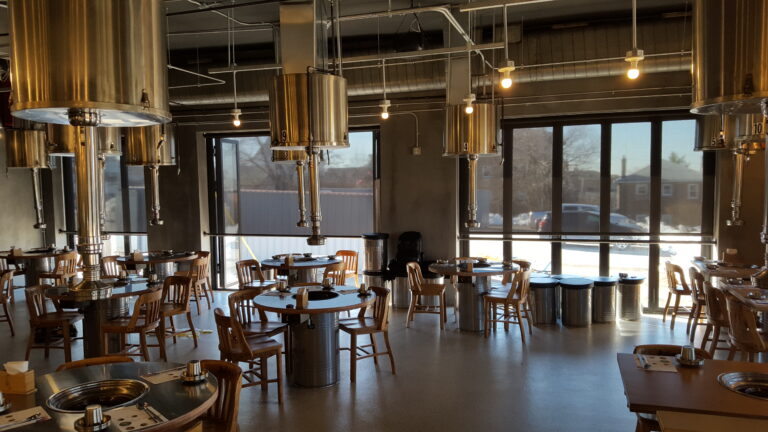
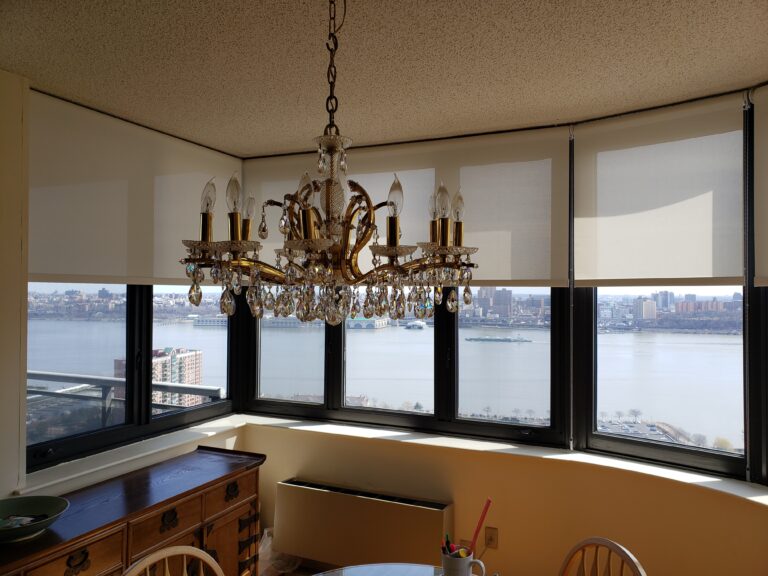
Every photo is a real install from a home or office we measured. One honest limit: on a very wide sliding door a single roller gets heavy and awkward, and we will usually point you at a vertical or panel system instead.
Working on a slider or a wall of glass? See blinds and shades for sliding doors — roller shades can work there, but only up to a point, and we would rather tell you where that point is before you order.
Roller shades we have installed
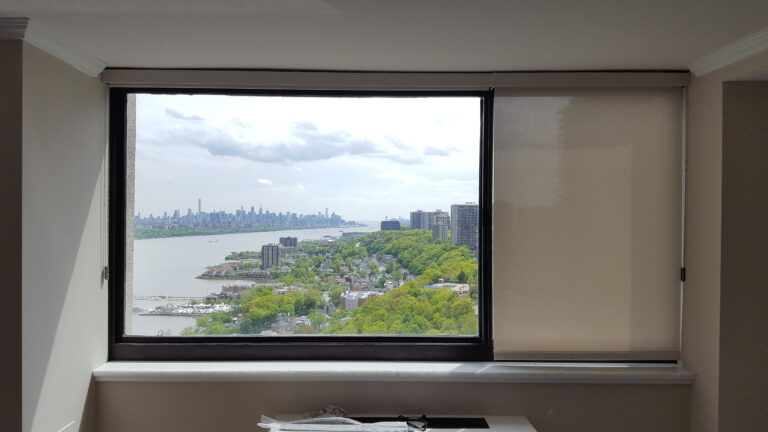
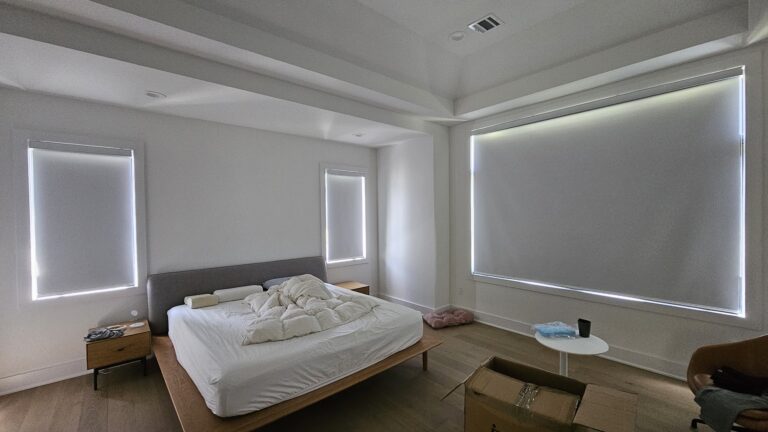
No stock photography, no showroom staging — homes and offices across Bergen County and the Tri-State.
What actually drives the price
Roller shades are priced per window, so a single headline number would be misleading. These are the four things that actually move it.
01Size of the opening
Wider and taller means more fabric, a thicker tube and a stronger bracket. Past a certain width the tube has to step up a size to stop it sagging in the middle, and that is a real jump in cost rather than a gradual one.
02Fabric
The biggest single variable. A plain house screen and a designer textile can differ several times over per yard. Blackout and coated fabrics sit at the top of the range because of what they are made of, not because of the shade.
03Headrail
An exposed roll costs nothing extra. A fascia adds a little. A full cassette adds more, and on a room-darkening shade it is the difference between a dark room and a dark room with a bright line across the ceiling.
04Motorization
A motor and a power source per shade. Worth it on tall or awkward windows and on any run of shades you want moving together. Rarely worth it on a small window you can comfortably reach.
Why we don't publish a price list. Two windows in the same room can differ by a third once you account for size, fabric and mount. We quote every window exactly during the free consultation — and that quote is what you pay. Book one here.
Measured to installed in about two weeks
Free consultation
We come to you, so you're judging the room in the light the shade will actually live in.
Measure & design
Every window measured to the sixteenth, with a designer's eye on mount, stack and fabric.
Made for your window
Hunter Douglas or our own Korean workroom — built to your opening, never trimmed from stock.
Installed & tidy
Professionally hung, tested, and the packaging leaves with us. Usually a single visit.
Roller shade questions we get asked
How much do custom roller shades cost?
They are priced per window, because cost is driven by the size of the opening, the fabric, the headrail and whether you add motorization. We quote every window exactly during the free in-home consultation, so the number you get is the number you pay.
What is the difference between light filtering and room darkening roller shades?
Light filtering is a closed weave that blocks the view in but still glows with daylight. Room darkening stops most of that light but not all of it. Blackout stops it entirely through the fabric. The step people underestimate is the last one: even blackout fabric leaks around the edges of the frame unless it is outside mounted or fitted with side channels — see blackout shades.
What does the percentage on a solar shade mean?
It is the openness factor — the proportion of the weave that is open space. A 1% screen is nearly solid and controls glare hardest; a 10% screen is very open and keeps almost all the view. We fit 3% and 5% most often. There is more on this on the solar shades page.
Can roller shades be blackout?
Yes — a coated or vinyl-backed fabric passes no light through it at all. For a genuinely dark room, pair it with an outside mount or side channels, because light will otherwise spill around the edges. That gap, not the fabric, is what usually disappoints people.
Are roller shades good for sliding glass doors?
Up to a point, and we will be straight with you about where that point is. A single roller wide enough for a full slider is heavy, and you have to raise all of it every time you use the door. On a wide opening we usually recommend vertical sheers or a panel track instead.
Are your roller shades child-safe?
Every roller shade we install is cordless or motorized by default. There is no operating cord and no inner lift cord, which meets the current safety standard for homes with children and pets.
How long do custom roller shades take?
Usually about two weeks from the day you approve the fabric to the day they are installed. Some imported fabrics run longer, and we tell you the timeline before you order rather than after.
Do you make roller shades yourself?
We work two ways — we are a Hunter Douglas partner and we also have our own Korean manufacturer, which is how we can quote the same window two ways at two prices. Which one we recommend depends on the fabric you want and the size of the opening.
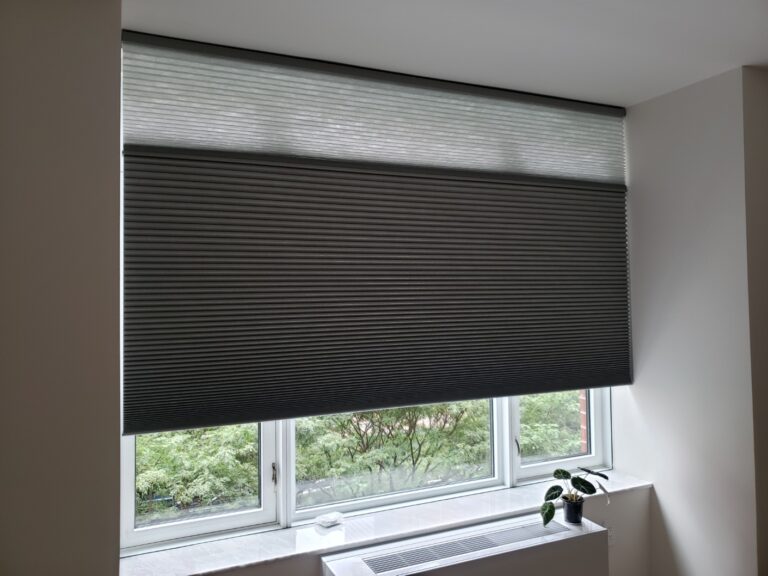 Blackout ShadesFor rooms that need to be genuinely dark
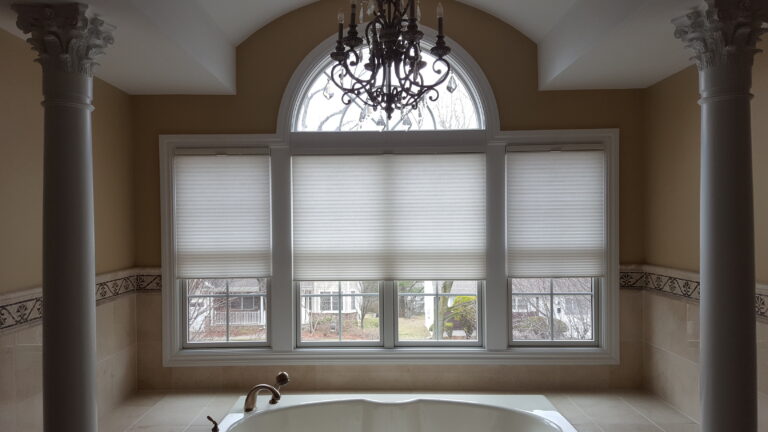 Cellular & HoneycombInsulating cells that cut heating and cooling
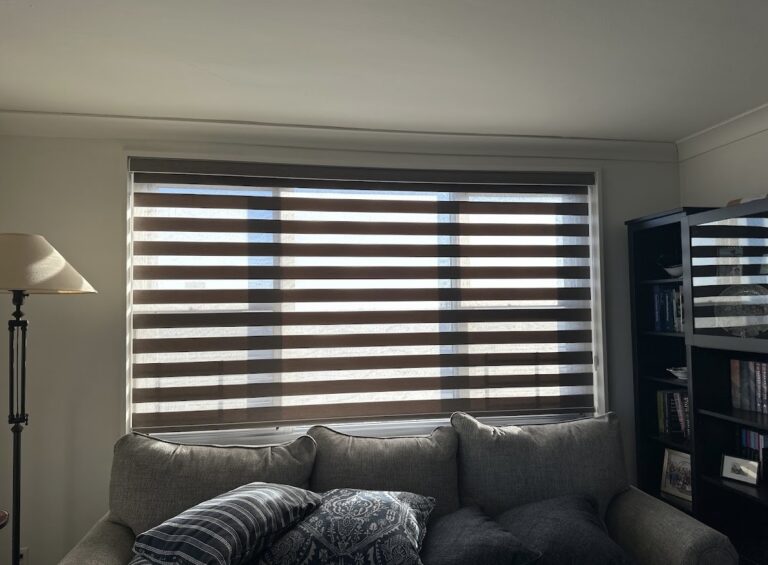 Zebra ShadesBanded fabric on the same roller mechanism
4.9 across 314 Google reviews
“We got quotes with Blinds to Go, 3 Day Blinds and The Curtain. What really set The Curtain apart was the quality of Jay's products and working with him. Jay must have come to our house between four and six times, as we went back and forth on zebra shades or roller shades. Shades arrived within two weeks and installation took under two hours.”
★★★★★ a year ago
“I have worked with The Curtain for many years now, and they have never failed to provide professional and exceptional service, whether it be a simple roller shades installation or a more elaborate and tricky golf room curtain installation. They provide quotes right there and then, unlike other vendors who take days if not weeks.”
★★★★★ a year ago
“Highly recommend this place for window treatment for the quality of the product and reasonable price. Jason Park is very nice and professional. He did both my blackout roller shade for the bedroom and the living room curtains. I am very satisfied with the result.”
★★★★★ a year ago
Visit the showroom
Prefer to see things in person before we come to you? We're on Broad Avenue in Palisades Park, a few minutes from Fort Lee and the GWB.
- 547 Broad AvenuePalisades Park, NJ 07650
- Mon–Fri 10–7 · Sat 10–5Closed Sunday
- (201) 302-9111We usually pick up on the first ring