Blackout Shades
Most blackout shades disappoint for the same reason, and it is never the fabric. It is the quarter inch of daylight running down each side of it. Here is how we close that gap.
 ★★★★★ 4.9 · 314 reviews (314)
 Partner
~2 weeks to install~2 wks
Partner
~2 weeks to install~2 wks
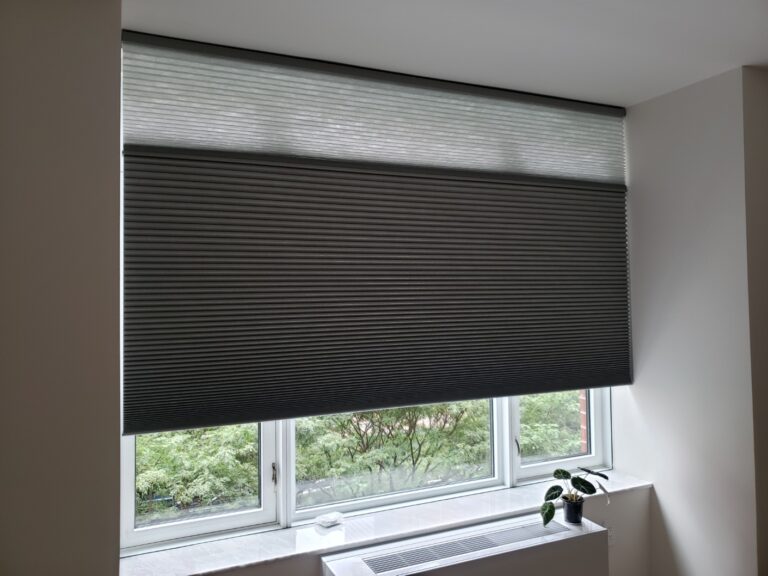
The fabric was never the problem
Nearly everyone who tells us their blackout shade "does not work" has a shade whose fabric is doing its job perfectly.
A blackout fabric is coated rather than woven, and it passes no light at all. Hold one up to a window and you will see nothing through it. That part is solved, and it has been solved for years.
The light you are seeing at six in the morning is coming around it. A shade mounted inside the window frame has to be cut narrower than the opening so it can move without scraping — usually about a quarter of an inch each side. In daylight that gap becomes two bright vertical lines on the wall, and because your eye is adapted to a dark room, they read as far brighter than they are. There is a third line across the top wherever the roll or the headrail sits proud of the frame.
So the question worth asking is not which fabric is darkest. Every blackout fabric is dark. The question is how the shade meets the wall, and that is a decision made at the measuring stage, not at the fabric stage.
- The sides. About a quarter inch each side on any inside-mounted shade. The single biggest source of light in the room.
- The top. Light over the roll or through an open headrail. A cassette closes it; a bare roller does not.
- The bottom. Usually the smallest of the three, and the easiest to live with — but it is what turns a good result into a genuinely dark room.
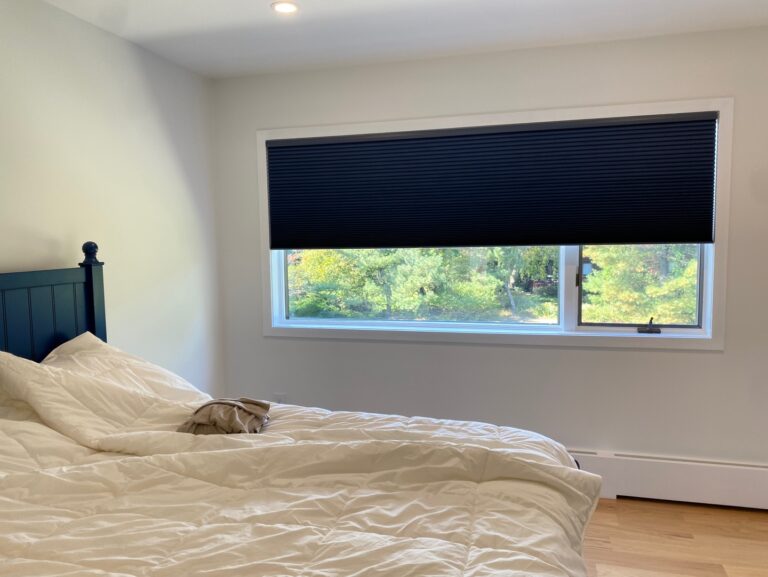
Three ways to close the gap, in order of how dark they get
You do not always need the most extreme option. Which one is right depends on how dark the room genuinely needs to be, and how the window is built.
Inside mount: the honest limit
The shade sits inside the window frame, showing off the moulding and keeping a clean, built-in line. It is the neater option and the one most people want on looks alone.
It also leaves the quarter-inch gap down each side, which no fabric can fix. That is fine in a living room, a den or a guest room. It is not enough for someone who sleeps during the day, and we would rather say so at the measuring stage than have you find out in July.
Best for living rooms, dens, guest rooms — anywhere "dim" is the goal, not "dark".
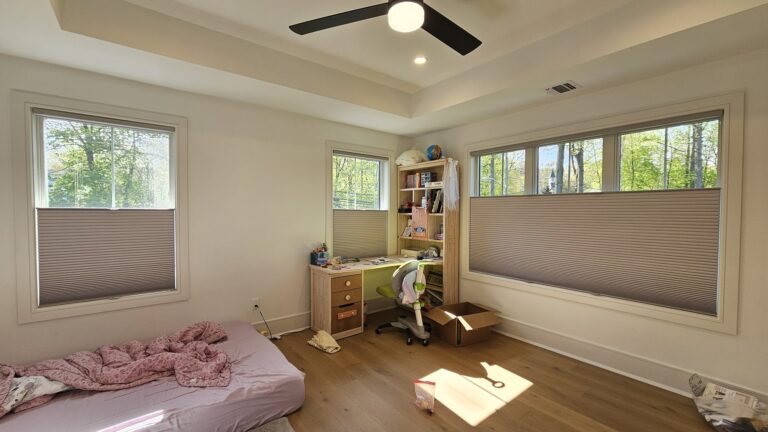
Outside mount: the cheap fix that works
Mount the shade on the wall above the window instead of inside it, and make it wider and taller than the opening. Now the fabric overlaps the frame on every side and there is no gap for light to come through — it has to get past an overlap instead of a quarter-inch slot.
It costs nothing extra beyond a little more fabric, and it is the single most effective thing you can do for a dark room. The trade is that it covers the moulding, and it reads as applied to the wall rather than set into the window.
Best for bedrooms, nurseries and media rooms, where dark beats tidy.
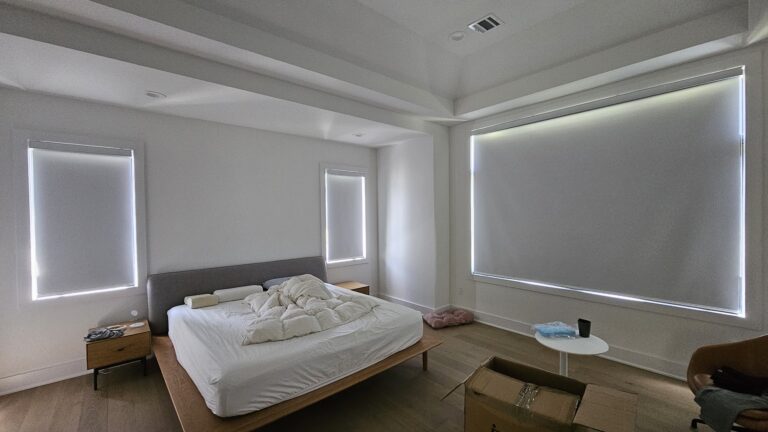
Side channels: as dark as a window gets
Aluminium tracks run down each side of the window, and the edges of the shade sit inside them. The fabric is physically enclosed, so there is no line of light at the sides at all. Paired with a cassette at the top, this is the closest a window covering comes to a genuinely black room.
It is the most expensive route and the most visible one, because the channels are a permanent fixture on the wall or in the reveal. We fit them where the room has to be dark — nurseries, night-shift bedrooms, home cinemas — and we talk people out of them everywhere else.
Best for nurseries, shift workers, home cinemas, migraine rooms.
Ask about this at the consultation. Mount type is decided when the window is measured, and changing it afterwards means remaking the shade. It is the first thing we raise on any bedroom or nursery window, and it costs nothing to get right the first time.
Blackout is a fabric, not a shade
There is no such thing as a blackout shade in the way there is a roller shade or a roman shade. Blackout is something four different shades can be, and which one you should pick depends on the room, not on the darkness.
Blackout roller shades
The simplest and the cheapest route to a dark room, and the one we fit most. A coated fabric on a roller, ideally in a cassette so the top is closed, and outside mounted so the sides are covered.
It stacks into almost nothing when it is up, which matters in a bedroom where you want the window back during the day. The look is plain — that is either the appeal or the drawback, depending on the room.
Best for most bedrooms; the best value for a genuinely dark room.
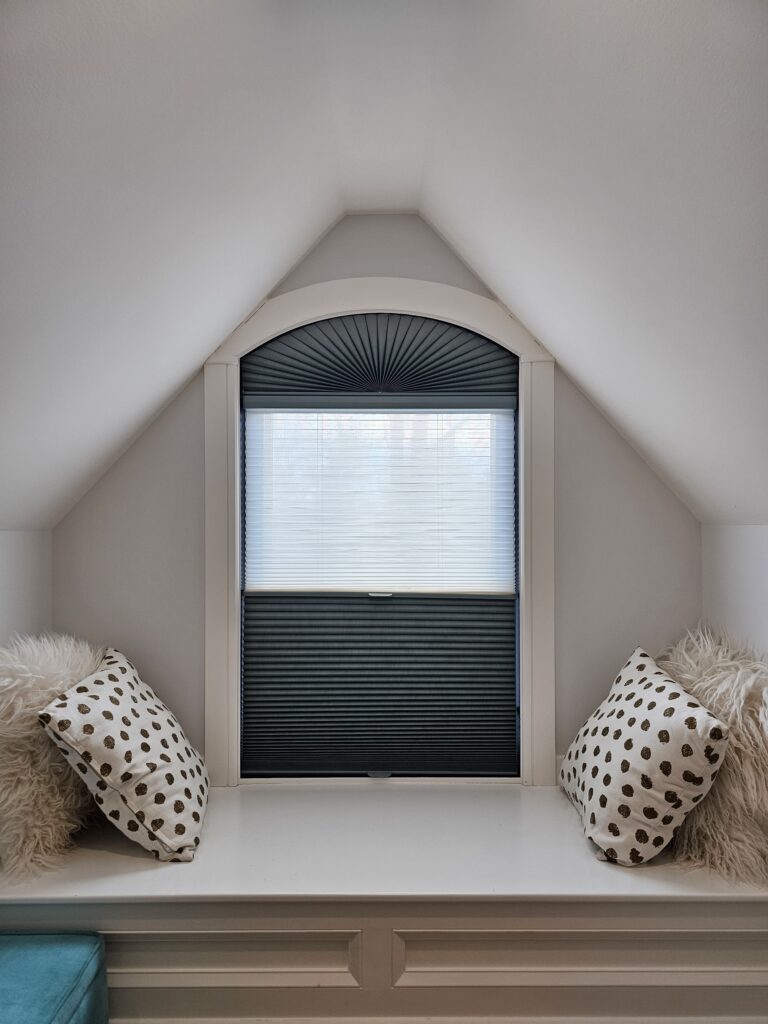
Blackout cellular shades
The same honeycomb structure that insulates a window, made with an opaque liner inside the cells. You get a dark room and a warmer one, which is why this is the usual answer for a nursery on a cold north wall.
Cellular is also the only one of the four that does top-down bottom-up properly — you can drop it from the top for daylight at the ceiling while the bottom of the window stays covered. In a child's room that is genuinely useful.
Best for nurseries, north-facing bedrooms, anywhere heat loss matters too.
Blackout roman shades
A blackout lining sewn behind a face fabric you actually chose. This is the option for a bedroom that is decorated rather than just darkened, because you keep the fabric, the folds and the softness and still get the dark.
It is the most expensive of the four and the bulkiest when raised, since the lining adds weight to every fold. On a window you look at all day in a room you care about, that is usually the point.
Best for main bedrooms, decorated rooms, windows on show.
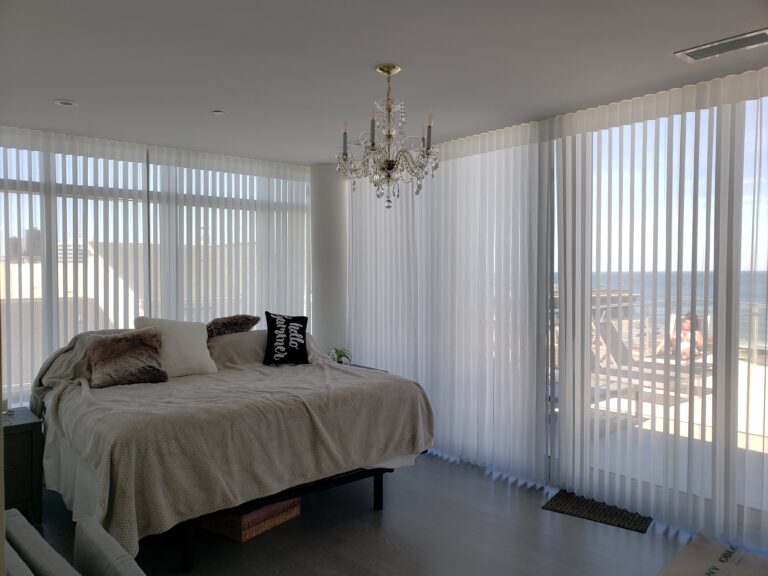
Blackout drapery
Interlined curtains on a track, returned to the wall at each end so the fabric wraps back rather than stopping flat. Done properly this is as dark as side channels and considerably warmer, because you are hanging a thick textile over the whole wall rather than covering a hole in it.
It needs the wall space to stack back into, and it is the most involved of the four to fit. Where it wins is a big window, a cold room, or a bedroom where a shade alone would look bare.
Best for large windows, cold rooms, main bedrooms; often layered over a shade.
Room darkening and blackout are not the same thing
The two words get used interchangeably in shops and online. They mean different things, and buying the wrong one is the second most common way people end up disappointed.
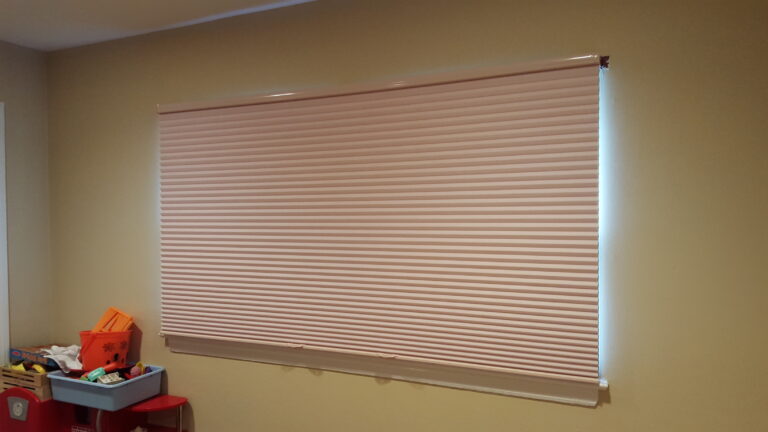
Room darkening fabric blocks most light but not all of it. Held to a window it glows faintly; in a room it takes the brightness out without taking the daylight away. It is enough for an afternoon nap, a TV room or a bedroom where you get up at a normal hour.
Blackout fabric passes no light whatsoever. It is coated rather than woven, and it is what you need if someone sleeps during the day, if a baby needs to nap at two in the afternoon, or if a screen has to be watchable at noon.
Our own job sheets use the trade shorthand for this: a shade written up as Duette Classic 3/4in RD Peony is room darkening, and it is not the same order as a blackout. When you tell us which one you want, tell us what the room is for — that gets us to the right answer faster than the word does.
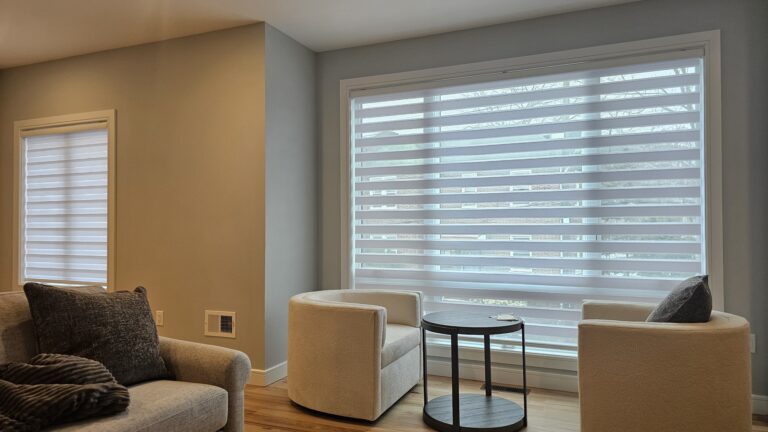
- Light filtering. Glows softly, blocks the view in. A living room default.
- Room darkening (RD). Most light stopped, a faint glow remains. Naps, TV rooms, ordinary bedrooms.
- Blackout. No light through the fabric at all. Day sleepers, nurseries, home cinemas — and only truly dark once the edges are handled.
Rooms that actually need blackout
Blackout is worth paying for in a handful of rooms and wasted in most of the rest. These are the ones where it changes something.
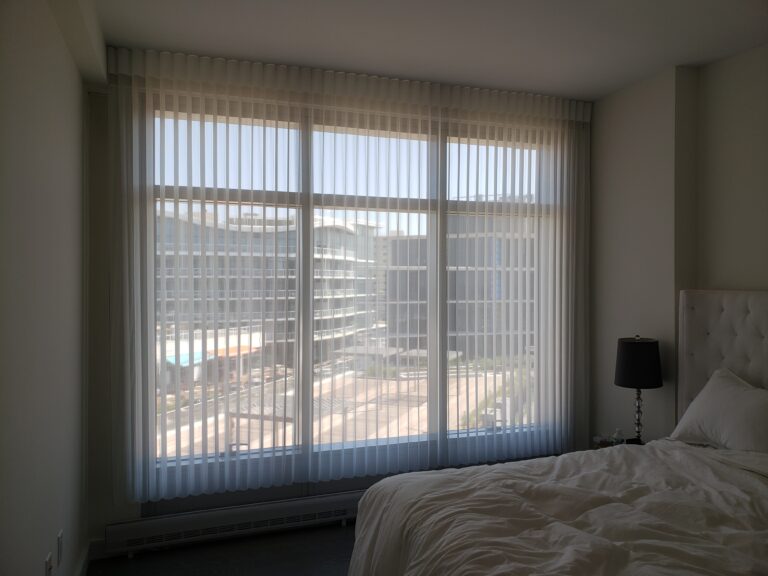
How you will raise and lower them
Every shade we install is cordless or motorized as standard. In a bedroom the question is usually whether you want to get out of bed to open it.
Motorized
Open from bed, or on a schedule that lifts them at the hour you actually want to wake up.
Bedrooms, high windowsCordless
Push up, pull down. No cord anywhere near a cot or a bunk bed.
Nurseries, kids’ roomsTop-down bottom-up
Drop it from the top for daylight high up while the lower half of the window stays covered. Cellular only.
Nurseries, ground floorsChain drive
A tensioned loop anchored to the wall, for a wide or heavy blackout shade.
Oversized windowsDarkened rooms we have fitted
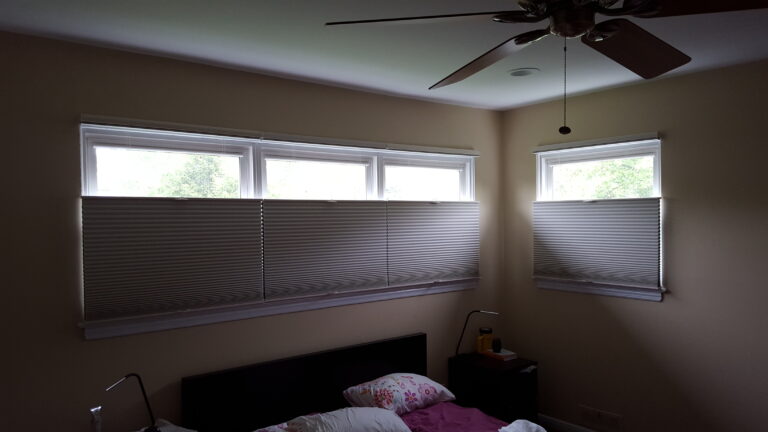
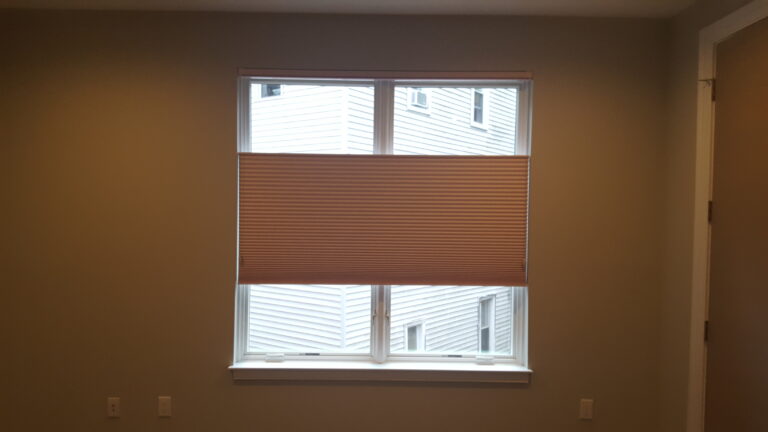
No stock photography, no showroom staging — homes and offices across Bergen County and the Tri-State.
What actually drives the price
Blackout is priced per window like everything else, but the things that move the number here are not quite the same as on an ordinary shade.
01Which shade type you pick
This is the biggest lever by far, and it is a decision about the room rather than about darkness. A blackout roller is the most affordable route to a dark room; a blackout roman with a lining sewn behind a chosen face fabric is several times that. Both end up equally dark.
02How you close the edges
An outside mount costs a little more fabric and nothing else, which is why we recommend it first. Side channels are a separate product fitted to the wall, and they are a real addition to the price — worth it in a nursery, wasted in a den.
03Size of the opening
Blackout fabric is heavier than the equivalent light-filtering one, so a wide window needs a sturdier tube or headrail sooner than it would otherwise. That threshold arrives earlier here than on any other shade.
04Motorization
A motor and power source per shade. In a bedroom this is the room where people most often decide it is worth it, because the shade you have to walk to is the shade you leave shut.
Why we don't publish a price list. Two windows in the same room can differ by a third once you account for size, fabric and mount. We quote every window exactly during the free consultation — and that quote is what you pay. Book one here.
Measured to installed in about two weeks
Free consultation
We come to you, so you're judging the room in the light the shade will actually live in.
Measure & design
Every window measured to the sixteenth, with a designer's eye on mount, stack and fabric.
Made for your window
Hunter Douglas or our own Korean workroom — built to your opening, never trimmed from stock.
Installed & tidy
Professionally hung, tested, and the packaging leaves with us. Usually a single visit.
Blackout questions we get asked
Why does light still come in around my blackout shade?
Because an inside-mounted shade is cut narrower than the opening so it can move — about a quarter inch each side. The fabric is doing its job; the gap is not. The fix is an outside mount that overlaps the frame, or side channels that enclose the edges.
What is the difference between room darkening and blackout?
Room darkening blocks most light but still glows faintly — enough for a nap, a TV room or an ordinary bedroom. Blackout is coated and passes no light at all, which is what a day sleeper, a nursery or a home cinema needs.
Are 100% blackout shades actually possible?
The fabric can be, and every blackout fabric we fit is. A 100% dark room is a different claim and depends on the mount, not the material. An outside mount with a cassette gets very close; side channels plus a cassette is as dark as a window covering gets.
What are side tracks or side channels?
Aluminium tracks fitted down each side of the window, with the edges of the shade running inside them so there is no gap at all. The most effective way to darken a room and the most visible, since they are permanent. We fit them for nurseries, shift workers and home cinemas.
Which blackout shade is best for a bedroom?
For most bedrooms, an outside-mounted blackout roller in a cassette — cheapest route to a dark room, and it stacks into almost nothing by day. Pick cellular if the room is cold, or roman if the window is on show.
Can blackout shades be motorized?
Yes, any of them. Bedrooms are where motorization is most often worth the cost, because a shade you have to cross a dark room to open is a shade you tend to leave shut.
Are blackout shades child-safe?
Every shade we install is cordless or motorized by default — no operating cord, no inner lift cord. That matters more than usual in a nursery, where the shade is likely to sit near a cot.
Do blackout shades help with heat and cold?
A little, and a blackout cellular shade helps considerably. Coated blackout fabric blocks solar gain well, but it is one layer; a cellular blackout traps air in its cells as well, so it insulates in winter too.
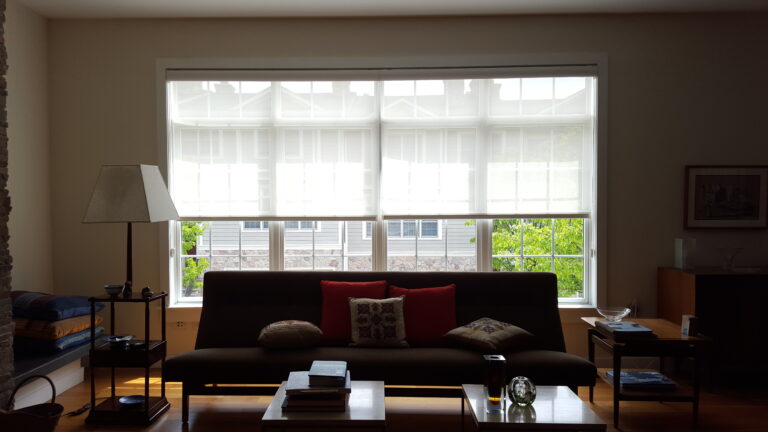 Roller ShadesThe cheapest route to a genuinely dark room
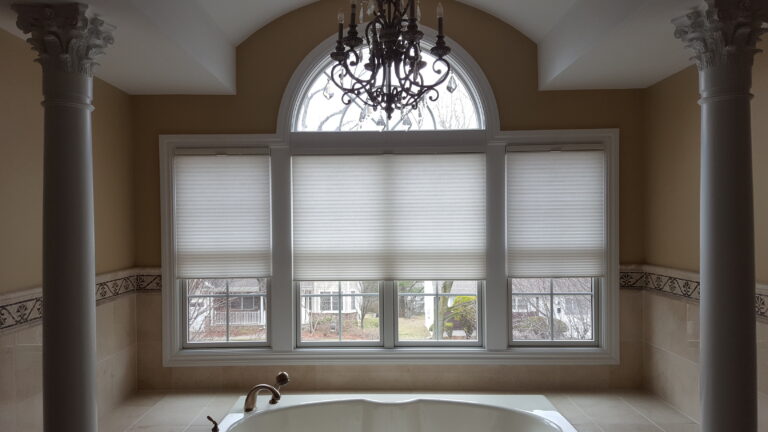 Cellular & HoneycombDark and warm, and top-down bottom-up
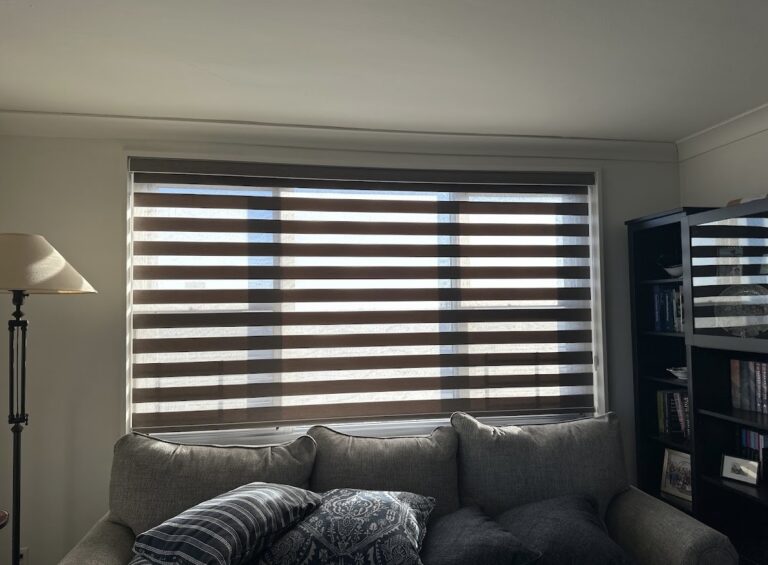 Zebra ShadesPrivate and dim, but never dark — pair it
4.9 across 314 Google reviews
“The owner was so kind and helpful. I slept so well last night after installing the blinds. Now that I have the blinds installed, I feel much more at ease and at peace. I really like it.”
★★★★★ 4 months ago
“Installation of Hunter Douglas Duette Honeycomb Blackout Shades. They arrived on time, were professional, and answered all our questions. Customer service was responsive. Overall, we are pleased with their service and recommend them.”
★★★★★ 2 years ago
“Highly recommend this place for window treatment for the quality of the product and reasonable price. Jason Park is very nice and professional. He did both my blackout roller shade for the bedroom and the living room curtains. I am very satisfied with the result.”
★★★★★ a year ago
Visit the showroom
Prefer to see things in person before we come to you? We're on Broad Avenue in Palisades Park, a few minutes from Fort Lee and the GWB.
- 547 Broad AvenuePalisades Park, NJ 07650
- Mon–Fri 10–7 · Sat 10–5Closed Sunday
- (201) 302-9111We usually pick up on the first ring