Cellular & Honeycomb Shades
The only shade that is also insulation. Rows of hollow cells trap air against the glass, so the window stops leaking heat in winter and stops gaining it in summer — and the shade still folds up to almost nothing.
 ★★★★★ 4.9 · 314 reviews (314)
 Partner
~2 weeks to install~2 wks
Partner
~2 weeks to install~2 wks
A shade built out of trapped air
Look at a cellular shade end-on and you see the whole idea. It is not one layer of fabric — it is rows of hollow chambers, and what is inside them is the product.
A window is the coldest surface in a room in January and the hottest in July. Ordinary fabric hung in front of it barely changes that, because fabric conducts. Still air does not, which is the principle behind every insulated wall and jacket ever made.
A honeycomb shade folds fabric into hexagonal cells that hold a pocket of air against the glass. Warm air inside the room stops touching cold glass in winter; solar heat stops radiating straight into the room in summer. The effect is largest at the windows that are worst — big panes, north walls, older single glazing.
A double-cell shade puts a second row of chambers behind the first, so there are two air pockets rather than one. It insulates measurably better and costs more, and it is slightly thicker in the stack when raised. On a north-facing window or an old draughty one, it is the version worth having.
- Single cell. One row of chambers. Lighter, slimmer, less expensive, and enough for most rooms in a well-insulated house.
- Double cell. Two rows, two air pockets. Noticeably better on cold or oversized windows, and the one we recommend on north walls.
- Cell size. Their job sheets are mostly 3/4in, which is the versatile middle. Smaller cells suit small windows and neat reveals; larger cells suit tall glass.
- The stack. The pleats collapse into a very shallow stack, so a raised cellular shade gives you more of the window back than almost anything else.
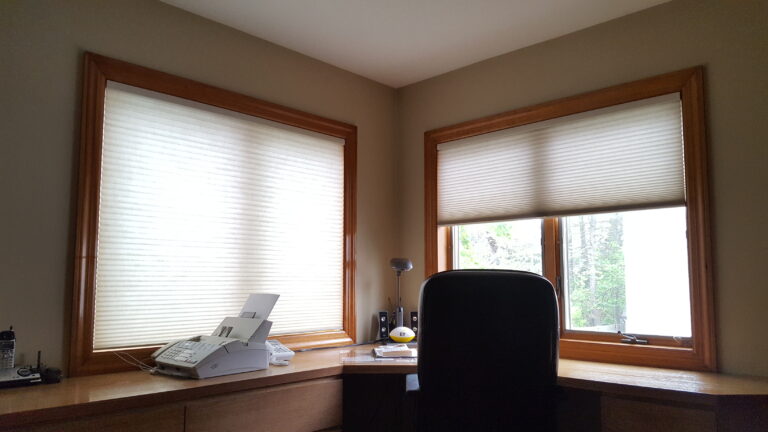
Same shade, four different rooms
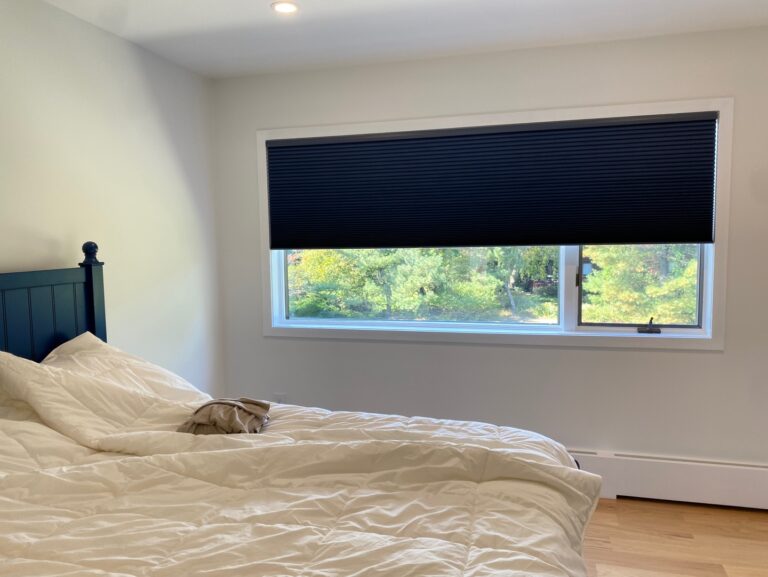
Cellular fabric comes in a ladder of opacities, and the same window can end up feeling completely different depending on where you land on it.
Light filtering (LF)
The one we fit most, and the one written on most of their job sheets. Daylight comes through evenly and glows, while the view in is gone. The safe default for living rooms, kitchens and offices.
A visual illustration, not a photograph of each fabric. Real light levels depend on the fabric, the window and which way it faces — we bring the range and hold it against your own glass.
The lines we fit, and when we recommend each
We are a Hunter Douglas partner and we also have our own Korean manufacturer, so the same window can be quoted two ways. These are the cellular lines that come up most in our own job records.
Duette® Élan
The line that appears on more of our job sheets than any other, almost always at 3/4in in a light filtering fabric — Daisy White, Aspen Snow, Desert Sands. It is the safe, versatile middle of the range.
Élan reads as a clean, matte, slightly textured fabric that disappears into a room rather than announcing itself. If you have no strong opinion about the fabric and you want the window handled properly, this is where we start.
Best for living rooms, offices and bedrooms; the default for most of the house.
Duette® Panache
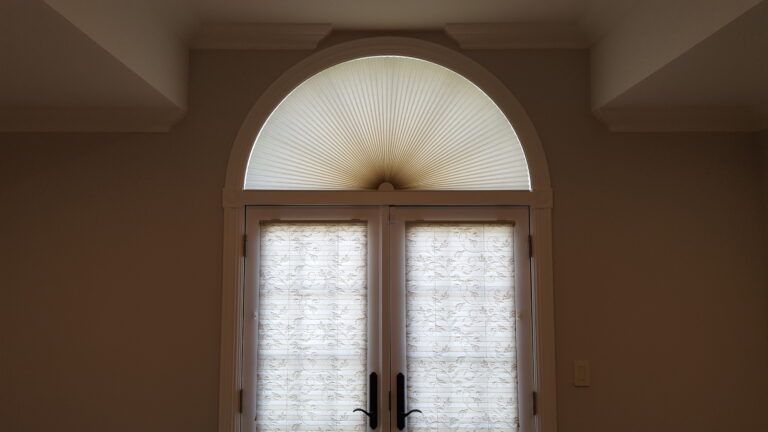
A more textured, more decorative weave than Élan, usually specified semi-opaque. Ours turn up on the windows people want to look furnished rather than simply covered.
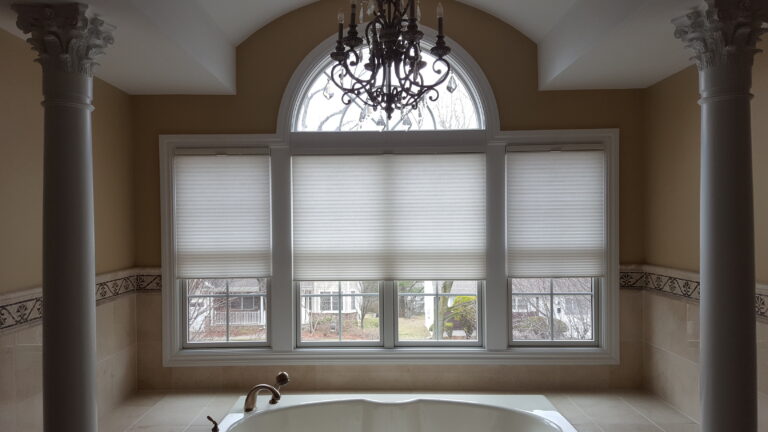
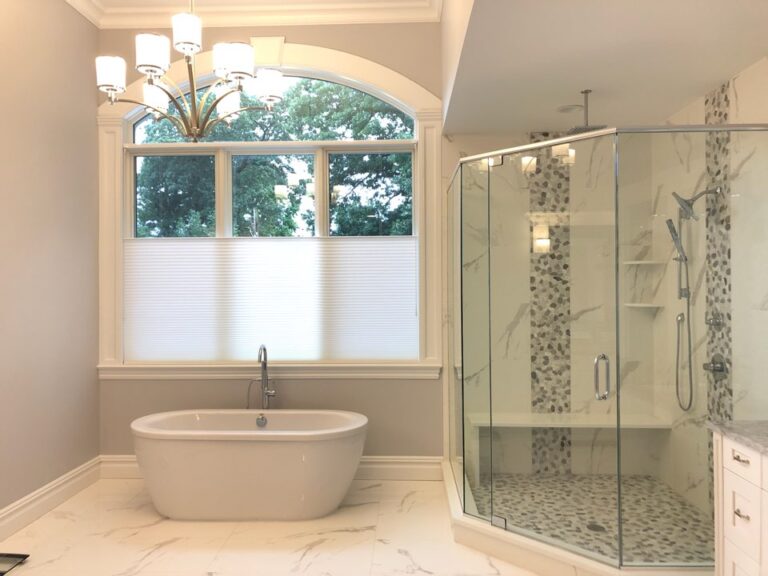
It also handles shaped openings well. One of our installs is a Panache semi-opaque fitted with an arch above it — a shaped cellular unit made to the curve, with the operating shade below.
Best for living and dining rooms, arched or shaped windows, decorated spaces.
Duette® Classic
The line we most often write up as RD — room darkening. A plain, dense fabric with an opaque liner in the cells, which is the combination that darkens a bedroom while still insulating it.
It is not the fabric you choose for its looks. It is the one you choose when the room has a job to do and you want the window to stop being the reason it cannot do it.
Best for bedrooms, nurseries, media rooms; anywhere dark and warm both matter.
Duette® Reception
A colour-forward line — our own installs include Capri and Oxford — for rooms where the shade is meant to be seen. Available room darkening, so colour does not cost you the darkness.
This is the one to look at if every other shade in the house is white and one room wants to do something else.
Best for a room with a colour scheme; shades that are part of the design.
Our own Korean line
Alongside Hunter Douglas we manufacture through a Korean partner, which is why we can quote the same window two ways and let you decide. The cell construction and the opacity range are comparable; the fabric libraries are different and so is the price.
We are not pushing you toward either one. On a straightforward window in a light filtering fabric the difference is mostly cost. On a shaped opening, a very wide span or a specific Hunter Douglas fabric, we will tell you which one we would actually order.
Best for straightforward windows where value matters more than the label.
The trick only this shade does properly
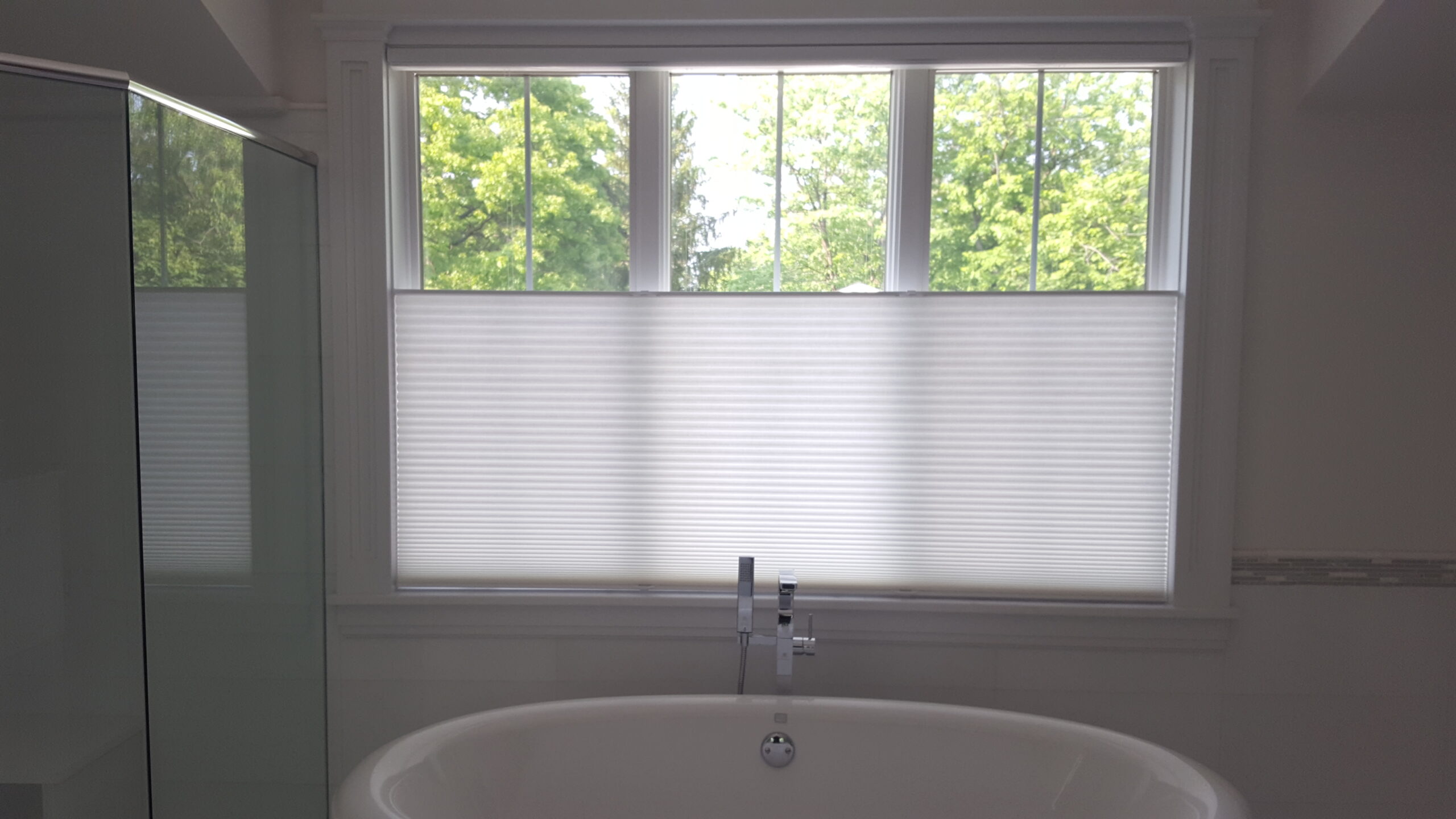
A cellular shade can open from the top as well as the bottom, and it is the reason a lot of people end up choosing one.
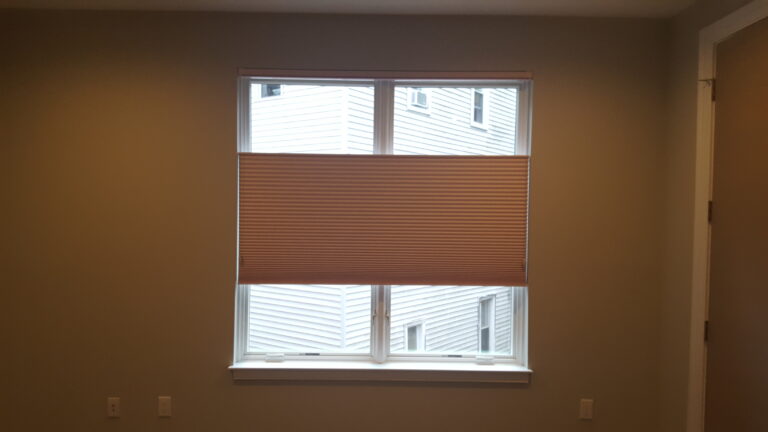
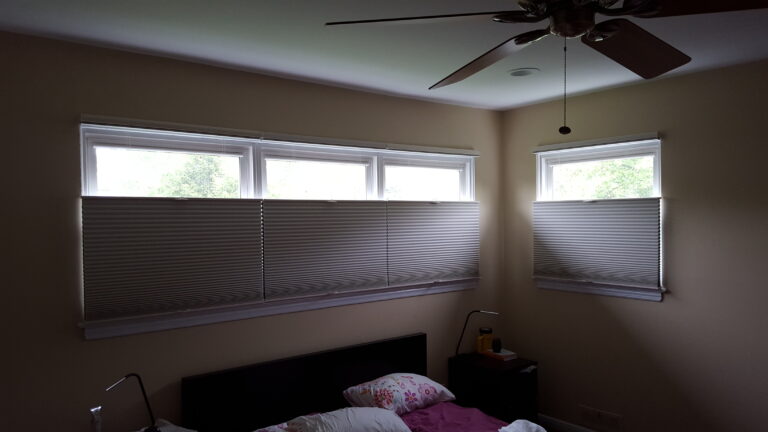
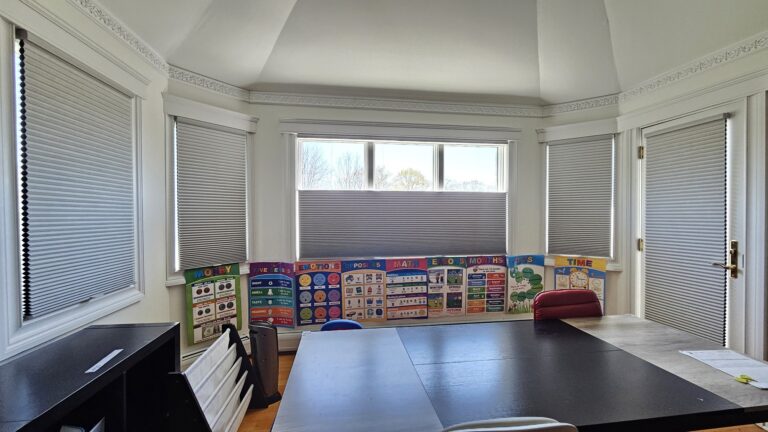
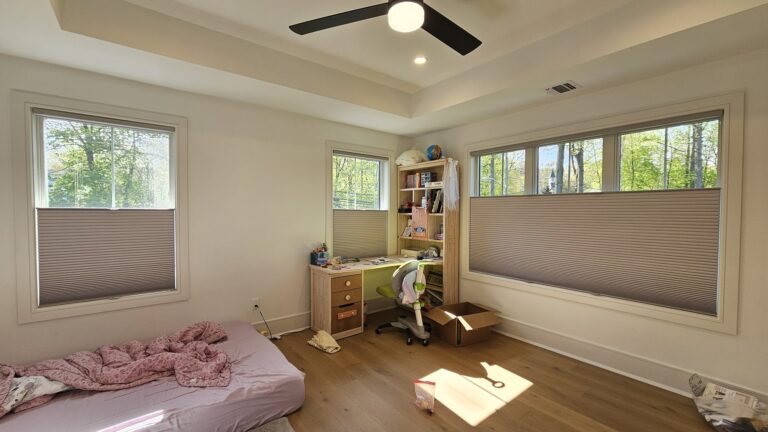
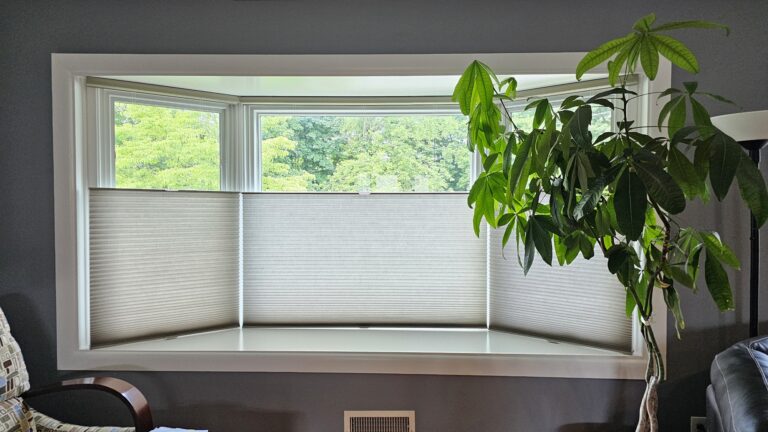
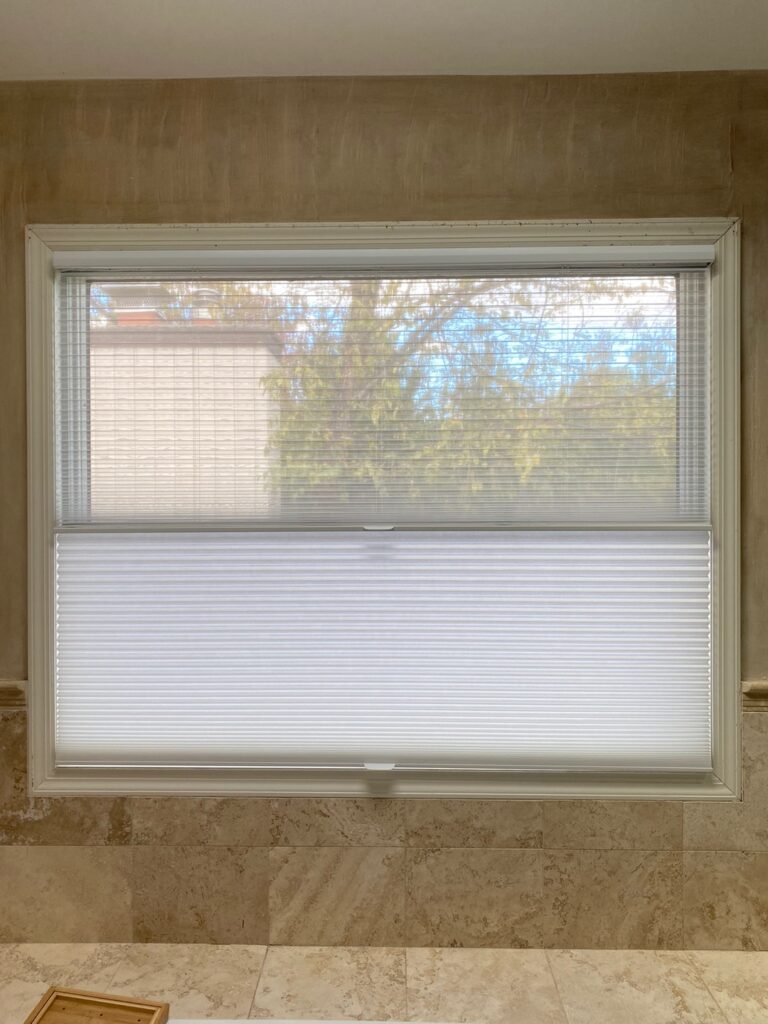
Drop the shade from the top and the upper part of the window opens up while the lower part stays covered. Daylight comes in over your head; nobody on the pavement can see in. No other shade we make does this as cleanly, because the pleated stack collapses so small that the shade can sit at either end of the window without looking like a mistake.
It solves a specific problem better than anything else. A ground-floor room on a street. A bathroom that needs light and absolutely needs privacy. A nursery where you want it dark at cot height and bright at the ceiling. In every one of those, the alternative is choosing between light and privacy, and this is the shade that refuses to make you choose.
It adds cost, because it is a second operating system on the same shade. Worth asking about on the two or three windows in a house where it matters, and skipping everywhere else.
How you will raise and lower them
Every shade we install is cordless or motorized as standard. Cellular has one more option than the others, because it can open from either end.
Cordless
Push up, pull down, and nothing hangs beside the window at all.
Kids’ rooms, reachable windowsTop-down bottom-up
Two rails on one shade, so it opens from the top, the bottom, or both.
Ground floors, bathroomsMotorized
App, remote, voice or a schedule. Sensible on a run of shades you want moving together.
Tall or hard-to-reach windowsWand
A retractable wand that stays the same length as the shade rises.
Tall windows, no motorRooms cellular shades suit best
These land wherever the window is a problem as well as a view — cold rooms, bright rooms, and rooms that need light and privacy at the same time.
Shaped openings are not a problem. We fit cellular units made to an arch or an angle above the operating shade — see arched windows.
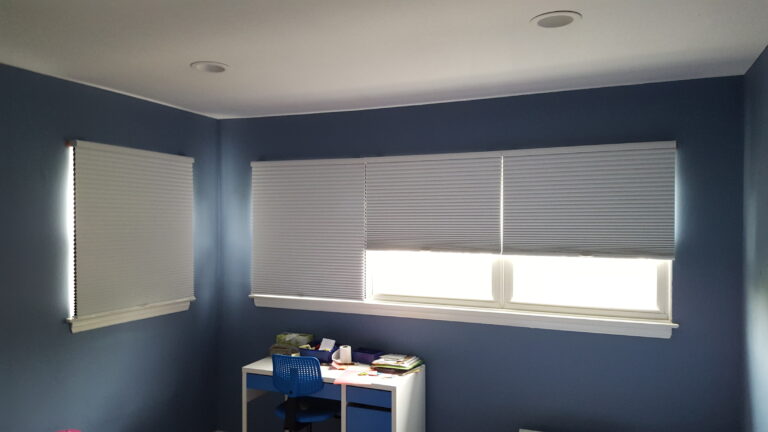
Cellular shades we have installed
No stock photography, no showroom staging — homes and offices across Bergen County and the Tri-State.
What actually drives the price
Cellular shades are priced per window. Cell count and opacity move the number more than size does, which is the opposite of most shades.
01Single cell or double cell
A double-cell shade is more material and more construction, and it insulates measurably better. On a north-facing or single-glazed window it usually pays for itself; on a warm interior room it is money spent on a problem you do not have.
02Fabric and opacity
Light filtering sits at the bottom of the range and room darkening at the top, because an RD fabric carries an opaque liner inside every cell. Colour-forward lines like Reception cost more than plain ones at the same opacity.
03Top-down bottom-up
A second operating system on the same shade, so it adds real cost per window. Worth it on the two or three windows where light and privacy genuinely conflict, and not worth it on the rest.
04Shaped openings
An arch or an angled unit is cut to a template of your actual window, which is a different job from a rectangle. It is one of the things we are asked for most and one of the things that most needs measuring in person.
Why we don't publish a price list. Two windows in the same room can price differently once you account for size, fabric and mount. We measure and quote every window during the free consultation, so you see the number before anything is ordered. Book one here.
Measured to installed in about two weeks
Free consultation
We come to you, so you're judging the room in the light the shade will actually live in.
Measure & design
Every window measured to the sixteenth, with a designer's eye on mount, stack and fabric.
Made for your window
Hunter Douglas or our own Korean workroom — built to your opening, never trimmed from stock.
Installed & tidy
Professionally hung, tested, and the packaging leaves with us. Usually a single visit.
Cellular shade questions we get asked
What are cellular shades?
A cellular or honeycomb shade is fabric folded into hollow hexagonal cells, each trapping a pocket of still air against the glass. That trapped air slows heat moving through the window, which is why they insulate better than any other soft treatment — and they fold into a very shallow stack when raised.
Are cellular and honeycomb shades the same thing?
Yes — two names for the same product, both describing the cell structure of the fabric. Hunter Douglas calls its version Duette®. All three words get used interchangeably.
Do cellular shades really save energy?
They reduce heat moving through the window, and the effect is largest where the window is worst — big panes, north walls, older single glazing. Double cell insulates more than single. They help least on a small modern window in a warm interior room, and we will say so.
What is the difference between single cell and double cell?
Single cell has one row of air chambers; double cell has two, so there are two pockets of trapped air. Double insulates better, costs more, and stacks slightly thicker when raised. On a cold or oversized window it is the one we recommend.
What is a top-down bottom-up shade?
A shade with two moving rails, so it lowers from the top as well as rising from the bottom. That lets daylight in high up while the lower window stays covered — light and privacy at once. It is the strongest single reason people choose cellular.
Can cellular shades be blackout?
Yes — a room darkening cellular carries an opaque liner inside the cells, so it darkens and insulates at once. As with any dark shade the fabric is only half of it; the edges decide the result. See blackout shades for how we close that gap.
Cellular shades or blinds?
Blinds have slats you tilt, so you control the direction of light and get a clear view out. Cellular has no slats and no view through it, but it insulates, spreads light evenly instead of in stripes, and stacks far smaller. Blinds for control of the view; cellular for comfort and temperature.
Can cellular shades fit an arched or angled window?
Yes — shaped units cut to a template of your actual opening, usually a fixed arch above an operating shade. It is one of the things cellular does best, and one that has to be measured in person. See arched windows.
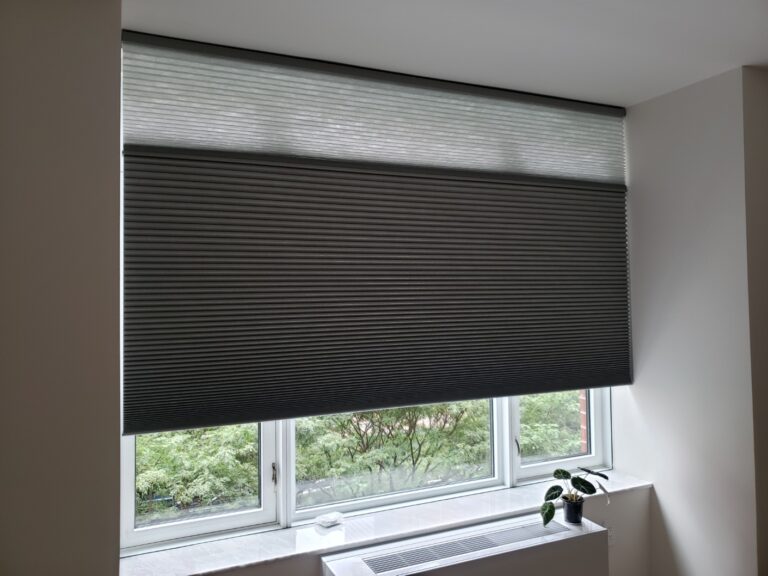 Blackout ShadesDark and warm, with the edges handled
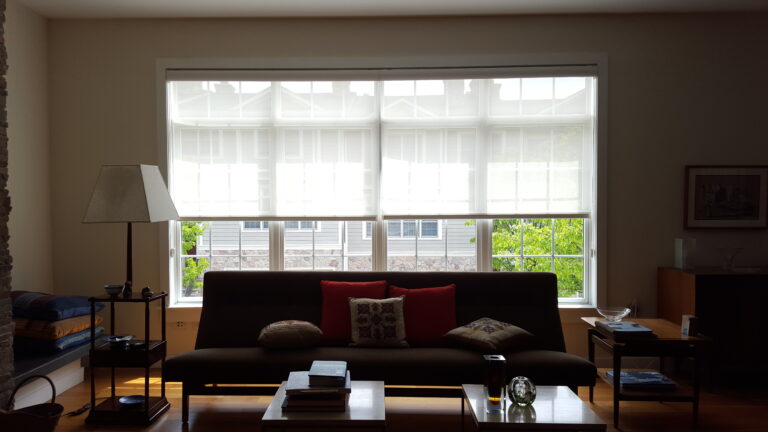 Roller ShadesSimpler and slimmer, with no insulation
 Roman ShadesSoft fabric folds with a tailored line
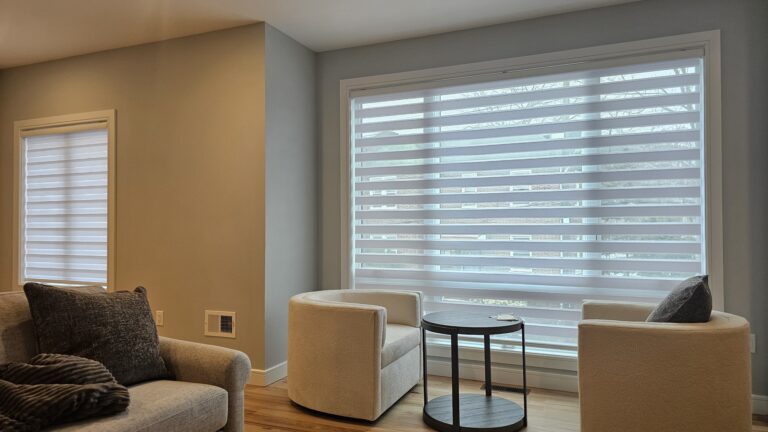
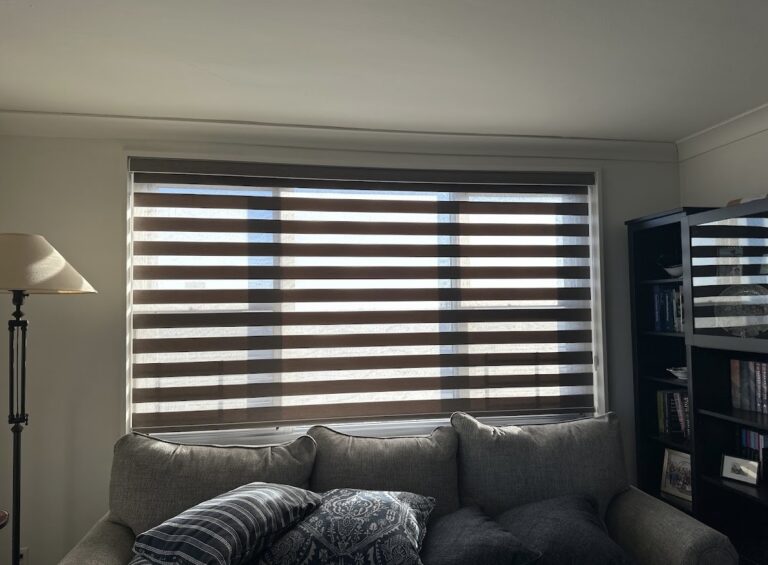 Zebra ShadesView or privacy, switched in one pull
4.9 across 314 Google reviews
“My experience with The Curtain for Hunter Douglas Honeycomb Applause installation was outstanding. The initial consultation was thorough, and they offered a wide range of options to suit our needs. Installation was completed efficiently in just a couple of hours for 15 large windows. This was the best home improvement experience I have had.”
★★★★★ a year ago
“Installation of Hunter Douglas Duette Honeycomb Blackout Shades. They arrived on time, were professional, and answered all our questions. Customer service was responsive. Overall, we are pleased with their service and recommend them.”
★★★★★ 2 years ago
“I have Hunter Douglas honeycomb shades and the system was broken and it could not pull up. I called and they were able to come the next day and fix it on the spot. The whole experience was great.”
★★★★★ a month ago
Visit the showroom
Prefer to see things in person before we come to you? We're on Broad Avenue in Palisades Park, a few minutes from Fort Lee and the GWB.
- 545 Broad AvenuePalisades Park, NJ 07650
- Mon–Fri 10–7 · Sat 10–5Closed Sunday
- (201) 302-9111We usually pick up on the first ring