Sheer Shades
Fabric vanes suspended between two sheer facings. Rotate them and the window moves from open daylight to full privacy, and at no point does it read as a covering — what you notice is the light, not the shade. It is the softest light in the shade family, and it is not a blackout.
 ★★★★★ 4.9 · 314 reviews (314)
 Partner
~2 weeks to install~2 wks
Partner
~2 weeks to install~2 wks
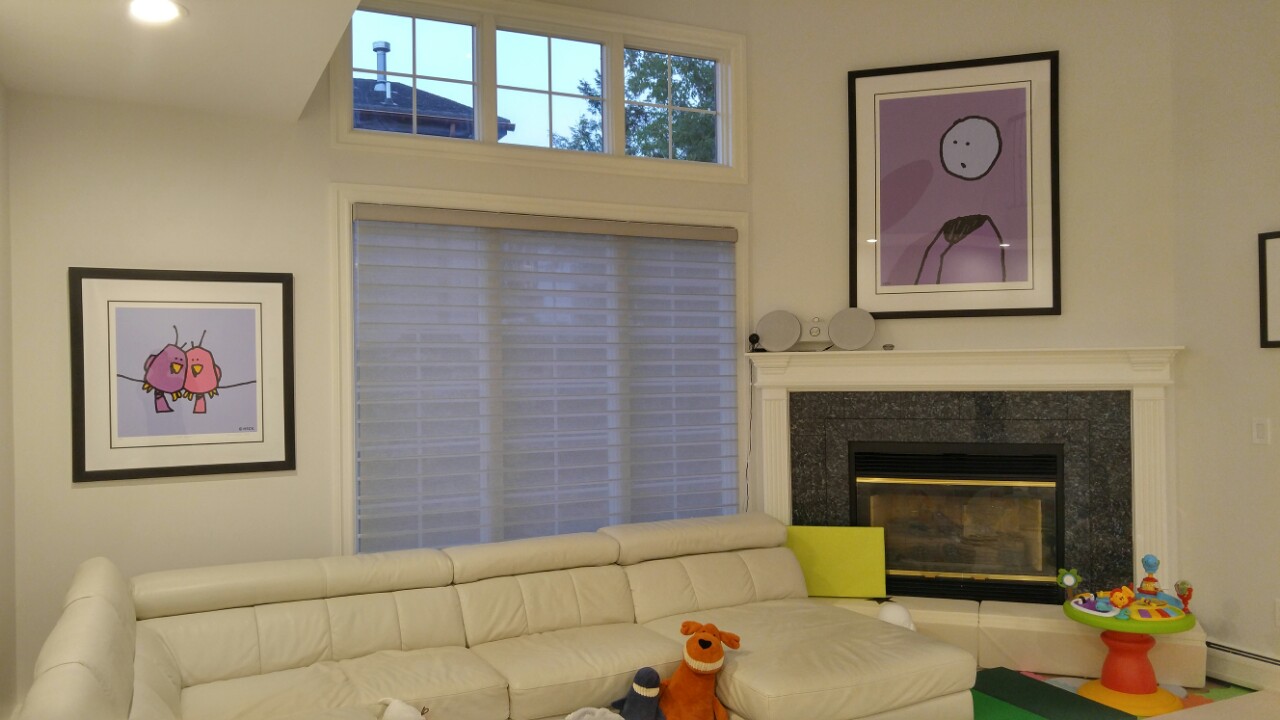
What is actually floating in there
From the sofa it looks like a band of soft light with lines in it. Up close it is three layers doing one job, and that construction explains everything the shade is good at and everything it is not.
A sheer shade is built from two knitted sheer facings, front and back, held apart by a few inches of air. Bonded between them, along their full length, sit horizontal fabric vanes. Turn the mechanism and every vane rotates at once inside that space — like the slats of a horizontal blind, if someone had sealed them between two layers of gauze and made them out of cloth.
What that buys you is a window with no hardware in it. A horizontal blind needs ladder cords to tilt its slats and lift cords threaded through them, which means holes punched in every slat and a visible mechanism running down the face of the window. Those holes are where a closed blind leaks light in dots, and where dust settles first. A sheer shade has none of it. The vanes are attached only at their front and back edges, so there is nothing between you and the glass but fabric and air.
The part people forget is that it also gets out of the way. This is not a fixed sheer panel. The whole assembly rolls up into the headrail the same way a roller shade does, so a raised sheer shade leaves you clear glass. That matters more than it sounds: plenty of rooms want the shade working hard for eight months of the year and doing nothing at all in October.
- Vanes, not slats. Soft fabric that rotates rather than rigid slats that tilt. They settle against the sheer instead of clattering into each other.
- No cords through the fabric. Nothing is threaded through a vane, so there are no pinholes of light when it is closed and nothing to fray or discolour along a cord line.
- It raises fully. The shade rolls into the headrail. Up, the window is clear — the same as any roller.
- Not a blackout. Both facings are sheer and the vanes are cloth. Closed, the shade is private and dim. It is never dark.
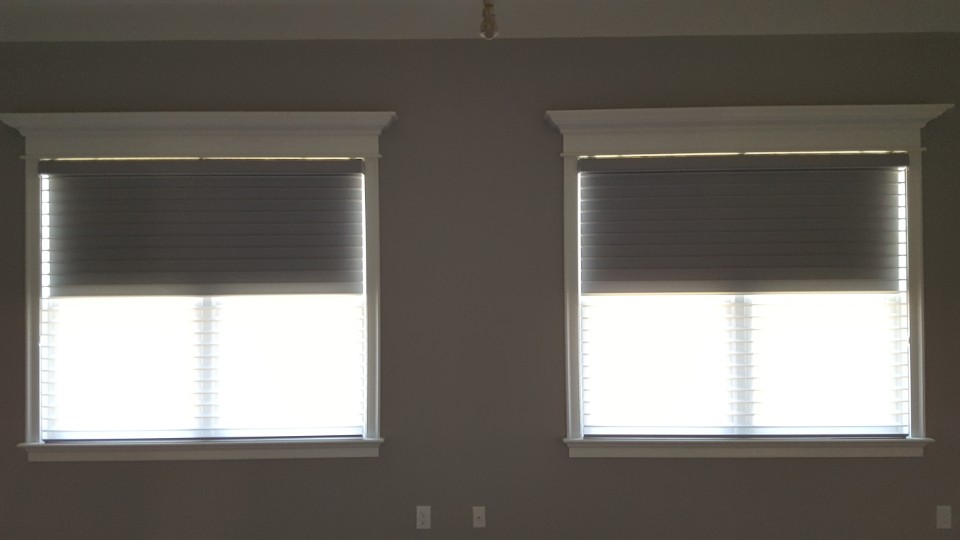
One shade, four different rooms
A roller shade has two useful states, up and down. A sheer shade has four, and the two in the middle are the ones you will actually live at.
Vanes open: daylight with the edges taken off
Rotated flat, the vanes sit horizontal and the gaps between them open up. Light comes through the gaps, hits the two sheer facings on the way in and gets scattered, so the room fills evenly instead of taking a hard bar of sun across the floor. This is the state the product was designed around and it is genuinely lovely at about four in the afternoon on a west window.
You can see out, but be clear about what that means. You are looking through two layers of knit, so the outside arrives as light, shape and movement rather than detail. It softens the view rather than framing it, and it never sharpens up the way an open weave does. If the reason you are covering that window is that you want to keep looking through it, this is the wrong product and a solar screen is the right one.
Best for daytime living rooms, north light, and any room where glare on a screen is the actual complaint.
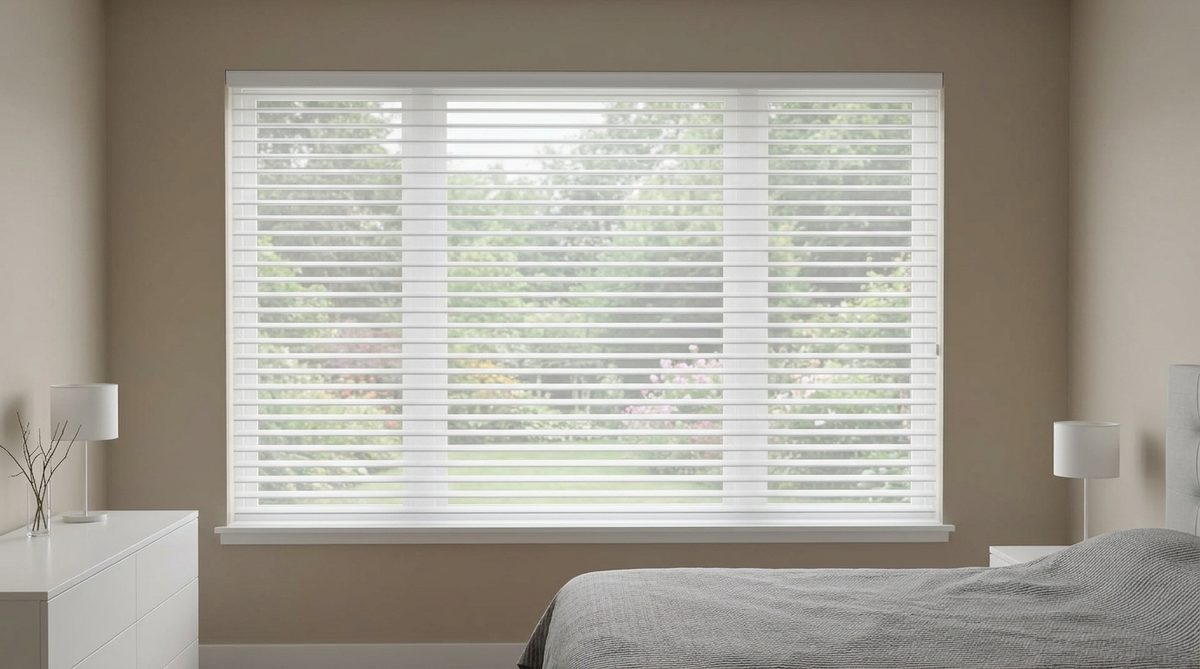
Half tilt: the position nobody plans and everybody uses
Rotate part way and the vanes narrow the gaps without closing them. Light drops noticeably but does not go away, and the angle stops anyone at street level from seeing straight into the room while you can still see down toward the sidewalk. It is where a sheer shade spends most of its day, and it is not the position people picture when they order one.
It is also the position where the shade stops being flat. A half-turned vane catches light on its top edge and shadows underneath, which is what gives a sheer shade its depth from inside the room and from the street. A zebra shade cannot do this — its bands lie flat against the glass at every setting.
Best for front-facing rooms, ground floors, and anywhere the street is closer than you would like.
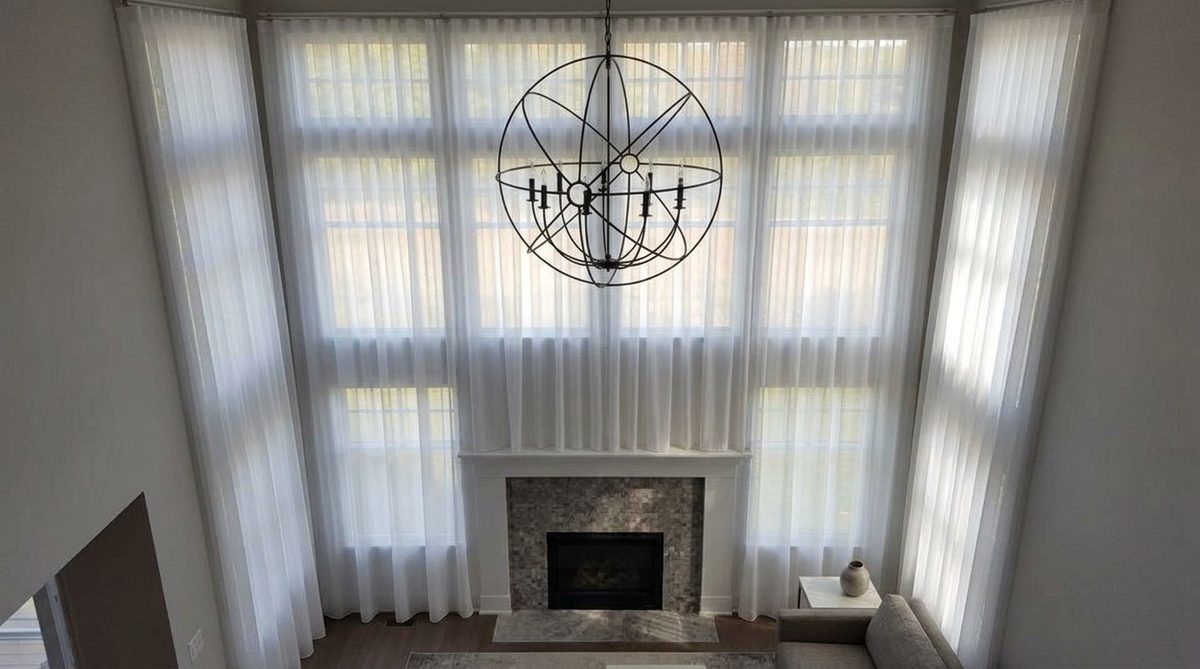
Vanes closed: private, and still not dark
Turned the rest of the way, the vanes lie flat against each other and overlap. Nobody outside sees shapes moving in a lit room, which is the definition of privacy most people mean. The shade looks like a single soft panel of fabric.
It is not darkness and we would rather say so here than have you find out in June. The facings are sheer and the vanes are cloth, so daylight still comes through the whole assembly and a lit window still glows from outside. If the room needs to be dark, this shade needs help: some sheer shade lines can be ordered with an opaque shade behind the sheer in the same headrail, and otherwise we pair it with a blackout roller or a lined drapery panel. That is a conversation worth having before you order rather than after.
Best for evening privacy in a living or dining room. For a bedroom, only with a second layer.
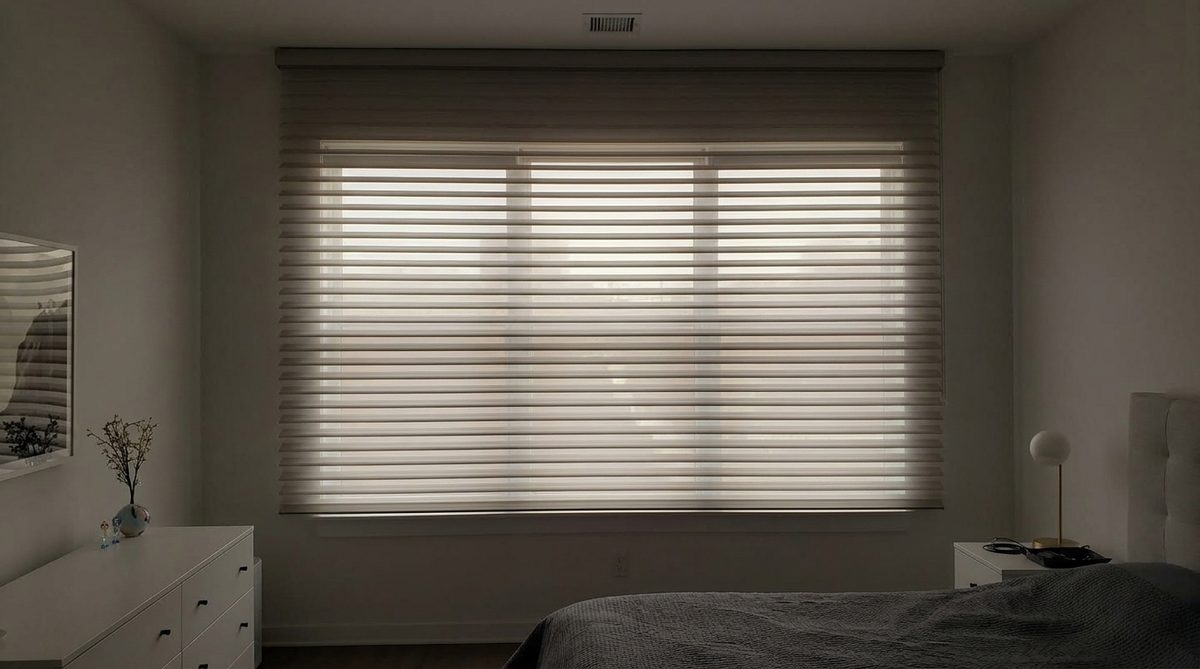
Raised: the window handed back
The fabric rolls up into the headrail and the opening is clear. The stack is small, but the headrail on a sheer shade is deeper than a roller tube, because it has to swallow the vanes as well as the facings.
That depth is the one measurement people are surprised by, and it is the reason we measure rather than ask you to. On a shallow window frame there may not be room for an inside mount, in which case the shade goes on the wall above the opening instead. It costs no more and it works exactly as well, but it changes how the window reads, so it is a decision to make standing in the room.
Best for spring, window cleaning, and any month the shade has nothing to do.

Silhouette shades, sheer shadings, and what the names mean
This product goes by a brand name about as often as it goes by a description, which is why shopping for it is confusing. All three of the words below point at the same construction.
Sheer shade is the plain description of the construction: fabric vanes between two sheer facings. Sheer shading is the same product under the phrase the industry tends to print on the tag. Silhouette is Hunter Douglas's trademarked name for their version of it, and it has been around long enough that people use it generically, the way they say Kleenex. We are a Hunter Douglas partner, so Silhouette is a line we fit and quote — and it is often the name someone has in mind before they know the category has a generic one.
Once you know they are the same category, the brand stops being the useful question and three specifications start being useful instead. Vane depth is the first: a deeper vane throws a broader, softer band of light and suits a big window, and a shallower one keeps a small window from looking heavy. The two extremes look like different products from across a room.
The second is how open the facings are. A more open knit gives you a clearer view with the vanes turned and less privacy when they are; a tighter one does the reverse and gives softer light. This is the specification that decides whether you are happy, and it is impossible to judge from a photograph or a swatch on a counter — the only honest test is holding two facings against your own glass, in your own light, which is what the in-home consultation is for.
The third is colour, and it has a wrinkle. The vane and the facing can be different colours, so a deep vane can sit behind a white facing. That keeps the outside of the house uniform from the street while the room gets the colour you wanted, which is worth knowing if you are doing a whole front elevation.
- Sheer shade = sheer shading. Two names for one construction. There is nothing to choose between them.
- Silhouette is a brand name. Hunter Douglas's sheer shading. We are a Hunter Douglas partner, so we fit and quote it.
- Vane depth changes the room. Deeper vanes make a broader, softer band of light. Shallower ones stop a small window looking heavy.
- The facings are not all equal. How open the knit is decides how much you see out and how much they see in. Hold two against your own glass before you choose.
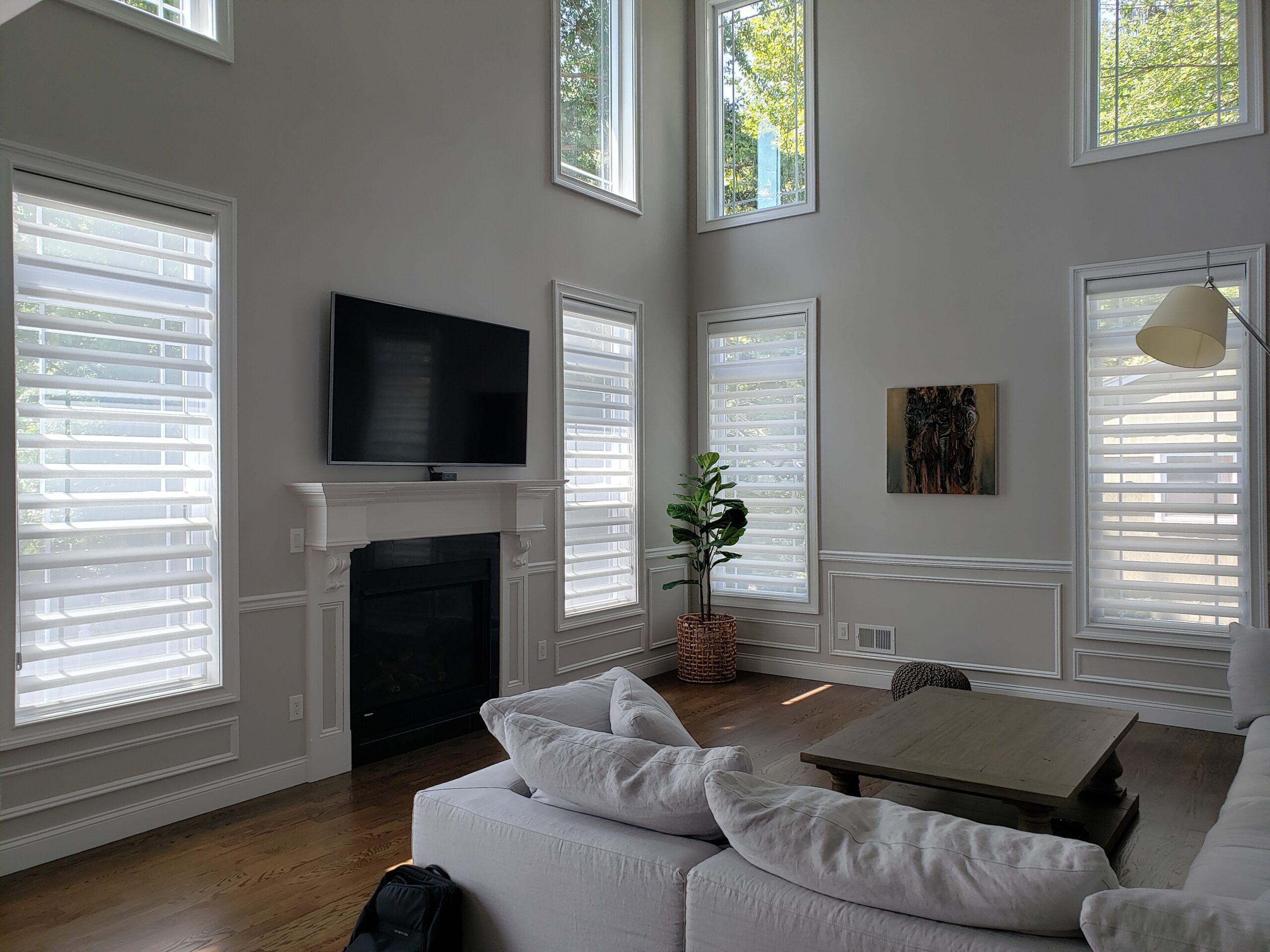
Sheer shades vs zebra shades
These two get mixed up more than any other pair of shades, and the reason is fair enough: both give you a view position and a privacy position out of one shade. Everything else about them is different.
They are built nothing alike
A zebra shade is one flat fabric printed in alternating sheer and solid stripes, joined into a loop and hung over a roller so there is a front layer and a back layer. Rolling it slides the two layers past each other and the stripes either line up or offset. Everything happens flat against the glass.
A sheer shade has no stripes and nothing sliding. The vanes occupy the space between two facings and rotate on the spot. That single difference explains the rest: a sheer shade has visible depth and a zebra does not, and a zebra rolls into a small tube while a sheer needs a deeper headrail to store its vanes.
Best for telling them apart in a showroom, where they can look similar from ten feet away.
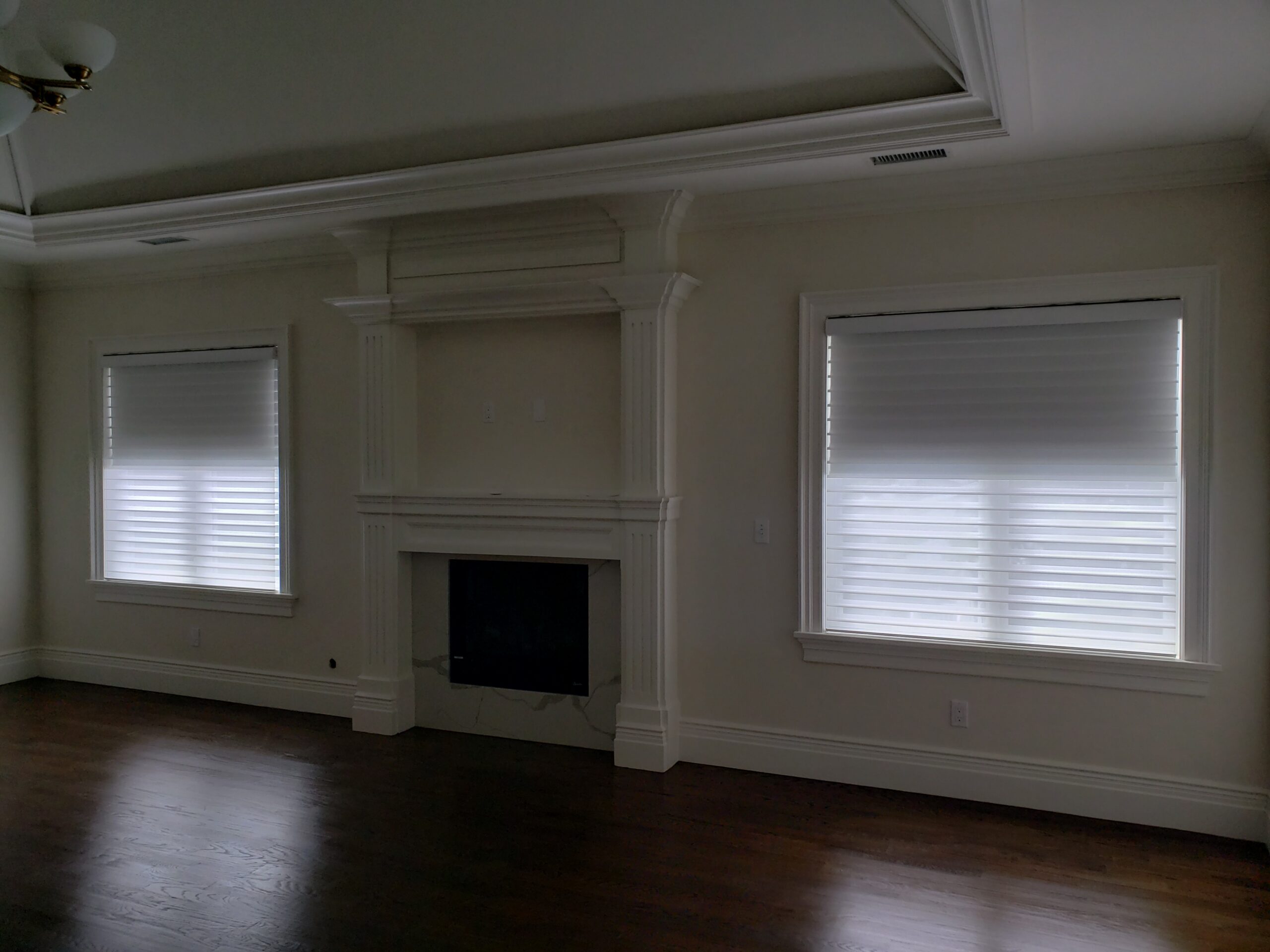
Which one actually lets you see out
The zebra wins this one and we will not pretend otherwise. With its bands offset you are looking through a single layer of sheer stripe, and the outside is reasonably legible. With a sheer shade you are always looking through two knit facings, so the outside is diffused rather than resolved. That is not a defect — turning the outdoors into light is the entire design intent — but it is the wrong answer if seeing the yard was the requirement.
The order flips on privacy. Closed vanes behind a sheer facing read as one soft panel and look finished from both sides, where aligned zebra bands read as stripes. Neither product is dark when it is closed, and neither should be sold to you as one.
Best for deciding which one you actually want — a zebra if the view matters more, a sheer if the light matters more.
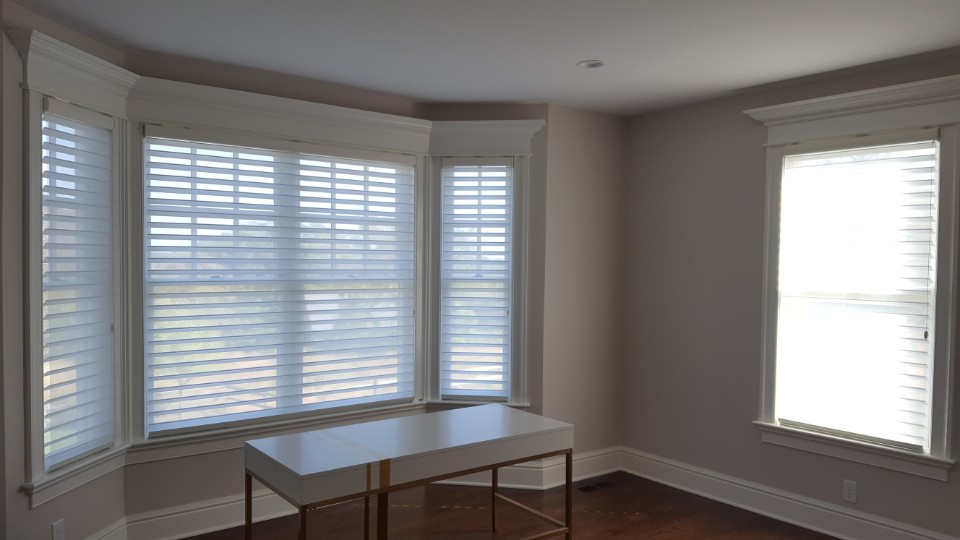
Soft light against a graphic line
A zebra shade draws hard horizontal lines across the opening. It is a strong graphic and it reads modern, which is a feature in a contemporary room and a mismatch in a traditional one. A sheer shade has almost no line to speak of — the vanes blur into each other at any distance and what you notice is the quality of the light, not the shade.
So the honest way to choose is to ask what you want the window to do in the room. If it should be an element, a zebra will do that. If it should disappear and leave the light behind, a sheer will.
Best for traditional and transitional rooms, and anywhere the window should not be the loudest thing in it.
The part everyone wants a number for
A sheer shade costs more than a zebra shade, and both cost more than a plain roller. The construction is the whole reason: two knit facings, vanes bonded to both of them along their full length, and a headrail that rotates as well as lifts, against one printed fabric on a tube.
That does not settle it, because the two shades are not interchangeable. But it does mean the budget deserves to be on the table early. If it is close, ask for both quoted on the same window during the consultation — comparing two real numbers on your own opening beats guessing from a category.
Best for settling the budget question before the consultation rather than after it. When budget is the deciding factor, the zebra is the honest answer.
How you will tilt and raise them
This shade has two jobs rather than one. The vanes rotate and the whole thing lifts, and how those two are combined is worth a minute of thought, because you will be touching the control several times a day.
Motorized
The vanes and the lift both run off a remote or an app, so the useful positions are a button apart and a schedule can find them for you. On a shade you adjust through the day rather than twice a day, this earns its cost more often than not.
The one we recommend mostContinuous cord loop
A tensioned loop anchored to the wall. Precise on the vane angle, which matters here, and the least expensive way to control a wide or heavy shade.
Wide and tall openingsCordless
Nothing hanging beside the window, which is the safest arrangement around children and the cleanest look on a run of shades. You reach the rail to raise it, so it wants a window you can get to.
Kids’ rooms, reachable windowsMount and headrail depth
Not a control, but the thing to settle first. The headrail is deeper than a roller tube, so a shallow frame may need an outside mount on the wall. We measure that before anything is ordered.
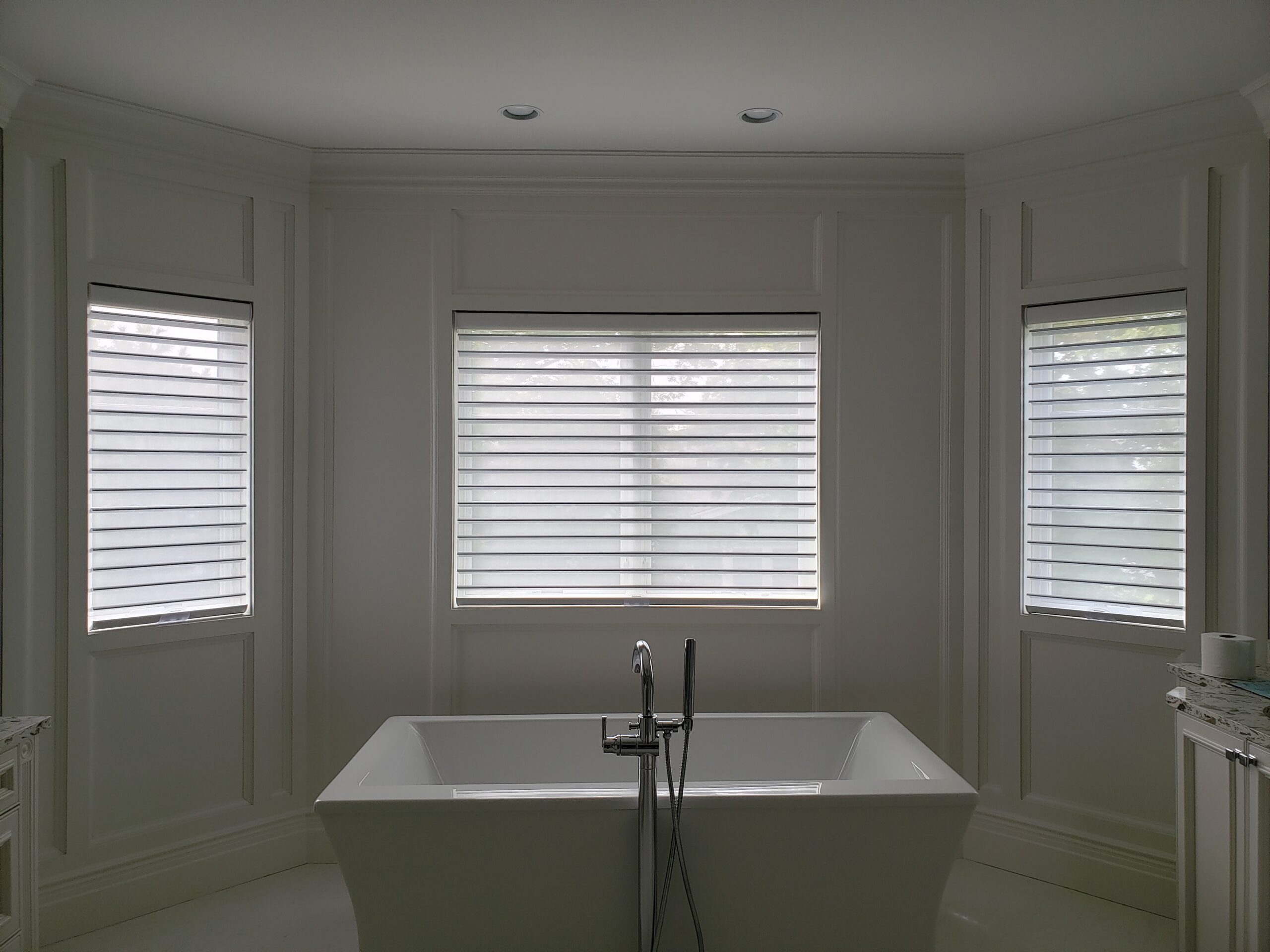
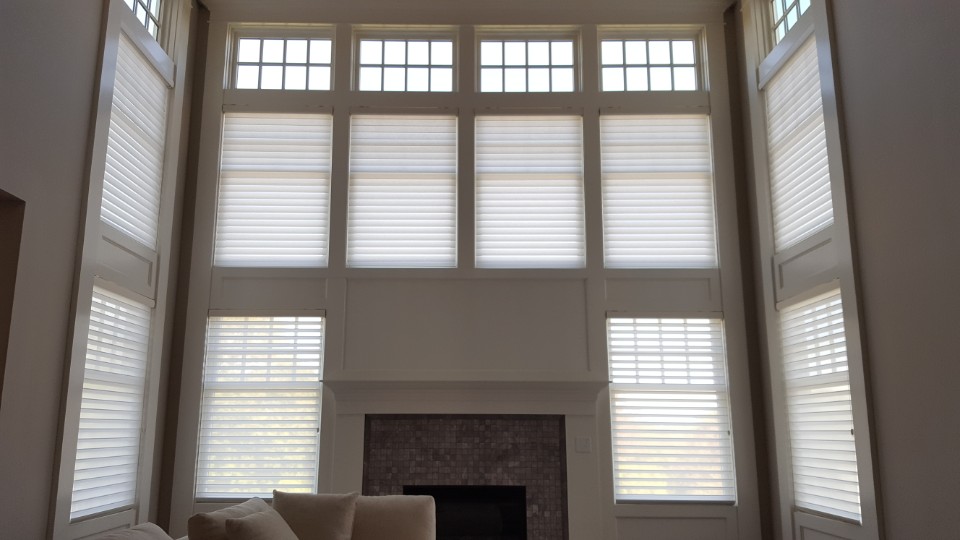
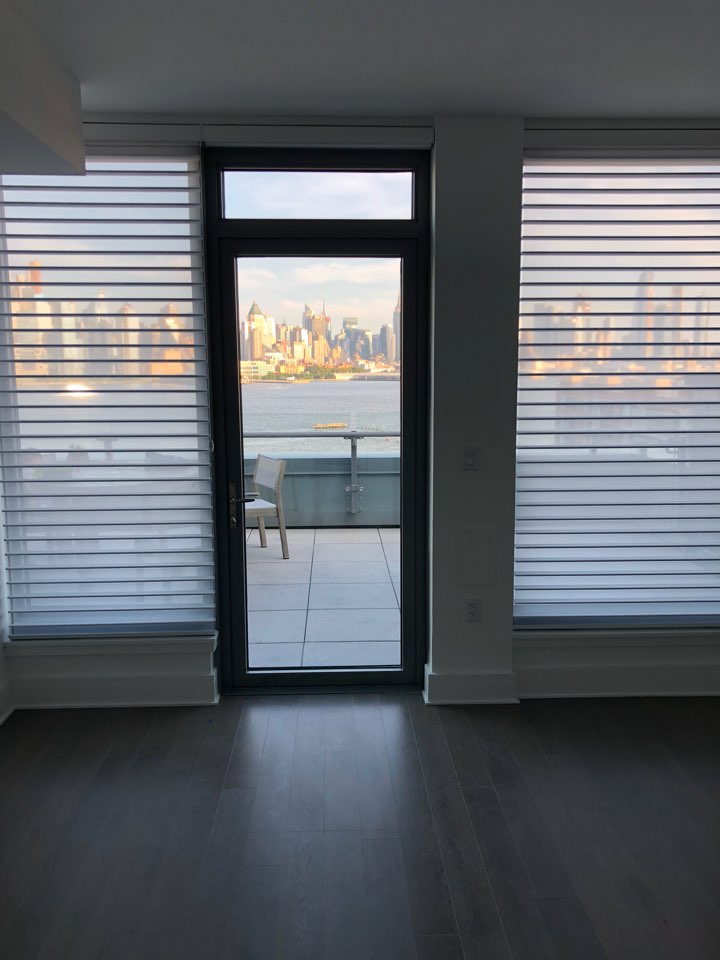
Decide it in the roomSheer shades we have installed
No stock photography, no showroom staging — homes and offices across Bergen County and the Tri-State.

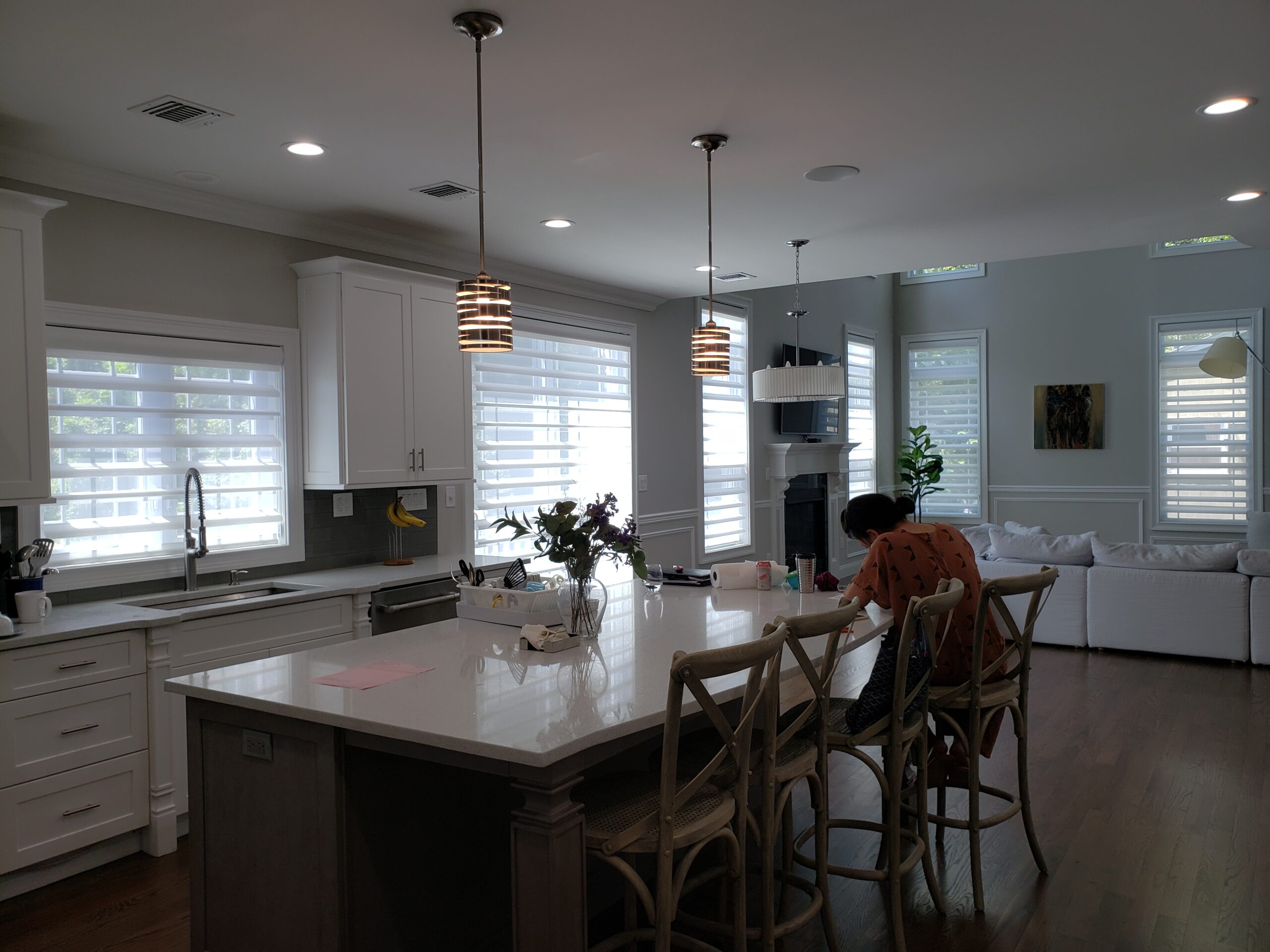

What actually drives the price
Sheer shades are priced per window, and they sit at the more expensive end of what we make. These are the five things that move the number, and only one of them is a size.
01The construction itself
This is the floor, and it starts higher than a roller shade's. You are paying for two knitted facings, vanes bonded to both of them along their full length, and a headrail that has to rotate as well as lift. A roller is one fabric on a tube. On the same window, expect a sheer shade to sit well above a roller and above a zebra shade too.
02Vane depth and facing
Deeper vanes use more material and generally cost more, but the wider range sits in the facing. A plain white knit and a textured or coloured one are different materials at different prices, and unlike a lot of upgrades this one is visible from the sofa every day.
03Width of the opening
Width moves this product more than height does. A wide sheer shade needs a stronger headrail to keep every vane rotating evenly across the whole span, and past a certain width a window is better built as two shades than one. That changes the price and, more to the point, changes how the window looks — we will tell you where that line falls on your opening rather than after it is made.
04Control
Cordless adds a little. Motorization adds a motor and power per shade, and it does more here than on most products because you are setting a vane angle rather than just choosing up or down.
05Mount and headrail
The headrail is deeper than a roller tube, so an inside mount needs the frame depth to take it. It is not a price question so much as a look question, which is why we settle it standing in the room.
Why we don't publish a price list. Two windows in the same room can price differently once you account for size, fabric and mount. We measure and quote every window during the free consultation, so you see the number before anything is ordered. Book one here.
Measured to installed in about two weeks
Free consultation
We come to you, so you're judging the room in the light the shade will actually live in.
Measure & design
Every window measured to the sixteenth, with a designer's eye on mount, stack and fabric.
Made for your window
Hunter Douglas or our own Korean workroom — built to your opening, never trimmed from stock.
Installed & tidy
Professionally hung, tested, and the packaging leaves with us. Usually a single visit.
Sheer shade questions we get asked
What are sheer shades?
A shade built from two knitted sheer facings with horizontal fabric vanes bonded between them. Rotating the vanes takes the window from open daylight to full privacy, and the whole shade also rolls up into the headrail like a roller shade. No cords run through the vanes, so there are no pinholes of light when it is closed.
What is the difference between sheer shades and zebra shades?
They only look similar from a distance. A zebra shade is one striped fabric looped over a roller, so two flat layers slide past each other. A sheer shade has fabric vanes suspended between two sheer facings that rotate on the spot. The zebra gives a clearer view when open; the sheer gives softer light and visible depth, and costs more.
Are sheer shades the same as Silhouette shades?
Yes. Silhouette is Hunter Douglas's trademarked name for their sheer shading, used so widely that many people say it for the whole category. Sheer shade and sheer shading are the generic terms for the same construction. We are a Hunter Douglas partner, so it is a line we fit and quote.
Do sheer shades give privacy at night?
With the vanes closed, yes — nobody outside sees shapes moving in a lit room, though the window still glows. With the vanes open it behaves as a sheer, and after dark a sheer gives no privacy at all because the bright side is inside. So it is private when you close it, and that is one turn of the control.
Can sheer shades be blackout?
Not on their own. Both facings are sheer and the vanes are cloth rather than a coating, so daylight comes through even with the vanes closed. Some lines can be ordered with an opaque shade behind the sheer in the same headrail; otherwise we pair the shade with a blackout roller or a lined drapery panel. Private and dim, not dark.
Are sheer shades a good choice for a living room?
It is the room they suit best — used in daylight, where the problem is glare and passing privacy rather than darkness, and where soft even light is worth paying for. Half tilt handles a front-facing window without shutting the room off from the street. The caveat is a living room with a view you want to look at: a solar screen keeps the view, a sheer shade softens it away.
How do you clean sheer shades?
Gently and rarely. Dust with a feather duster, or vacuum the facing with a soft brush on low suction, working across the shade rather than up and down. No cords pass through the fabric, so there is nothing for dust to gather around and they stay clean longer than a horizontal blind. For a mark on the facing, ask us before trying anything wet — a knit marks differently to a woven fabric.
Do sheer shades cost more than roller shades?
Yes, and by a clear margin rather than a little — two knitted facings, bonded vanes and a rotating headrail against one fabric on a tube. They cost more than a zebra shade too. We do not publish a price list, because two windows in the same room can differ a great deal once size, fabric and mount are accounted for. Every window is quoted exactly during the free consultation.
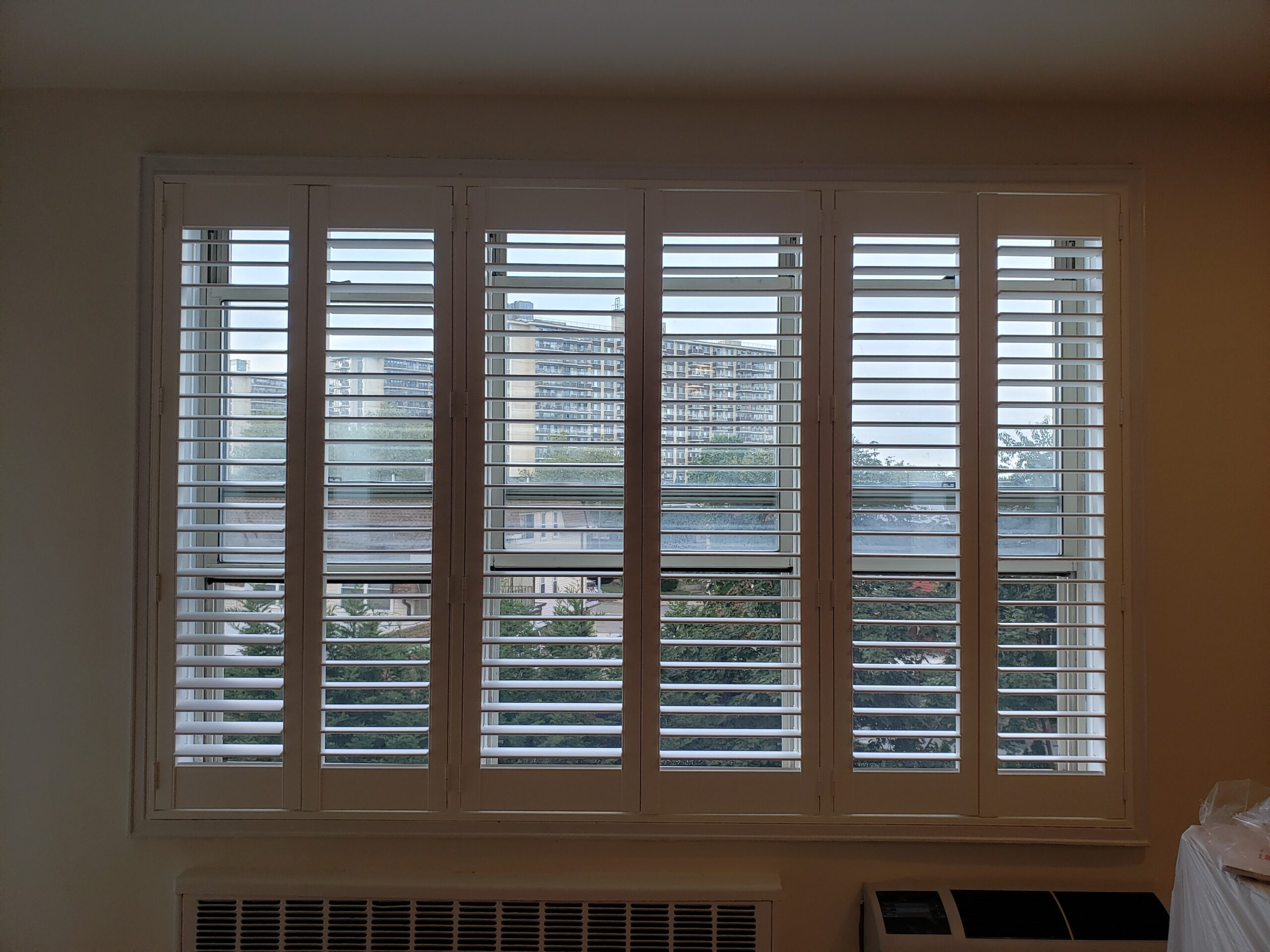 Plantation ShuttersBuilt into the frame, never raised
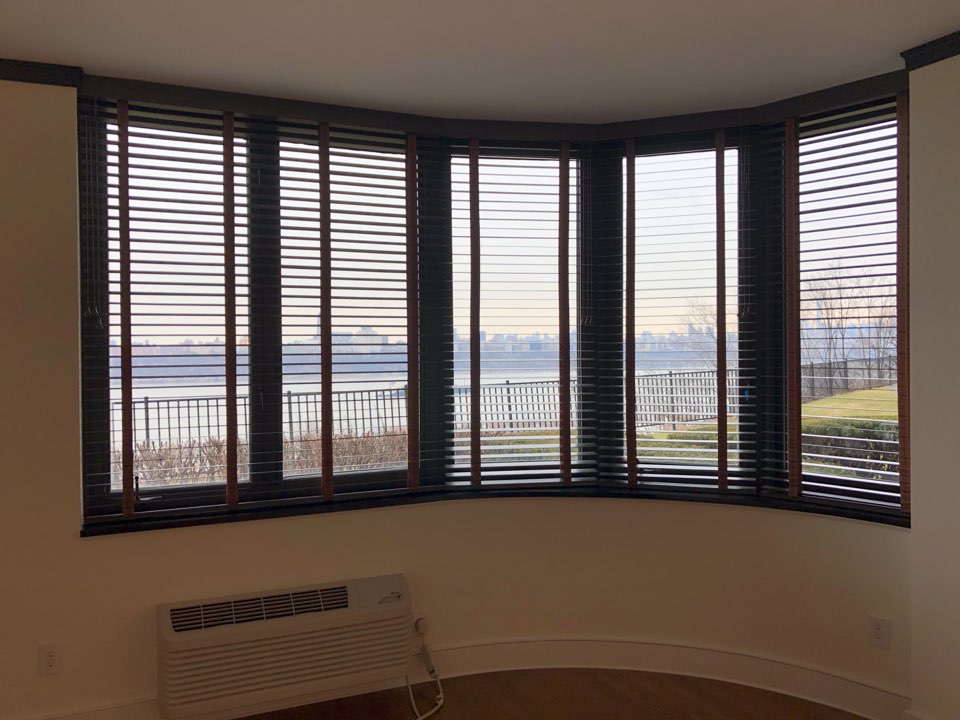 BlindsWood, faux wood and vertical
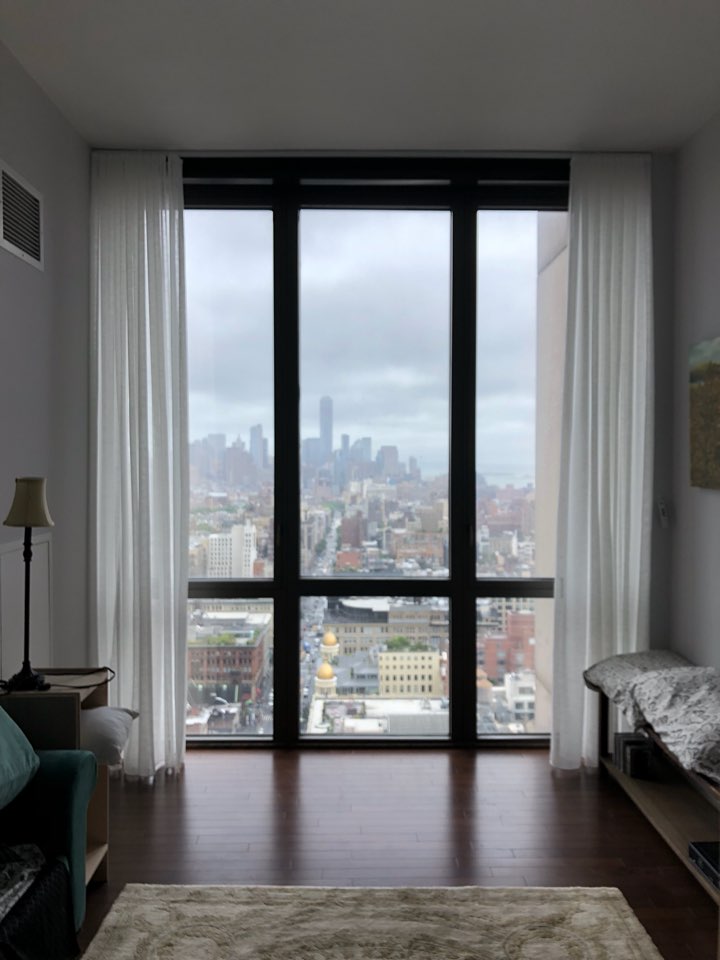 Drapery & CurtainsFabric, fullness and a proper track
4.9 across 314 Google reviews
“I have Hunter Douglas honeycomb shades and the system was broken and it could not pull up. I called and they were able to come the next day and fix it on the spot. The whole experience was great.”
★★★★★ a month ago
“I'm very happy with how my shades turned out. The team was communicative, knowledgeable and professional throughout the whole process — and their price was very reasonable compared to some other places we reached out to.”
★★★★★ a year ago
“Our french doors have very limited room for blinds or curtains. We'd visited Blinds To Go and other shops and had almost given up — until we visited The Curtain. Jason walked us through the best plan with his expertise.”
★★★★★ 3 years ago
Visit the showroom
Prefer to see things in person before we come to you? We're on Broad Avenue in Palisades Park, a few minutes from Fort Lee and the GWB.
- 547 Broad AvenuePalisades Park, NJ 07650
- Mon–Fri 10–7 · Sat 10–5Closed Sunday
- (201) 302-9111We usually pick up on the first ring