Composite Shutters
Plantation shutters built from a solid compound instead of timber, for the windows where wood does not last. Same louvers, same frames, same hinges — a panel that steam, splashes and afternoon heat leave alone.
 ★★★★★ 4.9 · 314 reviews (314)
 Partner
~2 weeks to install~2 wks
Partner
~2 weeks to install~2 wks
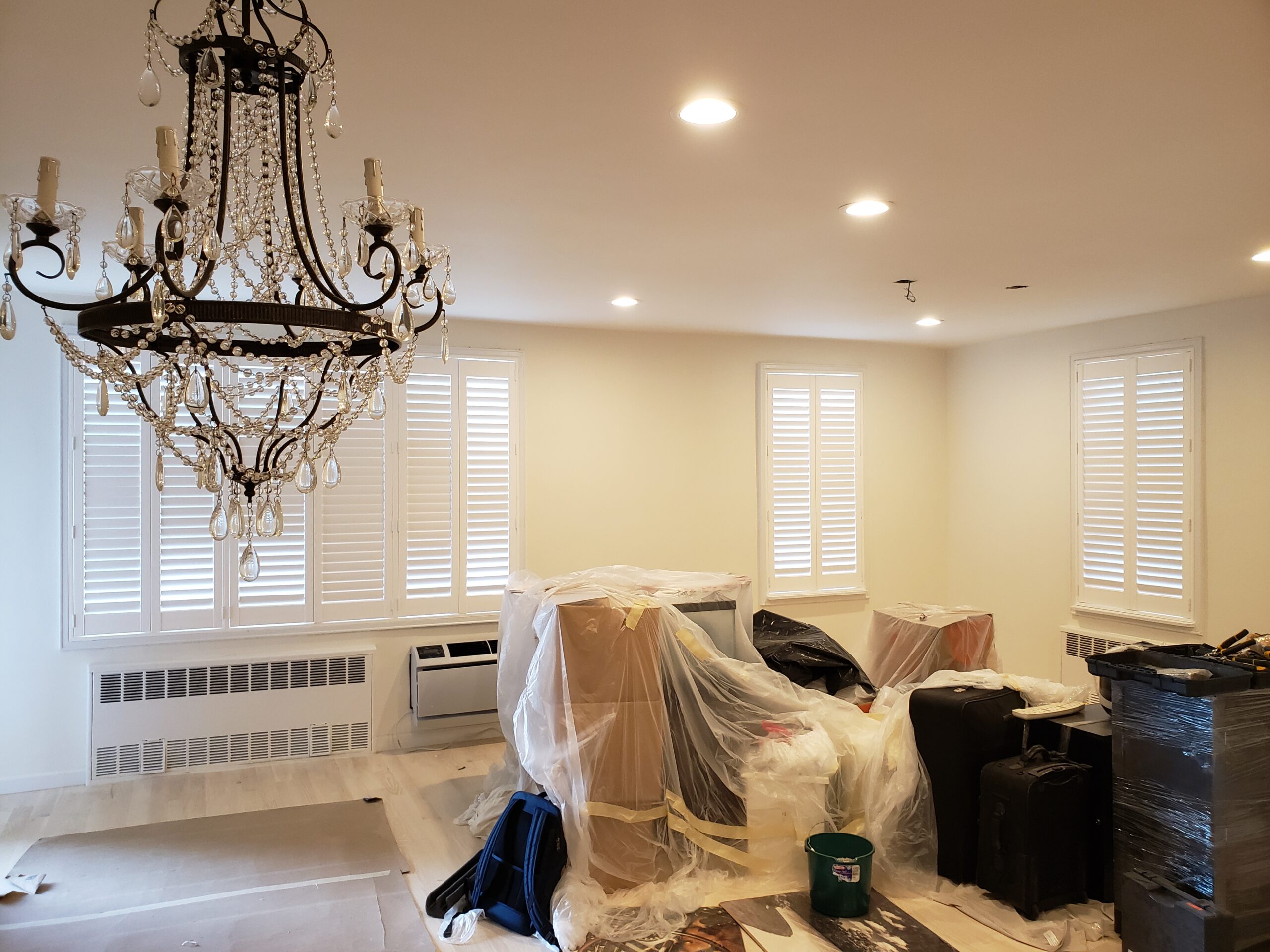
What a composite shutter is actually made of
Composite is a category, not a material. Three quite different panels get sold under the word, and which one you have decides how the shutter behaves on a wide window and how it ages in a damp one.
A plantation shutter is a frame, a set of stiles and rails, and the louvers between them. Composite changes what those parts are made from and nothing else. The frame still screws to the window, the panels still hinge open against the wall, the louvers still tilt together on a rod. If you have already looked at hardwood shutters, you know exactly how these work.
What changes is how the material behaves over years of steam and sun. Wood is a bundle of fibres that takes on moisture and gives it back again, and that slow movement is what eventually opens a joint or lifts a painted finish at a corner. A composite louver has no grain and no fibre to swell. It is either a solid polymer compound, an engineered wood core sealed inside a hard wrap, or an extruded vinyl profile — and those three are not interchangeable, whatever a showroom tag says.
The cost of all that stability is weight and colour. A composite panel is heavier than a hardwood one the same size, and the colour range is short because these panels are finished in a factory rather than painted by hand. Both get a section of their own further down instead of a line of small print.
- Nothing to absorb. No grain, no fibre, no joint that opens as the room dries out in January and closes again in July.
- Finished in the factory. The colour is either the material itself or bonded to it, so there is no brushed-on film to chip off a corner or yellow above a radiator.
- Heavier than wood. The real constraint. Panels are capped narrower, so a wide opening takes more of them or a rail across the middle.
- A short colour list. Whites, off-whites and a few neutrals. Matching a custom paint colour, or any stain at all, is a hardwood job.
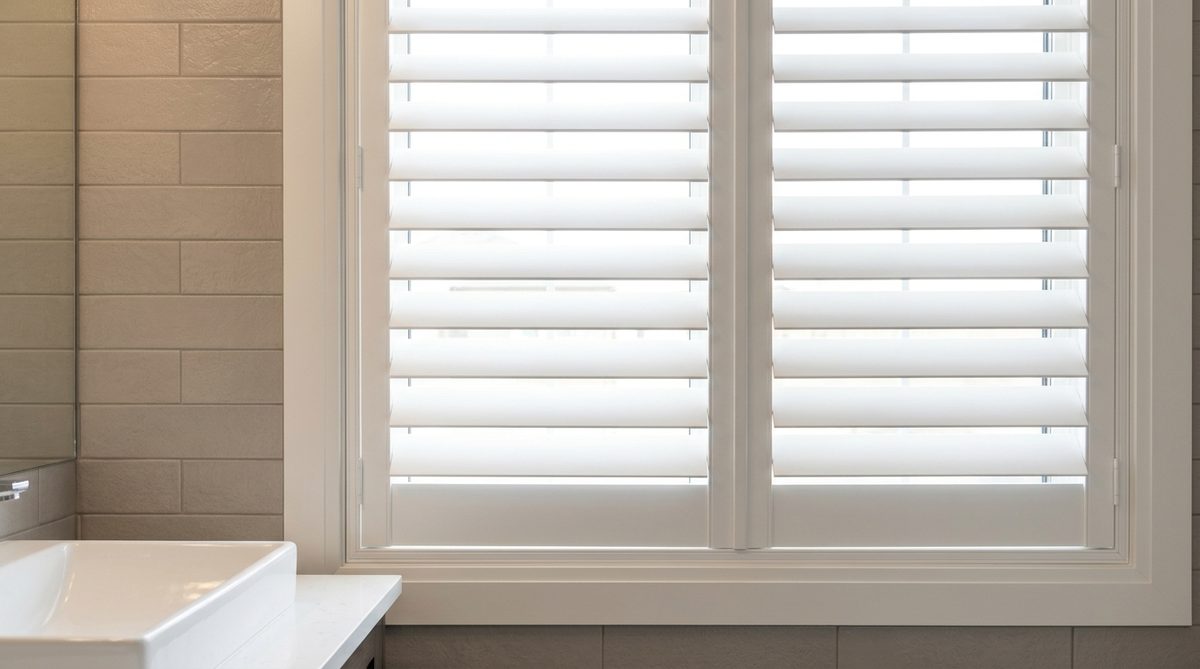
Polysatin, faux wood and vinyl are three different shutters
Shops use these words loosely and often interchangeably. They are not the same panel, they do not cost the same, and only one of them is genuinely solid all the way through.
Polysatin: solid all the way through
Polysatin is a compound molded into the louver and the frame, not a skin over something softer. Cut a louver in half and the middle is the same material as the face. That is the whole reason it holds up in a bathroom: there is no core for moisture to reach and no bonded surface to come away from it.
It is the most rigid of the three and also the heaviest, which is a good trade on a small or average window and a real consideration on a wide one. The finish is a satin surface rather than a coat of paint, so it wipes down with a damp cloth and there is no film on it to chip. Palm Beach is the Hunter Douglas polysatin line, and it is what we would specify for a wet room.
Best for bathrooms, laundry rooms, the window over a kitchen sink, anywhere there is steam.
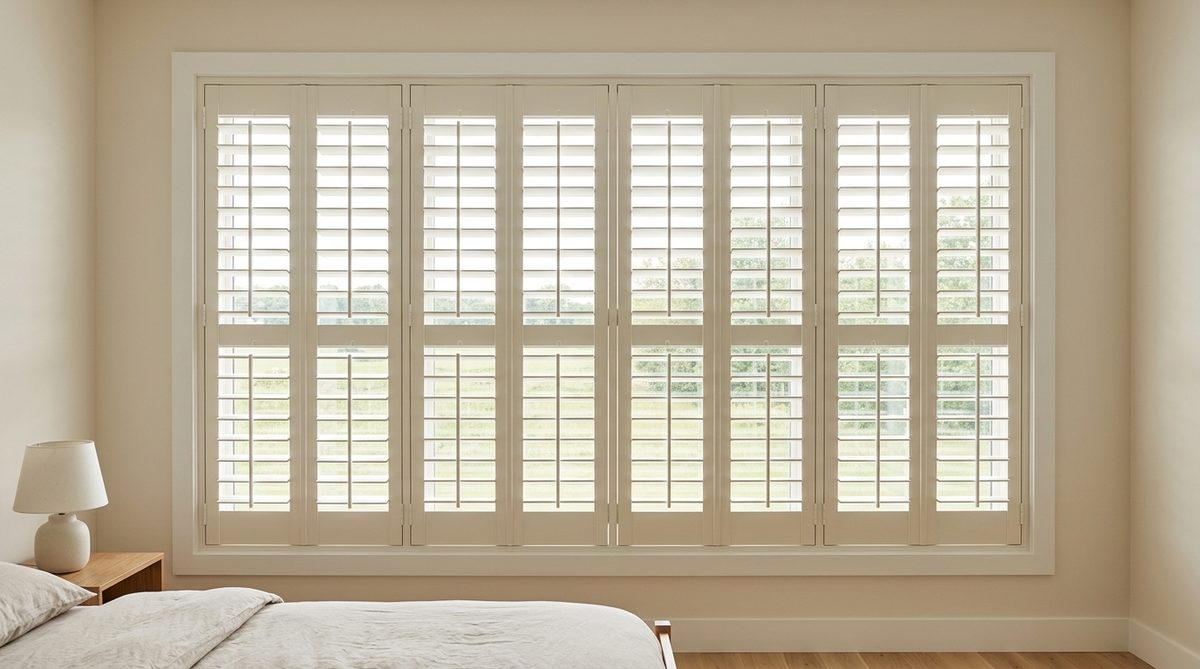
Faux wood: a sealed core with the weight of timber
Faux wood shutters put an engineered wood core inside a hard outer wrap, so you keep some of the density and the feel of timber with a sealed surface over it. NewStyle is the Hunter Douglas hybrid version. Painted white and hung at a window, most people cannot tell one from wood at three feet, and the ones who can are usually looking at the edge of a stile.
The distinction that matters is the wrap. It protects the core for as long as it is intact, which makes a faux wood panel right for a kitchen or a family bathroom and wrong for a window that gets properly wet. If water lands on the sill rather than hanging in the air, we would put polysatin there instead.
Best for kitchens, family rooms, powder rooms — where you want the weight of wood but wood would not last.
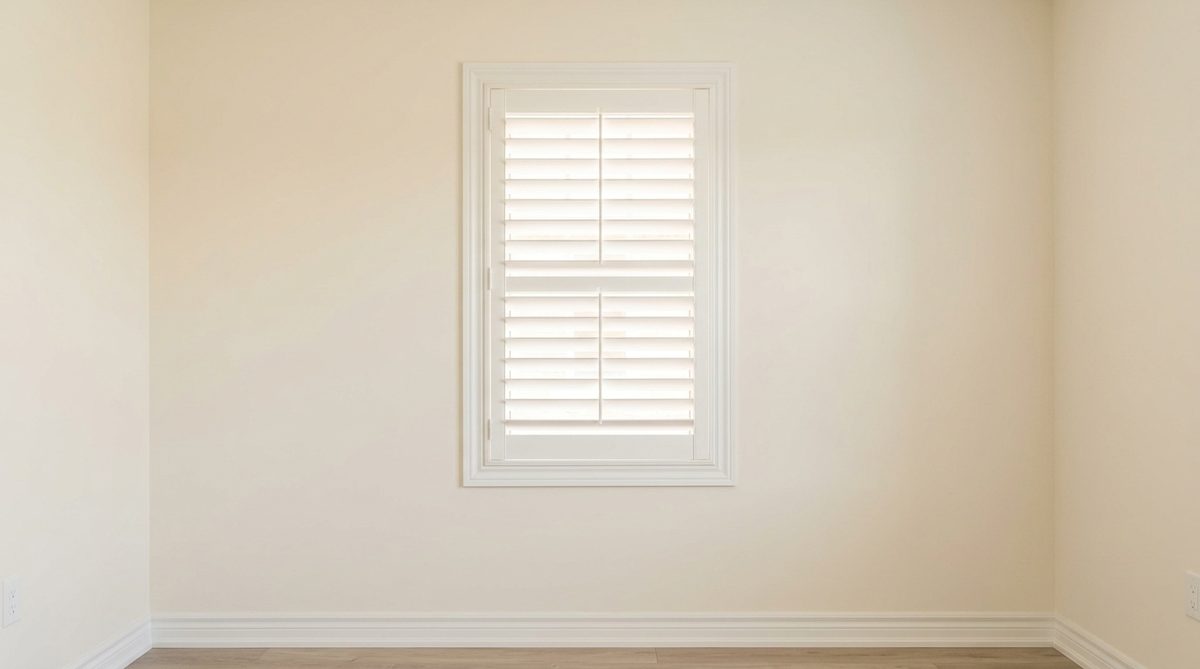
Vinyl: the one to ask questions about
Vinyl shutters are extruded rather than molded solid, which usually means hollow chambers running through the stiles and the louvers. That makes them the lightest of the three and the cheapest to produce, and it is why better vinyl panels carry an aluminum insert down the stile to stop them flexing on a tall window.
They are not a bad product. The honest version is that a hollow section flexes more than a solid one, takes direct heat on a south window less gracefully, and reads as plastic up close where a polysatin edge does not. Ask what is inside the stile before you buy one. If the answer is nothing, keep the panels narrow.
Best for small windows and budget-led jobs, with the panel width kept short.
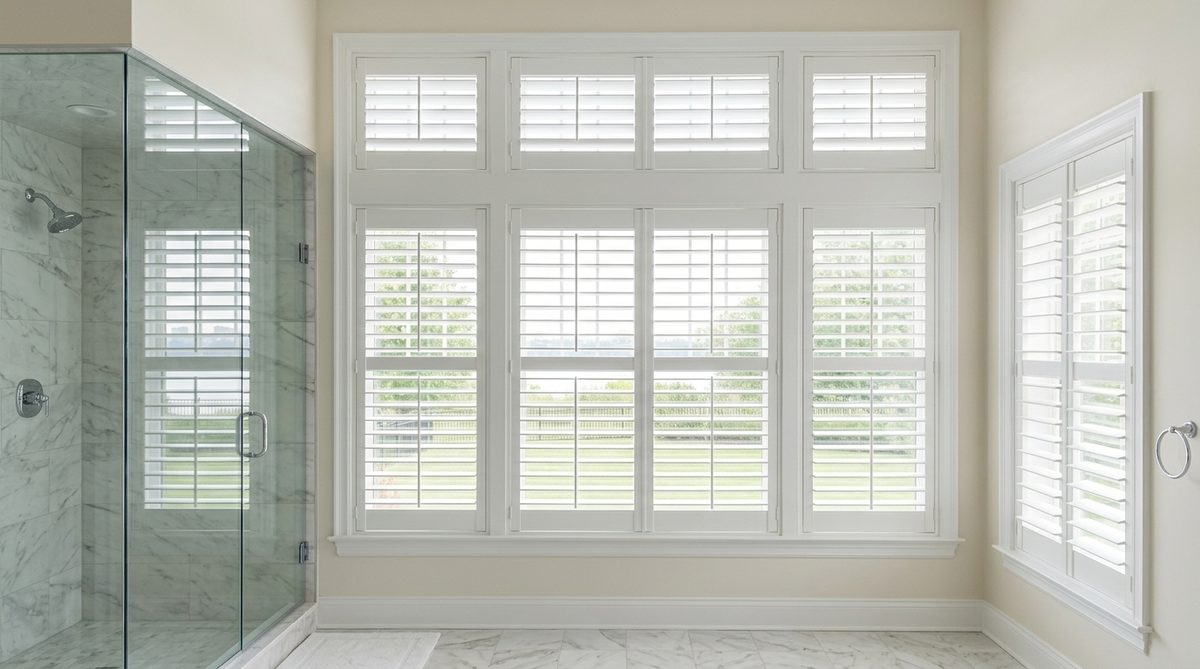
Bathroom shutters, and the word waterproof
Composite shutters get advertised as waterproof shutters. The panel earns that description. The window it is screwed to usually does not, and the difference is worth knowing before you order rather than after.
A solid polymer or a properly sealed composite louver does not absorb water. Splash it, steam it, wipe it down, and it is the same panel afterwards. That is a real difference from wood, where the finish is the only thing standing between moisture and a fibre that wants to drink it, and where a lifted finish in one corner is the beginning of the problem rather than the whole of it.
What waterproof does not mean is that the whole assembly ignores water. The frame is fixed to your window casing, and that casing is usually painted wood or a drywall return. Standing water on a sill still ruins the sill, and a shower stream aimed at the glass still finds its way behind a frame. Composite takes the shutter off the list of things that fail in a wet room. It does not take the room off the list.
For an ordinary family bathroom that is more than enough. Steam off a shower, condensation on the glass in February, a sill that gets wiped down every week — none of it touches the panel. The louvers also solve the problem fabric cannot: tilt them and the window vents to the air without opening to the street.
- Bathrooms. Steam, condensation, and a window you want open for air but not open to the neighbours. Tilting louvers give you both at once.
- Over a kitchen sink. Splashes and cooking heat, and a surface you wipe rather than dust.
- Laundry rooms. Warm, damp, and usually a small window, where the extra weight of a composite panel costs you nothing at all.
- Not inside a shower. A window in the wet zone of a shower is a different problem. Tell us where the water actually lands and we will tell you honestly whether a shutter belongs there.
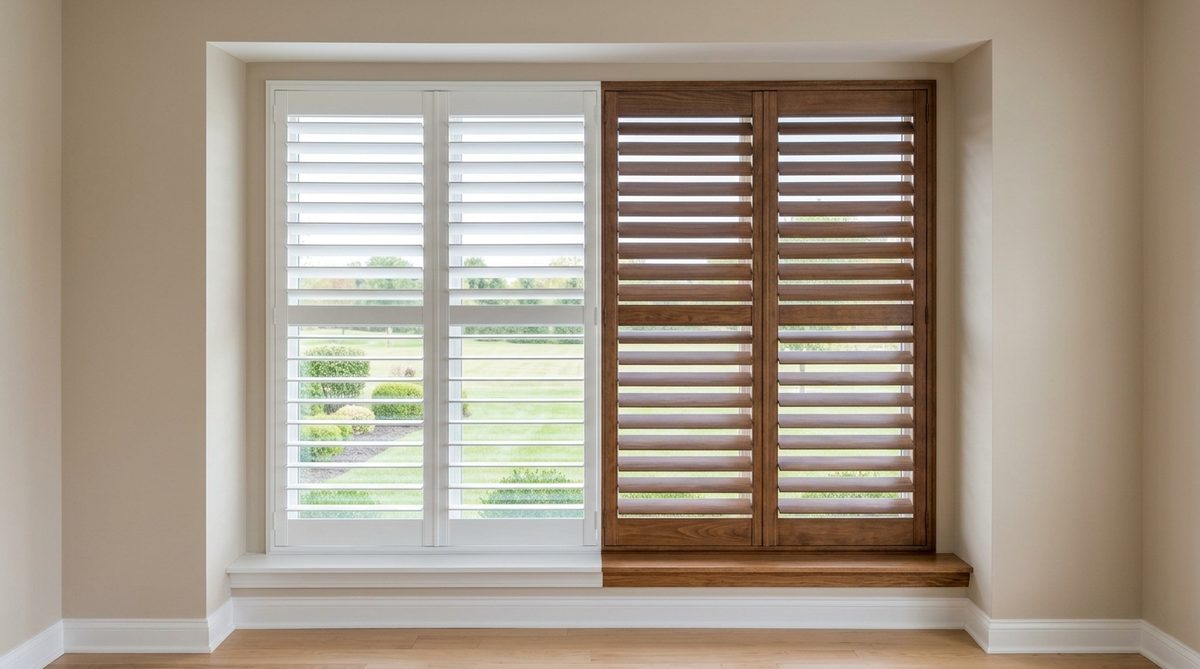
Composite vs wood shutters: where they really differ
Both are good shutters. They fail in different ways, they suit different rooms, and the price gap does not run the way most people assume it does.
Weight is the first real difference and the one that changes the drawing. A composite panel weighs more than a hardwood panel of the same size, so the width a single panel can be built to before it starts pulling on its hinges is capped lower. On an ordinary window nobody notices. On a wide opening it means more panels than the same window would need in wood, and every extra panel puts another stile — another vertical bar — in front of your glass. The alternative is a divider rail across the panel, which stiffens it and lets the top and bottom louvers tilt separately. Neither is a compromise you should mind. Both are decisions worth making at the measure rather than on installation day.
Colour is the second. Composite panels are finished in the factory and the palette is short: a handful of whites and off-whites and a few neutrals. Hardwood takes a custom paint colour, and it is the only one of the two that takes a stain, because it is the only one with a grain to show through it. If your casings are a specific colour, or the room is stained wood rather than painted, that single fact decides the material for you before anything else does.
Cost does not split neatly by category, which surprises people. Within one brand the composite line usually sits below the hardwood one, but a premium polysatin on a big window can come to more than an entry-level wood on a small one, so choosing composite as a way to save money is not a reliable plan. Choosing it because the room is damp is. So is choosing hardwood because the room is dry and the colour has to match. Ask us to price the window both ways when the choice is genuinely open.
- Wet rooms. Composite, every time. Wood in a bathroom is a repair with a date on it.
- Wide openings. Wood spans further per panel, so fewer stiles end up crossing the view.
- Colour and stain. Wood for a custom colour or any stain at all. Composite for white and off-white, done properly.
- Tall panels. Height loads the hinges as much as width does. Past a certain drop we will spec a divider rail on a composite panel whether you asked for one or not.
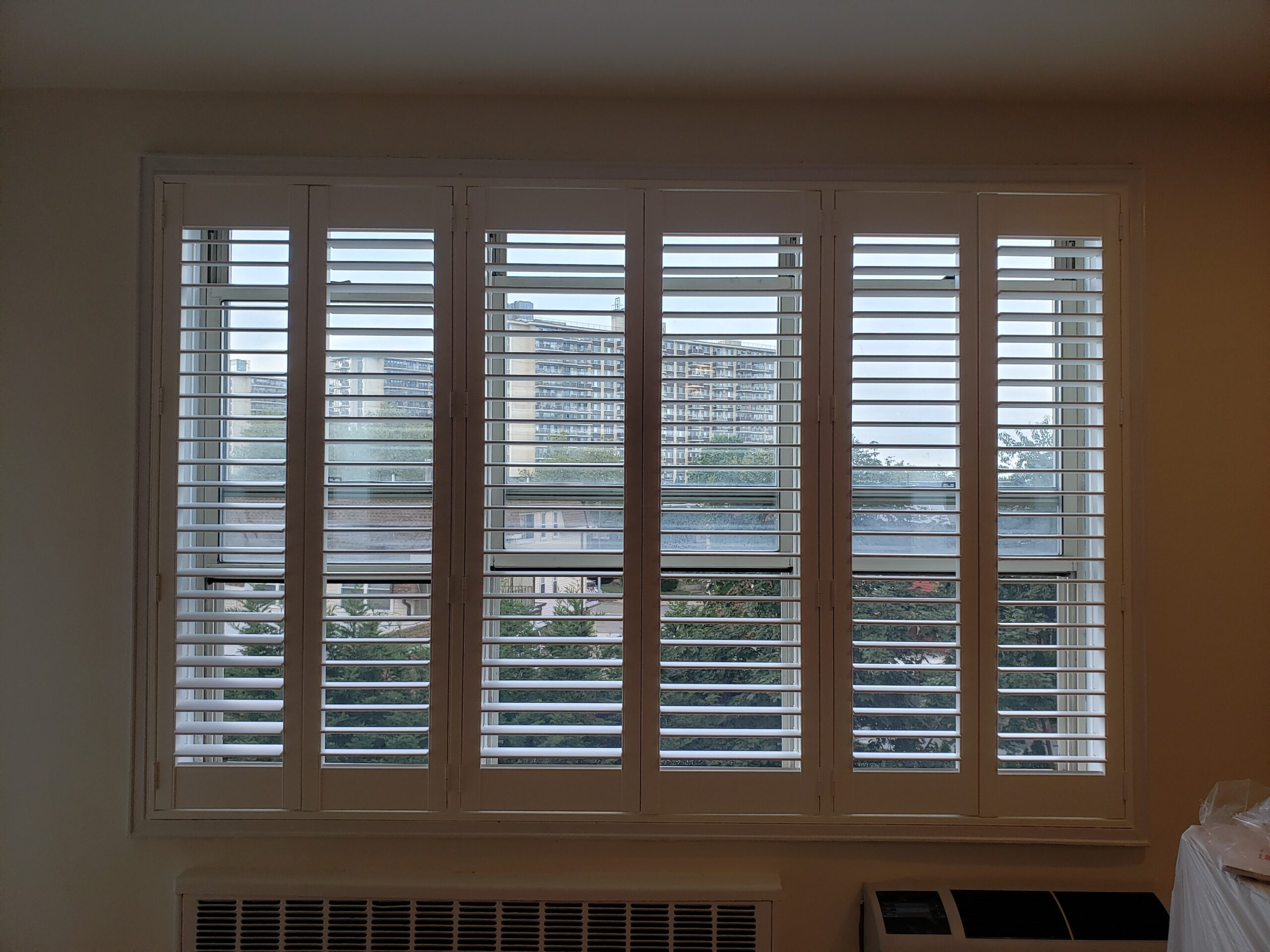
The five things we settle at the measure
Easy decisions to make at your window with a sample in your hand, and expensive ones to change once the panels are built.
Panel layout
How many panels, which way each one swings, and whether a wide opening carries a T-post down the middle. Composite panels are capped narrower than wood, so this gets settled first.
Decided at the windowDivider rail
A horizontal rail across the panel. It stiffens a tall panel, and it lets you tilt the top louvers open for light while the bottom ones stay shut.
Standard on tall panelsLouver width
We fit 2 1/2, 3 1/2 and 4 1/2 inch. Wider louvers put fewer lines across the glass and show more view when open. Closed, every width blocks the same.
A view decisionFrame and mount
Inside the opening or on the face of it, and which frame profile covers the gap you actually have. Older houses are rarely square, and the frame is what hides it.
Where old houses get trickyTilt rod
A visible rod down the front of the panel, or a hidden mechanism inside the stile. Hidden shows more of the louver; visible is traditional and easier to find in the dark.
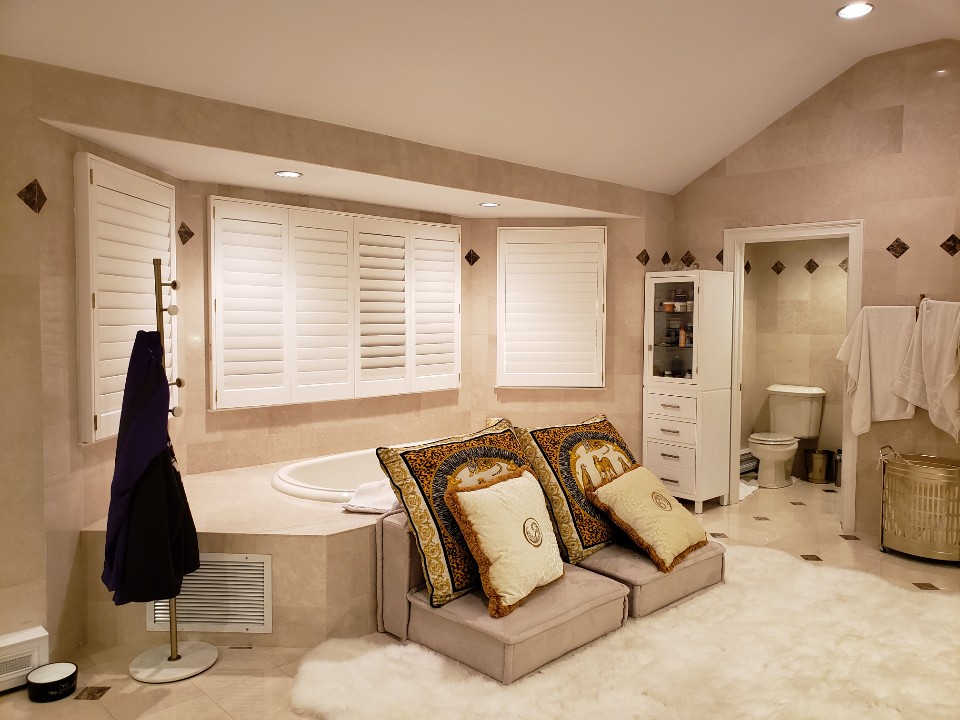
Looks, not functionComposite shutters we have installed
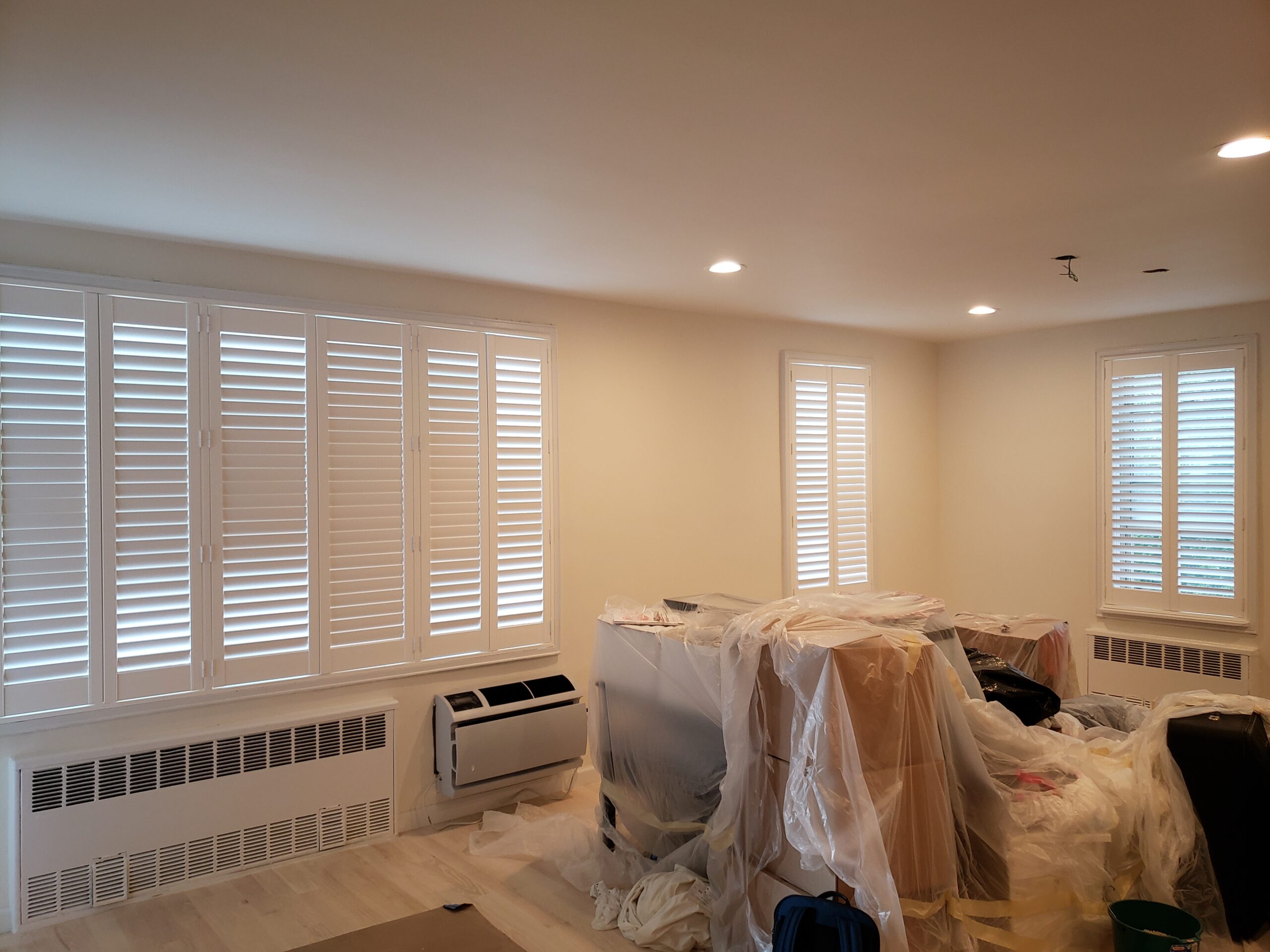
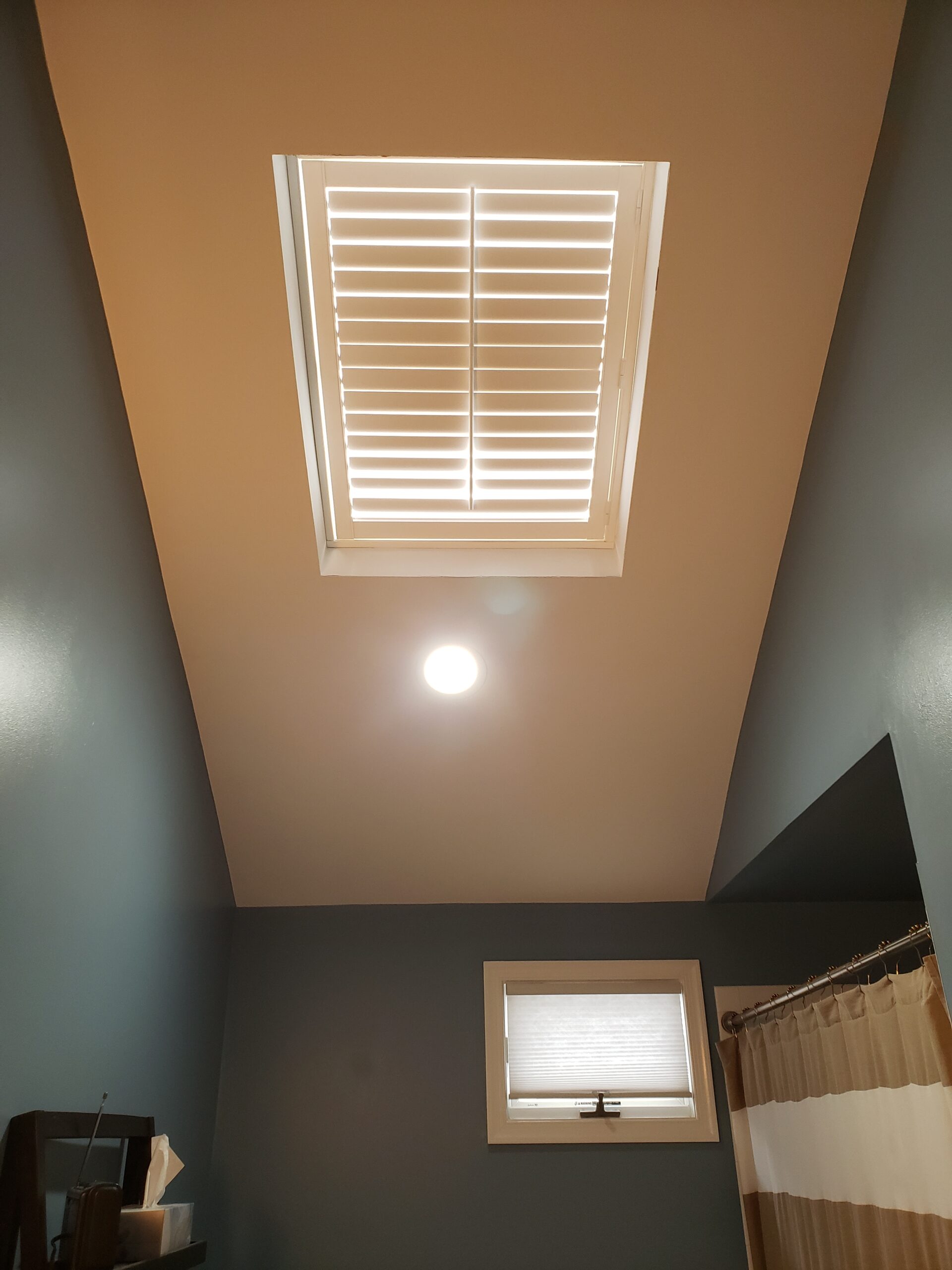
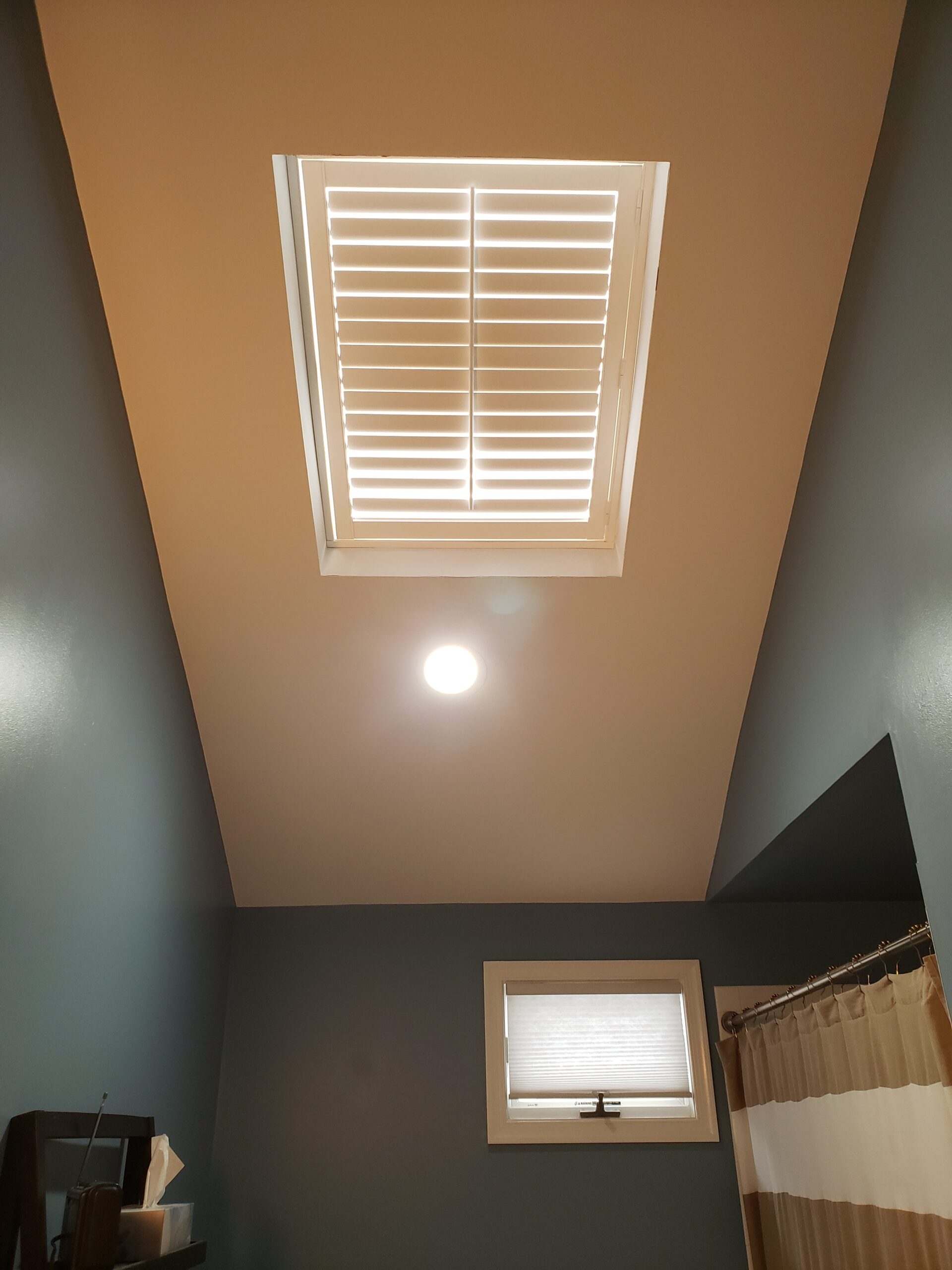
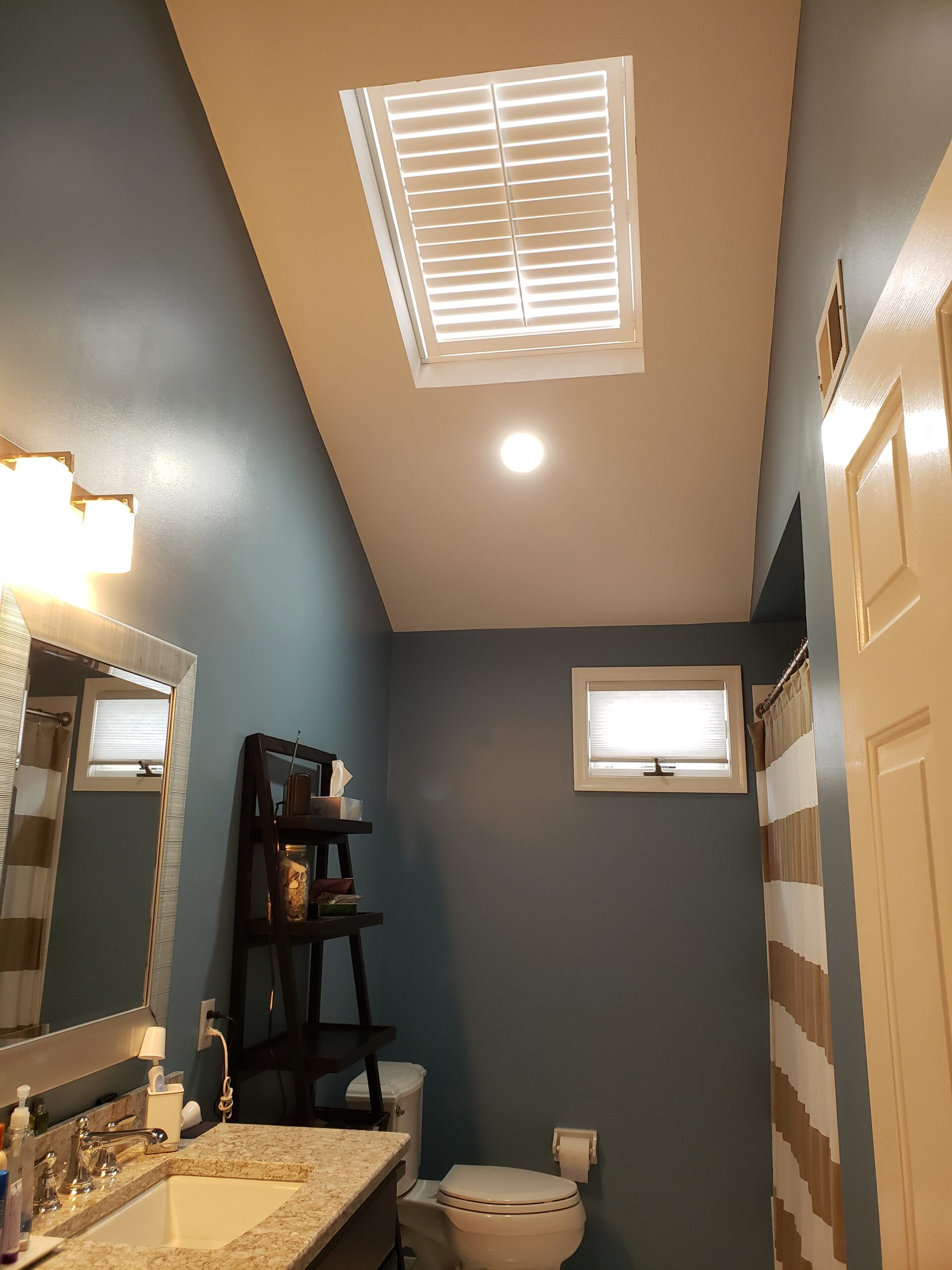
No stock photography, no showroom staging — homes and offices across Bergen County and the Tri-State.
What actually drives the price
A shutter is the most built thing we hang: a frame, panels, hinges, rails and louvers, all made to one opening and fitted to it. Shutters are priced per window, and these are the five things that move the number.
01The size of the opening
Area drives the price more than anything else, and on a composite shutter it does not climb smoothly. A composite panel is heavier than a wood one, so past a certain width the window needs another panel — another stile, another pair of hinges, more work in the shop. The price steps up at that point rather than sliding.
02Which material and line
Polysatin, faux wood and vinyl are three different products at three different prices, and within a single brand the composite line usually sits below the hardwood one. It is not a dependable saving though: a premium polysatin on a large window can pass an entry-level hardwood on a small one. Ask us to price the same window both ways when the choice is genuinely open.
03Louver width
A wider louver uses more material each but there are fewer of them per panel, so the two effects largely cancel out. The real cost effect is availability — the widest louvers are not offered across every line, so asking for 4 1/2 inch can move you into a different range without you meaning to.
04Frame, mount and hardware
A plain inside mount on a square opening is the least expensive way to hang a shutter. A divider rail, a T-post on a wide run, a hidden tilt rod, or a bi-fold stack that folds back on itself all add work before anything reaches your window.
05Shape
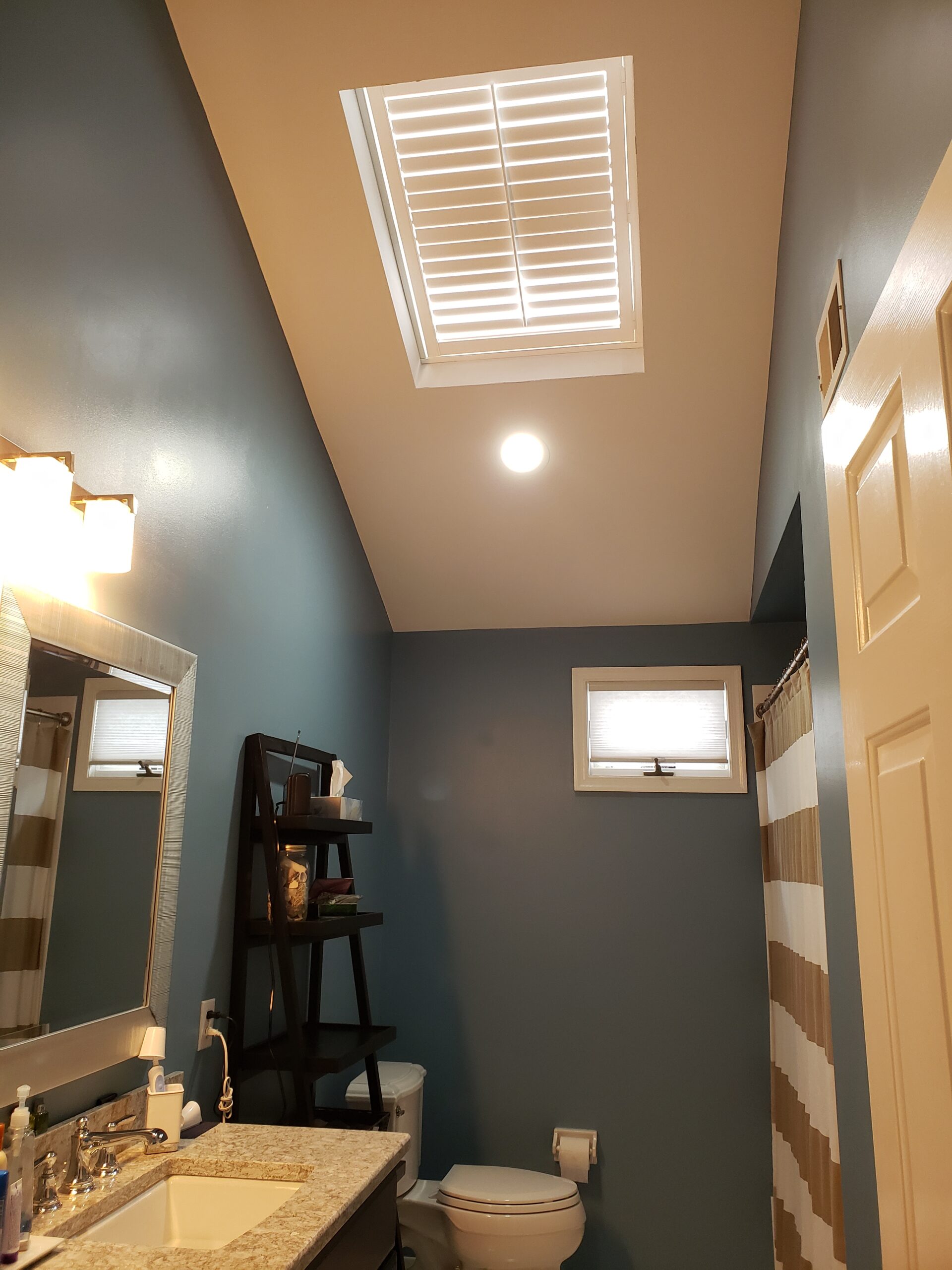
An arch, an angle over a staircase, an octagon or a circle is built to a template of the actual opening rather than cut down from a rectangle. It is the thing a shutter can do that almost nothing else can, and it is priced accordingly, because somebody has to build a curved frame that matches your curve and not a standard one.
Why we don't publish a price list. Two windows in the same room can price differently once you account for size, fabric and mount. We measure and quote every window during the free consultation, so you see the number before anything is ordered. Book one here.
Measured to installed in about two weeks
Free consultation
We come to you, so you're judging the room in the light the shade will actually live in.
Measure & design
Every window measured to the sixteenth, with a designer's eye on mount, stack and fabric.
Made for your window
Hunter Douglas or our own Korean workroom — built to your opening, never trimmed from stock.
Installed & tidy
Professionally hung, tested, and the packaging leaves with us. Usually a single visit.
Composite shutter questions we get asked
What are composite shutters?
Plantation shutters whose frames and louvers are made from a man-made material rather than timber. Three constructions get sold under the word: solid polymer, usually called polysatin; an engineered wood core inside a hard wrap, usually called faux wood or hybrid; and extruded vinyl, which is often hollow. They work exactly like wood plantation shutters — hinged panels, tilting louvers — and they are chosen for rooms where moisture or heat would eventually move a wooden panel.
What is the difference between composite and wood shutters?
Three things. Composite does not absorb moisture, so it belongs in a bathroom or over a kitchen sink where wood does not. Composite is heavier, so a panel can only be built so wide before it pulls on its hinges — a wide opening needs more panels or a divider rail. And composite comes in a short list of factory finishes, mostly whites and off-whites, while hardwood takes a custom colour and is the only one that takes a stain.
Are composite shutters waterproof?
The panel is, in the way that matters day to day — a solid polymer or sealed composite louver does not absorb water, so steam, splashes and condensation leave it alone. The assembly around it is another question. The frame is fixed to your window casing, and that casing is usually painted wood or drywall, so standing water on a sill is still a problem for the sill. Composite takes the shutter off the list of things that fail in a wet room; it does not waterproof the room.
Are polysatin shutters and vinyl shutters the same thing?
No, though they are often sold as if they were. Polysatin is molded solid, so a louver is the same material in the middle as on the surface. Vinyl is extruded, which usually leaves hollow chambers inside the stiles and louvers, and the better vinyl panels use an aluminum insert in the stile to stop them flexing. Solid is more rigid and holds a wide panel better; hollow is lighter and cheaper. Ask which one you are being quoted.
Can composite shutters be painted or stained to match my trim?
Not really, and it is the honest limit of the material. The colour is either the compound itself or a finish bonded to it in the factory, which is why there is no painted film to chip or yellow, and also why it cannot be your own colour. Expect a set of whites, off-whites and a few neutrals. A stain is not possible at all, because there is no grain underneath to show through. If the colour has to match something specific, that is a hardwood decision.
Are composite shutters a good choice for a bathroom?
A composite shutter is the first thing we would suggest for a bathroom window, and not because of how it looks. Steam and condensation do nothing to the panel, the surface wipes clean, and tilting louvers vent the room to the air without opening it to the street — which a fabric shade cannot do. The one place to be careful is a window inside the wet zone of a shower, where water hits the frame directly. Tell us where the water actually goes and we will give you a straight answer.
How wide can a composite shutter panel be?
Narrower than the same panel in hardwood, because the extra weight hangs on the hinges. The exact limit depends on the line and the height, so it gets measured rather than quoted from a chart. In practice a wide window takes more panels in composite than in wood, and each panel puts another vertical stile in front of the glass. On a tall panel we add a divider rail, which stiffens it and lets the top and bottom louvers tilt independently.
How long do composite shutters take?
Usually about two weeks from approval to installation. Specialty shapes — arches and angled openings — take longer, because the frame is built to a template of the real opening. We tell you the timeline before you order, not after.
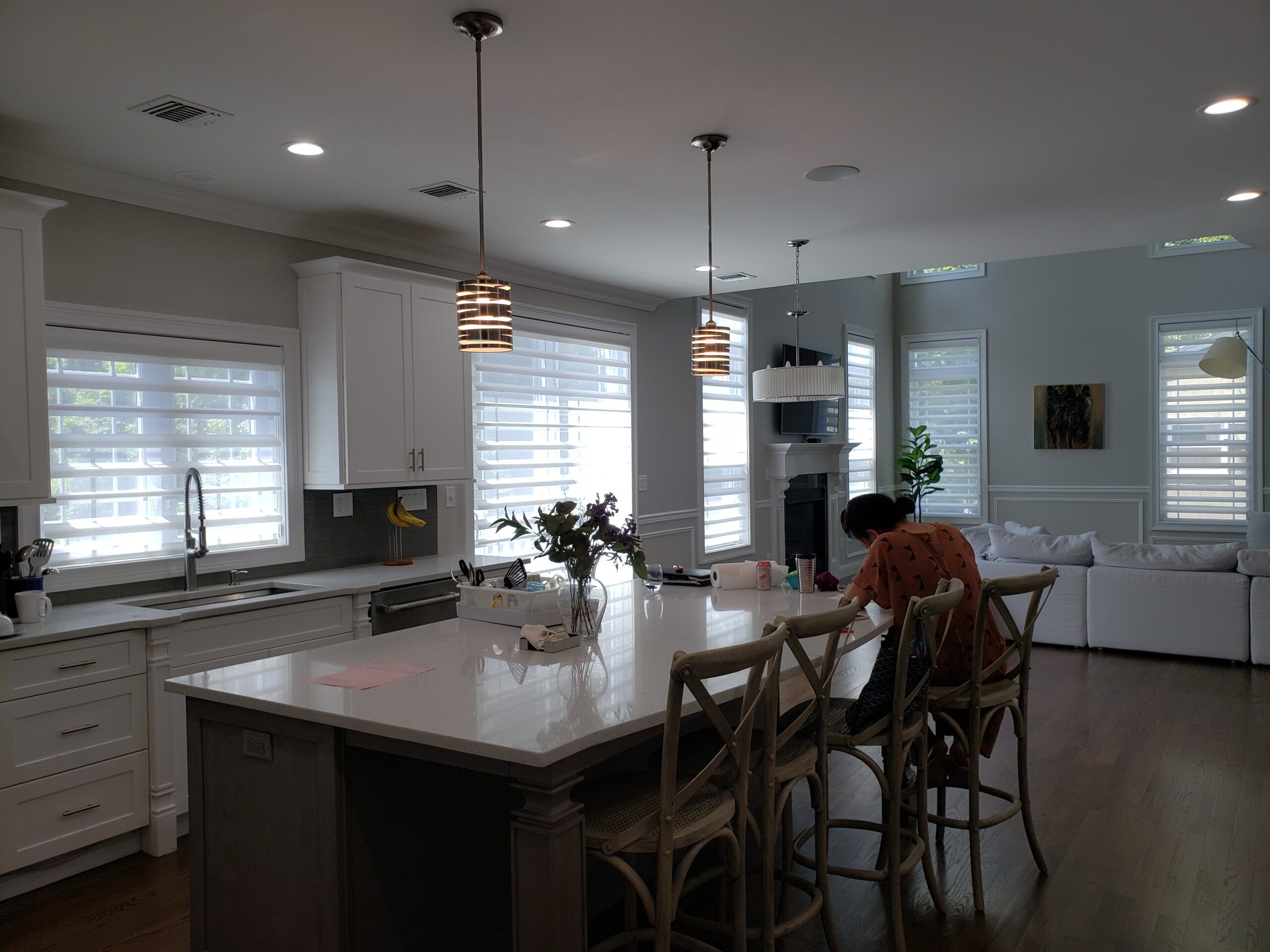 ShadesRoller, solar, zebra, cellular and more
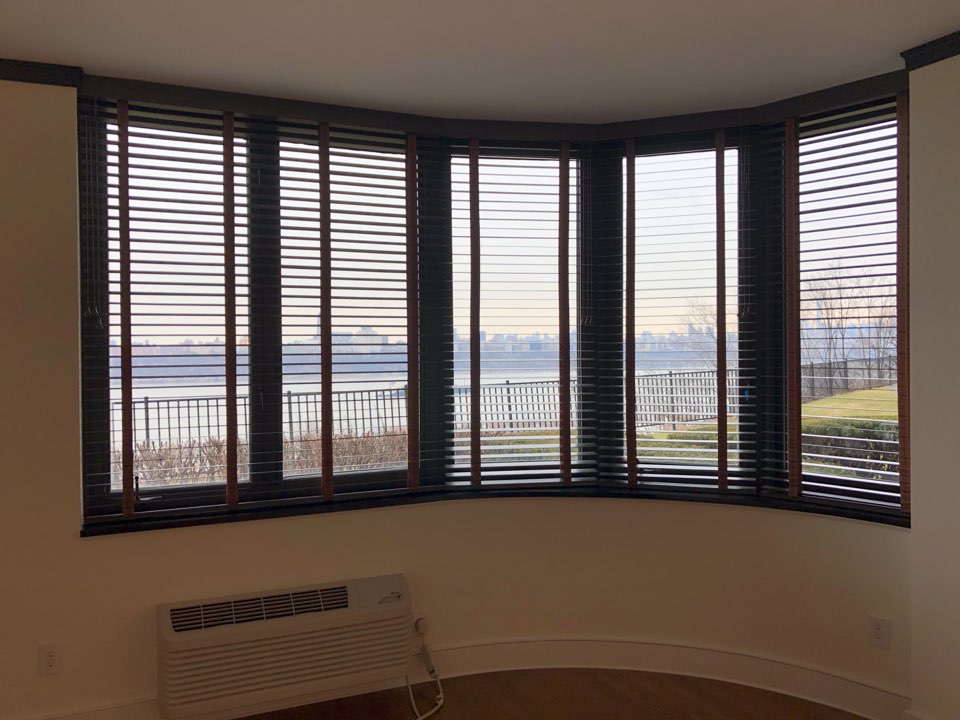 BlindsWood, faux wood and vertical
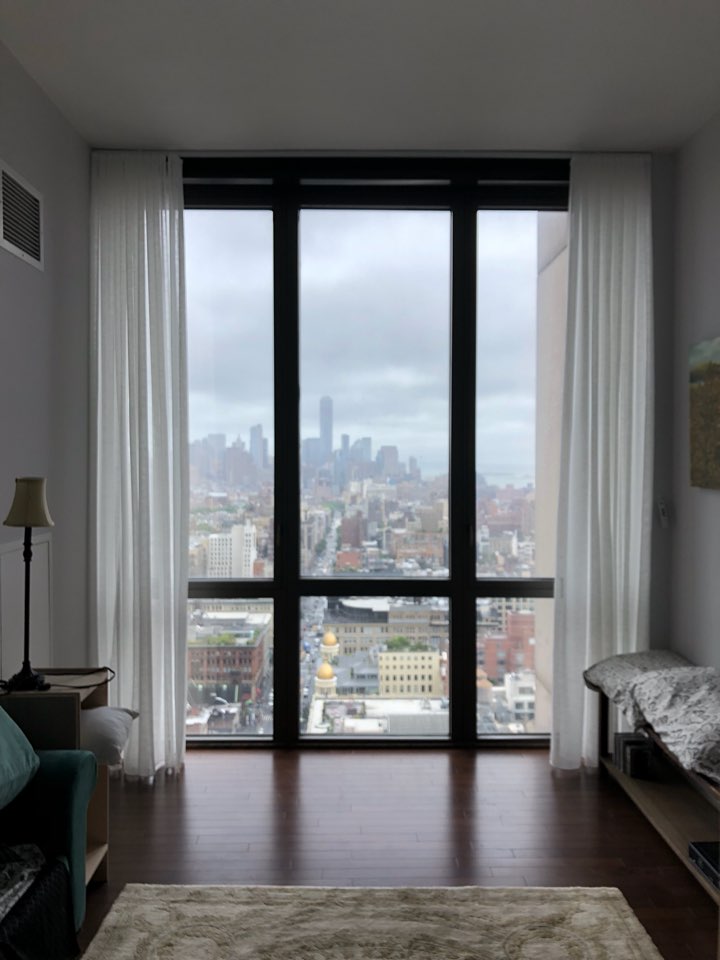 Drapery & CurtainsFabric, fullness and a proper track
4.9 across 314 Google reviews
“I am very pleased with my shades and they look terrific. They were very patient explaining how to operate my new electric shades, and set up my phone so I can control them. A very pleasant experience.”
★★★★★ 3 weeks ago
“They always make such good recommendations, are considerate of my timeline, come up with creative solutions to tricky situations, produce beautiful products, and consistently provide super smooth installation and thorough cleanup afterwards. Their service is top-notch, yet their price is very competitive.”
★★★★★ a year ago
“There is a reason why this place is five stars. Jay listens to what you need, goes out of his way to help you make the right decision for your home and is absolutely competitive and fair on pricing. We got quotes with Blinds to Go, 3 Day Blinds and The Curtain, and what set The Curtain apart was the quality of the products and working with him.”
★★★★★ a year ago
Visit the showroom
Prefer to see things in person before we come to you? We're on Broad Avenue in Palisades Park, a few minutes from Fort Lee and the GWB.
- 547 Broad AvenuePalisades Park, NJ 07650
- Mon–Fri 10–7 · Sat 10–5Closed Sunday
- (201) 302-9111We usually pick up on the first ring