Motorized & Smart Shades
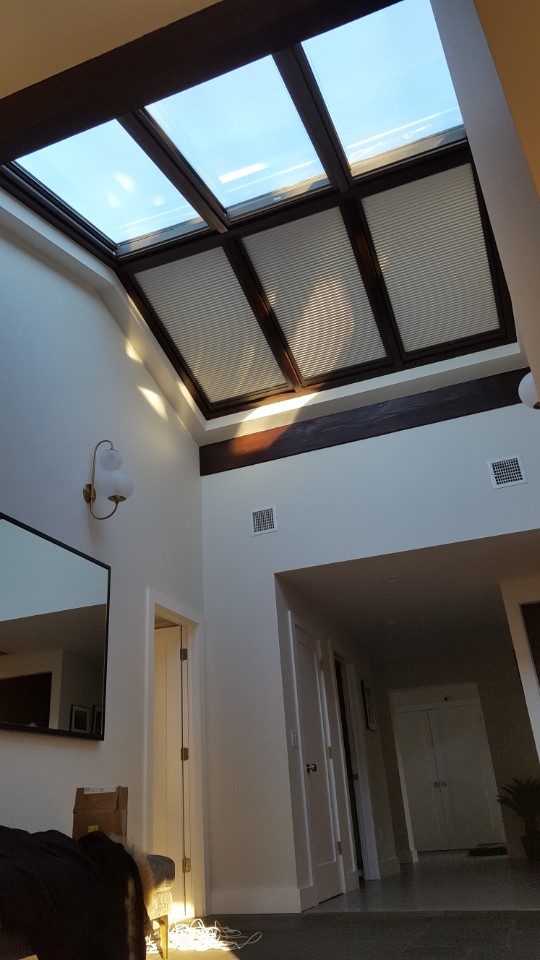
Motorized blinds earn their cost on the windows you would otherwise never touch — behind the sofa, above the stairs, the west glass that needs to come down at three in the afternoon when nobody is home. On a window you can reach and remember, a chain costs less and outlasts any motor.
 ★★★★★ 4.9 · 314 reviews (314)
 Partner
~2 weeks to install~2 wks
Partner
~2 weeks to install~2 wks
How motorized blinds actually work
There is less to this than the word smart suggests. A small motor lives inside the tube the fabric rolls on. The rest is how it gets power and how it is told to move.
On a roller, a solar screen or a zebra shade the motor sits inside the tube. On a cellular or a roman it sits in the headrail. Either way nothing hangs beside the window — it is the same shade with the chain missing.
The remote does not talk to the internet. It talks to the motor over short-range radio, so the shade keeps working when the wifi is down and when the hub is unplugged. The network layer sits on top, and it is optional.
Worth hearing before you buy eight of them: motors are quiet, not silent. There is a low hum for the few seconds a shade travels. With a television on you will not notice. In a bedroom at six in the morning, one person notices and the other does not.
- Nothing hanging. No cord, no chain, no wand. The main reason motorization goes into houses with young children.
- The same two stops, every time. Limits are programmed at install, so a row of windows reads as one line rather than five near-misses.
- One shade, a room, or a floor. A group is one button rather than a sequence.
- Radio first, network second. The shade answers the remote whether or not the house is online.
Battery or hardwired: the choice you make once
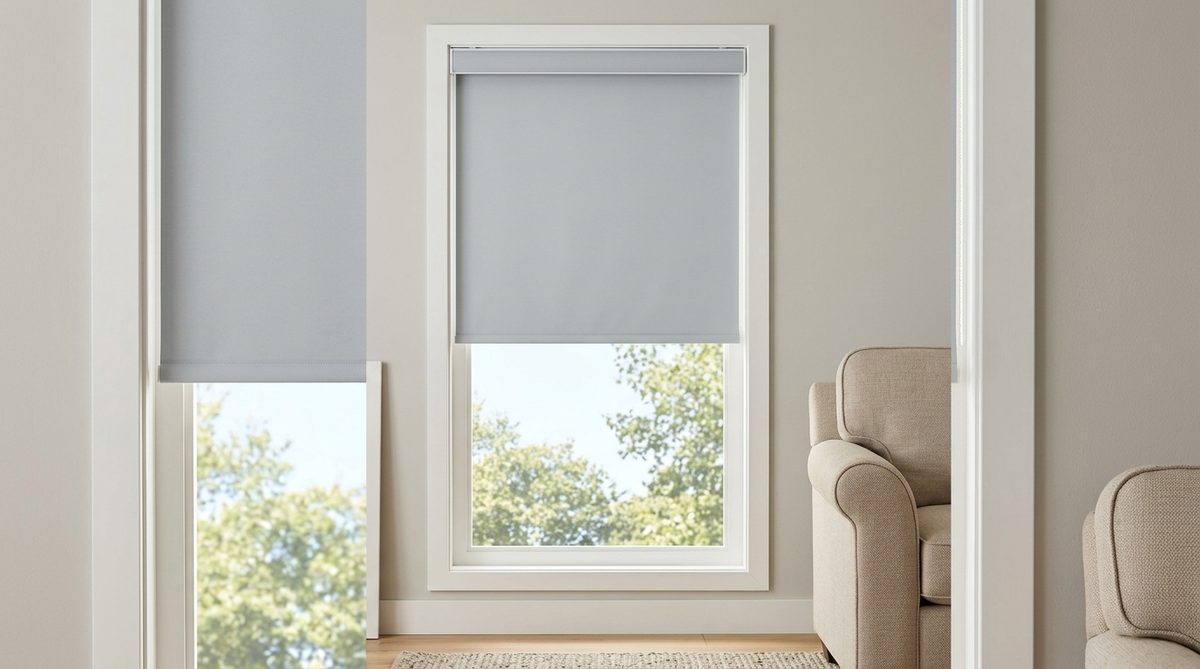
Almost everything else here can be changed later — fabric, scenes, extra remotes, the shade itself. How the motor gets power is settled on install day.
Rechargeable battery: the default, and the chore
A slim rechargeable pack clips into the headrail or sits in a wand behind the shade. No wall is opened and no cable is run, so a finished room stays finished. It is the usual answer in a house that is already finished.
The cost is a recurring job. Every so often the pack comes down, charges from a socket and goes back up. How often depends on the size and weight of the shade and how many times a day it moves. Eight motorized shades means eight packs on a rolling schedule, and that is the part people underestimate.
Best for finished rooms, and any window where running power is not worth the disruption.
Plug-in: wired behaviour without the wall
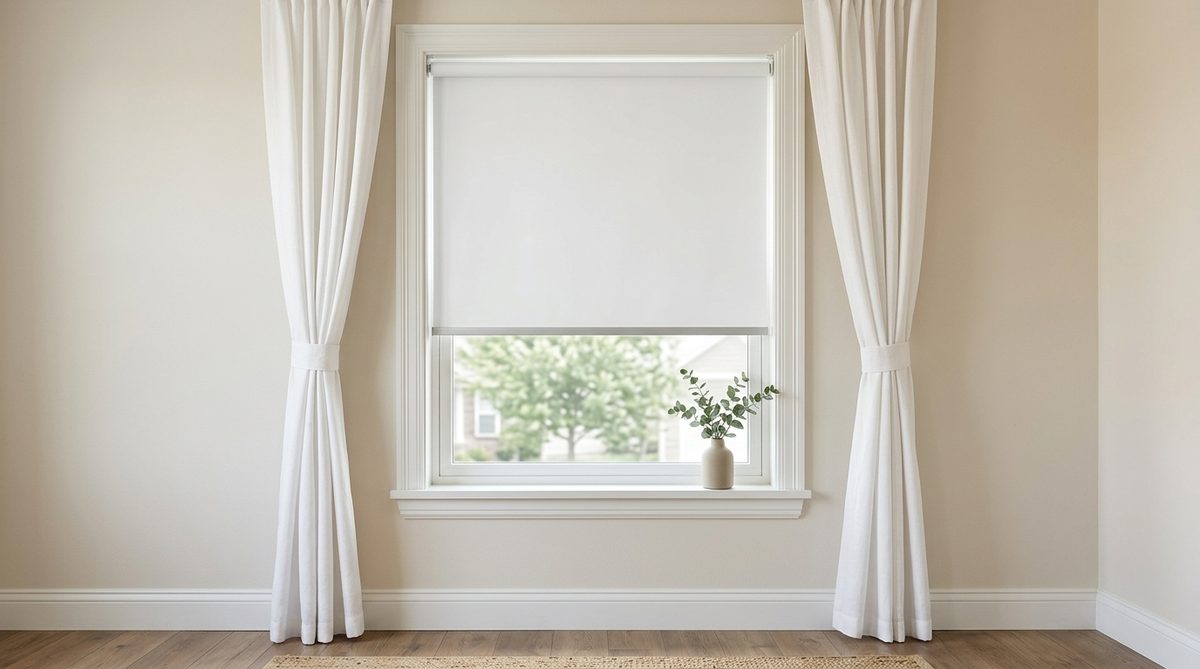
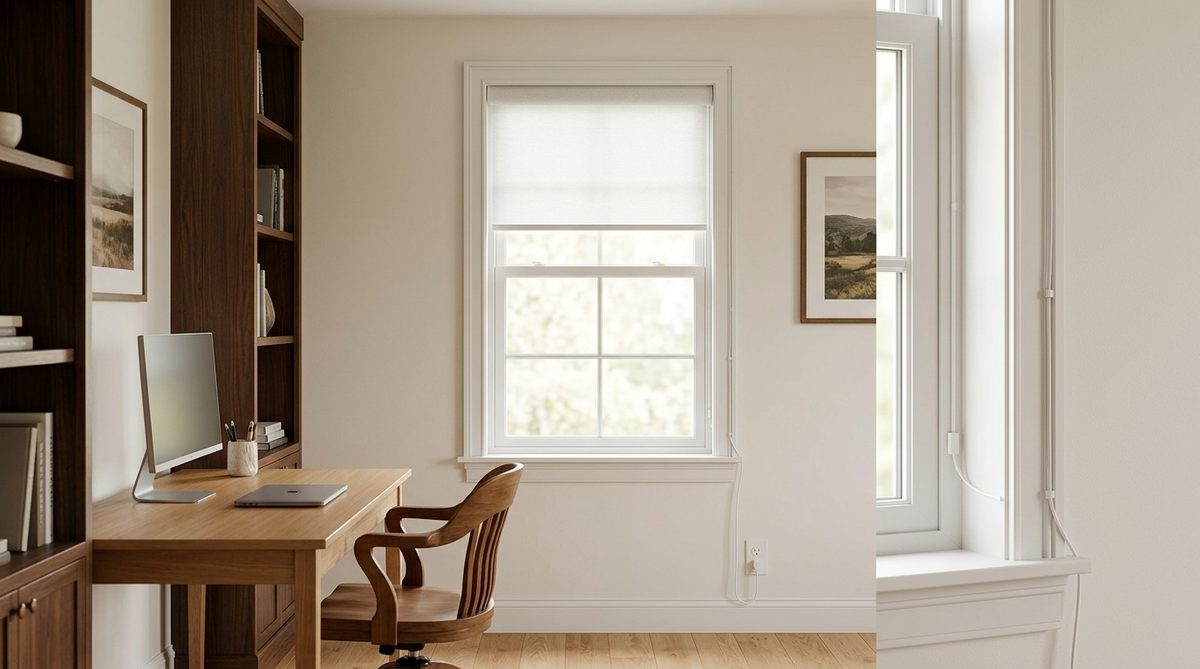
A low-voltage transformer plugs into a nearby outlet and a thin cable runs up to the shade. Electrically it behaves like a hardwired shade, with nothing to charge and nothing to take down, and no electrician is involved.
The catch is visible. If the outlet sits below the window where furniture will cover it, nobody will see the cable. If it does not, you will look at it every day. Good in an office, poor on a picture window.
Best for home offices, media rooms, windows with an outlet already hidden underneath.
Hardwired: the right answer at the wrong time
Power run inside the wall to the head of the window is the version with no compromises left in it. Nothing to charge, nothing to see, and shades still behaving the same way in ten years. If you are building or gutting the room, take it.
In a finished room the arithmetic changes: opening a wall, an electrician, patching and repainting. The cost is the route rather than the length of the run: a window with an attic above it is straightforward, the same window under a finished ceiling is not. Batteries usually beat plaster work.
Best for new construction, gut renovations, and tall glazing nobody wants to reach again.
Solar: for windows that get the sun anyway
A small panel on the glass or the frame keeps the battery topped up, so recharging becomes something you stop thinking about. It only works where the window gets real direct sun for part of the day, and that is fewer windows than people assume: north-facing glass, glass shaded by a neighbouring building and windows under a deep overhang will not keep a panel fed.
Best for south and west windows that already take strong sun, especially awkward ones.
Remote control blinds, app control and voice
These are not alternatives. Most houses use two or three, and the one used daily is rarely the one people were most excited about.
Handheld remote
The control that actually gets picked up. Holds individual shades and groups, works with nothing else in the house online, and lives on the arm of a chair.
On every installWall control
A remote in a bracket, or a flat scene switch beside the light switches. Gives the shades an obvious home so guests can find them.
Living rooms & kitchensPhone app
Where scenes and schedules get built. Good for setting up and for checking the house from elsewhere, clumsy as the thing you grab when the sun is in your eyes.
Setup & away from homeSchedules & sun
Shades that drop before the afternoon sun swings round and lift again at dusk, on sunrise and sunset rather than clock times.
West-facing glassVoice
Alexa, Google Assistant or Apple Home, once a gateway is on the network. Reliable for a named scene, fiddly for anything needing a specific percentage.
Needs a gatewayWhat makes a shade smart, and what does not
A motor makes a shade automatic. What makes it smart is a small box connecting it to the rest of the house, and it is worth knowing what that box does.
On its own, a motorized shade is a shade with a remote. Add a gateway — a hub that sits on your network and speaks radio to the motors — and the shades become something your phone, your voice assistant and the rest of your smart home can reach. Hunter Douglas calls their system PowerView, and it is the one we fit.
What the gateway buys is scenes and schedules. A scene is a set of positions with a name on it: the living room all to one height, the bedrooms at a third, the kitchen fully up. Tie the schedule to sunrise and sunset rather than a clock time, because six in the evening is right in April and wrong in December.
The honest limit: the gateway is one more device on your network that has to stay plugged in and will occasionally want updating. The shades themselves do not care and still answer the remote. It is the schedules and the voice control that stop until it is back.
- PowerView. The Hunter Douglas automation system, and the one we install, program and hand over working.
- One gateway, not one per shade. The hub covers the house. Range is the thing to check on a long floor plan, not quantity.
- Scenes beat individual control. Three good scenes get used daily. Eleven get scrolled past.
- The remote is the fallback. If the network is down the shades still move. Only the automation waits.
Which blinds and shades are worth automating
Nearly everything we make can be motorized. The useful question is which ones are noticeably better for it, because the gap between the best case and the marginal one is wide.
Roller, solar and zebra shades: the easiest case
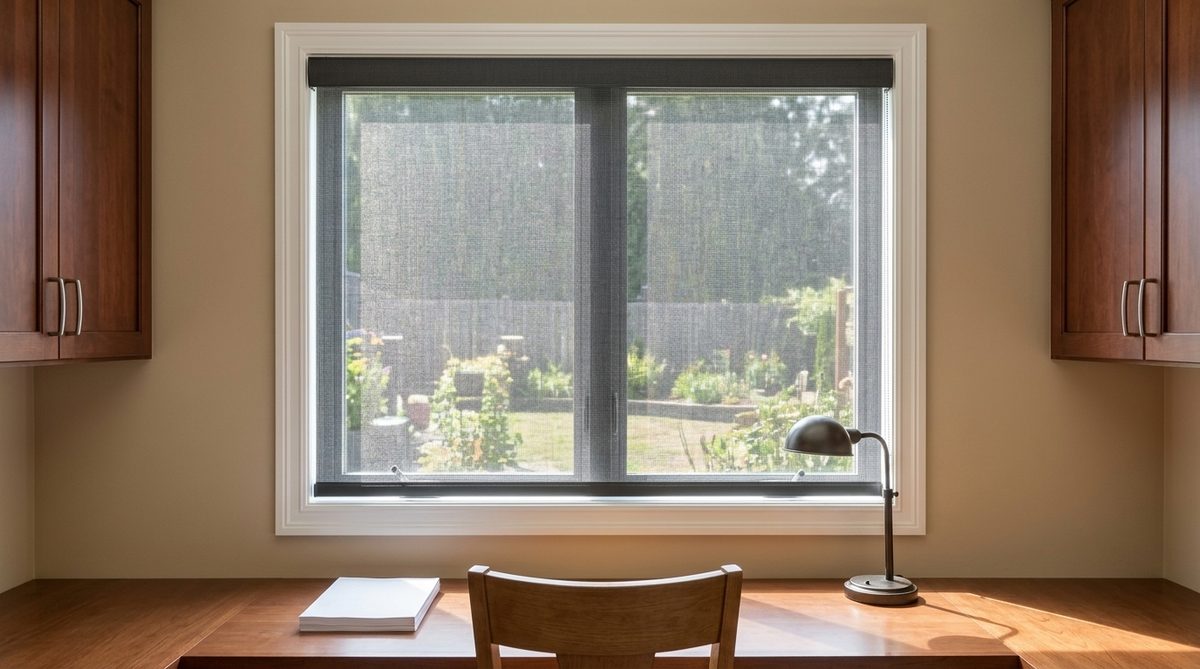
A roller is a tube, and a tube motor was designed for exactly this, so nothing about the shade changes visually — the chain is simply not there. Solar screens get the most out of it of anything on this page: their job is tied to the time of day, and a screen left up while the sun is on the glass is doing nothing at all.
Best for anything on a roller, and every solar screen on west or south glass.
Cellular and honeycomb: the biggest practical gain
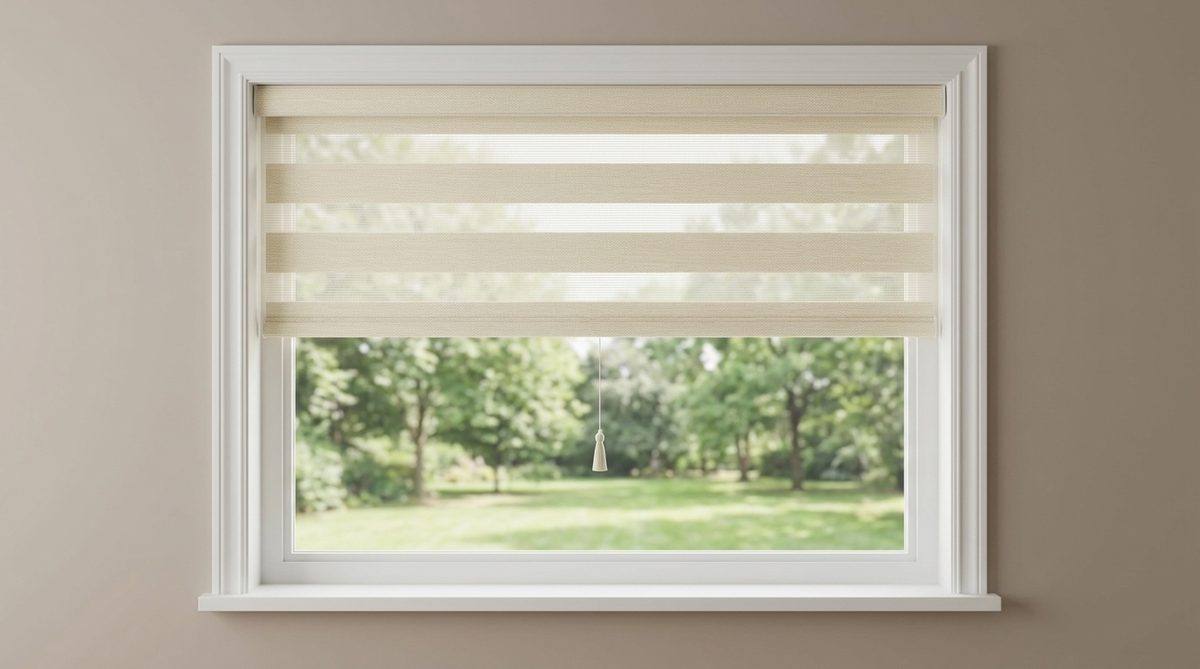
Cellular shades stack into very little, so they end up on tall windows, awkward windows and skylights — exactly where a cord is least useful and a chair is most often involved. Top-down bottom-up is the standout: running two rails by hand is a real nuisance, most people stop bothering after a month, and the feature they paid for goes unused.
Best for tall glass, skylights, top-down bottom-up, and whole-house installs.
Roman shades and drapery: heavier, and it shows
A roman lifts fabric that folds and gathers, so the motor works harder than on a roller. It works well, but the motor is sized up for the weight and a battery pack will not go as far between charges — on a heavy lined roman, plug-in or hardwired power deserves a longer look. Drapery is a different mechanism again: a track motor pulls the panels along the rod rather than lifting anything.
Best for formal rooms, wide drapery runs, and anything heavy enough that opening it is a chore.
Blinds and shutters: tilt as well as lift
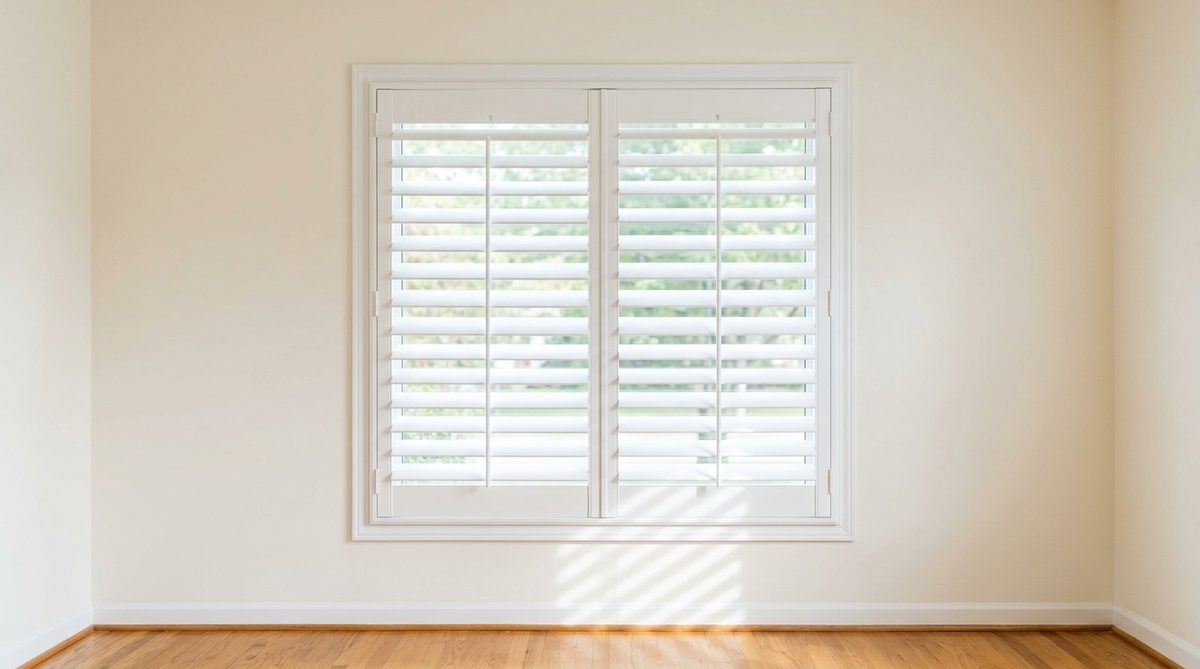
Horizontal blinds have two movements and motorization can handle either or both. Tilting the slats is what matters on most days and it is the simpler half, so deciding you only need tilt is a legitimate way to spend less. Shutters can be motorized for tilt too, which sounds like a novelty until you meet one above a stairwell.
Best for wide blinds, unreachable shutters, and rooms where tilt matters more than lift.
Can you motorize the blinds you already own?
The most common question we get on this, and the answer is not the one people want. Here it is plainly rather than buried in a footnote.
Technically, sometimes. Practically it is usually not worth doing, and we will normally talk you out of it.
A tube motor is not an accessory that clips onto a shade you own. It replaces the inside of the roller — a new tube sized to the motor, new brackets, often a new headrail, and your fabric moved across. By then you have paid for most of a new shade and you still have fabric that has been in the sun for years, in a colour that has quietly drifted from the one you chose.
The clamp-on devices that drive an existing chain are a different product with a different problem. They work, in the sense that the shade moves. They also sit beside the window as a visible box with its own battery, and they are slower and louder than a tube motor. If the goal is to stop climbing on a chair, one will do it. If the goal is what you saw in a showroom, it will not.
- Cost lands near a new shade. Tube, brackets, headrail and labour add up to most of the price of the thing you were trying not to buy.
- The fabric is still the old fabric. Sun does not skip the parts of a shade you happen to like.
- Chain add-ons are visible and audible. A box on the wall, a battery to charge, a noise you did not have before.
- When it is worth it. Large, recent, good condition, and a fabric you would still choose today.
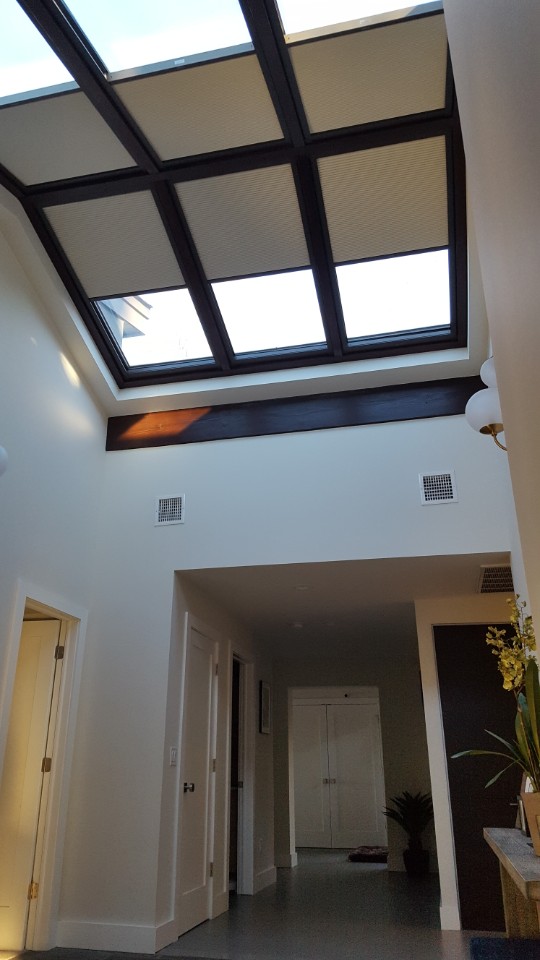
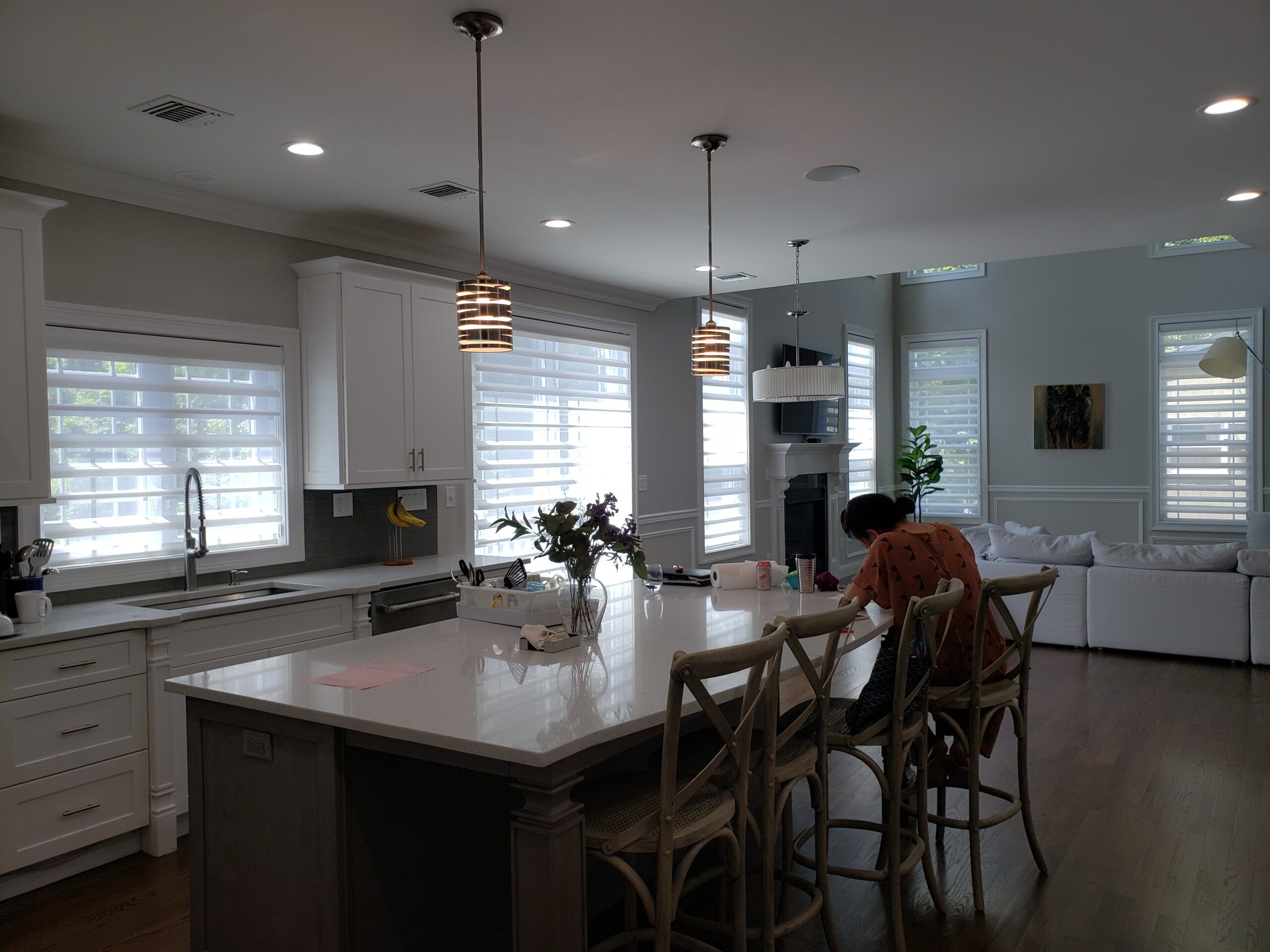
Motorized shades we have installed
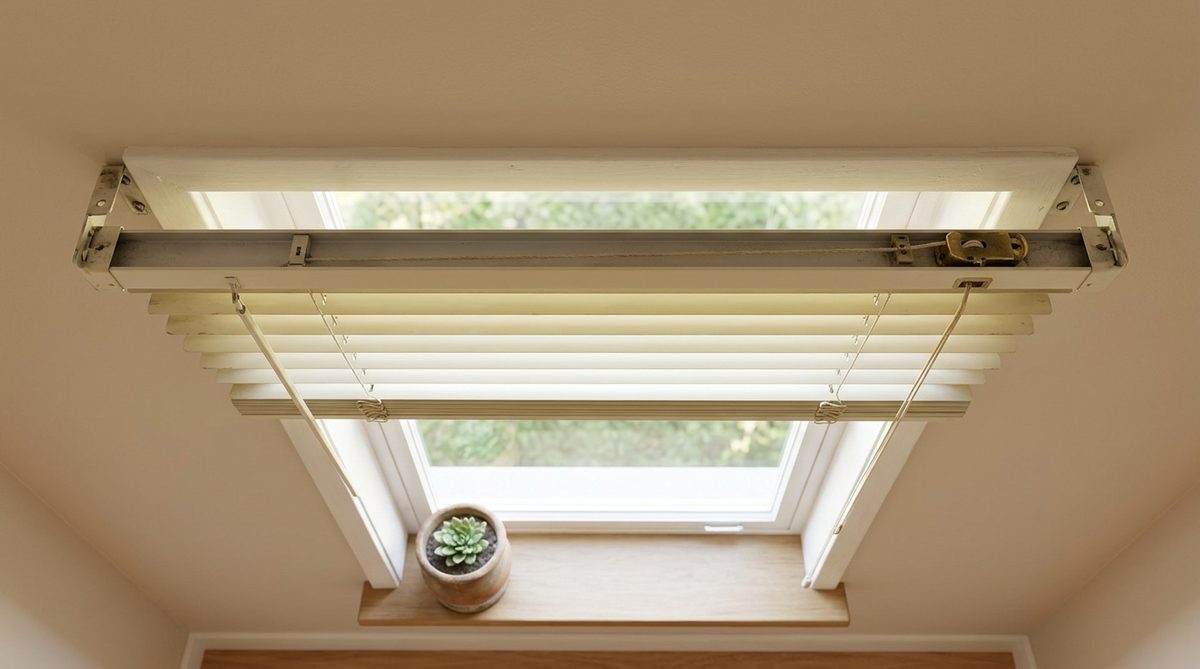
No stock photography, no showroom staging — homes and offices across Bergen County and the Tri-State.
What actually drives the price
Motorization is priced per shade, on top of the shade itself. There is no central system to buy into, and with one exception nothing gets cheaper per window as you add more.
01A motor in every shade
There is no central motor running the house. Every shade that moves has its own, so cost scales with how many windows you automate rather than with the size of the system. The upside is flexibility: automate four windows now and four next year, and the second four cost about what the first four did.
02How the shade is powered
A rechargeable battery is the least expensive way in, and the one with a recurring chore attached. A plug-in transformer costs a little more and removes the chore. Hardwiring costs the most, and the cost is the wiring work rather than the parts — far cheaper while a wall is open, far dearer once it is painted.
03The size and weight of the shade
A motor is sized to what it has to lift. A small roller and a wide blackout shade on tall glass do not take the same motor, and heavy fabrics — lined romans, blackout, drapery on a track — step up sooner than people expect. The same jump you see in the price of the shade itself.
04How you control them
Every install needs at least one way to talk to it, and a handheld remote is the simplest. Wall controls, extra remotes and the gateway that puts the shades on your network are each their own line. The gateway is the exception to the per-shade rule: one per house, so app and voice control get relatively cheaper the more shades are on it.
05Wiring and access
When power has to be run, the cost is the route rather than the distance. A window with an accessible attic above it is straightforward; the same window under a finished ceiling is a different job. We look at that during the consultation and tell you which one you have.
Why we don't publish a price list. Two windows in the same room can price differently once you account for size, fabric and mount. We measure and quote every window during the free consultation, so you see the number before anything is ordered. Book one here.
Measured to installed in about two weeks
Free consultation
We come to you, so you're judging the room in the light the shade will actually live in.
Measure & design
Every window measured to the sixteenth, with a designer's eye on mount, stack and fabric.
Made for your window
Hunter Douglas or our own Korean workroom — built to your opening, never trimmed from stock.
Installed & tidy
Professionally hung, tested, and the packaging leaves with us. Usually a single visit.
Motorized blind questions we get asked
What is the difference between motorized blinds and smart shades?
A motorized blind has a motor and a remote. A smart shade is that same shade connected to your network through a gateway, which adds app control, voice control, scenes and schedules. Every smart shade is motorized; not every motorized shade is smart, and plenty of people stop happily at the remote.
How much do motorized blinds cost?
Priced per shade, on top of the shade itself, so it scales with how many windows you automate. The power method, the size and weight of the shade, the controls you choose and any wiring work are what move the number. The gateway is one per house, not one per shade. We measure and quote every window during the free consultation, so you see the number before anything is ordered.
Should I choose battery or hardwired motorized shades?
If the room is finished, choose a rechargeable battery — hardwiring then means opening a wall, an electrician and repainting, and it rarely pays for itself. If the house is being built or gutted, hardwire everything you can: the wiring is nearly free while the wall is open, and the recharging chore goes for good. A plug-in transformer sits between the two.
How often do motorized shade batteries need recharging?
Months rather than weeks for most shades, though it varies more than any single number suggests. A small light shade moved once a day goes a long way between charges; a wide heavy blackout shade on tall glass moved twice a day does not. Plan for all of them rather than one: eight motorized shades means eight packs on a rolling schedule. A solar charging panel removes the job where a window gets real direct sun.
Can I control motorized shades with my phone, Alexa or Google?
Yes, once a gateway is on your home network. It is a small hub that speaks radio to the shades and connects them to your wifi, which is what makes the app, scenes, schedules and voice assistants possible. Hunter Douglas PowerView is the system we fit. Without a gateway the shades still work from a remote — you just do not get the app and voice side.
Can you motorize blinds I already own?
Usually it is not worth it, and we will normally say so. A tube motor replaces the inside of the roller — new tube, new brackets, often a new headrail, your old fabric moved across — which adds up to most of the price of a new shade while leaving you fabric that has been in the sun for years. Clamp-on devices that drive an existing chain do work, but they sit beside the window as a visible box with its own battery, and they are slower and louder.
Do motorized blinds make noise?
Yes, a little. A good motor is quiet rather than silent — a low hum for the few seconds the shade travels. In a living room with anything else going on you will not notice. In a bedroom on a sunrise schedule it is worth a thought, and it is why some people set those shades to open later than the rest.
What happens if the power or the internet goes out?
Battery-powered shades are unaffected by a power cut and keep working from the remote; hardwired shades stop until the power is back. Losing the internet is a smaller problem — remotes and wall controls talk to the motors over radio, not through your router, so the shades still move on demand. Only the schedules, the app and the voice control pause.
Shades we motorize most often
 ShadesRoller, solar, zebra, cellular and more
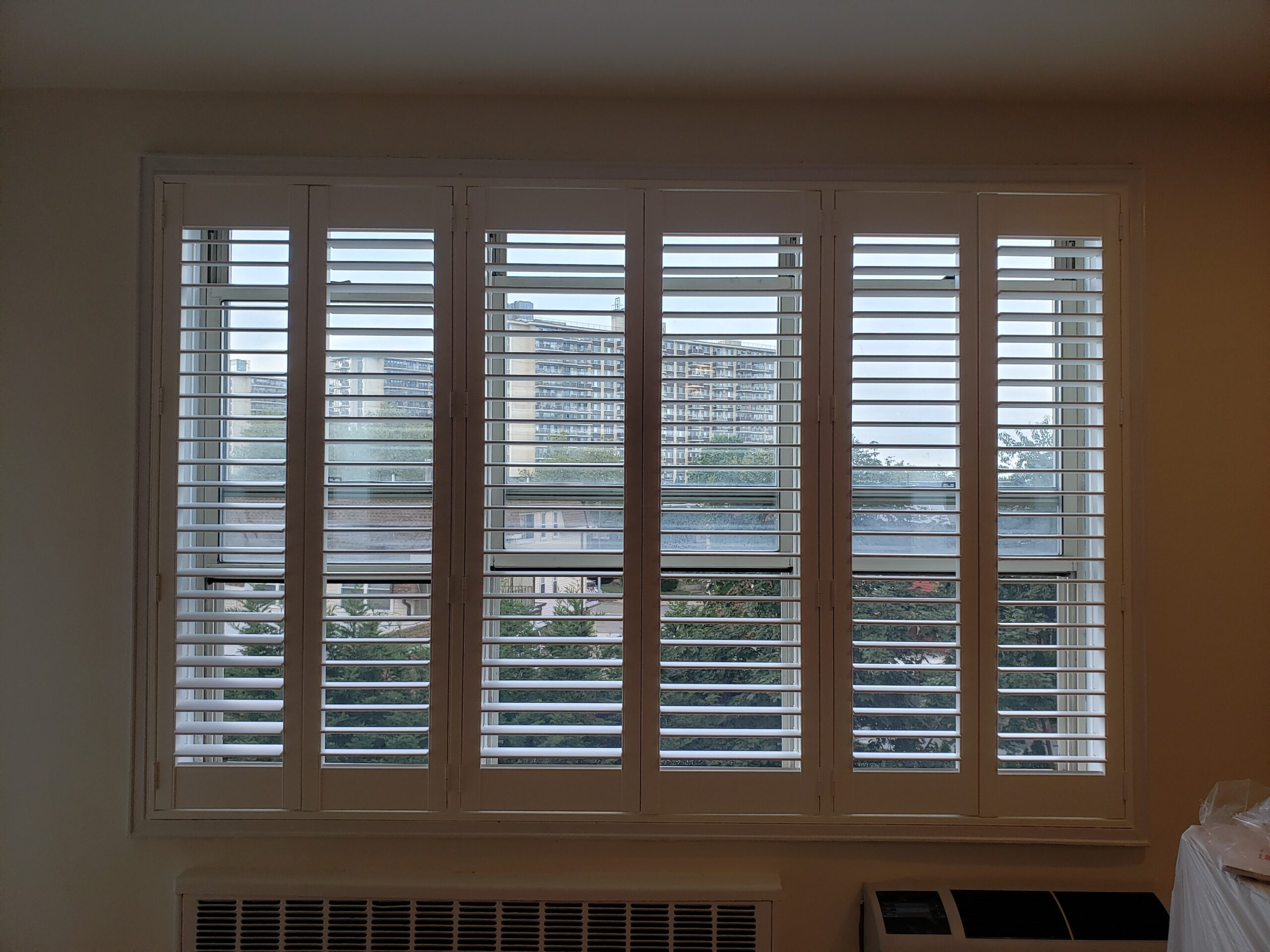 Plantation ShuttersBuilt into the frame, never raised
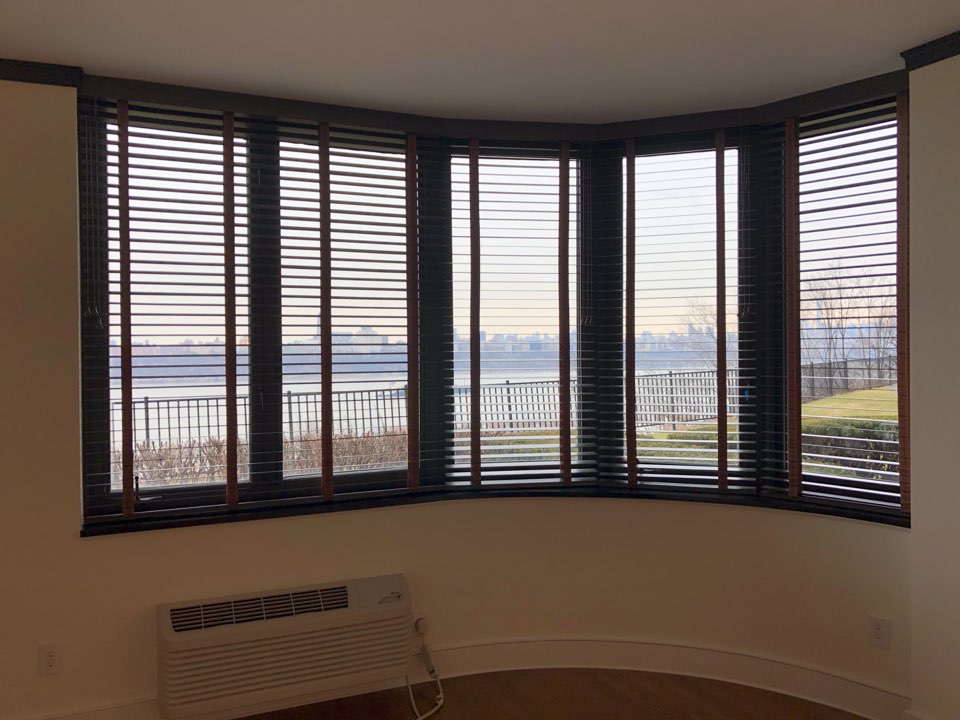 BlindsWood, faux wood and vertical
 Drapery & CurtainsFabric, fullness and a proper track
4.9 across 314 Google reviews
“I got motorized shades, both light filtering and blackout, and they were able not only to come to my house to take measurements and provide a consultation but deliver and install the shades within a week. The prices were competitive and the end result was beautiful and of high quality.”
★★★★★ a year ago
“We got quotes with Blinds to Go, 3 Day Blinds and The Curtain. What really set The Curtain apart was the quality of Jay's products and working with him. Jay must have come to our house between four and six times, as we went back and forth on zebra shades or roller shades. Shades arrived within two weeks and installation took under two hours.”
★★★★★ a year ago
“I have worked with The Curtain for many years now, and they have never failed to provide professional and exceptional service, whether it be a simple roller shades installation or a more elaborate and tricky golf room curtain installation. They provide quotes right there and then, unlike other vendors who take days if not weeks.”
★★★★★ a year ago
Visit the showroom
Prefer to see things in person before we come to you? We're on Broad Avenue in Palisades Park, a few minutes from Fort Lee and the GWB.
- 545 Broad AvenuePalisades Park, NJ 07650
- Mon–Fri 10–7 · Sat 10–5Closed Sunday
- (201) 302-9111We usually pick up on the first ring