Window Treatment Installation
A made-to-measure shade is only ever as good as the measurement it was built from and the wall it lands on. We measure every window ourselves, install what we make, and the packaging leaves with us.
 ★★★★★ 4.9 · 314 reviews (314)
 Partner
Usually a single visitOne visit
Partner
Usually a single visitOne visit
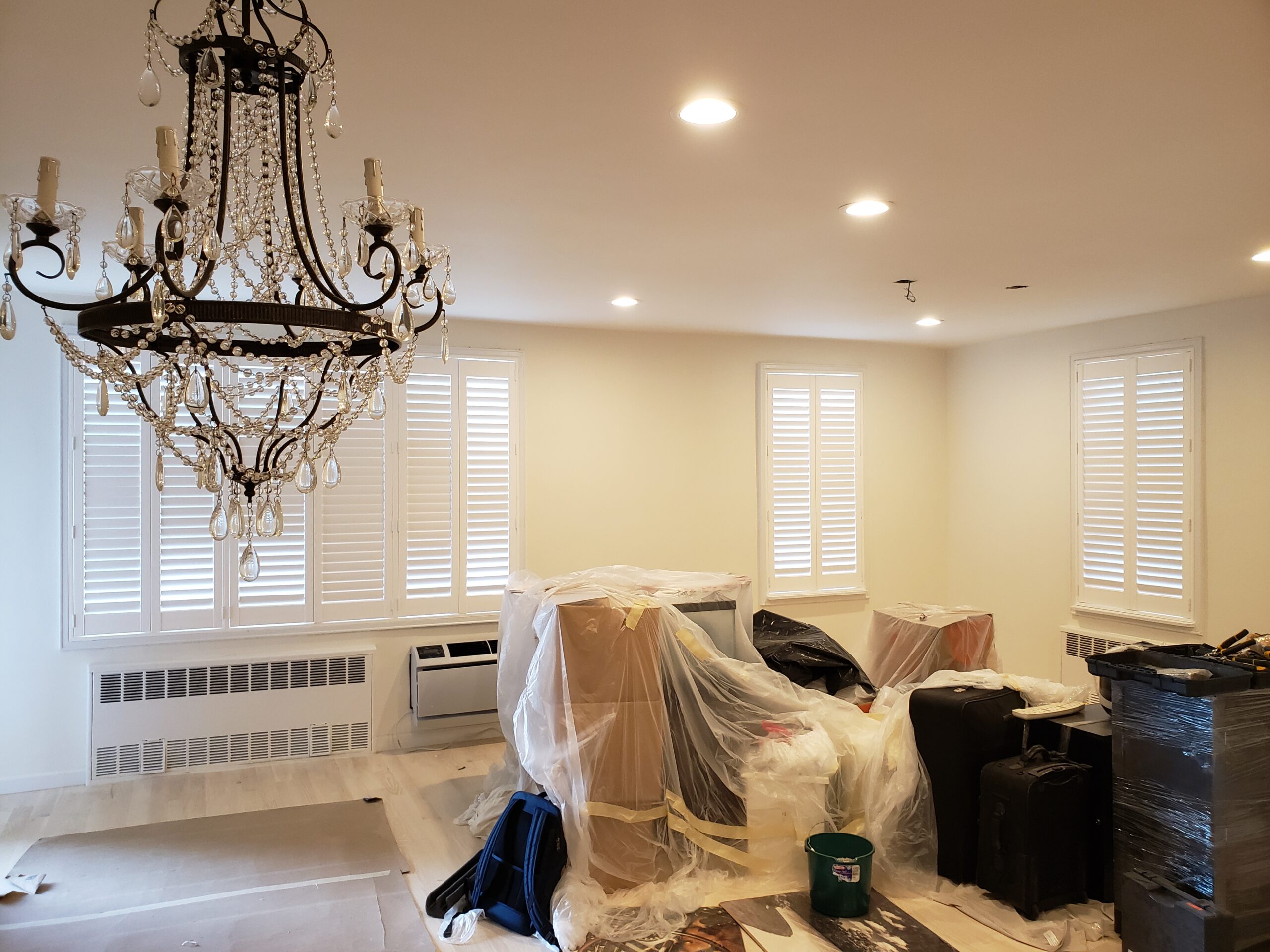
What a professional installation includes
Installation is not the twenty minutes at the end. It starts at the measure, and by the time anyone picks up a drill the decisions that determine how the window looks are already made.
The order of operations is the whole job. Somebody comes to the window, decides how the treatment should sit on it, measures the opening for that decision, and only then is anything ordered. Run that backwards and you end up trimming a shade to fit an opening it was never built for.
A stock blind is made to a round number and cut down at the end. A made-to-measure shade is built to your opening, so the opening has to be described correctly before the shade exists, and nothing that happens at the wall rescues a wrong measurement. That is the real work. The drilling is the easy part.
- Measured in the room. Every window measured to the sixteenth, with the mount decided before anything is ordered.
- Built to the opening. Hunter Douglas or our own Korean workroom. Nothing trimmed down from a stock width to make it fit.
- Hung, run and squared. Each treatment tested through its full travel before we move to the next window.
- Packaging leaves with us. Cartons, plastic, offcuts, dust. Nothing stacked in the hall for you to deal with.
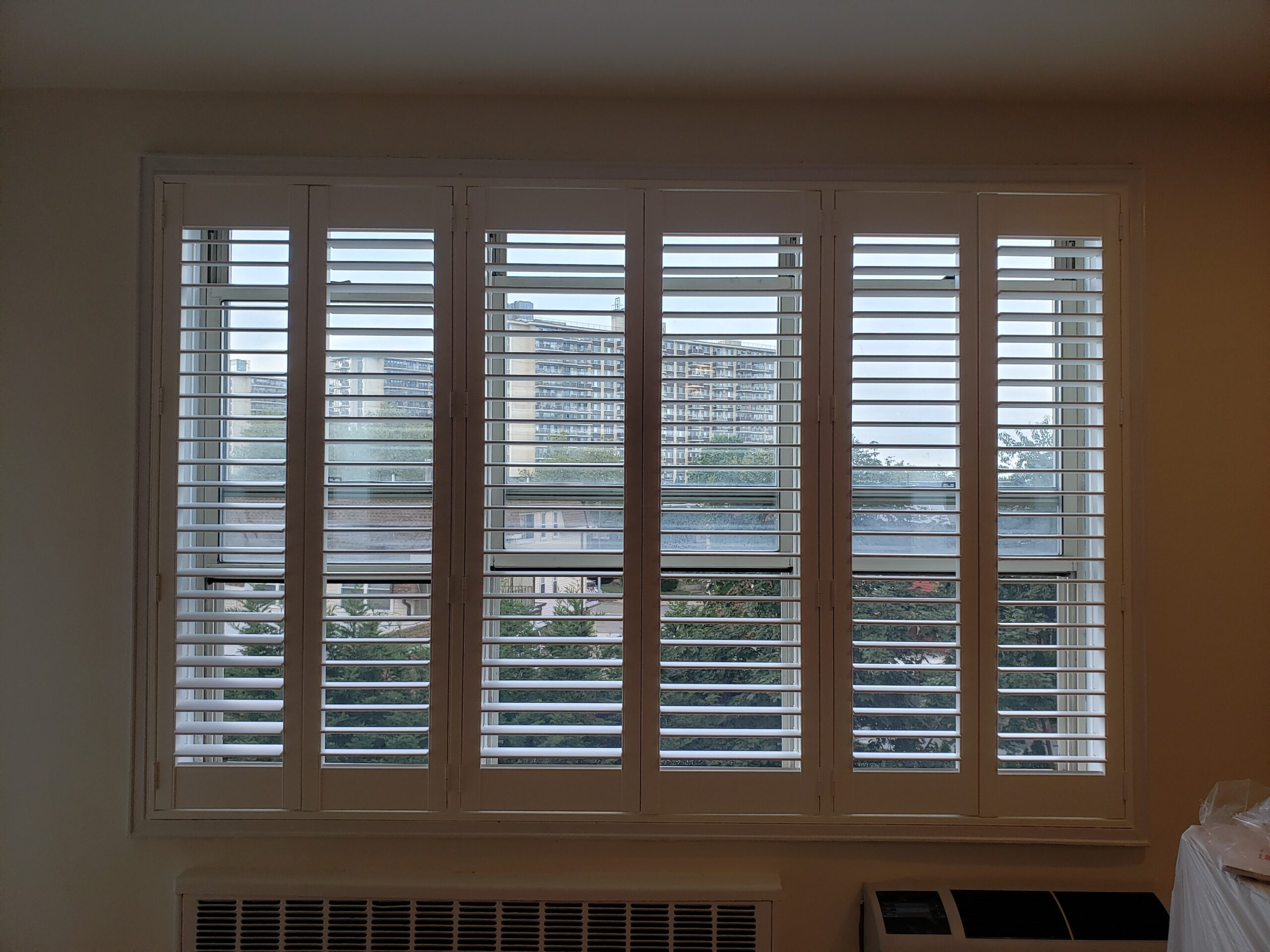
Measured to the sixteenth, and why that is not fussiness
A sixteenth of an inch sounds like a detail until you see what an eighth of an inch of daylight does down the side of a bedroom shade at six in the morning.
An opening gets measured in three places, not one. Width at the top, the middle and the bottom; height at the left, the centre and the right. Houses are rarely square, older ones almost never, and the gap between the widest and the narrowest of those numbers decides what is possible before anything else does.
For an inside mount you work from the smallest width, because the shade has to pass the tightest point on its way down. For an outside mount you work from the largest, because the treatment has to cover. Reverse those two rules and the shade either binds or leaves a gap, and on a made-to-measure product both are permanent.
Then there is the deduction. Every manufacturer takes a fraction off a stated inside-mount width so the shade clears the jamb, and that deduction belongs to the maker — hand over a number you have already deducted yourself and it gets taken off twice. Depth is the other one people miss: an inside mount needs clear jamb behind the face of the trim for the headrail, cassette or motor tube, and a motorized roller needs more of it than a plain shade. If the depth is not there, the answer is an outside mount, not a squeezed one.
- Three widths, three heights. The narrowest and the widest matter more than the average. Out of square is normal; unmeasured is the problem.
- Deductions belong to the maker. Give the true opening. A helpfully pre-deducted number gets deducted again at the factory.
- Old brackets are not a measurement. They tell you where the last installer drilled, not where the window is.
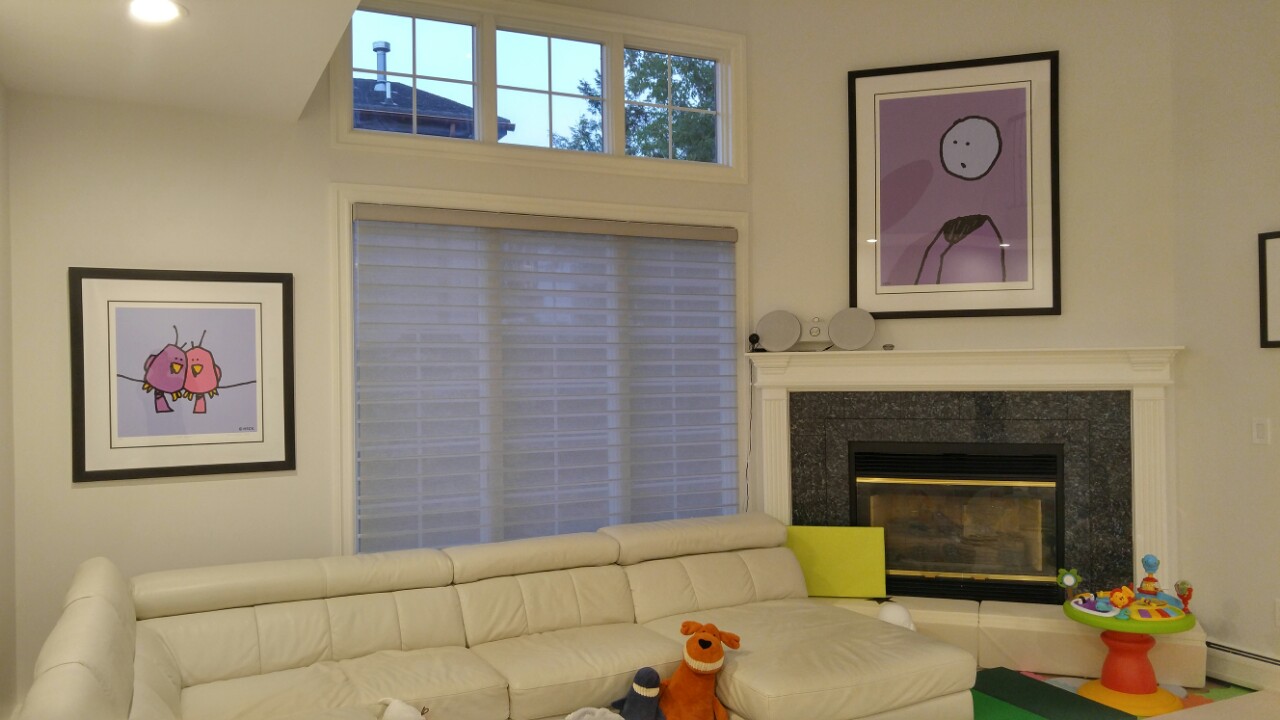
Inside mount, outside mount, and how to pick
This is the decision that changes how the finished window looks, and it gets made at the measure rather than on the day.
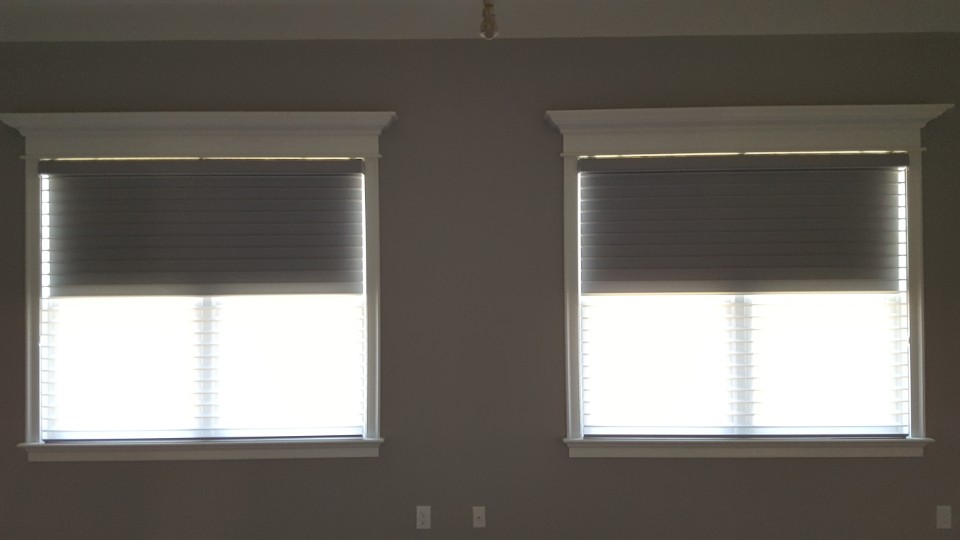
Inside mount: the built-in look
The treatment sits inside the opening, within the frame, so the casing stays visible and the whole thing reads as part of the architecture rather than something hung on the wall. On a window with trim worth looking at, it is almost always the better-looking answer.
It has two conditions: enough clear jamb depth for the headrail to sit behind the face of the trim, and an opening that is reasonably square. It also accepts a light gap by design. An inside-mount shade is deliberately narrower than its opening, so a thin line of light down each edge is a property of the mount, not a fault in the shade.
Best for deep jambs, trim you want to keep visible, rooms where the clean built-in line matters more than darkness.

Outside mount: the one that actually blocks light
The treatment mounts on the wall or the face of the casing and overlaps the opening on all four sides. It covers more glass, hides an opening that is out of square, and is the only way to get close to a genuinely dark room, because the overlap kills the side light an inside mount lets past.
It also makes a window look larger, which is why it is the right call on a small or awkwardly proportioned opening. The trade is that it covers the trim you may have wanted to see, and it needs a sound stretch of wall or casing above the window to fix into.
Best for bedrooms and media rooms, out-of-square openings, shallow jambs, small windows you want to read as bigger.
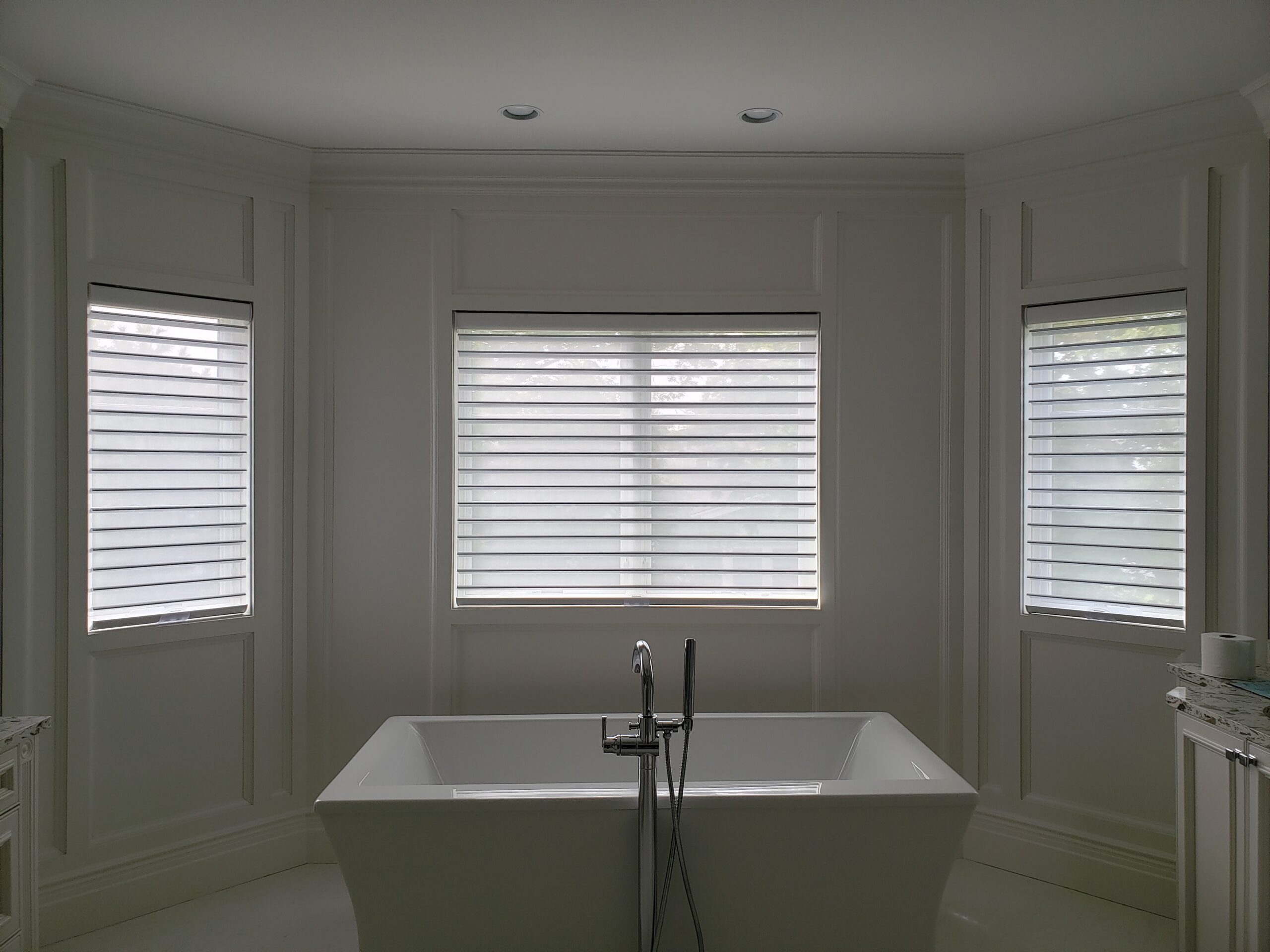
Ceiling mount: when there is no wall left
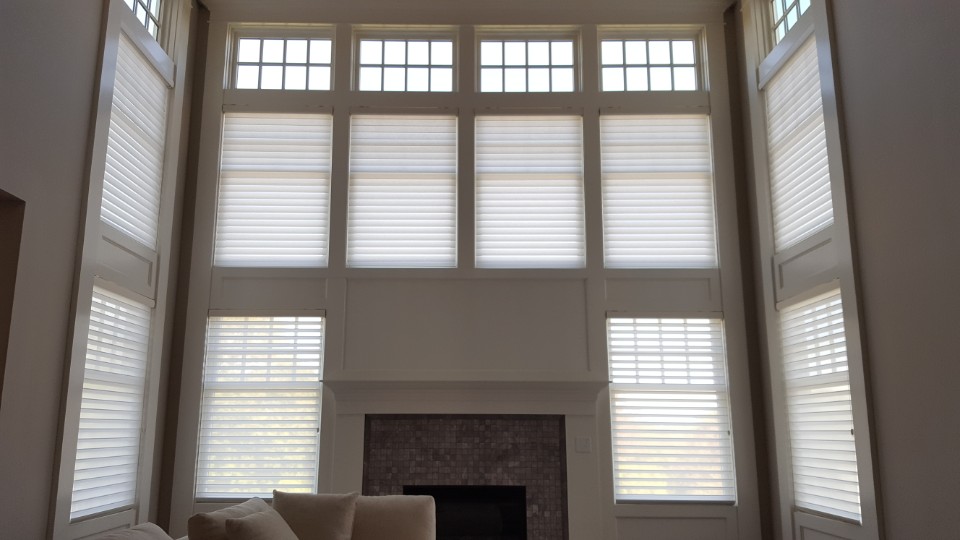
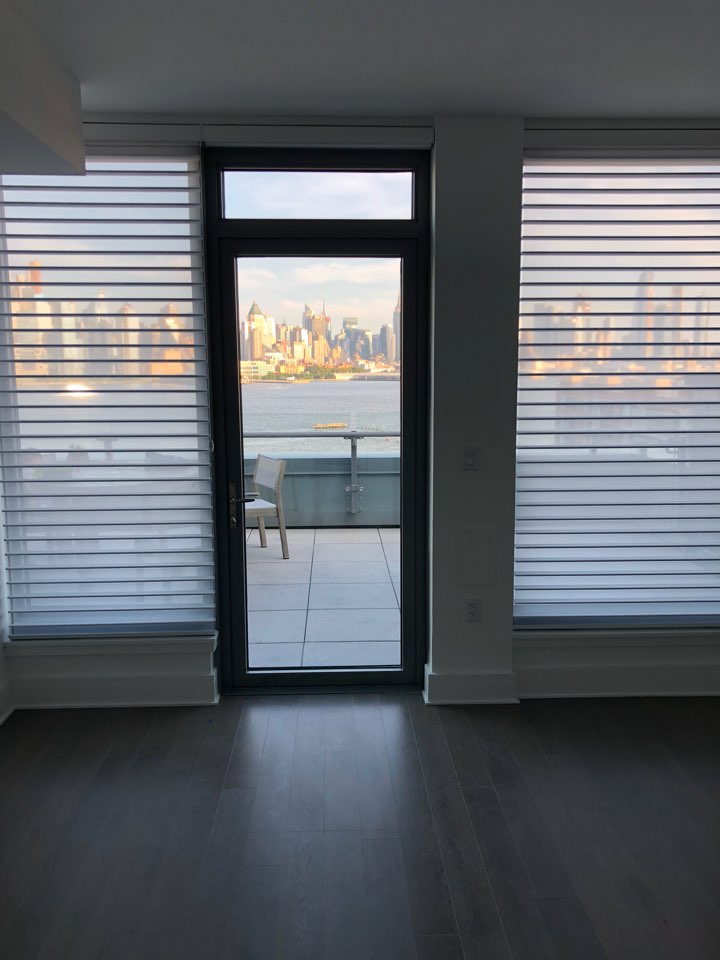
Some windows run to the ceiling, sit under a soffit, or continue in an unbroken band with nothing between the head of the glass and the slab above. There is no wall to mount to, so the brackets go into the ceiling and the treatment hangs from there.
It is a normal solution rather than a compromise, and on floor-to-ceiling glass it usually looks better than an outside mount would. What it needs is a ceiling that can be found and trusted. A bracket set into unbacked drywall with nothing behind it holds for a fortnight and then it does not.
Best for floor-to-ceiling glass, soffits, continuous window bands, drapery tracks.
The walls and windows that make an install go wrong
Most windows are straightforward. The ones that are not are usually a wall problem rather than a window problem, and they are the reason professional installation exists.
Plaster and lath: the one that crumbles
Older houses around here have plaster over wood lath, and it behaves nothing like drywall. Plaster is brittle and hollow behind in places, so a hammer drill or too much forward pressure blows a crater out of the surface and the anchor ends up sitting in dust.
The technique is to drill slowly on rotation only, aim for the lath rather than the gap between two laths, and reach solid wood wherever the bracket allows. Where wood is not reachable, a toggle spreads the load behind the plaster instead of the plaster face carrying it. On this wall a careless install shows up two years later, not on the day.
Best for pre-war houses, original trim, any wall that sounds hollow when you knock it.
Tile, stone and brick: no second attempt
Bathrooms and kitchens put windows into tile, and tile is unforgiving. A bit that wanders before it bites cracks the glaze, and a cracked tile is not a repair, it is a matching problem. Where the bracket position allows it, the hole goes in the grout line instead, because grout can be replaced and tile cannot.
Brick, block and stone are the other kind of difficulty: solid and forgiving of weight, but needing masonry bits, proper sleeves and patience. What you cannot do on masonry is guess and re-drill. Every hole is permanent and visible.
Best for bathrooms, kitchen windows, tiled reveals, brick and stone surrounds.
Steel lintels and concrete: when the drill stops
Above a great many windows, particularly in apartments and in anything built after the war, there is a steel lintel carrying the load. You find out it is there when the drill goes in half an inch and simply stops. Ordinary anchors are useless in steel, and pushing harder gets you a hot bit and a shiny dent.
The answer is usually to move the bracket rather than fight the steel: up onto the ceiling, down onto the casing, or sideways past the end of the lintel. Where it genuinely cannot move, a self-tapping fixing into the steel is the solution, and it is slow work. Concrete and cinder block are the same story with different tooling.
Best for apartments and condos, mid-century and later construction, anything above a wide opening.

Tall glass, bays and arches: geometry, not walls
Height changes the job before it changes the hardware. Past a certain reach it is two people and a proper ladder rather than one person and a step stool, and on a stairwell the ladder cannot stand square to the window at all. That, rather than the fixing, is why those installs take longer than they look.
Bays and bows are an angle problem. Each panel meets the next at an angle that is rarely the one on the plan, so brackets get set to the angle actually there and the treatments have to clear each other as they lower. Arches and angled heads are templated, and on those windows the template is effectively the product. If it is off, the treatment is off.
Best for stairwells, double-height rooms, bays and bows, arched and angled window heads.
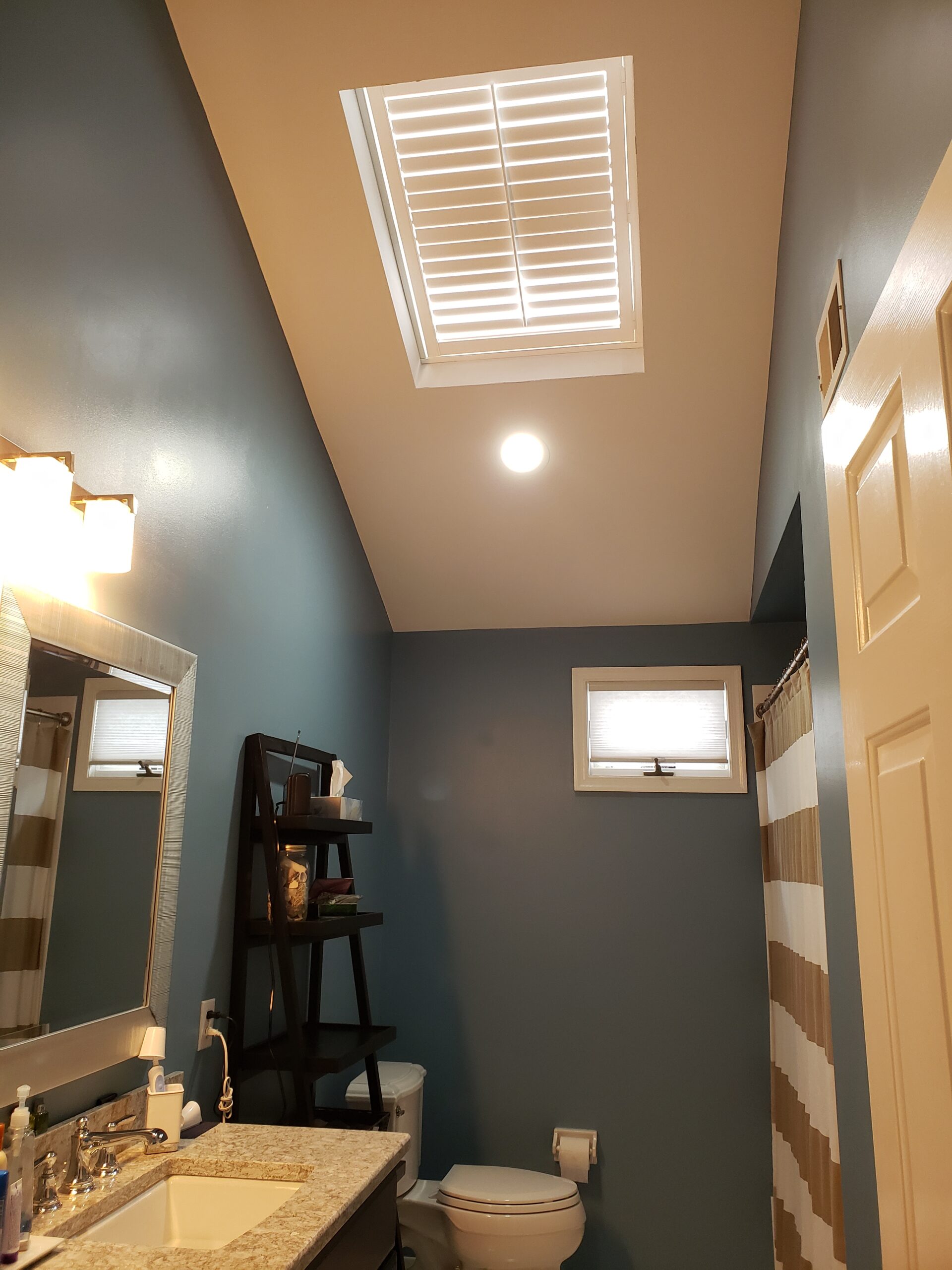
Some of these shapes have a page of their own: bay and bow windows, arched and angled windows, tall and oversized glass and skylights.
What actually happens on installation day
The short version: somebody arrives with treatments already made for your specific windows, and leaves with everything they brought except the treatments.
Somebody needs to be home. Not to supervise, but because there is usually one window where the obvious bracket position turns out to be the wrong one, and that is a thirty-second conversation before the drill instead of a problem after it.
The room gets prepared first: furniture pulled back, a drop cloth down, the sill cleared. Drilling makes dust, and catching it beats cleaning it off upholstery. If there are old treatments coming down, say so when you book rather than on the day — taking them down, and dealing with the holes and marks they leave behind, is real work and it belongs in the plan.
Then it is one window at a time. Brackets marked, checked level, drilled and fixed into something that will hold. The treatment goes up, runs through its full travel, and is adjusted until it hangs square and stops where it should. On a motorized treatment the top and bottom limits are software rather than mechanics, so they get programmed with you standing in the room. Most jobs are a single visit.
- Usually one visit. Everything measured on the same trip goes up on the same trip.
- Level first, drill second. A window that is out of square is normal. A shade that follows it down is not.
- Limits set with you there. Motorized stopping points are programmed on the day, to where you want them.
- The packaging leaves with us. Cartons, plastic, offcuts and dust. That part is not an extra.

When you should just do it yourself
Not every window needs us. If you have bought a stock blind for a spare room, the honest answer is that you can hang it yourself in an afternoon.
Stock blind, square opening
A ready-made blind in a plain drywall opening is a genuinely easy job. A drill, a level, a tape and an hour.
Do it yourselfAnything made to measure
The measurement is the product. A shade built to a wrong number is not returnable and not adjustable, so one mistake costs the whole shade.
Have it measuredPlaster, tile or masonry
These walls punish a first attempt. A blown-out plaster crater or a cracked tile costs more to put right than the installation was going to.
Get helpMotorized or hardwired
Battery motors are manageable. Anything wired in, or grouped onto one remote, becomes an electrical job with a shade on the end of it.
Get helpHigh, heavy or very wide
A wide shade weighs more than it looks, and a stairwell ladder cannot stand square to the window. This is where DIY stops being a bad result and becomes an injury.
Two people minimumWindows we measured and fitted
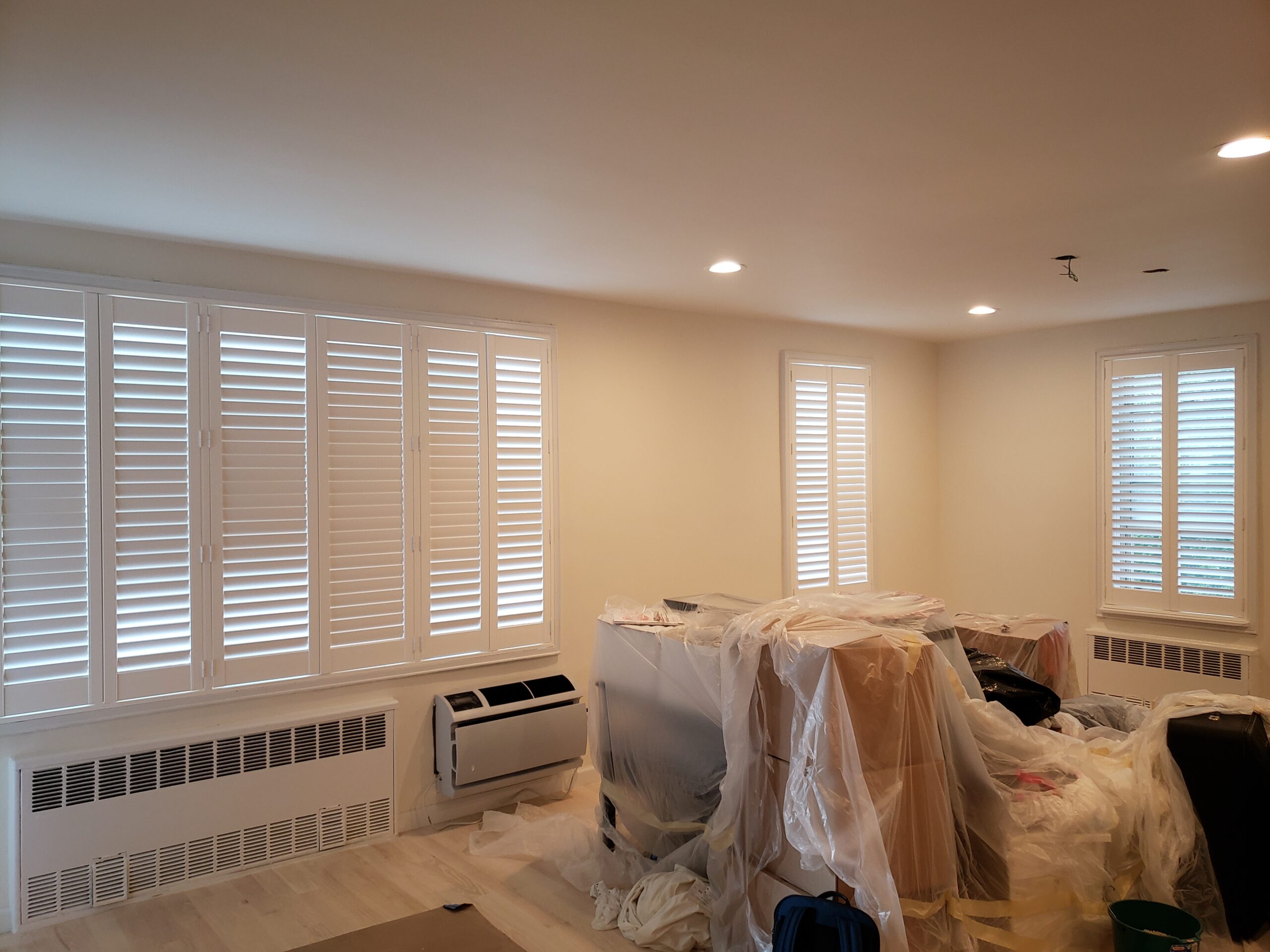
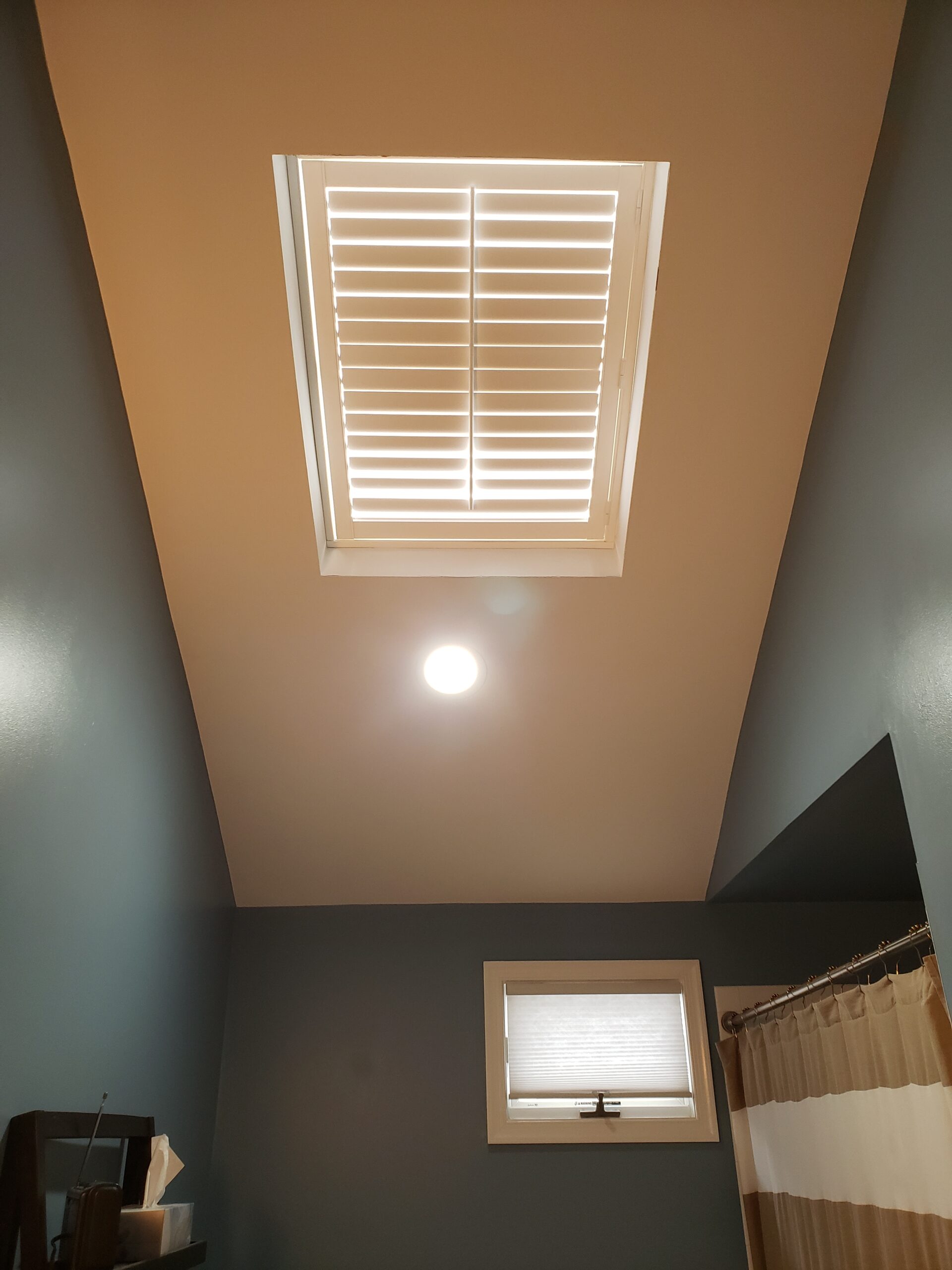
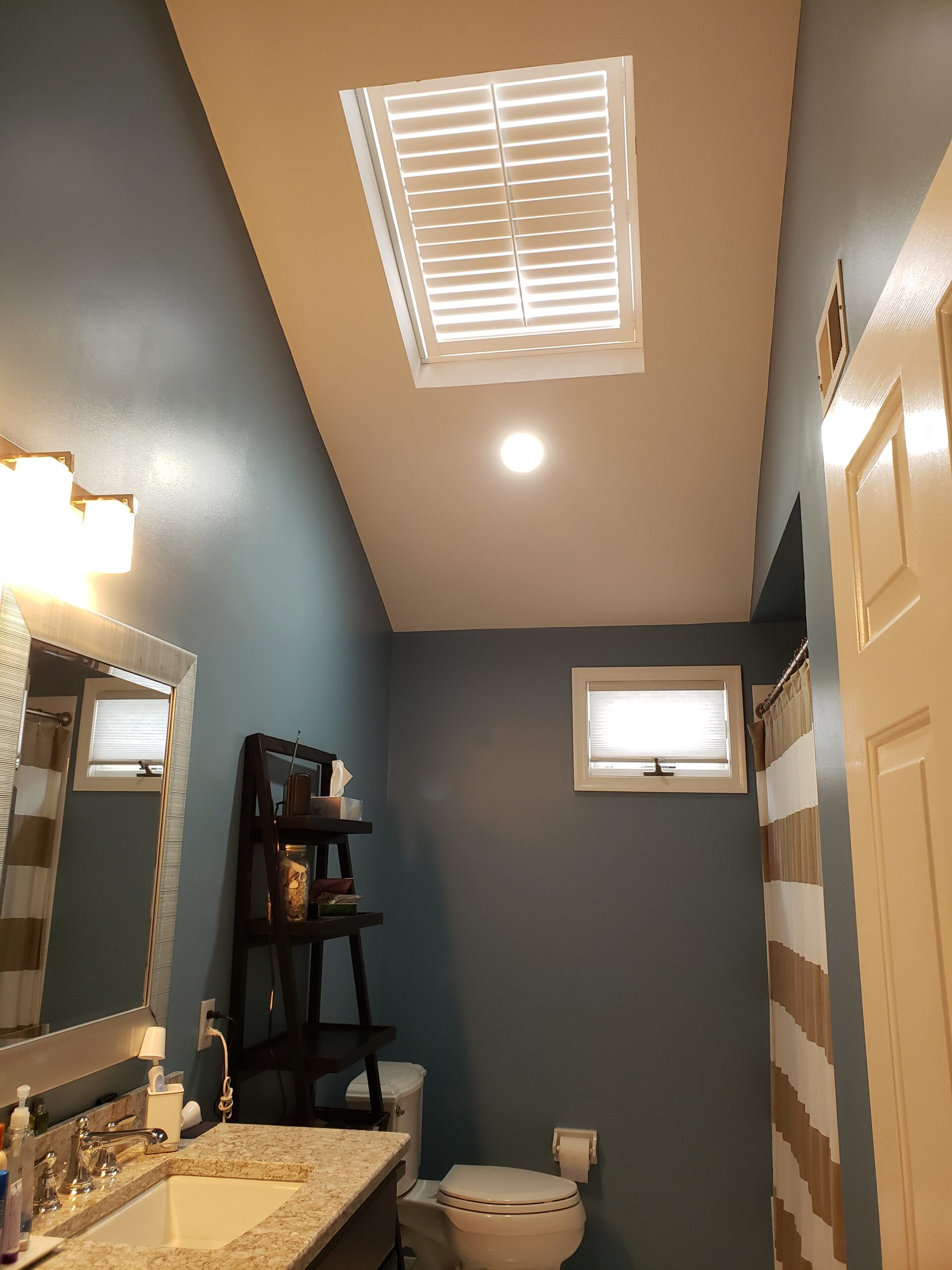
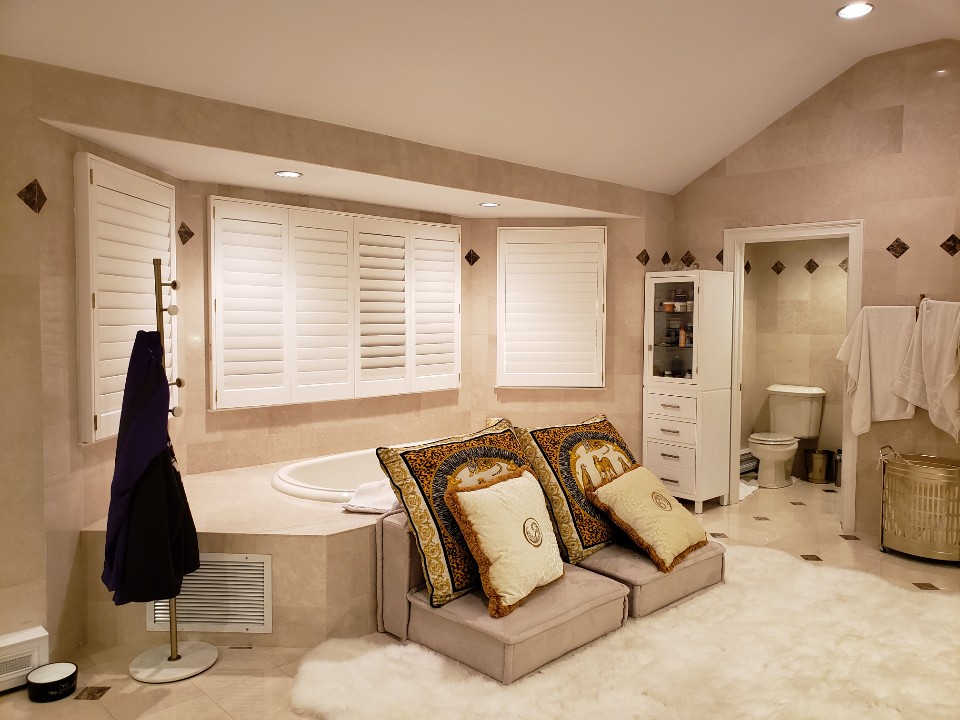
No stock photography, no showroom staging — homes and offices across Bergen County and the Tri-State.
What actually drives the price
We quote the whole job at the free consultation rather than off a price list, because two houses with the same number of windows can take completely different amounts of time once somebody is standing in front of the walls.
01How many windows, and where they are
The first window in a house costs more time than the tenth. Getting there, carrying in, moving furniture and covering floors all happen once, and after that it is repetition. That is why we would rather measure everything on one visit even if you fit it in stages.
02Mount type and what is behind the wall
An inside mount into a wood jamb is the quick one. An outside mount into plaster, tile, brick or a steel lintel is a different job with different fixings and no margin for a mistake. We can usually tell which we are dealing with at the measure, which is part of why the measure happens in person.
03Height and access
Anything above comfortable reach becomes a two-person job with a proper ladder. Stairwells are the extreme case: the ladder cannot stand square to the window, so setting up safely takes longer than the fitting does. Tall glass is not harder to fix a bracket to. It is harder to stand in front of.
04Motorization
A motor is a treatment plus a power source plus programming. Battery and rechargeable motors are straightforward on the day. Hardwired ones need power at the head of the window, which is a decision to make before the walls close if you are renovating, and an awkward one to retrofit if you are not.
05Shape work: bays, bows and arches
Angles and curves are templated rather than measured, and the template is a separate piece of work before anything is ordered. A bay also needs the treatments to clear each other as they lower, which is settled at the measure rather than on the day.
Why we don't publish a price list. Two windows in the same room can price differently once you account for size, fabric and mount. We measure and quote every window during the free consultation, so you see the number before anything is ordered. Book one here.
Measured to installed in about two weeks
Free consultation
We come to you, so you're judging the room in the light the shade will actually live in.
Measure & design
Every window measured to the sixteenth, with a designer's eye on mount, stack and fabric.
Made for your window
Hunter Douglas or our own Korean workroom — built to your opening, never trimmed from stock.
Installed & tidy
Professionally hung, tested, and the packaging leaves with us. Usually a single visit.
Installation questions we get asked
Do I need to be home for the installation?
Yes, or somebody who can make decisions about the house. There is usually one window where the obvious bracket position is not the right one — a short conversation before the drill rather than a problem after it. You also want to be there at the end, when each treatment gets demonstrated rather than handed over.
How long does a blinds installation take?
Most jobs are a single visit. A straightforward inside mount in a square opening takes minutes; an outside mount into plaster or tile, a motorized shade whose limits need programming, or a bay set to the angles actually there takes far longer. What kind of windows they are matters more than how many. From approval to installation is usually about two weeks.
Can I measure my own windows?
You can, and for anything made to measure we would rather you did not. A custom shade is built to the number you supply, so a wrong number is permanently wrong and not returnable. The two usual mistakes: measuring one width instead of three, and deducting for clearance yourself when the factory is going to deduct again.
Should I choose an inside mount or an outside mount?
Inside mount if the jamb is deep enough and you want the trim visible — it is the cleaner look. Outside mount if you want the room dark, if the opening is out of square, if the jamb is shallow, or if you want a small window to read as bigger. An inside mount always lets a thin line of light down each side: fine in a living room, a problem in a bedroom.
What if my windows are not square?
Almost none of them are, especially in older houses, and it is not a problem as long as it is measured — which is why an opening gets measured in three places rather than one. An inside mount is built to the narrowest width so the shade clears on the way down; where the difference is big enough to see, an outside mount covers it instead.
Will installing blinds damage my walls?
Every bracket is a hole, so yes, there will be holes. What matters is where they go and what goes in them. Drywall and wood jambs are simple. Plaster needs a slow drill and a fixing that spreads behind the surface. Tile is drilled in the grout line wherever the bracket allows, because a cracked tile is a matching problem rather than a repair. A steel lintel gets the bracket moved rather than forced.
Do you install window treatments bought somewhere else?
Ask us before you buy them. Nearly all of our installations are treatments we measured and made, because the measuring and the fitting are really one job and splitting them between two companies is where things go wrong. If you already have treatments on hand, call and describe them, and we will tell you honestly whether it is work we can take on.
How far do you travel to install?
We install across Bergen County, into New York City and around the Tri-State, working out of the showroom at 547 Broad Avenue in Palisades Park, a few minutes from Fort Lee and the George Washington Bridge. Not sure whether you are in range? Call and ask, or see the areas we serve.
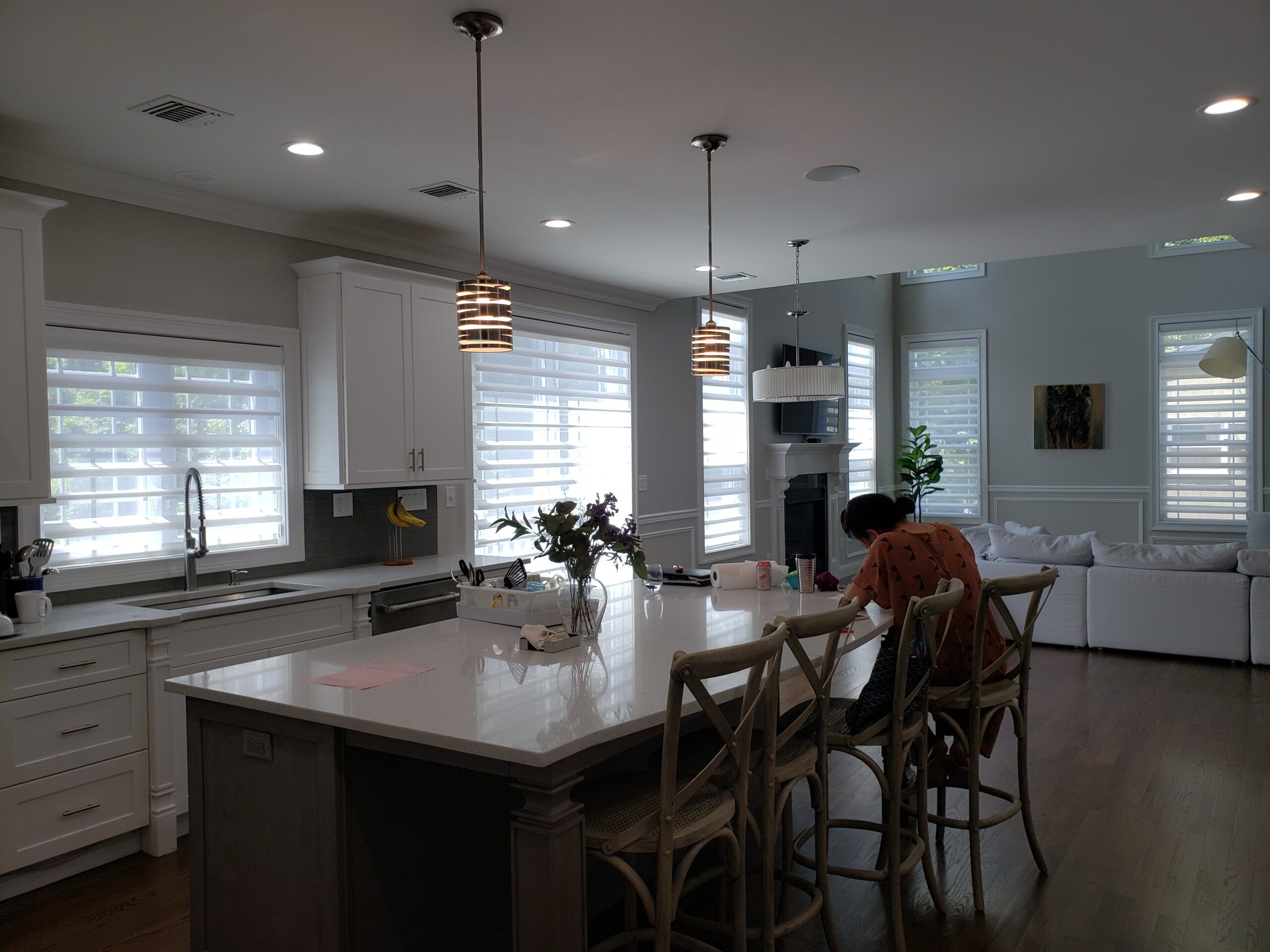 ShadesRoller, solar, zebra, cellular and more
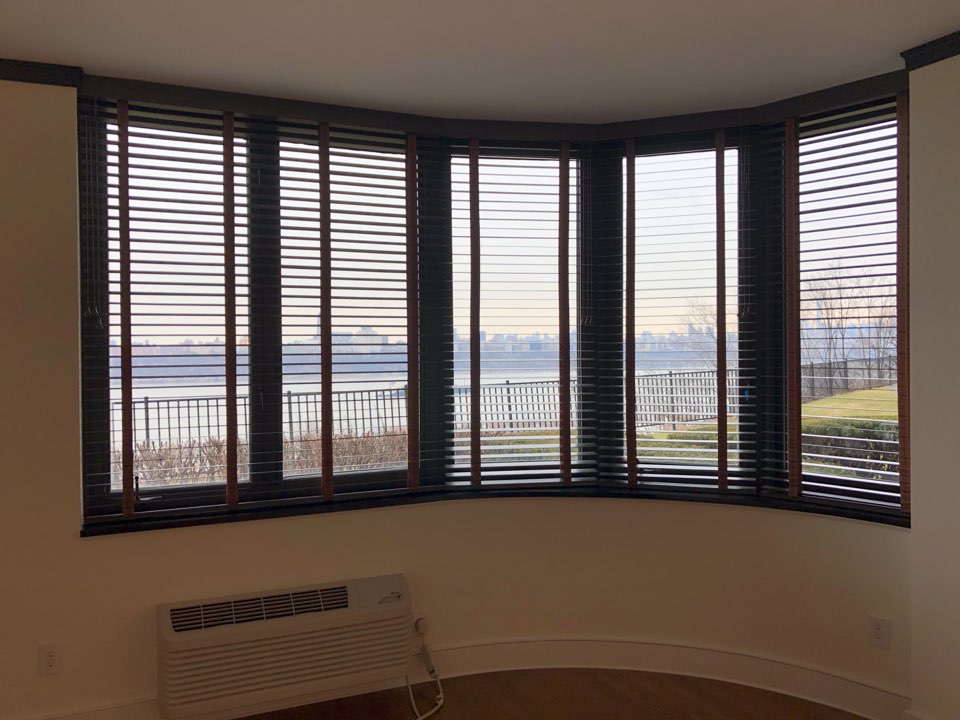 BlindsWood, faux wood and vertical
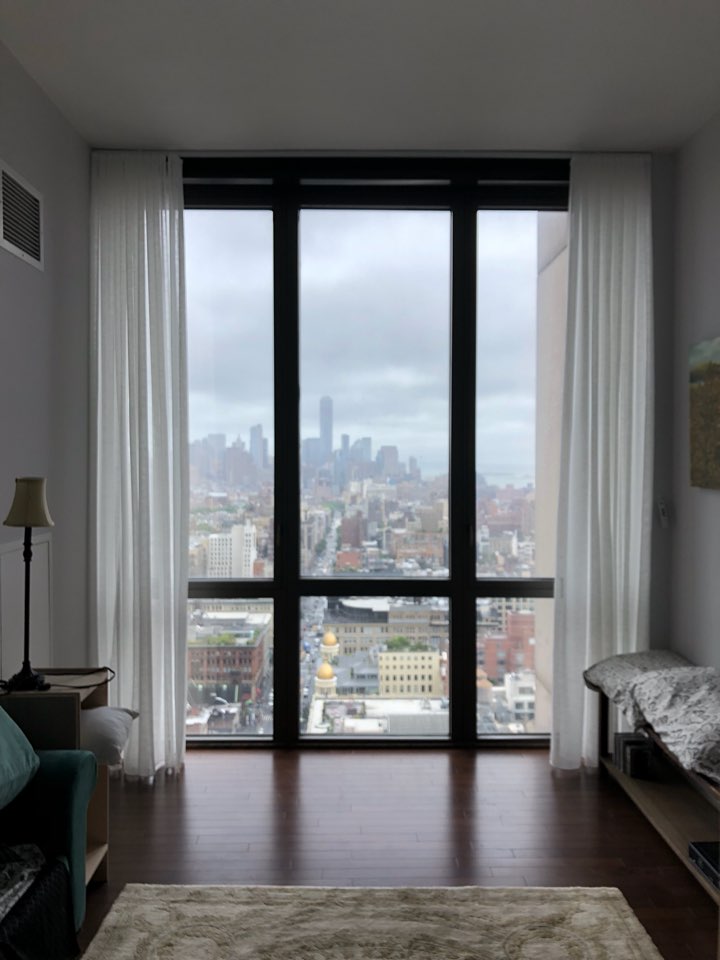 Drapery & CurtainsFabric, fullness and a proper track
4.9 across 314 Google reviews
“We booked a consultation, and Young was really helpful, explaining the different types of blinds and showing us pictures. We ended up going with Swan and roller blinds from their Korean brand. It is the best choice. The curtains dressed up the entire house and made it look so modern.”
★★★★★ 2 years ago
“The owner was so kind and helpful. I slept so well last night after installing the blinds. Now that I have the blinds installed, I feel much more at ease and at peace. I really like it.”
★★★★★ 4 months ago
“Installation of Hunter Douglas Duette Honeycomb Blackout Shades. They arrived on time, were professional, and answered all our questions. Customer service was responsive. Overall, we are pleased with their service and recommend them.”
★★★★★ 2 years ago
Visit the showroom
Prefer to see things in person before we come to you? We're on Broad Avenue in Palisades Park, a few minutes from Fort Lee and the GWB.
- 547 Broad AvenuePalisades Park, NJ 07650
- Mon–Fri 10–7 · Sat 10–5Closed Sunday
- (201) 302-9111We usually pick up on the first ring