Commercial Window Treatments
Offices, restaurants, salons, medical suites and apartment buildings. The products are mostly the same ones we hang in houses. The scheduling, the fabric certificates and the need for window forty to match window one are not.
 ★★★★★ 4.9 · 314 reviews (314)
 Partner
~2 weeks to install~2 wks
Partner
~2 weeks to install~2 wks
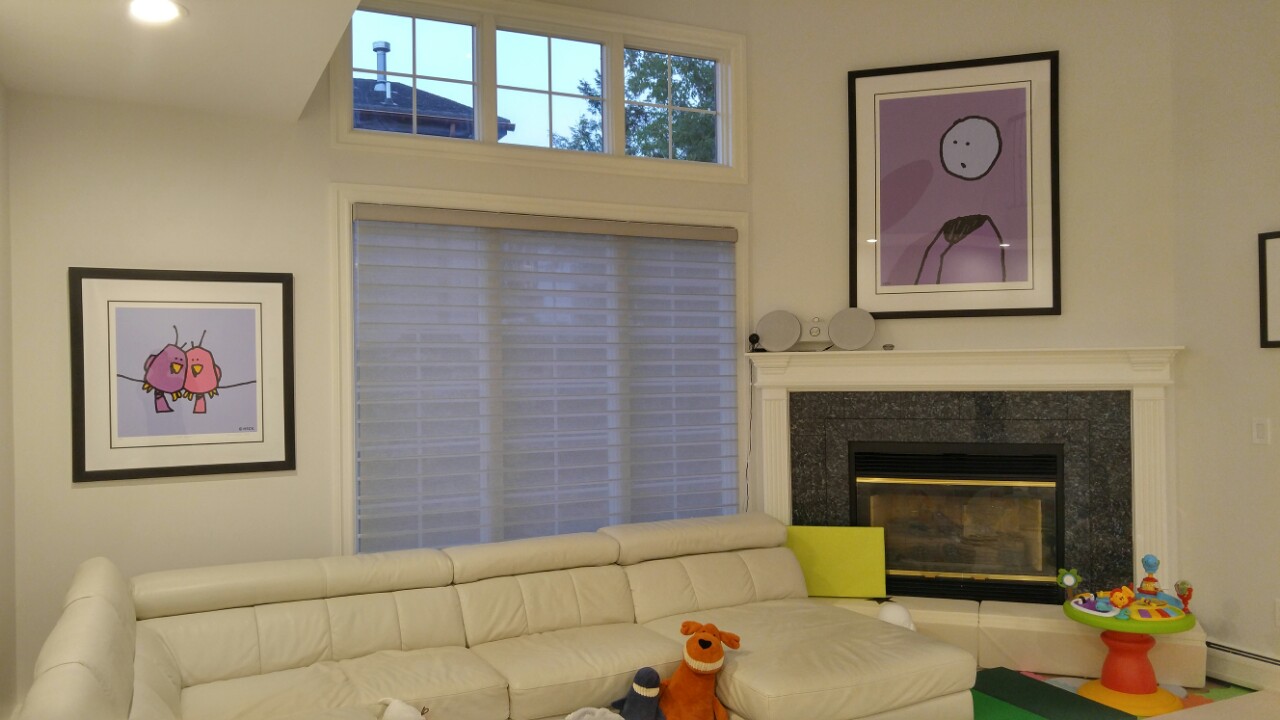
What changes when the window is not in a house
The catalogue barely changes. Who decides, when you are allowed in the room, and what happens in three years all do.
A house has a dozen windows, most of them different, and one or two people deciding. A commercial floor has more windows, most of them identical, and a decision that has to survive a tenant, a facilities manager and often a landlord. What is being settled is a rule that forty openings will follow.
Every treatment also has a job description. In a conference room the shade exists so a screen is readable at two in the afternoon; in a ground-floor exam room, so nobody outside can see in. When the job is that specific, the wrong product announces itself within a week.
- Repeatable, not bespoke. Forty windows can share one spec. Get it right once and the rest is arithmetic.
- Somebody else’s rules. Landlords and boards often dictate what the street sees, even when the tenant picks what the room sees.
- Downtime is the real cost. The install date matters more than any line on the quote.
- It gets re-ordered. A building still needs window forty-one in three years, so the spec has to be written down.
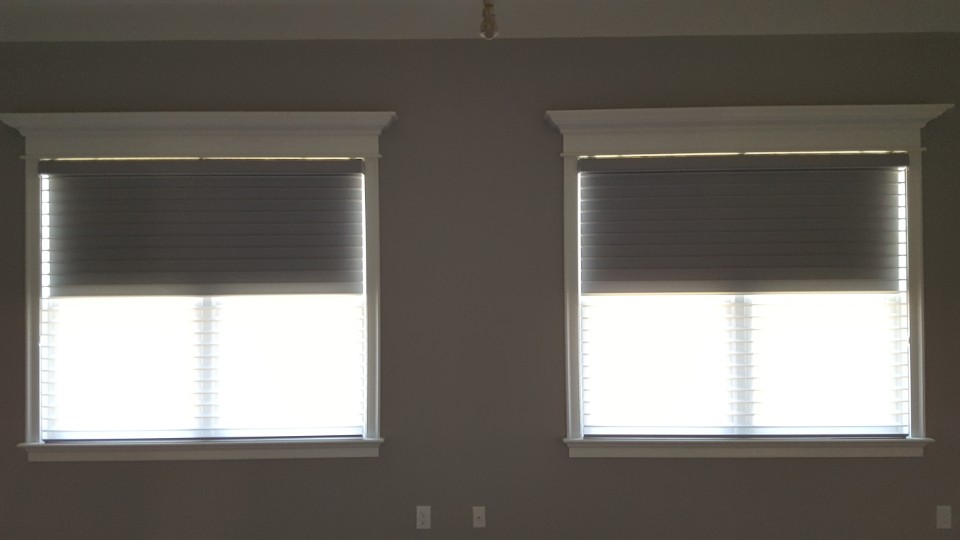
Offices, restaurants, salons, medical and multi-unit buildings
Five kinds of space, five different problems. The product that solves one is usually wrong for the next, which is why a building ends up with a mixed spec.
Offices: usually a solar screen
Most office calls are glare calls, and a solar screen is built for them: an open mesh rather than a textile, so it cuts glare, heat and UV and leaves the daylight and the view.
Three percent openness is the default where people sit at screens; five keeps more of the view in rooms people occupy but do not work in. Conference rooms are the exception, because projection needs a darkening layer.
Best for open floors, private offices, any desk facing a window.

Restaurants and bars: the sun sets into the dining room
A west-facing storefront is lovely at noon and difficult at six. Covering the glass is the obvious move and the wrong one, because the streetscape is part of what the table is worth. A dark screen fabric scatters less light: the view stays, the glare goes.
Anything near a pass holds grease and odour, so flat wipeable fabric beats gathered fabric. And a shade that depends on a host remembering it at six will not get pulled on a Friday.
Best for storefront glazing, west-facing dining rooms, bars with a view.
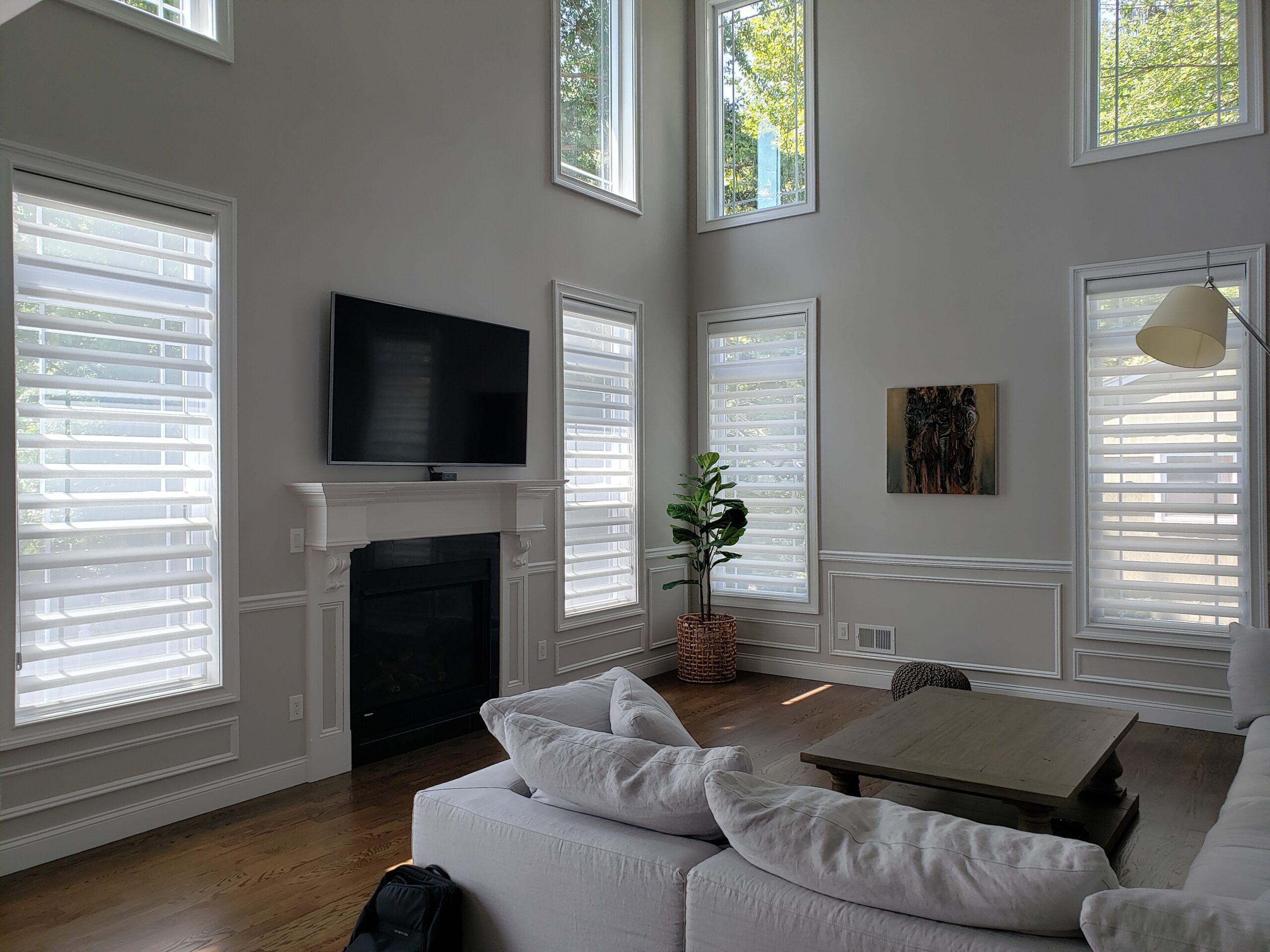
Salons and studios: the light is the product
A colourist matching hair is doing colour-critical work under mixed daylight and lamp light, and a strongly tinted fabric shifts everything passing through it. Neutral greys and whites are the safe specification, even when the branding says otherwise.
Photography and fitness studios want even light with no hot stripe across the floor, which means something on every window rather than a heavy treatment on one. Treatment rooms want the opposite: real darkness.
Best for salon floors, treatment rooms, photo studios, fitness spaces.
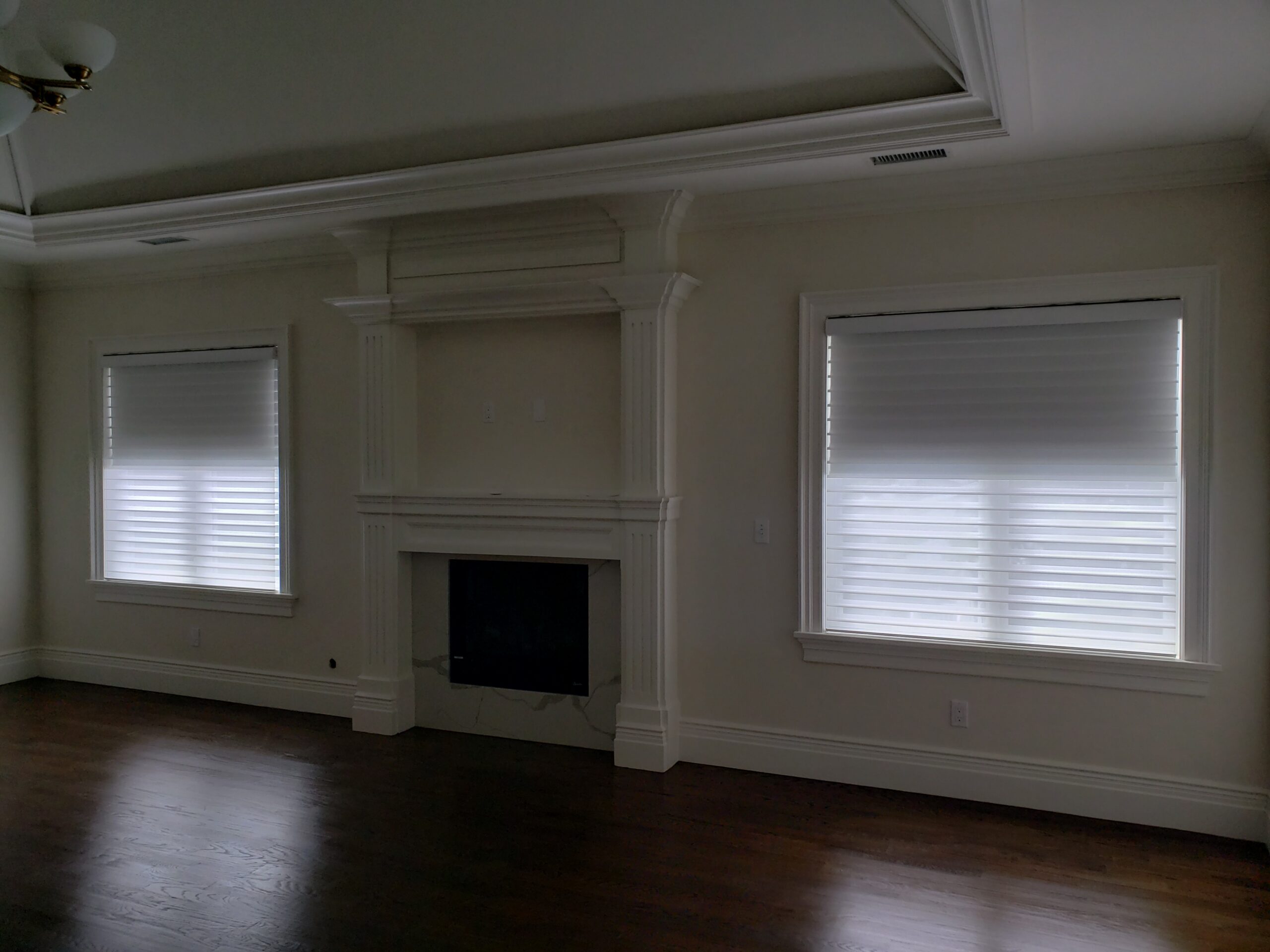
Medical and dental: privacy first, then cleanability
An exam room needs real privacy at every hour, which rules out the product that suits the office down the hall. A solar screen works only while the outside is brighter; after dark a lit room is visible from the street. Use a closed fabric or a blackout roller.
After that it is surfaces and safety. Flat treatments wipe down; gathered fabric beside a chair does not. A cord loop next to a treatment chair is a hazard, so cordless or motorized is the default.
Best for exam and treatment rooms, dental operatories, ground-floor windows.
Apartment and condo buildings: the street view is the spec
The facade is a shared asset, so many boards specify what the outside sees and leave the inside alone: a uniform liner colour, sometimes a fixed headrail, and the resident free to choose the fabric behind it. It only works if it is written down.
Units get done one at a time over years, so a specification is worth exactly what it can reproduce later. Lobbies and amenity floors are a commercial job with residential expectations.
Best for condo boards, building-wide standards, lobbies and amenity floors.
Glare on screens starts most commercial calls
Not heat, not privacy, not decoration. Somebody cannot read a monitor between two and five in the afternoon, and that is what puts window treatments on the agenda.
Two different problems get the same name. Direct glare is the sun landing in somebody’s field of view, and a shade at that window fixes it outright. Reflected glare is the window showing up in the surface of a display, and if the screen faces a window wall no fabric fully solves it — turning the desk ninety degrees is the free fix we suggest first.
For direct glare the specification is an openness factor and a fabric colour, and instinct gets the colour backwards. A dark weave absorbs light instead of scattering it, so the view through it stays sharp. A white weave at the same openness hazes the view but reflects more heat back out.
- 3% or 5% openness. Three is the default on a floor of desks. Five keeps more of the view where people sit rather than work.
- Dark fabric, clearer view. A charcoal screen behaves like sunglasses. A white one reflects more heat but hazes the view.
- Cover the window behind the desk. On a floor that lives on video calls, the camera-facing window matters more than the one people face.
- Projection needs a second layer. A solar screen never darkens a room. If it has to dim for a screen, it also needs a blackout roller.
Fire-rated and contract fabrics, without the jargon
Two phrases turn up on nearly every commercial spec sheet, and neither is well explained by the people quoting on it.
Fire-rated: a test the fabric passed, not a brand
Flame resistance for hanging interior fabric in the United States is generally shown by a vertical flame test, and NFPA 701 is the standard most often named on commercial specs. It applies to one fabric in one finish, not to a product family. A roller shade is not fire-rated; a particular roller fabric either is or is not.
Inherently flame-resistant fabric passes because of the fibre; treated fabric passes because of a finish, which can degrade. Who requires a rating is decided by the code official, the landlord or the insurer, and it is asked far more often in restaurants, assembly spaces, schools and healthcare than in a private office. Ask for the certificate for the exact fabric, in writing, before you order.
Best for restaurants and assembly spaces, healthcare, schools, anywhere an inspector asks.
Contract grade: built for ten years of other people
Contract fabric is fabric specified for commercial use: more weight, better abrasion resistance, better colourfastness under constant sun, and wider bolts so a large window needs no seam.
Residential fabric in a commercial space rarely fails dramatically. It fades on the sun side and goes limp where the public handles it. That does not make contract grade right everywhere — on a north-facing back office nobody touches, the residential version will last for years.
Best for lobbies, dining rooms, corridors, any glass the sun hits all afternoon.
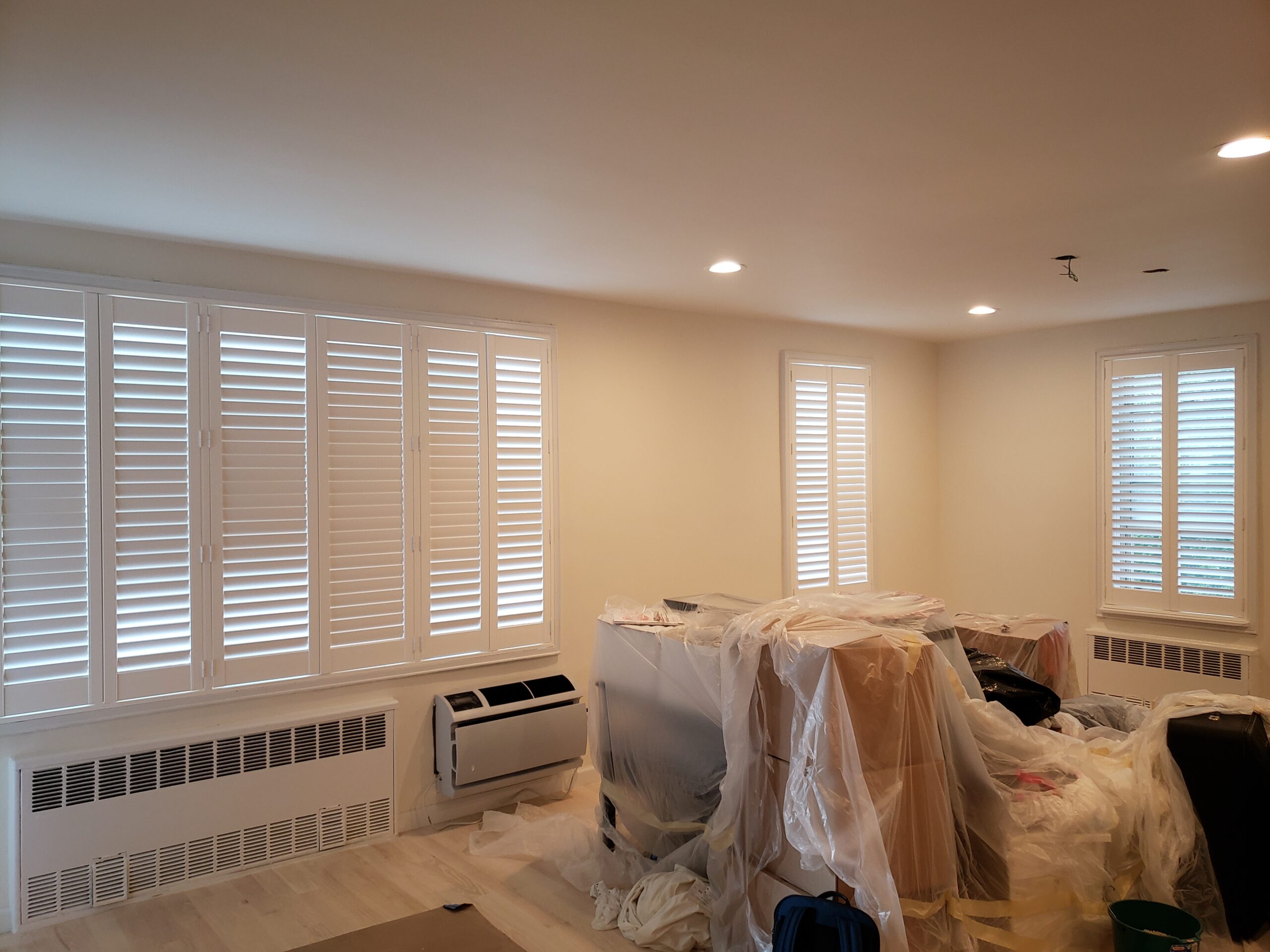
Cleaning and damage: plan for the window that gets knocked
A commercial installation is maintained rather than admired, so choose partly on how it survives a cleaning crew. Flat surfaces win: rollers, screens and verticals wipe down, while pleated and gathered fabric near food cannot be cleaned in place.
Verticals have an advantage people forget: vanes replace individually, so a damaged vane on a busy door wall is a five-minute fix rather than a new shade. Ordering a few spares with the job is cheap insurance.
Best for high-traffic spaces, food service, door walls, nightly cleaning.
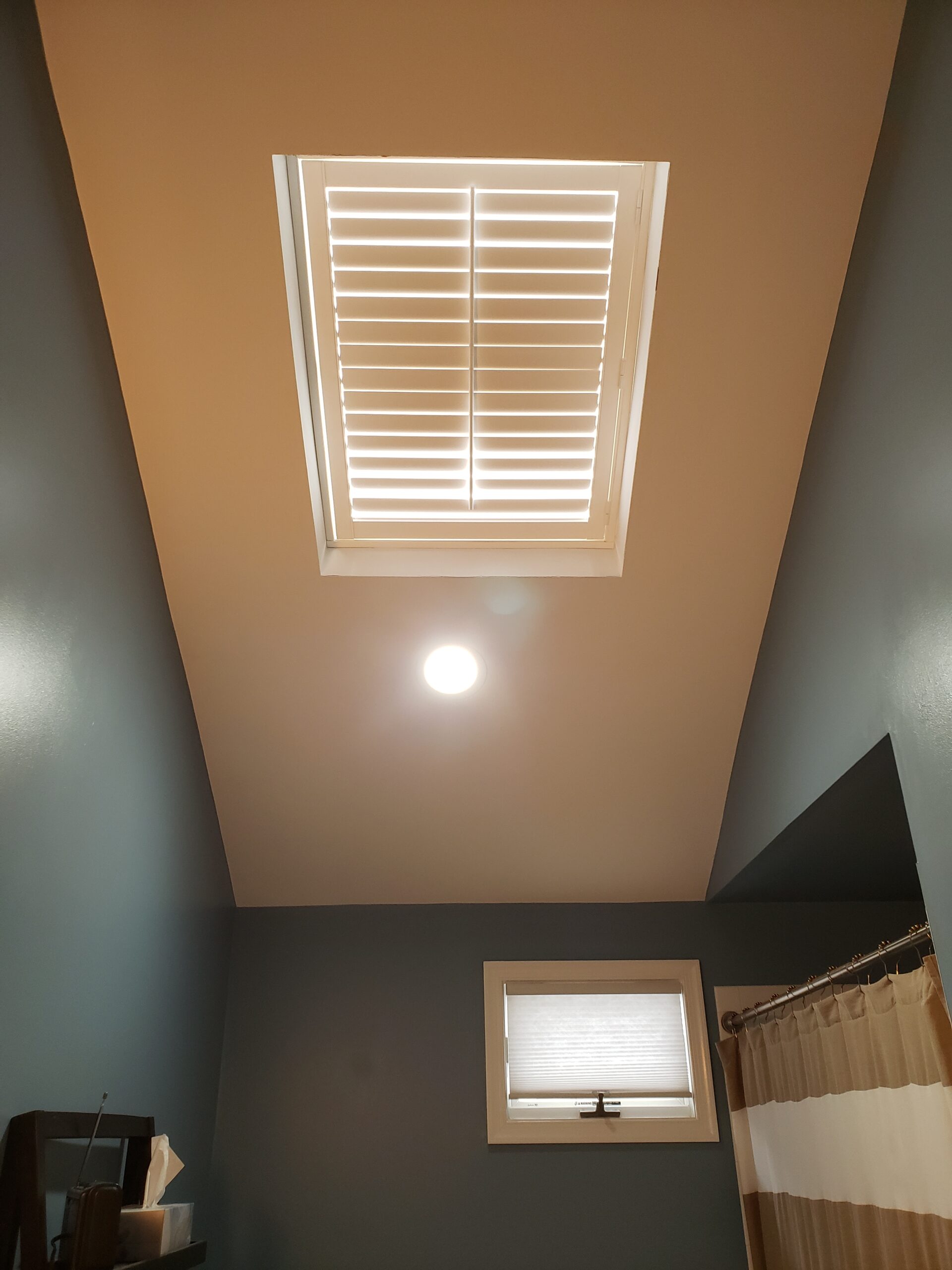
Matching an existing spec across a whole building
A large share of commercial work is not a new scheme. It is twelve more of whatever is already hanging on the third floor, and matching it is harder than specifying it new.
Fabric name, colour and openness are the obvious things to match, and they are often printed on a label on the headrail. The less obvious ones cause more trouble: mount, headrail style, roll direction and control side. Roll direction is the one nobody thinks of and everybody notices — a run where one shade rolls off the back of the tube and its neighbours roll off the front reads as a mistake from the doorway.
Then the part nobody wants to hear. Mills discontinue colours and run new dye lots, so a fabric bought four years ago may still exist and still not match. A near-match is more visible than a clean change: two greys that are almost the same catch the eye every time. Where the original is gone, redoing one complete elevation is usually the better answer, and we will say so even though it is the larger order.
- Roll direction and control side. The two details people forget and the two you notice from the doorway.
- Mount depth varies. One window with a shallower jamb changes how the whole run mounts.
- Dye lots drift. Same fabric, later run, slightly different colour. Order a full elevation at once.
- Keep the paperwork. The fabric name on the headrail label is the difference between a phone call and starting over.
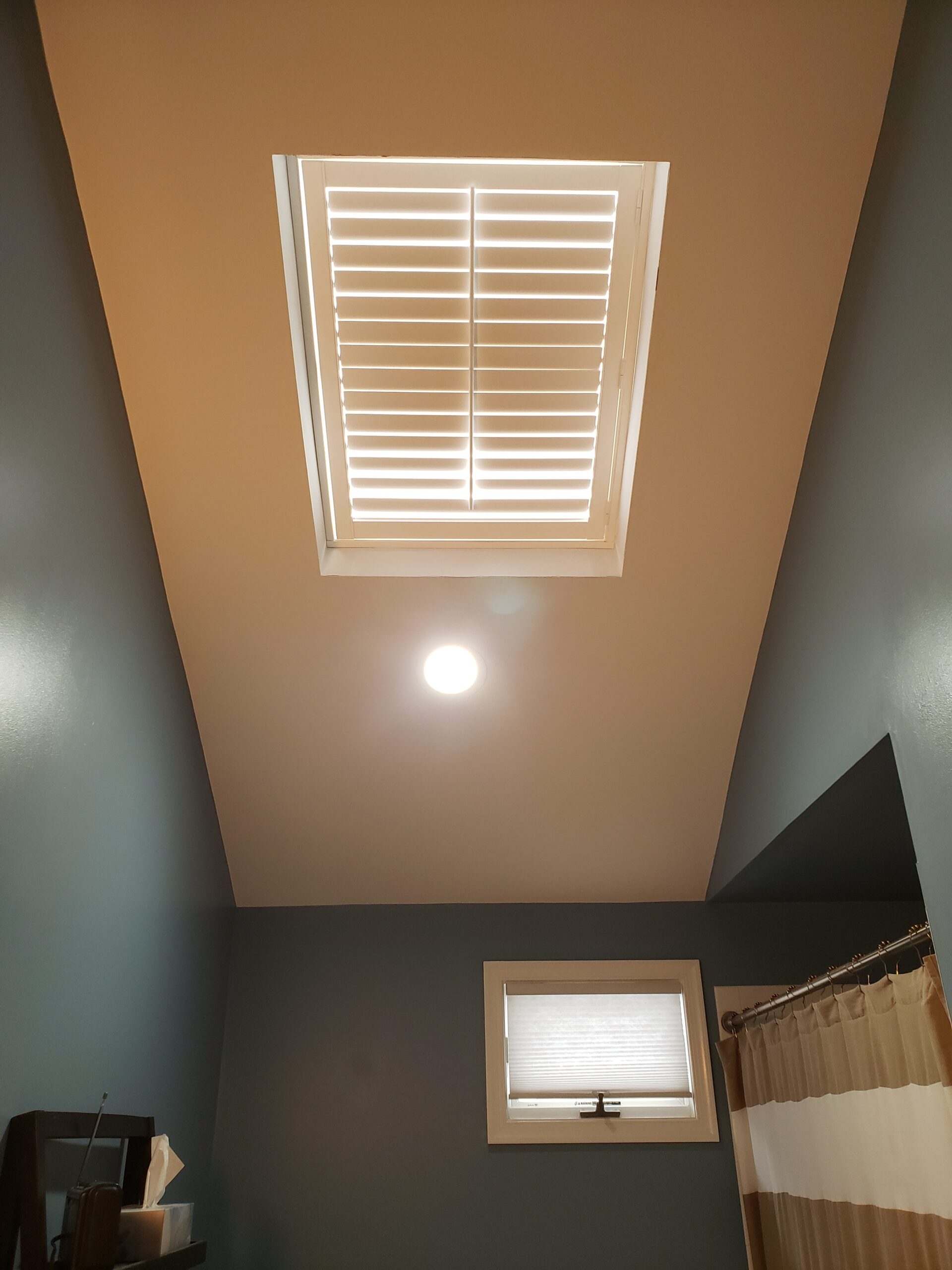
Installed after hours, so the space keeps working
The install date is the part of a commercial quote that actually affects the business. Settle these before you order.
Evenings and weekends
A dining room cannot lose a Friday and a clinic cannot lose a morning. Tell us the hours the space is empty and the visit is planned around them.
Restaurants, clinics, salonsPhased by floor or zone
Large runs go in sections, so no area is out of use for long — and the first section proves the spec before the rest is made.
Large ordersBuilding access, settled early
Loading dock hours, freight elevator booking, after-hours entry, and whatever paperwork the building asks of an installer. Get that list at the quote stage.
Managed buildingsPower for motors, planned first
Battery, plug-in or hardwired belongs at the start. Retrofitting power into a finished ceiling is the expensive way to end up with motorized shades.
Motorized runsThe packaging leaves with us
Every shade arrives in a box, and forty shades is a lot of boxes. They go out with the van, not into your dumpster.
Every installThe spaces we fit across Bergen County and the Tri-State
Family-owned since 2007, and the people who measure and install in houses do the commercial work too. Sejun Park specifies the job herself.
Most commercial work lands on three products: a solar screen where there are screens and a view worth keeping, a roller or blackout roller where a room has to go dark, and vertical blinds on wide sliders and door walls.
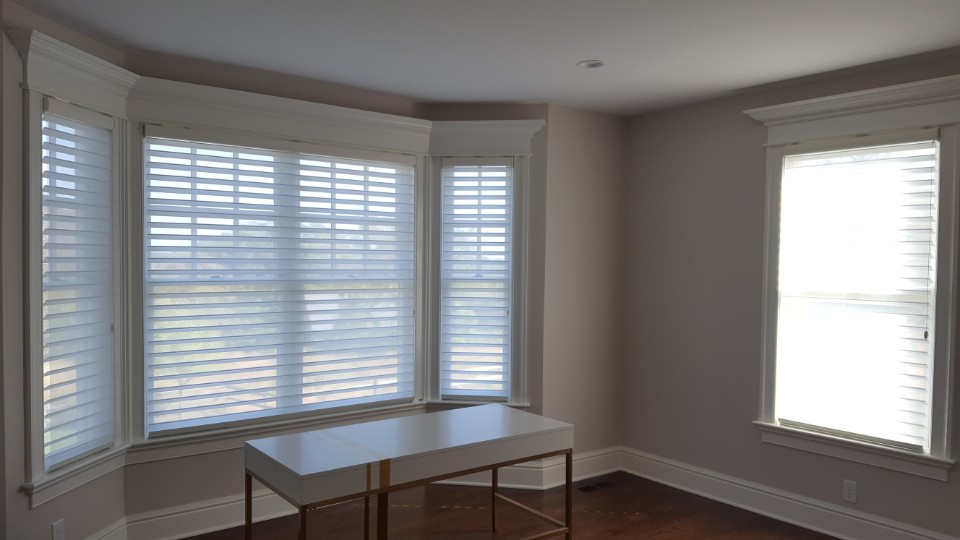
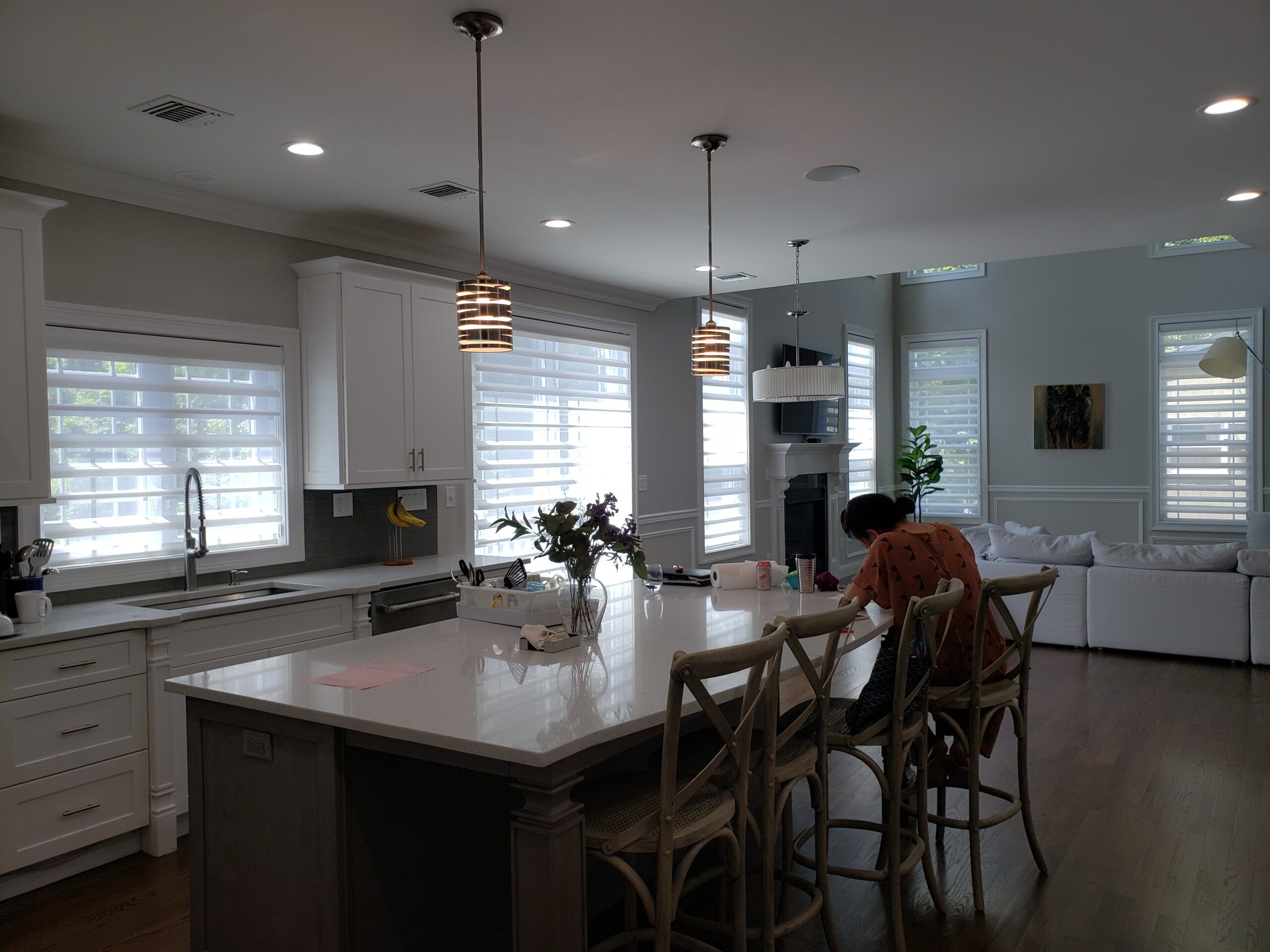
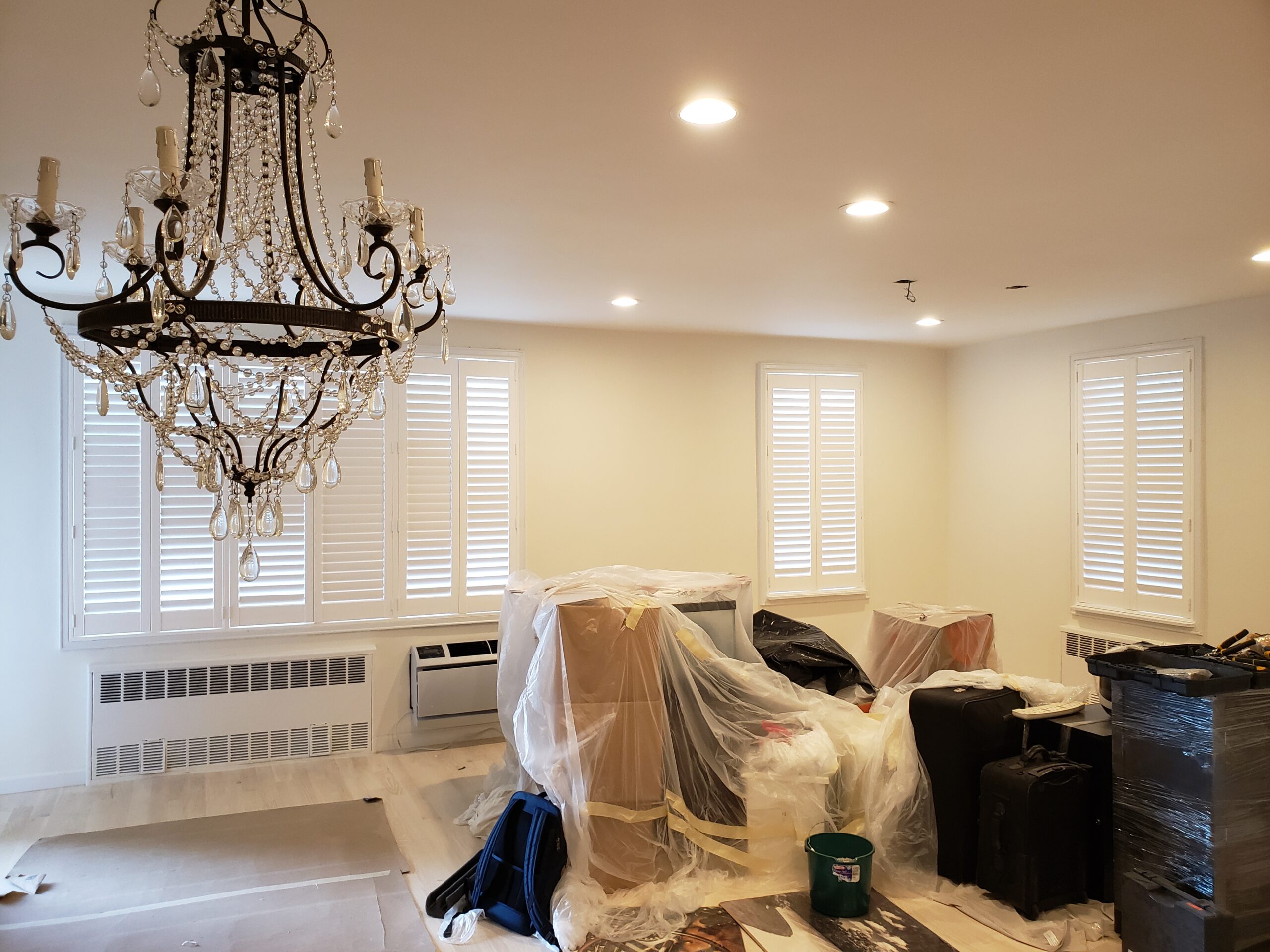
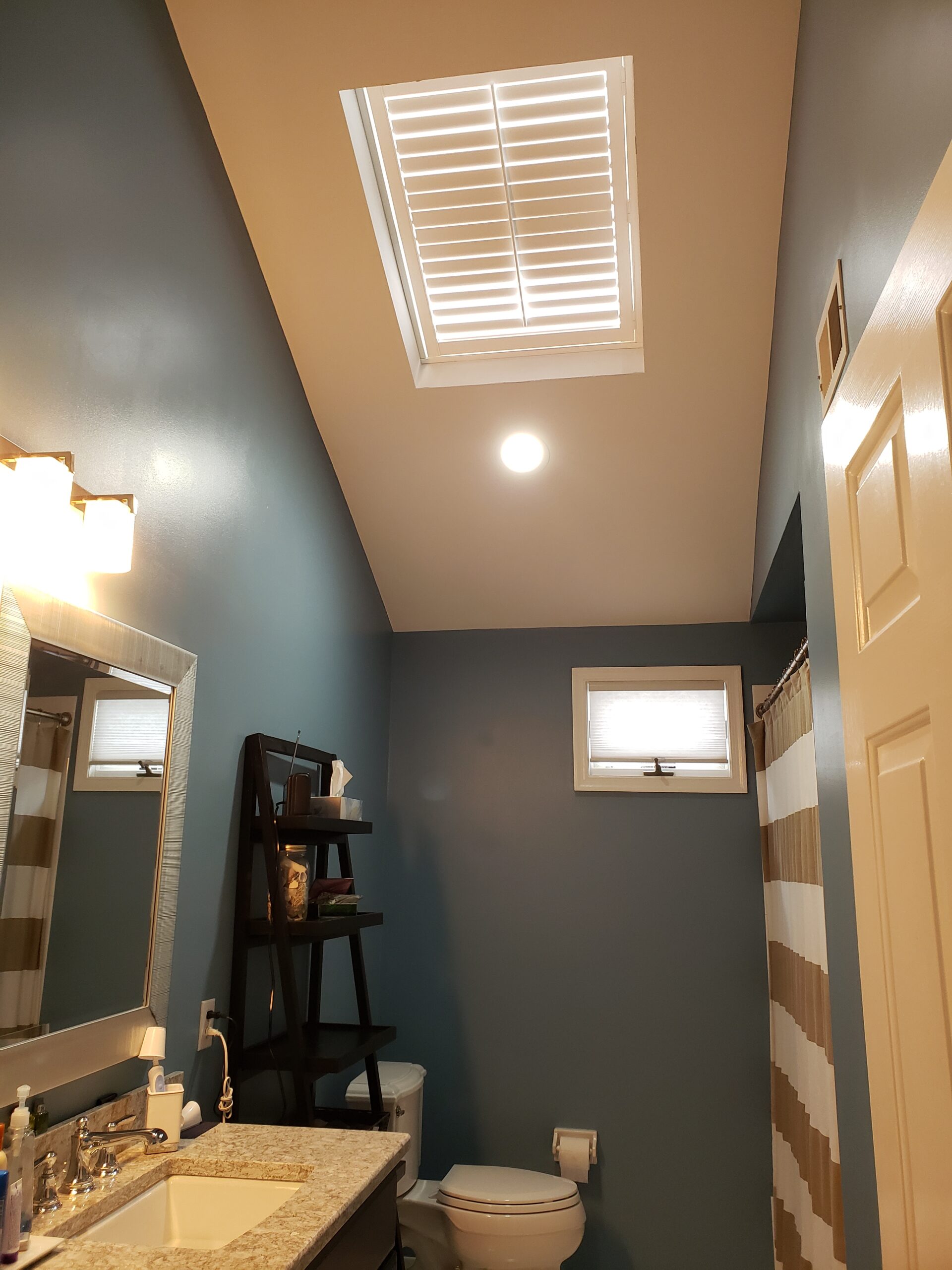
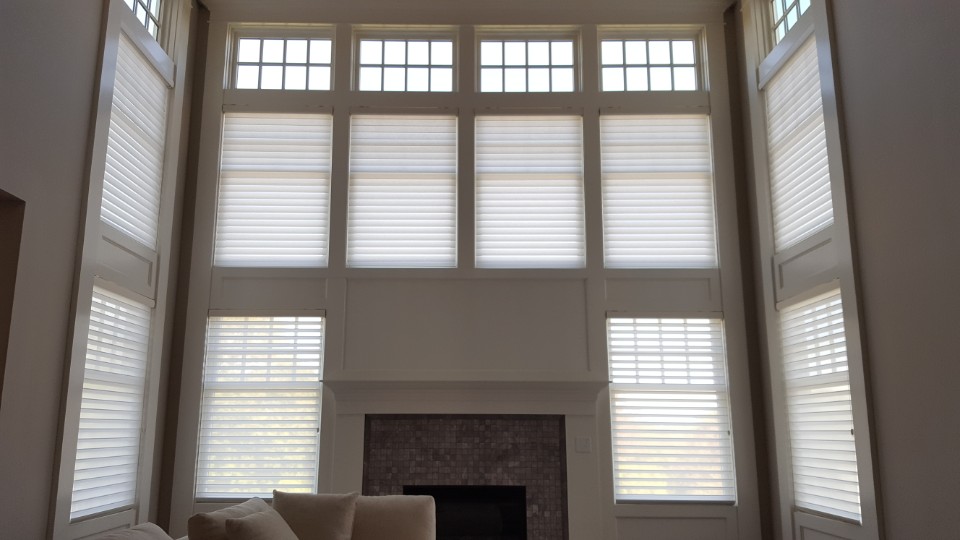
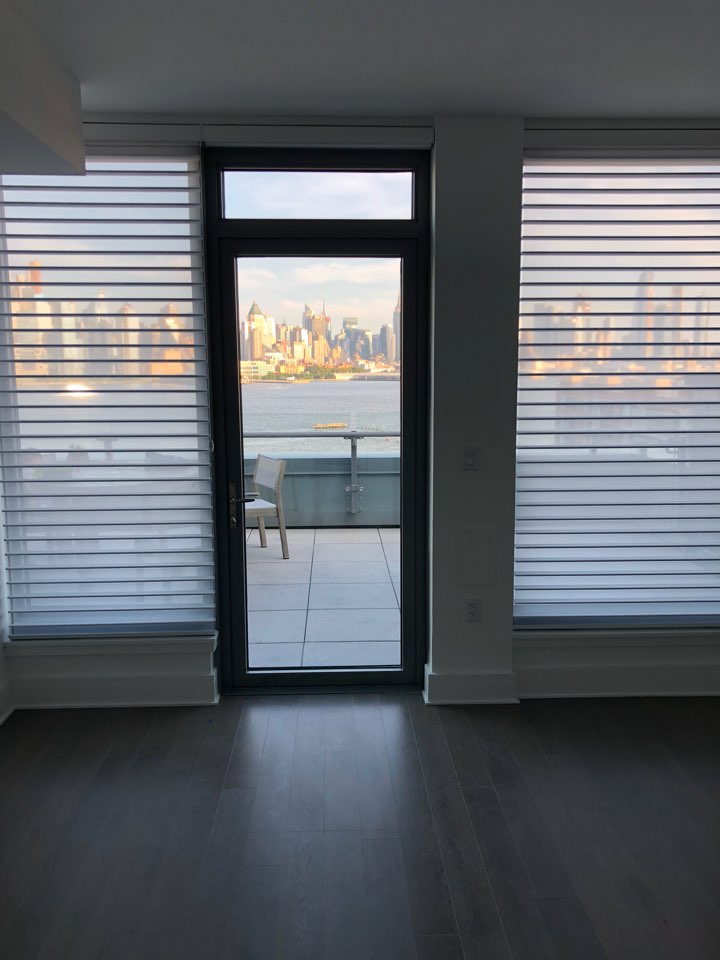
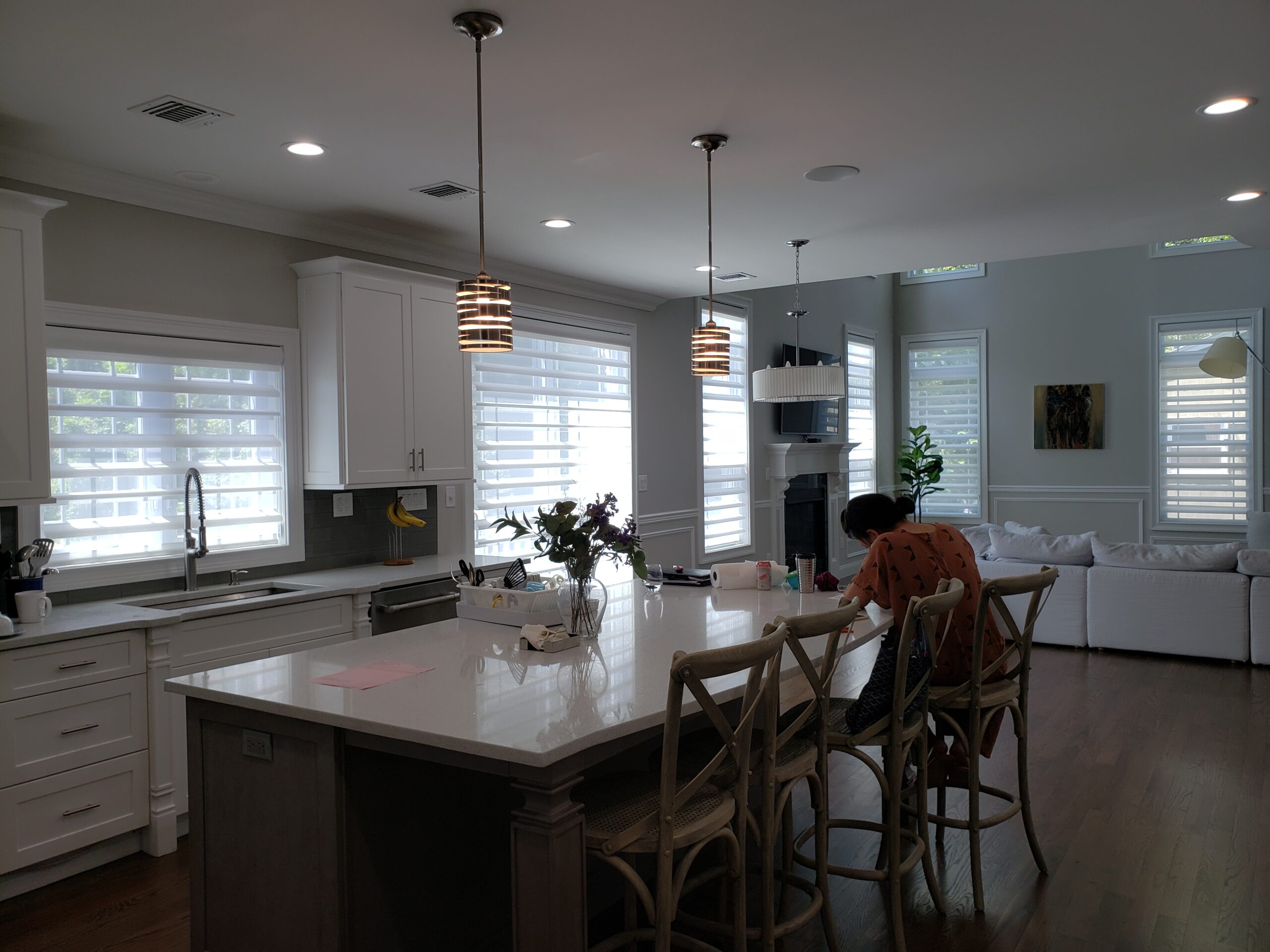
Commercial work we have installed
No stock photography, no showroom staging — homes and offices across Bergen County and the Tri-State.

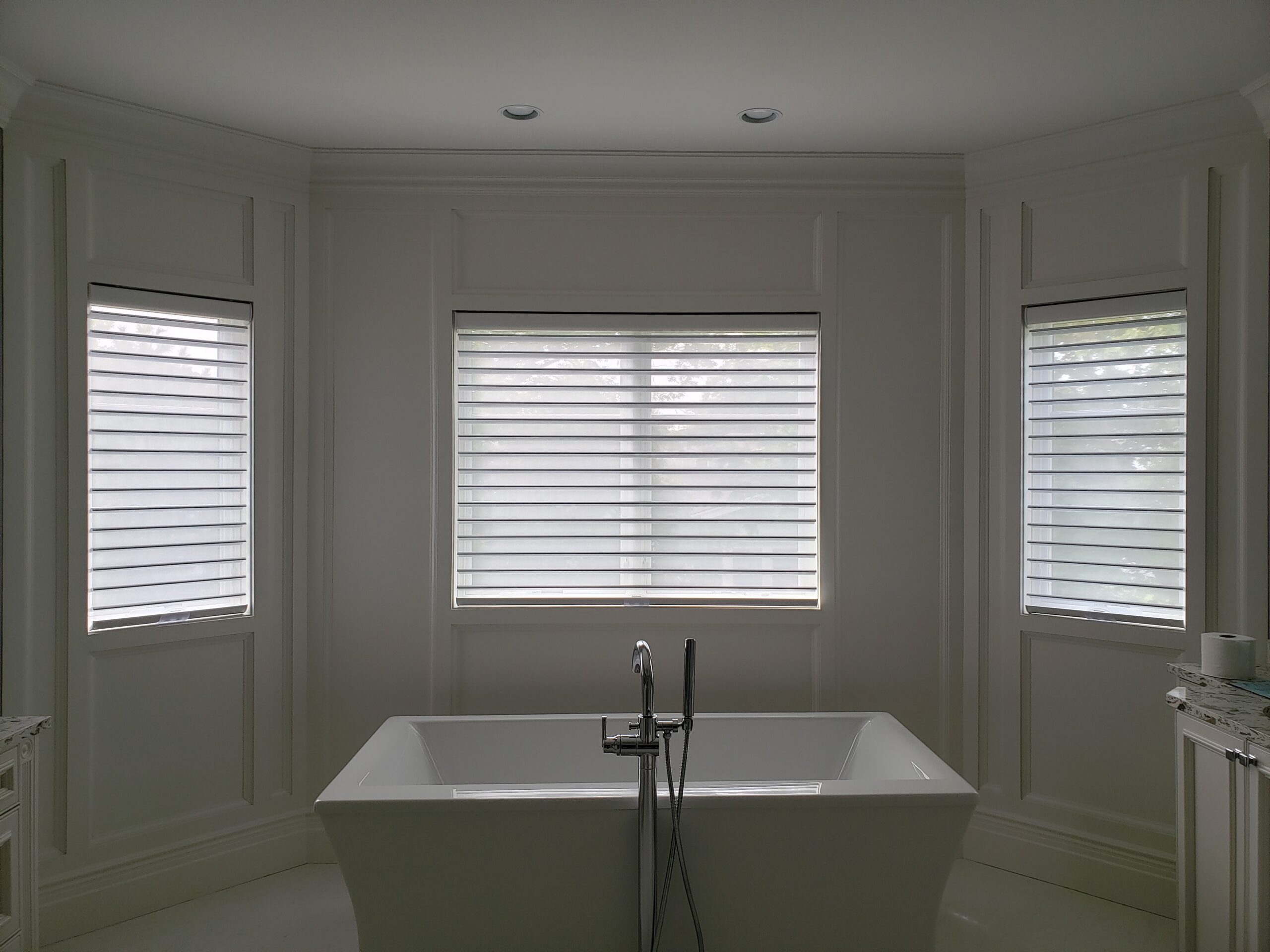

What actually drives the price
Commercial jobs are still priced per window — there is no per-square-foot shortcut — but the things that move the number are not the ones that move a house.
01How many windows, and how alike they are
Repetition matters more than count. Forty identical openings is the best case: one spec, one measure pattern, one install rhythm. Forty windows where no two are alike is a different job at the same count, and the difference lands in labour rather than in fabric.
02Fabric grade and fire rating
Contract-grade fabrics cost more per yard than residential equivalents, and a fire-rated version of a fabric is often its own line at its own price. Establish whether a rating is required at the start, because a fabric with no rated equivalent means starting the selection again.
03Motorization and how power reaches it
A motor is priced per shade, so grouping shades on one remote saves less than people expect. The variable is power: battery needs recharging, plug-in depends on an outlet being where the shade is, and hardwiring is cleanest and gets planned with an electrician.
04Access, height and hours
After-hours installation, glass high enough to need a lift, and restricted loading or elevator access all move the installation line. On a house this is a small part of the quote. On a commercial job it is sometimes the largest variable in it.
Why we don't publish a price list. Two windows in the same room can price differently once you account for size, fabric and mount. We measure and quote every window during the free consultation, so you see the number before anything is ordered. Book one here.
From site visit to installed, usually about two weeks
Free consultation
We come to you, so you're judging the room in the light the shade will actually live in.
Measure & design
Every window measured to the sixteenth, with a designer's eye on mount, stack and fabric.
Made for your window
Hunter Douglas or our own Korean workroom — built to your opening, never trimmed from stock.
Installed & tidy
Professionally hung, tested, and the packaging leaves with us. Usually a single visit.
Commercial window treatment questions
Do you do commercial window treatments?
Yes. Offices, restaurants and bars, salons and studios, medical and dental suites, and multi-unit residential buildings, alongside the residential work. Installs are scheduled around the hours the space is open. See areas we serve.
What is the best window treatment for an office?
For most offices, a solar screen shade at 3% or 5% openness — it cuts glare on monitors and blocks heat and UV while keeping the daylight and the view. Two exceptions: a conference room used for projection also needs a darkening layer, and a ground-floor office needs a closed fabric, because a screen gives no privacy after dark.
Can you install after hours or on a weekend?
Yes, and on commercial work that is usually how it is done. Installs are scheduled outside opening hours, and large runs are phased by floor or zone so no area is out of use for long. Tell us the hours the space is genuinely empty and any loading dock or elevator rules.
What are fire-rated window treatments, and do I need them?
Fire-rated means a specific fabric has passed a flame test — NFPA 701 is the standard most often named on US commercial specs. It applies to that fabric in that finish, not to a product family, so a roller shade is not fire-rated in itself while a particular roller fabric may be. Whether you need one is decided by your code official, your landlord or your insurer. Ask for the certificate in writing before you order.
Can you match window treatments already installed in our building?
Usually, if we can identify what is there. Fabric name, colour and openness are often on a label on the headrail. We also need the mount, headrail style, roll direction and control side, because those are the differences you notice from the doorway. Where the original fabric is gone, redoing one complete elevation usually looks better than adding a near-match.
Do you work on apartment and condo buildings?
Yes, both individual units and building-wide standards. Many boards specify what the street sees — usually a uniform liner colour — and leave the resident free to choose the fabric behind it. That only works if the standard is written down, because units get done one at a time over years.
Can commercial shades be motorized?
Yes, and the case is stronger commercially than at home — a shade nobody is paid to adjust does not get adjusted, so a schedule does the job a person forgets. Decide early how power reaches each motor: battery, plug-in or hardwired.
How long does a commercial order take?
About two weeks from approval to installation for most orders, the same as our residential work. Larger runs are phased, so the first section goes in while the rest is still being made. Contract-grade and fire-rated fabrics can take longer because they come from the mill.
What commercial spaces usually end up with
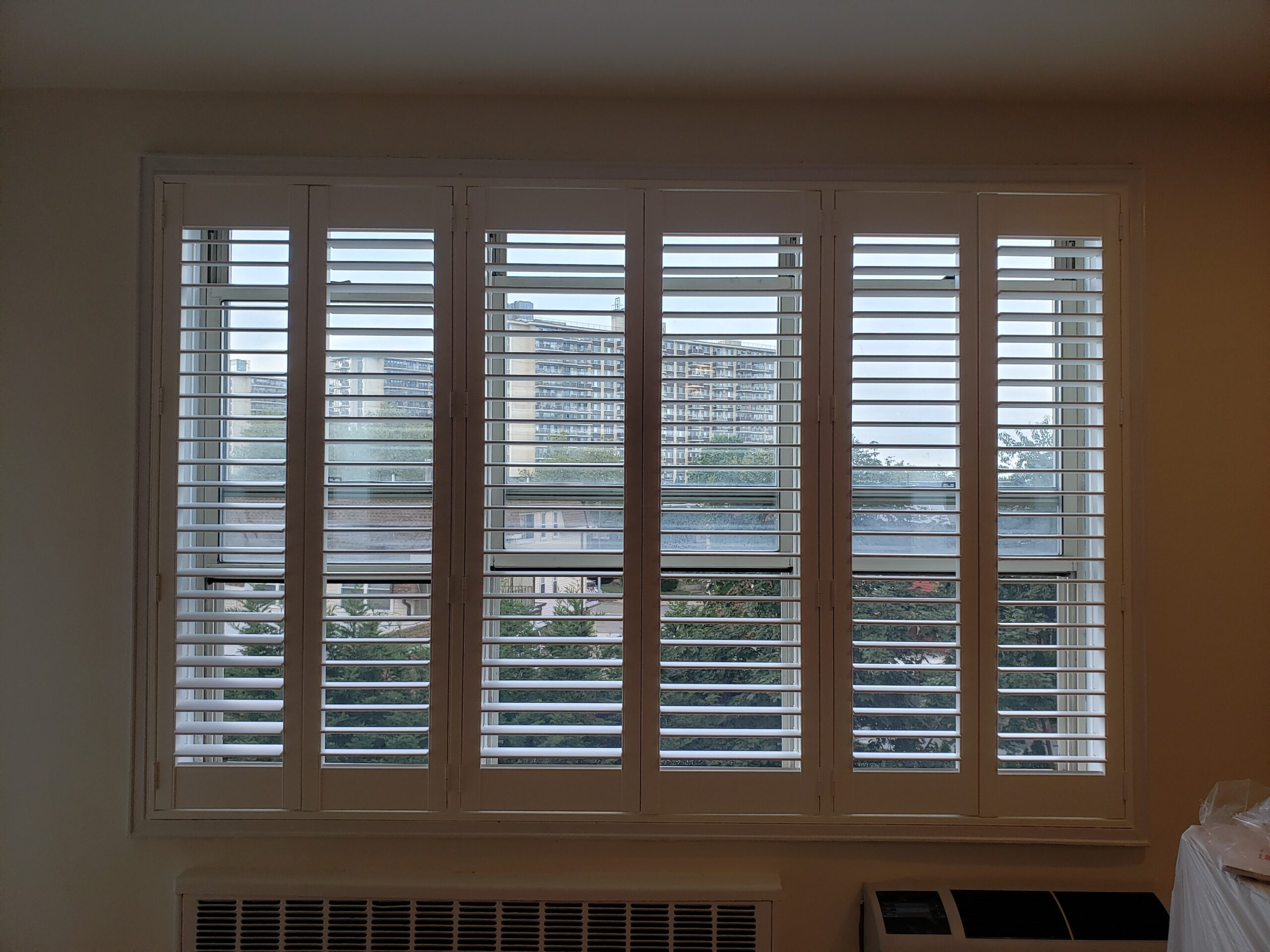 Plantation ShuttersBuilt into the frame, never raised
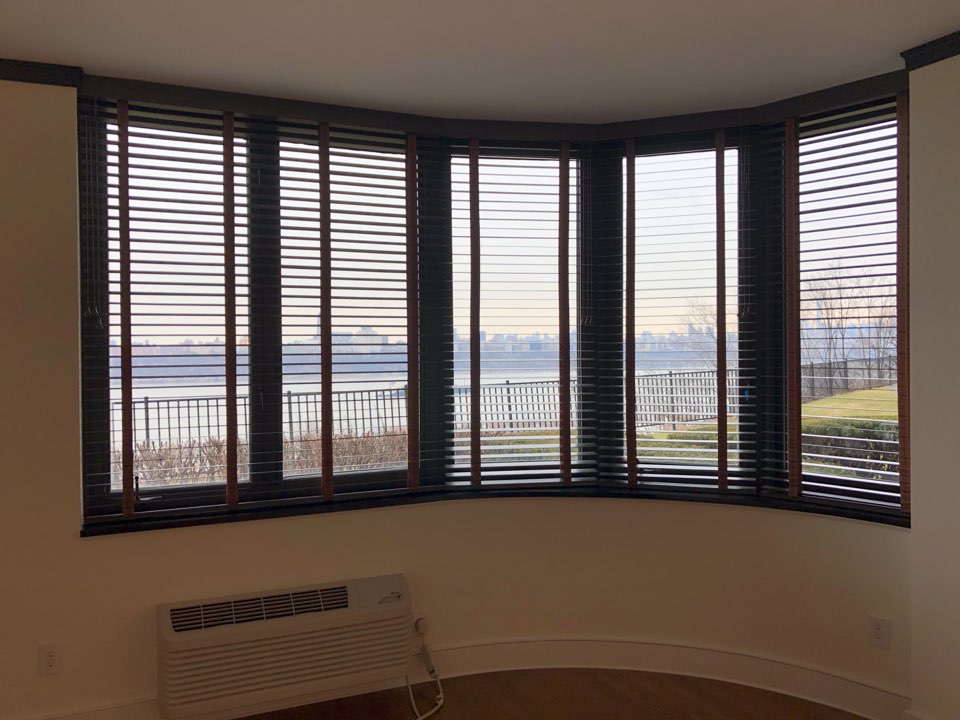 BlindsWood, faux wood and vertical
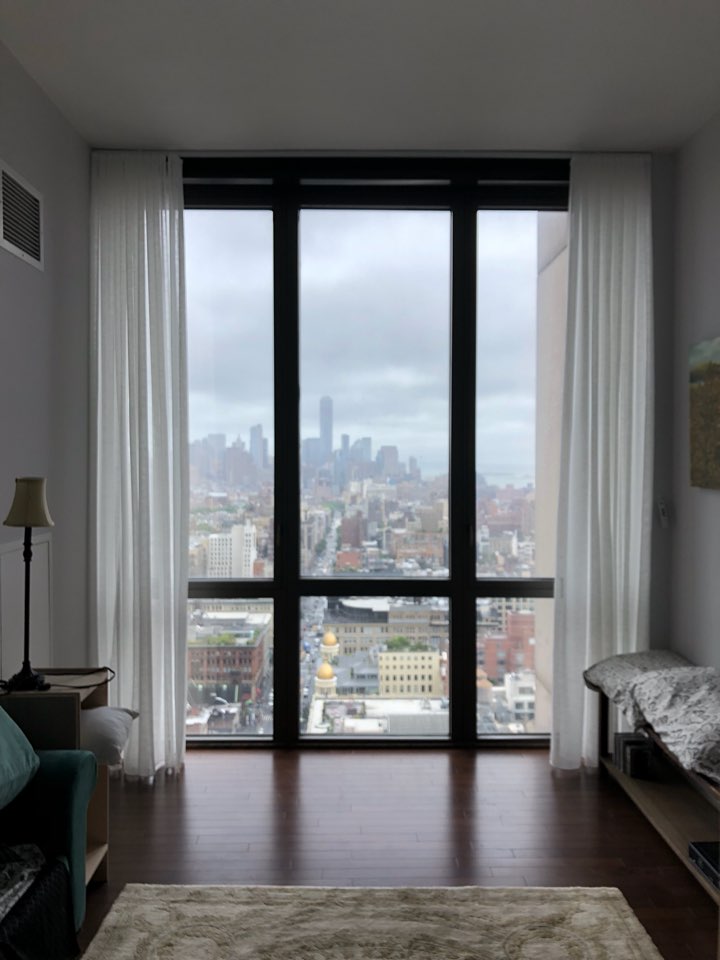 Drapery & CurtainsFabric, fullness and a proper track
4.9 across 314 Google reviews
“My experience with The Curtain for Hunter Douglas Honeycomb Applause installation was outstanding. The initial consultation was thorough, and they offered a wide range of options to suit our needs. Installation was completed efficiently in just a couple of hours for 15 large windows. This was the best home improvement experience I have had.”
★★★★★ a year ago
“I have Hunter Douglas honeycomb shades and the system was broken and it could not pull up. I called and they were able to come the next day and fix it on the spot. The whole experience was great.”
★★★★★ a month ago
“I'm very happy with how my shades turned out. The team was communicative, knowledgeable and professional throughout the whole process — and their price was very reasonable compared to some other places we reached out to.”
★★★★★ a year ago
Visit the showroom
Prefer to see things in person before we come to you? We're on Broad Avenue in Palisades Park, a few minutes from Fort Lee and the GWB.
- 547 Broad AvenuePalisades Park, NJ 07650
- Mon–Fri 10–7 · Sat 10–5Closed Sunday
- (201) 302-9111We usually pick up on the first ring