Faux Wood Blinds
Composite and PVC slats that read as painted wood and behave nothing like it. Faux wood goes where real wood fails — steam, splash, hard cleaning. It has one limit of its own, and that limit is weight.
 ★★★★★ 4.9 · 314 reviews (314)
 Partner
~2 weeks to install~2 wks
Partner
~2 weeks to install~2 wks
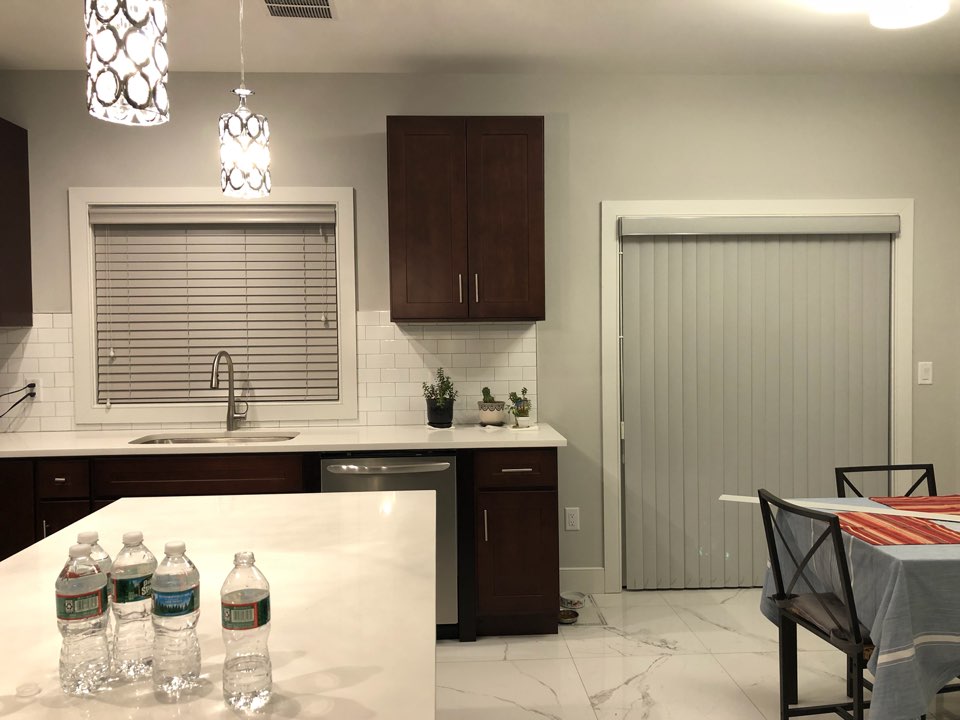
What faux wood blinds are actually made of
Two different products share the name. Which one you are being quoted explains most of the price difference and all of the weight.
Solid PVC is a moulded vinyl slat with nothing inside it. Composite is an engineered wood core wrapped in a PVC or polymer skin. Both are sold as faux wood and both read as painted wood from six feet away. Vinyl is the more common and the less expensive, and it is the heaviest material on this page. Composite is lighter and stiffer at the same slat size, which matters more than it sounds like it should, because almost every limitation of a faux wood blind traces back to weight.
What neither of them is, is wood. The grain is printed or embossed. It convinces at the distance you normally stand from a window and it does not convince from two feet away. In a bathroom nobody is looking. In a formal room with stained trim, some people are, and that is worth deciding on purpose.
- Solid PVC. The default in a bathroom.
- Composite. A wood core in a PVC skin. Lighter and more rigid, so it holds a straighter line across a wide opening.
- The grain is printed. Convincing across a room, clearly not wood up close. That is the trade, and it is usually the right one.
- Water is a non-issue. No swelling, no cupping, no veneer lifting at the edge. A damp cloth and a little dish soap.
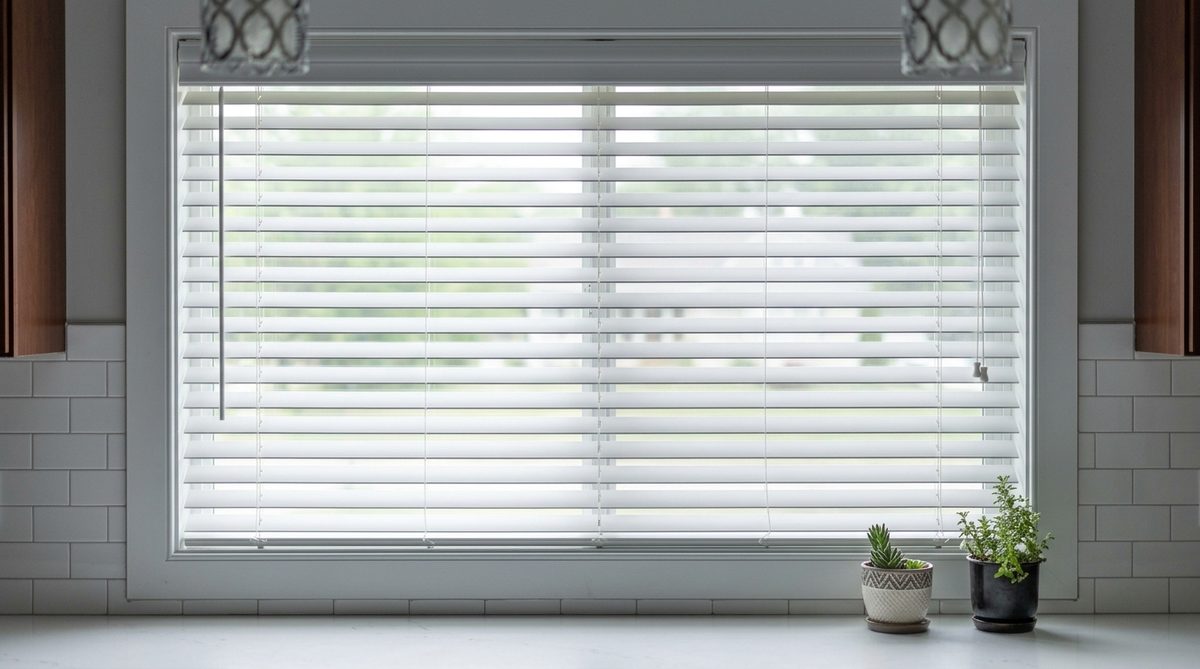
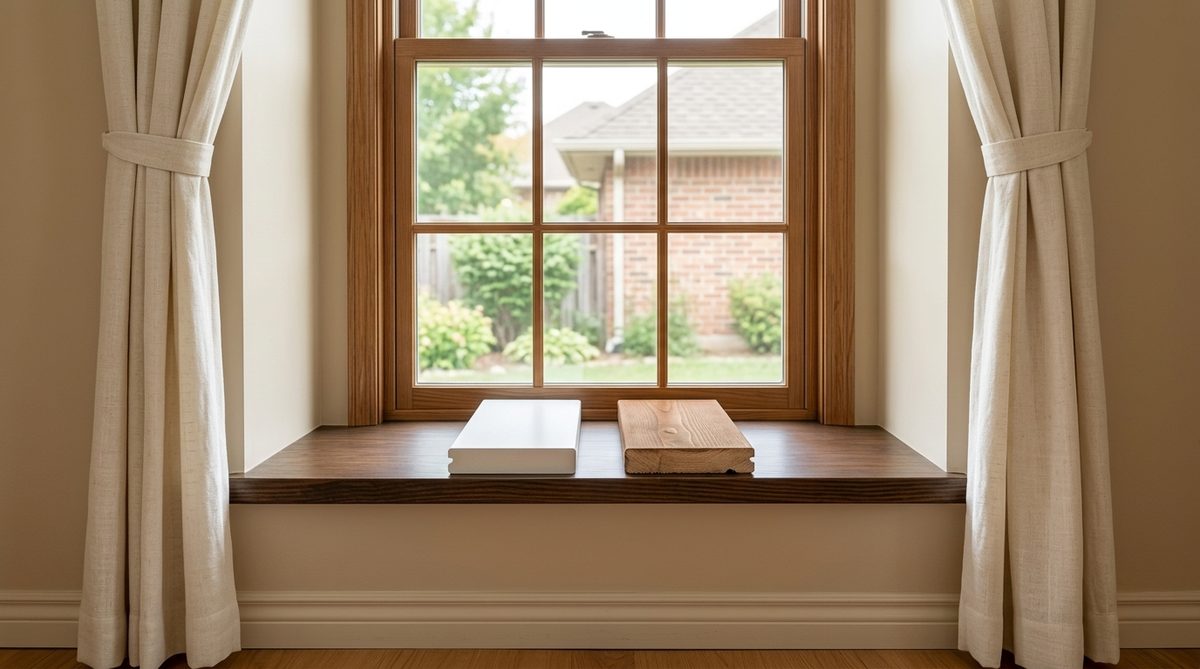
Faux wood vs real wood, decided by the window
The same blind in two materials. The right answer changes room by room rather than house by house, and it is normal to end up with both.
Choose faux wood when the room is damp or busy
Moisture is the clean case. A bathroom, a kitchen window over a sink, a laundry, a basement. Wood takes up moisture unevenly across the grain, swells, and cups — and a cupped slat never comes back flat. Faux wood absorbs nothing, so nothing moves.
The second case is traffic. It shrugs off being knocked, and it can be cleaned with something you would never put on a wood blind.
Best for bathrooms, kitchens, basements, laundries, and any window a wet hand reaches.
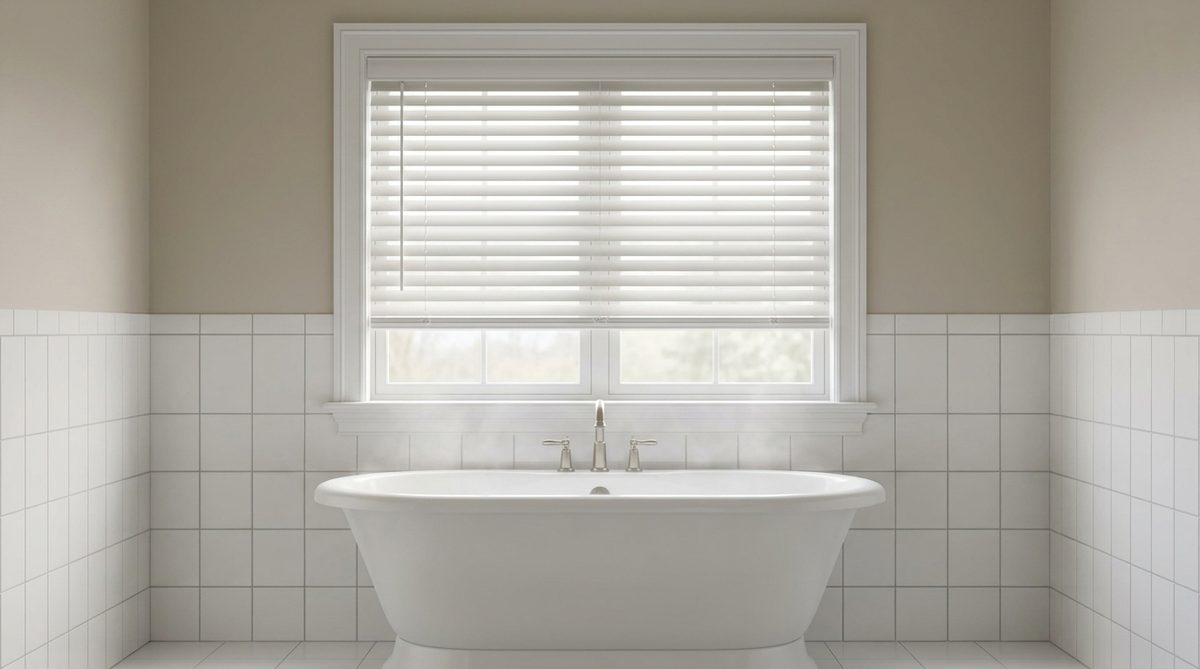
Choose real wood when the window is wide, tall or formal
Basswood weighs roughly half what a vinyl slat the same size weighs, and everything follows from that. Wood spans a wider opening before it has to be split, it is lighter to raise, and it holds a straighter line at full width.
Then there is the look. Real grain does not repeat, stain sits into the wood rather than on top of it, and beside real wood trim a printed grain shows.
Best for wide windows, tall windows, formal rooms, and anywhere the blind sits beside real wood trim.
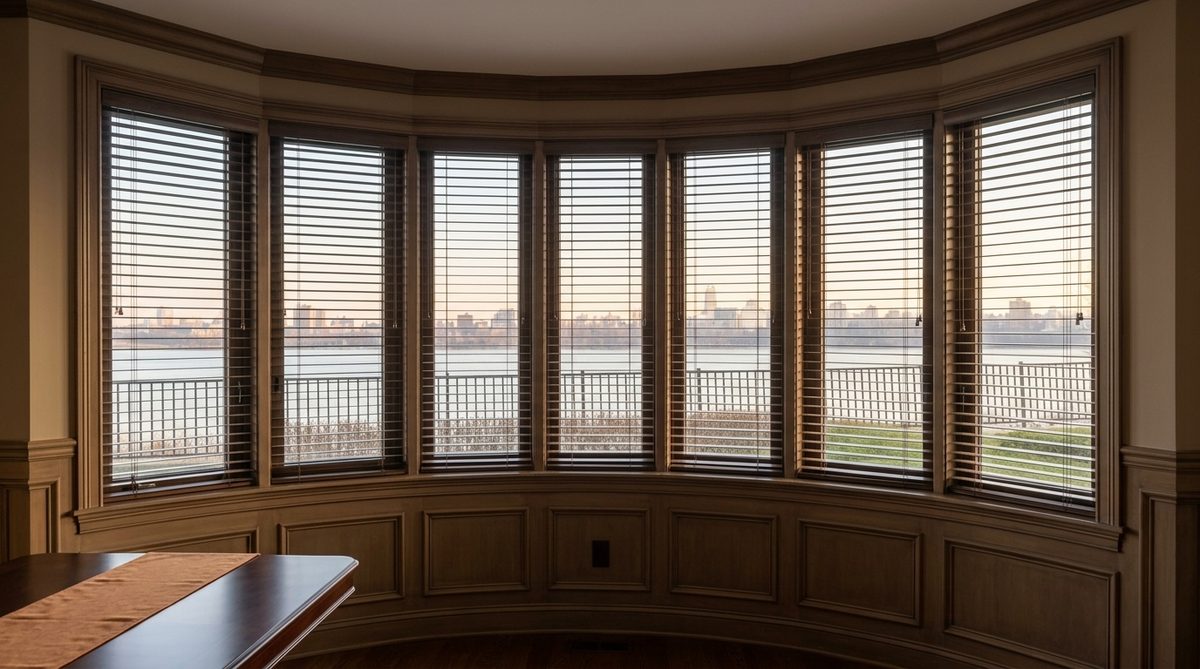
What the difference actually costs you
Faux wood is the less expensive of the two, and the gap widens as the window grows, because a wide faux wood blind needs a heavier headrail and a wood blind of the same size does not.
Everything else is a wash. Same tilt, same lift options, same mounting, same valances and tapes. Buy on the room rather than on the material, and do not feel obliged to use one product through a whole house.
Best for a house where the bathrooms get faux wood and the living room gets wood, which is what most of these jobs look like.
Why 2 inch is the default, and when it is not
Slat width changes three things at once: how much glass you see with the blind tilted open, how tall it stacks when raised, and how much it weighs. Wider is not automatically better.
2 inch
What almost everyone means by a faux wood blind. It reads as wood at a distance, tilts fully closed, and fits the depth of an ordinary frame for an inside mount.
The default2½ inch
Fewer slats for the same drop, so more glass shows when the blind is tilted open and it stacks a little tighter when raised. It needs more frame depth and weighs more per foot.
Large windows, deep frames1 inch
A mini blind in faux wood. Worth it only where a 2 inch slat would project past a shallow frame or look oversized — a basement hopper, a narrow window over a tub.
Small or shallow openingsRouteless slats
Standard slats have a hole punched through each one for the lift cord. Closed, that is a column of pinpricks of light. Routeless slats notch the edge instead, so a closed blind actually closes.
Ask for it in bedroomsCloth tape solves the same problem from the other side. A woven tape down the face of the blind hides the route holes and the ladder strings — and it reads traditional, which is either what you want or exactly what you do not.
The one thing faux wood is bad at
Weight. A vinyl slat is roughly twice the mass of basswood the same size, and on a wide window that stops being a specification and becomes something you see from the doorway.
A blind is a stack of unsupported slats carried by ladder strings spaced along its width. The wider the blind, the further each slat spans between strings, and the more its own weight pulls the middle down. On a narrow window nothing happens. Past a certain width a faux wood blind bows visibly: the bottom rail dips, the closed slats stop reading as a straight line, and raising it becomes a chore.
Most faux wood lines cap a single blind somewhere in the six-foot range, and the lines that go wider do it with a heavier headrail rather than a better slat. That cap is not a suggestion. A blind ordered at the very top of its range looks fine in year one and tired by year five. So a wide window has three honest answers, and the right one depends on the room rather than the budget.
- Split it into two. Two blinds on one continuous headrail, meeting in the middle. Each half sits well inside its limit, the valance runs unbroken, and you get independent control of the two halves. This is the answer most of the time.
- Switch to real wood. Half the weight buys real width. On a wide window where nobody wants a seam down the middle, this is the reason to spend the difference.
- Use a shade instead. Past a certain size a horizontal blind of any material is the wrong tool. A shade covers the same opening as one clean surface, with no seam and nothing to sag.
- Direct sun is the other one. Sustained heat can soften a solid vinyl slat into a permanent bend. On a hard south or west window, specify composite.
The width where this starts belongs to the line rather than to the category, so ask about the specific blind you are quoted. We measure first and tell you where your window sits — and if the answer is real wood or a roller shade, we would rather say so.
Faux wood blinds for bathrooms and kitchens
This is the category faux wood exists for, and the one place we do not present it as a compromise.
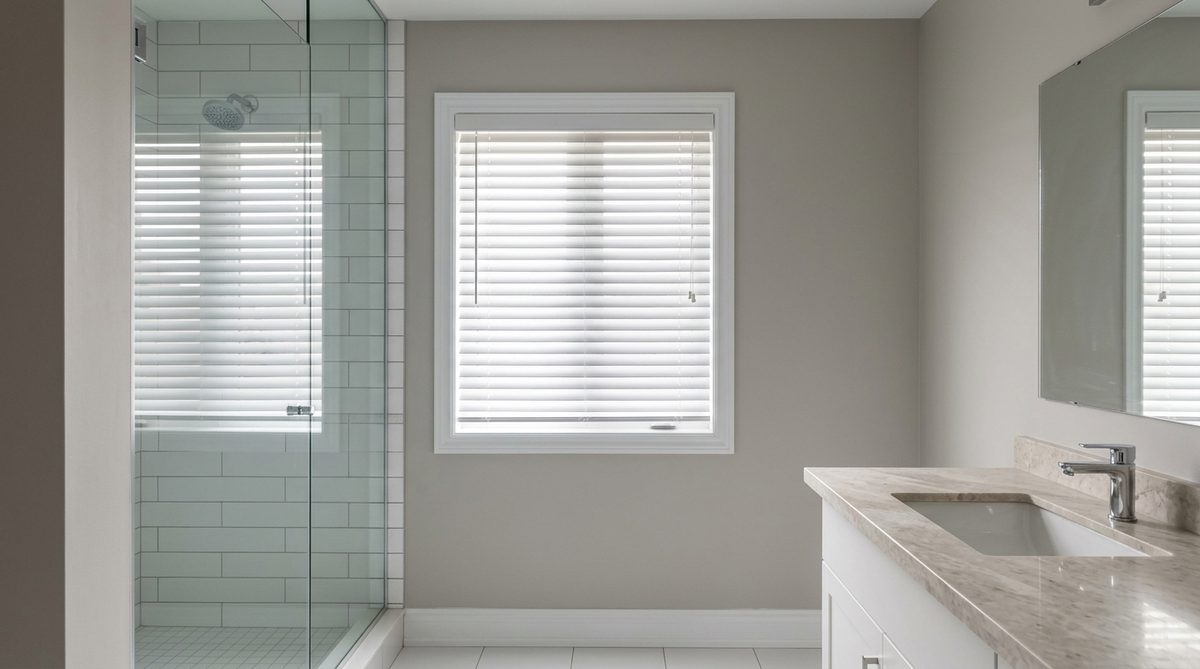
Bathrooms: the clearest case there is
A bathroom window sits in warm wet air twice a day. Wood absorbs it, swells across the grain and cups, and no amount of ventilation stops that over a few years. Faux wood absorbs nothing.
Two details matter more here than anywhere else. Ask for routeless slats if the window faces a neighbour, because a bathroom is where a line of pinholes at eye level actually gets noticed. And mount inside the opening where the frame allows, so the headrail stays out of the splash.
Best for every bathroom window, including the one over a tub, where we would not fit real wood at all.
Kitchens: yes, with one exception
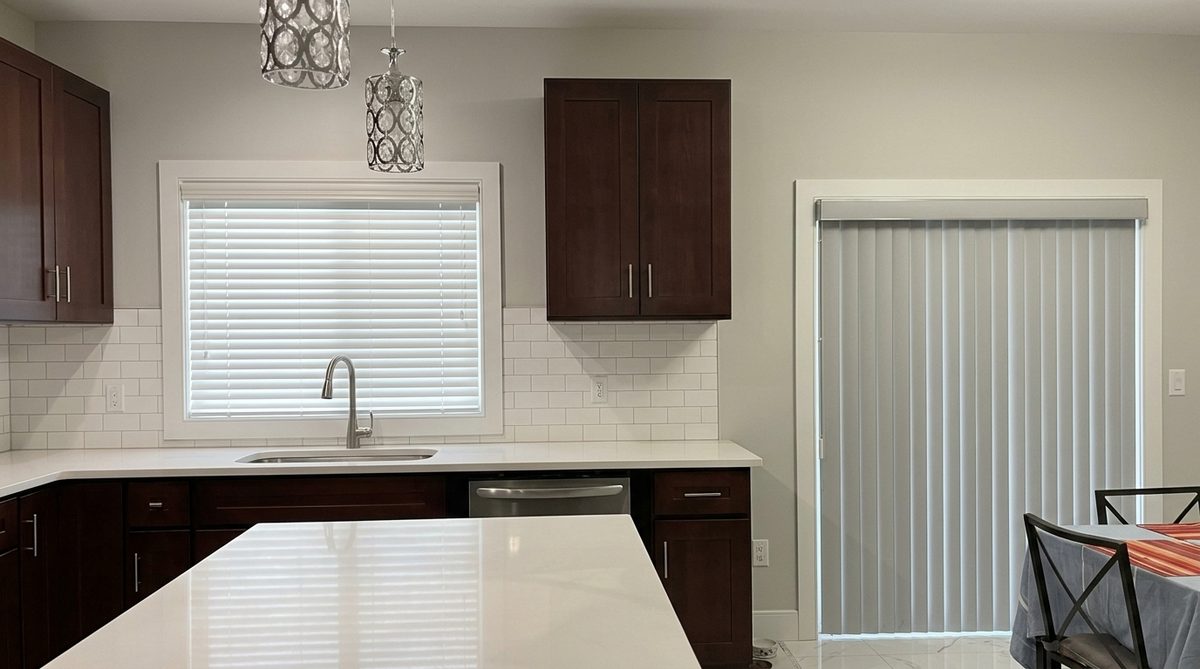
Steam, spray off a sink and general kitchen grease are all fine. Faux wood wipes down properly rather than being dusted, which is more than can be said for a wood blind or a fabric shade in the same position.
The exception is directly over a cooktop. A horizontal blind there presents twenty-odd upward-facing surfaces to airborne grease and becomes a cleaning job nobody does twice. A wipeable roller shade is the better answer.
Best for over the sink, on side windows, in breakfast nooks. Not directly above a range.
The rooms nobody photographs
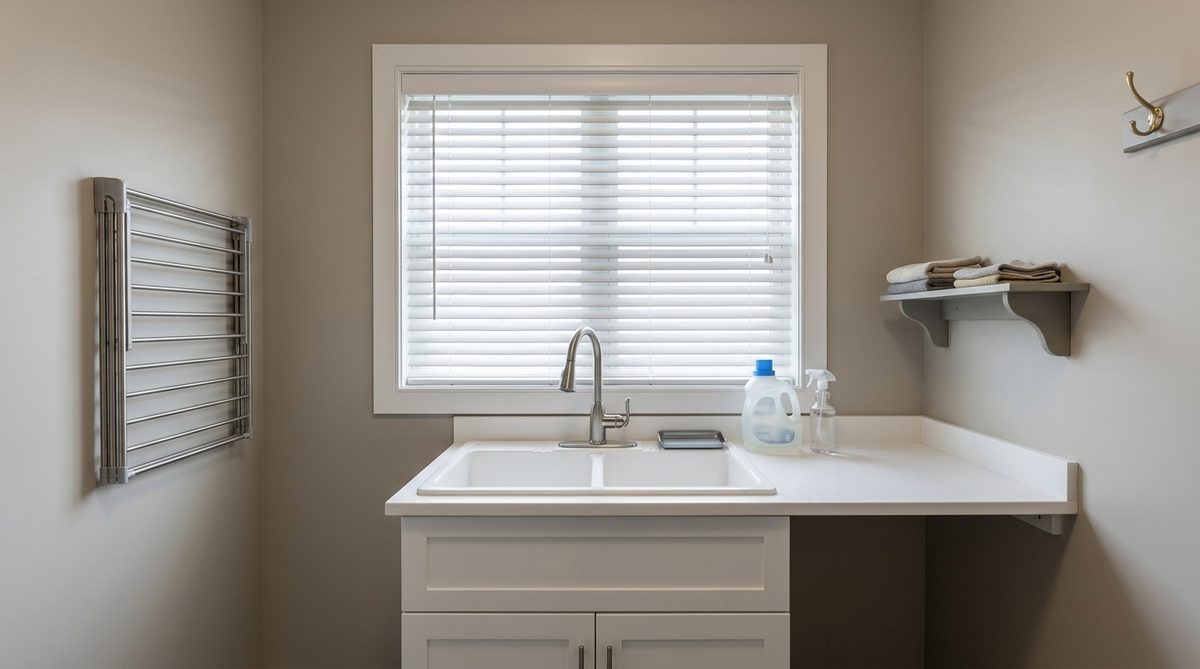
Cold glass, damp air, and a window that gets knocked by a laundry basket. This is where faux wood quietly does its best work.
Small openings down here often suit a 1 inch slat rather than a 2 inch, particularly a basement hopper window where the frame is shallow and a wide slat cannot tilt fully without catching the reveal. Small thing to get right, irritating to get wrong.
Best for basement windows, laundry rooms, mudrooms and garages.
Cordless faux wood blinds, and the other controls
Two mechanisms live on every blind: one tilts the slats, one raises the whole thing. You choose them independently, and on faux wood the weight decides more than taste does.
Cordless lift
Push up, pull down, and a spring in the headrail holds it where you stop. Nothing hangs beside the window, which is the right default in any room a young child uses. The caution is size: the spring is holding up a heavy blind, so a very wide or tall one gets stiff.
The default nowMotorized
A motor in the headrail, tilting and lifting from a remote or on a schedule. It earns its cost on a window you cannot comfortably reach — above a stair, behind a sink, over a tub.
High and awkward windowsWand tilt
A short rigid wand you twist to angle the slats. Nothing to tangle, nothing hanging in a loop, and it pairs with either lift.
Standard tiltCorded lift
Still the smoothest way to raise a genuinely heavy blind, and still the reason cordless became the default everywhere else. In a room a small child uses, take the cordless.
Wide or heavy blinds onlyFaux wood blinds we have installed
No stock photography, no showroom staging — homes and offices across Bergen County and the Tri-State.
What actually drives the price
Priced per window, and at the more affordable end of what we make. Five things move the number, and only one of them is size.
01Solid vinyl or composite
The biggest single lever. PVC is cheaper and heavier; a composite core costs more and holds a straighter line. On a small bathroom window the difference is not worth paying for. On a six-foot window it is close to the whole decision.
02Width, and where it steps
Cost climbs with size but not smoothly. Past a certain width the blind needs a heavier headrail; past a further point it has to be built as two blinds on one rail. Both are steps rather than slopes, which is why two similar-looking windows come back with different quotes.
03Slat size and finish
A 2½ inch slat uses more material per foot than a 2 inch. Routeless slats and cloth tapes are options rather than defaults. Small on one window, noticeable across a house.
04Lift and tilt
A wand tilt with a corded lift is the baseline. Cordless costs more, because there is a spring inside the headrail doing real work, and more again as the blind gets heavier. Motorization adds a motor and power per blind.
05Mount and the frame you have
An inside mount needs enough depth for the slats to tilt without catching the reveal. Too shallow and the blind mounts outside instead, which means a longer headrail, a wider valance and more material.
Why we don't publish a price list. Two windows in the same room can price differently once you account for size, fabric and mount. We measure and quote every window during the free consultation, so you see the number before anything is ordered. Book one here.
Measured to installed in about two weeks
Free consultation
We come to you, so you're judging the room in the light the shade will actually live in.
Measure & design
Every window measured to the sixteenth, with a designer's eye on mount, stack and fabric.
Made for your window
Hunter Douglas or our own Korean workroom — built to your opening, never trimmed from stock.
Installed & tidy
Professionally hung, tested, and the packaging leaves with us. Usually a single visit.
Faux wood blind questions we get asked
What are faux wood blinds made of?
Two materials share the name. Solid PVC is a moulded vinyl slat with nothing inside it. Composite is a wood core wrapped in a PVC skin: lighter, more rigid, and better across a wide window. Both are waterproof, and neither is wood — the grain is printed.
Faux wood or real wood blinds?
Faux wood where there is moisture or hard use. Real wood where the window is wide or tall, or sits beside real wood trim. The deciding fact is weight — vinyl is roughly twice the mass of basswood, so wood spans further before it bows. Most houses end up with both.
Are faux wood blinds good for bathrooms?
Yes, and it is the one room where we would not fit real wood at all. Wood takes up bathroom air, swells across the grain and cups permanently; faux wood absorbs nothing. Worth specifying: routeless slats if the window faces a neighbour, and an inside mount where the frame allows.
How wide can a faux wood blind be before it bows?
Do faux wood blinds come cordless?
Yes, and it is the right default in any room a young child uses. The caution is size: a spring in the headrail is holding up a heavy blind, so a very wide or very tall one can be stiff. On those windows a corded lift or a motor works better.
Should I get 2 inch or 2½ inch slats?
2 inch unless there is a reason to change. 2½ inch on a large window, for more glass when tilted open and a tighter stack when raised — it needs more frame depth and weighs more per foot. 1 inch only on a small or shallow opening.
Do faux wood blinds block out all the light?
No. Closed they block most of it, but light comes around the edges and, on standard slats, through the route holes. Routeless slats remove the holes. For a genuinely dark room a blind of any material is the wrong product — you want a blackout shade.
How do you clean faux wood blinds?
A damp cloth and a little dish soap, with the blind tilted closed so the faces line up. Real wood can only be dusted. That difference is the whole reason faux wood goes in kitchens and bathrooms.
Other blinds and treatments we make
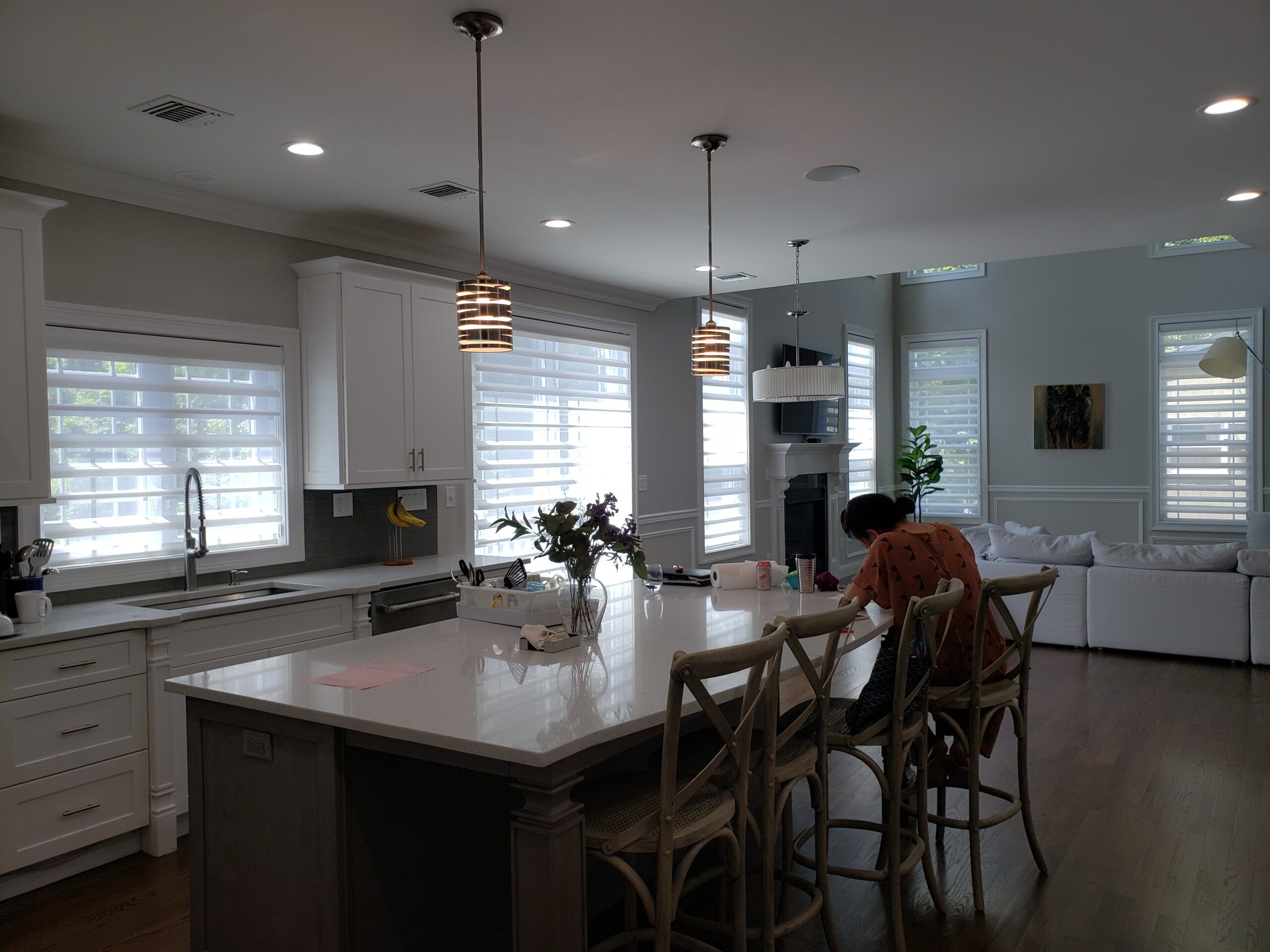 ShadesRoller, solar, zebra, cellular and more
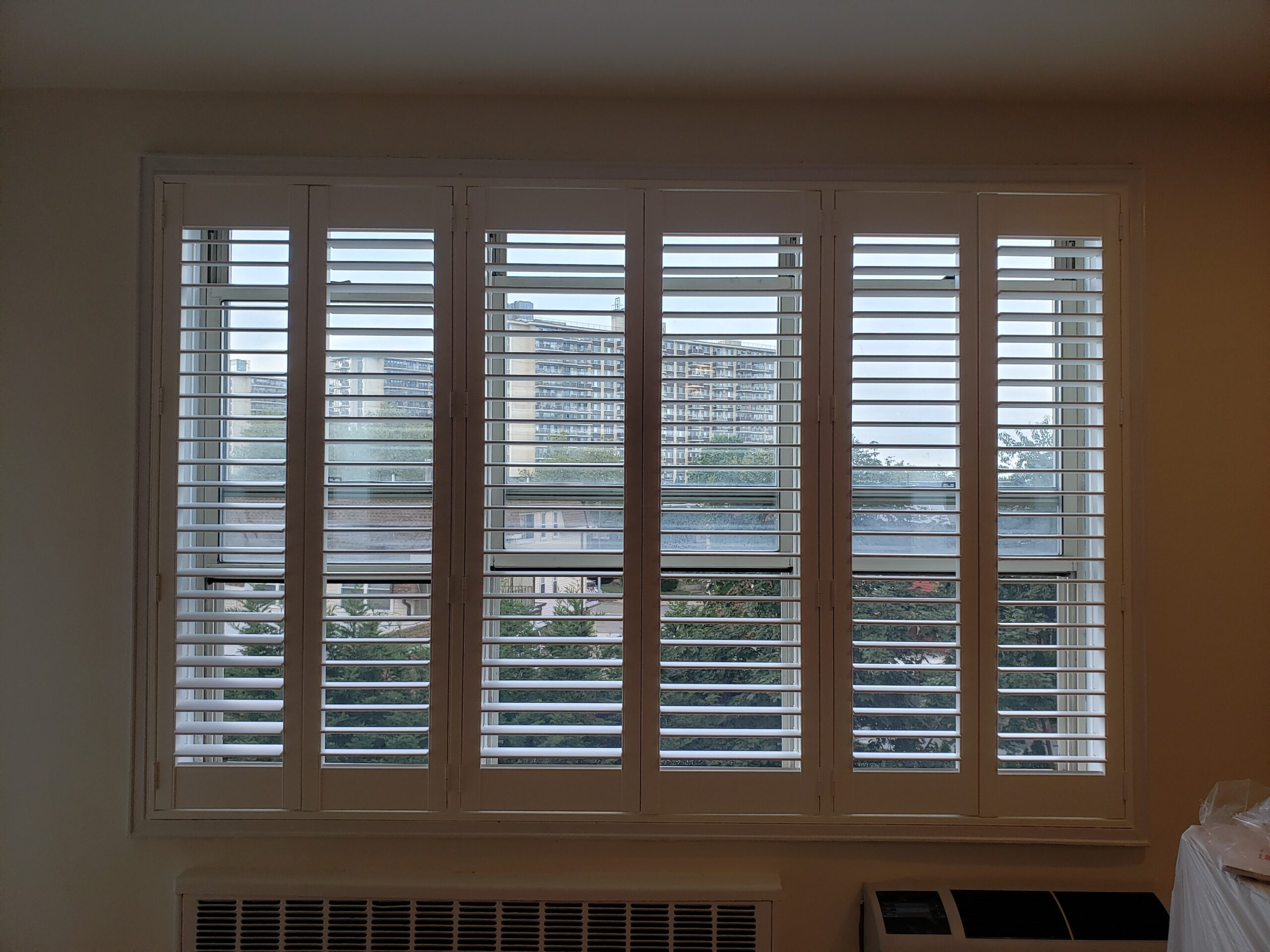 Plantation ShuttersBuilt into the frame, never raised
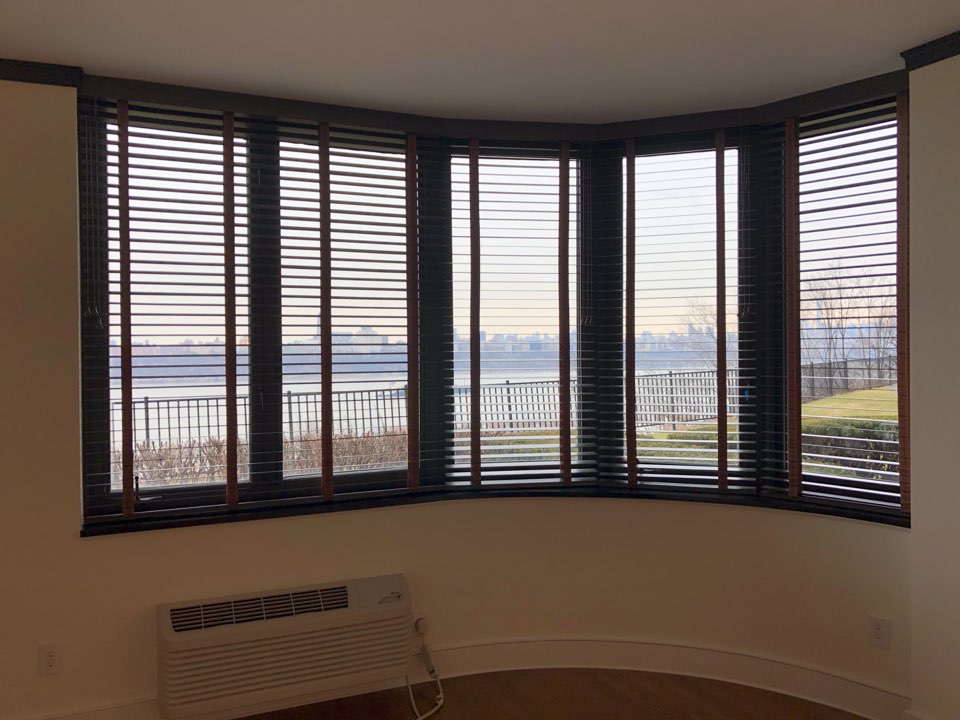 BlindsWood, faux wood and vertical
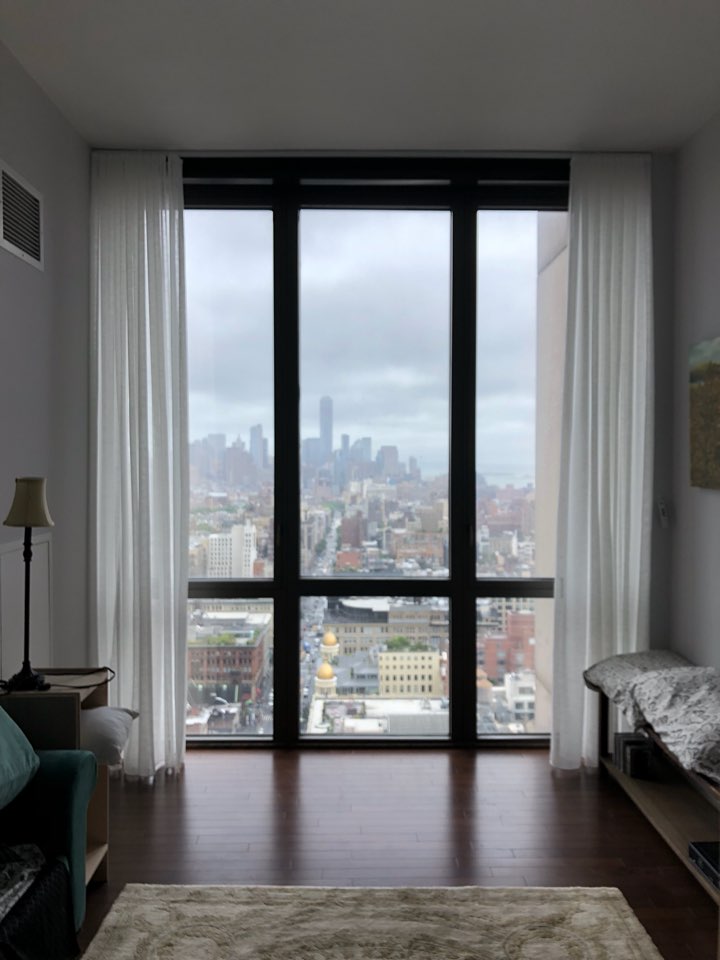 Drapery & CurtainsFabric, fullness and a proper track
4.9 across 314 Google reviews
“We had a wonderful experience with The Curtain. Especially the manager, Jason, went above and beyond our expectations, so professional and attentive throughout the entire process. We ordered zebra blinds, and everything from the initial quote to installation went incredibly smoothly. The blinds look beautiful.”
★★★★★ 6 months ago
“Jay must have come to our house between four and six times, as we went back and forth on zebra shades or roller shades, and samples after samples. We chose the Korean manufacturer with Tide White as our color. Shades arrived within two weeks and installation took under two hours.”
★★★★★ a year ago
“We booked a consultation, and Young was really helpful, explaining the different types of blinds and showing us pictures. We ended up going with Swan and roller blinds from their Korean brand. It is the best choice. The curtains dressed up the entire house and made it look so modern.”
★★★★★ 2 years ago
Visit the showroom
Prefer to see things in person before we come to you? We're on Broad Avenue in Palisades Park, a few minutes from Fort Lee and the GWB.
- 545 Broad AvenuePalisades Park, NJ 07650
- Mon–Fri 10–7 · Sat 10–5Closed Sunday
- (201) 302-9111We usually pick up on the first ring