Wood Blinds
Real hardwood slats on a ladder, tilted to aim the daylight rather than simply block it. They read as woodwork instead of as window covering, which is why they end up in offices, living rooms and dining rooms — and why they should stay out of your bathroom.
 ★★★★★ 4.9 · 314 reviews (314)
 Partner
~2 weeks to install~2 wks
Partner
~2 weeks to install~2 wks

What you get from real wood blinds
Hardwood or composite is the first decision, because it settles where the blind can go and most of what it will cost. Wood wins on grain and on weight. It loses badly in a wet room, and that one is not close.
A wood blind is a stack of hardwood slats hung on a ladder — a pair of fine cords, or a woven cloth tape — with a tilt mechanism in the headrail that rotates all of them at once. Basswood is the usual timber: light, straight-grained, and stable enough to hold flat across a two-inch slat. The slats are cut to your opening rather than trimmed down from a stock width.
The look is the obvious reason to pay for it. Grain runs differently down every slat, and under raking afternoon light that variation is what a composite never quite manages — a moulded slat repeats the same printed figure every foot or so, and once you have seen it you keep seeing it. The less obvious reason is weight: hardwood is lighter than composite at the same size, so a wide wood blind lifts more easily and holds a straighter line where a heavy composite bows in the middle.
The limit is moisture. Wood moves with humidity, and it moves permanently. In a bathroom steamed every morning, or over a kitchen sink that runs with condensation through the winter, the slats cup and the finish lifts at the edges. It takes a couple of years rather than a week, and it is not a defect — it is what wood does. Those windows want a faux wood composite, and we say so at the measure.
- Grain that reads as real. Because it is. Every slat differs a little, which is also why a stained blind never perfectly matches the one beside it.
- Lighter than composite. Same size, less weight, so a wide wood blind lifts more easily and sags less than the faux wood version.
- Takes stain and paint. Matched against your own trim, cabinetry or floor, in the room, rather than picked off a chart across a counter.
- Not for wet rooms. Steam and standing damp warp hardwood. Bathrooms and sink windows should be faux wood.
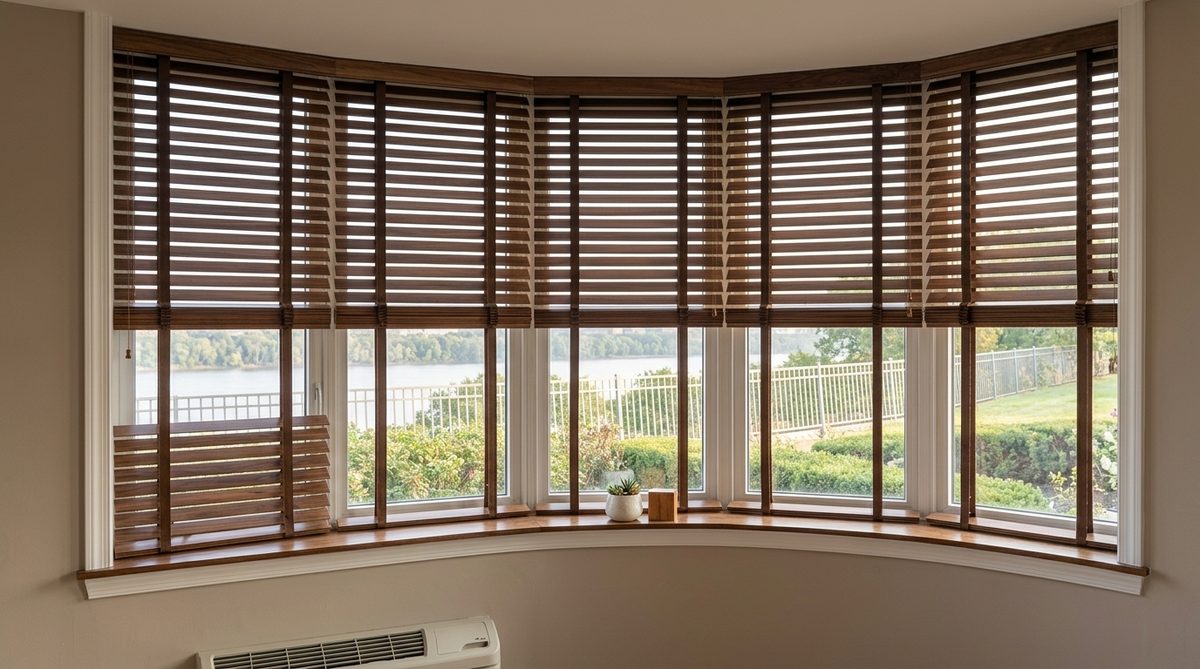
Why most wood blinds end up at 2 inch
Slat width changes three things at once: how much glass shows between the slats when the blind is open, how tightly it shuts, and how big the pile of slats is at the top when it is raised.
1 inch: the smallest scale
A one inch slat gives a fine, close-set look that suits a small window, a divided-light sash or a room with delicate trim. It reads least like furniture and most like a blind, which is sometimes what a room wants.
It also has twice as many slats as a two inch blind over the same drop. That means more ladder crossing the glass while the blind is open, and a taller stack when it is up — on a full-height window the stack can take several inches of view before the blind is even lowered.
Best for small windows, cottage sash, rooms with fine woodwork.
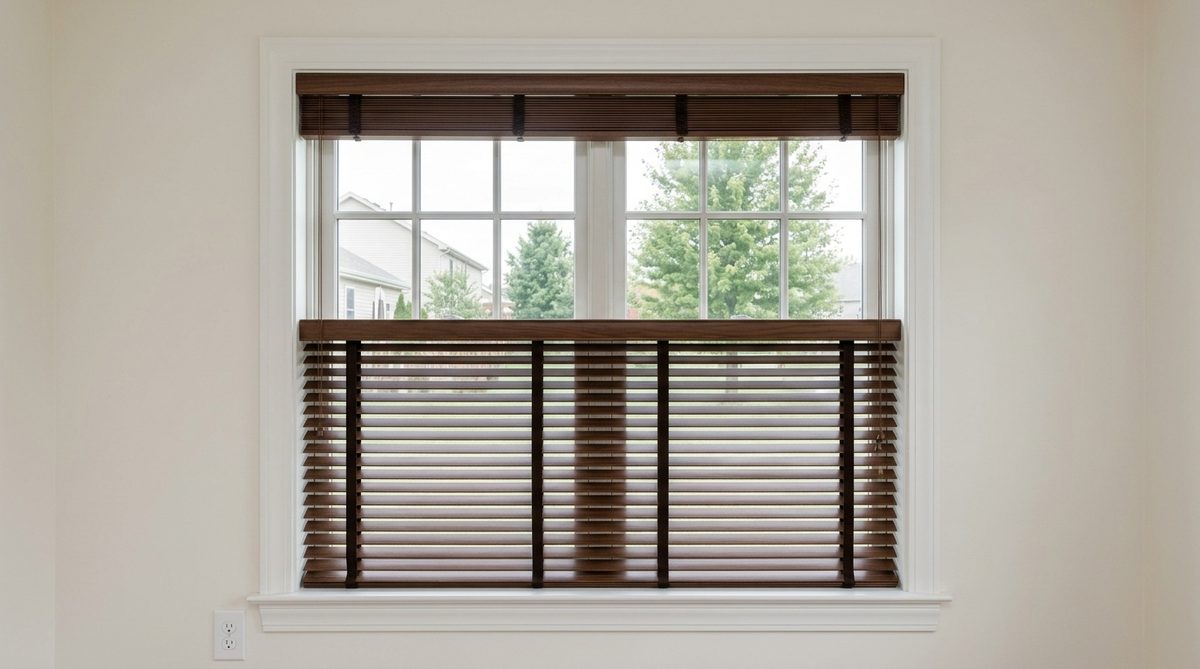
2 inch: the one we fit most
Two inch is the default for good reasons. It closes tightly enough to make a room properly dim, it shows a generous amount of glass between the slats when open, and it stacks into roughly half the pile a one inch blind makes over the same drop.
It is also the width where a wood blind starts to read as woodwork rather than as a covering, which is usually what people are paying for. If you are undecided, this is the sample to hold against your own window first.
Best for most windows, in most rooms. Start here.
2½ inch: for the big glass
On a tall or wide window a two inch slat can start to look busy, because you are reading dozens of horizontal lines at once. Two and a half opens the spacing up, closes even tighter, and holds the proportion against large glass and heavy trim.
The trade is depth. A wider slat needs more room to rotate, so it projects further into the room when tilted and needs a deeper frame to sit flush on an inside mount. On a shallow opening it may not clear a crank handle, which we check with a tape at the measure.
Best for tall windows, wide openings, rooms with substantial trim.
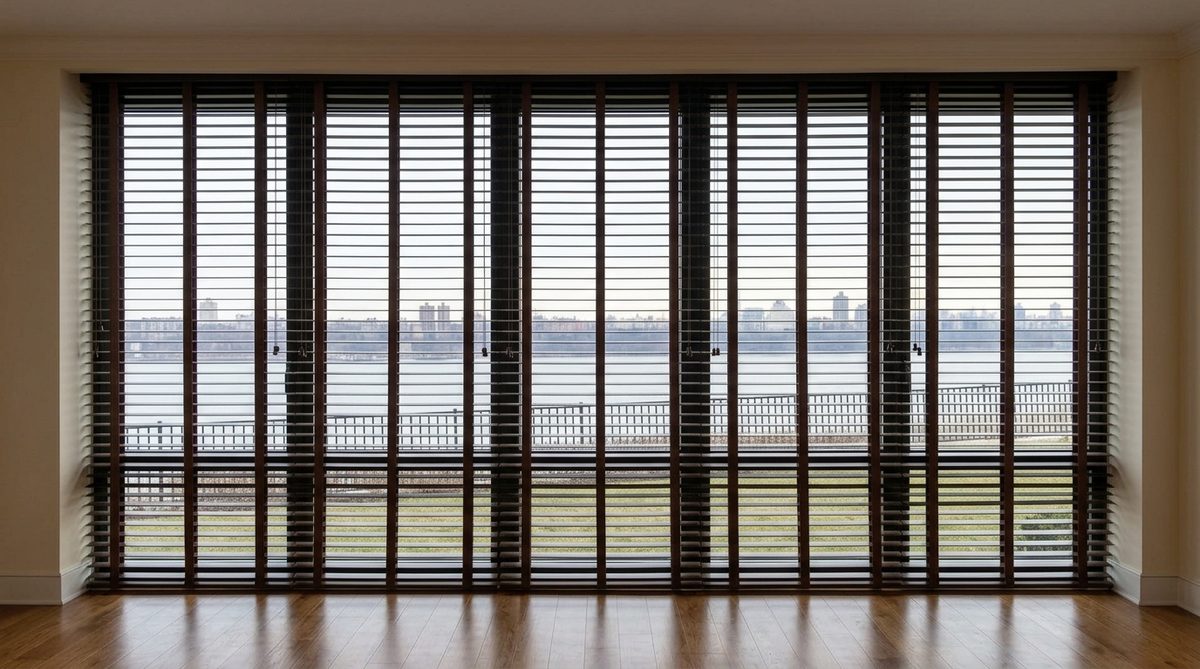
Stained or painted, and what actually changes
Most people arrive with a colour in mind and no view on the finish. It is worth ten minutes, because stain and paint behave differently on real wood over the first few years, not just on the day it goes up.
Stained: the grain stays visible
Stain soaks into the timber and colours it without covering it, so you keep the figure of the wood. That is what makes a wood blind read as furniture, and it is the finish to choose when there is other woodwork in the room to answer to — a floor, a mantel, a run of cabinetry.
Two honest things about stain. Every slat takes it slightly differently, so a stained blind carries natural variation across its face and from one blind to the next; that is real wood behaving normally, not a fault. And a dark stain in a sunny window lightens over years, the way a hardwood floor does.
Best for rooms with wood floors, cabinetry or trim you want the blind to belong to.
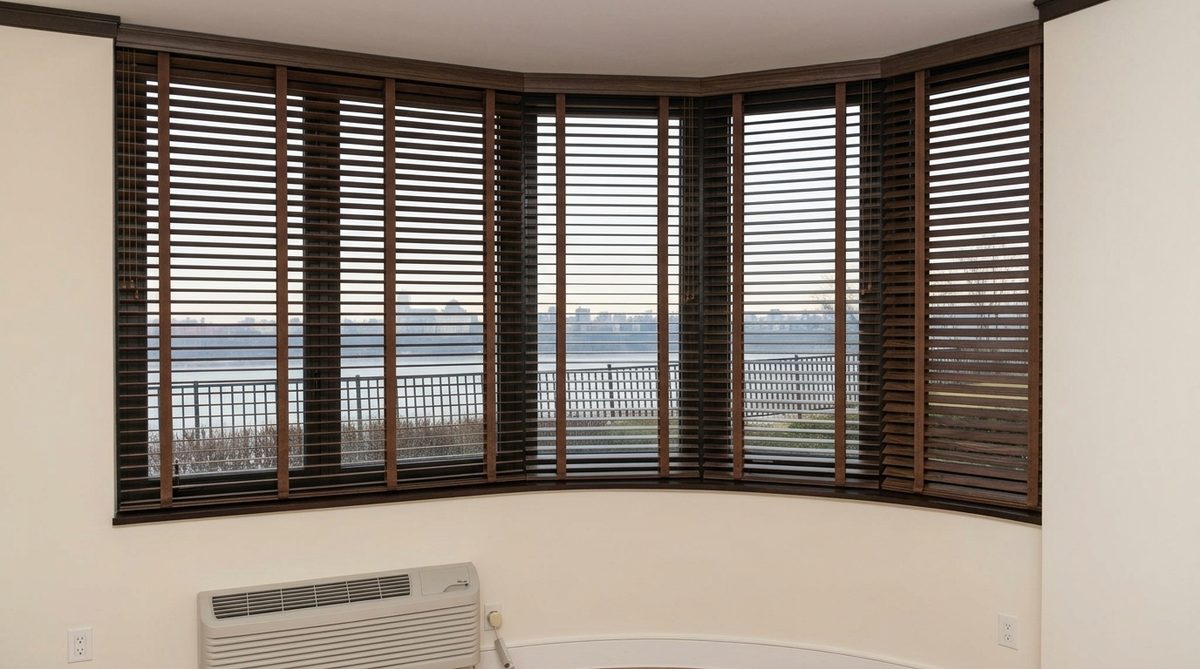
Painted: uniform, and it holds
Paint sits on the surface, so the colour is identical slat to slat and blind to blind across a whole house. White and off-white are the volume choice for a reason: they disappear against painted trim, they lift a north-facing room, and they hide the cord holes far better than a dark stain does.
A painted finish holds its colour longer in a bright window and takes a wipe better. What you give up is the grain — from a few feet away a painted wood blind and a painted composite look much the same, which is a fair argument for putting the composite in the difficult rooms.
Best for white trim, painted rooms, anywhere you want the blind to recede.
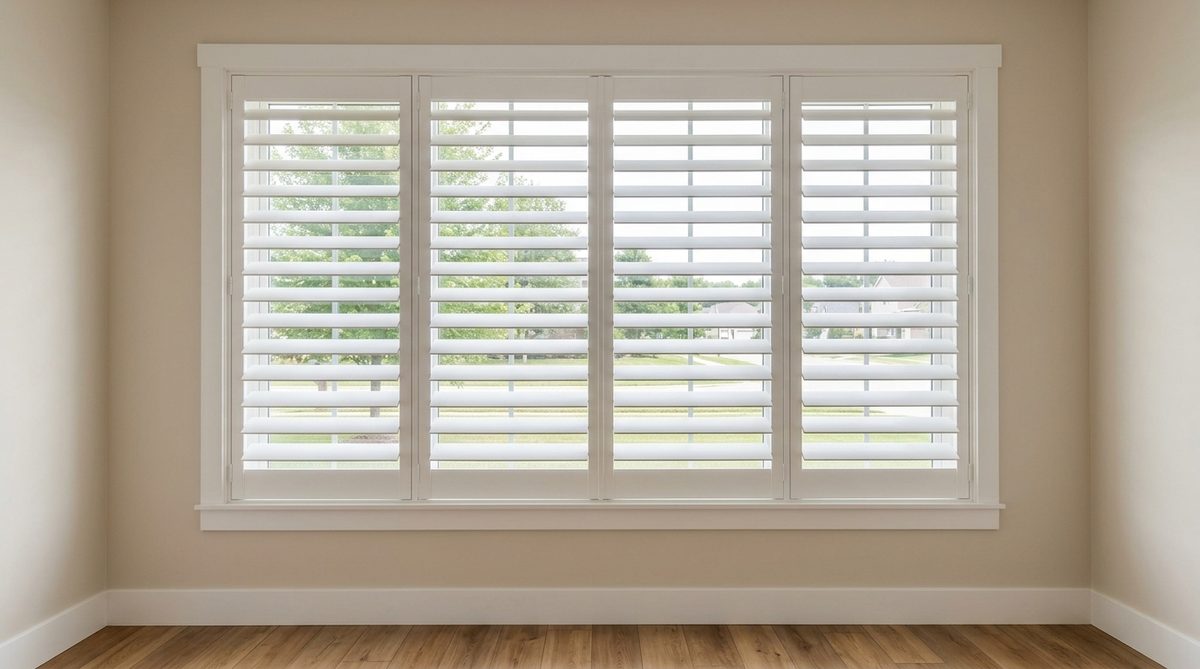
Matching a floor or a trim colour
Match against the actual thing, in the actual room. A colour chosen under showroom light shifts in a north-facing bedroom, so we hold the sample chain against your own floor and trim. And an exact match to a floor usually looks wrong: two woods at different angles under different light almost never agree, so the blind reads as a near miss rather than a match. A shade lighter or darker is nearly always better, and it is what Sejun tends to push people toward.
Best for anyone matching existing woodwork. Decide in the room, not from a chart.
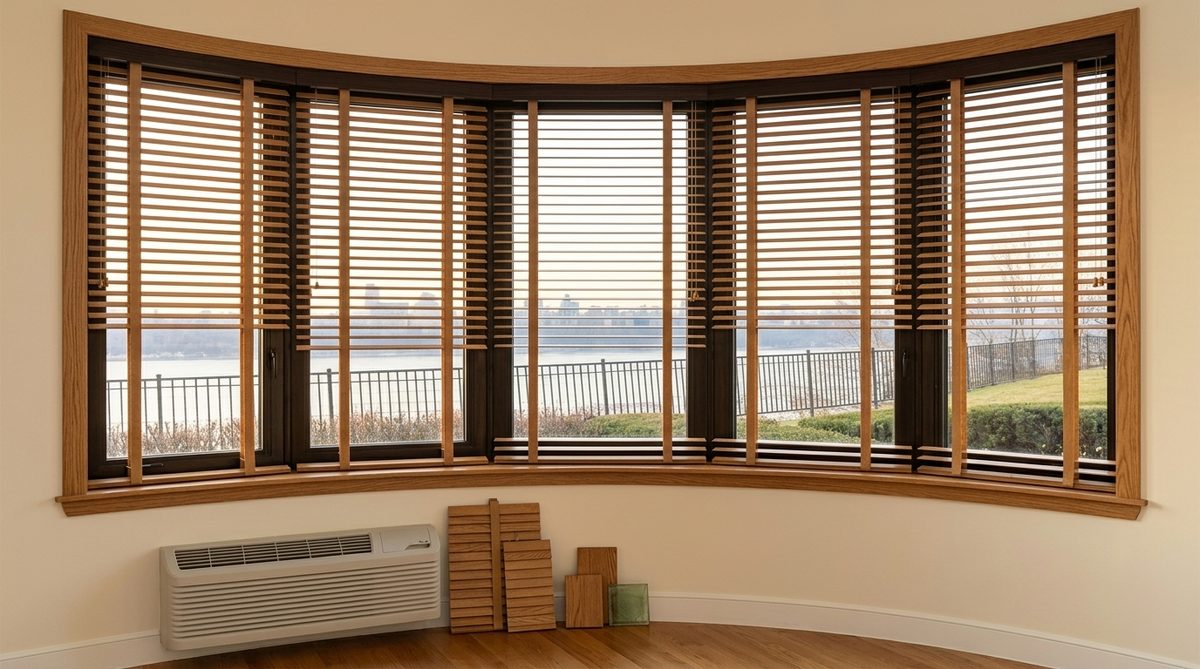
Wood blinds with tape, and what the tape is doing
The wide fabric bands running down the face of some wood blinds are not only decoration. They are covering something, and whether you want it covered is a real decision rather than a styling one.
Every slat on a corded blind has holes punched through it for the lift cords. Closed, those holes line up into vertical columns of small bright dots. On a white painted slat you barely see them. On a dark stain in a bright window they are obvious, and once you have seen them you see them every time.
Cloth tape is a wide woven ladder that replaces the thin cord ladder and sits across the face of the slats, hiding the route holes behind it. It also gives the blind a stronger horizontal rhythm and a second colour to work with — matched to the slat so it reads as one piece, or contrasted so the banding becomes the feature.
What tape costs you is a slightly deeper stack and a little more money per blind. What it does not do is make the blind dark — it covers holes, not the hairline overlaps between slats or the gaps at the sides of an inside mount. There is a third answer worth asking about: some wood blinds route the lift cord at the back of the slat instead of through it, so there are no holes in the face at all. That is the right call when you want a dark stain and a plain, unbanded look at once.
- Hides the cord holes. The main job, and it matters most on dark stains and windows that get direct sun.
- Adds a second colour. Matched, so it disappears into the slat, or contrasted, so the banding is the thing you notice.
- Deeper stack. The tape has thickness, so a taped blind piles a little taller at the top than the same blind without it.
- Not a light-blocking upgrade. It covers holes. The overlaps between slats and the gaps around the edges are unchanged.
How you will tilt and lift them
A blind has two movements and they usually sit on two separate controls. The tilt is the one you touch every day; the lift is the one that decides whether a heavy blind ever goes up.
Cordless lift
Push it up, pull it down, nothing hanging beside the window. The default we suggest in any house with young children or a dog that pulls.
Our defaultWand tilt
A short rod you twist to rotate the slats. Tidier than a tilt cord, and it stays where you leave it instead of swinging against the frame.
Everyday windowsMotorized tilt & lift
A remote or an app, with a schedule if you want one. On a wide or high wood blind this is less about convenience than about the weight you are lifting by hand.
Wide, tall, hard to reachValance & returns
Not a control, but the part you look at. A wood valance hides the headrail, and returns close the ends when the blind is mounted outside the opening.
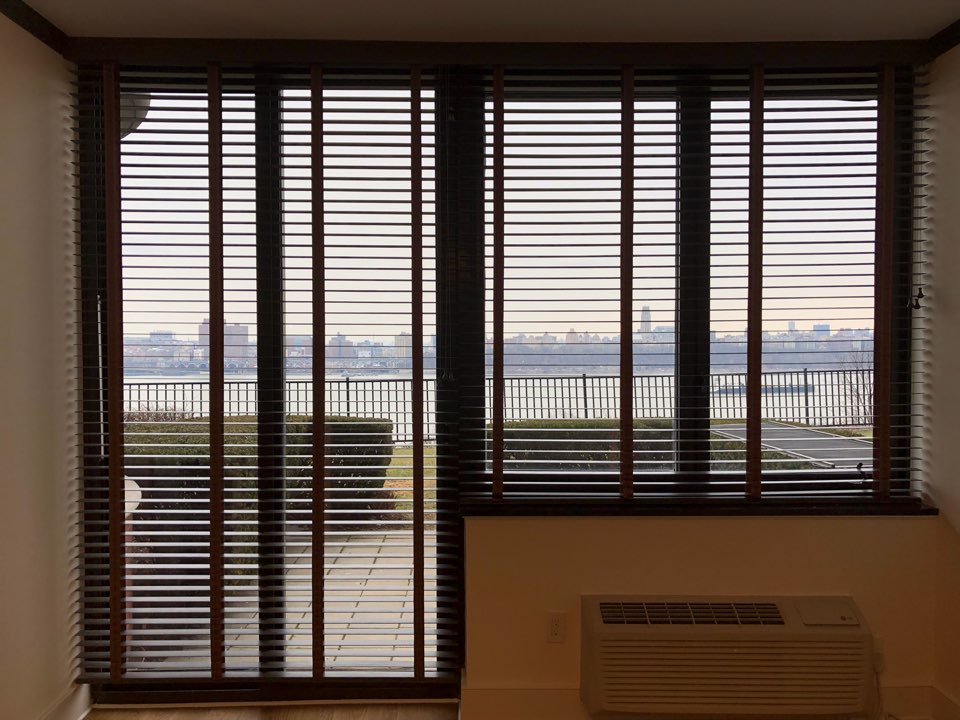
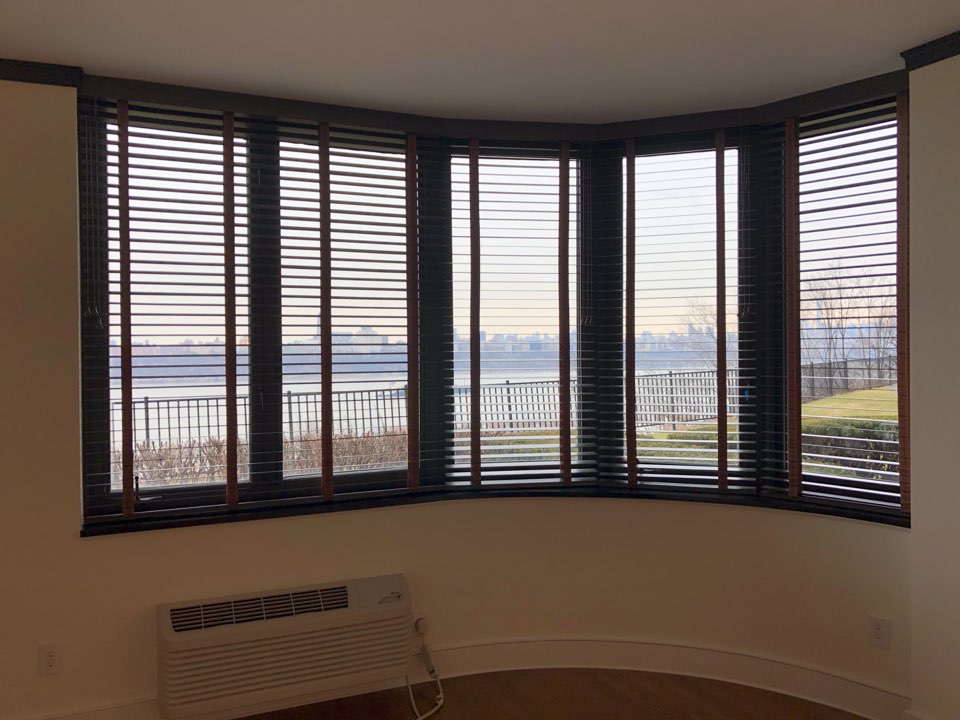
The finished edgeWood blinds we have installed
No stock photography, no showroom staging — homes and offices across Bergen County and the Tri-State.
What actually drives the price
Wood blinds are priced per blind rather than per window, and on a wide opening those are not the same number. Five things move it.
01Timber, finish and slat thickness
The slat is most of the cost. A painted basswood slat and a specialty stain on a heavier, thicker slat are not close in price. Thickness is the part nobody asks about and the part that shows, because a thicker slat resists bowing across a wide window.
02Size of the opening
Width and drop both add material, and width adds it faster, because it also decides the headrail, the tilt mechanism and how many lift cords the blind needs to carry its weight evenly.
03One blind or two
Past a certain width we split an opening into two blinds on one continuous headrail, so each half lifts on its own and the slats stay straight. From the room it reads as one blind with a fine break in the middle. It prices as two.
04Cloth tape and valance
Tape adds cost per blind, and a decorative valance adds more than a standard one. Neither changes how the blind works. Both change how finished the top and face of the window look, which on a wood blind is much of what you are buying.
05Control
A wand tilt costs nothing over a tilt cord. Cordless lift adds a mechanism per blind, and motorization adds a motor and power. On wood that earns its money more often than on a light shade, because a heavy blind is the one people quietly stop raising.
Why we don't publish a price list. Two windows in the same room can price differently once you account for size, fabric and mount. We measure and quote every window during the free consultation, so you see the number before anything is ordered. Book one here.
Measured to installed in about two weeks
Free consultation
We come to you, so you're judging the room in the light the shade will actually live in.
Measure & design
Every window measured to the sixteenth, with a designer's eye on mount, stack and fabric.
Made for your window
Hunter Douglas or our own Korean workroom — built to your opening, never trimmed from stock.
Installed & tidy
Professionally hung, tested, and the packaging leaves with us. Usually a single visit.
Wood blind questions we get asked
What is the difference between real wood blinds and faux wood blinds?
Real wood blinds have hardwood slats, usually basswood; faux wood has a composite slat moulded to look like wood. Real wood shows genuine grain and is lighter at the same size, so it stays straighter across a wide window. Faux wood does not warp in humidity, so it takes the bathrooms and sink windows real wood cannot. Painted, the two look much alike — stained, they do not.
Can I put real wood blinds in a bathroom or a kitchen?
In a kitchen, yes — provided the window is away from the sink and the range. Directly over a sink that runs with condensation, or above a cooktop, the slats cup and the finish lifts within a couple of years. In a bathroom with a daily shower, no. Use a faux wood composite there — same slat widths, same tilt, so the look of the house does not change.
What slat width should I choose for wood blinds?
2 inch for most windows. It closes tightly, shows a good amount of glass when open, and stacks into about half the pile a 1 inch blind makes over the same drop. Go to 1 inch for small windows and fine trim, and 2½ inch for tall or wide glass where 2 inch looks busy. Wider slats need more frame depth to rotate, so we measure that first.
Should I get stained or painted wood blinds?
Stain if there is other woodwork in the room for the blind to belong to and you want the grain visible — expect variation between slats, and expect a dark stain in a sunny window to lighten over years. Paint if you want the blind to disappear against white trim, or a colour identical on every blind in the house. Paint also hides the cord holes better.
What is the cloth tape on wood blinds for?
It hides the holes punched through each slat for the lift cords, which show as vertical columns of bright dots when the blind is closed. It also adds a wide band of colour across the face, matched or contrasted. It makes the raised stack slightly deeper and costs a little more per blind — and it does not make the blind darker.
Do wood blinds block out light?
No, and no horizontal blind does. Closed, there are still hairline gaps where the slats overlap, gaps at the sides of an inside mount, and pinpricks through the cord holes unless the blind has cloth tape or back-routed cords. A closed 2 inch wood blind makes a room dim and private, not dark. For a genuinely dark bedroom, pair it with a blackout shade or a lined drape.
Can wood blinds be cordless or motorized?
Both. Cordless lift is our default in a house with young children, since nothing hangs beside the window. Motorized lift and tilt earns its cost on wide, tall or hard-to-reach windows, where the weight of a real wood blind is the reason people stop raising it. Tilt can be motorized on its own if the lift is not the problem.
How wide can a single wood blind be?
Wider than the same blind in faux wood, because hardwood weighs less at the same size. There is still a point where one blind gets heavy enough to bow across the headrail and hang unevenly — past it we split the opening into two blinds on one continuous headrail. It reads as a single blind with a fine break in the middle, and each half lifts on its own.
Other ways to cover the same window
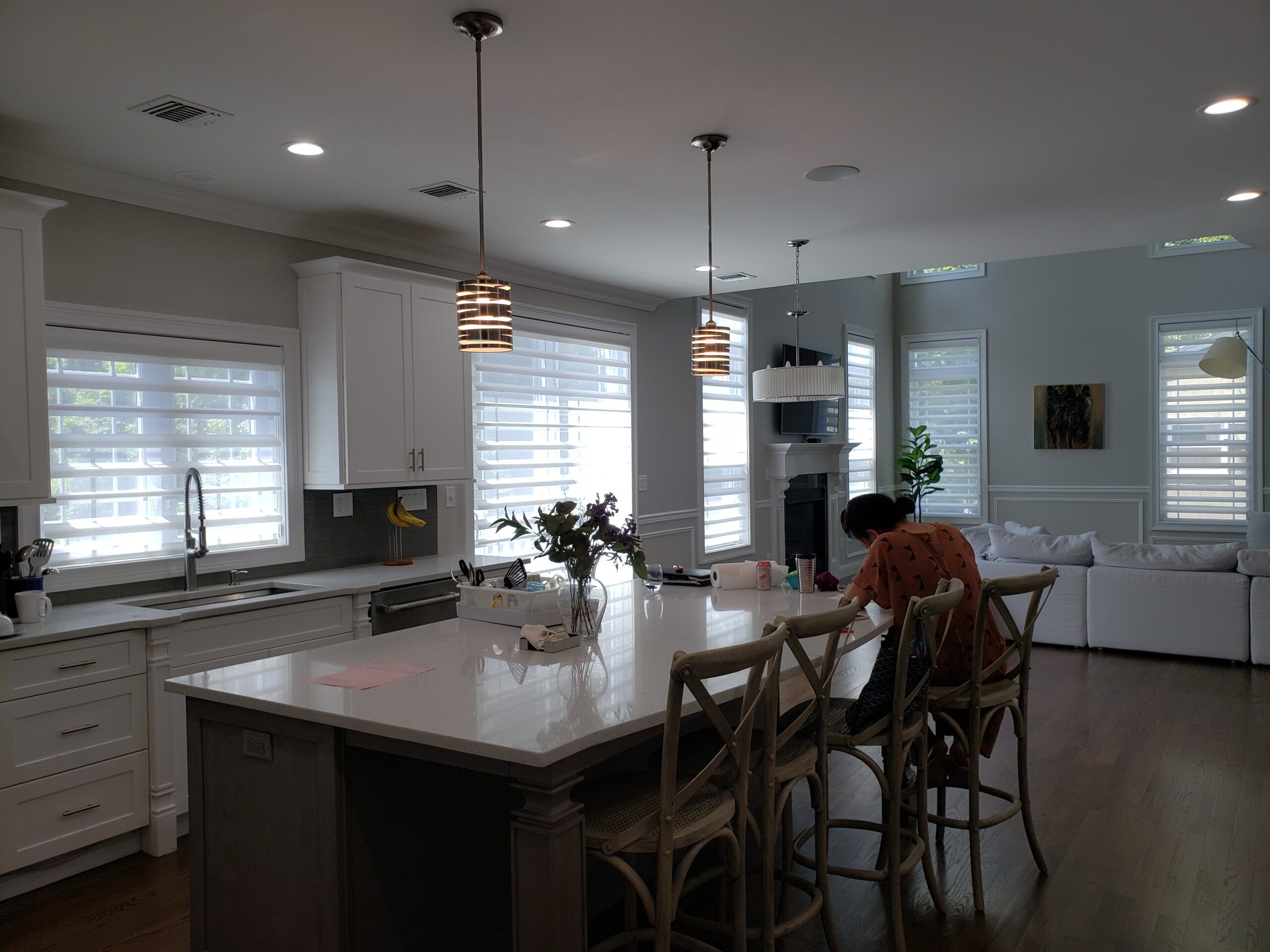 ShadesRoller, solar, zebra, cellular and more
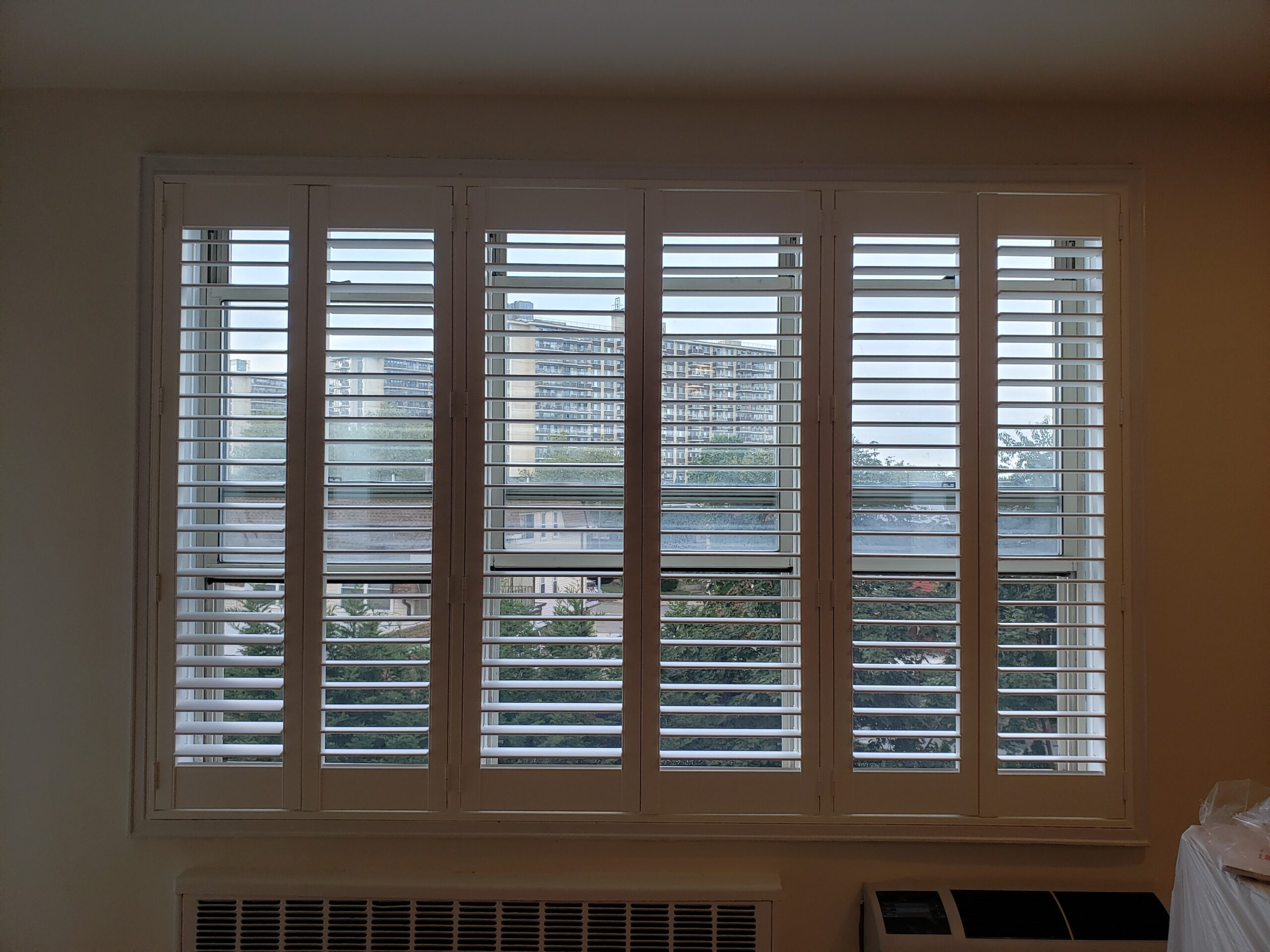 Plantation ShuttersBuilt into the frame, never raised
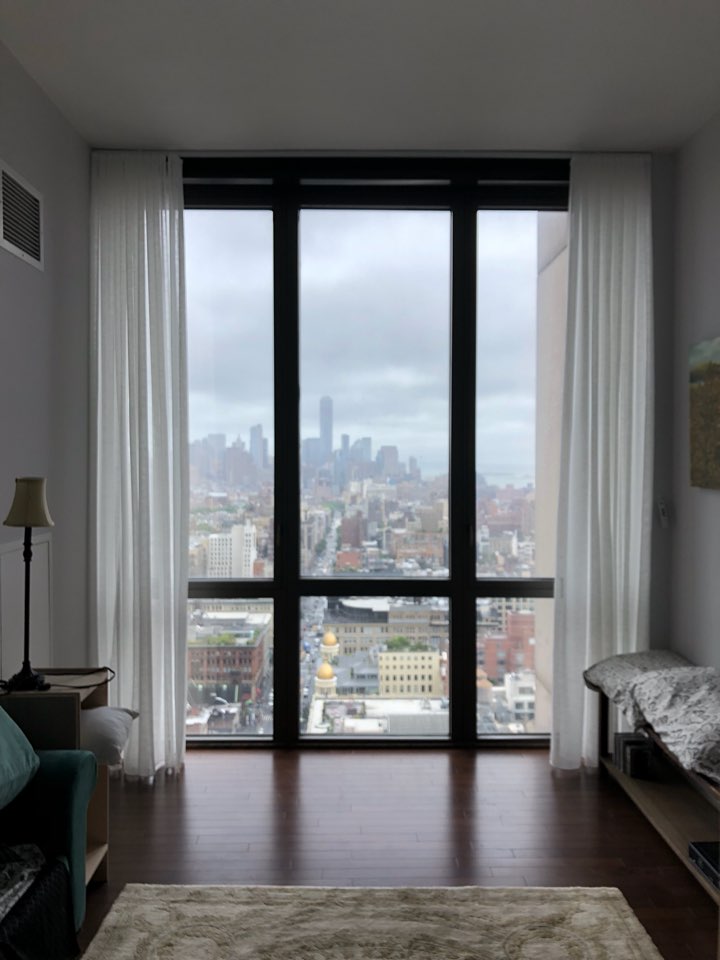 Drapery & CurtainsFabric, fullness and a proper track
4.9 across 314 Google reviews
“We got quotes with Blinds to Go, 3 Day Blinds and The Curtain. What really set The Curtain apart was the quality of Jay's products and working with him. Jay must have come to our house between four and six times, as we went back and forth on zebra shades or roller shades. Shades arrived within two weeks and installation took under two hours.”
★★★★★ a year ago
“I have worked with The Curtain for many years now, and they have never failed to provide professional and exceptional service, whether it be a simple roller shades installation or a more elaborate and tricky golf room curtain installation. They provide quotes right there and then, unlike other vendors who take days if not weeks.”
★★★★★ a year ago
“Highly recommend this place for window treatment for the quality of the product and reasonable price. Jason Park is very nice and professional. He did both my blackout roller shade for the bedroom and the living room curtains. I am very satisfied with the result.”
★★★★★ a year ago
Visit the showroom
Prefer to see things in person before we come to you? We're on Broad Avenue in Palisades Park, a few minutes from Fort Lee and the GWB.
- 547 Broad AvenuePalisades Park, NJ 07650
- Mon–Fri 10–7 · Sat 10–5Closed Sunday
- (201) 302-9111We usually pick up on the first ring