Woven Wood Shades
Bamboo, reeds, grasses and jute, woven with fine thread and made up as a shade that lifts. The texture is real because the material grew, and so is the variation from strand to strand. Unlined, it filters daylight and hides very little after dark, so most windows want a liner.
 ★★★★★ 4.9 · 314 reviews (314)
 Partner
~2 weeks to install~2 wks
Partner
~2 weeks to install~2 wks
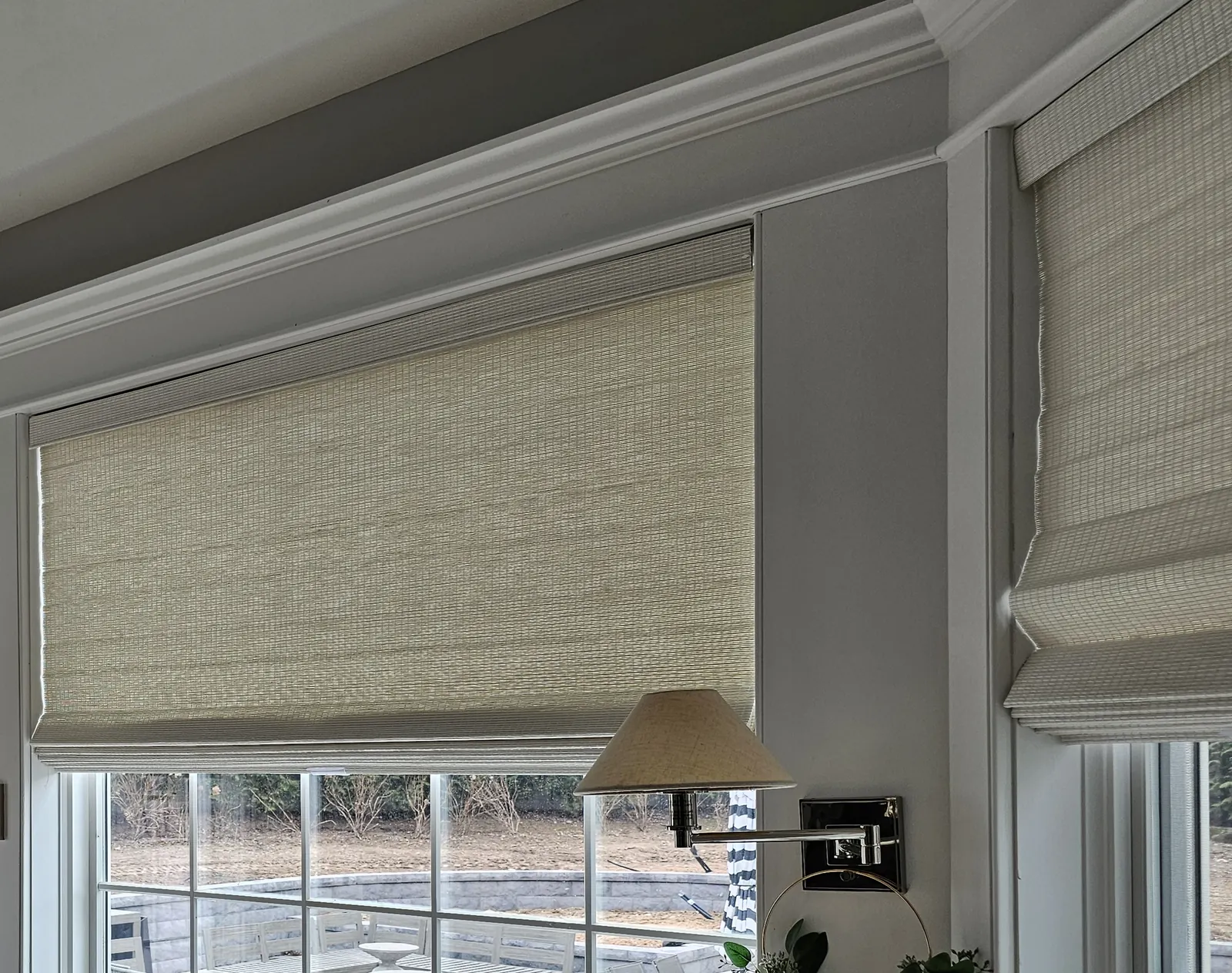
What a natural woven shade is actually made of
Woven wood, bamboo, natural woven, matchstick: the names overlap because the construction is the same. Plant material laid side by side, tied with thread, and hung as a shade.
Strands of split bamboo, round reed, grass, jute or thin wood run across the window, held by fine vertical threads. Nothing backs them unless you order a liner, so the gaps are real and light comes through.
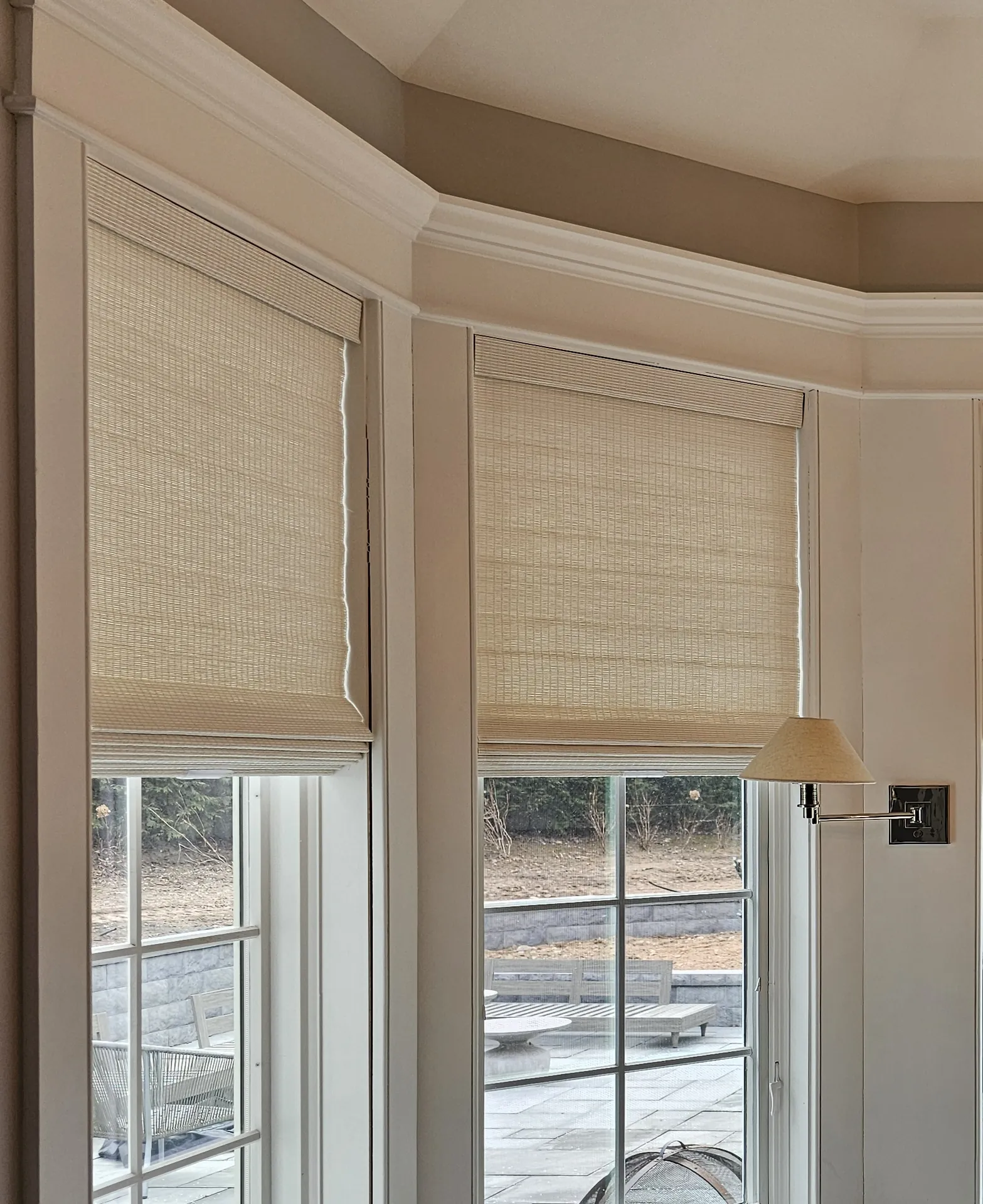
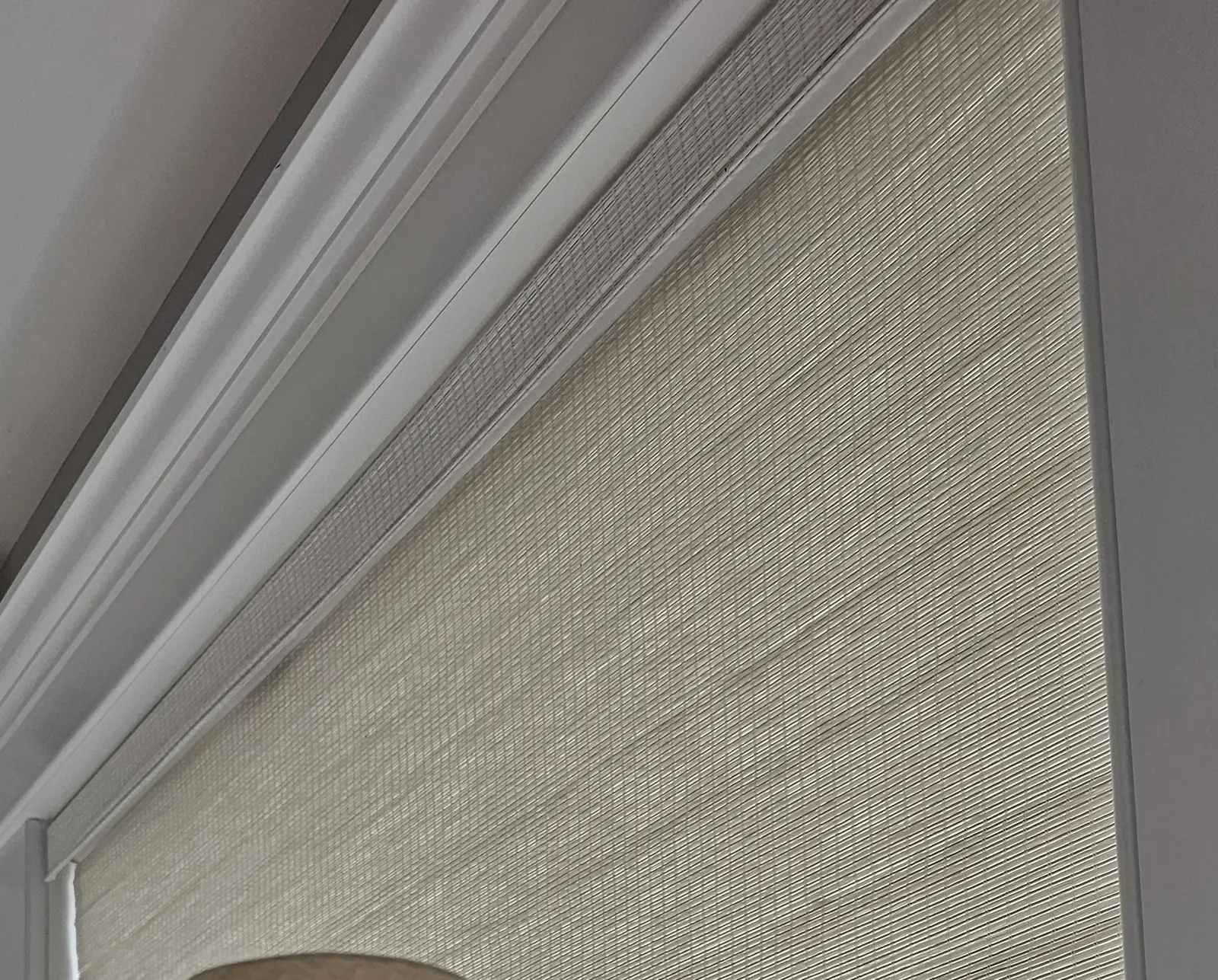
Most woven shades lift like a Roman shade, gathering into folds under a headrail that a valance in the same weave usually hides. Every shade we fit is custom made, by Hunter Douglas or direct from the maker, to measurements taken in your home.
- Real plant material. No two strands are identical. That is the look, and it is also the catch.
- Heavier than fabric. Which matters for the lift, and for how thick the shade stacks when raised.
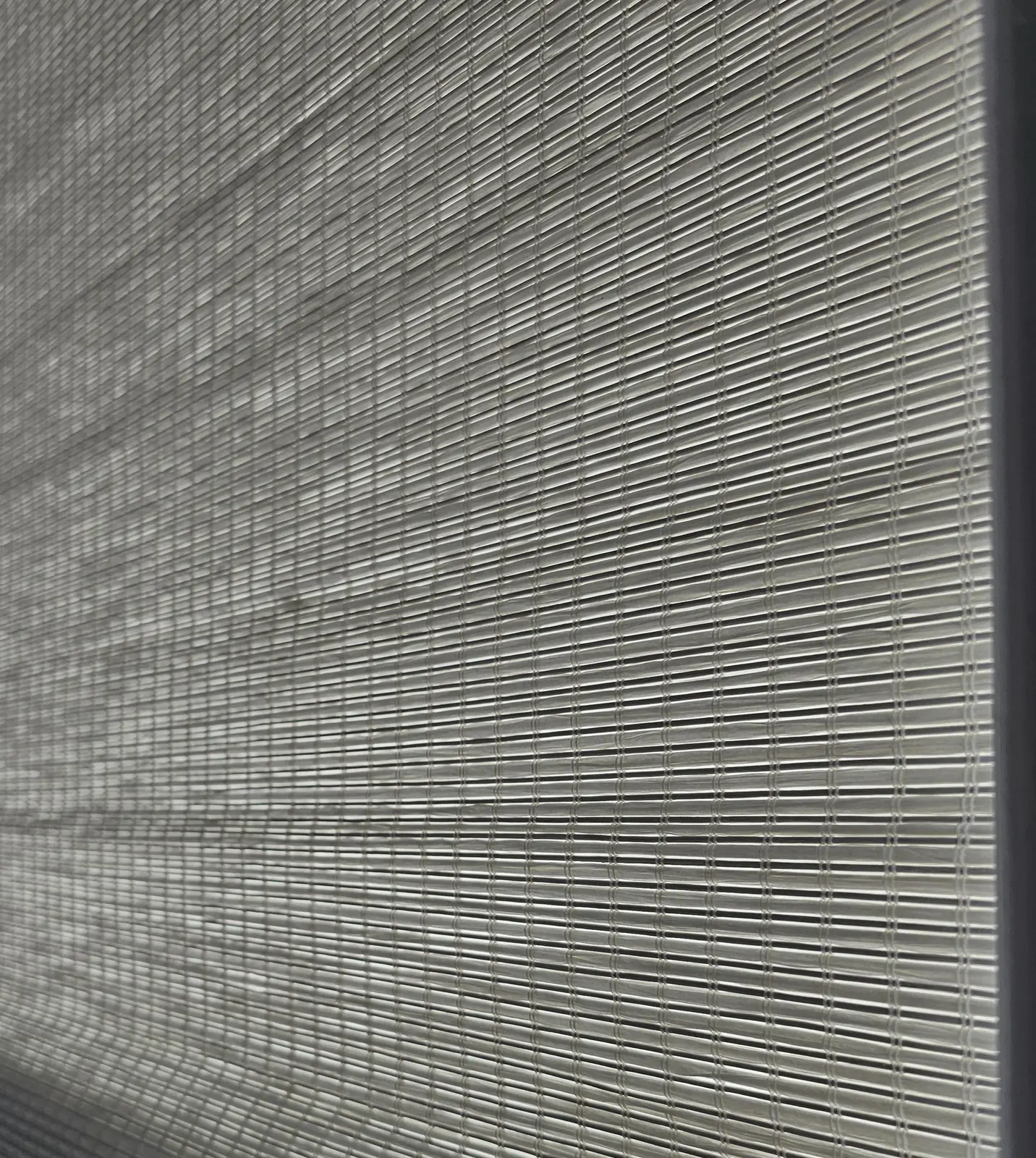
Bamboo shades, reeds, grasses and jute
The material decides how stiff the shade is, how much light gets through, and how the folds sit when it is raised.
- Bamboo. Flat slats or thin matchsticks. Stiff and regular, so it hangs flat, folds crisply and varies least from shade to shade. Matchstick bamboo gives very little privacy unlined.
- Reeds. Smooth round stems that never sit flush, so thin lines of light always come through. On a street-facing window it needs a privacy liner after dark.
- Grasses. Pliable and woven tight, for the densest face and folds that relax rather than snap. Color shifts from blade to blade, and for most people who choose grass, that is the reason.
- Jute. Twisted, rope-like strands with the heaviest texture. It takes up moisture and can sag, so keep it in dry living spaces, away from a shower or range.
Woven wood Roman shades: flat fold or soft fold
Most woven shades are built as Roman shades, and the fold changes how the shade looks lowered, not only raised.
- Flat fold. Lowered, one smooth panel of weave; raised, neat folds under the headrail. It shows the material most clearly and is nearly always right on a small window.
- Soft fold. Also sold as hobbled or waterfall: loops stitched down its length show even when it is lowered. More traditional, more material, and every fold collects dust. Suits pliable grasses.
- Roll-up. Rolls instead of folding, on cords or on a roller at the top. The most casual look. The cord-lifted kind is awkward to set halfway, so it suits a window you adjust once a season.
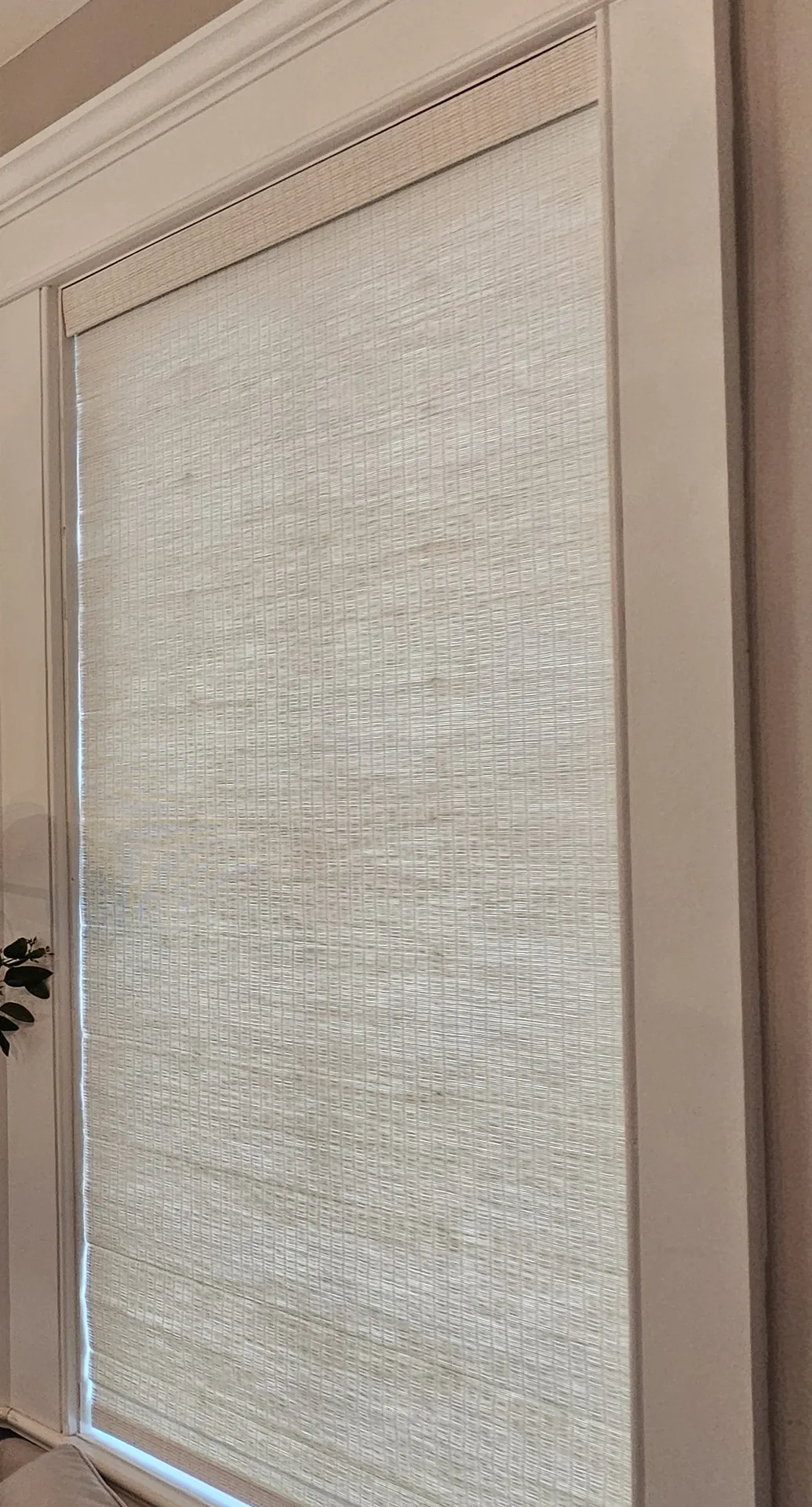
Woven shades with a privacy liner
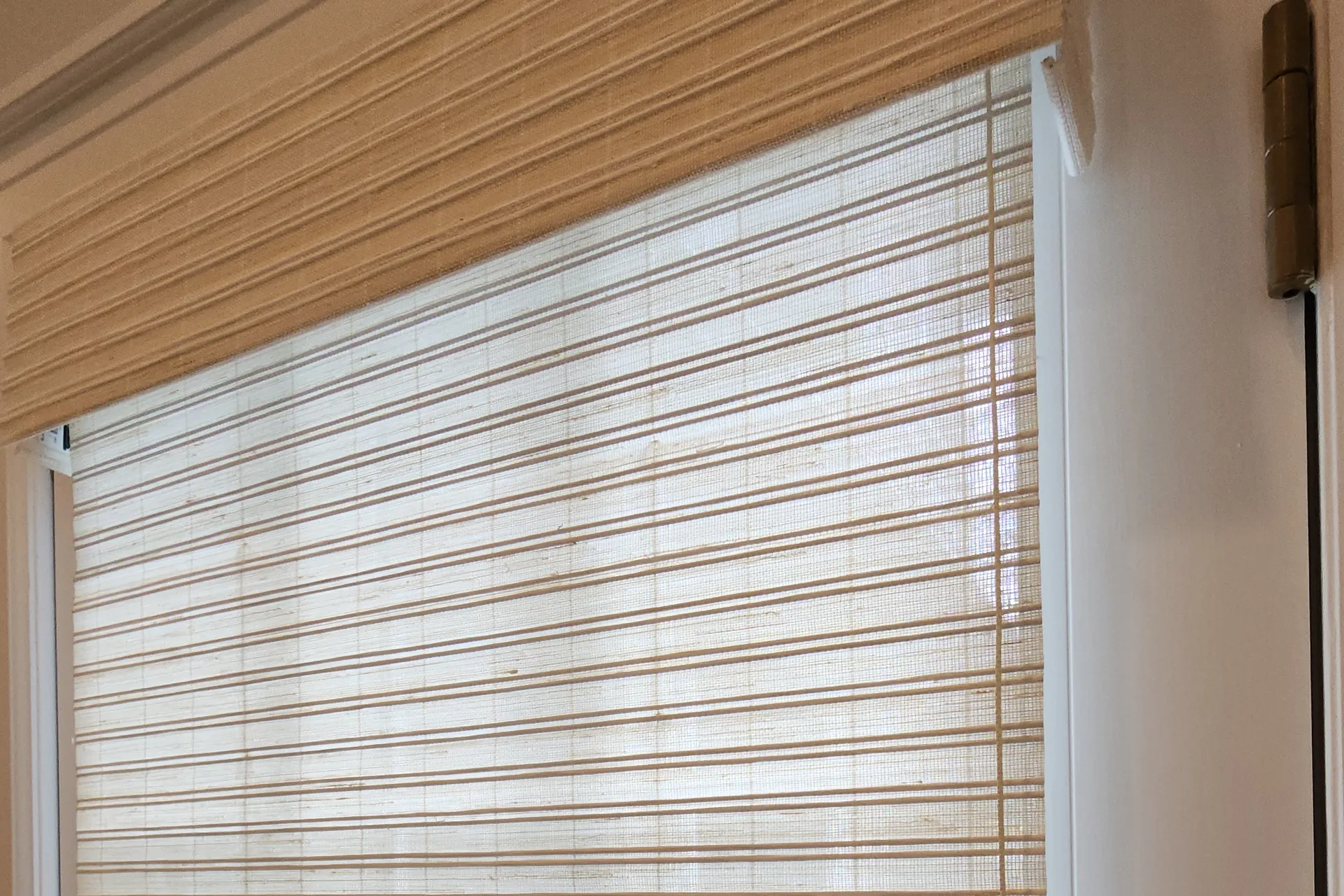
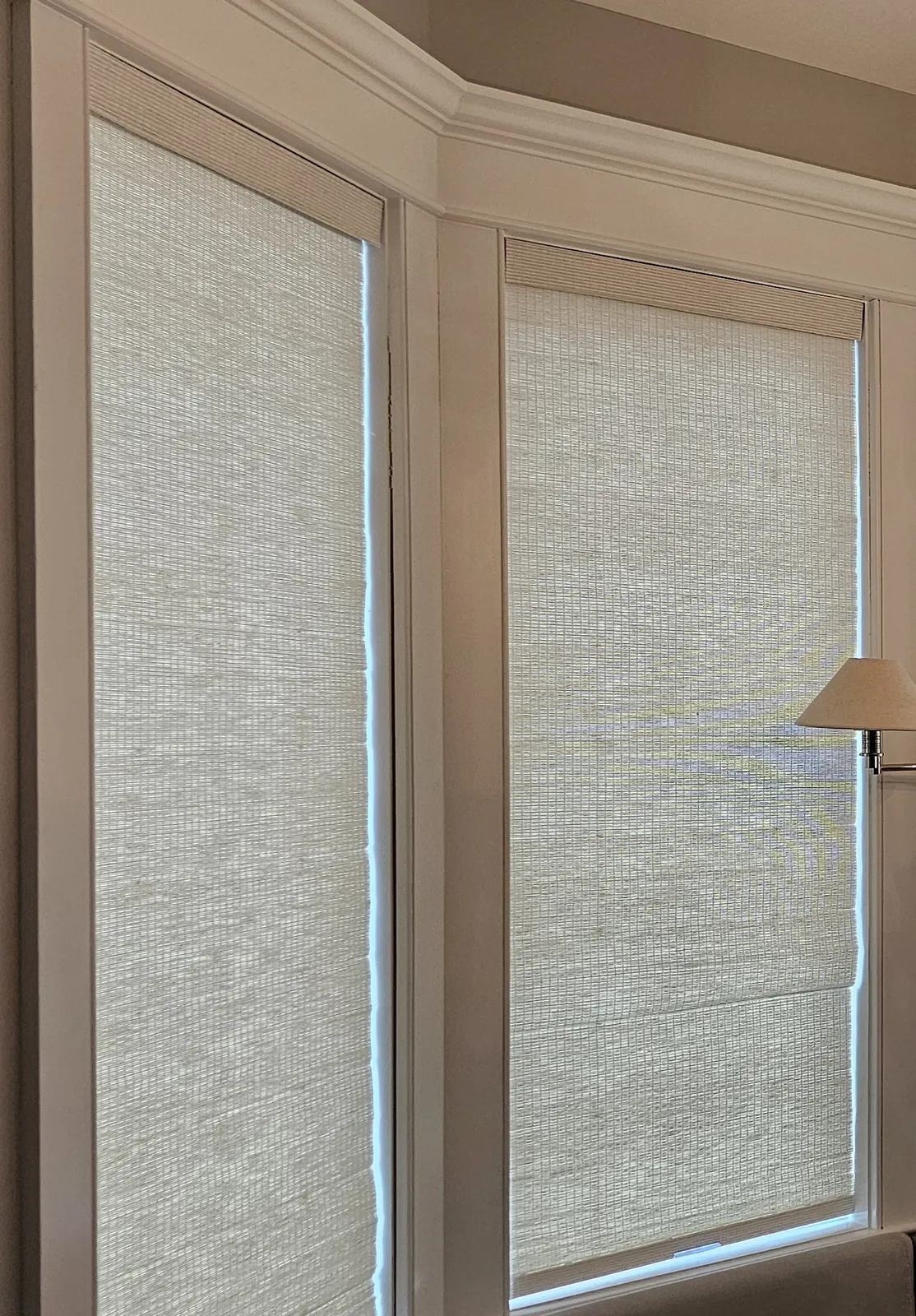
A liner is a layer of fabric fixed to the back of the shade. From the room you still see the weave. From the street after dark, it is a different shade.
A privacy liner is a light-filtering fabric that closes the gaps without shutting out the day. From outside, the window reads as a soft panel instead of a lit lattice. On a street-facing window, treat it as part of the shade.
A room-darkening liner stops light through the weave but not around it, so a woven shade makes a bedroom dim rather than dark. For a truly dark room, a blackout cellular shade mounted outside the frame is the better tool.
A liner is far simpler to order with the shade than to add later.
Where a woven shade is the wrong choice
Most regrets about a woven shade come down to a few predictable things. Here they are, with what to use instead.
Unlined, it is see-through at night. With the lamps on, the room is the bright side and everything in it shows. On any window the street can see, add a privacy liner.
- No two shades match exactly. Order a whole room at once. For a uniform row, a roller shade is more consistent.
- Fiber fades. On an unshaded south or west window, consider a solar shade.
- Steam, grease and dust. Keep it away from a shower or range, and expect to vacuum the weave. For a wipe-clean surface, choose faux wood.
- Thick stack, little warmth. Raised, it takes more of the window than a roller does. A cellular shade stacks smaller and does far more for a cold window.
Woven shades for kitchens and living rooms
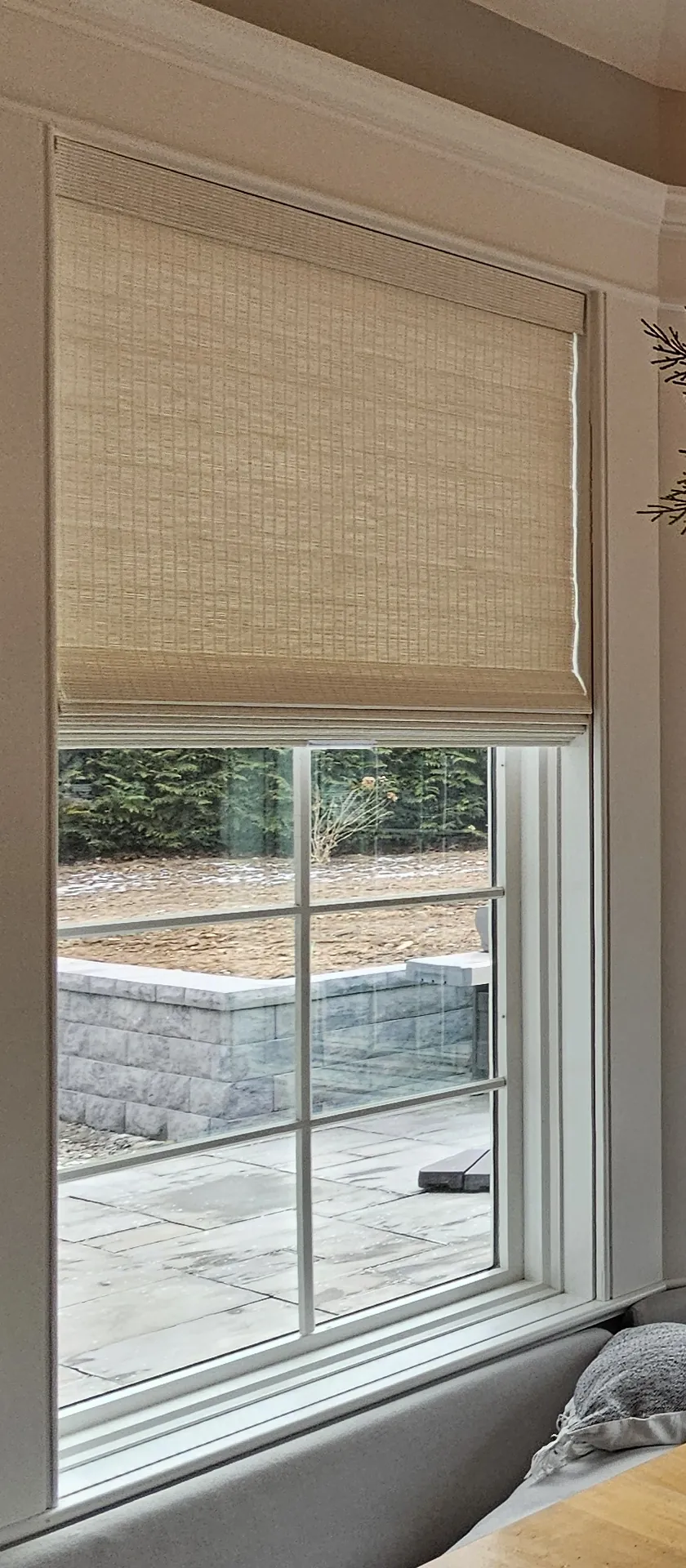
The living room is where this shade is most at home, and the kitchen is where it needs the most care.
- Living rooms. The easiest fit. Texture warms up a room of drywall, glass and a large television. A front window still wants a privacy liner for the evening.
- Kitchens. A breakfast nook, a far window or a sink set well back from the glass all suit one. Right beside a range does not: steam warps the weave and grease never comes out.
- Bedrooms and bathrooms. Only with a liner, and even a room-darkening liner leaves a bedroom dim rather than dark. In a bathroom, keep it to a powder room or a window well clear of the shower.
Cordless woven shades, and the other ways to lift them
A woven shade weighs more than a fabric shade of the same size, and that weight decides which of these it can take.
Cordless
Push up and pull down on the bottom rail, with nothing hanging beside the window. The safest choice around children and pets. The spring carries the weight of the weave, so the largest shades may not be offered cordless.
Kids' rooms, reachable windowsContinuous cord loop
A loop anchored to the wall turns a clutch in the headrail, so a heavy shade lifts with light, even effort and stops where you leave it.
Wide and heavy shadesMotorized
Run from a remote, an app or a schedule. Worth it on high windows, on a row of shades raised together, and on sizes too heavy for cordless.
High and hard-to-reach windowsTop-down, bottom-up
The shade lowers from the top as well as rising from the bottom, so the lower half of the window stays covered while daylight comes in above.
Ground floorsWoven wood shades we have installed
No stock photography, no showroom staging — homes and offices across Bergen County and the Tri-State.
What actually drives the price
Every woven shade is quoted per window, in writing, at the free in-home consultation, and nothing is owed if you decide not to go ahead. These are the five things that move the number.
01The material and the weave
The biggest lever, and the one you cannot judge from a photograph. Two samples that look alike on a screen can be quite different in the hand and in cost: a tighter weave uses more material across the same window, and some fibers are simply scarcer than others. Feeling them side by side, against your own window, is the only fair way to compare.
02The size of the window, and its width
Cost follows the area of the shade, but width matters in a second way. Natural weaves come off the loom in limited widths, so past a certain point a wide window is better built as two shades than one. Where that line falls depends on the material, so ask about it for the weave you like before anything is ordered.
03The liner
An unlined shade is simply the weave. A privacy or room-darkening liner adds a second material and the work of fixing it to the back, and an independent liner that raises on its own adds a second lift. That is a good reason to line the windows that need it, not every window by habit.
04Fold style and edge finish
A soft fold uses considerably more material for the same drop than a flat fold, because of the loops stitched into it. A fabric edge binding adds material and sewing too, and it changes how finished the shade looks from across the room.
05The lift
Cordless and a continuous cord loop are the everyday options. Top-down, bottom-up adds a second rail and a second mechanism. Motorization adds a motor and power to each shade, sized to the weight of the weave.
Why we don't publish a price list. Two windows in the same room can price differently once you account for size, fabric and mount. We measure and quote every window during the free consultation, so you see the number before anything is ordered. Book one here.
Measured to installed in about two weeks
Free consultation
We come to you, so you're judging the room in the light the shade will actually live in.
Measure & design
Every window measured to the sixteenth, with a designer's eye on mount, stack and fabric.
Made for your window
Hunter Douglas or our own Korean workroom — built to your opening, never trimmed from stock.
Installed & tidy
Professionally hung, tested, and the packaging leaves with us. Usually a single visit.
Woven wood shade questions we get asked
What are woven wood shades?
Shades made from natural materials such as bamboo, reeds, grasses, jute and thin strips of wood, held together with fine vertical threads. Most are built as Roman shades that gather into folds when raised. Unlined, they filter light through the gaps in the weave. With a liner on the back, they give privacy after dark or darken a room.
Are bamboo shades the same as woven wood shades?
Close enough that the names are used interchangeably. Bamboo shades are woven shades made mostly or entirely of bamboo, in flat slats or thin matchsticks. Woven wood is the wider category and also covers reeds, grasses, jute and wood strips. Bamboo is the stiffest and most even of them; grasses are softer and vary more. Strictly, bamboo is a grass, not a wood.
Do woven shades need a privacy liner?
Any window you want private after dark does. You see through a gap toward the brighter side: by day that is outside, so the weave looks fairly solid from the street, but at night the lit room is the bright side and people can see in. A privacy liner closes the gaps and still lets daylight through. A window facing a private yard can go unlined.
Are woven shades a good choice for a kitchen?
On the right window: a breakfast nook, a window away from the cooking, or a sink window where the faucet sits well back from the glass. Right beside a range they are the wrong choice, because steam warps natural fiber and grease settles into it for good. A faux wood blind or a wipe-clean roller shade belongs on that window.
What is the difference between flat fold and soft fold woven shades?
A flat fold hangs as a smooth panel when lowered and stacks into neat folds when raised. A soft fold, also called hobbled or waterfall, has loops stitched in down its length, so it shows a cascade of folds even when fully down. Flat fold is more tailored and suits small windows and bamboo. Soft fold looks more relaxed, uses more material, and gathers more dust.
Can woven wood shades be cordless?
Yes, in most sizes. A cordless woven shade is raised and lowered by hand from the bottom rail, with no cords beside the window, which makes it the safest choice around children and pets. Woven shades weigh more than fabric ones, so on the largest windows a continuous cord loop or a motor lifts them better.
Will all the woven shades in a room match?
Closely, but never exactly. Natural strands vary in color and thickness, and one batch of material differs slightly from the next, so shades side by side show small differences. Ordering a whole room at once keeps them as close as possible. If a uniform row matters more than natural texture, a roller or Roman shade in a textured fabric is the consistent alternative.
How do you clean woven wood shades?
Often and gently. Vacuum with a soft brush on low suction, working along the strands, or use a hair dryer on its cool setting to lift dust from a tight weave. Keep water away, because natural fiber stains and warps: blot a mark with a dry cloth and ask us before trying anything wet. It is not a wipe-clean surface, which is why it stays away from ranges and showers.
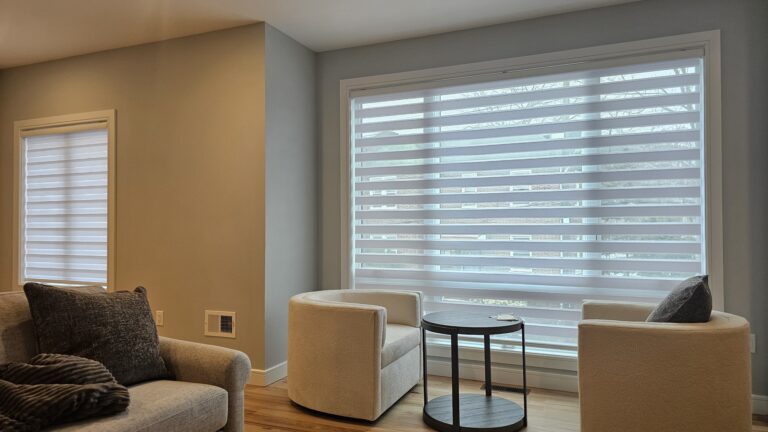 Roman ShadesThe same folds in fabric, with an even color
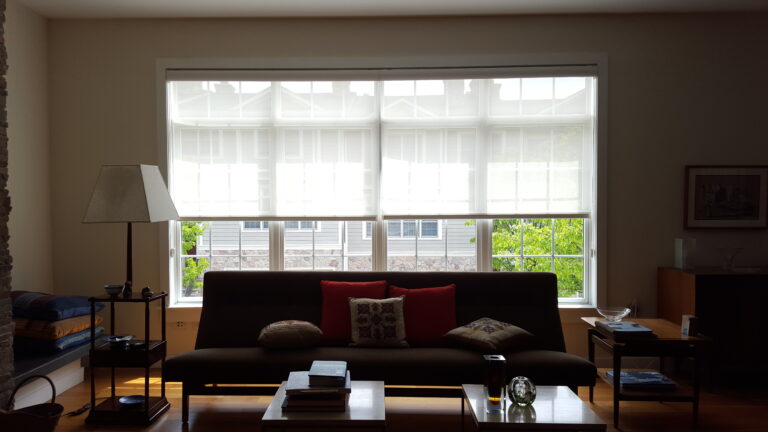 Roller ShadesA smaller stack, and wipe-clean options
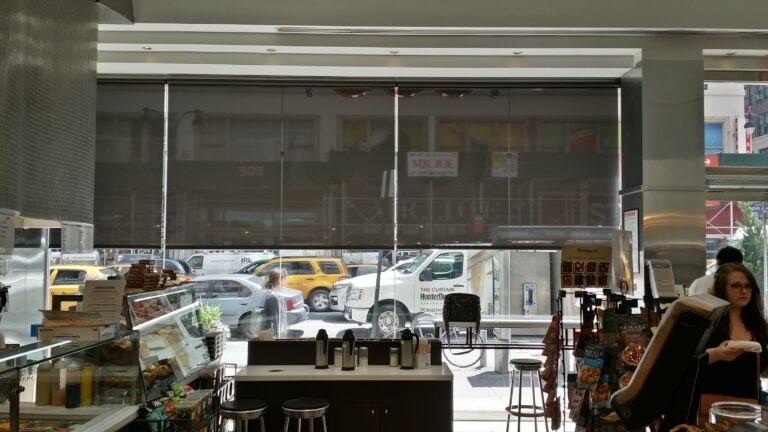 Solar ShadesFor the sunny window that would fade a weave
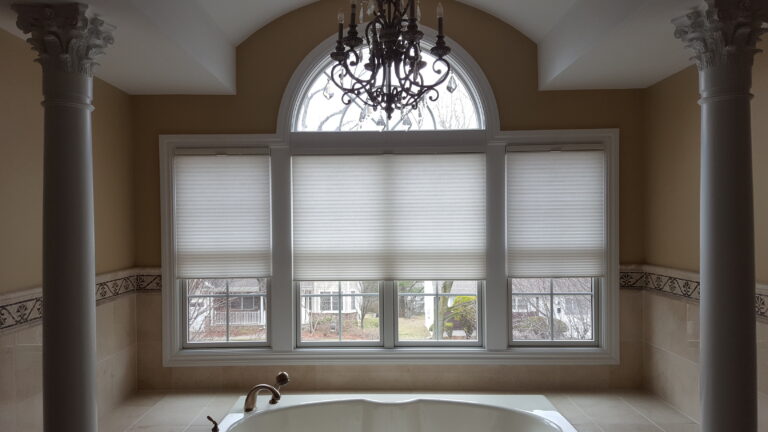 Cellular & HoneycombThe route to a genuinely dark bedroom
4.9 across 314 Google reviews
“They are very knowledgeable and they will take the time to explain the pros and cons of each shade. Our custom-made shades are the perfect addition to our new home!”
★★★★★ a year ago
“Our experience from start to finish was seamless and very quick. We are so pleased with how our shades turned out and have already recommended them to our friends and neighbors.”
★★★★★ 2 years ago
“The Curtain staff were professional and patient. Highly recommend these folks. Also, the shades are beautiful.”
★★★★★ a year ago
Visit the showroom
Prefer to see things in person before we come to you? We're on Broad Avenue in Palisades Park, a few minutes from Fort Lee and the GWB.
- 547 Broad AvenuePalisades Park, NJ 07650
- Mon–Fri 10–7 · Sat 10–5Closed Sunday
- (201) 302-9111We usually pick up on the first ring