Custom Blinds
Slats that tilt, so you aim the daylight instead of just blocking it. Wood, faux wood, aluminum and vertical, all measured, made and installed by us.
 ★★★★★ 4.9 · 314 reviews (314)
 Partner
Free in-home measureFree measure
Partner
Free in-home measureFree measure
Six blinds, and where each one earns its keep
A blind is a blind until it goes in a room. The slat material decides where it can live, the slat width decides how much view you get back, and the stack decides what you look at when it is up.
Wood Blinds →
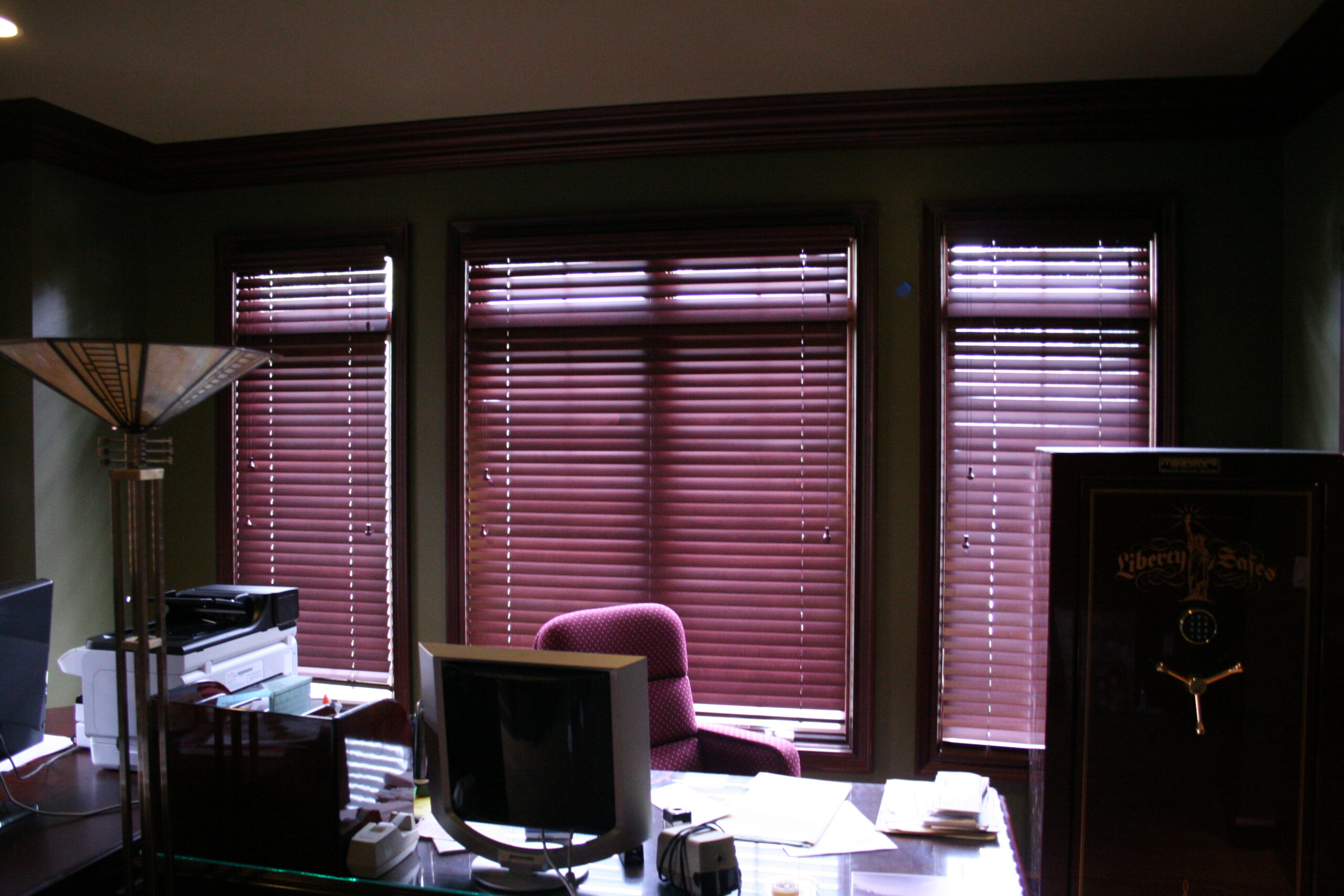
Real hardwood slats, for the room where you want the window to read like furniture. Grain and weight a composite never quite gets, stained or painted to match your trim or your floor. Keep them off any window that runs with condensation.
Faux Wood Blinds →
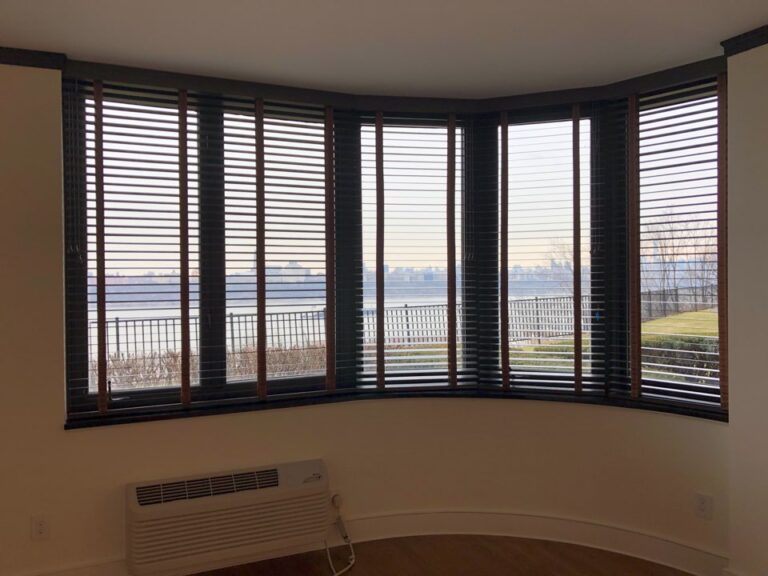
A composite slat that will not warp, swell or fade, so it takes the kitchens, bathrooms and basements real wood cannot. Painted, from a few feet away, you will not tell the two apart.
Aluminum Blinds →
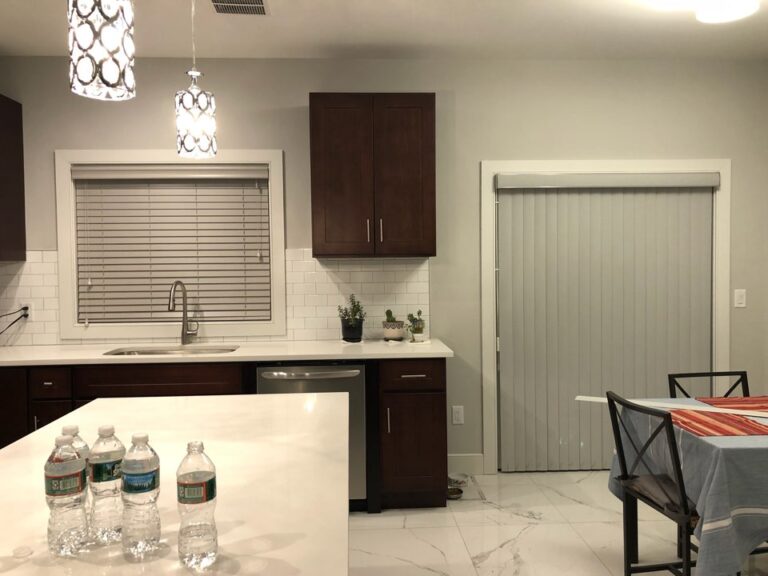
Metal slats from half an inch to two inches. The slim sizes stack into almost nothing on a small or utility window you look past all day, and the 2-inch slat with cloth tape dresses a room without minding the damp.
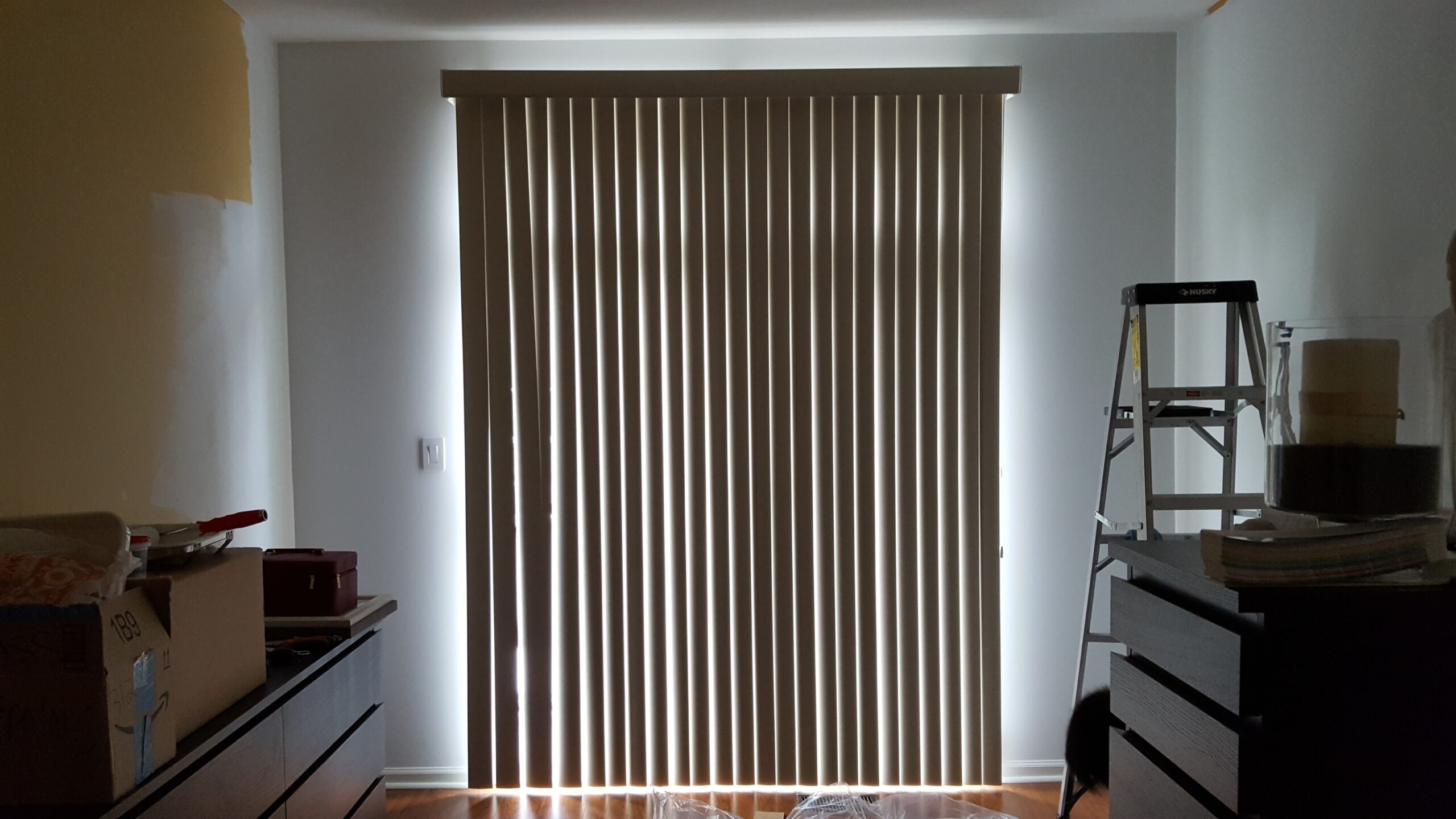
Vertical Blinds →
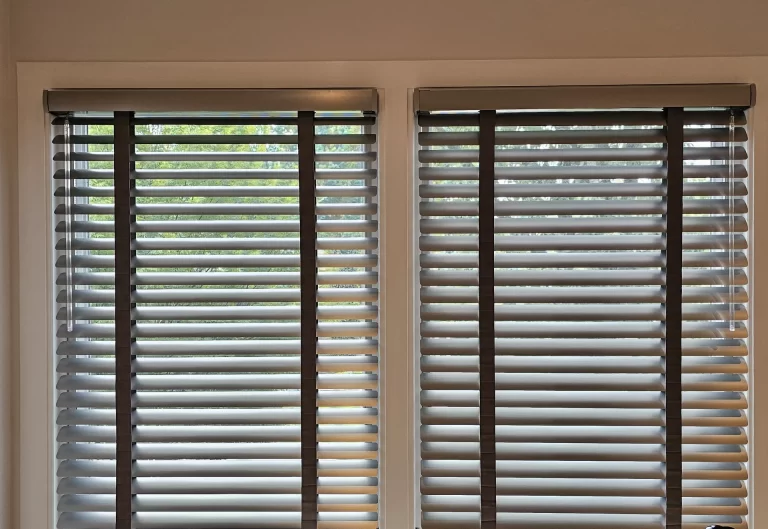
Vanes that hang from a track and draw sideways, which is the only sensible answer on a wide slider or a patio door. Tilt them for light, then stack them clear of the door you actually walk through.
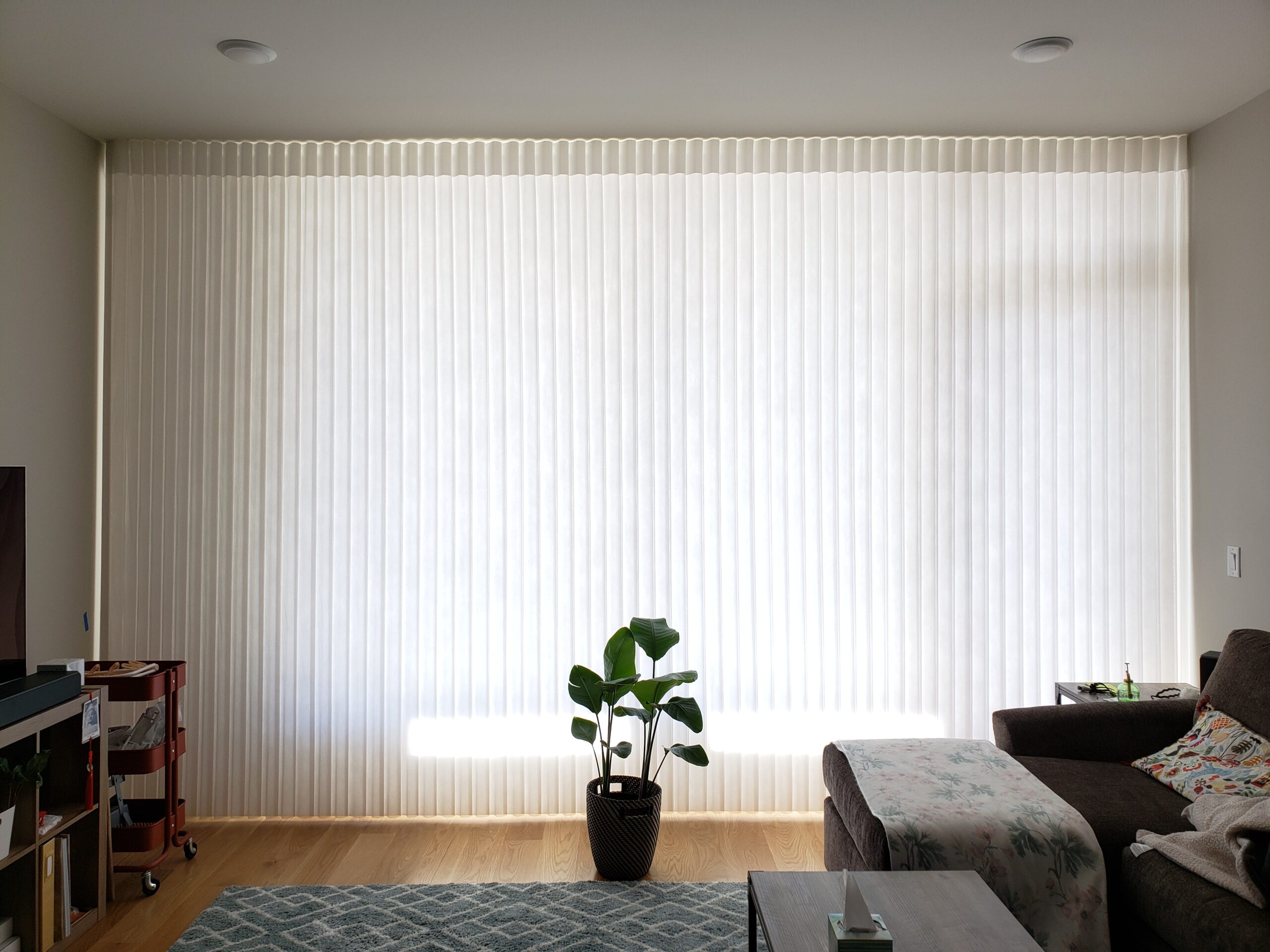
Vertical Sheers →
Fabric vanes suspended inside a sheer. They rotate for privacy like a vertical blind but read like drapery, which is what we reach for on a window wall when a hard vane would make the room look like an office. Hunter Douglas calls it Luminette.
Motorized Blinds →
Any blind on this page can run on PowerView, from an app, a remote, your voice or a schedule that follows the sun. Worth it on a stairwell or a bank of tall windows, rarely worth it on one you can reach from the floor.
Start with the room, not the slat
Almost every blind decision is made by the room it goes in, not by the sample in your hand. Pick what is driving yours and we will tell you where we would start, and the runner-up worth seeing beside it.
Faux Wood Blinds
Steam is what kills a wood blind. A composite slat takes the humidity over a sink or a tub without warping or discoloring, and you wipe it down instead of dusting it. The Hunter Douglas version is EverWood.
Aluminum Blinds
Also immune to the damp, and the slim slat almost disappears on a small window over a sink.
Vertical Blinds
A horizontal blind on an eight foot slider is a fight every time you want to go outside. Vanes draw sideways and stack at one end, so the door stays a door. Tilt them for light, pull them for a clear opening.
Vertical Sheers
Same sideways draw, but the vanes float inside a sheer, so the wall reads soft instead of commercial.
Wood or Faux Wood Blinds
Close the slats down and away from the sun and you stop the direct beam before it lands on your floor, while the room keeps usable bounced light. A 2 inch slat closes tighter than a half inch aluminum one, so it blocks more when shut and shows more view when open.
Solar Shades
If it is the heat and not the glare you are fighting, a screen fabric stops more of it right at the glass. We will show you both on the same window.
Wood Blinds
Nothing fakes grain under raking afternoon light. Real hardwood is also lighter than composite at the same size, so a wide blind lifts more easily and sits straighter on the headrail. Stains and paints get matched to your trim or your floor in the showroom.
Faux Wood Blinds
Paint hides the difference far better than a stain does, so if the blind is getting painted anyway, the composite is the practical call.
Motorized Blinds on PowerView
A stairwell window, a transom, a run above a kitchen cabinet. Motorization is what stops that becoming the window nobody ever adjusts, and a schedule can close the west side before the room heats up. It runs from an app, a remote, your voice or a schedule that follows the sun.
Cordless Blinds
A tilt wand instead of a motor. Simpler, nothing to charge, and fine on anything you can still reach from the floor.
Blinds, shades or shutters?
People use the three words interchangeably. They are three different products, and the difference is mechanical rather than decorative.
A blind is slats that tilt
Individual slats on a ladder tape, or vanes on a vertical track. Tilt them and you send daylight up onto the ceiling or down at the floor without raising anything, which is the one thing a shade cannot do. Raise the blind and the slats stack at the top.
Choose a blind when you want to control the direction of the light, not just how much of it there is.
A shade is one piece of material
It rolls, folds or stacks as it rises, so there is no tilt and no gaps between slats. That continuous surface is what carries a fabric, a pattern or a blackout lining, and it reads quieter on the wall.
Choose a shade when you want softness, fabric, or a room that goes properly dark. See shades →
A shutter is part of the window
Slats set in a hinged panel that is fixed to the frame and finished like woodwork. It tilts the way a blind does, but it never comes down, so the window keeps a permanent frame and there is nothing to raise or lower.
Choose a shutter when you want the treatment to look built in. See shutters →
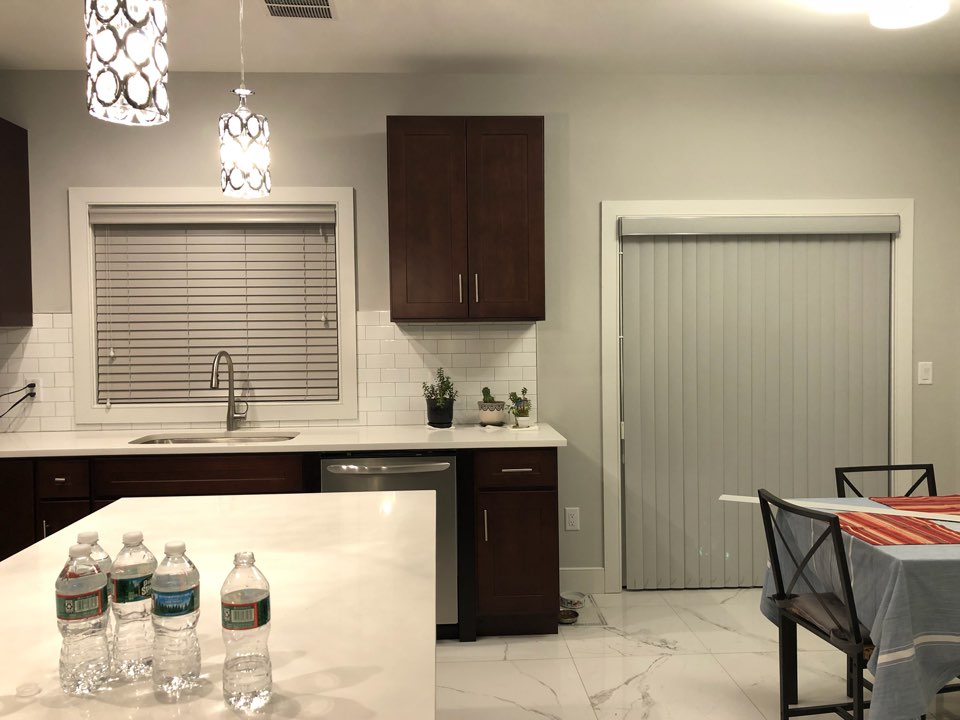
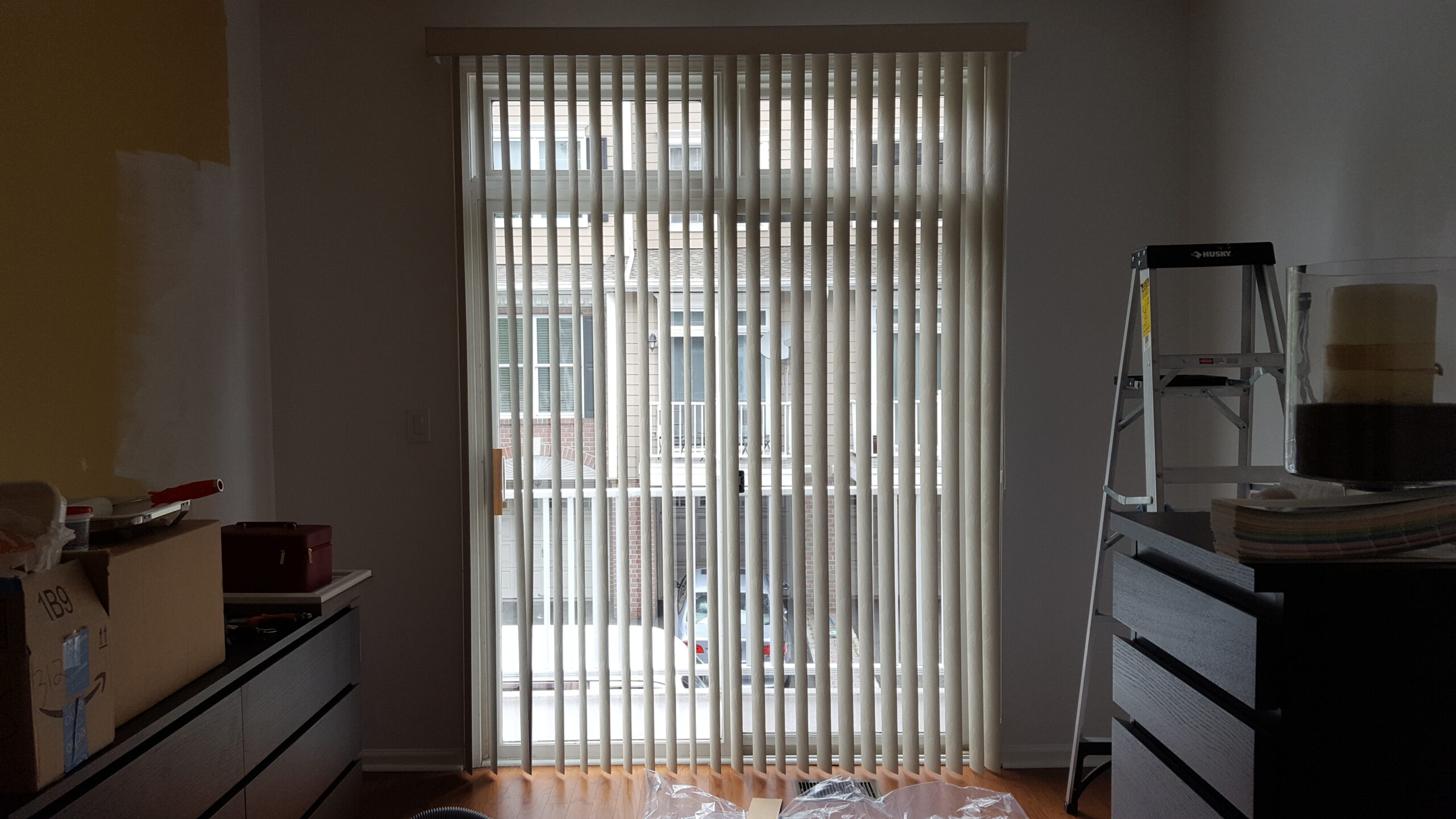
Blinds we've installed nearby
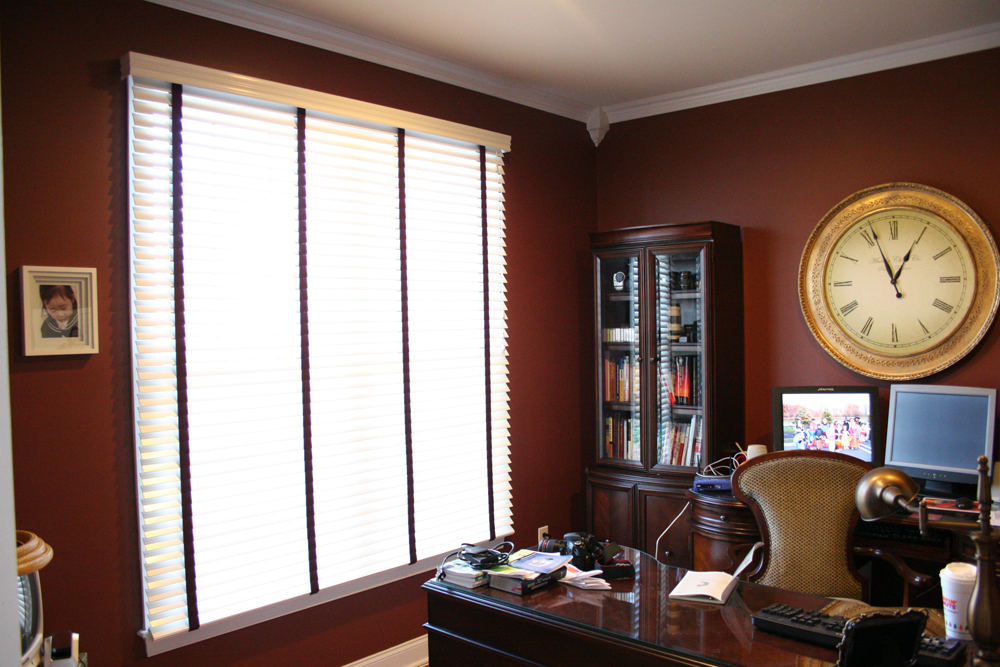
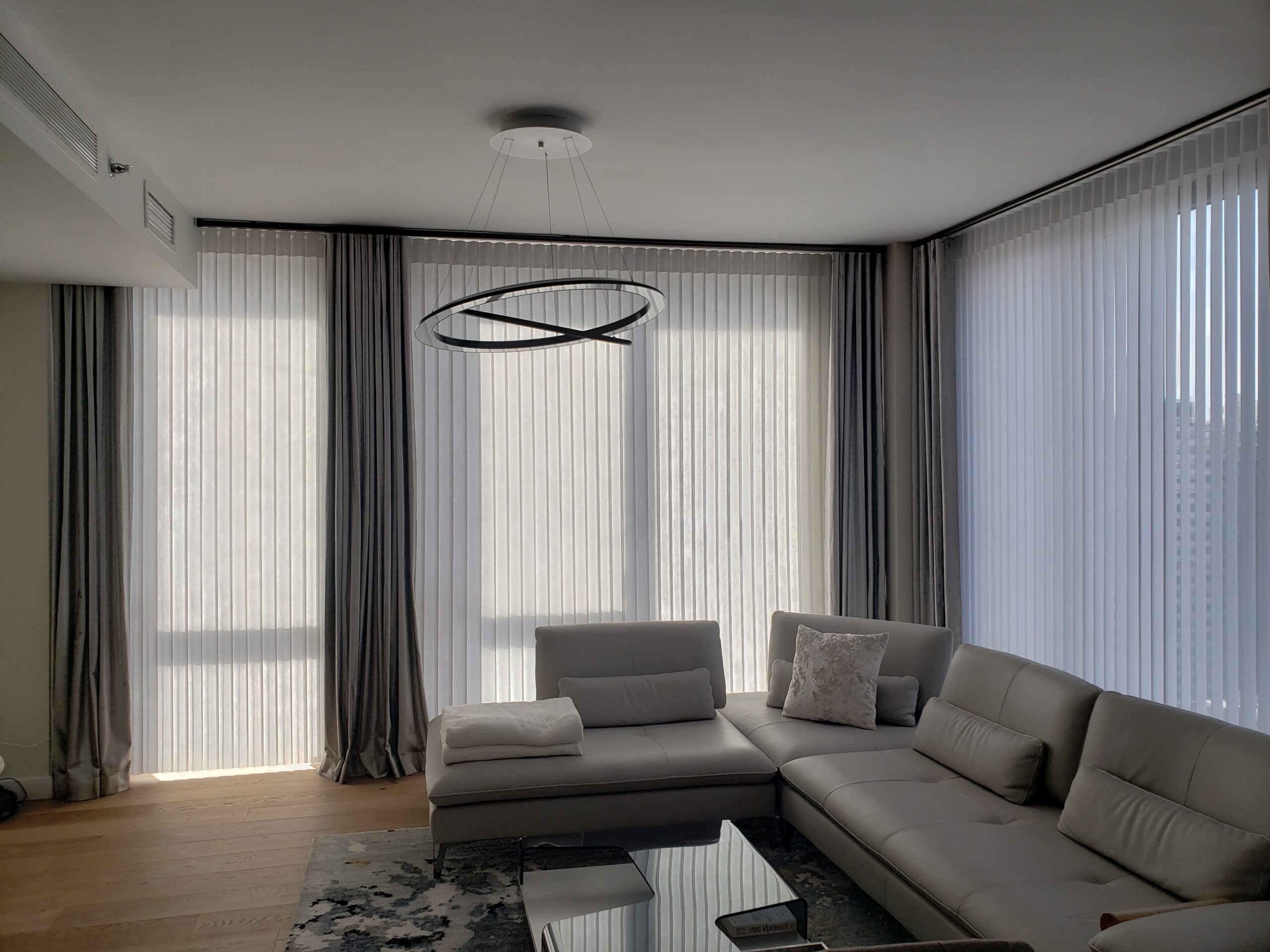
Real homes and offices across Bergen County and the Tri-State. No stock photography.
Blind questions
The five that come up in almost every consultation. A sliding door, a bay or an arch plays by different rules, so say so when you call and we will start there.
Tell us the room and what is bothering you about the light. We will narrow it to two options in a five-minute call.
What is the difference between blinds and shades?
A blind is made of individual slats that tilt, so you can angle daylight without raising anything. A shade is one continuous piece of material that rolls, folds or stacks as it rises. If you want to aim the light, you want a blind. If you want fabric, softness or true darkness, you want a shade.
Which blinds are best for keeping heat out?
A wood or faux wood blind, closed down and away from the sun. Angled that way the slats catch the beam at the glass instead of letting it land on your floor, and the room still gets light bounced off the ceiling. Slat width matters here, because the wider the slat the tighter it closes. If the glass faces west and the room is genuinely hot rather than just bright, a solar screen will do more, and we will hang the two side by side on the same window so you can see the difference.
Can I put real wood blinds in a kitchen or bathroom?
Over a kitchen window away from the range, real wood is fine. Directly above a sink, a tub or a shower it is not, because steam and splashes make wood slats warp and the finish lift. Use a faux wood composite in those spots instead. Once it is painted, from a few feet away you will not tell them apart.
What blinds work on a sliding glass door?
Vertical blinds or vertical sheers, because both draw sideways and stack clear of the opening. A horizontal blind on a wide slider has to be raised every time you use the door, and that gets old by the second week. We measure the door and the wall beside it so the stack lands where it will not block the handle.
How much do custom blinds cost?
Blinds are priced per window. The size of the opening, the slat material and width, and whether you add motorization are what move the number, so a small aluminum blind and a wide motorized wood one are not the same conversation. We measure every window in your home for free and put the exact figure for each one in writing before anything is ordered.
Visit the showroom
Prefer to see things in person before we come to you? We are on Broad Avenue in Palisades Park, a few minutes from Fort Lee and the GWB.
- 545 Broad AvenuePalisades Park, NJ 07650
- Mon–Fri 10–7 · Sat 10–5Closed Sunday
- (201) 302-9111We usually pick up on the first ring