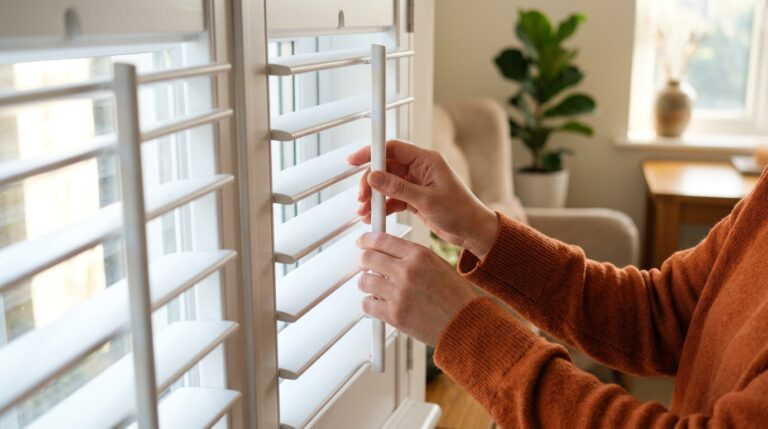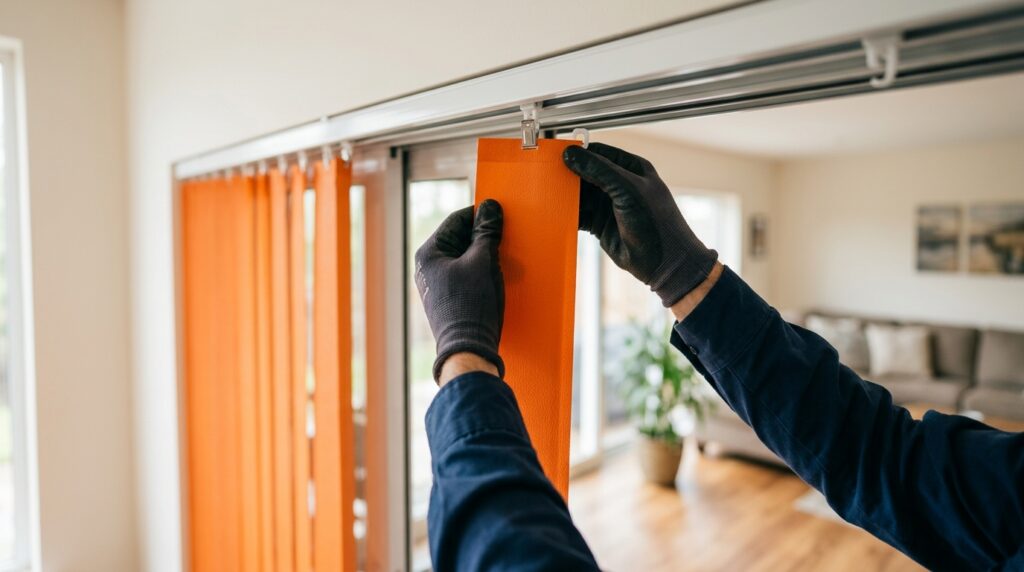
One cracked or sun-bleached slat shouldn’t force you into ripping out the whole system covering your sliding glass door. Yet finding the right vertical blinds replacement slats, matched in color, width, and material, can feel harder than it should be. This guide sorts out your options for 2026, from vane style to mounting fit, so you can restore a clean, functional look without starting over. We’ll also flag when a repair makes sense versus when it’s time for something new.
Why Vertical Blinds Need Slat Replacement Over Time
Common Signs Your Slats Need Replacing
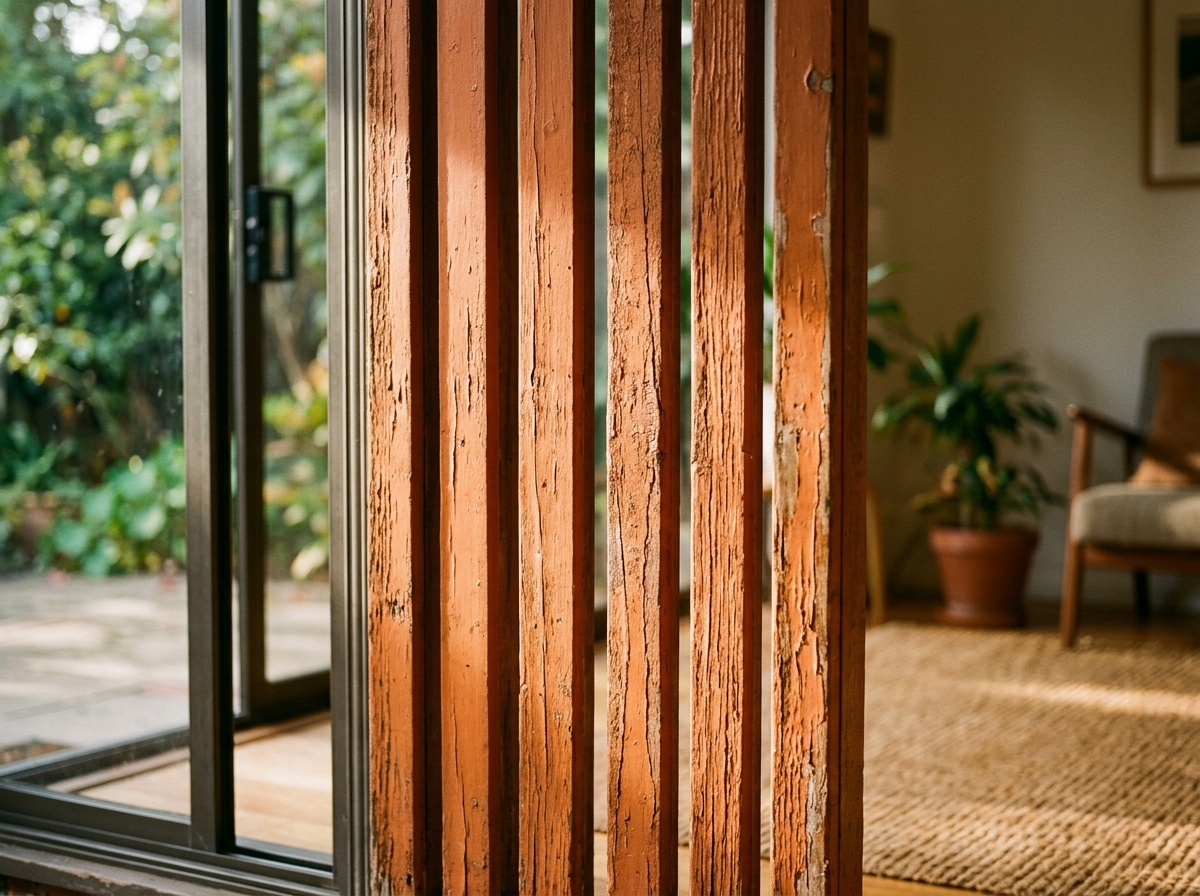
Sun is the biggest culprit. A sliding glass door usually faces the backyard. That means hours of direct light every day, and it bakes vinyl and fabric slats until they fade, go brittle, and curl at the edges. Warping is easy to spot: slats that won’t hang flat, or that twist when the door’s closed, are past saving. Cracking shows up along the fold lines first, right where the slat bends to rotate open and closed.
Then there’s the hardware, and it wears out faster than most people expect. Pull cords and chains on a sliding door system get used constantly, far more than a stationary window ever would, so the mechanism fatigues. Vanes pop out of their carriers, stems snap, and the whole headrail starts to sag. If you’re already weighing how vertical blinds for sliding glass doors hold up against daily foot traffic, know this: the track and clips usually fail before the fabric does.
A quick gut check: if you’re opening and closing that door five or six times a day, expect visible wear within three to five years, not ten.
When Repair Isn’t Enough
Sometimes a single cracked slat is a simple fix. You snap in a replacement and move on. But matching old slats gets hard fast, because many fabric and vinyl colors get discontinued within a few years of their original run. A faded beige from 2018 rarely matches a “new” beige today, even from the same catalog. At that point, patch repairs just create a mismatched, patchy look that draws the eye for all the wrong reasons.
That’s when it makes more sense to replace the full slat set rather than chase individual pieces. Headrails, the track mechanism at the top, last much longer than the slats themselves, so swapping slats alone is often enough. But if the headrail is bent, the cord lock is stripped, or you want to move to a cordless or motorized setup, replacing the whole system is the smarter long-term call. Slat-only replacement saves money; full-system replacement saves you from repeating this process every two years. Either way, it beats living with blinds that look tired every time guests walk past your patio door.
Vertical Blinds Replacement Slats: Materials, Sizes, and What Actually Fits Your Door
Fabric vs Vinyl vs Faux Wood
Replacement slats come in three common materials, and each one handles light differently. Fabric slats are soft, often textured, and range from sheer to room-darkening depending on the weave. Vinyl is the budget workhorse: smooth, wipeable, and usually the most opaque option out of the box. Faux wood gives you a heavier, more upscale look with a slight grain texture. It’s worth comparing to the real thing before you commit; a quick read on faux wood vs wood blinds lays out the durability tradeoffs pretty clearly.
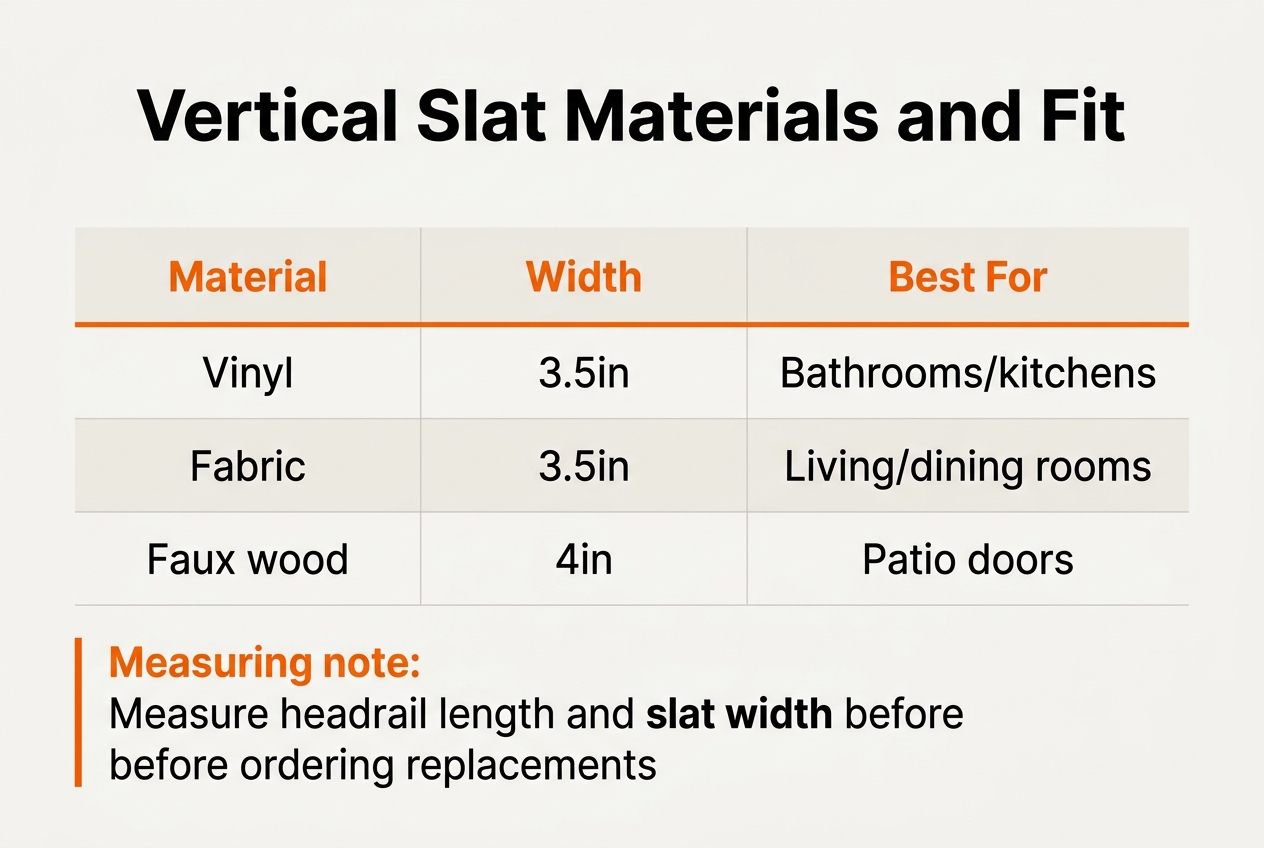
The table below breaks down what you can expect from each material, plus the standard sizing most sliding glass doors use.
| Material | Typical Opacity | Standard Width | Best For |
|---|---|---|---|
| Vinyl | Opaque to near-blackout | 3.5 inches | Bathrooms, humid rooms, tight budgets |
| Fabric | Sheer to semi-opaque | 3.5 inches | Living rooms, bedrooms, softer light |
| Faux Wood | Opaque, warm tone | 3.5 inches | Sliding doors needing a furniture-grade look |
| Fabric (wide-slat) | Varies by weave | 4.5 inches | Older or oversized door tracks |
Notice that 3.5 inches is the width you’ll see on nearly every modern sliding door setup. It’s the industry default for a reason: it clears standard headrails and stacks cleanly against the frame. Older homes sometimes have 4.5-inch track hardware, so check before ordering blind.
Getting Accurate Measurements
Measure twice, order once. Start with the headrail length, then measure slat drop from the top clip to where the slat should just clear the floor or sill. Don’t eyeball it. A quarter-inch error throws off how slats hang and rotate.
Color matching matters just as much as sizing. Pull a sample slat in daylight, not under indoor bulbs, since fading and dye lots shift over time. If your existing slats have faded unevenly, a near-match may stand out more than a bold contrast would.
DIY Slat Swaps vs a Full Vertical Blind Upgrade
When a Quick Fix Makes Sense
If you’ve got one or two cracked vanes from a dog bumping into the door or a curious toddler yanking on a tilt wand, clip-in replacement slats are a reasonable fix. Most vertical blind systems use a universal top clip, and a handful of replacement vanes in a matching color can run you $20 to $40. That’s a fair trade for a quick patch job, especially if the rest of the set still looks and functions fine.
This works best when damage is isolated and recent. A slat snapped last month on an otherwise clean, flexible set is a different problem than a whole wall of brittle plastic. Spot repairs make sense only when the surrounding material is still in good shape — matching a faded replacement slat to sun-bleached neighbors never looks quite right, and you’ll notice the seam every time light hits it.
Before you order anything, measure twice. Vane width (typically 3.5 inch) and drop length both need to match exactly, or the new slats will hang unevenly and catch on the track.
When to Start Fresh
Widespread fading, curling, or brittleness is a different story. If more than a handful of vanes crack when you bend them, or the whole set has gone chalky from years of sun exposure, patching won’t get you far. You’ll spend money chasing a look that’s already gone, and six months later you’ll be replacing more slats anyway. At that point, piecemeal repair starts costing more than it saves.
Run the math honestly. A dozen replacement vanes at $3 to $5 apiece, plus shipping and your time hunting for a color match, can edge close to half the price of a new vertical blind system built for the opening. Reinvesting also opens the door to better materials, cordless lift options, and header rails that glide instead of stick. Worth noting, too: whatever color-matching headaches you’re trying to solve, understanding can people see through my blinds during daytime versus night is a separate privacy question entirely, and it’s one more reason a uniform, unfaded set matters.
Vertical blind systems designed specifically for sliding glass doors handle the wide spans and frequent operation that standard window blinds weren’t built for, with reinforced headrails and chain-and-weight systems that keep heavy vanes tracking straight for years. If you’re weighing fabric alternatives for that same opening, it’s worth knowing how linen curtains perform in high-traffic doorways before committing either way. A full upgrade isn’t always necessary, but when the old set is this far gone, it’s rarely a bad call.

Comparing Window Coverings for Sliding Glass Doors
Feature-by-Feature Comparison
Wide sliding glass doors need a treatment that can stack neatly to one side without crowding the walkway. Vertical blinds, panel track systems, and woven shades all handle big spans, but they behave very differently once you live with them day to day. The table below lines up the practical stuff: how much light they block, how private they keep you, and what operating them actually feels like.
| Treatment | Light Control | Privacy | Ease of Operation | Best Width Range |
|---|---|---|---|---|
| Vertical blinds | Adjustable via tilting slats | Very good when closed | Wand or cord, simple | Up to 12+ feet |
| Panel track | Moderate, gaps between panels | Good, not full blackout | Smooth glide, one motion | 6 to 18 feet |
| Woven shades | Soft filtering, no full dark | Fair, light passes through weave | Cordless lift, easy | Up to 10 feet |
| Cellular shades (paired) | Excellent, blackout options exist | Excellent | Cordless or motorized | Best under 8 feet per panel |
Noise and temperature tell a different story. Vertical blinds offer some sound buffering and are fine insulators, but they’re thin, so heat still sneaks through the gaps between slats. Woven shades trap a bit more air and soften echo nicely in open-concept rooms. Cellular shades beat both for insulation, hands down, thanks to their honeycomb pockets. If swings in indoor temperature bother you, insulating cellular shades are worth exploring as a companion piece rather than a replacement.
For high-traffic patio doors, durability and quick access matter more than looks. Vertical blinds still win here. They part cleanly for foot traffic, shrug off daily handling, and the slats are simple to swap out if one gets snagged. Panel track looks sleeker but shows wear faster with heavy use. If cords near a play area worry you, cordless and PowerView motorized options remove the dangling-cord concern entirely, which is a real plus for homes with kids or pets moving through the doorway constantly.
Choosing between these options often comes down to how the space gets used, not just how it looks; thinking through smart window treatment options for sliding doors can help you decide if motorization is worth the upgrade. And if privacy at night is your main worry, it helps to review proven privacy curtains strategies before committing to a single system.
Solving Common Sliding Door Window Problems
Noise and Temperature Control Options
Big glass panels are great for light. They’re also terrible at keeping outside noise where it belongs: outside. Traffic, neighbors, a barking dog two yards over — it all bleeds right through a single pane of glass near your patio door. The same glass surface that lets sound in also lets your indoor temperature swing wildly with the weather, since glass has almost no insulating value compared to a wall.
A few adjustments make a real difference without touching the glass itself. Covering the sliding doors in your living space with the right layered treatment cuts sound transmission and stabilizes room temperature at the same time. Consider these approaches:
- Cellular shades trap a pocket of air in their honeycomb structure, which slows heat transfer in both winter and summer.
- Heavier custom drapery adds mass to the window area, which absorbs sound waves instead of letting them bounce around the room.
- Wooden or metal blinds with wider slats can be angled to redirect airflow and block direct drafts near the door seam.
- Layering a shade underneath drapery gives you both insulation and sound dampening without rebuilding the window itself.
- For genuinely drafty or failing glass, insulating shades help, but a single-pane door that won’t hold heat may need a window contractor’s attention, not just a new treatment.
UV Protection Without Window Film
Sliding doors face the sun for hours at a stretch, and that means fading. Hardwood floors bleach out, rugs lose color, and furniture fabric near the door ages twice as fast as the rest of the room. Window film is one common fix, but it’s permanent — once it’s on the glass, you’re stuck with it, bubbles and all. Shades and blinds do the same UV-blocking job and adjust with the day instead of locking you into one tint forever.
Solar roller shades and light-filtering cellular shades cut glare and UV exposure while still letting you open things up on a cloudy afternoon. If you’re leaning toward soft, flowing coverage instead, a sheer curtains guide can help you weigh light-filtering fabric against a denser solar screen. Either way, you keep control — something film just can’t offer.
Steps to Replace or Upgrade Your Vertical Blinds
Preparing for a Consultation
A little homework before anyone shows up saves time and gets you better answers. Start by looking closely at what’s actually wrong, because “replace a slat” and “replace the system” are two very different projects with two very different price tags.
- Assess slat damage and headrail condition, checking for warped vanes, snapped carriers, or a track that sticks when you slide it.
- Measure the width, drop, and mounting type of your opening, noting whether the headrail sits inside the frame or is mounted outside it.
- Decide, even loosely, whether you’re leaning toward replacement slats or a full system swap, since that affects what to bring up first.
- Pull together any paperwork or photos from the original installation, if you have them, to speed up matching.
- Think about daily habits, like how often the door gets opened, who’s operating the blinds, and whether cords near kids or pets are a concern.
That last point matters more than people expect. If dangling cords are a worry, cordless lifts or PowerView motorized options are worth raising early, not as an afterthought. Either way, scheduling a free in-home consultation is the natural next move once you’ve got the basics sorted.
What Happens During the Visit
A designer will inspect the headrail, vanes, and chain system in person, since damage often hides where it’s hard to see from the floor. They’ll take precise measurements, confirm mounting type, and walk you through whether individual slats or a full replacement makes more financial sense. If motorization comes up, this is also when you’d learn how to reset motorized blinds that lose calibration after a power outage, a small detail that trips up a lot of PowerView owners later. Expect honest input, not a hard sell. A good consultation ends with a clear recommendation and a number, not a guessing game.
Getting Expert Help With Vertical Blinds Replacement Slats in Bergen County
What a Consultation Covers
A free in-home design consultation is where slat questions actually get answered. An expert brings real samples to your door, measures your track, and tells you honestly whether your current vanes are even worth matching. Some are built on a Hunter Douglas vertical system, which uses proprietary vane shapes and carriers you won’t find on a general hardware shelf. Others are generic, and a swap is quick and cheap.
This is also the moment to sort fabric, light control, and budget without guessing. If you’re unsure whether to replace a few slats or move to a different covering entirely, reading up on blinds vs curtains choosing the right window treatment beforehand helps you ask sharper questions. Consultants focus purely on the window: fabric, color, operation, light control. They won’t redesign your living room, and they’ll say so upfront. Think of it as a focused expert visit, not a decorating overhaul.
Worth noting: this isn’t a sales pitch dressed up as a visit. A good consultant will tell you when a $40 slat fix beats a full replacement, even if that’s the cheaper answer for you.
Serving Homes and Businesses Across the Area
Homeowners from Fort Lee, Cliffside Park, and Edgewater to Leonia, Englewood, Tenafly, Ridgewood, and Franklin Lakes can get a consultant to their door without driving anywhere. Commercial clients get the same visit, just scaled: more doors, more windows, same measuring and matching process. For standard glass walls in an office, surface-mounted roller or cellular shades are the practical route; fully integral glazing systems come from the glass manufacturer, not a window treatment installer.
If you’d rather see and touch fabric first, the Palisades Park showroom is set up for exactly that. Hold a sample vane against real daylight, compare matte versus textured finishes, and feel the weight difference between a basic vinyl slat and a heavier fabric-wrapped one. It’s a small thing, but it changes decisions. Seasonal promotions on select product lines run through the showroom too, so timing a visit around those can trim real dollars off a larger order.
One more distinction worth making: repair covers hardware, broken carriers, bent headrails, stuck chains. Fabric cleaning doesn’t, and that’s by design. A dedicated fabric cleaner handles stains and buildup properly; forcing that work into a repair visit does nobody’s slats any favors. For anything else, a call to (201) 302-9111 sorts out which category your problem falls into.
Once you’ve measured twice and settled on a material that suits the room’s light and privacy needs, the slat swap itself is a straightforward afternoon project that shouldn’t require any special tools beyond a step stool and some patience. If the old track or headrail is damaged rather than just the slats, it’s worth checking whether a full replacement makes more sense than patching things piecemeal, and this is where a quick look at The Curtain’s vertical blinds for sliding doors can show you what current hardware and slat options look like side by side. Either way, the goal is the same: smooth-operating slats that still do their job of filtering light and giving you privacy without fuss.