Sliding glass doors let in beautiful light, but they bring a stubborn styling problem too. Standard curtains bunch awkwardly. Roller shades can’t handle the width. Most horizontal blinds simply aren’t built for a door you walk through every day. Vertical blinds for sliding glass doors solve this by pairing full light and privacy control with a design made specifically for wide, high-traffic openings. This guide walks through how to pick the right materials, sizing, and mounting approach, so your door works smoothly and looks sharp for years.
Why Sliding Glass Doors Need Special Window Treatments
Common Problems With Standard Treatments on Sliding Doors
Sliding glass doors create a unique challenge. Their large glass panels let in strong sunlight, heat, and cold air. Without the right coverage, rooms feel exposed at night and stuffy during the day. Standard treatments often can’t handle all three jobs at once: light control, privacy, and insulation.
Horizontal blinds and standard curtains were built for smaller, narrower windows. On a wide sliding door, horizontal slats bow under their own weight and jam over time. Curtains bunch at the sides, blocking the door’s swing path or dragging on the floor track. Many homeowners chasing a fix for this exact problem end up comparing blinds vs curtains choosing the right window treatment before landing on something better suited.
These mismatches cause real frustration. A treatment that needs constant adjusting, or one that blocks foot traffic, defeats its own purpose. The door’s size and function call for a treatment built specifically for that shape and movement.
How Vertical Designs Solve Space and Function Issues
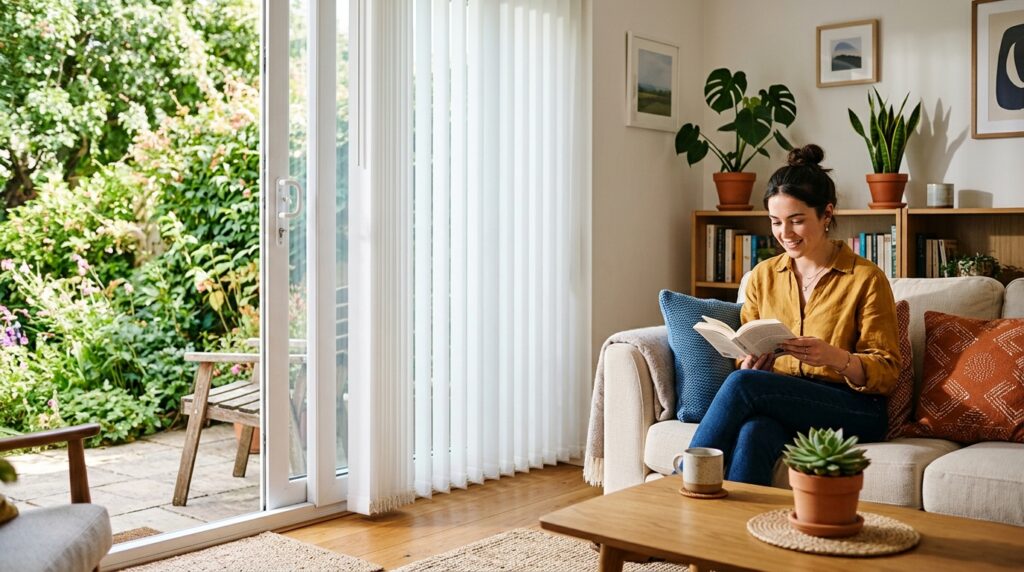
Vertical blinds hang and move in the same direction as the door. That alignment means the treatment never blocks the sliding path. Panels stack neatly to one side, leaving a clear opening for daily use, pets, or moving furniture through the doorway.
Because vertical slats rotate instead of lift, they give precise control over light and privacy without fully opening or closing. That makes them practical for tall, wide openings where horizontal designs fall short. Homeowners discussing this on forums, including one popular thread asking “Good vertical blinds for a sliding glass door?”, keep pointing to this same functional edge.
For more comparisons and design tips, many readers browse a dedicated provider’s blog before settling on a final style.
Vertical Blinds for Sliding Glass Doors: What They Are and How They Work
Anatomy of a Vertical Blind System
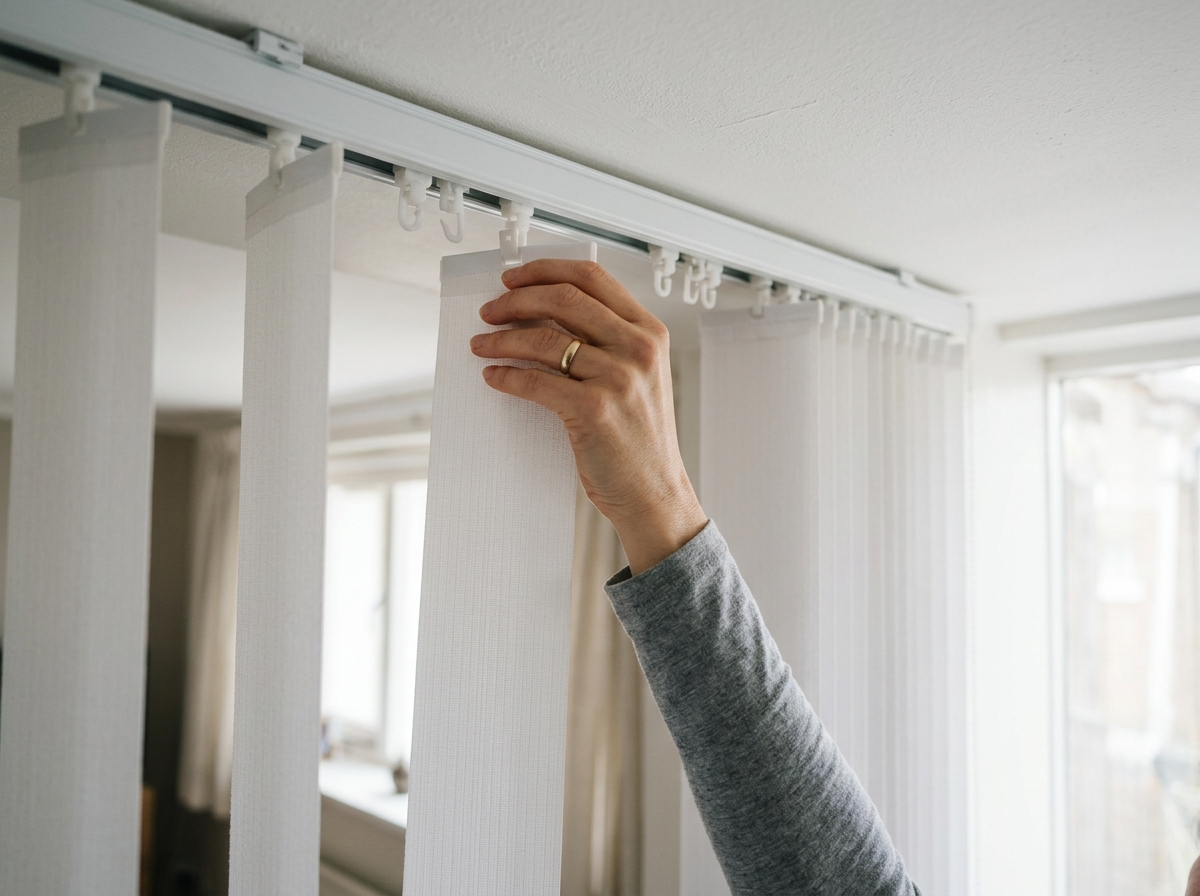
A vertical blind system has three main parts: a headrail track, hanging vanes, and a control mechanism. The headrail houses small carriers that hold each vane in place. Vanes typically run 3.5 inches wide and hang from floor to ceiling height, though custom sizing is common for oversized sliders.
Each vane clips into its own carrier, which glides along the track on its own. This lets vanes rotate together in unison, controlled by a single mechanism instead of adjusting each slat by hand. Weighted bottoms or connecting chains keep vanes hanging straight, even near drafty door seams.
Many local businesses recommend this system for sliders because the parts are easy to service. A single damaged vane can be swapped out without replacing the whole set, which saves money down the road.
Vane Materials: Fabric, Vinyl, and Faux Wood
Fabric vanes give a soft, textile look and come in hundreds of colors and weaves. Vinyl vanes resist moisture and wipe clean easily, which makes them a smart pick near humid patio doors. Faux wood vanes mimic real wood shutters while staying lightweight and durable.
Fabric vanes need gentler care. Owners often research how to wash curtains for tips that also work for spot-cleaning fabric slats. Vinyl and faux wood only need a damp cloth.
How Traverse Rods and Wands Control Light and Privacy
Traverse rods let you pull vanes across the track, opening them fully to one side for easy door access. A wand rotates vanes between open and closed positions, adjusting light and privacy without touching the fabric directly.
Some homeowners upgrade to motorized versions, and plenty wonder whether are motorized shades worth it for busy households. Stacking vanes neatly to one side keeps the doorway clear, which is exactly why this system remains the default choice for sliders. For broader regional buying guidance, resources like NECINJ can help homeowners compare local options.
Top Reasons Homeowners Choose Vertical Blinds
Privacy and Light Control Benefits
Sliding doors need treatments that adjust fast. Rotating vanes tilt open or closed in seconds, letting homeowners fine-tune sunlight without giving up privacy. That matters most at night, or when neighbors have a clear line of sight into the living room.
- Vanes rotate a full 180 degrees, offering gradual light control instead of an all-or-nothing setting.
- Sliding panels stack neatly to one side, so the door opens fully without removing the treatment.
- Blackout-lined vanes block harsh afternoon glare on west-facing patio doors.
- Split-draw tracks allow the panels to open from the center, useful for doors used often by kids or pets.
Durability and Low Maintenance
Vertical blinds hold up well against daily traffic near doors. Vinyl and PVC vanes resist moisture, warping, and fading better than fabric drapery, which needs regular washing or dry cleaning.
Homeowners weighing manual versus motorized systems often start with automated blinds vs automated shades which smart window t… to understand the long-term upkeep differences.
Budget-Friendly Customization
Compared to floor-length drapery, vertical blinds cost less to buy and maintain. Custom widths and colors keep pricing flexible for nearly any budget.
Some homeowners still like softer fabric looks, and options like pleat curtains can be paired alongside blinds for added texture.
Vertical Blinds vs. Popular Alternatives
Panel Track Blinds vs. Vertical Blinds
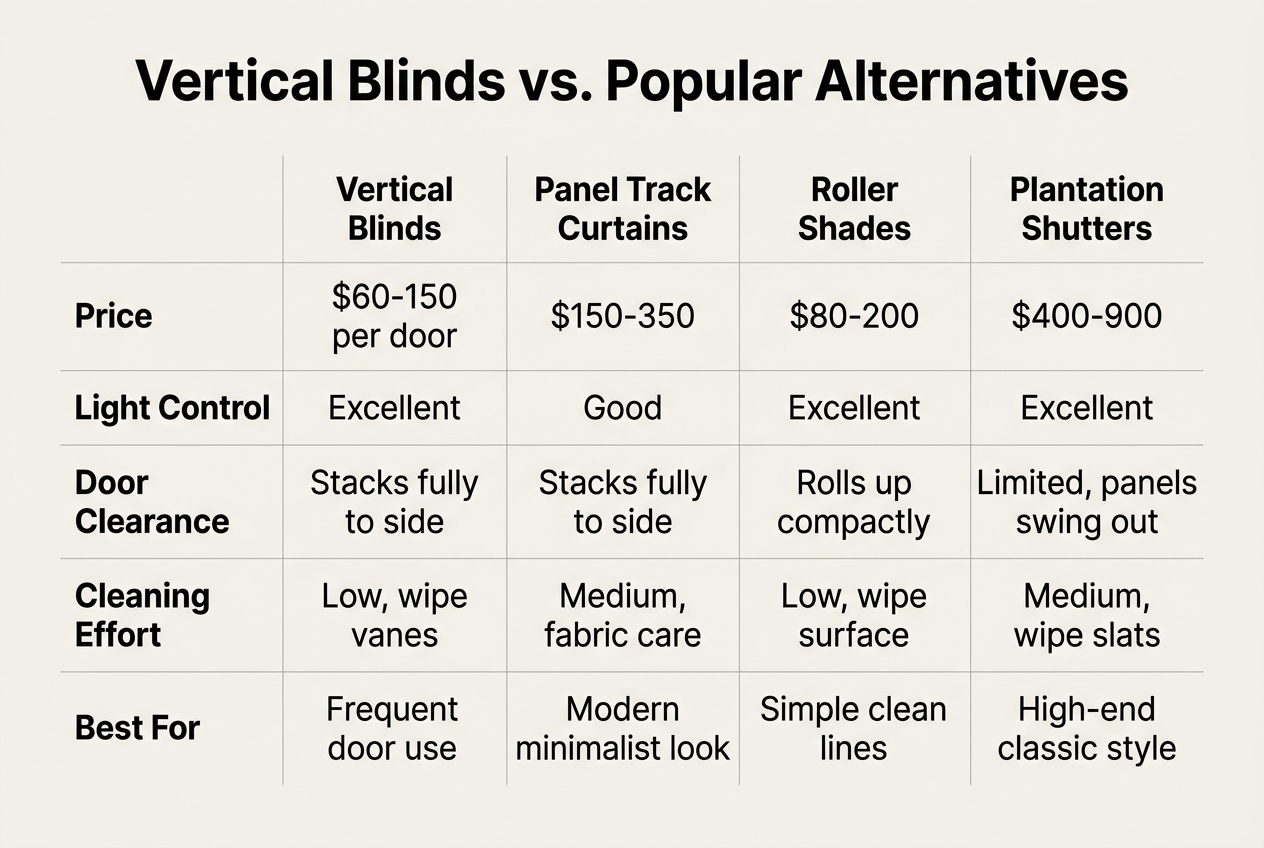
Panel track blinds use wide fabric panels that glide on a track, working much like vertical blinds but with a cleaner, more modern look. Vertical blinds usually cost less and offer more color choices, while panel tracks suit wider door openings better. Both control light well, but panel tracks show fewer seams and gaps.
Vertical Cellular Shades and Sliding Panels
Vertical cellular shades bring honeycomb insulation to a sliding door, trapping air pockets that cut down on heat transfer. Sliding panels work like panel tracks but often use stiffer materials for a tailored, architectural feel. For upkeep tips on the fabric versions, see this guide on how to clean cellular shades, which applies to many vertical fabric styles too.
| Treatment | Light Control | Insulation | Style | Price Range |
|---|---|---|---|---|
| Vertical Blinds | Excellent | Low-Moderate | Classic | $ |
| Panel Track Blinds | Excellent | Moderate | Modern | $$ |
| Vertical Cellular Shades | Good | High | Soft, layered | $$ |
| Sliding Panels | Good | Moderate | Architectural | $$$ |
| Drapery/Dual Sheer Shades | Variable | Moderate-High | Elegant | $$$ |
Drapery and Dual Sheer Shades as Softer Options
Drapery adds warmth and texture but needs more fabric and careful pairing with door traffic. Dual sheer shades combine soft bands of fabric for filtered light with more privacy than sheer curtains alone. Homeowners after fabric elegance with vertical function often compare options like the Bali | Cordless Fabric Vertical Blinds – Window Treatments before choosing between hard and soft treatments.
Choosing the Right Style for Your Space
Light Filtering vs. Room-Darkening Options
Start by asking how the room actually gets used. A sunny dining area near patio doors usually benefits from light-filtering vanes, which soften glare while keeping the view. Bedrooms and media rooms usually need room-darkening fabric instead, blocking outside light almost completely.
Vane material matters too. Sheer or lightly woven fabrics let in a soft glow, great for kitchens or sunrooms. Opaque PVC or heavier fabric vanes suit south-facing doors that get intense afternoon sun. The choice comes down to comfort, privacy, and how much natural light you actually want streaming in each day.
Matching Style to Modern or Traditional Interiors
Style should match the room’s overall decor, not just the door itself. Sleek, wide vanes in neutral tones suit modern spaces with clean lines and minimal furniture. Traditional homes often pair better with textured fabrics or subtle patterns that echo drapery elsewhere in the house.
Door size shapes this choice too. Larger sliding doors, 8 feet or wider, can carry bolder colors or fabric-wrapped vanes without overwhelming the space. If you’re unsure how a treatment will read against existing furnishings, guides on how to choose curtains for living room settings offer color and texture tips that apply to Vertical Blinds selections too.
Energy Efficiency and Insulation Considerations
Patio doors lose more heat than standard windows. Choosing insulated fabric or dual-layer vanes can cut drafts noticeably, especially in colder climates. This small upgrade often pays for itself through lower heating bills over time.
Ask a dedicated provider about thermal-backed options during your consultation. Many local businesses offer samples so you can compare insulation ratings before committing to a final fabric choice.
Customization Options and Upgrades
Fabrics, Colors, and Patterns
Vertical blinds come in many materials, from smooth vinyl to woven fabric and even faux wood. Each option changes how a room looks and feels. Picking the right texture is one of many diy curtain hacks transform your space with simple upgrades homeowners try before committing to a full custom order.
- Fabric vanes add softness and help absorb sound in busy living spaces.
- Vinyl vanes resist moisture, making them a smart pick near patios or humid climates.
- Solid colors like white, gray, and taupe work well with most décor styles.
- Bold patterns or textured weaves can serve as a statement feature in a plain room.
- Light-filtering fabrics soften sunlight while sheer options keep views open.
Motorized and Smart Home Compatible Options
Motorized vertical blinds let homeowners open and close panels with a remote, app, or voice command. Many systems connect to smart hubs like Alexa or Google Home. This automation adds real convenience for tall or hard-to-reach sliding doors.
Eco-Friendly and Specialty Materials
Cordless controls improve child and pet safety while giving a cleaner look. Eco-friendly fabrics, including recycled polyester and PVC-free vinyl, cut environmental impact without sacrificing durability. For a full comparison of styles and materials, the guide on Vertical Blind Alternatives for Sliding Doors offers helpful side-by-side details.
How to Measure Sliding Glass Doors for Vertical Blinds
Inside Mount vs. Outside Mount Measurements
Before pulling out a tape measure, decide on your mount type. An inside mount sits within the door frame for a clean look. An outside mount covers the frame and hides gaps around uneven doors. Each needs different width and depth measurements.
Step-by-Step Measuring Instructions
Use a steel tape measure, not cloth, for accuracy. Measure in three spots and record the smallest number, since frames often shift slightly over time. The table below breaks down each step.
| Step | Inside Mount | Outside Mount |
|---|---|---|
| 1. Width | Measure frame opening at top, middle, bottom | Add 3–4 inches beyond frame on each side |
| 2. Height | Measure from headrail spot to floor | Add 2–3 inches above frame for headrail clearance |
| 3. Depth | Check frame depth is at least 2.5 inches | Not required |
| 4. Clearance | Confirm door slides without hitting vanes | Confirm mounting surface is solid, not drywall alone |
Avoiding Common Measuring Mistakes
Rounding measurements up or down causes gaps and light leaks. Skipping the three-point check is another frequent slip, since doors are rarely perfectly square. For general guidance, this resource on how to measure for curtains covers similar principles.
Professional measuring cuts down on costly reorders and installation delays. A trained technician catches frame irregularities homeowners often miss. Many local businesses offer this service free with a custom order, including detailed options like Vertical Blinds for Sliding Glass Doors – Factory Direct… for reference on sizing standards.
Installation Steps and Professional Tips
DIY Installation Walkthrough
Most vertical blind kits mount inside or outside the door frame with a headrail track. The table below breaks down the typical steps and time needed for a standard 84-inch sliding door.
| Step | Task | Tools Needed | Time Estimate |
|---|---|---|---|
| 1 | Mark bracket positions on wall or frame | Pencil, level | 10 minutes |
| 2 | Drill pilot holes and secure brackets | Drill, screws | 15 minutes |
| 3 | Snap headrail into brackets | None | 5 minutes |
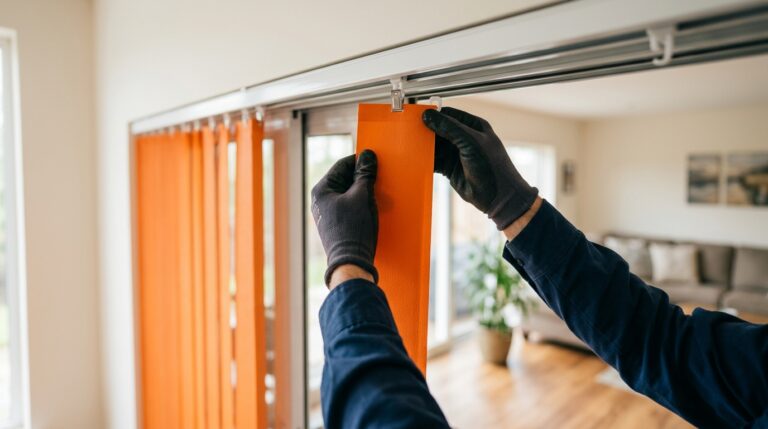
| 4 | Attach vanes to carriers | None | 15 minutes |
| 5 | Test slide and rotation function | None | 5 minutes |
A basic installation usually takes under an hour with a helper. Watching a short demo, like The BEST Options for Sliding Glass Doors (Blinds, Shades …, helps clear up tricky bracket angles before you start.
Signs You Should Hire a Professional
Call an installer if your door frame is uneven, if you’re mounting motorized track systems, or if the header needs structural anchoring into brick or tile. Heavy vane sets over 96 inches wide also benefit from professional leveling to stop sagging.
Ongoing Care and Cleaning Tips
Wipe vanes monthly with a damp cloth and vacuum the tracks to clear dust buildup. Lubricate carriers twice a year with a light silicone spray. Good vane coverage also affects energy performance, and understanding do curtains keep heat out concepts can guide smarter cleaning schedules around seasonal temperature shifts.
Cost Factors and What to Expect When Ordering Custom Treatments
What Affects Pricing
Vertical blind prices vary widely. Basic vinyl slats for a standard door might run $60 to $150. Fabric or woven options with premium hardware can climb to $200 to $500 or more. Size matters most, since sliding doors often need wider panels than a typical window.
Material choice drives cost too. Vinyl is the most budget-friendly. Fabric adds texture and light control but raises the price. Motorized versions, cordless lift systems, and specialty headrails add another $100 to $300 to the total. Track quality matters as well, since a smoother, quieter track often costs more upfront but saves on repairs later.
Features like light-blocking backing, antimicrobial coatings, or child-safe cordless controls also affect the final number. Homeowners should expect quotes to reflect the exact combination of size, fabric, and mechanism chosen for their space.
Custom Orders vs. Ready-Made Options
Off-the-shelf vertical blinds cost less and ship right away. But they rarely fit sliding doors precisely, leaving gaps that let light and drafts through. Custom orders fix this by matching the exact door width and height, often within an eighth of an inch.
The design process of custom window treatments also opens up more choice in color, texture, and control style, something ready-made panels rarely offer. Many local businesses recommend custom orders for doors over 80 inches wide, since standard sizes simply don’t stretch that far without visible seams or uneven panels.
What Happens During a Design Consultation
A typical consultation starts with measuring the door and talking through light, privacy, and traffic patterns. The consultant then shows fabric swatches and hardware samples in the actual room, since lighting changes how colors appear.
Expect a written estimate before ordering, plus a timeline for production and installation. Many providers also point clients toward resources like the Best Vertical Window Blinds lineup to compare styles before making a final call.
So take stock of what that big span of glass is actually asking of you — how often the door gets used, which way the afternoon sun lands, whether you want the slats to disappear entirely when the panel slides open. Once you know that, the choice between a traditional vertical stack, a wider fabric vane, or a panel of custom drapery gets a lot easier to make, and a conversation with someone who handles vertical blinds for sliding doors day in and day out, like The Curtain, tends to settle the remaining questions about width, mounting, and stacking direction. Sliding doors are one of the few windows in a house you touch every single day, and it’s worth getting them right rather than living with something that fights you every time you step outside.