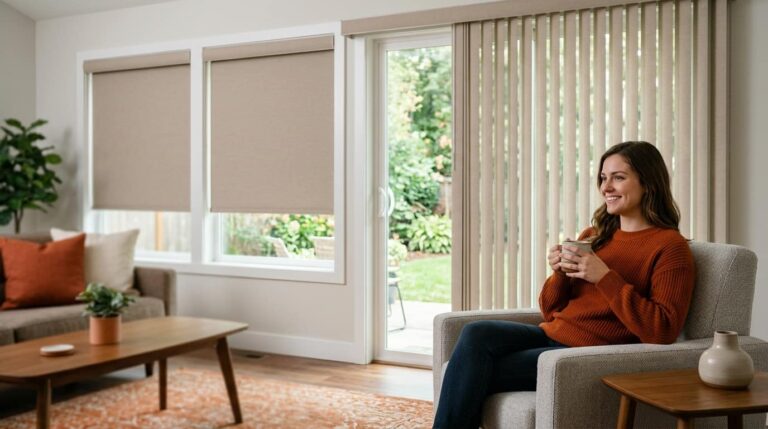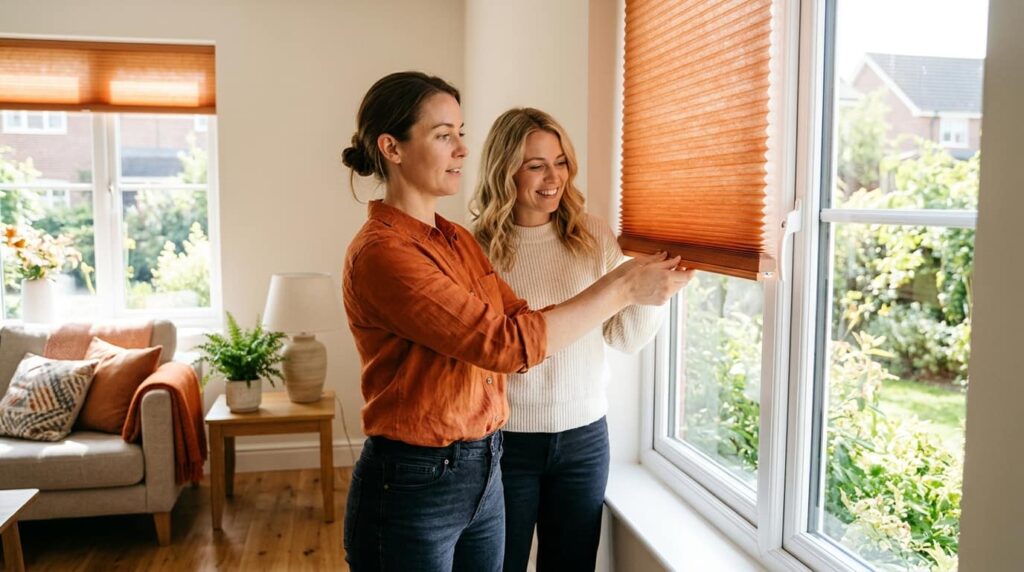
You’re scrolling through options, trying to decide between adjustable window screens for glare control and a fully custom treatment that matches your home’s style. It’s a real tradeoff. Screens promise flexibility and a budget-friendly fix, but they rarely deliver the light control, insulation, or finished look that tailored window treatments provide. This guide breaks down both paths honestly, so you can choose what actually fits your windows, your goals, and your 2026 budget.
What People Mean by Adjustable Window Screens
Insect screens vs. adjustable light control
Search for “adjustable window screens” and you’ll actually find two different products wearing the same name. The older meaning is a physical screen: a mesh panel that slides, expands, or retracts on a track to keep bugs out while a window or door stays open. Think screen doors, retractable porch screens, or those expandable frame inserts sold at hardware stores. That’s a specialty trade of its own, dealing with mesh, tracks, and frame repair rather than fabric or light control.
The newer, and now more common, use points somewhere else entirely: interior coverings you adjust to dial in exactly how much light, view-through, or privacy you want at any moment. Louvered plantation shutters you tilt open and shut, cellular shades you raise halfway, roller shades with a light-filtering fabric — all of these get called “adjustable screens” by people who just want flexible control, not bug-proofing. It’s a bit of a misnomer. But it’s how plenty of homeowners search.
This guide sticks to the second meaning. Interior light-and-privacy coverings are what the rest of these sections compare, since the mesh-screen hardware side is a genuinely separate trade with its own installers. If you’re dealing with sagging screen material or a torn door screen, that calls for a screen specialist, not a window treatment consultation. If what you actually want is softer light in the afternoon or more privacy at night without losing the view entirely, you’re in the right place. Knowing the difference up front saves you a wasted phone call.
Why Homeowners Want Adjustability in the First Place
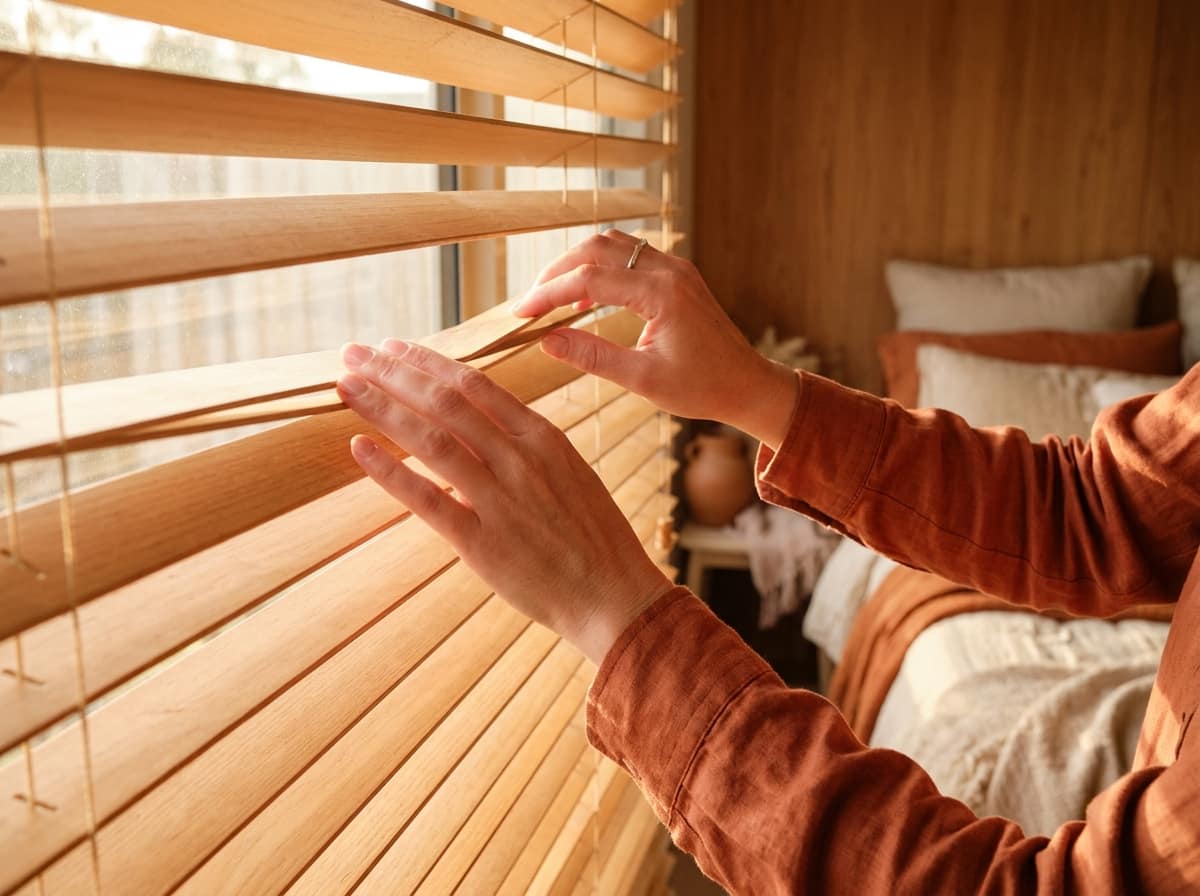
Fixed coverings make a promise they can’t keep: one setting, all day, every season. That’s not how light or life actually works. The sun moves, your evenings get darker earlier in winter, and the glare on your TV at 7pm is a different problem than the heat pouring in at noon. Adjustability exists because static fabric and slats just can’t track all that change.
Common frustrations with fixed coverings
Talk to enough homeowners and the same complaints keep surfacing. A fixed shade that’s perfect at 10am is often useless by 3pm once the sun angle shifts across the room. Here’s what tends to push people toward something more flexible:
- Morning sun that’s mild in spring turns brutal and low-angled by late summer, so a shade set once in April stops working by August.
- Street-facing bedrooms need full privacy at night but block too much daylight if left closed all day, which frustrates anyone who wants natural light in the morning.
- Glare bouncing off a television or laptop screen is a daily annoyance that only tilt-adjustable slats, not flat drawn curtains, can really fix.
- Rooms with big glass walls or sliders run hot in summer afternoons and cold against single-pane glass in winter, regardless of what the thermostat says.
- Ground-floor rooms near sidewalks or driveways need coverage that changes by the hour, not a one-size setting left the same from morning to night.
None of this is really about style. It’s about function changing hour to hour. If you want a deeper comparison of how different shade types handle privacy versus daylight, a resource worth reading is this breakdown of shades for privacy and light, which gets into exactly this tradeoff room by room. That tension between privacy and light is the whole reason adjustable options exist.
Comparing Adjustable Interior Options by Light and Privacy Control
Every adjustable window covering walks a line between how much light it lets in and how much privacy it gives back. Some products swing wide open and shut tight. Others sit in a narrower middle ground. The table below breaks down seven common families so you can see where each one lands before you start comparing fabrics and finishes.
| Product | Adjustability Range | Privacy Level | Light Filtering vs. Blackout | Best Room Use | Price Tier |
|---|---|---|---|---|---|
| Wooden blinds | Full tilt, 0-180° | High when closed | Filtering, near-blackout when tilted shut | Living rooms, home offices | Mid to high |
| Metal blinds | Full tilt, 0-180° | High when closed | Filtering, near-blackout when tilted shut | Kitchens, laundry rooms | Budget to mid |
| Cellular shades | Top-down/bottom-up | Moderate to high | Filtering or blackout liners available | Bedrooms, nurseries | Mid |
| Roller shades | Single raise/lower | Moderate | Sheer to full blackout fabrics | Sunrooms, home theaters | Budget to mid |
| Roman shades | Single raise/lower | Moderate to high | Filtering, blackout lining optional | Dining rooms, formal spaces | Mid to high |
| Woven shades | Single raise/lower | Low to moderate | Filtering only | Dens, reading nooks | Mid |
| Shutters | Full tilt, louvered | Highest | Filtering, near-blackout when closed | Bathrooms, street-facing rooms | High |
A few patterns jump out. If total darkness matters for sleep, a cellular shade with a blackout liner or a lined roman shade beats a woven shade every time. Woven textures are gorgeous, but they’ll never fully block a streetlight. If privacy is the priority — think a bathroom window facing a neighbor’s porch — shutters and closed blinds outperform roller shades, which still leave a shadow outline even when fully lowered. And if you’re weighing fabric choices for softer rooms alongside these hard treatments, reading up on linen curtains for layered privacy can help you decide whether to pair a hard shade with soft drapery. Worth noting: nothing here solves true blackout for a nursery like a dedicated blackout shade does. Don’t force wood blinds into that job. Wrong tool.
Solving Heat, Glare, and UV Without Window Film
Why shades beat permanent film for flexibility
Window film sounds like a tidy fix for sun damage. It’s applied straight to the glass, and that’s where it stays. Once it’s on, you can’t adjust it room by room, hour by hour, or season to season. If you decide later you want more light on a gray January afternoon, tough luck — it’s bonded to the pane. Shades give you the same UV and heat protection without that permanence. Solar roller shades and light-filtering cellular shades block the harsh midday sun and then roll back up the moment you want the view again.
That flexibility matters more than people expect. A south-facing kitchen might need full coverage at 2 p.m. and none at all by dinner. Film can’t respond to that; shades do, instantly, with a cord, wand, or remote. Cellular shades add another layer of benefit: their honeycomb pockets trap air, which insulates against both summer heat and winter cold, something flat film simply doesn’t attempt. For readers weighing total energy impact rather than just glare, your guide to energy efficient window coverings breaks down how insulating fabrics compare across seasons.
For brutal west-facing glare, one shade often isn’t enough. Pairing a solar shade with a secondary blackout layer, like roman shades, gives you two-stage control: diffuse the glare during the day, then block it completely at night or during a movie. It’s a layered approach film can’t offer, since film only ever does one thing, permanently, in one direction.
Worth noting: even the best interior shade works after sunlight has already hit the glass. Exterior awnings intercept the sun before that happens, cutting heat gain at the source rather than managing it indoors. Interior treatments can’t fully replicate that. Rooms with relentless southern or western exposure — think top-floor sunrooms or glass-heavy additions — sometimes genuinely benefit from both: an awning outside, solar or woven shades inside. That’s a conversation for an exterior contractor, but it’s worth knowing the two solutions aren’t competitors. They’re a team.
Adjustable Coverings for Sliding Glass Doors and Oddly Shaped Windows
Sliding doors
Big glass doors are their own puzzle. You need something that controls light and privacy but never blocks the path in and out, and that rules out a lot of standard window products right away. Vertical blinds remain the go-to answer here. The slats rotate on a track to open, close, or angle the light, then stack neatly to one side when you need full access to the patio or deck.
They’re not the only option on the market, though they’re the most proven one. Panel track shades do a similar job with soft fabric panels instead of hard vanes, and some homeowners prefer that look. But for sheer durability and ease of operation over years of daily use, vertical blinds are hard to beat. If you want a deeper breakdown of how the hardware works and which fabrics or materials hold up best, this guide on vertical blinds for sliding glass doors walks through the practical details.
One quick note: closet doors and room divider panels are a different animal entirely. They often rely on separate track hardware or millwork, not window-treatment components, so don’t expect a one-size solution to cover both jobs.
Arches, angles, and other non-standard shapes
Not every window is a rectangle. Arched tops, angled peaks, trapezoids, octagons — these shapes show up more often than you’d think in older New Jersey homes and newer custom builds alike. Standard blinds and shades simply won’t fit. That’s where specialty-shaped treatments come in, built to the exact geometry of the window using templates and precise measurements rather than off-the-shelf sizing.
Shutters and certain cellular or roman shade systems can often be adapted to these shapes, giving you consistent light control across a whole room even when one window looks nothing like the next. It’s a more involved fabrication process, so expect it to cost more and take longer than a standard order. Worth it, though, if the alternative is a bare arch with no covering at all.
Skylights and roof windows are a separate category altogether. They sit on a different plane, face different sun exposure, and generally need their own covering systems installed by specialists who work in that niche rather than standard window-treatment lines. If your home has specialty shapes alongside skylights, it’s reasonable to handle the walls and arches through one consultation and the roof glass through a separate specialist.
Motorized Adjustability: PowerView and Smart Control
Motorization changes what “adjustable” even means. Instead of walking to each window twice a day, you tap an app or press a remote, and every shade in the room responds at once. You can set shades to move by schedule, by scene, or on demand. It’s a small shift in daily habit that saves real time, especially in larger homes with a dozen or more windows to manage.
Cordless safety benefits
Dangling cords have always been the weak point of traditional blinds, and cordless lift systems solve that problem outright. This matters more than people think, especially with kids or pets roaming the house. A few concrete points worth knowing:
- Cordless and motorized shades remove loose cords and chains entirely, cutting the strangulation risk that’s long worried parents and pediatricians alike.
- App and remote control let you adjust shades from the couch, the office, or across the house, rather than walking window to window.
- PowerView can be set to raise shades at sunrise and lower them at dusk automatically, so the home adjusts itself without you thinking about it.
- Scene settings let you group shades by room or purpose, so “movie night” or “morning light” triggers several windows at once.
- Battery and plug-in options mean motorization doesn’t always require rewiring, which keeps installation simpler than most homeowners expect.
It’s worth separating this from whole-house smart systems. PowerView handles shades, not your lights, locks, or speakers. If you’re building a broader AV or whole-home automation setup, that’s a job for a dedicated smart home integrator, not a window treatment provider. On a related note, if you’re weighing the upfront cost, it helps to know that research on whether window treatments increase home value suggests upgrades like these aren’t purely a convenience expense. Think of PowerView as one well-run piece of a smart home, not the whole system.
Choosing, Installing, and Maintaining Adjustable Treatments
Picking the right adjustable covering isn’t complicated, but it’s easy to rush one step and regret it later. Before you buy anything, it helps to know exactly how to measure for blinds, since a quarter-inch error can throw off an inside mount entirely. The table below walks through the process in order, with the checks and slip-ups worth knowing at each stage.
Step-by-step selection process
| Step | What to Check | Common Mistake |
|---|---|---|
| Measure the window | Width at three points, height at three points, depth of the frame | Using one measurement instead of the smallest of three |
| Set light control priority | Room use, sun exposure, time of day it matters most | Picking fabric by color alone and ignoring opacity |
| Choose mount type | Frame depth for inside mount; wall space for outside mount | Forcing an inside mount on a frame that’s too shallow |
| Select operating system | Cordless for safety, standard for budget, motorized for convenience | Choosing corded lift in a home with young kids or pets |
| Schedule a consultation | In-home light conditions and fabric samples under real daylight | Ordering online from a swatch viewed on a screen |
| Install | Level brackets, secure anchors, smooth headrail operation | Skipping a level check and forcing crooked brackets |
| Test adjustability range | Full tilt, full raise, full lower, cord or remote response | Not testing the full range before calling the job done |
When to repair vs. replace
Most problems are smaller than they look. A broken lift cord, a slat that won’t tilt, or a motor that stalls can usually be fixed rather than replaced, and repair is almost always cheaper than a full swap. Fabric cleaning is a different job entirely; a textile cleaning specialist handles stains and buildup, while repair services handle hardware and mechanics. One more thing worth ruling out first: if the glass itself is foggy or cracked, that’s a glazier’s problem, not a window covering one. Don’t replace a perfectly good shade because the window behind it has failed.
Getting Expert Guidance for Your Space
What a consultation covers
A free in-home consultation is really a room-by-room walkthrough. A designer looks at which way each window faces, how much privacy you actually need after dark, and whether street noise or a busy neighbor is part of the problem. That matters more than people expect. A south-facing kitchen window has very different needs than a north-facing bedroom, and no two houses on the same block get the same light at the same time. Context drives the recommendation, not a catalog page.
It’s worth being clear on scope, too. These sessions focus on the window itself: treatment style, fabric weight, color, and how much light control you want, from sheer to full blackout. It’s not full room staging, and nobody’s going to rearrange your furniture or pick a sofa. If pets are part of the household equation, it helps to review pet friendly window treatment options before the visit so you can ask pointed questions about durability and cord safety. Think of it as a focused expert opinion, not a decorating overhaul.
For homes with drafty or single-pane glass, a designer can also flag when insulating cellular shades will genuinely help and when the real fix is a window contractor’s job. That honesty saves you money either way.
Bringing samples to your door
Homeowners across Fort Lee, Cliffside Park, Edgewater, Leonia, Englewood, Tenafly, Ridgewood, and Franklin Lakes can have a designer bring physical swatches and finish samples right into the room being treated. Fabric looks different under your actual lighting than it does on a screen or in a showroom. A gray that reads cool under fluorescent bulbs can look entirely different in late-afternoon sun through a bay window. Seeing it on-site removes the guesswork.
It also means comparing textures side by side — woven wood against a smooth roller shade, or a sheer against a heavier Roman fold — without driving anywhere. That’s a real advantage for anyone juggling work schedules or a house full of kids.
Timing the visit around seasonal promotions on select product lines is a smart move too. Discounts tend to rotate by season and by product category, so asking what’s currently running before you commit can shift the budget noticeably. Scheduling is simple: a direct call to (201) 302-9111 gets a visit on the calendar for anyone ready to compare options face to face.
Before settling on a fix, it helps to be honest about what’s actually causing the discomfort in the room—whether it’s heat radiating through bare glass, light sneaking around the edges, or drafts that point to the window itself rather than what’s covering it. Cost, adjustability, and how much control you want day to day are worth weighing against more permanent options, since a shade can be opened and closed while something fixed to the glass cannot. Once you know whether the problem lives in the glass or in the room, the right next call becomes a lot clearer.