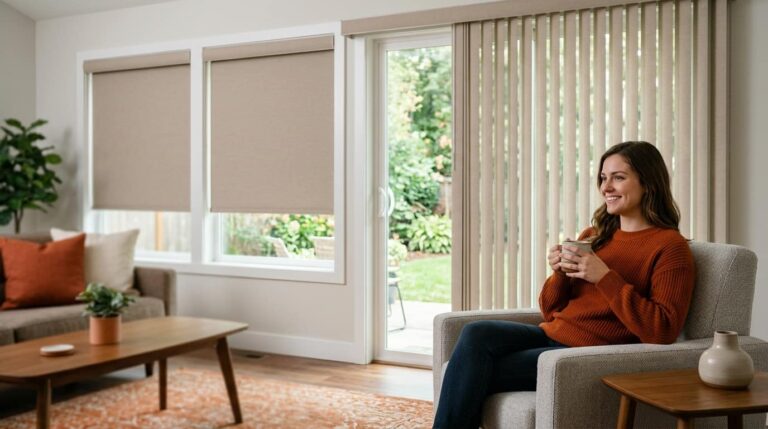
Standing in a New Jersey showroom staring at a wall of fabric swatches, you’ve probably realized that choosing between curtains, sheers, window treatments can feel more overwhelming than picking paint. Every room in your home faces a different direction, a different season, a different light problem. What works for a sun-drenched living room in July won’t cut it for a drafty bedroom in January. This guide breaks down exactly which options make sense for NJ’s climate and your style, room by room. No fluff, just straight answers before you spend a dime.
Curtains, Sheers, and Window Treatments: What’s the Real Difference
Why the terms get confused
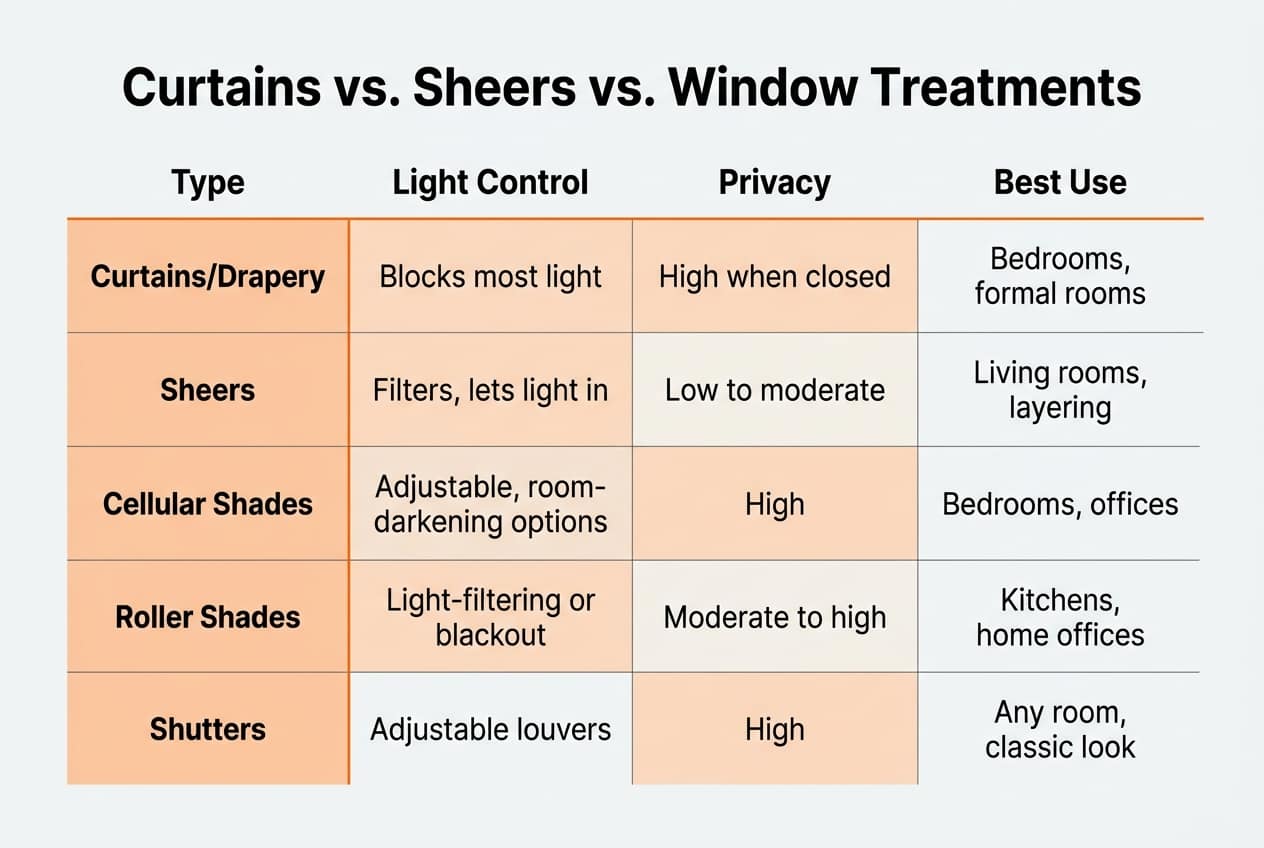
People use these words like they’re interchangeable. They’re not. Curtains are fabric panels hung on a rod, usually made from a lighter drapery fabric, and they’re mostly decorative. They soften a room but don’t do much heavy lifting for light control or privacy on their own. Sheers are a specific fabric type, not a product category. Thin, almost see-through material that filters sunlight while still letting you see out and keeping some privacy during the day.
“Window treatments” is the umbrella term. It covers all of it: blinds, shades, shutters, drapery, sheers, lumped together under one label. That’s partly why confusion sets in. A salesperson might say “window treatment” when they mean a specific shade, and a homeowner hears it as a catch-all. For a deeper breakdown of fabric types and how light passes through them, a solid sheer curtains guide clears up more of the terminology than most showroom conversations do.
Here’s the short version: curtains are a format, sheers are a fabric, and window treatments is everything. Keep those straight and the rest of the shopping process gets a lot easier.
How layering sheers with shades or drapery improves function
Most homeowners don’t pick just one. Sheers layered under heavier drapery give you flexibility: sheer alone during the day for soft, filtered light, drapery closed at night for full privacy. It’s a two-stage setup, and it works well in living rooms and bedrooms alike. Pairing cellular shades with decorative side panels does something similar. The shades handle insulation and light control, while the panels add color and texture without blocking the window.
Bergen County has a lot of older homes with large picture windows, bay windows, or oddly proportioned openings, and single treatments often fall short on those. Combining a structured shade with soft fabric covers more bases: better insulation, better light control, and a finished look that a single panel can’t deliver alone. Smaller windows have their own quirks too, and if you’re furnishing a tight space, tips on curtains for small windows are worth reading before you order anything custom.
One quick note: layering adds cost and measuring complexity. It’s not always necessary. But for awkward or oversized windows, it’s usually the better call.
Matching Fabric Weight to the Room’s Purpose
Fabric weight isn’t a style detail. It’s a function decision. The right weight controls how much light gets in, how private a room feels after dark, and how a space actually gets used day to day.
Living rooms and dining areas
Sheer fabrics let in the most natural light and give a room a soft, airy glow. The catch: at night, with lamps on, sheers offer almost no privacy from the street. That’s fine for a formal dining area used mostly in daylight, less fine for a street-facing living room. Semi-sheer or light-filtering shades split the difference, keeping daytime views soft while adding real coverage once the sun goes down. For a living room or den, woven wood shades bring texture and a natural, grounded look that pairs well with wood furniture or a more casual layout. If you’re wondering whether that style still holds up, it’s worth reading up on whether woven wood shades are out of style before ruling them out. Custom drapery solves the either-or problem entirely, letting sheer and heavier panels share the same rod.
Bedrooms and media rooms
Bedrooms and media rooms want the opposite priority: darkness over daylight. Room-darkening or blackout-style cellular shades are the standard answer here, blocking glare off a TV screen or sunrise through an east-facing window. The table below breaks down how each weight class performs across the factors that actually matter in these rooms.
| Fabric weight | Light control | Nighttime privacy | Best room fit |
|---|---|---|---|
| Sheer | Maximizes daylight | Minimal | Dining areas, sun rooms |
| Semi-sheer / light-filtering | Soft glow, reduced glare | Moderate | Living rooms, home offices |
| Woven wood | Filtered, textured light | Moderate | Dens, living rooms |
| Room-darkening cellular | Near-total block | High | Bedrooms |
| Blackout cellular | Full block | Full | Media rooms, nurseries |
Pairing a blackout cellular shade with a sheer or drapery panel gives you both: full dark for sleep, softness for daytime. Odd window shapes don’t have to limit you either. Arched or angled windows in bedrooms can still take layered treatments once you understand the framing, which is covered in a practical guide on how to hang curtains on an arched window. Get the weight wrong and you’ll be squinting at a screen or stuck sleeping in daylight. Neither is a fun fix after the fact.
Solving Sun Damage and Heat Gain Without Window Film
Sunlight is slow poison for your interiors. Fade a sofa, a wood floor, or a framed print over a few summers of direct afternoon sun, and you can’t undo it. UV rays break down dyes and fibers whether your room is occupied or empty, which is why south- and west-facing windows tend to show the worst damage first. Applying film to the glass is one answer, and it does block UV permanently. But permanent is the catch: it can’t be removed, adjusted, or swapped out once your furniture layout or seasonal needs change. For most living spaces, that trade-off doesn’t make sense.
Solar roller shades and light-filtering cellular shades solve the same problem without locking you in. Solar shades use a tightly woven mesh that screens out UV and glare while still letting you see outside, and you raise or lower them as the sun moves through the day. Cellular shades go a step further on heat: their honeycomb-shaped cells trap a layer of air between the glass and the room, which slows heat transfer in summer and heat loss in winter. That’s the same principle behind double-pane window design, just applied to fabric instead of glass. Many local businesses see cellular shades requested specifically for west-facing rooms where afternoon heat builds up fast.
So which route fits your home? If you want permanent, glass-level UV blocking and don’t mind giving up adjustability, a window film installer is the right call. If you want flexibility, day-to-day light control, and a layered look you can pair with drapery, adjustable shading wins. A lot of homeowners also lean on woven shades or sheers for softer light filtering in rooms that don’t need full blackout, and reading up on linen curtains can help you judge how much UV protection lighter fabrics realistically offer. There’s no wrong category here, just different goals.
Addressing Drafts, Noise, and Temperature Swings
When shades are enough
Most comfort complaints in NJ homes aren’t structural. They’re just air moving past glass that’s doing its job but not insulating much. Cellular shades are the strongest insulators among soft window treatments, thanks to their honeycomb pockets that trap air like a thin layer of insulation stapled right to your window. For noise, layering drapery over blinds adds real sound-dampening mass, which matters a lot if you’re facing a busy road in a town like Fort Lee or Englewood.
Before you call anyone about bigger work, consider what a simple shade swap can fix. A few scenarios where soft treatments solve the problem on their own:
- A window that’s structurally fine but feels drafty at night, where a cellular shade’s trapped air layer cuts the chill noticeably.
- A bedroom near a main road where custom drapery paired with cellular shades can noticeably quiet the room without touching the glass.
- A sunroom or home office with temperature swings between morning and afternoon, smoothed out by insulating shades acting as a buffer.
- A living room with hard floors and bare windows, where heavier drapery adds sound absorption the room currently lacks.
- A rental or older home where structural fixes aren’t an option, making insulating shades the practical, lower-cost first step.
That last point is worth sitting with. Spending on new treatments before diagnosing the real issue is money you can’t easily get back.
When the issue is the window itself
Shades can only do so much against a window that’s failing. If you’ve got single-pane glass, a cracked seal, or a frame that lets in a draft you can feel from across the room, no amount of fabric will fully fix it. That’s a job for a window replacement contractor, not a treatments provider. Reviewing the standard design process of custom window treatments is useful context here, since it shows where treatment selection ends and structural repair begins. Think of shades as the first, cheapest layer of defense, not a permanent patch for a broken window.
So how do you know which camp you’re in? A quick gut check: if you feel a draft only in winter wind, or notice a seasonal temperature dip rather than a constant chill, shades will likely help a great deal. If the cold air is there year-round regardless of weather, or you can see fog between panes, that’s a glass problem. No honeycomb shade fixes a failed seal. Get the window looked at first, then revisit treatments once the opening itself is sound.
Choosing Between Blinds, Shades, Shutters, and Drapery
Comparing light control and privacy levels
Every window covering walks a line between light and privacy. Wooden and metal blinds give you the most precise control, since tilting slats let you aim light up or down without opening the whole window. Roller and roman shades pull flat for a cleaner, tailored look that suits kitchens and home offices. Shutters, woven shades, and sheer shades each solve the problem a little differently, and the table below breaks down where they land.
| Treatment | Light control | Privacy level | Best rooms |
|---|---|---|---|
| Wooden/metal blinds | Precise, tilt-adjustable | High when closed | Offices, bedrooms |
| Roller/roman shades | Moderate to full (depends on fabric) | Moderate to high | Kitchens, offices |
| Plantation shutters | Precise, louvered | High | Living rooms, bedrooms |
| Woven shades | Soft, filtered | Low to moderate | Dining rooms, dens |
| Sheer shades (Silhouette/Pirouette) | Diffused, glare-reducing | Low to moderate | Living rooms, sunrooms |
Plantation-style interior shutters are worth a separate mention. They’re not the same thing as exterior storm shutters bolted on for wind protection. These are furniture-grade louvers mounted inside the frame, built for everyday light and privacy, not weather events. If hurricane protection is the goal, that’s a job for a licensed exterior contractor, not an indoor shutter.
Best picks for sliding glass doors and large windows
Big glass needs a treatment that can move easily and hold up over years of daily use. Vertical blinds remain a practical, budget-friendly choice for sliding glass doors and wide openings, stacking neatly to one side without the bulk of heavy drapery. For readers weighing options, it helps to spend a few minutes learning more about vertical blinds for sliding glass doors before settling on a style. Sheer shades like Silhouette and Pirouette work beautifully on large picture windows too, softening harsh afternoon sun while still letting the view through.
Woven shades bring a natural, textured look that pairs well with wide windows in dens or dining areas, though they offer less privacy after dark. None of these replace closet doors or room divider panels, by the way. That’s a different category of hardware entirely. For glass doors and oversized windows, stick with treatments actually built for that span and weight.
Specialty Windows, Automation, and Safety Considerations
Handling arches, angles, and oversized glass
Not every window fits a standard panel. Arched tops, sharp angles, and oversized picture windows need pieces built to that exact shape, not trimmed down from a stock size. A half-moon transom above a front door, for instance, calls for a fixed fan-shaped covering, while an angled attic wall might need a treatment mounted on a custom track. Off-the-shelf blinds just won’t cut it here.
- Arched or eyebrow windows usually need a stationary, shape-specific covering since the arc can’t be raised or lowered like a standard shade.
- Steeply angled windows, common in A-frame rooms or converted attics, often require custom mounting brackets to hold the headrail at the correct tilt.
- Oversized glass walls may need a layered approach, pairing wider roller or woven shades with reinforced hardware to handle the extra weight and width.
- Sliding glass doors are generally handled with vertical blinds built to the door’s full height and width, not a window product squeezed into place.
- Skylights and roof windows fall outside standard window treatment lines entirely and typically call for a specialty skylight provider instead.
A measurement that’s off by even an inch on an angled frame can throw the whole installation. That’s why an in-home visit, not a guess from a tape measure alone, matters most on unusual openings.
What PowerView automation does and doesn’t cover
PowerView lets you raise, lower, and schedule shades from an app or a remote, no cords required. You can set them to open at sunrise and close at dusk automatically. For homes with toddlers or pets, cordless lifts and motorized shades remove the dangling cord risk entirely, which matters more than people realize until there’s a crawling baby in the room. If you’re comparing motor options, it helps to review how automated blinds and shades differ before settling on a system. But PowerView is shade automation, not a whole-home smart system. It won’t control your lights, thermostat, or locks. Broader smart home wiring and multi-device integration is a job for an AV integrator, not a window treatment installer. Keep that distinction straight and you’ll avoid disappointment later.
Buying, Installing, and Maintaining Window Treatments
What to expect from a professional consultation
A free in-home design consultation starts with something you can’t replicate online: real light. Fabric swatches look different at noon than they do at 7 p.m. under a lamp, and a sample that reads crisp white in a store can turn dingy against your actual walls. A designer brings samples into your space, holds them up to your windows, and lets you see the true color and opacity before you commit to anything. It’s a focused service, not a full room makeover. Think window-specific, not furniture or paint.
The other big reason to invite someone in: measuring. Wrong width or drop is the single most common ordering mistake, and it’s an easy one to make if you’re working alone with a tape measure. Inside-mount shades need clearance of maybe an eighth of an inch per side; outside-mount drapery panels need enough width to fully clear the glass when opened. A pro checks both, plus depth for cellular shades and tilt clearance for wooden blinds, so you’re not stuck with panels two inches too short.
There’s also real financial upside worth knowing before you buy. Research on whether window treatments increase home value suggests thoughtfully chosen coverings can pay you back at resale, not just in daily comfort.
Repair versus replacement: how to decide
Not every problem calls for a new treatment. Frayed lift cords, a cracked slat, or a motorized shade that won’t respond to its remote are classic repair jobs. A technician can usually replace the cord mechanism, swap a broken slat, or troubleshoot a PowerView hub without touching the rest of the installation. If the headrail and fabric are still in good shape, repair is cheaper and faster, often same-week.
Full replacement makes more sense when the fabric itself has faded unevenly, when the hardware is discontinued, or when you’re changing the whole look of a room. One quick gut-check: if the repair cost creeps past half of a new unit’s price, replacement usually wins. It’s not always close, but it’s worth doing the math before you decide.
One thing a treatment specialist won’t do is launder your drapery. Fabric cleaning for curtains and sheers is a job for a dedicated textile cleaning service, since home dry-cleaning or spot-washing can shrink lining or warp pleats. Keep that distinction in mind, and don’t assume one provider handles both hardware and fabric care.
Timing matters too. Seasonal promotions on select product lines, often tied to spring refresh or fall energy-saving pushes, can knock down costs enough to justify upgrading several rooms at once instead of stretching the project across two years.
Getting Started with a Local Window Treatment Consultation
If you live in Fort Lee, Cliffside Park, Edgewater, Leonia, Englewood, Tenafly, Ridgewood, or Franklin Lakes, you don’t need to drive far to get expert eyes on your windows. In-home consultations bring the designer to you, which matters more than people think. Light, wall color, and furniture placement all look different on-screen than they do in your actual living room. A good consultation measures your windows, yes, but it also watches how sun moves through the space at different hours. That’s information a catalog photo can’t give you.
A showroom visit fills in the rest. Standing in front of real wood blinds, metal slats, and shade mechanisms tells you more in ten minutes than a week of scrolling product pages. You can feel the weight of a woven shade, test how a cordless lift operates, and compare fabric opacity against actual daylight. This kind of hands-on comparison has been part of how family-owned operations have worked with homeowners since 2007, often through a Hunter Douglas partnership that opens up premium product lines not every shop carries. Seeing materials in person before committing is simply a smarter way to spend your budget.
Before your appointment, do a little homework. Snap a few photos of each room, in daylight and at night if you can. Bring paint chips or a fabric swatch from your sofa. Homeowners researching insulation options beforehand can start by reading your guide to energy efficient window coverings, which helps frame smart questions for the designer. Then just pick up the phone. A call to (201) 302-9111 gets you a scheduled session with a real designer — no guesswork, no pressure.
Choosing the right sheers often comes down to living with a few fabric samples by your own windows and watching how the light moves through them morning to evening, since that tells you more than any showroom display ever could. For windows with unusual angles or arches where standard sheers won’t sit right, The Curtain handles those specialty shaped window treatments alongside the full range of fabrics and light-filtering options worth comparing. From there, it’s simply a matter of narrowing down the look, texture, and opacity that feel right for the room.