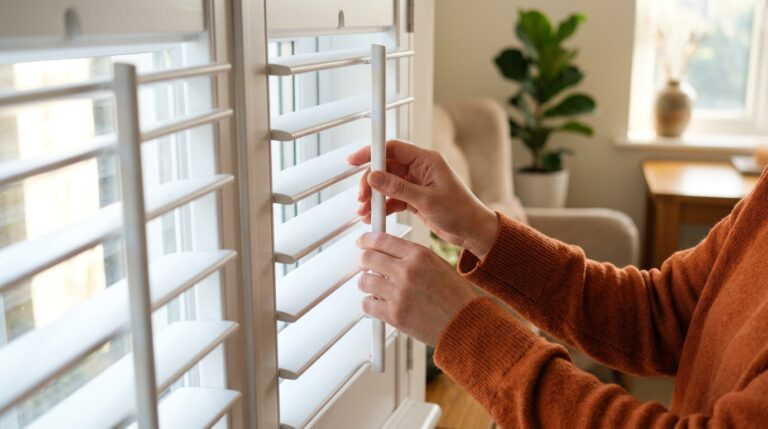
You’ve probably seen the trick online: hang a tension rod, throw up some fabric, and call it a closet door. It’s a fine stopgap for hiding clutter, but plenty of Bergen County homeowners try the same closet curtains approach on actual windows and wonder why the room still feels drafty, glaring, or exposed at night. There’s a real difference between covering an opening and controlling light, privacy, and temperature the way your home actually needs. Let’s break down where closet curtains fall short and what genuinely works instead.
Why People Search for Closet Curtains in the First Place
What retail closet curtains are designed to do
Type “closet curtains” into a search bar and you’re usually chasing one of three things: a cheap way to hide an open closet, a curtain to dress up a doorway, or a soft way to split a room without hiring anyone to hang doors. That’s the whole job. It’s a small, practical fix, not a design overhaul. Most people just want the mess out of sight before guests show up.
Retail closet curtains are mass-produced fabric panels, usually grommet-top, ruffled, blackout-lined, or accordion-style, sold in a handful of fixed sizes like 34×80 or 42×80 inches. You grab one off a shelf or a website, hang it on a tension rod, and you’re done. They’re a DIY, budget-first product, built for closets, dorm rooms, and doorways. No measuring service, no custom order, no consultation involved.
Here’s the important distinction, though: these panels solve storage and doorway privacy problems. They don’t touch what happens at an actual window. A closet curtain won’t block a hot afternoon sun or muffle traffic noise. Window treatments exist for that job specifically, managing light, heat, sound, and UV exposure at the glass, which is a different problem with different products entirely.
Closet Curtains, Room Dividers, and Sliding Doors: Where the Confusion Starts
Sliding glass doors vs. closet openings
Here’s the mix-up we see constantly. Someone types “closet curtains” into a search bar, but what they’re really staring at is a sliding glass door leading to the patio, or a reach-in closet with no doors at all, or an open archway they want to divide into two spaces. Fabric panels feel like the obvious fix for all three. They’re not. Each of these openings behaves differently, and treating them the same way usually means redoing the job twice.
A sliding glass door needs something built to stack cleanly to one side and hold up to daily use, which is exactly what vertical blinds are designed for. They’re not a workaround borrowed from closet organizing; vertical blinds for sliding glass doors are engineered for that wide, heavy-traffic opening specifically. A closet is a completely different animal, and interior partitions are different still. Trying to make one product solve all three jobs is where most of the frustration starts.
If your actual need is bifold doors, sliding closet doors, or a panel-track room divider, that’s hardware and millwork territory, not window treatment territory. A door specialist or closet company handles the tracks, panels, and framing that job requires. Some homeowners also look at linen panels for softness in a bedroom nook, and it’s worth noting that linen curtains serve a decorative, light-diffusing role rather than a structural, space-dividing one. Different goal, different product entirely.
Now, if the real goal is just covering that slider without it looking like an afterthought, you’ve got better options than fabric panels. Vertical blinds handle light and privacy without flapping in the AC vent or dragging on the floor. Woven shades on a track system are another route, giving you texture and warmth while still gliding open smoothly. Both skip the dust-catching fabric problem that curtain panels on sliders always seem to develop. Match the product to the opening, not the search term, and the whole thing gets a lot simpler.
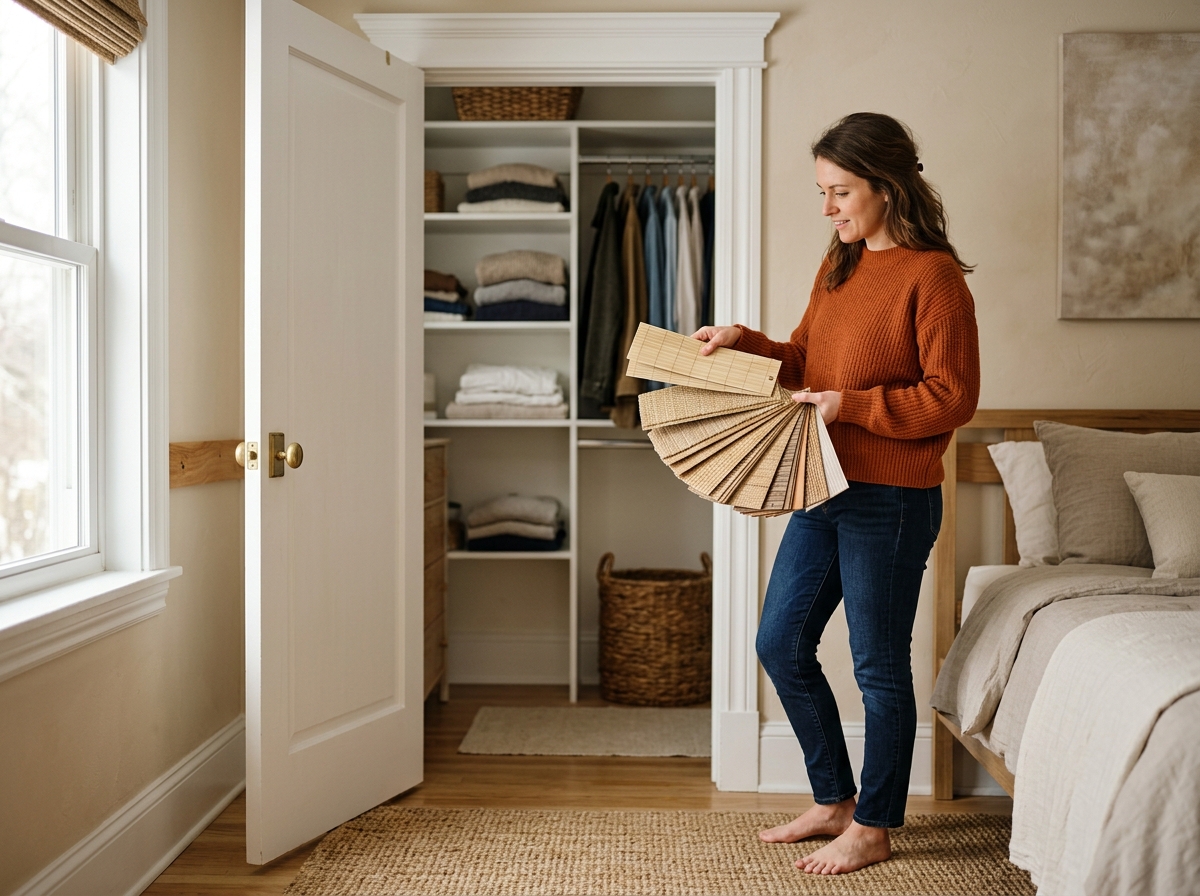
Fabric Panel vs. Custom Window Treatment: A Side-by-Side Look
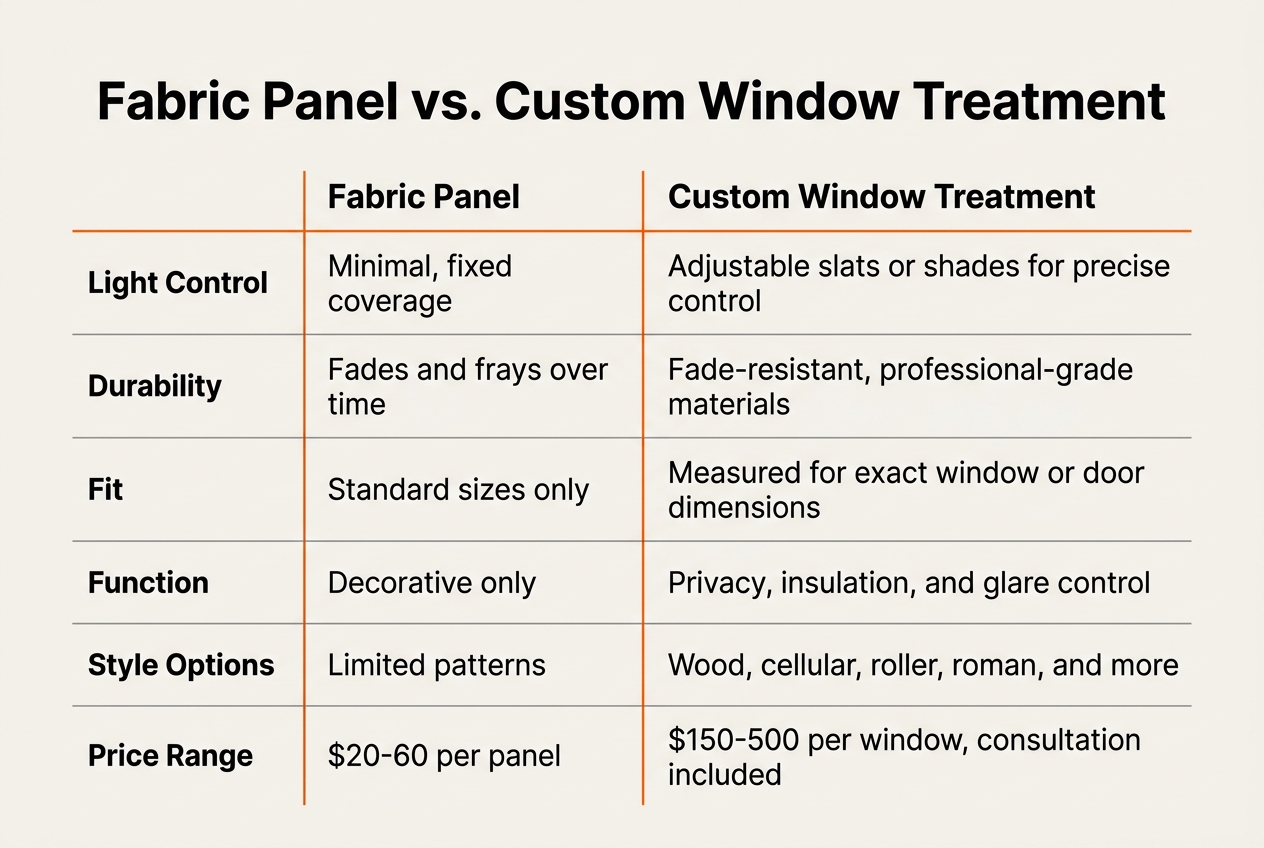
Numbers make this easier than opinions do. Below is a plain comparison of a generic 84-inch retail panel pair against a professionally measured window treatment, on the factors homeowners actually care about once the curtains are hung.
| Factor | Retail Closet Curtain Panels | Custom Window Treatment |
|---|---|---|
| Cost per opening | $20–$60 a pair, stock sizes only | $150–$600+, priced to the exact opening |
| Durability | 1–3 years, thin fabric fades and sags | 10+ years with quality hardware and fabric |
| Light control accuracy | Gaps at top, sides, and floor | Sealed edges, room-darkening or filtered as needed |
| Cleaning | Machine wash, shrinkage and wrinkling common | Low-maintenance fabrics, dust with a vacuum brush |
| Fit to non-standard openings | Poor; bunching or excessive length | Built for arches, bays, sliders, and odd widths |
The pattern is obvious once it’s laid out. Retail panels win on upfront price and nothing else. They’re just fabric hanging from a rod, so they add no insulation and no noise dampening at all, while a cellular shade’s honeycomb pockets trap air and a Roman shade in a heavier fabric knocks down sound noticeably. If you want the actual numbers behind that, your guide to energy efficient window coverings breaks down R-values by product type. And if the goal is that same soft, layered fabric look but at a real window, custom drapery or a lined Roman shade delivers it with tailored hems and consistent light control that a $30 panel never will.
Solving the Problems Closet Curtains Can’t: Light, Heat, and Noise at the Window
Insulating shades as a lower-cost step before window replacement
If your bedroom or home office sits near Route 4 or Broad Avenue, you already know the problem: traffic noise doesn’t care what time it is. A flat closet panel hanging in a track does almost nothing to stop it. There’s no mass, no layering, nothing to absorb sound before it bounces around the room.
Custom drapery and cellular shades work differently. Heavier fabrics and the honeycomb pockets in cellular shades create dead air space, and that air gap is what actually dampens sound and buffers temperature swings near large windows. It’s a small structural difference that makes a big practical one. Before you even think about pricier fixes, this is worth trying first. That said, be honest with yourself here: insulating shades help, they don’t perform miracles. A failed, single-pane window with a cracked seal is still a job for a window contractor, not a shade.
Sunlight is the other quiet destroyer. UV rays fade hardwood, bleach upholstery, and dull rugs over a few short years, often before anyone notices. A few adjustments handle most of it without blacking out the room:
- Light-filtering roller shades cut glare and soften harsh afternoon sun while still letting the room feel open and bright.
- Sheer shades diffuse direct light through a woven fabric vane, which is gentler on eyes and furniture than a bare pane of glass.
- Solar roller shades block a significant share of UV rays while staying fully adjustable, raised, lowered, or removed whenever you want.
- Cellular shades add insulation and UV protection together, which matters most on west-facing rooms that bake by 4 p.m.
- Window film is sometimes pitched as the fix, but it’s bonded permanently to the glass and can’t be removed if your taste changes.
Some homeowners lean on tutorials for choosing and installing custom draperies to get the fabric weight and lining right for noise control. Others compare cellular shades to window film and land on shades simply because they can be adjusted room by room, season by season, without touching the glass at all.

When a Curtain Panel Isn’t Enough: Specialty and Awkward Openings
Getting an accurate fit for non-standard windows
A rod and a fabric panel work fine on a plain rectangle. They fall apart the moment you’re dealing with an arched transom over a doorway, an angled wall window in a converted attic, or that oddly trapezoidal pane tucked beside a closet. Gravity and geometry both work against loose fabric here. There’s no clean way to hang a rod on a curve, and a panel draped over an angle just looks wrong, bunching on one side and gapping on the other.
Specialty shaped window treatments exist for exactly this problem. They’re built to the precise outline of the opening, whether that’s a half-moon arch, a steep diagonal, or a genuine trapezoid, so the covering actually follows the shape of the glass instead of fighting it. Getting there starts with careful measuring, and it helps to understand the design process of custom window treatments before you commit to a shape or fabric. Off-the-shelf curtains simply don’t come in these dimensions, full stop.
Skylights and roof windows are their own category, separate from wall-mounted specialty shapes, and worth calling out on their own. A consultation can tell you fairly quickly whether your window is an angled wall opening, which is treatable, or a true overhead skylight, which is a separate ask best handled by a skylight-specific supplier. Shutters, meanwhile, give odd-shaped or hard-to-dress windows a tailored, furniture-grade finish that fabric just can’t match; they hold their line at an angle, they don’t sag, and they look built-in rather than improvised. If your goal is a polished look near an entryway or closet nook, that’s the difference between a room that looks finished and one that looks like a work in progress.
Cordless and Motorized Options for Homes with Kids and Pets
If you’ve got a toddler who grabs everything or a cat that treats hanging fabric like a personal toy, the hardware on a closet-curtain setup deserves a hard look. Retail panels often ship with tension rods, exposed hooks, or long cords meant to bunch the fabric to one side. None of that was designed with small hands or paws in mind. A rod that isn’t properly anchored can come down. A cord loop can catch a collar or a curious finger. It’s a real risk, not a theoretical one.
What PowerView automation does and doesn’t control
Cordless lift systems solve part of the problem by removing the dangling cord from the window entirely, no loops, no wands, nothing to wrap around a wrist. Motorized options go a step further. PowerView automation lets shades open and close on a schedule or with an app tap, so there’s no pull cord to grab in the first place. Understanding automated blinds vs automated shades which smart window treatment fits your home helps clarify which motorized style actually suits a busy household with kids underfoot. Here’s what that shift actually gets you, and where its limits sit:
- Cordless shades remove the most common snagging hazard at the window itself, which is the loose cord or chain kids and pets tend to find first.
- PowerView motorization schedules shades to open at sunrise or close at bedtime automatically, so no one has to reach for a wand near a crib or a pet bed.
- This is a genuine safety upgrade at the window, but it’s not a substitute for dedicated child safety window guards or security hardware if that’s the real concern.
- PowerView only controls the shades themselves; it doesn’t manage lights, locks, or thermostats.
- Wiring PowerView into a broader smart-home system, alongside lighting or security, is a separate project best handled by an AV integrator.
- Battery-powered and rechargeable motorized options mean you’re not stuck running new electrical lines just to get cords off the window.
The verdict is simple: cordless and motorized shades fix a real hazard, but they’re a window solution, not a childproofing plan for the whole room. Treat them as one good layer among several.
How to Choose Between a Curtain Panel and a Custom Window Treatment
Not sure whether your opening needs a $20 panel or a real window treatment? Walk through it step by step. It takes ten minutes, and it saves you from buying the wrong thing twice.
Quick decision checklist by room type
Step 1 is the simplest and most skipped: is it a closet, a doorway, or an actual window with glass behind it? A lot of buyer’s remorse starts here. Step 2, for real windows, means tracking light through the day and asking whether anyone in the house complains about drafts or street noise. Step 3 is deciding if you only need privacy, or if insulation, UV protection, and light control matter too. Step 4 applies to sliding glass doors, where durability and cleaning ease separate the good choices from the annoying ones. Step 5: if fading, drafts, or noise keep coming up, that’s a signal to get a real assessment rather than guess again with retail panels. Step 6, if it’s a hardware failure on an existing shade, repair is often faster and cheaper than full replacement.
| Step | Question to Answer | What It Tells You |
|---|---|---|
| 1. Opening type | Closet, doorway, or glass window? | Only glass windows need real light/heat/noise control |
| 2. Light & noise | Sun exposure by hour, draft or sound complaints? | Points toward insulating or light-filtering products |
| 3. Function needed | Privacy only, or insulation and UV too? | Determines fabric weight, lining, and material type |
| 4. Sliding doors | Vertical blinds vs. fabric panels for wear and cleaning? | Vertical blinds usually outlast fabric near foot traffic |
| 5. Recurring complaints | Same fading or draft issue more than once? | Time for an in-home consultation, not another panel |
| 6. Hardware failure | Is only the mechanism broken, not the fabric? | Repair likely beats full replacement cost |
Step 3 is where most people either save money or waste it. If UV damage on furniture is the worry, light-filtering roller shades and cellular shades do that job at the glass, and unlike window film, they’re adjustable rather than permanently fixed to the pane. For sliding doors in step 4, vertical blinds tend to hold up better against daily bumps and pets than fabric panels, which show wear fast in high-traffic spots. And honestly, reading up on blinds vs curtains choosing the right window treatment before you buy anything settles half these arguments before they start.
Caring for Fabric Window Treatments So They Last
Repair versus cleaning: knowing which service you need
Custom drapery and roman shades collect dust just like a curtain hanging in your closet, but professional-grade fabrics hold up longer when you actually stay on top of it. Vacuum panels and shade folds monthly with a brush attachment, low suction, working top to bottom. If your windows are small and oddly proportioned, some homeowners find that curtains for small windows need even more frequent dusting since fabric bunches closer to the sill and traps more grime.
Spills happen. Blot and spot clean them right away rather than tossing heavy drapery in the wash at home. Home laundering can shrink lining, warp pleats, or fade dye unevenly. Deep cleaning drapery or fabric blinds is really a job for a dedicated fabric or ultrasonic blind cleaning service, not something The Curtain handles. Those two jobs solve different problems, and mixing them up wastes everyone’s time.
Repair service is the right call when cords fray, headrails jam, or slats bend out of shape. It’s a mechanical fix. What it won’t do is restore soiled, sun-bleached, or discolored fabric. That’s a cleaning problem, not a hardware one. And if you’ve got panels near south-facing glass, rotate or replace them sooner than the ones living in shade. UV exposure is relentless. It doesn’t care how expensive the fabric was.
Ultimately it comes down to what you’re actually trying to solve: if it’s glare, heat, or privacy at the glass itself, that’s a window treatment question worth exploring through a design consultation, while structural issues like drafty panes, storm protection, or exterior curb appeal call for a different specialist entirely. It’s worth asking what the room needs day to day, not just at first glance, since the right fabric or shade often does more for comfort than people expect. Take stock of your priorities and budget before committing to any one fix, since the best outcome usually blends the right expert for each part of the job.