Custom Drapery & Curtains
Six ways to hang fabric on a window, from a sheer that keeps the daylight to a blackout lined panel that holds a bedroom dark at noon. We measure it, make it, mount the hardware and hang it.
 ★★★★★ 4.9 · 314 reviews (314)
 Partner
Free in-home measureFree measure
Partner
Free in-home measureFree measure
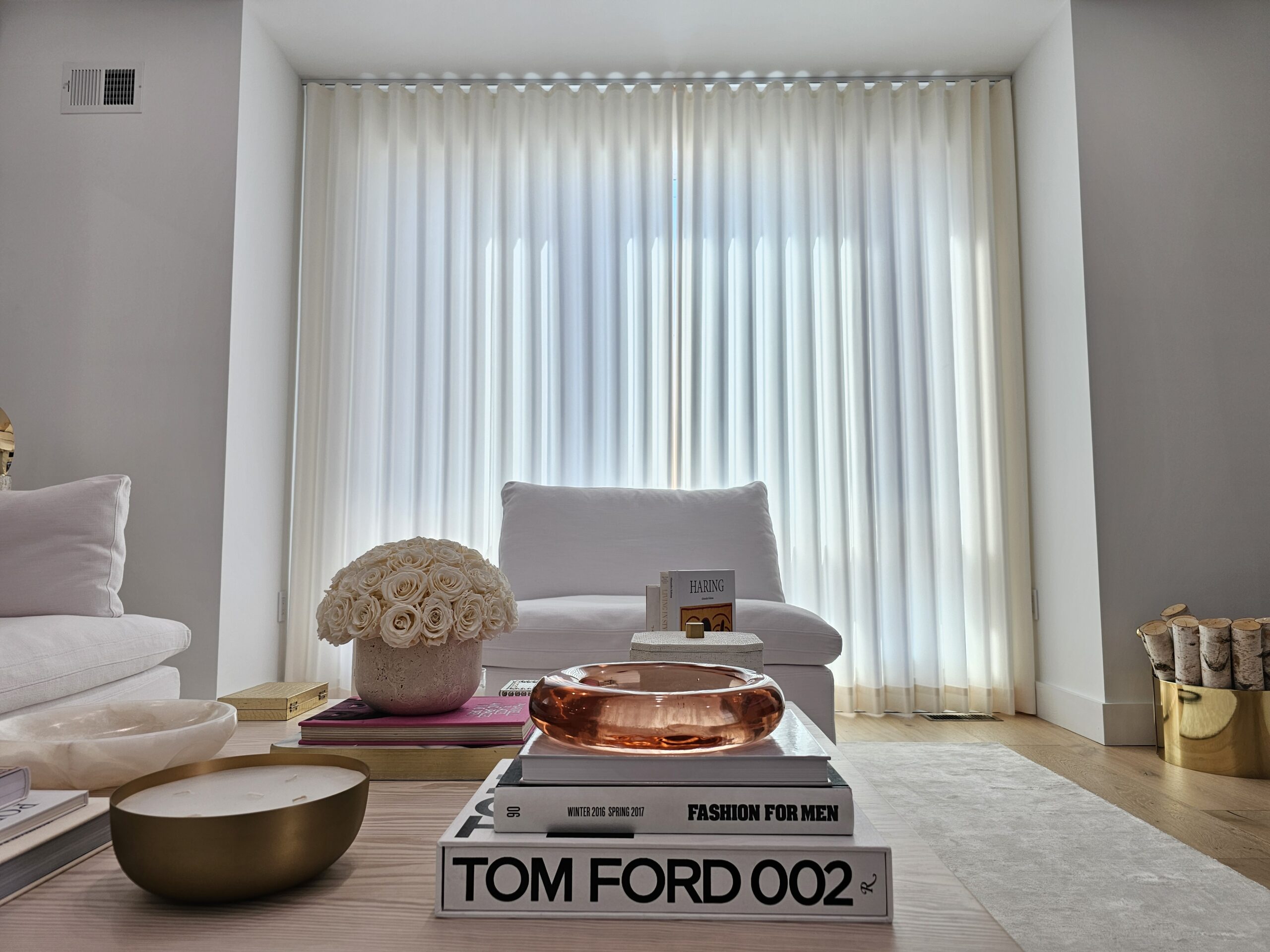
Six ways to hang a panel, and what each one does best
Fabric gets all the attention, but the heading is what decides how drapery hangs, how tight it stacks back and how much glass it covers when it is open. Here is the short version of each, and where it earns its keep.
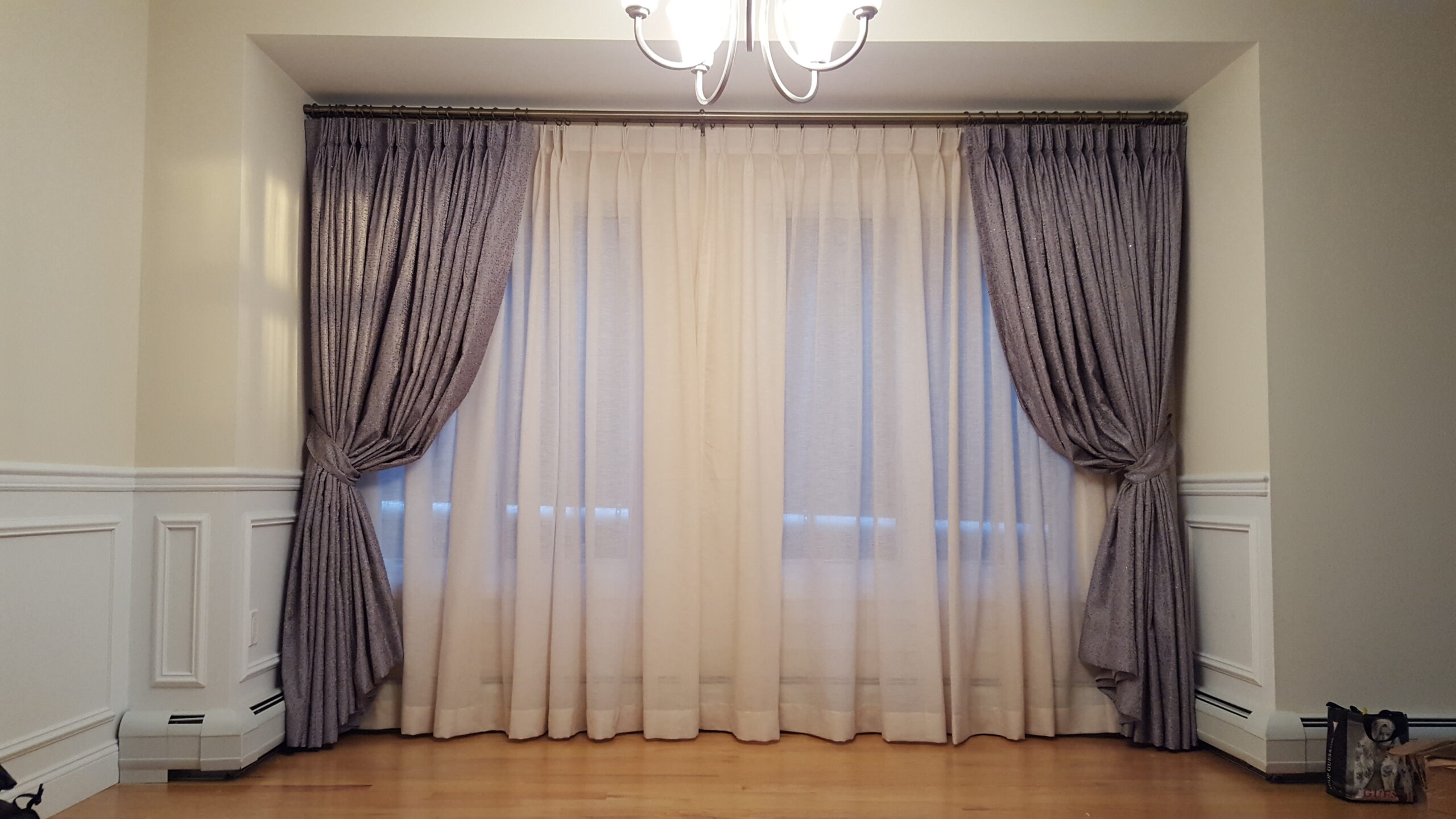
Pinch Pleat Drapery →
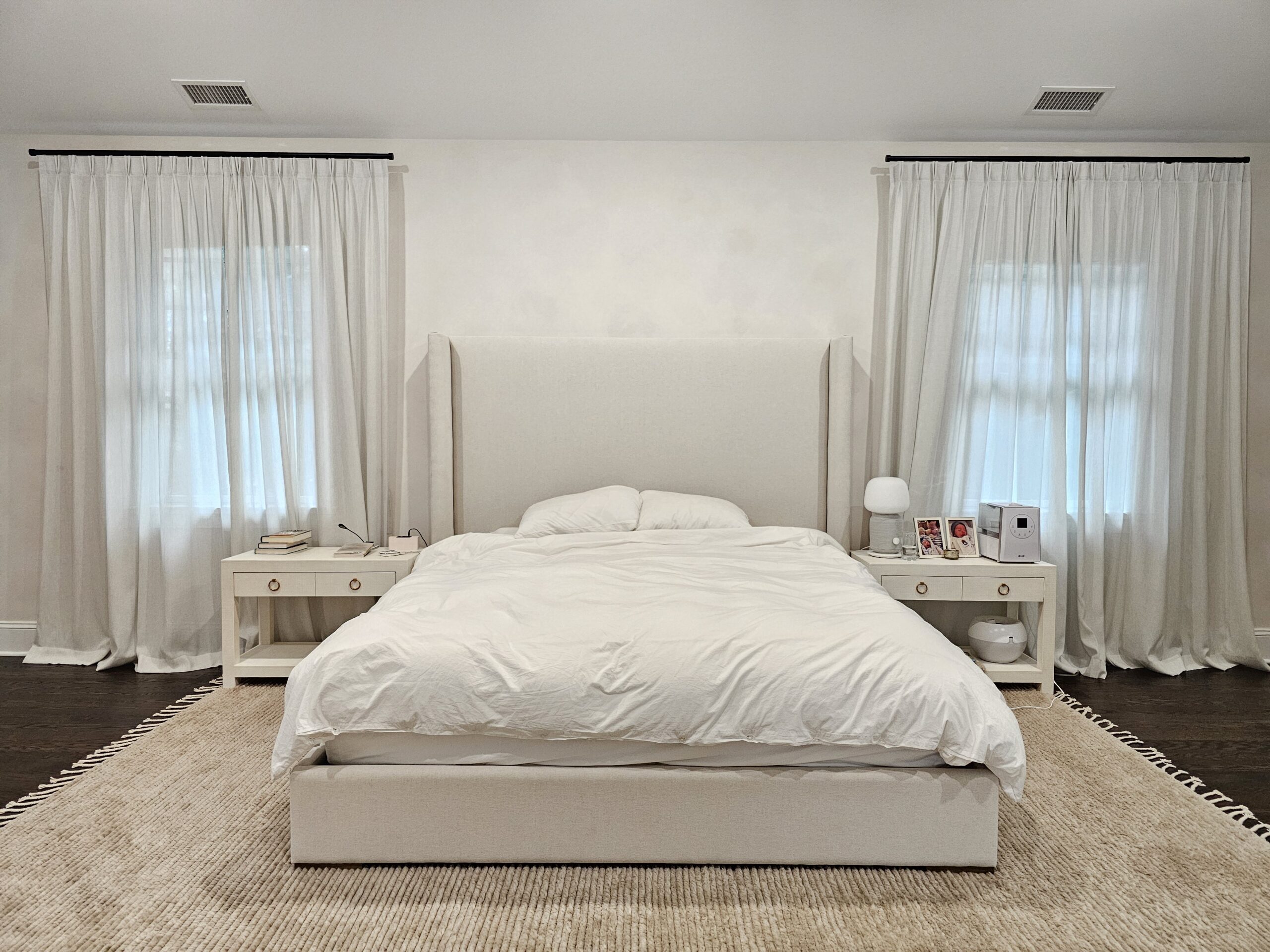
The classic tailored heading. Fabric is pinched into folds at the top and hung from rings on a rod or from a traverse rod, so the panel falls the same way every time you draw it. Pick it when you want the window to look dressed rather than covered.
Ripplefold Drapery →
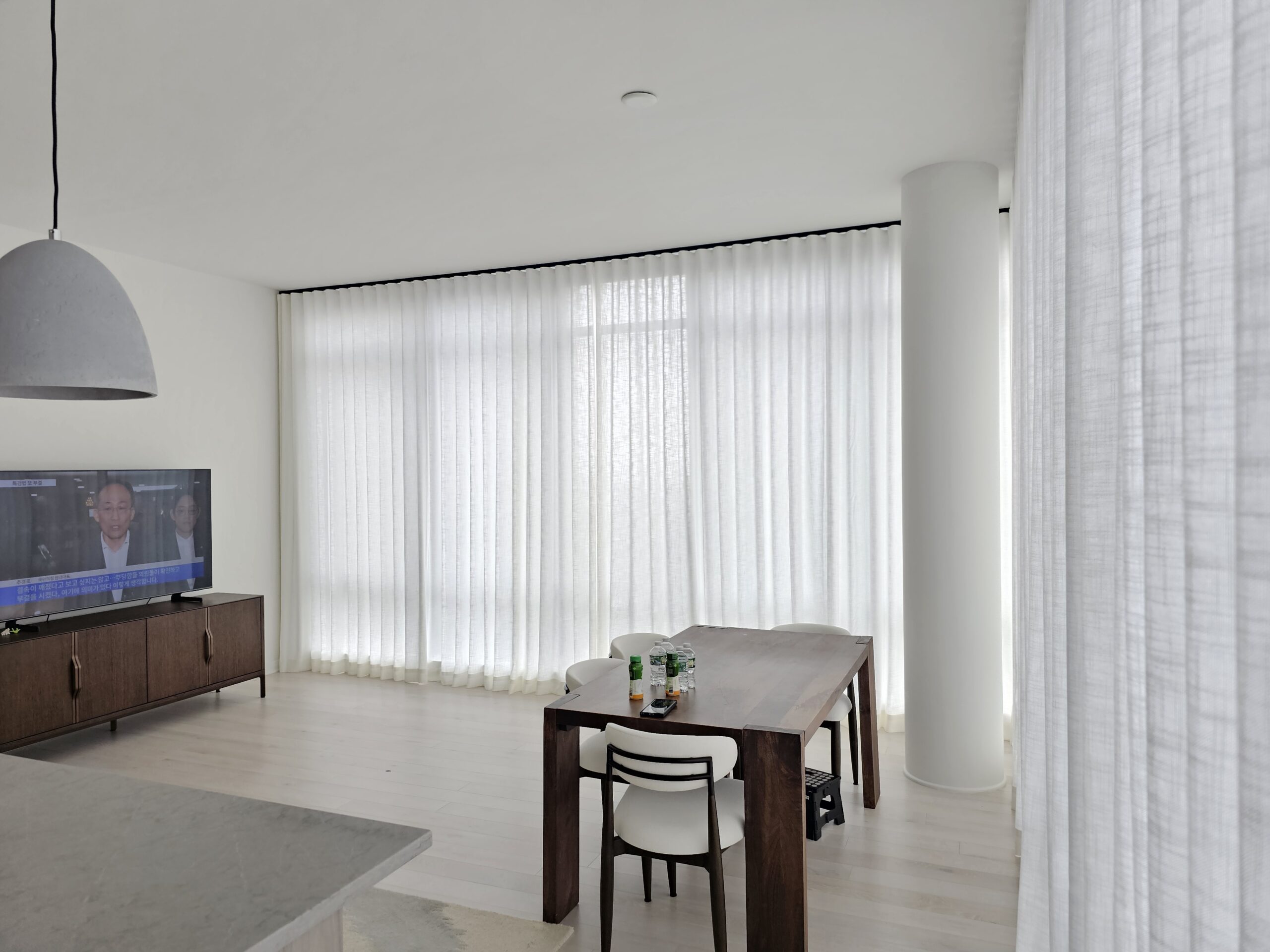
Snap carriers on a track hold the fabric in one continuous S wave. It stacks back tighter than a pleat, so more glass stays clear when the panels are open, and it is the easiest heading to put on a motor.

Grommet Panels →
Metal rings punched straight through the header, riding on a rod. Casual, simple, and it slides open with one hand, which is why it ends up in bedrooms and dens more often than in dining rooms.
Sheers & Layered Panels →
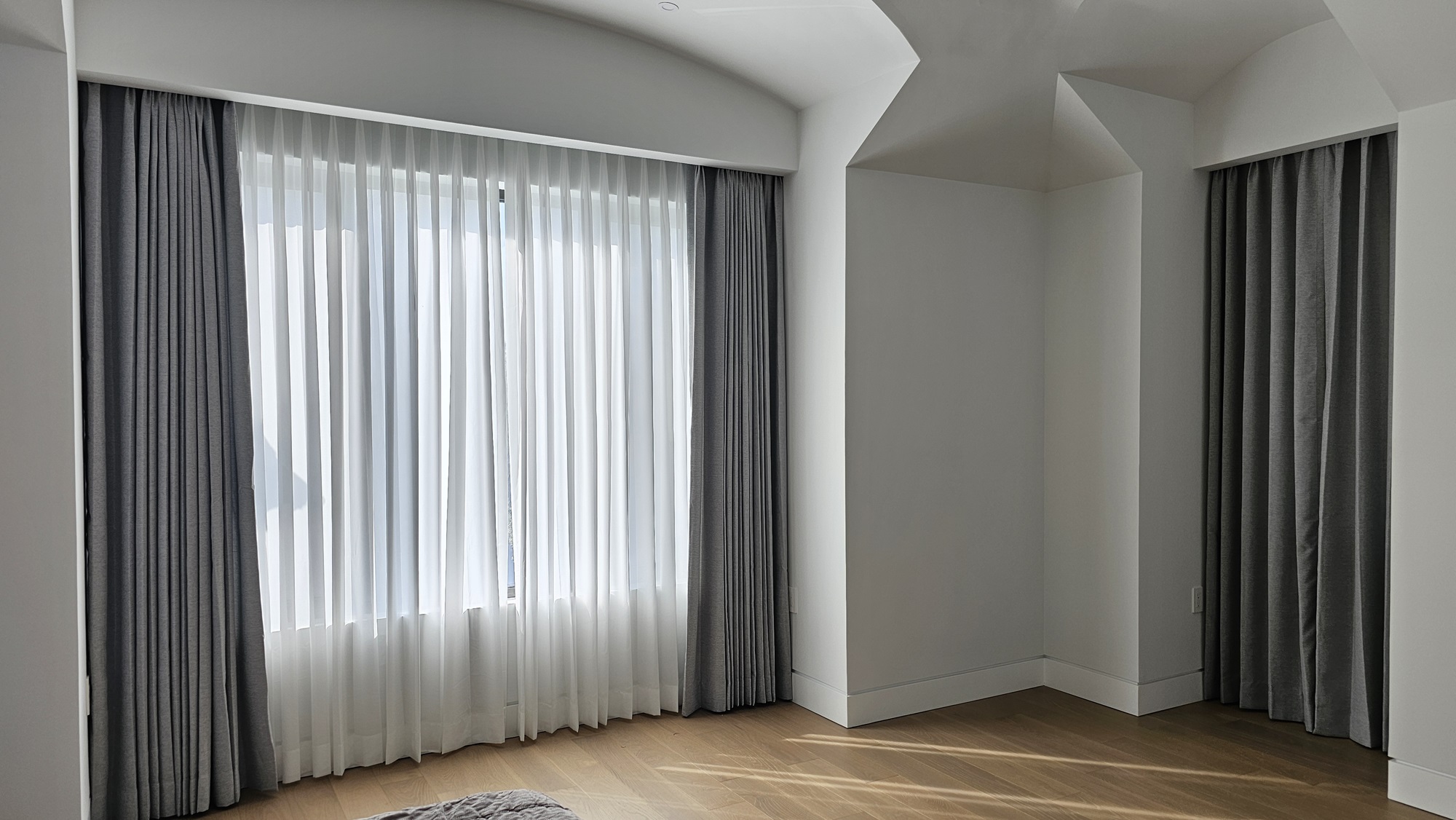
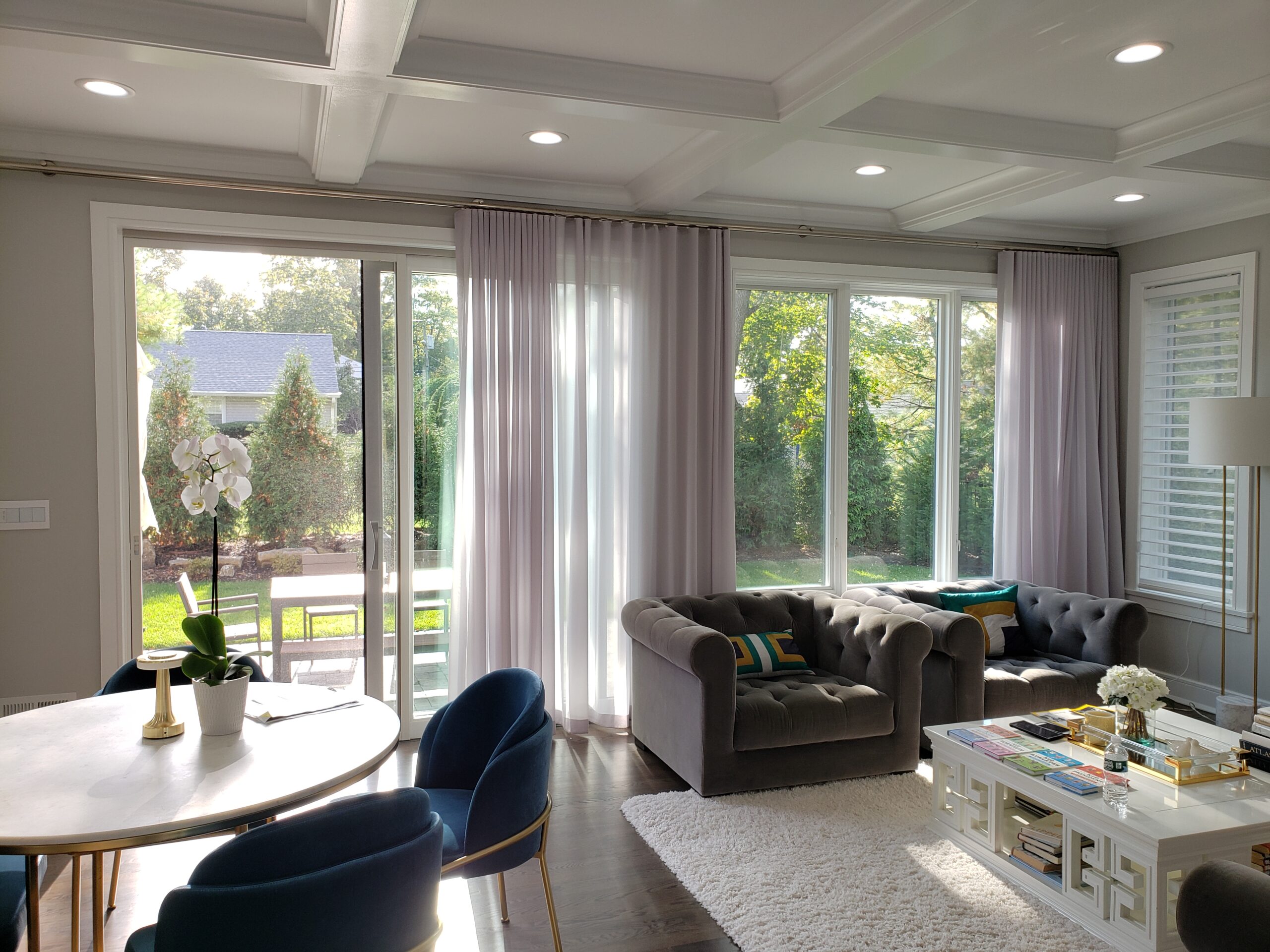
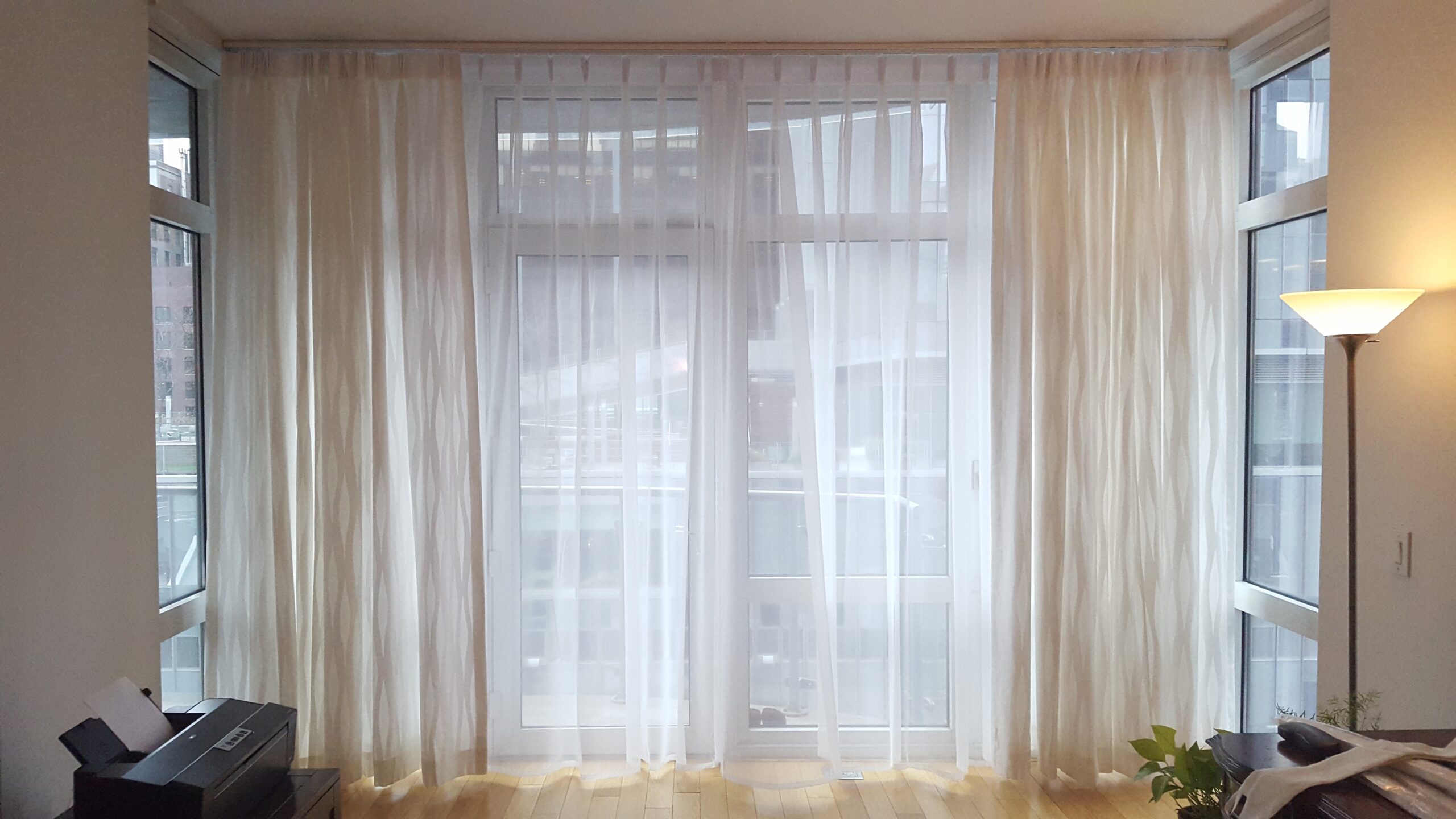
A sheer inside for daytime privacy, a heavier panel outside for the evening. You keep the light at 2pm and still close the room at dusk. Luminette® privacy sheers do both jobs in one panel where the wall only takes a single track.
Blackout & Lined Drapery →
Lining is what makes a panel hang straight instead of limp, and it is what keeps the sun off the face fabric. Blackout lining goes further and takes the light out, but only if the rod is mounted wide and high so nothing spills around the edges.
Motorized Drapery Track →
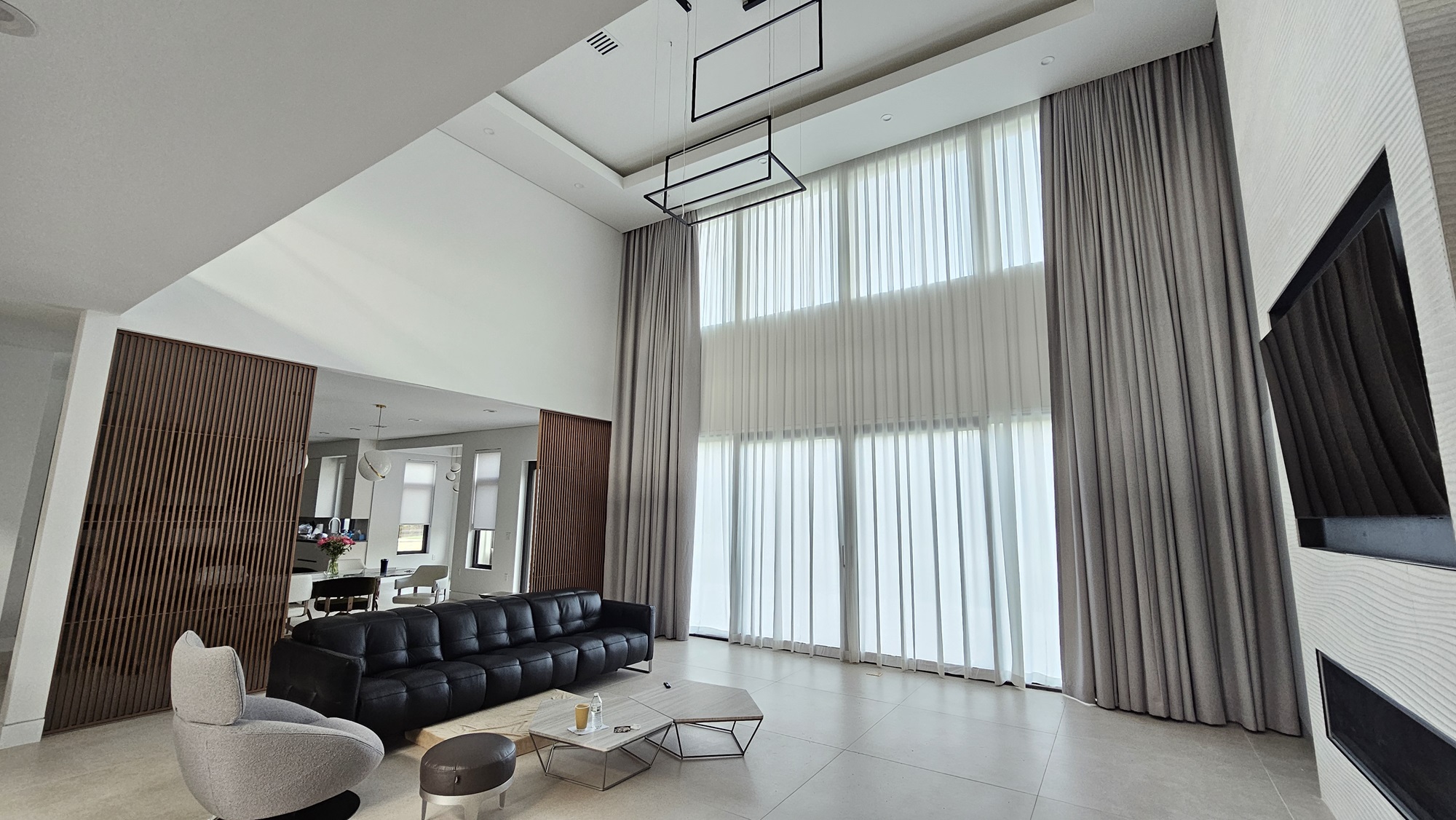
A quiet track that draws the panels from an app, a remote, your voice or a schedule. PowerView® automation earns its keep on a two storey window or a slider you walk past forty times a day, and it stops anyone pulling a panel by its face fabric.
Start with the problem, not the fabric
Almost everyone arrives with one priority. Pick yours and we will tell you where we would start, and the runner up worth seeing next to it.
Sheers & Layered Panels
A sheer inside the window keeps the room private in daylight while the light still comes through, and a heavier panel over it closes the room at night. That is two layers, so decide the hardware first: either a double rod, or one track wide enough to carry both.
Luminette® Privacy Sheers
If the wall only takes one track. Fabric vanes between two sheers do both jobs in a single panel, which suits a wide slider.
Blackout & Lined Drapery
Blackout lining stops the light coming through the fabric. The rest is mounting. The rod runs wide of the frame and high above it, the panels are long enough to sit on the floor, and there is enough fullness that nothing gaps in the middle when they meet.
A Blackout Shade Behind the Panels
The shade seals the opening, the drapery softens it, and the pair beats either one working alone.
Ripplefold Drapery
On a track, ripplefold stacks back tighter than a pleated panel, so more glass stays clear when it is open. It also draws smoothly across twelve feet, which is where a rod and rings starts to feel like work.
Pinch Pleat on a Traverse Rod
If the room is traditional and you would rather see defined folds than one continuous wave.
Pinch Pleat Drapery
Pinched folds hold their shape open or closed, and the heading is where the design decision lives: French, goblet or cartridge, on rings you are meant to see. This is the one that makes a dining room look finished rather than furnished.
Grommet Panels
If the room is relaxed rather than formal. Same fabric, less structure, and you can slide them with one hand.
Motorized Drapery Track
A motorized track draws the panels from an app, a remote, your voice or a schedule that follows the sun. On a two storey window or a stair landing, that is the difference between drapery that gets used and drapery that stays open all year.
A Wand Draw on a Plain Track
If the window is reachable and you want to keep it simple. The wand moves the panel instead of your hand on the fabric, which is what wears a leading edge out.
Drapery or curtains? Lined or unlined?
Two questions come up before a single fabric gets chosen. Neither answer is complicated, and both change what you end up buying.
Drapery and curtains are the same window, different words
In the trade, drapery means a panel made for your window: cut to length, headed, and usually lined so it has weight. Curtain is the everyday word, and on a shelf it usually means a ready made panel in a stock size that you hope fits. Everything on this page is the first kind.
Call it either one. We measure the same way. Book a free measure →
Lining is what makes a panel hang
Unlined fabric moves with the room and glows in the afternoon, which is the entire point of a sheer. Add a lining and the panel gains body, the folds stay where they were dressed, the face fabric fades slower and the room gets quieter. Blackout lining is the same idea taken one step further.
Unlined for light. Lined for body. Blackout for a bedroom. Blackout lining →
Drapery over a shade beats either one alone
A shade handles the light hour by hour, at the glass, where the glare is. Drapery handles the room: the softness, the sound, the height of the window and what the wall looks like at night. Put a shade behind the panels and each one does the job it is good at.
If you cannot choose between them, the answer is usually both. See shades →
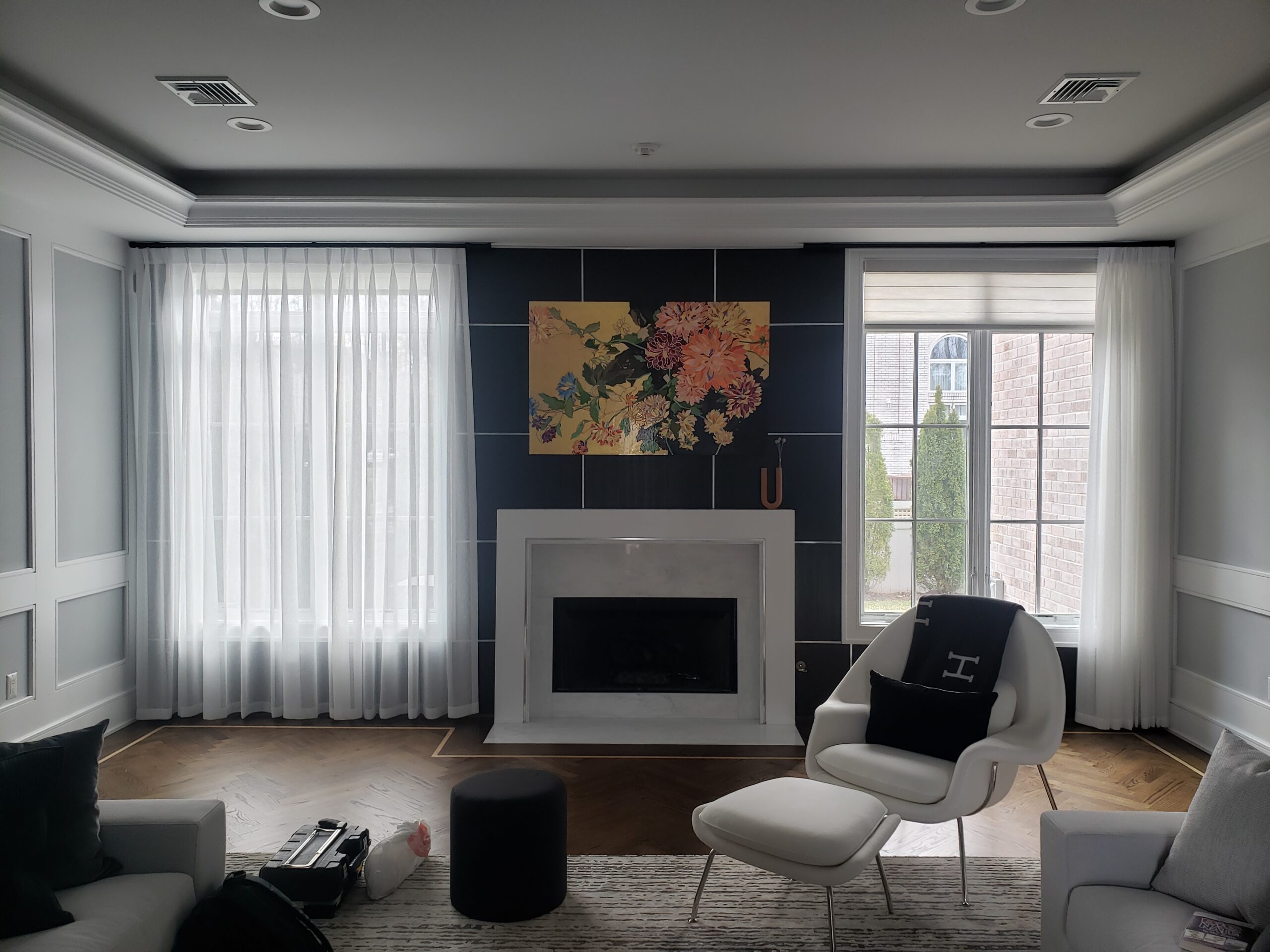
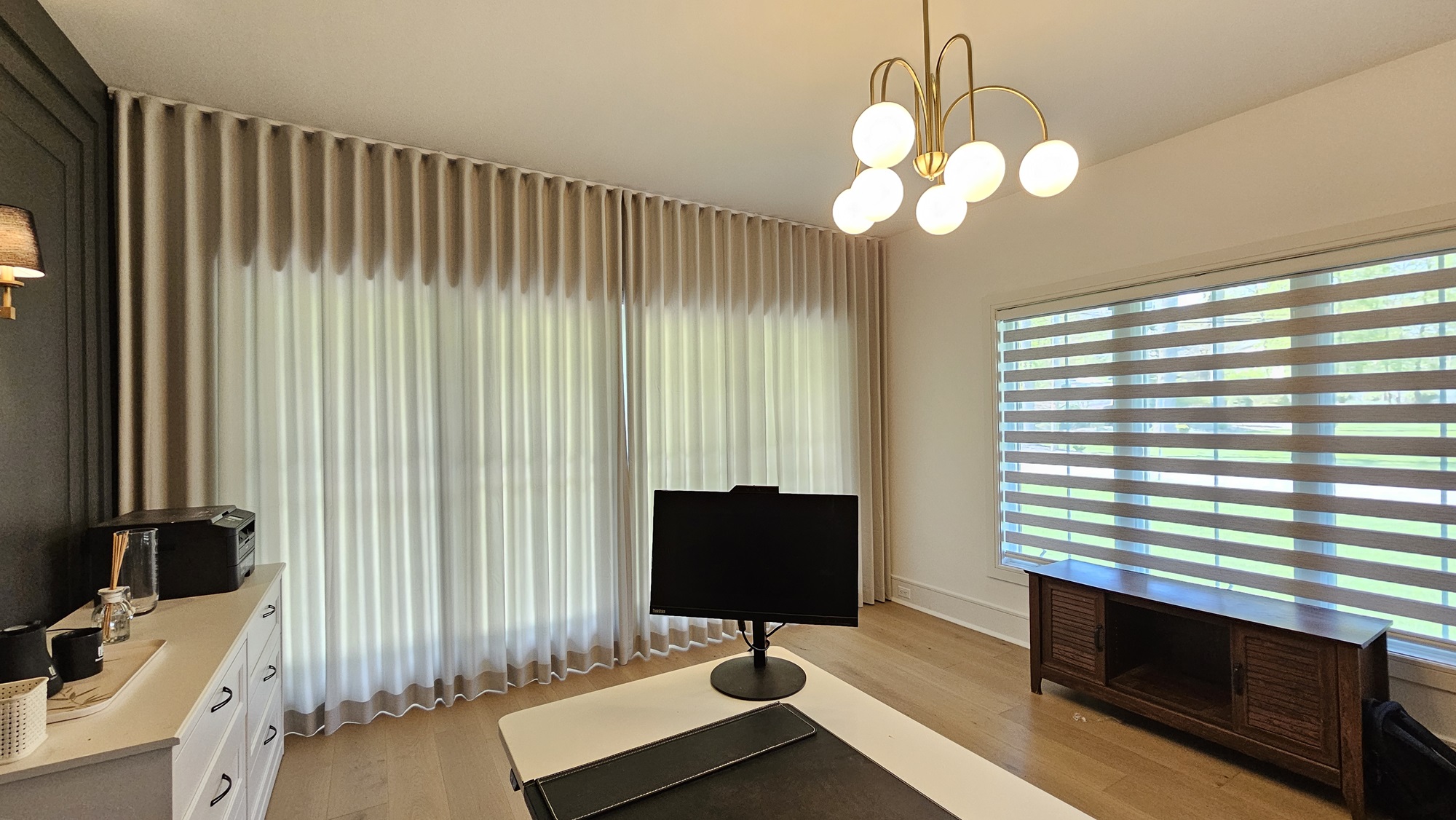
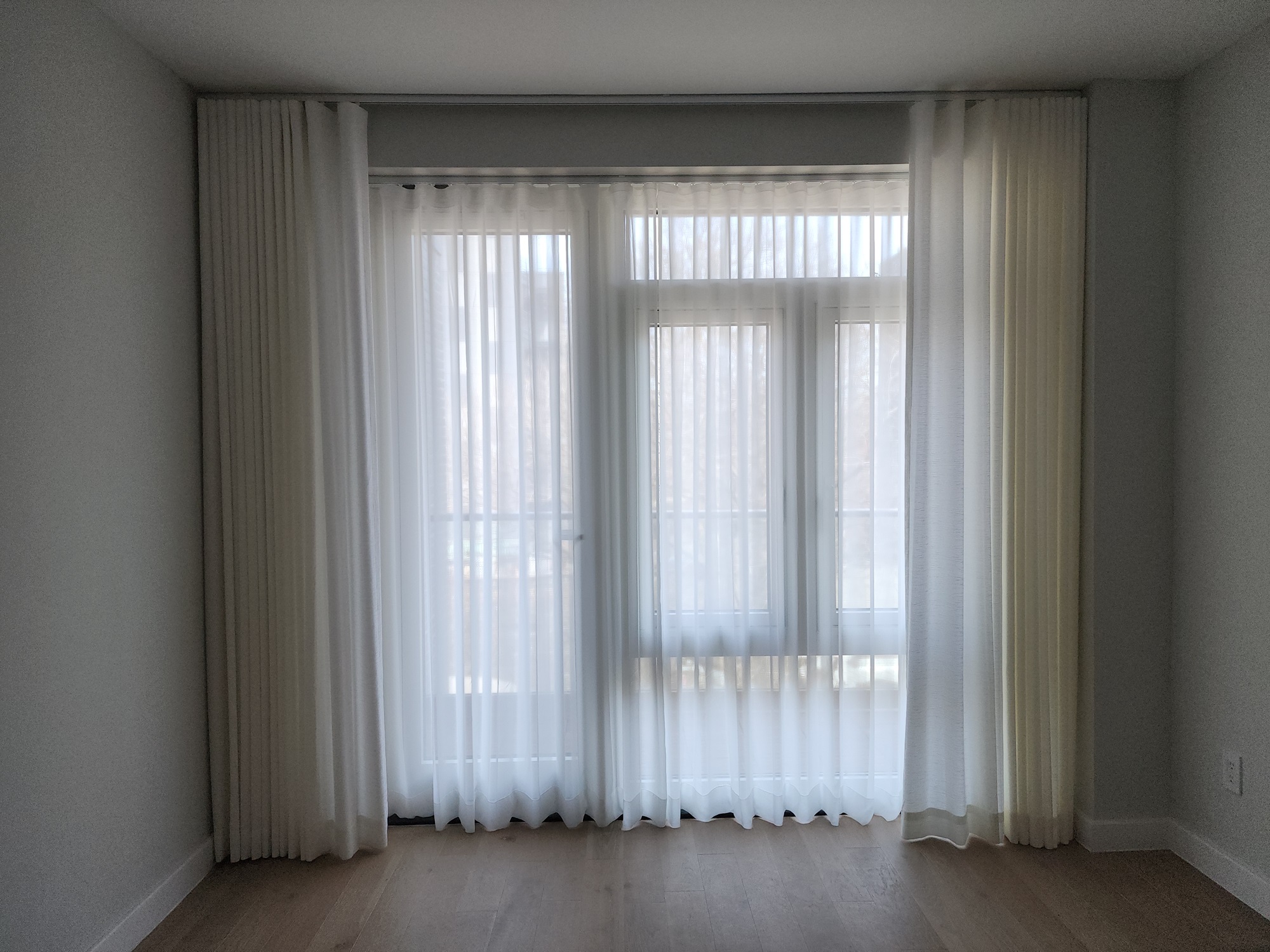
Drapery we've installed nearby
Real rooms across Bergen County and the Tri-State. No stock photography.
Drapery questions
The five that come up in almost every consultation. Tell us the room, the window and what is bothering you about the light, and we will narrow it to two options.
Tell us the room and what is bothering you about the light. We will narrow it to two options in a five-minute call.
What is the difference between drapery and curtains?
Mostly the words. In the trade, drapery means a panel made for your window, cut to length, headed and usually lined, while curtain is the everyday word and in a store it normally means a ready made panel in a stock size. Everything we make is measured to the opening and finished to the drop we take on the day, so call it whichever you like.
Do you install the drapery, or do I hang it myself?
We install. It starts with a free in-home measurement and a written quote, then we make the panels, mount the rod or track into something solid, hang the drapery and dress the folds so they fall the same way from the first day. We also repair and rehang drapery you already own.
Will drapery actually make a bedroom dark?
Only if the lining and the mounting are both right. Blackout lining stops light coming through the fabric, but the light that wakes you comes around the edges, so the rod has to run wide of the frame and high above it, and the panels have to overlap where they meet. If the window faces east and you want it genuinely dark, put a blackout shade behind the drapery and let the panels do the softening.
Where should the rod go, and how long should the panels be?
Higher and wider than most people expect. We usually set the rod several inches above the frame and run it far enough past each side that the open panels sit on the wall instead of over the glass, which makes the window look taller and gives you more daylight. On length, panels either just touch the floor or break about an inch onto it, and we measure every drop separately because floors are rarely level.
Do you make drapery for offices and businesses?
Yes. A lobby, a conference room or a restaurant gets measured the same way a house does. The differences show up in the specification rather than the process: harder wearing fabric, track instead of a rod on long runs, and motorization on a schedule so nobody has to walk the room closing panels at 4pm.
Visit the showroom
Prefer to see things in person before we come to you? We are on Broad Avenue in Palisades Park, a few minutes from Fort Lee and the GWB.
- 545 Broad AvenuePalisades Park, NJ 07650
- Mon–Fri 10–7 · Sat 10–5Closed Sunday
- (201) 302-9111We usually pick up on the first ring