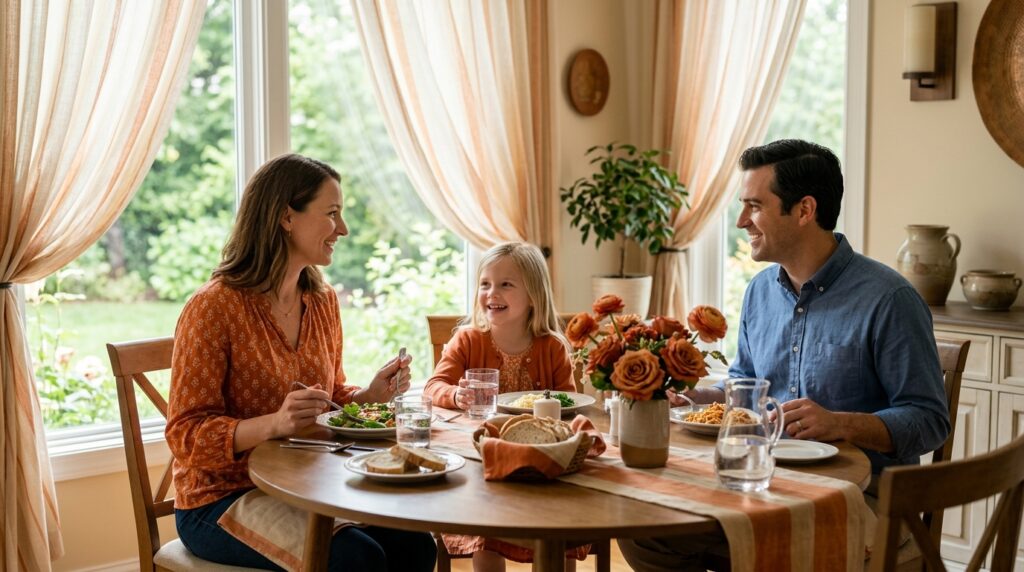
Your dining room should feel like the warmest spot in the house, but harsh afternoon glare, dull lighting, or bare windows can undercut even the best table setting. The right dining room curtains fix all three at once. They soften light, frame your view, and pull the whole room together. No single fabric or style works for every table, though. Here’s how to choose window treatments that actually earn their spot in your dining room for 2026.
9 Dining Room Curtains and Shades Worth Considering
How dining room light and traffic patterns affect the right choice
Dinner table, big windows, maybe a sliding door to the patio — your dining room asks a lot of its window treatments. You need style that holds up to candlelit dinners and Sunday brunch alike. You need real light control for both. And you need privacy if the street or a neighbor’s porch sits close to the glass. There’s no single right answer here. It depends on the room.
Here’s the lineup this guide walks through, each one suited to a different layout and a different set of priorities:
- Flowing drapery that dresses up a formal dining room with large, prominent windows and a layered, finished look.
- Solar roller shades built to cut glare and UV exposure during meals without blocking the view entirely.
- Cellular shades that trap air for better insulation, useful in rooms with drafty or older windows.
- Woven wood shades that bring texture and warmth to open-concept spaces near a kitchen or living area.
- Roman shades and plantation shutters, two structured options for rooms where tailored light control matters more than softness.
- Sheer shades, vertical blinds for sliding glass doors, and motorized PowerView shades, each solving privacy, patio access, or convenience problems that pop up in specific floor plans.
A formal room with tall double-hungs calls for something different than an open-concept space with a wall of glass leading to the patio. Knowing which layout you’ve got narrows the list fast — and the next sections break down each option on its own.
Custom Drapery for a Formal, Layered Look
Pairing drapery with a functional shade underneath
Flowing fabric panels do something no hard window treatment can: they soften a room. In a formal dining room, floor-length drapery framing the window adds height, weight, and a sense of occasion. It’s the kind of detail guests notice without quite knowing why. But drapery alone is decorative, not functional. It doesn’t block glare at a 1 p.m. lunch or stop a nosy neighbor’s view at dusk. That’s why layering matters.
Pair drapery with a sheer shade or a roller shade mounted behind it, and you get the best of both. The sheer softens harsh afternoon sun while keeping the room bright; a roller shade, when fully drawn, gives you real privacy and light control after dark. The drapery stays put as a frame while the shade does the daily work of opening and closing. If you’re furnishing a smaller dining nook, it helps to review proven curtains for small windows so the layered look doesn’t overwhelm a tight space.
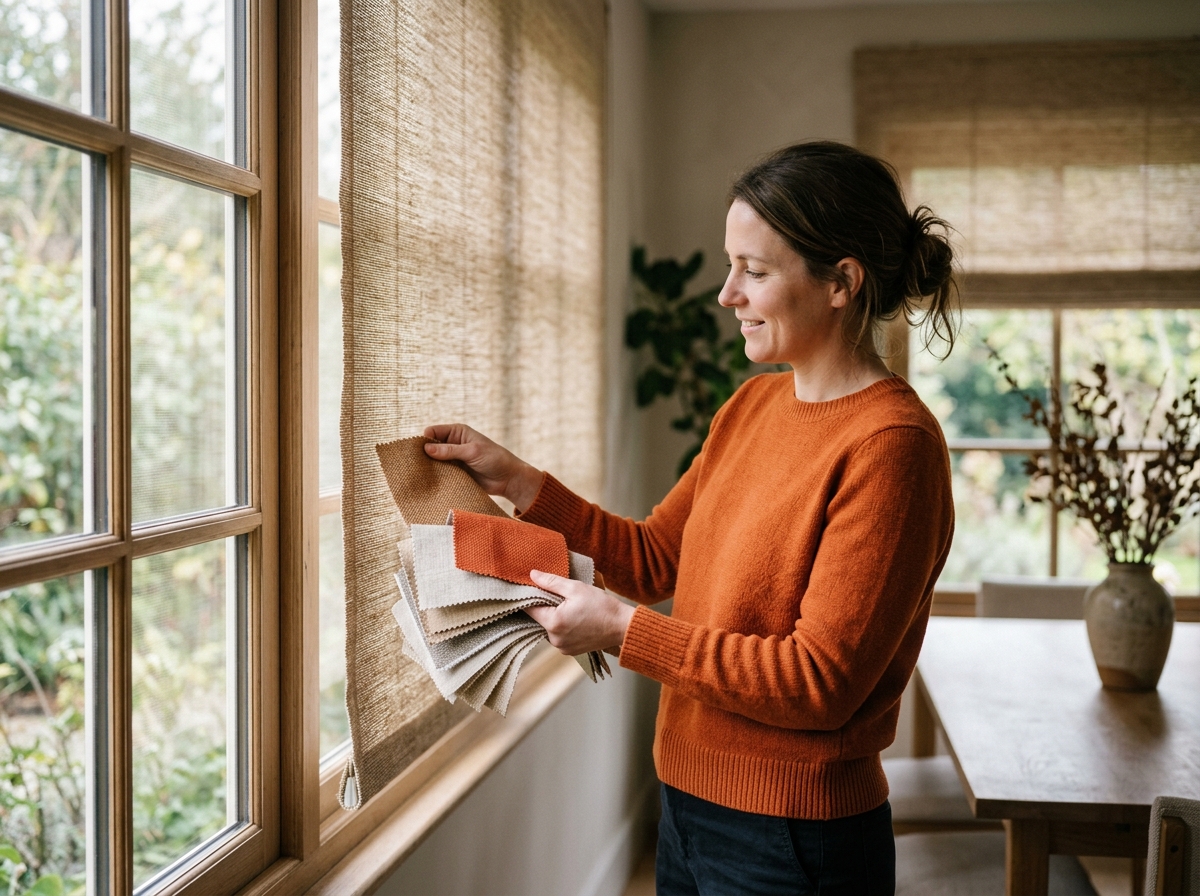
Fabric, lining, and pleat style all change how drapery behaves. A heavy pinch-pleat linen hangs differently than a relaxed grommet-top cotton, and blackout lining changes how much light sneaks through the sides. Many people are drawn to natural texture, and linen curtains are a popular choice for their soft drape and casual elegance, though they wrinkle more than synthetic blends. Coordinating drapery fabric with table linens or seating upholstery is a smart, common move. Just know it stops short of full room styling. That’s a bigger job than fabric matching, and a dedicated consultation focuses on the windows, not the whole room’s design scheme.
Solar Roller Shades for Glare and UV Protection During Meals
Sit at a dining table for a few years under direct sun and you’ll see the damage before anyone tells you about it. Faded wood grain. A bleached rug edge. A china cabinet with one noticeably duller side. UV rays do that quietly, day after day. Solar roller shades cut that exposure while letting you keep the view out the window, which is more than you can say for window film once it’s stuck to the glass. Film is permanent. Shades aren’t. You can raise them for a dinner party and lower them for a sunny Sunday brunch, and that flexibility matters more than people expect.
Opacity is where the real decision happens. A 1% to 3% openness blocks most glare and UV but keeps the outside nearly invisible; something in the 10% to 14% range softens light while preserving a clearer view for meals where you actually want to see the yard. Worth noting: reading up on energy efficient window coverings can help you weigh heat gain against daylight before settling on a percentage.
One honest caveat: exterior awnings block sun before it ever touches the glass, which no interior shade can fully replicate. That’s a different product for a different job, and it’s not something offered here. But awnings are fixed and weather-exposed. Solar shades live indoors, adjust in seconds, and pair easily with automated blinds vs automated shades comparisons if you’re considering motorization down the road.
Cellular Shades vs. Roman Shades vs. Woven Wood Shades
These three shade styles get mentioned together a lot, but they solve pretty different problems. If a drafty dining window is your main headache, insulation matters most. If you want a dressy, tailored look near the table, texture and fold matter more. Here’s how they stack up on the things people actually ask about.
| Shade Type | Insulation Value | Light Control | Texture / Style | Typical Price Range |
|---|---|---|---|---|
| Cellular Shades | Best — honeycomb pockets trap air | Light-filtering to blackout options | Clean, minimal, modern | $$ |
| Roman Shades | Moderate | Good, varies by lining | Soft fabric folds, formal | $$$ |
| Woven Wood Shades | Lower | Lighter, more filtered glow | Natural, casual-to-transitional | $$ |
Cellular shades earn their reputation as the insulation champ of the group. Their honeycomb construction traps air against the glass, which helps smooth out the chill you feel sitting near an old dining window in January. Think of them as a far cheaper move before you call a window contractor about full replacement — sometimes the shade alone solves 80% of the complaint.
Roman shades bring a dressier, more formal texture to a dining room, with soft horizontal folds that read almost like drapery when raised. They offer decent insulation, but that’s not really their job. Woven wood shades go the other direction entirely: natural grasses, bamboo, and reeds give a relaxed, textured look that suits a farmhouse or transitional table setting. They let more light filter through, though, so if you’re wondering whether that casual look holds up long-term, it helps to read up on whether woven wood shades are out of style before committing. None of the three is “wrong” — it just depends on what the window’s actually complaining about.
Plantation Shutters for Light Control and Privacy
Why interior shutters aren’t a storm-protection product
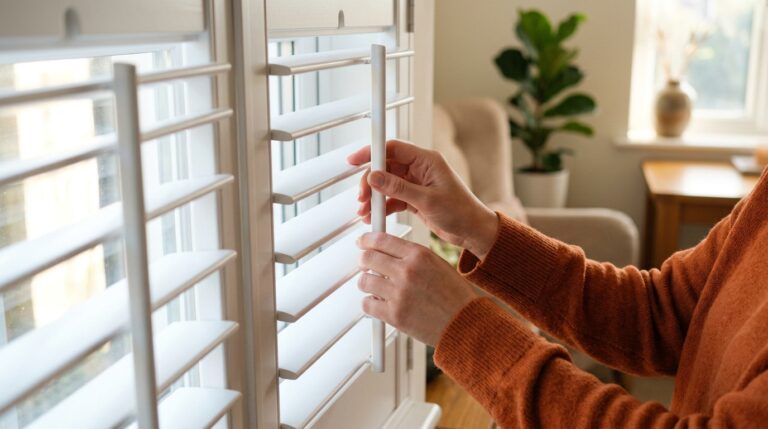
Plantation shutters bring a crisp, architectural look to a dining room, and they work through simple angled louvers you tilt by hand or with a tilt rod. Close them for privacy during a dinner party, angle them slightly for soft light over breakfast, or open them wide when you want the full view. Light control is the whole point, and it’s a satisfying one. For a dining room with large or oddly shaped windows, the adjustability beats a fixed panel every time.
The look suits traditional and transitional rooms especially well. Think a wood-paneled dining room, a farmhouse table, or classic crown molding. Shutters read as built-in and permanent, which is exactly the formal, finished feel a lot of homeowners want in this specific room. They pair cleanly with simple drapery panels if you want extra softness without going overboard.
Here’s the distinction worth repeating: interior plantation shutters are a light-and-privacy product, full stop. They are not rated for wind, flying debris, or storm pressure, and they shouldn’t be marketed or treated that way. If hurricane or wind protection is the goal, that’s a job for a licensed exterior contractor installing actual storm-rated panels or shutters, a separate category entirely from what hangs inside your dining room window.
Durability-wise, interior shutters hold up well to daily life. Solid wood or composite louvers resist warping, wipe clean with a damp cloth, and don’t collect the dust that heavy drapery can. For a room that sees regular meals, spills, and foot traffic, that low-maintenance quality matters. It’s also worth knowing that privacy curtains can achieve a similar screening effect with a softer, less architectural look, so the choice often comes down to style preference rather than function.
Sheer Shades and Privacy Curtains for Street-Facing Windows
When to choose sheers over blackout fabric
If your dining room window faces the sidewalk, the street, or a neighbor’s porch, you want light, not a spotlight on your dinner table. Sheer shades like Silhouette and Pirouette let soft daylight filter through while keeping passersby from getting a clear view in. They solve daytime privacy without the heavy, closed-off feel of blackout fabric. That’s the trade-off worth understanding before you pick a fabric weight.
Sheers also make sense when a room already gets limited natural light. Heavy drapery can swallow what little sun reaches the table, especially in rooms with a northern exposure or a shade tree out front. A softer, sheer panel keeps the room bright and airy instead of dim. For a broader look at fabric weights and weave options, a sheer curtains guide is a useful starting point before you commit.
Here’s the honest trade-off: sheers won’t block a view after dark, once your lights are on and the window turns into a mirror the other way. For nighttime, pair a sheer shade with a blackout roller shade on the same window. Layer them and you get daytime diffusion plus evening privacy, without rebuying window treatments twice.
Vertical Blinds and Specialty Shapes for Sliding Doors and Unique Windows
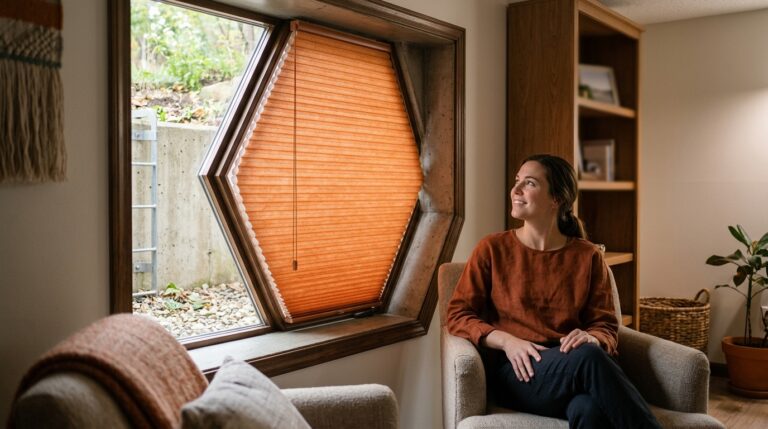
Not every dining room has a simple rectangle of glass to dress. If yours opens onto a patio through a sliding door, standard panels just aren’t built for that job. Vertical blinds stack neatly to one side, clearing the path for foot traffic and covering sliding doors specifically, not closets, not barn-style room dividers, and not pocket doors. That’s a distinction worth making up front, since the hardware and track systems differ quite a bit between those uses.
Arched windows, angled gables, oversized picture windows over a built-in banquette — these all throw standard sizing out the window, so to speak. A few things worth knowing before you shop for anything unusual:
- Arched or half-round windows typically need a fixed, custom-cut frame rather than anything that opens or stacks, since the curve has no moving parts to work with.
- Angled or peaked windows common in dining additions require precise measuring at the installation stage, because even a small miscalculation throws off the whole fit.
- Oversized dining windows sometimes call for motorized lift systems simply because the panels are too heavy or too tall to manage comfortably by hand.
- True skylights sit in a separate category entirely and aren’t something standard window treatments are built to address.
- Specialty shapes are best worked out face to face, since photos and rough measurements rarely capture the angles accurately enough for a confident order.
A design consultation earns its keep here. Odd geometry is exactly the kind of problem that benefits from someone measuring in person rather than guessing from a tape measure and a hunch.
Choosing Between Manual and PowerView Motorized Shades
Steps to decide if motorization fits your dining room
Not every dining room needs a motor. Some just need fewer cords hanging near the table. Before you spend more on automation, walk through how you actually use the room, then compare the two control styles side by side.
| Factor | Manual (cord/wand) | PowerView motorized |
|---|---|---|
| Daily operation | Pull cord or turn wand each time | App tap, voice command, or saved scene |
| Cords near kids/pets | Dangling cord, a real snag risk | Cordless lift, nothing hanging at table height |
| Scheduling light for meals | You remember to adjust it yourself | Shades open or close automatically at set times |
| Upfront cost | Lower | Higher, plus hub and app setup |
| Scope of control | One shade at a time | Groups of shades, by room or scene |
If young kids, grandkids, or an overly curious cat spend time near your windows, cordless or motorized lift styles solve a real safety annoyance, not just a convenience one. PowerView is worth a close look if you host dinners often: set a scene so shades lower automatically at sunset and lift again before breakfast, no fumbling with a wand mid-meal. For readers curious about how this fits into a broader smart-home setup, learning about smart curtains and home automation is a useful next step. One clarification matters here: PowerView automates your shades specifically. It doesn’t wire your whole house. If you want lighting, thermostats, and shades running off one unified system, that’s a separate job for an AV integrator, not something a window treatment consultation covers.
Maintaining and Updating Your Dining Room Window Treatments
Dining room window treatments take more abuse than people think. Candle smoke, spilled wine, kids leaning on the sill during a long holiday dinner — it adds up. Knowing when a quick wipe-down will do and when something needs real attention saves you money and keeps your room looking sharp. Here’s how to tell the difference.
Repair vs. replacement signs to watch for
Most dining room treatments just need light, consistent upkeep. A few habits go a long way toward keeping things looking new:
- Dust wood blinds and shutters weekly with a microfiber cloth or a vacuum brush attachment, since buildup is what makes slats look dull and gray over time.
- Spot-clean fabric shades and drapery hems right after a spill, before wine or sauce has a chance to set into the fibers.
- Check lift cords and tilt wands monthly for fraying, sticking, or slow response, which usually signal a mechanical issue rather than a dirt problem.
- Inspect slats and vanes for cracks or warping near heat vents or sunny windows, a common trouble spot in dining rooms with large glass doors.
- Tighten loose mounting brackets as soon as you notice a shade sagging on one side, since that strain only gets worse with time.
Hardware problems are a different animal than dirt. A stuck lift cord, a snapped slat, or a headrail that won’t stay level calls for repair or outright replacement, not a cleaning product. Pulling harder on a jammed cord usually just finishes the job of breaking it. Deep fabric cleaning is its own specialty too; drapery panels or fabric blinds with years of buildup are better handed off to a dedicated cleaning specialist rather than scrubbed at home, where it’s easy to set a stain or shrink a lining. If you’re unsure whether your window treatments affect resale appeal, it’s worth noting that research on whether window treatments increase home value suggests well-maintained ones do matter to buyers. When you’re genuinely stuck on whether to patch something up or start fresh, a free in-home consultation is the fastest way to get a straight answer, and that kind of visit is available to homes across Fort Lee, Cliffside Park, Edgewater, Leonia, Englewood, Tenafly, Ridgewood, and Franklin Lakes.
Before deciding, it helps to be honest about what’s actually causing the discomfort in the room—is it glare and heat coming through the glass, or a draftier window that no covering alone can fully solve? Think about how much adjustability matters to you day to day, since a fixed exterior solution and a flexible interior one solve the same problem in very different ways. If you’re unsure which approach fits your windows, a design conversation focused specifically on light, privacy, and insulation can clarify the options before you commit to either path.