Every few months someone walks into our Palisades Park showroom, points at a natural weave, and asks the question you probably typed to get here: are woven wood shades out of style? They are not. You will see the same product sold as woven wood shades, woven fabric blinds, or woven wood Roman shades depending on whose catalog you are reading, and all three names describe slats of bamboo, reed, jute or grass bound together into a shade. What has changed in Bergen County homes is how people order them: tighter weaves, cooler tones, and a liner chosen for the room instead of skipped to save money.
Short answer
No, woven wood shades are not out of style in 2026. They are a natural-material staple rather than a trend piece, and texture plus neutral color is still what most rooms are built around. The thing that dates a window is a loose, orange-toned bamboo hung with no liner. A tighter weave in a driftwood or gray-brown tone, lined for the room it is in, still reads as current.
What a Woven Wood Shade Actually Is
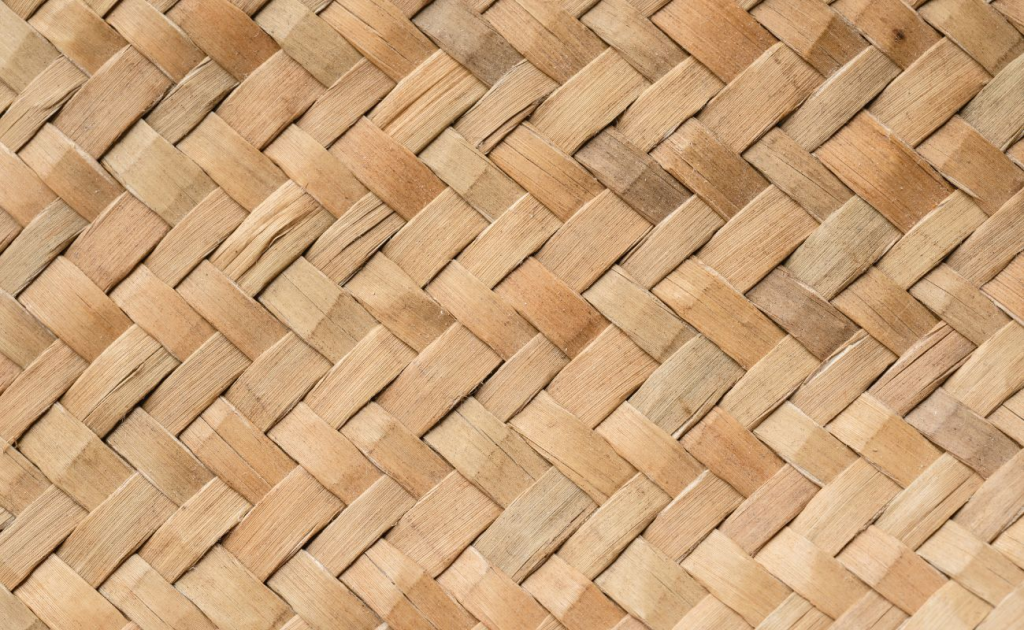
Picture slim strips of bamboo, reed, jute, rattan or dried grass woven together with fine cord and hung as a single panel. There is no fabric face and no paint. Because every strand is a natural fiber, no two shades are identical, and the weave scatters daylight into a soft, dappled light instead of a flat wash. That texture is the whole point. It does something flat paint, glass and smooth cabinetry cannot do on their own.
Hunter Douglas builds its woven woods under the Provenance name, and as a Hunter Douglas partner we sell and install them alongside our own custom drapery. You can see the full shade range on our shades page, and if you want the deeper material comparison, the pros and cons of bamboo shades covers the fiber side in detail.
Are Woven Wood Shades Out of Style in 2026, or Just Changing?
Changing. Four things are different from the versions people hung ten years ago, and each one is worth knowing before you order.
- Color moved cooler. The honey and orange bamboo tones are what make a room look dated. Driftwood, gray-brown, greige and espresso stains sit better next to the white trim and cool grays in most Bergen County interiors.
- Weaves got tighter. A loose, open weave reads casual and beachy. A tight, uniform grass weave reads tailored, and it also gives you far more daytime privacy.
- Liners became standard. A liner behind the weave is the norm now rather than the upgrade, and that single choice decides whether the shade works in the room.
- Layering replaced the bare window. Woven woods on the glass with solid linen or cotton panels outside the frame is the layered look people are asking for now. Our 2026 window treatment trends post tracks where the rest of the category is heading.
Woven Wood Roman Shades vs Flat Roll-Ups
Same material, two different ways of getting out of the way.
Woven wood Roman shades gather into soft horizontal folds as they rise, and the folds stack into a visible bundle at the top of the window. That stack is part of the look, and it is also glass you no longer see through, which matters more on a short window than on a tall one. It is the more furnished, more finished version.
Flat roll-up woven shades wrap around a tube and disappear into a slimmer roll. They read quieter and suit narrow frames and modern trim. If you like the tailored fold but want it in fabric instead of natural fiber, our Roman shades page shows that side of the range.
On an outside mount, run the shade a couple of inches past the frame on each side. Natural weave has more light leak at the edges than a solid fabric does, and the extra width is what closes that gap.
The Liner Decision Is the One People Get Wrong
Woven wood shades filter light. On their own they do not stop it, and at night an unlined weave will show silhouettes from the street. Pick the liner for what the room does, not for how the sample looks in your hand.
- No liner. Sunrooms, back windows, any room you bought for the view. You get the glow and the outdoor connection, and you accept that people can read shapes through it after dark.
- Light-filtering liner. Daytime privacy with the weave still glowing. This is the default for street-facing living and dining rooms.
- Room-darkening liner. Bedrooms and media rooms. It cuts the light hard, but a shade still hangs inside or in front of a frame, so light will find the edges. If you need true darkness, pair the weave with a separate blackout shade or with lined drapery.
What we would put on the window
- Street-facing living roomTight weave with a light-filtering liner, solid linen panels outside the frame.
- Bedroom that needs real darknessRoom-darkening liner in the weave, or a blackout roller behind it.
- Dining room bayOne shade per section in the same weave, cordless lift, headrails aligned.
- Sunroom or a window you bought for the viewLoose weave, no liner, top-down bottom-up lift.
- Bathroom or the window over the kitchen sinkSkip the weave. Faux wood or a moisture-friendly roller shade.
Lift Systems: What to Order
The lift is the part you touch every day, and it is the part people regret. Match it to the window and to who is in the room.
| Lift type | Best for | Why it works |
|---|---|---|
| Cordless | Homes with kids or pets | No hanging cord, smooth manual lift |
| Continuous loop | Tall or wide windows | Balanced pull, less effort on a heavy shade |
| Motorized | High or hard-to-reach windows | Remote or app control, scheduled scenes |
| Top-down bottom-up | Street-level rooms, bathrooms | Daylight in from above, privacy below |
Cordless is worth insisting on wherever a child sleeps or plays, and our guide to child-safe window treatments explains why. If you are weighing motors, the comparison of automated blinds and automated shades covers what changes once a shade runs on a motor.
Where Woven Woods Are the Wrong Call
Natural fiber and steady moisture do not mix. In a full bathroom or directly over a kitchen sink, the weave can swell, warp or hold odor, so we usually steer those windows toward faux wood or a wipeable roller instead. Our bathroom window treatment guide and the faux wood versus wood blinds comparison both cover that trade.
Wide sliders are the other limit. A single woven shade across a full patio door gets heavy and awkward to raise, so a panel track or a vertical treatment usually wins on a sliding door. And if your real goal is a warmer room in January rather than texture, woven woods are not the insulating product. A weave cuts direct sun on the glass, which helps in summer, but cellular shades are what trap air at the window.
Layering Woven Woods With Drapery
Hang the weave on the glass and put solid panels outside the frame, mounted high and wide so the drapery frames the window rather than covering it. Keep the panels plain. Linen, cotton or a matte solid lets the weave stay the focal point, and a pattern on both layers fights itself. Our walkthrough on how to layer curtains has the mounting details, and we make the panels themselves as custom drapery in the showroom.
Keeping the Weave Looking New
- Dust weekly with a microfiber cloth or the soft brush attachment on the vacuum. Dust settles into the weave and dulls the color faster than sun does.
- Spot clean with a barely damp cloth. Do not soak natural fiber and do not steam it.
- Raise and lower the shade through the seasons so any sun fading happens evenly. South and west windows fade fastest.
- If a lift cord or a mechanism fails, the shade is usually worth repairing rather than replacing.
From our own installs in Bergen County
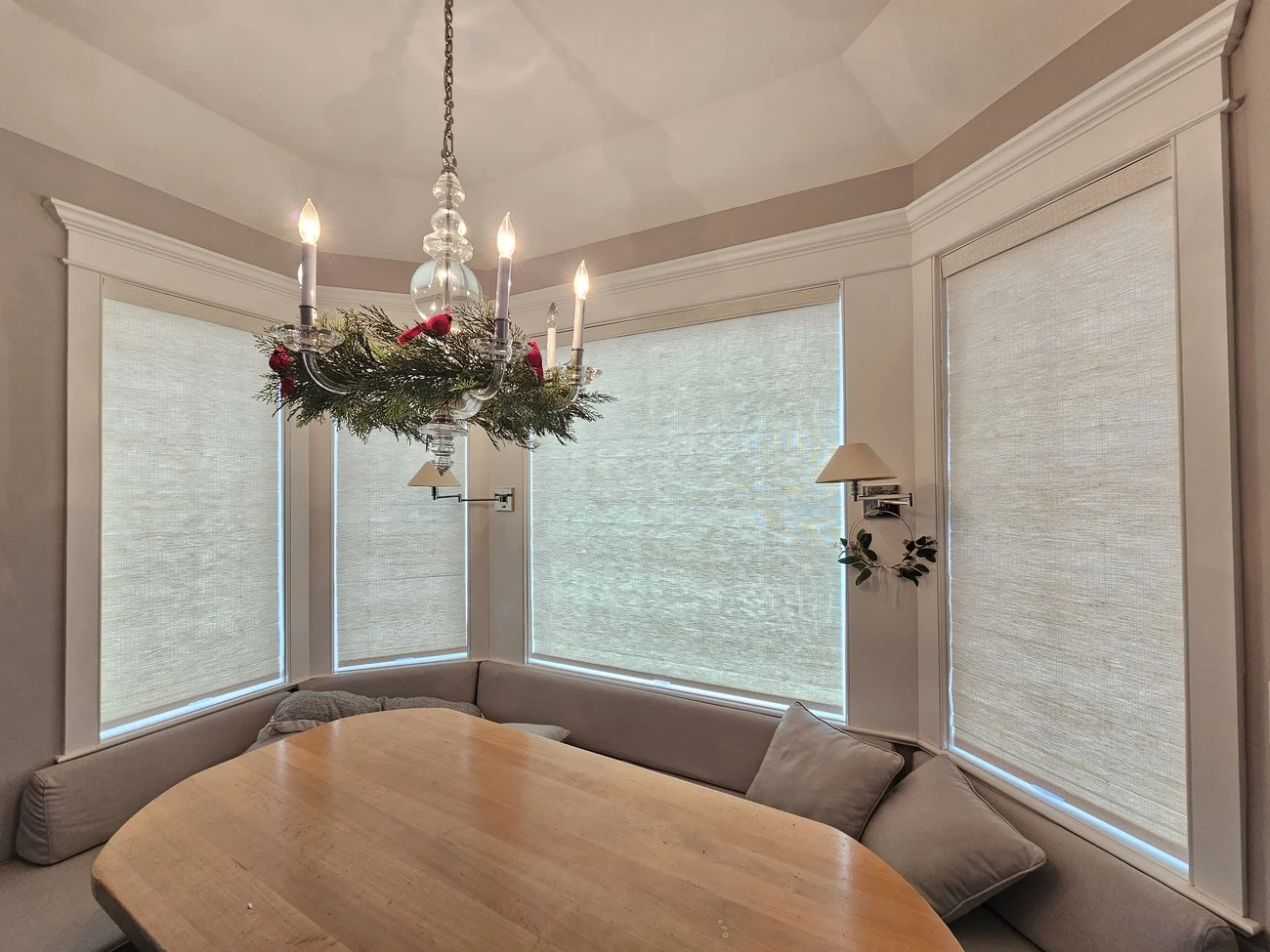

See the Weaves in Palisades Park Before You Order
Woven wood is the one product you should not buy from a screen. Color varies from strand to strand, a photo flattens the texture, and the same sample looks different against your trim than it does under showroom lights. Bring a paint chip or a photo of the room and hold the samples against it.
The Curtain is a family-owned window treatment showroom at 545 Broad Ave in Palisades Park, in business since 2007 and run by owner and designer Sejun Park. We are a Hunter Douglas partner, so we sell and install Hunter Douglas shades, blinds and shutters, and we make custom drapery for the layers that go around them. You can see finished rooms in our gallery, read what neighbors say on our reviews page, and check the towns we cover on our areas we serve page.
We measure your windows in your home at no charge and put the quote in writing. Call (201) 302-9111 or book a free consultation, and we will bring the weaves, the liners and the lift samples to you.