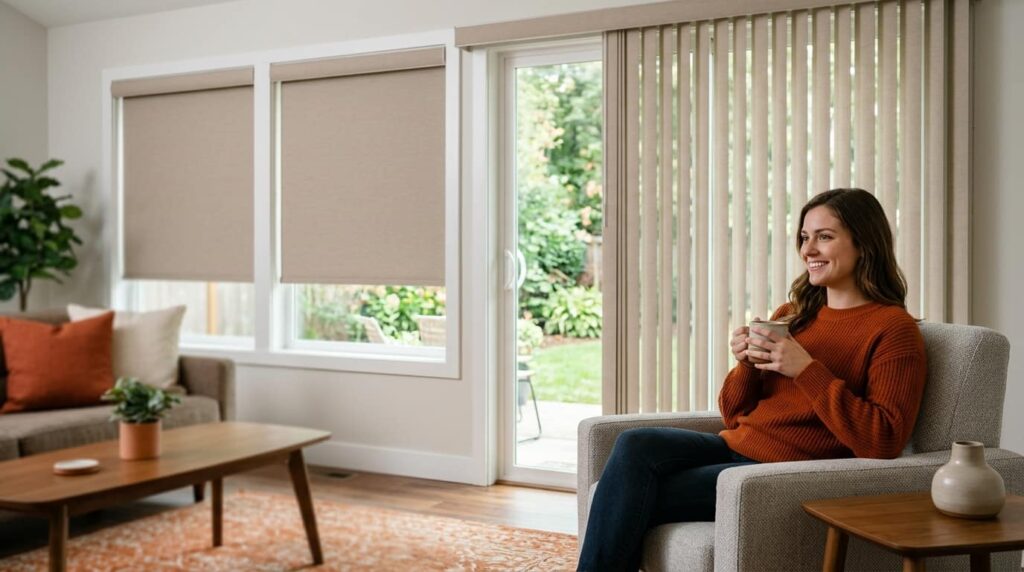
Mismatched panels, gaps that let in glare, a sliding door that never quite looks finished—dressing adjoining windows and doors well is trickier than it seems. Choosing curtains for window and door combinations means balancing proportion, light control, and privacy across two very different openings. This guide walks you through fabric, hardware, and layout decisions so every room reads as one cohesive design, not an afterthought. Get it right, and the payoff is simple: a space that finally looks pulled together.
Why Matching Window and Door Treatments Matters
How Doors and Windows Differ in Treatment Needs
A window and a door might sit on the same wall. But they do very different jobs. Windows mostly deal with light and view. Doors, especially sliding doors leading to a patio or deck, handle heavy foot traffic, constant hand contact, and full-height glass that invites in way more heat and glare than a standard window. That’s a lot to ask of one fabric panel.
Think about a living room with a large slider next to two regular windows. The windows might only need opening twice a day for a breeze. The slider, though, gets opened and closed dozens of times a week by kids, pets, and anyone carrying groceries out back. A flimsy curtain panel will twist, tear, or just get shoved aside within a year. The covering on that door needs to survive real wear, not just look nice in photos.
Privacy and light control differ too. A kitchen window over the sink might only need light filtering during the day. A bedroom slider needs near-total blackout at night and tight privacy once the sun goes down, since neighbors can often see straight through unobstructed glass. Matching rooms get this wrong constantly, treating every opening the same way and wondering why one spot never feels quite right.
None of this means doors and windows should look unrelated. Quite the opposite. A room reads as finished when treatments share a color story, a fabric texture, or at least a consistent hardware finish, even if the mechanics behind them are totally different. Picture a family room where roman shades on the windows echo the same woven texture as vertical panels on the slider; the eye reads it as one cohesive design, not two mismatched projects. That’s the balance worth aiming for: unified style, treatment-specific function.
This is also where size and shape start to matter. A narrow bathroom window and a long hallway window don’t behave like standard living room glass. Getting proportions right is its own skill. If you’re furnishing a smaller opening, it helps to look at proven approaches to curtains for small windows before assuming a scaled-down version of your door treatment will work. Sliding glass doors, meanwhile, generally call for sturdier, frequently-operated coverings like vertical blinds or durable woven shades, built to take daily handling without sagging or snagging. Windows have more room to play with. Layered drapery, romans, soft woven textures, delicate sheers, whatever suits the room, since they’re not getting yanked open every hour. Keep that distinction in mind, because it shapes nearly every product decision covered in the sections ahead.
Curtains for Window and Door: Matching Styles That Work Together
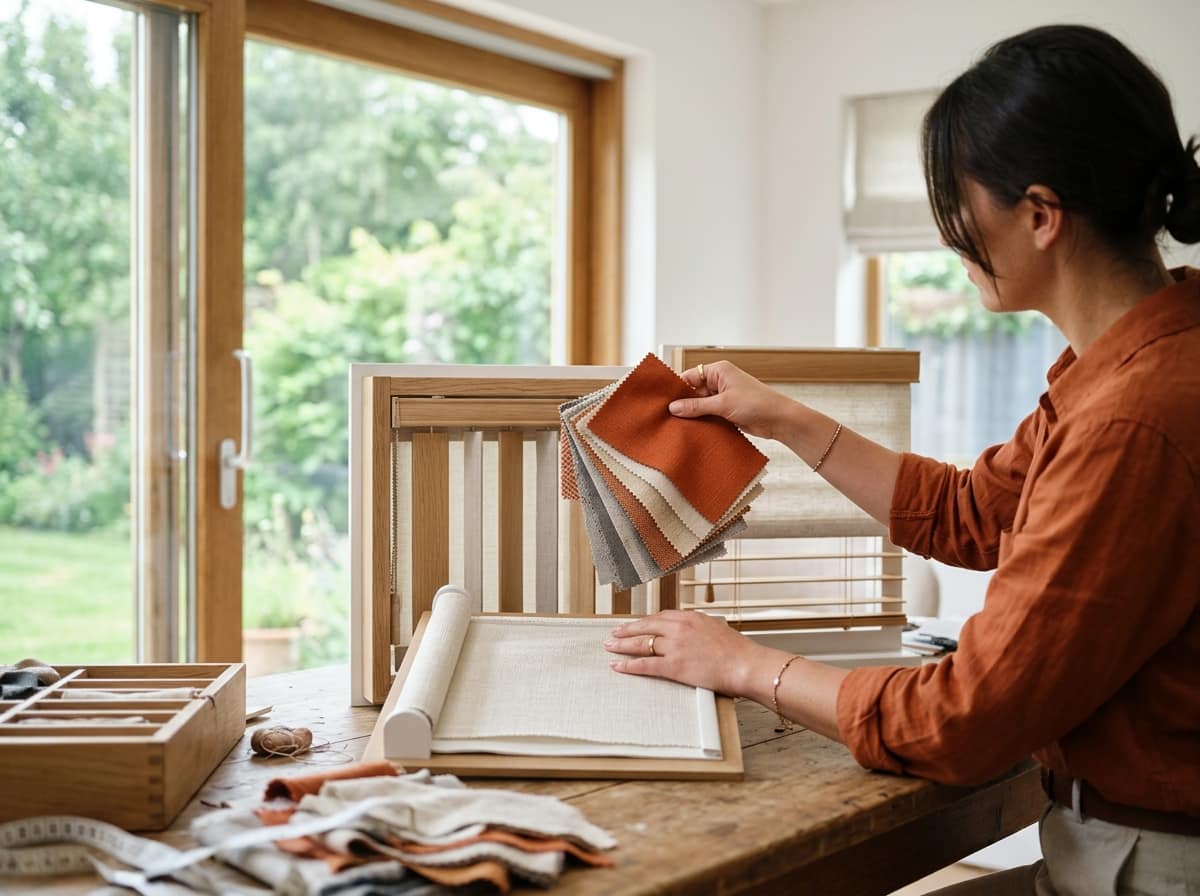
Coordinating Fabrics, Colors, and Textures
Here’s the challenge most homes face: a window and a sliding glass door sitting a few feet apart, each needing coverage, but you don’t want two unrelated treatments fighting for attention. A common solution is custom drapery on the window, paired with vertical blinds on the sliding door. The drapery brings softness and depth. The verticals handle the heavy daily use a door demands. Keep the fabric or slat color in the same family and the two read as one plan, not two afterthoughts.
If drapery feels like too much fabric for a smaller room, woven shades or roman shades on the window work nicely beside panel-style vertical blinds on the door. Woven wood brings texture without bulk. Panel track verticals mimic drapery’s clean lines but glide open like a closet door would, which matters for a door you walk through daily. The trick is matching tone, not matching product. A warm oatmeal woven shade and a soft linen-look panel track can sit ten feet apart and still feel coordinated.
Texture is where people get stuck. Our rule of thumb: one dominant texture per room, with a second as an accent. Pair a nubby woven shade with smooth linen drapery, not two competing heavy weaves. Color should anchor the pairing, not the pattern. Stick to neutrals or one shared accent color across both treatments and the room stays calm instead of busy.
When to Mix Hard and Soft Treatments
Hard treatments, like wood blinds or shutters, and soft treatments, like drapery, aren’t rivals. They’re often better together. A window with plantation shutters for light control, topped with a simple drapery panel for softness and framing, is a classic combination that works in nearly any room style. The shutters do the functional work. The drapery adds the finished, layered look that shutters alone can’t deliver.
On a sliding door, the math shifts slightly. Vertical blinds are the practical hard-treatment choice since they stack cleanly to the side without blocking door traffic. If you want a softer look there too, a single stationary drapery panel on one side of the verticals adds warmth without interfering with the door’s function. It’s a small addition that pulls the whole wall together visually, especially when the drapery fabric echoes something elsewhere in the room, a cushion, a rug border, a wall color.
Motorization changes the mixing calculus too, since a comparison of automated shades and blinds can help decide which hard treatment pairs best with a stationary drapery panel when only one needs daily adjusting. Rooms with unusual window shapes add another layer of decision-making. If yours includes an arch, it helps to first look at practical guidance on hanging curtains on an arched window before you commit to a pairing. None of this needs guesswork, honestly. A free in-home consultation lets a designer look at your actual layout, your light direction, your door traffic, and suggest a pairing built for that specific room rather than a generic formula. Comfort factors matter too, and some homeowners also track indoor temperature with tools like smart thermostat installations alongside insulating shades. For a layout with both a window and a door competing for visual space, that outside perspective is worth more than another hour of scrolling photos online.
Window Treatment Options at a Glance
With ten-plus product types on the market, picking the right one comes down to four questions: how much light do you want blocked, how private does the room need to be, what’s the room actually used for, and what’s your budget tier. The table below breaks down the most common options side by side, so you can narrow things down before you start comparing fabrics and finishes.
| Treatment | Light Control | Privacy | Best Room Fit | Cost Tier |
|---|---|---|---|---|
| Wooden blinds | High, adjustable | High | Living rooms, home offices | Mid |
| Cellular shades | High, insulating | High | Bedrooms, nurseries | Mid to high |
| Roller shades | Low to high (solar to blackout) | Moderate | Kitchens, sunrooms | Low to mid |
| Sheer shades | Soft, diffused | Low to moderate | Dining rooms, formal spaces | Mid to high |
| Vertical blinds | Moderate, adjustable | Moderate | Sliding glass doors, patio openings | Low to mid |
A few things that table doesn’t fully capture. Metal blinds behave a lot like wooden ones for light and privacy, but they hold up better in damp spots like bathrooms or laundry rooms. Roman shades and woven shades sit in a similar design lane, soft and tailored looking, with woven shades adding natural texture that works well in casual or coastal-style rooms. Shutters give you the most durable, built-in look of the bunch, and interior plantation shutters are a popular pick for dens and bathrooms where you want a finished, permanent feel. Custom drapery is less about blocking light on its own and more about framing a window, often layered over blinds or shades for both function and style; if you’re leaning toward airy panels, learning what sets linen curtains apart from heavier fabrics helps before you commit to yardage. And for sliding glass doors specifically, vertical blinds remain the standard answer — they stack neatly to the side, handle wide spans, and won’t tangle the way a center-split panel can; it’s worth reading up on vertical blinds for sliding glass doors before assuming drapery alone will do the job.
Solving Common Household Problems with the Right Treatment
Noise and Temperature Control
Traffic noise, barking dogs, a neighbor’s leaf blower — it all gets into a room through the glass. Layered window coverings help absorb and block sound in a way a single pane of glass never will. The combination that works best is a honeycomb-style cellular shade mounted close to the glass, paired with a heavier drapery panel hung beside it. The cellular’s trapped air pockets dampen vibration, while thick drapery fabric soaks up the rest. It’s not soundproofing. But it’s a real, noticeable difference.
Temperature swings are a separate headache, and one many homeowners jump too far ahead on. Before you call anyone about new glass, try insulating cellular shades first. They’re a fraction of the cost and often solve the problem on their own. A few things worth knowing before you decide:
- Cellular shades come in single, double, and triple-cell versions, and the extra cells mean better insulating performance for rooms with the worst drafts.
- A snug, inside-mount installation matters more than the fabric itself, since gaps around the frame let conditioned air leak right past the shade.
- Rooms facing north tend to lose heat fastest in winter, so that’s often where the upgrade pays off quickest.
- If a window is still cold to the touch with a cellular shade drawn tight, the glass or seal itself may be failing.
- Single-pane or badly fogged windows are a different problem entirely, and that work belongs to a licensed window contractor, not a shade installer.
Shades manage comfort. They don’t fix broken glass. Know the difference before you spend money on either one.
Sunlight, UV, and Glare
Fading on a sofa or hardwood floor is UV damage, plain and simple, and it adds up fast in a sun-facing room. Reading up on blinds vs curtains choosing the right window treatment is a smart first step if you’re not sure which category even fits your situation. Window film is one common fix, but it’s permanent once it’s on the glass, and removing it later is a messy job. Light-filtering roller shades or cellular shades do the same UV-blocking work, and you can raise, lower, or swap them whenever your needs change.
Exterior awnings solve glare differently — they stop sun before it ever reaches the glass, which no indoor product can fully replicate. If an awning isn’t in the cards, interior solar roller shades or woven woods are the next best thing, cutting glare and heat gain right at the window. For bedrooms, it’s also worth understanding how privacy curtains can layer with a solar shade for both daytime glare control and nighttime coverage in one setup.
Special Situations: Doors, Odd-Shaped Windows, and Safety
Sliding Glass Doors and Specialty Windows
Sliding glass doors need a treatment that moves the way the door does. Vertical blinds remain the standard answer here: the slats stack neatly to one side, clear the track, and give you full control over light and privacy without fabric dragging on the floor. That’s different from covering a closet opening or building a room divider with sliding panels. Those are door and millwork projects, not window treatments. So if that’s your goal, you’ll want a carpenter or closet specialist rather than a blind installer.
Odd-shaped windows are their own puzzle. Arches, angled tops, trapezoids, circles above a door, these don’t take off-the-shelf hardware. Specialty shaped treatments are built to the exact geometry of the opening, often as a fixed frame that matches the arc or angle precisely. It’s a more involved measuring and fabrication process, which is exactly why a custom window treatment design process starts with someone measuring in person rather than guessing from a photo.
One honest caveat: skylights are a different animal entirely. They sit overhead, take direct sun at a steep angle, and usually need a tilt- or pole-operated system designed specifically for roof windows. That’s a separate category from arches and angled walls, and it’s worth saying plainly rather than lumping it in with specialty shapes.
Child-Safety-Minded Features
Dangling cords are a real worry in homes with young kids or curious pets, and it’s one of the most common questions raised during a design consultation. Cordless lifts solve the problem at the source: no loop, no pull chain, just a smooth push-up or push-down motion. PowerView motorized shades go a step further, letting you raise or lower treatments by app or schedule with no cord at all. Think of it as convenience that happens to remove a hazard, not a dedicated security feature.
That distinction matters. Cordless and motorized shades are not window guards or security hardware, and they shouldn’t be marketed or treated as such. If actual security bars or guards are what you need, that’s a separate product category entirely, handled by a security installer rather than a window treatment provider.
Plantation shutters fit into this conversation too, but only for interior light and privacy control, with louvers you tilt by hand to manage glare without cords. Don’t confuse them with storm shutters or exterior decorative shutters, which are wind-rated or purely cosmetic facade products installed by a licensed exterior or siding contractor. Many local businesses get asked about hurricane protection, and the honest answer is that interior shutters were never built for that job. For fabric pairings on nearby windows, a quick sheer curtains guide can help you balance privacy with the softer look cordless shades alone don’t quite deliver.
Steps to Choosing and Installing New Treatments
Buying new window and door treatments isn’t complicated, but skipping steps leads to wrong sizes and buyer’s remorse. There’s a logical order to this, and following it saves you money and headaches down the road.
Start with a free in-home design consultation. A designer walks your rooms, checks light exposure, and notes what’s bothering you, whether that’s glare on a TV or a chilly draft near the sliding door. From there you’ll look at fabric and material options, deciding between manual operation and PowerView automation for rooms you’d rather control from a phone. If you’re also planning new drapery panels, choosing and installing custom draperies involves its own fabric and hardware decisions worth discussing at this stage too.
The table below lays out the full process in order, so you know what’s happening at each stage and roughly why it matters.
| Step | What Happens | Why It Matters |
|---|---|---|
| 1. Consultation | Designer assesses rooms, light, and goals | Catches problems before you commit to a product |
| 2. Material Review | Compare fabrics, manual vs. PowerView control | Matches function to budget and lifestyle |
| 3. Measuring | Professional measurement of windows and sliding doors | Prevents gaps, overhangs, or ill-fitting panels |
| 4. Quote Review | Pricing shown with seasonal promotions applied | Clarity on cost before ordering |
| 5. Installation | Scheduled install plus basic care guidance | Ensures proper function and longer lifespan |
Professional measuring matters more than people think. A quarter-inch off on a sliding glass door track can mean vertical blinds that bind or won’t close fully. That’s not a fabric problem. It’s a math problem.
Once installed, basic care is simple: dust regularly, avoid yanking cords, and keep moving parts clean. Know the difference between repair and replacement, too. A broken lift cord or bent slat is usually a repair call. Faded fabric, warped wood, or a motor that’s given up after a decade usually means it’s time to replace rather than patch.
Caring for and Maintaining Your Treatments Long-Term
Repair Versus Replacement
A broken cord, a cracked slat, or a motor that won’t respond doesn’t always mean starting over. Window treatment repair handles exactly these mechanical headaches, and it’s usually far cheaper than buying new. A snapped lift cord on a cellular shade, a bent vane on a vertical blind, or a stalled PowerView motor can often be fixed in a single visit. Replacement only makes sense when the frame itself has failed or when the style no longer suits the room.
Fabric is a different animal entirely. If your drapery panels are dusty, stained, or smoke-damaged, that’s a cleaning job, not a hardware repair. A dedicated fabric cleaning specialist has the equipment and solvents to refresh delicate weaves without shrinking or discoloring them. Trying to spot-clean heavy drapery yourself can set stains rather than lift them. It’s worth asking a repair technician upfront which category your problem falls into.
Repair and cleaning, kept separate, actually extend a treatment’s life quite a bit. Research on do window treatments increase home value suggests well-kept coverings pay for themselves over time, so routine upkeep isn’t wasted effort. Think of hardware repair and fabric care as two different appointments entirely.
When to Call a Different Specialist
Not every window problem belongs to a window treatment company. If you’re noticing fog between panes, a cracked pane, or a seal that’s failed and letting in drafts, that’s a glass issue. Call a glazier. No shade or blind fixes a bad seal, and pushing insulating cellular shades as a cure for failing glass just delays the real repair.
Commercial spaces bring their own wrinkle. Standard offices and storefronts can use surface-mounted roller or cellular shades across most window openings, same as a home. But glass wall systems with blinds built right into the glazing are a different product entirely, sourced from the glazing manufacturer, not installed after the fact by a treatments provider. Know which one your space actually has before you shop.
Automation has limits too. PowerView does a great job controlling shades by app, schedule, or voice command. But if you want your shades talking to lighting, locks, and thermostats as one connected system, that’s whole-house wiring territory. An AV integrator handles that broader smart home build. PowerView can usually join an existing system through a hub; it just won’t install one. Keep that distinction in mind before you promise yourself a fully unified setup.
Before deciding how to move forward, it’s worth getting clear on the actual goal: are you chasing glare and heat control, privacy, a cleaner look, or something structural like a drafty pane? That answer usually points to a different fix than the one you started searching for, and a licensed contractor or specialist may be the right call for anything involving the glass or frame itself. For everything on the window treatment side, a free in-home design consultation can help sort through the options with someone who actually looks at your light, your fabric preferences, and your budget in person.