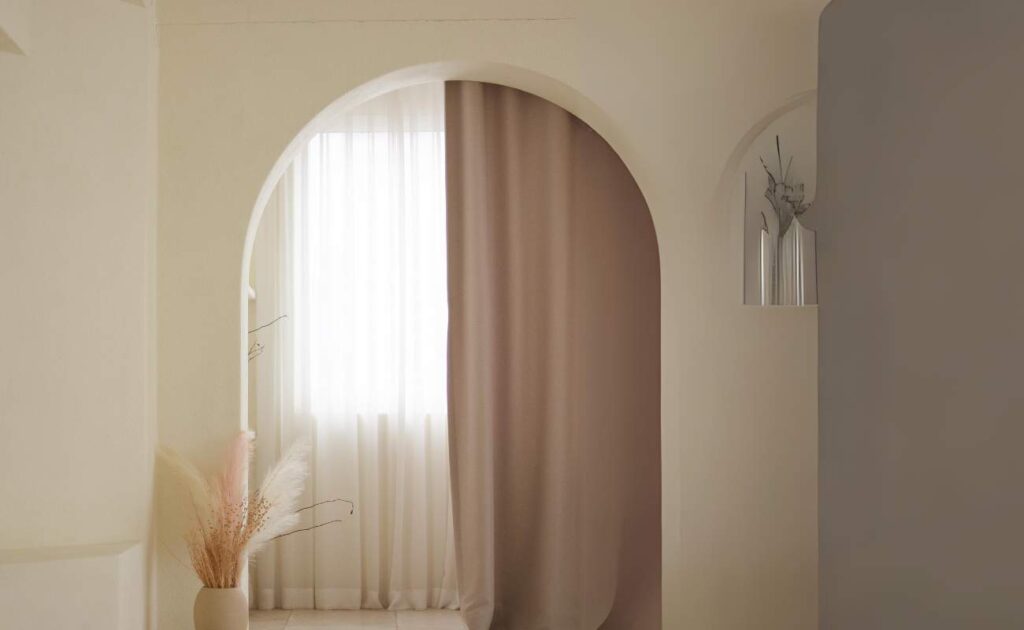
An arched window is the nicest thing in most Bergen County living rooms and the hardest thing to dress. Learning how to hang curtains on an arched window is really a decision about the arch itself: follow the curve, ignore it, or cover it. The curtain options for windows with an arch come down to those three, and the right one depends on whether the arch opens, how high it sits and how much light you need to block.
Short answer
There are three ways to hang curtains on an arched window. Bend a flexible rod along the curve and hang stationary panels from it, mount a straight rod above the arch and hang full-length panels wall to wall so the window reads as one opening, or leave the arch bare and treat the rectangle below it. Follow the curve when the arch is decorative, go straight above it when the curtains have to draw every day.
1) Measure the Arch
Measure the width of the window at its base first. Hold the tape level and write the number down in inches, to the eighth. Then measure the height of the arch: put the tape at the center of the base and run it up to the highest point of the curve.
For a rod that follows the arch, you also need the length of the curve itself. Run a flexible tape from one springing point, where the curve leaves the vertical, over the top and down to the other side. That measurement is what a curved rod or a shaped panel gets cut to, and guessing it is the most common reason a shaped treatment comes back wrong.
Measure the wall too. The inches of flat wall above the arch and on each side decide whether a straight rod is even possible. Our measuring guide runs the same routine on a rectangular opening.
2) Choose the Right Curtain Rod
A flexible rod is the usual answer for following the curve. It is cut to length and bent by hand to the arch, then held with clips along the way. It suits sheer or lightweight panels that stay put rather than draw.
A half-moon rod is made for arched windows and comes pre-curved. It mounts on the frame or the wall just outside it, so installation is simple, but the curve is fixed and has to match your arch.
A swag rod gives you a draped look. Fabric goes over the rod and falls at both sides. Lighter fabrics swag well, heavy lined drapery does not.
An adjustable straight rod is the option people overlook. Mounted 4 to 6 inches above the top of the arch and extended past the frame on both sides, it lets ordinary panels cover the whole window, arch included, and still open and close. A thicker rod carries lined or blackout panels without sagging, a thinner one disappears behind sheers. See our rods and hardware guide for bracket spacing.
3) Select Curved Curtains
Panels made for the curve are cut and hemmed to the shape of the arch, so the top edge follows the window instead of cutting across it. They almost always have to be custom, because your arch is not anyone else’s arch.
Pick fabrics that drape. Linen, cotton sateen and sheer polyester fall into a soft curve. Stiff or heavily backed fabrics fight the shape and stand away from the wall at the top. Expect to confirm the shape against a template before anything is cut. This is where custom drapery earns its keep.
4) Install the Rod
Mark the bracket positions in pencil and check them with a level. On a flexible rod, brackets or clips go every 8 to 12 inches along the curve so the rod holds its shape. On a straight rod above the arch, keep the end brackets outside the window trim and add a center support on any span wider than about 60 inches.
Pre-drill the holes. Hit studs where you can and use proper anchors in drywall everywhere else, because a lined panel pulls down and out on the bracket. Seat the rod, sight it against the arch, then tighten. A window above a stairwell is a ladder job worth handing to an installer.
5) Hang the Curtains Evenly
Attach rings or clips at even spacing and use the same count on both sides. Slide the panels on and distribute them so the folds are the same depth left and right.
Check the hem line from across the room, not from the ladder. On a straight rod, panels look best breaking at the floor or just brushing it, and our note on whether curtains should touch the floor covers the lengths. On a curved rod, both panels should end at the same point on each side, easier to judge against a piece of tape on the wall than by eye.
Understanding Different Types of Arched Windows
Arched windows fall into two groups, and which one yours is changes what you hang.
Fixed Arched Windows
Fixed arched windows do not open. They exist to bring in light and to look good, often over an entry door or a picture window, and are frequently made with decorative or frosted glass.
- Non-operational: the sash cannot be opened.
- Design focus: usually an architectural feature in entryways and great rooms.
- Materials: often decorative glass.
Nothing has to move, so a fixed arch is the best candidate for a stationary shaped panel or shade.
Operable Arched Windows
Operable arched windows open for air and come as casement, single-hung or double-hung units.
- Functional: opens for airflow.
- Variety: available in several operating styles.
- Versatile placement: living rooms, kitchens and anywhere you want ventilation.
Here the treatment has to clear the crank or sash, so a straight rod above the arch with panels that stack off the glass is cleaner.
Material Choices for Curtain Rods and Hardware
Rod material decides what the hardware can carry.
Metal Options
Steel is the strongest and carries heavy lined drapery. Brass resists corrosion, useful in a bathroom or a kitchen. Aluminum is light and usually anodized or powder-coated so it does not rust. Metal rods come in adjustable lengths and work on straight runs and curved arch hardware alike. Use brackets rated for the weight you hang.
Wooden Options
Wooden rods suit traditional and rustic rooms. Pine takes paint or stain well, oak is sturdier, mahogany is the richest in color. Thickness matters more with wood than with metal, since a thin rod bows under a heavy panel. Wooden rods come in fixed lengths and are best for light to medium-weight curtains.
Customizing Curtains for Arched Windows
Choosing Fabric
Linen and sheer polyester filter daylight and keep the arch feeling open. Velvet, or a panel with blackout lining, gives you privacy and real light control, and our blackout curtain notes are worth reading for a bedroom. Neutral tones blend in, a bold pattern makes the window the focal point.
Measuring for a Perfect Fit
Measure the width at the widest point, normally the base, and add a few inches per side if the panels extend past the arch. Measure the height from the top of the arch to where the curtain should end. Order a shaped rod against the curve measurement, not the width, and plan on an extra center bracket on a standard straight rod.
Curtain Options for Windows With an Arch, Beyond Drapery
Curtains are one answer. In plenty of Bergen County homes the arch sits 12 feet up over a stairwell or a two-story great room, and what people want is something shaped and permanent on top with a working treatment underneath.
Shaped cellular shades can be cut to the arch and fitted as a fixed sunburst or fan, which keeps the shape visible while cutting glare. Arched shutters do the same in wood or composite, with a fixed panel above and operable louvers below. Both pair with a roller, cellular or roman shade on the rectangle underneath, and the two read as one window. There is more on our cellular shades page and in our shutter guide, and the arched window page shows the shapes we fit. Two-story openings and large windows usually get motorized so nobody is on a ladder every morning.
What we would put on the window
- Fixed decorative arch over a living room windowShaped cellular shade or sunburst shutter panel cut to the curve, roller or roman shade below.
- Operable arched window you open for airStraight rod above the arch, lined panels wall to wall so the sash stays clear.
- Bedroom arch facing a street lightBlackout drapery on a straight rod above the arch, panels wide enough to overlap.
- Arch 12 feet up over a stairwellFixed shaped panel on top, motorized shade on the section you need to move.
From our own installs in Bergen County
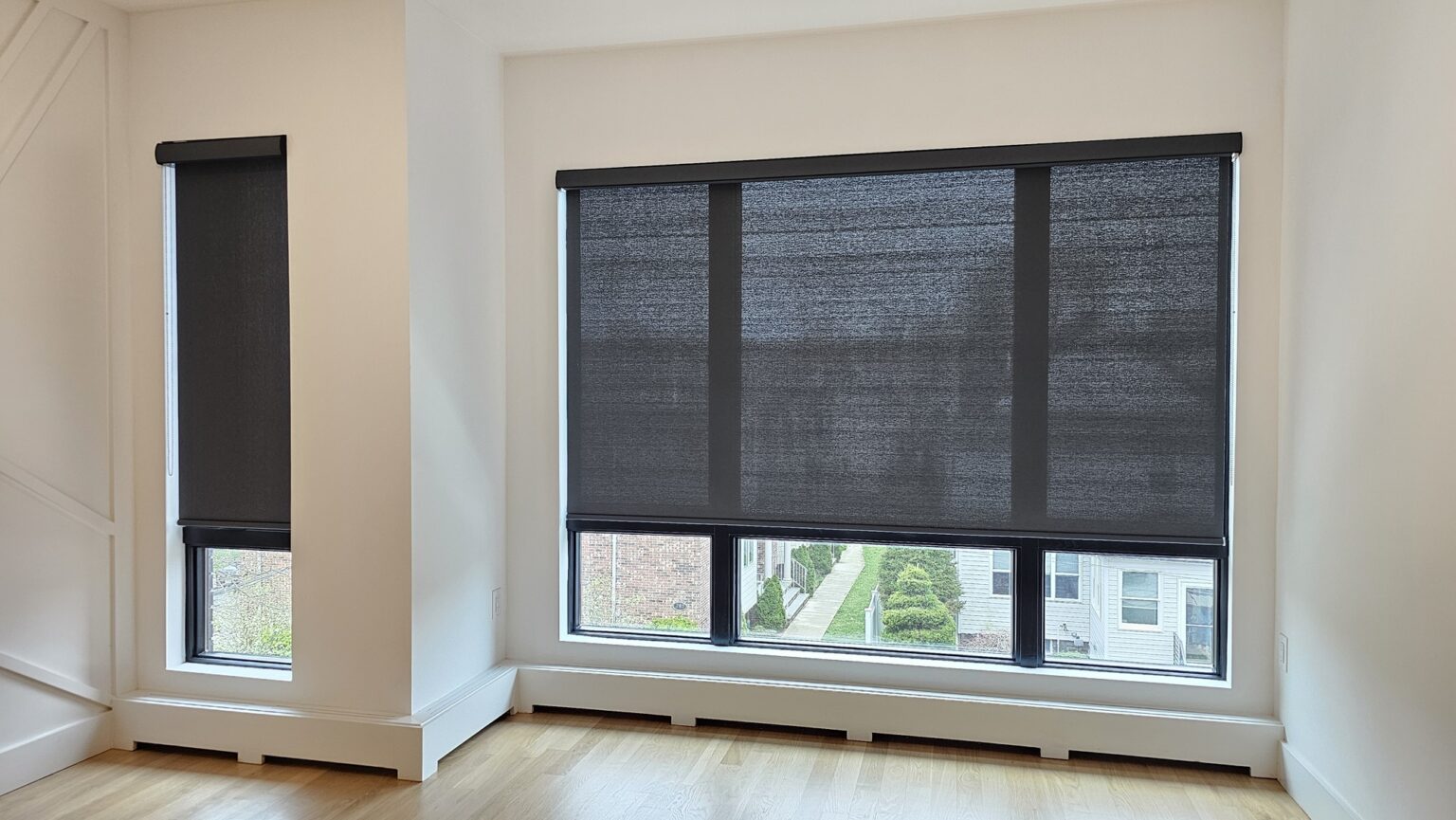
Have Your Arched Window Measured in Palisades Park
The Curtain is a family-owned window-treatment showroom at 547 Broad Ave in Palisades Park, in business since 2007 and serving Bergen County. Owner and designer Sejun Park will look at your arch, say whether a curved rod, a straight rod or a shaped shade is the better call, and measure it properly.
We are a Hunter Douglas partner, so we sell and install Hunter Douglas shades, blinds and shutters, and we make custom drapery when the window needs fabric instead. The in-home measurement is free and you get a written quote. Call (201) 302-9111, book a free consultation, or check the towns we serve. Finished rooms are in our gallery.
Bring the width, the height and the curve measurement if you have them. If not, that is what the visit is for.