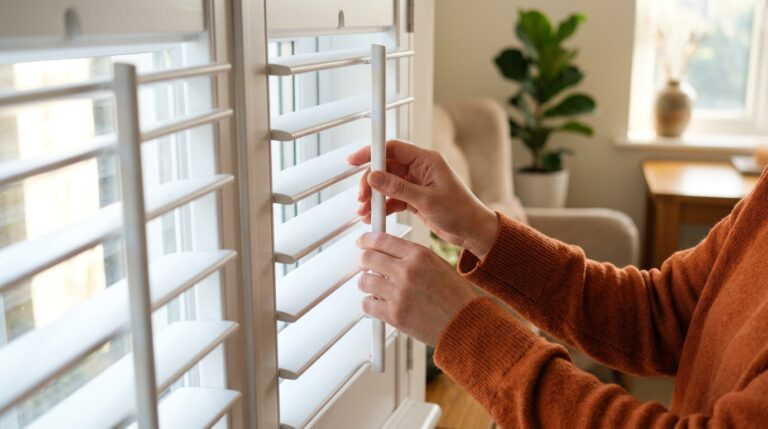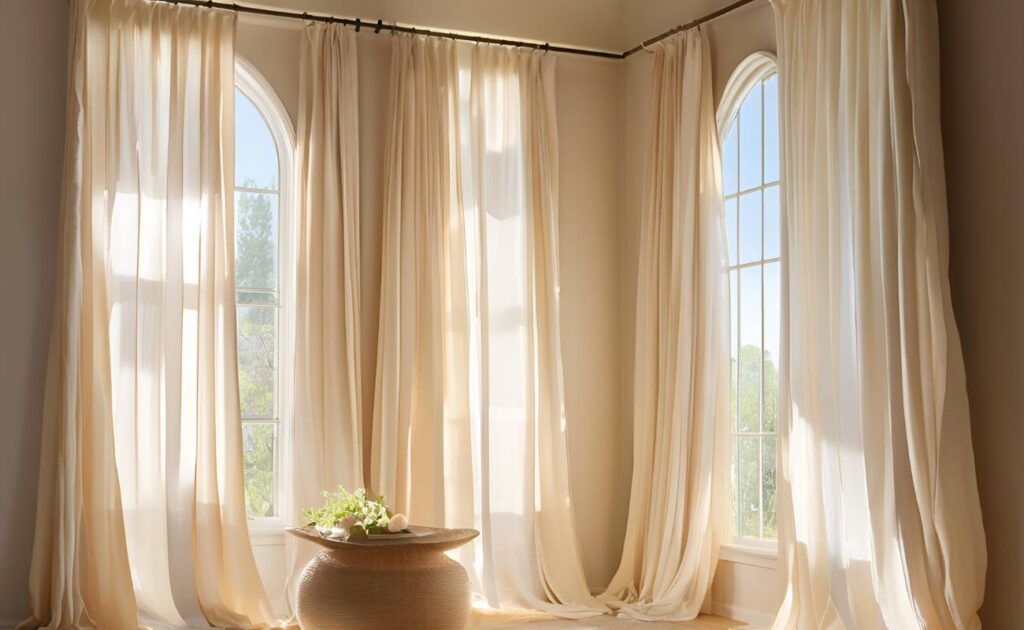
Layering is two jobs on one window: a sheer layer that softens daylight all day, and a heavier layer that closes for privacy at night. If you are working out how to layer curtains with one rod, or you are collecting layered curtain ideas for a Bergen County living room, the whole decision comes down to three things. What goes underneath, what goes on top, and what hardware carries both. Here is how we plan those combinations for homes around Palisades Park.
Short answer
You can layer on a single rod two ways. Use a double bracket set so the sheer rides a back channel and the drapery panels ride the front, or clip both layers to one rod with the sheer stationary and the panels drawing over it. One rod is fine for a light sheer under unlined panels. For heavy lined drapery, give each layer its own rod, or put a shade under the panels instead of a second fabric.
Unlock the Art of Curtain Layering
A single panel makes you choose. Open it and the room is bright and exposed, close it and the room goes dark. A layered window gives you a middle setting, which is the setting most rooms live in. In a south-facing living room the sheer stays closed through the afternoon and the panels stack off the glass. In a street-facing bedroom the panels close at night over a room-darkening layer. If you are still deciding which pieces to combine, our window treatments pages cover each type on its own.
Benefits of Layering Curtains
Enhanced Aesthetic Appeal
Layering adds depth to a window. Two fabrics at different weights read as a finished treatment rather than a set of panels, and it lets you use color in one layer while the other stays neutral.
Improved Light Control and Privacy
Sheers diffuse sun and keep daytime privacy without blocking the view. A heavier drape or a blackout shade takes over after dark, when a sheer alone shows silhouettes.
Increased Energy Efficiency
Two layers of fabric slow heat transfer at the glass, which matters on the north side of a New Jersey house in January. A lined panel over a cellular shade is the version of this that actually seals.
How to Layer Curtains With One Rod
- Double brackets on a single rod. Bracket sets that hold two rod diameters let a sheer hang behind and panels hang in front, with roughly 2 to 3 inches of clearance so nothing rubs.
- Ring clips, one rod. Clip the sheer to rings across the whole span and clip the panels over it at the outer thirds. Keep the sheer stationary and only draw the panels, otherwise the rings crowd each other.
- Rod plus shade. The cleanest one-rod layering is not two fabrics at all. Mount a roller, Roman, or cellular shade in the window and hang one rod of panels outside it. See double rods versus single rods for how the hardware compares.
Choosing the Right Fabrics and Colors
- Sheers: lightweight and translucent, they filter daylight and give a soft level of daytime privacy.
- Drapes: heavier and more opaque, they carry the privacy and the light blocking. Linen, cotton blends, and velvet all behave differently at the same length.
- Blinds or shades: a shade under the panels adds precise light control that fabric alone cannot give you. Browse the shade types before you commit to two fabric layers.
For color, pick one of three routes. Complementary, where a neutral sheer sits under a saturated panel. Monochromatic, where both layers are shades of one color. Or patterned over plain, where a printed drape hangs over a solid sheer so the window does not get busy.
Combining Patterns and Textures
Start with a solid base layer. That gives the patterned or textured layer something quiet to sit against. If both layers carry pattern, vary the scale: a large floral drape over a fine geometric sheer reads as intentional, while two mid-scale prints fight. Texture works the same way. Smooth silk or faux silk against a nubby linen gives depth without adding a single color.
Layered Curtain Ideas by Room
These are the combinations we specify most often for Bergen County homes, and they are the fastest way to picture what layering will look like on your own windows.
What we would put on the window
- Street-facing bedroomBlackout cellular shade under lined pinch pleat panels.
- South-facing living roomSolar shade for glare, sheer panels stacked off the glass.
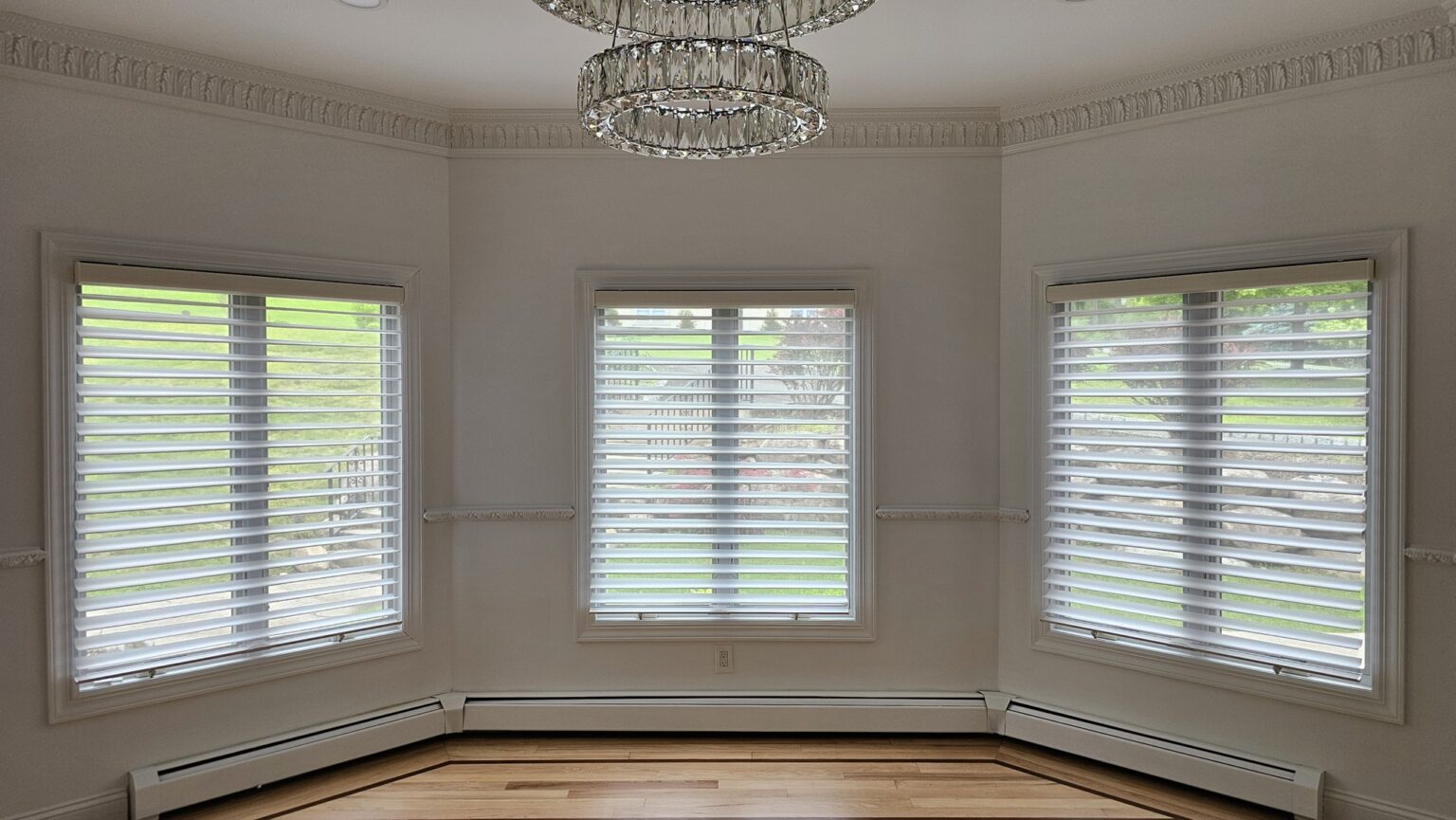
- Bay window you want to keep openSheer shadings inside the bay, drapery panels only at the outer corners.
- Dining roomRoman shade in the window, drapery panels mounted outside the frame.
- Sliding patio doorWide roller or vertical treatment behind stationary side panels.
For the bay and the slider, the frame shape drives the answer more than the fabric does. Our bay window and sliding door pages show how the hardware is handled.
Measuring and Installing Multiple Curtain Rods
Measure the window width first, then add several inches on each side so both layers can stack off the glass when open. For height, decide where the rods land before you drill. Mounting the front rod closer to the ceiling than to the frame makes the window read taller, and it gives the panels room to reach the floor.
- Spacing: set the sheer rod slightly above and behind the drapery rod so the layers hang free and neither catches the other.
- Anchoring: two layers of fabric plus two rods is real weight. Use anchors rated for it, and hit studs where you can.
- Leveling: level both rods independently. A rod that is off by a quarter inch shows immediately once the hems are at the floor.
If you are still choosing hem length, see should curtains touch the floor, and how to hang curtain rods for the bracket work.
Styling Tips for a Cohesive Look
Keep the proportions honest. Panel width should total about two to two and a half times the window width across both layers, or the drape looks skimpy when closed. Pull the color of the top layer from something already in the room, a rug or an upholstered chair, rather than matching the wall. Then add hardware last. Rings, finials, and holdbacks are the parts you touch every day, so pick them for feel as much as finish.
Maintenance and Care for Layered Curtains
Sheers are usually machine washable on a gentle cycle or hand washable, and they go back up slightly damp so the creases fall out. Lined and interlined drapes are normally dry clean or spot clean only, so check the care label before anything gets wet. Vacuum both layers with a brush attachment every few months, and once a season tighten the bracket screws. Two layers work the hardware harder than one. Our guide to getting wrinkles out of curtains covers the rest.
Creative Layering Ideas
A valance over the sheer hides both rods and finishes the top of the window, which is useful when the brackets are visible from a stairwell or a hallway. Mixing header styles also works: pinch pleat drapes over grommet or clip-top sheers keeps the two layers visually separate. And one bold layer is usually enough. Let a saturated drape be the focal point and keep the sheer neutral behind it.
Troubleshooting Common Layering Challenges
If the layers look bulky where they overlap, the fabrics are too heavy for the spacing. Move the rods further apart or drop one layer to a lighter weight. If the hems do not line up, the layers were not measured to the same finished length, and hemming the sheer is the easier fix. If the panels are hard to draw, that is weight and friction, not user error. Wands, traverse hardware, or a motorized shade under lighter panels all solve it. See automated blinds versus automated shades if you are considering motors.
Elevate Your Home with Layered Curtains
Layering is not complicated once the hardware plan is settled. Choose the two levels of light you actually want, pick a fabric for each, then let the rod or the shade carry the difference. Get the measurements right and the rest is style. You can see finished combinations in our gallery.
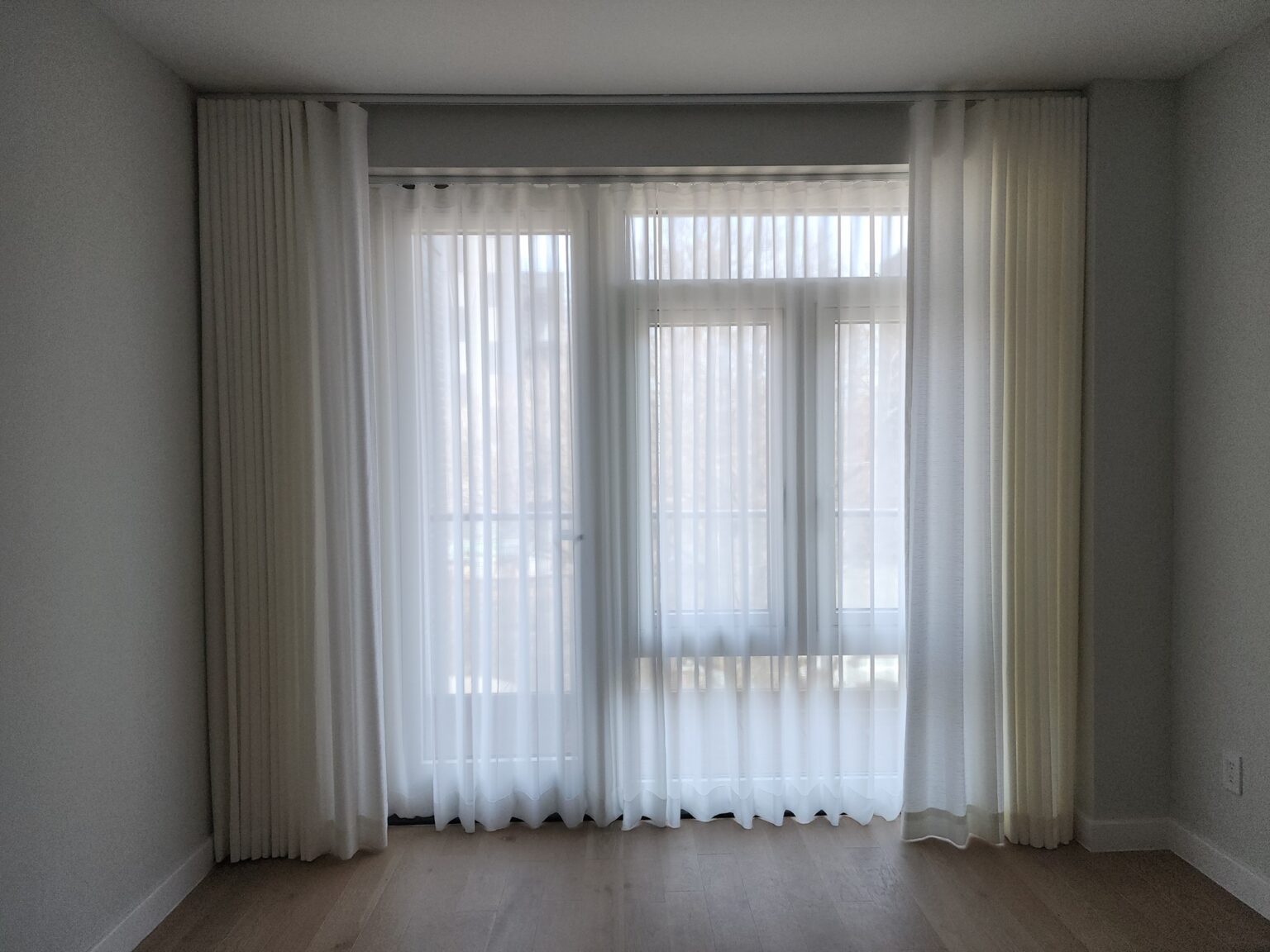
From our own installs in Bergen County
See Layered Combinations at Our Palisades Park Showroom
The Curtain has been a family-owned window treatment showroom since 2007, at 547 Broad Ave in Palisades Park. Owner and designer Sejun Park plans layered windows one at a time: which layer moves, which layer stays, and what the hardware has to carry. We are a Hunter Douglas partner for shades, blinds, and shutters, and we make custom drapery in the fabrics and headers described above, so both layers can be specified together instead of bought separately and made to fit later.
Measuring is the part most layered projects get wrong, so we do it for you. Book a free in-home measurement and you get a written quote. Call (201) 302-9111, or check the towns in our service area across Bergen County.