Curtains arrive folded, go through the wash, sit out a humid Bergen County August, and end up creased. This guide covers how to get wrinkles out of curtains four ways, from letting gravity work to how to iron curtains without shine marks, with a separate note on ironing polyester curtains, the fabric most ready-made panels are cut from. It also covers which fabrics and linings hang flat from the first day.
Why Curtains Wrinkle in the First Place
Wrinkles set in when fabric is folded under pressure or dries in a folded position:
- Shipping. Ready-made panels sit folded in a plastic sleeve for months, and those full-width creases are the hardest to remove.
- Storage. Panels crammed onto a shelf or sealed in a plastic bin come out with sharp folds.
- Washing and drying. A hot dryer, and a panel left sitting after the cycle ends, bakes in new wrinkles.
- Humidity and gravity. New Jersey summers run humid. Damp fibers sag, then set as the room dries out.
Shipping folds need heat. Humidity sag usually needs a rehang and a day of patience.
How to Get Wrinkles Out of Curtains Without Damaging the Fabric
The fabric, and the lining behind it, decide how much heat you can use. Check the care label first. If there is none, go by the material:
- Cotton and linen. Take a hot iron and steam well, but wrinkle the fastest. A softly rumpled linen panel is the look, not a flaw.
- Silk and satin. Low heat only. Steam from a few inches away or press the reverse side through a cloth. Water drops can spot silk, so keep the steamer moving.
- Polyester and blends. The most wrinkle-resistant group and the most common in ready-made panels. Light steam works; a hot iron glazes it, so it gets its own section below.
- Velvet. Never press velvet face down; the pile flattens into a shiny patch. Steam from the back and brush the pile upright as it dries (more in our velvet curtains guide).
Then check the lining. Custom drapery is usually lined with cotton sateen; blackout drapery has a foam-backed lining that should never touch a hot iron, since it can stick, bubble or lose its coating. Treat a lined panel at the temperature of its most delicate layer.
Method 1: Hang Them and Let Gravity Work
The simplest fix, and the right first step for heavy fabrics, velvet, and mild creases.
- Hang the panels right away, straight from the box or the washer. The weight of the fabric pulls creases down over time.
- Get air moving. Open a window or run a ceiling fan.
- Mist lightly with plain water from a foot away. Skip fabric softener on silk or anything dry-clean-only.
- Give it a day or two. Shipping folds can take a week to drop out.
Method 2: Steam Them on the Rod
Steaming is what drapery workrooms and installers rely on: it works with the panel hanging in place and is gentle on nearly every fabric, including silk, polyester and lined or pleated drapery. It is also how a good installation is finished, with the folds dressed and the panels steamed header to hem so the drapery hangs straight from day one.
- Use a handheld garment steamer, filled with distilled water if your tap water is hard; mineral spots show on dark fabric.
- Work top to bottom in slow, straight strokes, nozzle an inch or two off the fabric, with a towel held behind the panel.
- Do not park the steamer. Lingering soaks the fabric and leaves a water mark.
- Let it dry hanging. Leave the panel alone for an hour.
Method 3: How to Iron Curtains on a Flat Surface
Stubborn shipping folds in cotton, linen or blends sometimes need direct contact. Ironing works best and is the easiest to get wrong.
- Set up wide. An ironing board is too narrow for a 50-inch panel. Lay a clean cotton sheet over the dining table and iron there.
- Match the heat to the fabric. Cotton and linen take the cotton setting with steam. Everything else starts low. Test on the bottom hem where a mark will not show.
- Iron the back through a pressing cloth to keep the face fabric and any print away from shine and direct heat.
- Work in strips and rehang at once. A pressed panel left folded on a chair for an hour is a wrinkled panel again.
Best for: deep folds in cotton, linen or blends. Not for velvet, foam-backed blackout lining, or anything marked dry-clean-only.
Ironing polyester curtains
Polyester is easy to scorch. It needs little heat, and past a certain temperature it glazes: the surface turns shiny and stiff for good. Use the synthetic setting (the lowest one or two dots), keep the steam on, use a pressing cloth, and keep the iron moving. If a crease will not release at low heat, steam it instead of turning the dial up. Polyester also comes out of a warm dryer nearly flat, so Method 4 is often the better choice.
Method 4: The Dryer and a Damp Towel
The fastest fix for machine-washable panels, and the one to try first on polyester.
- Check the label. Unlined cotton and polyester are usually fine. Lined, pleated or dry-clean-only drapery is not.
- Dampen a bath towel, wrung out so it is damp, not dripping.
- Tumble 10 to 15 minutes on low. The towel makes steam inside the drum.
- Pull them out the moment it stops and hang them while still warm.
Washing Curtains Without Setting New Wrinkles
Most wrinkles that are not shipping folds come from the laundry. If your panels are machine washable, wash them cold on a gentle cycle, two at a time so they can move, then hang them damp on the rod the moment the cycle ends. The weight of wet fabric pulls the panel straight as it dries. If you must use the dryer, use low heat and stop while the fabric is slightly damp.
Lined drapery, pleated headers, silk and velvet do not go in a home washer. Dry cleaning keeps the lining and face fabric from shrinking at different rates, which is what makes a lined panel pucker at the seams. Between cleanings, a vacuum with the upholstery brush on low suction handles dust and pet hair.
Fabrics and Linings That Hang Flat
If you are choosing new drapery rather than rescuing old panels, a few decisions at the ordering stage decide whether it wrinkles at all:
- Fabric. Polyester and poly-blend drapery fabrics, including most velvets and faux linens, hold their shape and shed creases with a quick steam. Pure linen and thin cotton wrinkle by design; choose linen for the relaxed look, not a crisp one.
- Lining. Cotton sateen lining adds body, so the face fabric hangs in smooth columns instead of collapsing into creases. Blackout lining adds more weight and stops light completely.
- Interlining. A layer of soft flannel between face and lining gives hotel drapery that heavy, rounded fold. Interlined panels rarely wrinkle because the fabric never lies flat enough to crease.
- Fullness and header. Custom panels are made at two to two and a half times the window width, and pinch pleats train the fabric into permanent folds that hide small creases. Ready-made panels, often at one and a half times fullness or less, hang almost flat and show every wrinkle.
- Weighted hems and dressing. Weights sewn into the bottom corners keep the hem straight. Dressing the panels (folding them into even pleats and tying them loosely for a day or two after installation) sets the fabric memory so the drapery falls the same way every time.
Our guide to choosing and installing custom draperies walks through those options. Read should curtains touch the floor before you order, since a puddled panel collects creases at the bottom, and how to hang curtains if the rod is part of the problem.
When You Would Rather Never Steam Again
Some windows are better served by a fabric treatment that cannot wrinkle. Roman shades fold into flat, stacked pleats, so the fabric never sits creased. Hunter Douglas Silhouette shadings hold soft fabric vanes between two sheer layers, giving the diffused light of a sheer curtain without the sheer’s habit of crumpling. Cellular shades have no loose fabric at all. In a Bergen County home with a lot of windows, custom drapery in the living and dining rooms and shades everywhere else is a common way to get the look without a weekend of ironing.
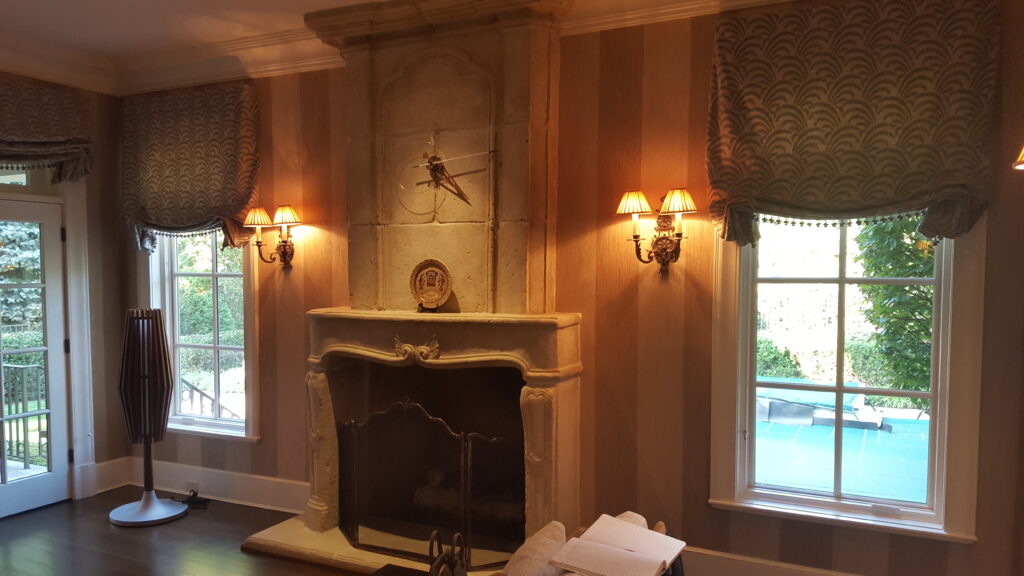
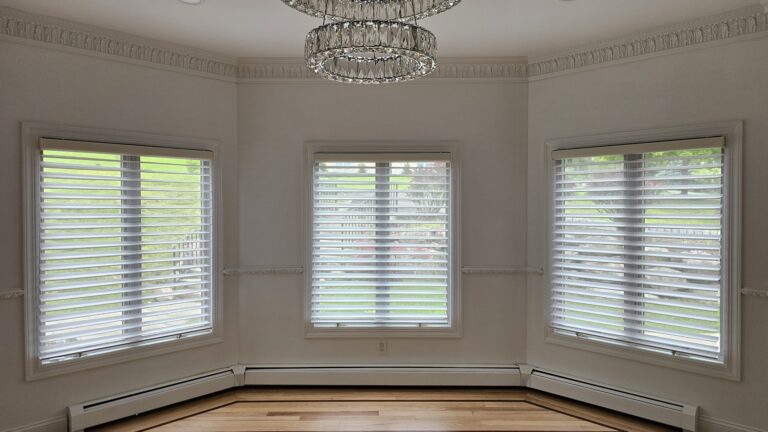
See roman shades, cellular shades and the full range of shades.
Keeping Curtains Wrinkle-Free
Store off-season panels rolled around a cardboard tube in a cotton bag, never folded in plastic. A five-minute steam every few months keeps small creases from setting. The mistakes that ruin panels are parking a hot iron in one spot, over-wetting, harsh fabric sprays, and ignoring the care label. If a panel has been steamed, ironed and washed and still looks tired, the fabric may be finished; see how often you should replace your curtains.
From our own installs in Bergen County
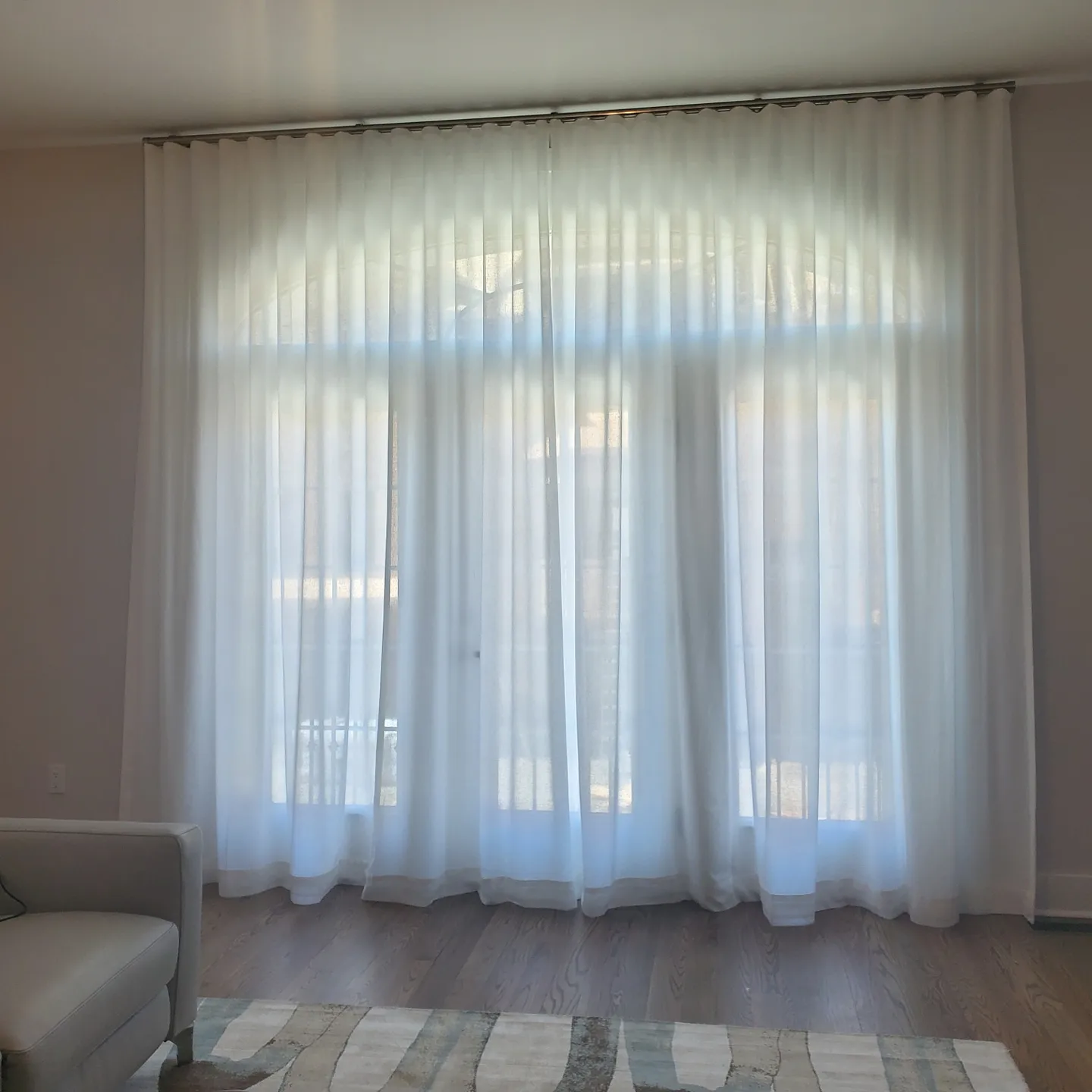
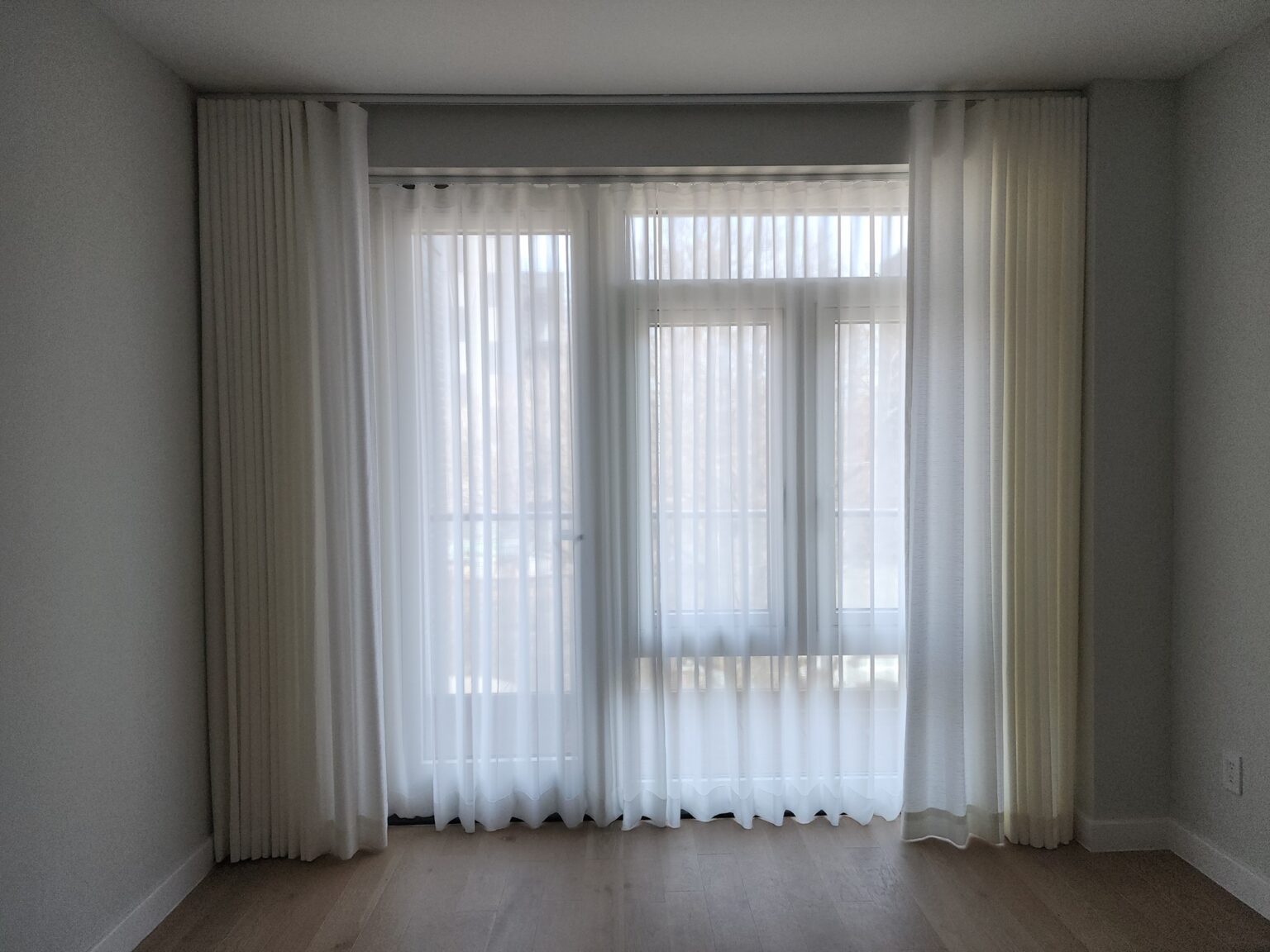
How We Do It at the Showroom
The Curtain is a family-owned window-treatment showroom at 545 Broad Ave in Palisades Park, New Jersey. We have been in business since 2007 and serve homeowners across Bergen County. Owner and designer Sejun Park makes custom drapery, and we are a Hunter Douglas partner, so we also sell and install Hunter Douglas shades, blinds and shutters.
If you are replacing wrinkled ready-made panels with custom drapery, it starts with a free in-home measurement and a written quote, or a visit to the showroom to compare fabrics and linings by hand.
Call (201) 302-9111 or book a free consultation online. If you are outside Palisades Park, check the towns we serve.