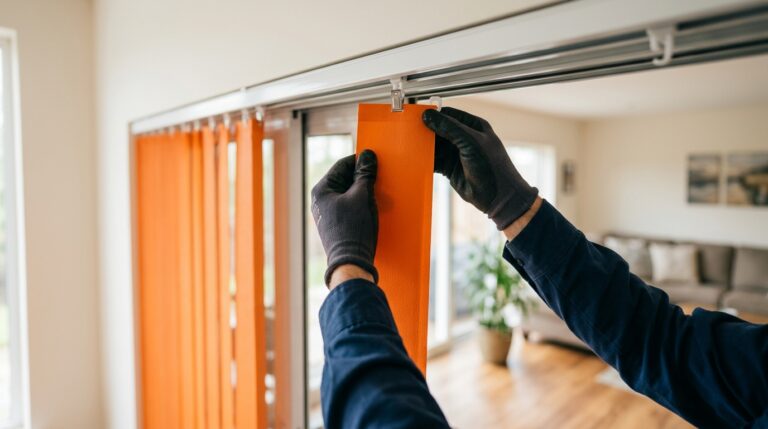
Choosing between countless finishes, slat widths, and price points can turn a simple window upgrade into a frustrating guessing game. One wrong decision, and you’re stuck living with the result for years. Wooden blinds for windows offer a timeless solution, but only if you understand which materials, mechanisms, and installation details actually matter for your space and budget. This guide covers everything worth knowing before you buy: real wood versus faux wood performance, sizing, maintenance, and the 2026 trends shaping today’s best options.
What Are Wooden Blinds for Windows
How Real Wood Blinds Are Constructed
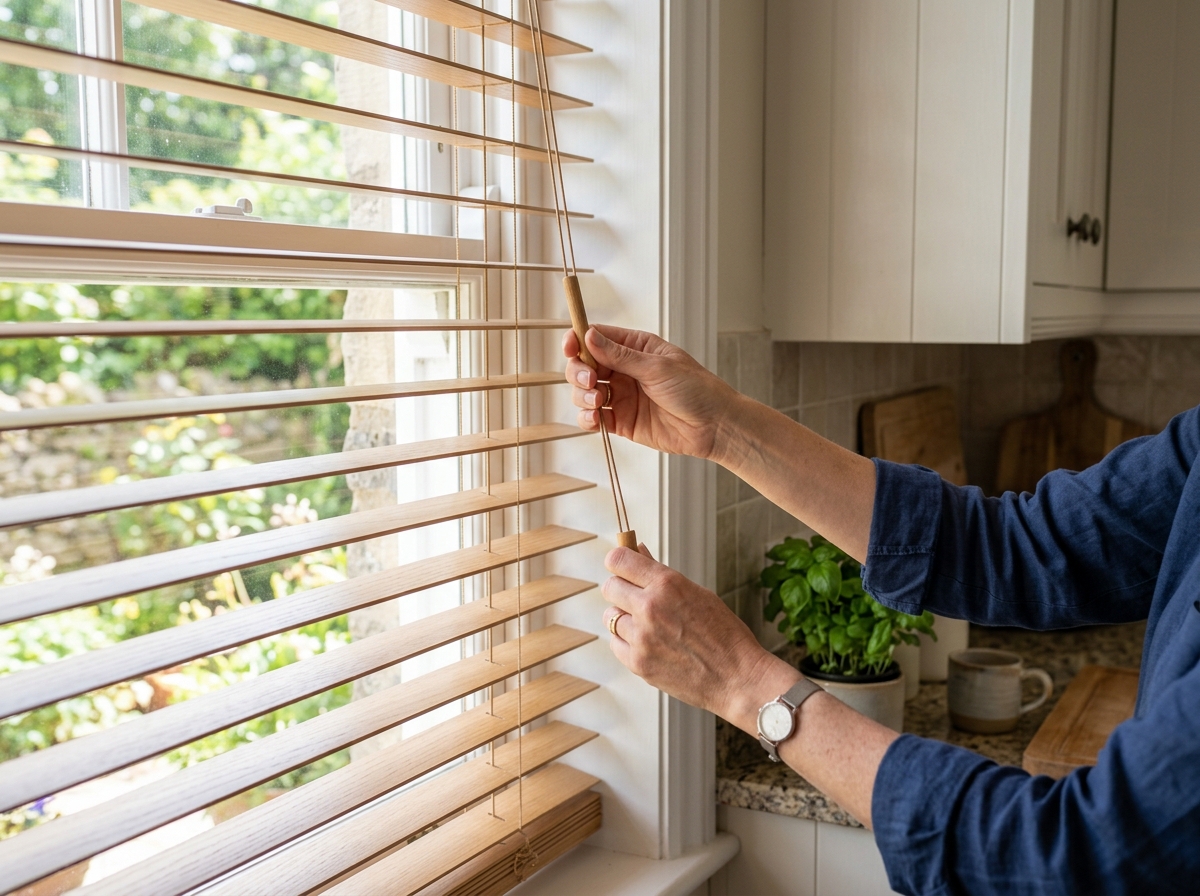
Real wood blinds are built from solid milled lumber, cut into horizontal slats. Each slat is drilled and strung on ladder tape or cord, so they tilt open and closed. This simple system controls light, privacy, and airflow with a single pull or wand.
The headrail houses the lifting mechanism and hides the hardware at the top of the window. Most headrails wear a matching wood valance for a clean, finished look. Slats typically run 1 inch to 2.5 inches wide, and bottom rails add weight so the blind hangs straight.
Finishes vary widely, from natural stains that show off wood grain to painted whites and rich espresso tones. Many manufacturers offer distressed or two-tone options too. These details let one product style adapt to farmhouse, traditional, or modern interiors alike.
Wood Blinds vs. Other Window Coverings
Unlike fabric shades or curtains, wood blinds give you rigid, adjustable slats instead of soft folds of material. That means precise light control at any angle, not just fully open or closed. Weighing softness against structure? Read blinds vs curtains choosing the right window treatment before deciding.
Compared to aluminum or vinyl blinds, real wood brings warmth and natural texture plastic simply can’t fake. It also insulates better than metal slats, helping regulate room temperature year-round.
Common Rooms and Window Styles They Suit Best
Wood blinds work well in living rooms, home offices, and dining areas, anywhere warmth and craftsmanship matter. They suit standard double-hung windows, large picture windows, and French doors with equal ease.
Bedrooms benefit from strong light-blocking tilt control. Studies gain a polished, professional feel. For more design inspiration and product comparisons, many people browse a blog before settling on a final style.
Why Homeowners Choose Wood Blinds
Timeless, Natural Aesthetic
Wood grain brings warmth few materials can match. Each slat carries unique streaks and tones, giving every window a slightly different, organic look. That natural variation makes rooms feel grounded rather than sterile.
Many homeowners pair wood blinds with soft window treatments for added texture. Layering fabric on top? This guide on how to choose curtains for living room spaces offers useful pairing tips. Hard and soft materials together create depth flat coverings just can’t achieve.
Long-Term Durability and Value
Quality wood blinds often last 10 to 20 years with proper care. Solid basswood and hardwood slats resist warping better than cheaper materials, especially in stable indoor climates. That longevity means fewer replacements down the road.
Wood blinds don’t need frequent washing like fabric drapes, so they save homeowners time and money. For comparison, fabric treatments demand regular upkeep; see this resource on how to wash curtains to see the difference in maintenance work. That durability also translates into strong resale value for the home.
Versatility Across Interior Styles
Wood blinds fit nearly any design theme. Farmhouse kitchens, modern lofts, and traditional living rooms all benefit from their clean lines. Painted white slats suit coastal decor, while stained oak or walnut complements rustic or craftsman interiors.
This flexibility explains why wood blinds remain popular across generations. They adapt easily to changing trends without looking dated, a smart long-term investment for any style-conscious homeowner.
Key Benefits and Drawbacks of Wood Blinds
Energy Efficiency and Insulation
Wood is a natural insulator. Its cellular structure traps air, slowing heat transfer through your windows. That means lower energy bills in both summer and winter. Slats close tightly, blocking drafts near glass surfaces. Many homeowners notice a real difference in room comfort by the first cold season.
Light Control and Privacy
Wood blinds offer precise tilt control, so you can angle slats for softened glare or full privacy. That flexibility beats many fabric shades, which only open or close. For help balancing light and seclusion, see this breakdown of the top 5 shades for privacy and light in new jersey. The table below compares wood blinds against common alternatives.
| Feature | Wood Blinds | Cellular Shades | Fabric Curtains |
|---|---|---|---|
| Insulation Value | High | Very High | Moderate |
| Light Control Precision | Excellent | Good | Poor |
| Average Weight (per window) | 3-6 lbs | 1-2 lbs | 2-4 lbs |
| Humidity Tolerance | Low | High | Moderate |
| Typical Cost Range | $$$ | $$ | $ |
Potential Downsides to Consider
Wood’s weight can strain smaller mounting hardware over time, especially on wide windows. Humidity causes warping or cracking, so wood is a poor fit for bathrooms and kitchens. Cost runs higher than faux wood or vinyl options too. Anyone exploring Custom Wood Window Blinds should weigh these tradeoffs against long-term durability and appearance.
Types of Wood Used in Custom Blinds
Basswood vs. Oak vs. Other Hardwoods
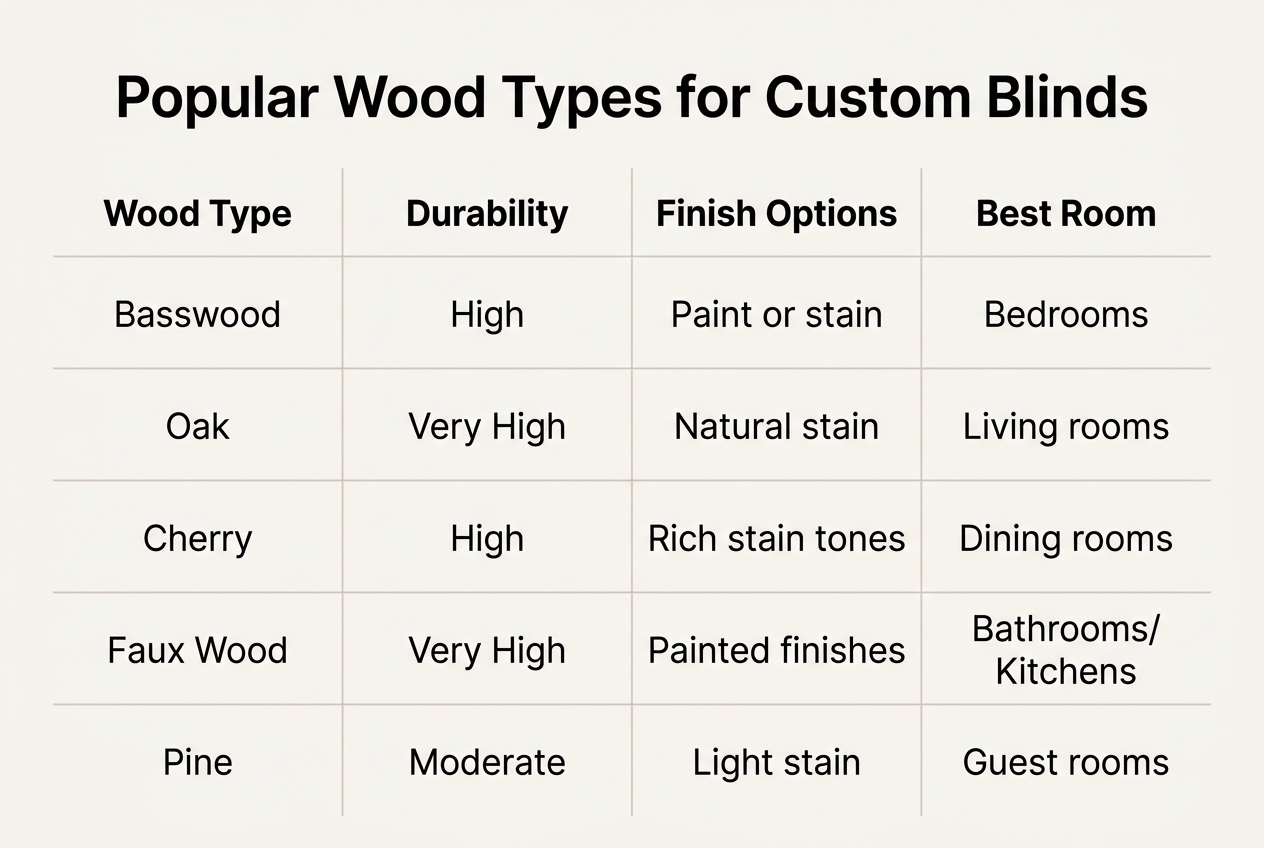
Basswood is the most popular choice for custom blinds. It’s lightweight, resists warping, and takes stain evenly. Its tight, subtle grain works great for painted finishes, since it hides imperfections well.
Oak brings a bolder, more visible grain pattern. It’s heavier and denser than basswood, giving slats a sturdier feel. Homeowners chasing a rustic or traditional look often prefer oak for its texture and warmth.
Other hardwoods, like cherry, walnut, and cedar, show up in premium collections. Cherry offers a reddish tone that deepens with age. Walnut brings rich, dark contrast. Cedar adds a light, aromatic option often used in closets or humid spaces. Each option gets more detail in guides like Wood Window Blinds | Custom Wooden Blinds for Windows, which breaks down species-specific benefits.
Stains, Paints, and Finish Choices
Wood type affects how stain and paint appear. Basswood’s fine grain takes paint smoothly, producing a clean, uniform surface. Oak’s open grain shows more texture under stain, creating natural variation from slat to slat.
Darker stains highlight grain patterns, while whites and pastels tend to mute them. Some finishes include UV-protective coatings, which slow fading near sunny windows. Matte finishes hide fingerprints better than glossy ones, a small but practical detail for busy households.
Matching Wood Type to Budget
Basswood typically costs less than oak or exotic hardwoods, making it a budget-friendly starting point. Denser woods raise material and shipping costs, which pushes up the final price. Buyers comparing overall window treatment spending, including custom curtains costs, often find basswood blinds offer strong value alongside fabric options.
Choosing the Right Slat Size and Style
2-Inch vs 2.5-Inch Slats
Slat size changes both the look and the view. Narrower 2-inch slats suit smaller windows and give a tailored, classic look. Wider 2.5-inch slats show fewer lines when open, offering a clearer view and a more modern feel. Larger windows usually look best with the wider option. Reviewing the Custom Real Wood Blinds – Products lineup can help you compare slat widths side by side before ordering.
Cloth Tapes and Decorative Ladders
Ladders hold the slats in place and add style. Cloth tapes soften light and hide the rungs behind the slats. Consider these options when comparing looks:
- Matching cloth tapes create a seamless, monochrome appearance across the whole window.
- Contrasting tape colors add a bold accent that draws the eye.
- Standard cord ladders show more of the mechanism but cost less overall.
- Decorative tapes work well alongside choosing and installing custom draperies for layered window treatments.
Cordless and Motorized Options
Safety and convenience matter, especially with kids or pets around. Cordless lift systems remove dangling cords entirely. Motorized blinds raise and lower with a remote or app, and many pair with smart home systems for scheduled adjustments.
Wooden Blinds vs. Faux Wood Blinds
Material and Moisture Resistance
Real wood offers a warm grain faux wood can’t fully copy. But moisture resistance flips the advantage. Faux wood, made from PVC or composite materials, resists warping in bathrooms and kitchens. Real wood can crack or bow near steam and humidity if left unprotected.
Appearance and Weight Differences
Weight matters more than most buyers expect. Faux wood slats weigh more per foot, which strains cords on wide windows. Real wood stays lighter, so large installations operate more smoothly. The table below breaks down the core differences.
| Feature | Real Wood Blinds | Faux Wood Blinds |
|---|---|---|
| Average weight (per sq ft) | 0.8–1.2 lbs | 1.5–2 lbs |
| Moisture resistance | Low to moderate | High |
| Cost per window (avg) | $150–$400 | $80–$250 |
| Best rooms | Living room, bedroom, office | Bathroom, kitchen, basement |
| Lifespan (typical) | 10–15 years | 15–20 years |
Which Option Fits Your Room
Choose real Wood Blinds for dry, temperature-stable rooms where appearance matters most. Pick faux wood for humid spaces or tight budgets. Considering a motorized upgrade? Read this comparison of automated blinds vs automated shades which smart window t… before finalizing a choice. A dedicated provider can test samples in your actual lighting before you commit.
How to Measure Windows for Wood Blinds
Accurate measuring is the difference between a clean, professional look and gaps or bunching. You’ll need a steel tape measure, not a fabric one, plus paper and a pencil for recording numbers. A step stool helps for taller windows. Take three measurements per window, since frames are rarely perfectly square. These steps apply whether you shop locally or order Custom Wood Blinds online.
Measuring for an Inside Mount
Inside mount blinds sit within the window frame for a built-in appearance. Measure the width at the top, middle, and bottom of the opening, then use the smallest number. Do the same for height, using the tallest measurement so the blind covers the full opening. Check that the frame has at least 1.5 inches of depth.
Measuring for an Outside Mount
Outside mount blinds attach to the wall or trim above the window. Add 3 inches of overlap on each side for privacy and light control. Add 2 to 3 inches above the frame for the headrail. This method resembles how to measure for curtains, since both rely on total coverage rather than exact frame size.
| Mount Type | Width Rule | Height Rule | Best For |
|---|---|---|---|
| Inside Mount | Smallest of 3 readings | Tallest of 3 readings | Clean, recessed look |
| Outside Mount | Add 3″ per side | Add 2-3″ above frame | Shallow or uneven frames |
| Bay Windows | Measure each section separately | Measure each section separately | Angled window walls |
Common Measuring Mistakes to Avoid
Rounding numbers up or down causes ill-fitting wood blinds. Skipping the depth check can leave hardware unable to close properly. Always record measurements in inches, to the nearest eighth, for the most reliable fit.
Installing Wood Blinds Step by Step
Tools and Preparation
Before mounting anything, gather your tools and confirm your measurements twice. A successful installation depends on preparation, not speed. Many homeowners enjoy small projects like this. Want more quick ideas first? Check out diy curtain hacks transform your space with simple upgrades before tackling the blinds themselves.
- A cordless drill with the correct bit size for your bracket screws saves time and reduces stripped holes.
- A level ensures the headrail sits straight, which matters for both function and appearance.
- A pencil and tape measure help you mark bracket placement accurately along the frame.
- Wall anchors are essential if you’re mounting into drywall without a stud behind it.
- A stepladder keeps you at a safe, comfortable height for taller windows.
Mounting and Attaching the Headrail
Most kits include brackets that screw into the frame or wall, then snap the headrail into place. Inside mounts sit within the window frame for a clean look, while outside mounts attach above and around it. Check for square alignment before tightening final screws. A crooked headrail causes uneven slats later.
Signs You Should Hire a Professional
Some situations call for expert help rather than a weekend project. Consider a professional if any of these apply:
- Your windows are unusually large, arched, or oddly shaped, making standard hardware unreliable.
- You’re installing multiple windows and want consistent, efficient results across every room.
- The wall material is plaster, tile, or metal, requiring specialized anchors or drilling techniques.
- You lack confidence using power tools at height or near electrical fixtures.
For inspiration on finished results, browsing options like Wood Blinds for Natural Interior Window Style can help set expectations before your project begins.
Choosing Colors and Finishes for Your Space
Coordinating with Trim and Décor
Wood blinds should echo the tones already in a room. Look at door frames, baseboards, and window casings before picking a stain. A consistent finish ties the whole space together instead of fighting with it.
Furniture matters too. Cherry stains pair naturally with warm wood floors, while gray-washed slats suit modern furnishings with cooler undertones. If curtains hang alongside the blinds, coordination gets trickier. This guide on how to match curtains with your homes color scheme offers a useful framework for layering fabrics and finishes together.
Try a simple test: hold a stain sample against the trim in daylight, then again under evening light. Undertones shift dramatically. What looked matched at noon may clash by dinner.
Popular Stain and Paint Trends
For 2026, warm neutrals lead the way. Honey oak and golden walnut are replacing the gray-toned stains that dominated the last decade. Homeowners want warmth without going back to heavy 1990s browns.
Painted finishes remain popular too, especially crisp white and soft greige. White blinds brighten small rooms and suit coastal or farmhouse styles. Black-painted slats are gaining traction in bold, modern interiors, often paired with brass hardware.
Light vs Dark Finish Considerations
Light finishes make rooms feel larger and reflect more daylight, which helps in north-facing spaces. Dark finishes add drama and hide dust or fingerprints better in high-traffic rooms like kitchens.
Think about maintenance and light control needs before deciding. Many local businesses also stock hybrid options; comparing painted, stained, and Faux & Real Wood Blinds side by side helps clarify which finish suits your climate and budget.
Wood Blind Alternatives Worth Considering
Cellular and Roller Shades
Cellular shades use honeycomb-shaped pockets that trap air, giving them the best insulation value of any shade type. Some models advertise an R-value near 4.0, which can noticeably lower heating and cooling costs in extreme climates. Roller shades take the opposite approach: flat, simple, and streamlined, they suit modern rooms where wood grain feels too traditional.
Roller shades also work well in tight spaces, since many stack to under two inches when raised. Cellular shades come in single, double, or triple-cell versions, with thicker cells offering stronger noise reduction. For bedrooms facing busy streets, that sound dampening often matters more than style.
Both options now come in motorized versions controlled by remote or smartphone app. Weighing convenience against cost? Read up on whether are motorized shades worth it before upgrading, especially for hard-to-reach windows.
Layering with Drapery
Drapery adds softness that wood slats can’t replicate. Pairing floor-length curtains with a simple shade underneath creates depth, texture, and better light control. This layered look works especially well in living rooms and primary bedrooms.
Many homeowners choose sheer drapery over cellular shades, letting daylight filter through while blocking direct glare. This combination softens hard architectural lines and adds a finished, designer feel without sacrificing function.
When an Alternative Makes More Sense
Wood blinds struggle in bathrooms, kitchens, and laundry rooms, where humidity causes warping. Cellular or faux materials handle moisture far better in these spaces. Large picture windows also benefit from roller shades, which avoid the weight and sag issues wood slats face at wide widths.
A dedicated provider can assess room-by-room needs during a consultation, recommending hybrid combinations rather than one blanket solution. Many local businesses now mix wood blinds in living areas with cellular shades in wet rooms, balancing style and durability.
Caring for and Maintaining Wood Blinds
Everyday Cleaning Techniques
Regular dusting keeps wood blinds looking new. Close the slats and wipe them with a microfiber cloth or a soft duster once a week. This prevents dust buildup that can scratch the finish over time.
For deeper cleaning, use a slightly damp cloth with mild soap, then dry each slat right away. Never soak wood blinds or use harsh chemical cleaners, since they can warp or discolor the finish. Refreshing an entire room? Pairing this routine with tips from a how to choose curtains guide expert tips for every room can help coordinate fabric care too.
Protecting Against Sun and Humidity
Wood is a natural material, so it reacts to light and moisture. Too much sun exposure fades color, while humidity causes swelling or warping.
- Choose UV-resistant finishes when ordering blinds for south-facing windows.
- Rotate slats periodically to distribute sun exposure evenly across the surface.
- Avoid installing real wood blinds in bathrooms or kitchens with heavy steam.
- Use a dehumidifier in damp climates to protect wood from swelling.
- Keep blinds a few inches from radiators or heating vents to prevent drying and cracking.
Repairing Common Wear and Tear
Cords and tapes wear out before the wood itself. Replacement cord kits are affordable and simple to install at home. For cracked or chipped slats, many local businesses sell matching replacement pieces to restore a uniform look without replacing the entire blind.
Frequently Asked Questions About Wood Blinds
Cost and Lifespan Questions
Real wood blinds typically cost between $80 and $300 per window, depending on slat size, finish, and control style. Basswood tends to sit at the lower end, while premium hardwoods and specialty stains push prices higher. Custom sizing and motorized upgrades also add to the total.
With proper care, wood blinds last 15 to 20 years in most homes. Sun exposure, humidity, and daily handling affect longevity more than the wood species itself. Rooms with steady temperatures and low moisture see the best results over time.
Many homeowners also pair blinds with layered fabrics for better light control at night. If privacy and darkness matter in a bedroom, it helps to review what to know about blackout curtains before finalizing a full window treatment plan.
Custom Sizing and Special Windows
Standard blinds rarely fit oddly shaped openings well. A dedicated provider can custom-build blinds for arched windows, bay windows, French doors, and extra-wide spans up to 96 inches or more. Precise measurements matter most here, since even a quarter-inch error can affect operation.
Corner windows and skylights often require specialty mounting hardware or motorized controls, since manual wands aren’t practical at those heights or angles.
Motorization and Smart Home Compatibility
Motorized wood blinds now integrate with popular smart home systems, including voice assistants and app-based schedules. Homeowners can program blinds to open at sunrise or close during peak afternoon heat, improving comfort and energy efficiency without manual adjustment.
Battery-powered and hardwired options both exist, giving buyers flexibility based on wiring access and budget. Many local businesses now offer retrofitting for existing wood blinds, so upgrading to motorization doesn’t always require full replacement.
If you’re ready to see how the right wooden blinds can transform your windows, stop by The Curtain and talk with their design team in person. As a family-owned business since 2007, they bring genuine expertise to every consultation, including access to premium Hunter Douglas collections paired with professional installation. Book a design consultation today and let their experienced team help you find blinds that fit your home perfectly.