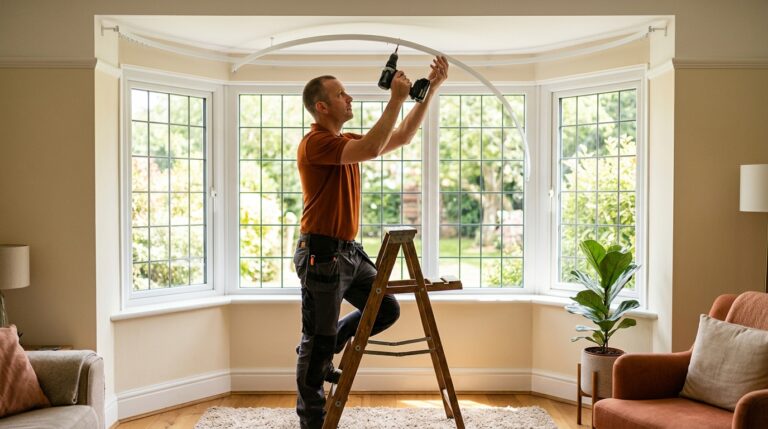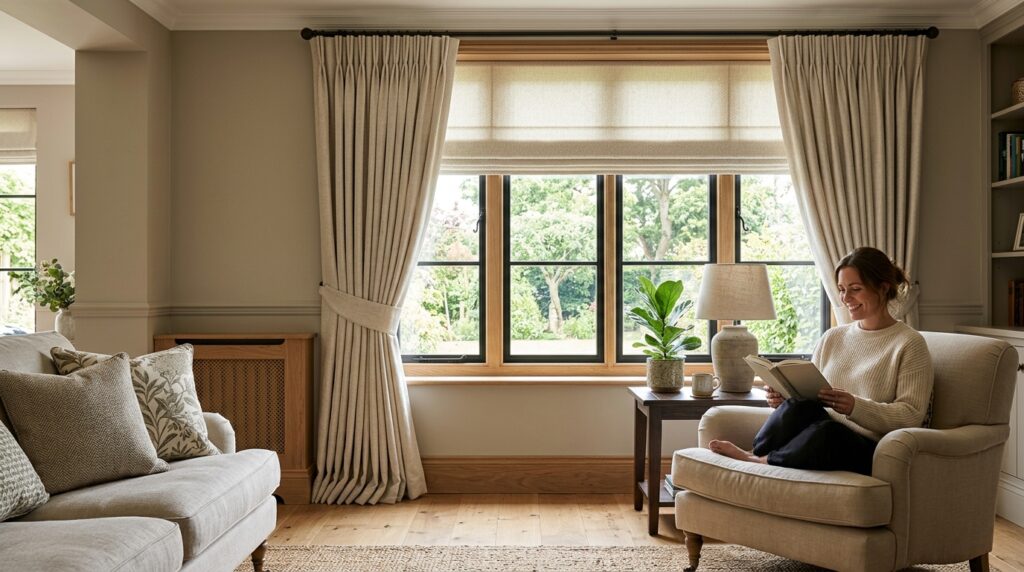
Standard blinds that stop three inches short of the sill, curtains that pool awkwardly on the floor, shades that block half your view when a bay window curves the wrong way—off-the-shelf solutions rarely fit real homes with any real precision. The gap between “close enough” and “exactly right” is where custom window treatments earn their higher price tag. But that only pays off if you know how to shop smart, without overpaying or ending up with the wrong fabric, mount, or mechanism. This guide covers every decision point—materials, measurements, motorization, and cost—so you can invest in window treatments built for your space and your budget in 2026.
What Are Custom Window Treatments and Why They Matter
Custom vs. Ready-Made: The Key Differences
Off-the-shelf blinds come in fixed sizes, like 24, 36, or 48 inches wide. Your windows rarely match those numbers exactly. Made-to-measure treatments are built from your exact window dimensions, down to the eighth of an inch.
This affects more than looks. A ready-made shade might leave a two-inch gap on each side. That gap lets light leak in and lets heat escape during winter. Custom pieces close that gap entirely, giving a tailored result instead of a generic one.
Material choice also differs. Off-the-shelf options limit you to a handful of colors and fabrics. Custom orders open up hundreds of finishes, from woven woods to blackout linings, matched to your home’s specific style.
How Precise Fit Impacts Function and Style
Exact measurements change how a room feels and functions. A shade that fits tightly blocks more light, which matters in bedrooms or media rooms. Poor fit means glare, faded furniture, and uneven privacy at night.
Energy efficiency also depends on fit. Properly sized cellular shades can reduce heat loss through windows significantly in cold months. Gaps around loose-fitting blinds undercut that benefit, letting drafts slip past the edges.
Style suffers with a poor fit too. Treatments that hang crooked or stop short of the sill look unfinished. A precise fit creates clean lines that match the room’s proportions, whether it’s a small bathroom window or a wide living room bay.
The Role of a Design Consultation
A trained eye catches details homeowners often miss. During a session, a consultant measures each window, checks light direction, and asks about daily routines before recommending options.
This guidance shapes better outcomes. Someone unfamiliar with the design process of custom window treatments might choose a fabric that fades quickly in direct sun. A consultant steers clients toward durable, practical choices instead.
Many local businesses offer this service at no cost. For homeowners wanting more detail beforehand, a company blog can explain what to expect during a visit.
Exploring the Main Types of Window Coverings
Blinds: Wood, Faux Wood, and Metal
Blinds use horizontal slats that tilt open or closed with a wand, cord, or motor. Real wood brings warmth and works best in dry rooms. Faux wood resists moisture and holds up in kitchens and bathrooms. Aluminum blinds are slim, budget-friendly, and easy to clean. If you’re comparing manual versus motorized options, this guide on automated blinds vs automated shades which smart window t… breaks down the tradeoffs clearly.
Shades: Roller, Solar, Roman, Cellular, and Woven Wood
Shades raise and lower as a single fabric panel instead of using slats. Each style suits a different need:
- Roller shades give a clean, minimal look and work well in modern spaces.
- Solar shades block glare while keeping outdoor views intact.
- Roman shades fold into soft horizontal pleats for a tailored feel.
- Cellular shades trap air in honeycomb pockets, improving insulation.
- Woven wood shades add natural texture from grasses, reeds, or bamboo.
Drapery and Shutters as Statement Pieces
Drapery and shutters do more than cover a window; they define a room’s character. Long drapery panels suit tall, narrow windows and add drama. Solid shutters fit uniform, boxy windows and offer a permanent, architectural look. For a broader side-by-side comparison of these categories, see Custom Window Coverings | Blinds, Shades, and Shutters … before choosing.
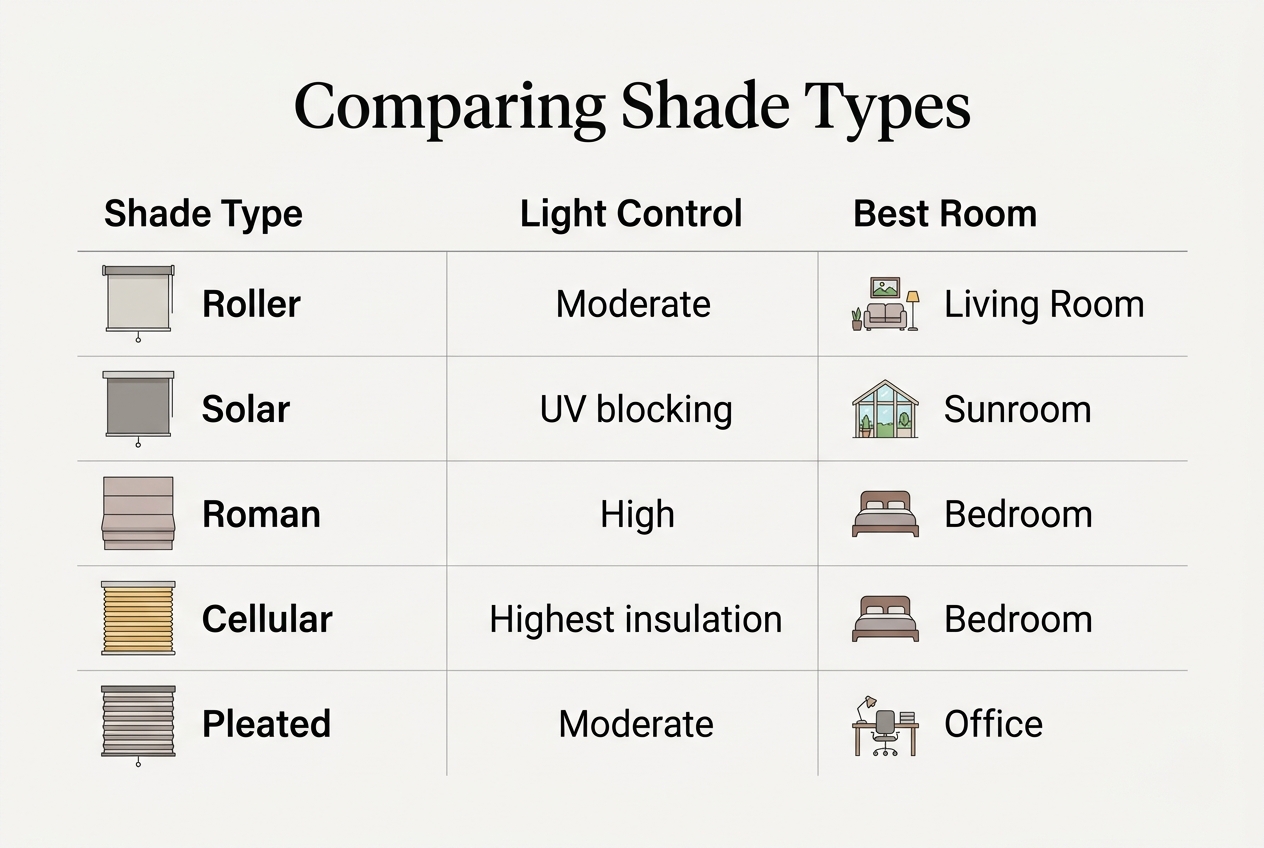
Comparing Shades: Roller, Solar, Roman, Cellular, and Pleated
Light Control and Privacy Levels
Each shade style filters light differently. Roller shades come in sheer, light-filtering, or blackout fabrics, giving flexible privacy. Solar shades cut glare while keeping views visible, which makes them popular for sunrooms. For softer folds and elegant coverage, roman shades offer a fabric-forward option with adjustable light control.
Energy Efficiency and Insulation
Insulation matters as much as looks. Cellular shades trap air in honeycomb pockets, often improving window insulation by 40% or more. Pleated shades offer a similar, thinner structure at a lower price. Roller and solar shades provide less thermal benefit but excel at blocking UV rays.
| Shade Type | Light Filtration | Energy Efficiency | Best Rooms |
|---|---|---|---|
| Roller | Sheer to blackout | Low-Moderate | Kitchens, offices |
| Solar | Glare reduction | Moderate | Sunrooms, living rooms |
| Roman | Moderate to full | Moderate | Dining rooms, bedrooms |
| Cellular | Full blackout available | High | Bedrooms, nurseries |
| Pleated | Light to moderate | Moderate-High | Small windows, offices |
Best Use Cases by Room
Bedrooms benefit from cellular or blackout roller shades for deep darkness. Kitchens favor easy-clean rollers. Living rooms often pair well with solar shades. For detailed specs, the Window Treatments & Custom Window Coverings resource offers helpful comparisons.
Blinds and Shutters: Durability, Style, and Function
Wood and Metal Blind Options
Wood blinds bring warmth and texture to a room. Real wood works best in dry spaces like bedrooms and living rooms, since humidity can cause warping over time. Slats typically run 1 to 2 inches wide, giving a clean, classic look that suits traditional and transitional decor alike.
Faux wood blinds solve the moisture problem. Made from composite or PVC materials, they resist warping in kitchens and bathrooms. They cost less than real wood and hold up well in high-traffic homes with kids or pets.
Metal blinds offer a sleek, modern alternative. Aluminum slats are lightweight, durable, and available in narrow widths for a tailored appearance. For a deeper comparison of styles and materials, this guide on blinds vs curtains choosing the right window treatment breaks down the pros and cons clearly.
Vertical Blinds for Large Openings
Sliding glass doors and wide patio openings need coverage that moves easily. Vertical blinds are built for this job. Their panels stack neatly to one side, allowing full access to the doorway without bunching fabric or hardware.
Available in fabric, vinyl, or faux wood, vertical blinds control light and privacy while standing up to daily use. Many homeowners choose them for sunrooms and home offices with oversized windows, where horizontal slats would be impractical.
Plantation Shutters and Long-Term Value
Plantation shutters deliver lasting value. Wide louvers, often 3.5 to 4.5 inches, offer superior light control and a timeless look. Built from solid wood or composite, they add resale value and rarely need replacing. See this resource on Custom Window Treatments – Calico for more design inspiration.
Drapery, Hardware, and Finishing Touches
Choosing Fabric and Lining
Fabric weight shapes how drapery looks and moves. Heavy velvets create rich folds and block light well. Lighter linens or cottons let sunlight filter through and feel airy. Consider the room’s purpose before picking a fabric. Bedrooms often need denser weaves for privacy and darkness.
Lining adds function beyond looks. Blackout lining stops nearly all outside light. Interlining adds body and insulation, helping regulate room temperature. A thermal lining can also reduce energy loss near drafty windows. Reading about drapery lining options helps homeowners match fabric choices to real household needs, not just style preferences.
Color and pattern matter too. Bold prints can anchor a room, while solid neutrals blend with existing decor. Test fabric swatches in actual room lighting before committing to yardage.
Selecting Drapery Hardware
Hardware affects both function and style. Rods come in various diameters; thicker rods suit heavier fabrics and wider windows. Traverse rods allow smooth opening and closing, while decorative rods stay stationary and pair with tiebacks.
Finials add a finishing detail. Options range from simple metal caps to ornate glass or wood designs. Mounting height matters as well. Placing rods higher than the window frame makes ceilings feel taller and rooms feel larger.
Valances and Cornices as Accents
Valances soften the top of a window and hide hardware. They work well layered over blinds or shades. Cornices offer a more structural, tailored look, often upholstered to match room decor. Homeowners seeking full guidance can explore Custom Window Coverings in Columbus, OH for regional examples of these finishing details done well.
Choosing the Right Treatment for Every Room
Kitchens and Bathrooms
Moisture and grease change everything about material choice. Near sinks, stovetops, and showers, water-resistant materials matter more than fabric texture or pattern. Faux wood blinds, vinyl shutters, and PVC-coated shades hold up far better than natural wood or delicate linen in these humid, splash-prone spaces.
- Faux wood blinds resist warping and cracking even with daily steam exposure near a shower or tub.
- PVC or polymer shutters clean easily with a damp cloth and won’t swell like real wood.
- Moisture-resistant roller shades offer a sleek look above a kitchen sink without trapping odors.
- Light, wipeable fabrics work best over a stove, where grease particles tend to settle on textiles.
Bedrooms and Nurseries
Sleep quality depends on darkness and quiet. Blackout capability is the top priority for bedrooms and especially nurseries, where nap schedules matter. Cellular shades with blackout liners, or layered drapery over shutters, block streetlights and early morning sun. Privacy matters just as much, so look for treatments that seal light gaps along the edges rather than just covering the center of the window.
Living Rooms and Home Offices
These rooms balance style with everyday function, since they host guests and video calls alike. Reviewing tips on how to choose curtains for living room spaces can clarify proportion and fabric weight before committing. For glare control during work hours, many households also browse a Shop Custom Blinds, Shades, & Window Treatments … catalog to compare light-filtering options side by side.

Motorization and Smart Home Customization Options
Motorized Shades and Blinds Explained
Motorized shades raise and lower with a remote, a wall switch, or a phone app. Many systems let you set a schedule, so shades open at sunrise and close at dusk automatically. This is useful for hard-to-reach windows above stairs or behind furniture.
Some motors run on rechargeable batteries, needing a charge every few months. Others wire directly into your home’s electrical system for constant power. A good Window Treatments consultation will help you decide which option fits your budget and layout.
Integrating with Smart Home Systems
Most motorized shades pair with popular voice assistants like Amazon Alexa, Google Assistant, and Apple HomeKit. You can say a simple command to open or close shades without touching a switch.
These systems often connect to smart hubs, letting shades work alongside lights and thermostats. For example, shades might close automatically when a room’s temperature rises, saving energy during hot afternoons.
Safety Benefits of Cordless Designs
Cordless designs remove dangling cords that pose strangulation risks to young children and pets. Federal safety groups have pushed for cordless standards for years, and many manufacturers now build cordless as the default option.
Motorized and cordless shades eliminate loose cords entirely, reducing accidents in busy households. Reading curtain safety tips you need to know can help families choose safer coverings for nurseries and playrooms.
How Measuring and Installation Work
Inside Mount vs. Outside Mount
Every project starts with one basic choice. Inside mount fits the treatment inside the window frame for a clean, built-in look. Outside mount covers the frame and wall, which hides uneven trim and makes windows appear larger. Depth of the frame matters too. A frame under 2 inches deep often can’t support certain cellular or Roman shades without brackets.
Steps in a Professional Measurement Visit
Professional measuring removes guesswork. A trained measurer checks width, height, depth, and squareness at multiple points, since older homes rarely have perfectly even frames.
| Step | What Happens | Typical Time |
|---|---|---|
| 1 | Measure width at top, middle, bottom | 5 minutes |
| 2 | Measure height at both sides and center | 5 minutes |
| 3 | Check frame depth and obstructions | 3 minutes |
| 4 | Confirm mount type and hardware | 5 minutes |
| 5 | Record specs and place order | 2 minutes |
What Expect During Installation
Most single-room installations take 30 to 60 minutes per window. Larger orders with motorization or multiple rooms may need a full afternoon. Installers bring levels, drills, and anchors suited to drywall, plaster, or tile. For smaller updates between projects, diy curtain hacks transform your space with simple upgrades without a full install. Watching a walkthrough like Custom Window Treatments Made Easy | Free In-Home … also helps homeowners know what a consultation and install visit actually involve.
Budgeting for Quality Window Treatments
Key Factors That Affect Pricing
Several things shape the final price of a window treatment order. Material choice matters most. Natural woods and solar-screen fabrics cost more than basic vinyl or polyester. Window size also plays a big role. Large picture windows or patio doors need extra fabric and stronger hardware. Motorization adds another layer of cost, since it includes wiring, remotes, or smart hubs.
Investing in Premium Materials and Brands
Premium brands like Hunter Douglas charge more upfront, but they use tougher fabrics, better lift systems, and stronger warranties. A basic cellular shade might last five years. A premium version can last well over a decade with daily use. That difference adds up over time, especially in rooms with heavy sun exposure.
| Cost Factor | Budget Option | Premium Option |
|---|---|---|
| Material | Vinyl slats | Real wood or faux wood |
| Size | Standard window | Oversized or bay window |
| Operation | Manual cords | Motorized with remote |
| Warranty | 1-2 years | Limited lifetime |
Getting the Most Value for Your Budget
Smart budgeting means balancing cost today with savings later. Sturdy fabrics resist fading and sagging, so replacements happen less often. This also helps protect your furniture with the right window treatments, since quality shades block harsh UV rays. Spending a bit more now often means fewer repairs and replacements down the road.
Maintaining and Caring for Your Window Treatments
Cleaning Blinds, Shades, and Drapery
Good care starts with knowing your material. Wood blinds need a dry cloth or a light dusting attachment, never soaking water. Faux wood tolerates a damp wipe. Cellular shades collect dust in their folds, so a vacuum brush attachment works best. Most drapery panels can be machine washed on gentle cycle or dry cleaned, depending on the fabric label. Regular cleaning of custom window treatments keeps colors bright and mechanisms running smoothly for years.
Protecting Against Sun and Wear
Sunlight is the biggest enemy of window coverings. UV rays fade fabric, dry out wood, and weaken fibers over time. Sun protection extends the life of any treatment significantly. Consider these steps:
- Choose UV-resistant or solar fabrics for windows facing south or west, where sun exposure is strongest.
- Rotate or tilt slats regularly to reduce concentrated light damage on one section.
- Add a liner to drapery panels to block harmful rays before they reach the decorative fabric.
- Close treatments partially during peak afternoon hours in summer months.
- Avoid placing dark-colored shades on windows that receive direct, all-day sunlight.
Recognizing Signs You Need a Replacement
Even well-maintained treatments wear out eventually. Knowing when to repair versus replace saves money and frustration. Watch for cords that fray, slats that warp, or fabric that looks noticeably faded compared to when installed. A professional often can fix small mechanical issues, but broken headrails or torn fabric usually signal it’s time for new treatments.
Working with a Design Consultant for the Best Results
What Happens During an In-Home Visit
A consultant usually spends 60 to 90 minutes walking through your home. They measure windows, check light direction, and note architectural details like deep sills or arched frames. This step ensures every recommendation fits your actual space, not a showroom guess.
During the session, expect real conversation. A good consultant asks about morning sun in the kitchen, glare on the TV, or privacy needs in a street-facing bedroom. They may also point out details you missed, like uneven walls or trim color clashing with your flooring.
Many local businesses offer this visit at no charge, treating it as education rather than a sales pitch. You walk away with a clearer sense of options, timelines, and rough pricing before committing to anything.
Using Swatches to Compare Options at Home
Fabric and material look different under store lighting. Bringing swatches home lets you see how a shade or drapery color behaves in morning sun versus evening lamplight. Consultants typically leave five to ten samples for a few days so you can compare against furniture and walls.
This hands-on step also helps when weighing light control. If privacy or sleep quality matters, a consultant can explain the benefits of blackout curtains using an actual fabric sample held against your window.
Personalizing Choices to Your Lifestyle
Every household has different habits. A family with toddlers may need cordless lift systems. A remote worker might prioritize glare control for video calls. Consultants factor these routines into their suggestions rather than pushing one standard product.
They also consider pets, allergies, and cleaning frequency, recommending fabrics or materials that match how you actually live day to day.
So the next step really depends on what’s bothering you about the window itself: if the glass is fogged, cracked, or failing at the seal, that’s a glazier’s work, and it makes sense to sort that out before anything new goes up in front of it. Once the glass is sound, the conversation shifts to light, privacy, and how the room feels through the day — and that’s where a considered set of blinds, shades, shutters, or drapery earns its keep, with arched and angled openings handled beautifully by The Curtain. It’s a quieter kind of project than glass work, and often the one that finally makes the room feel finished.